
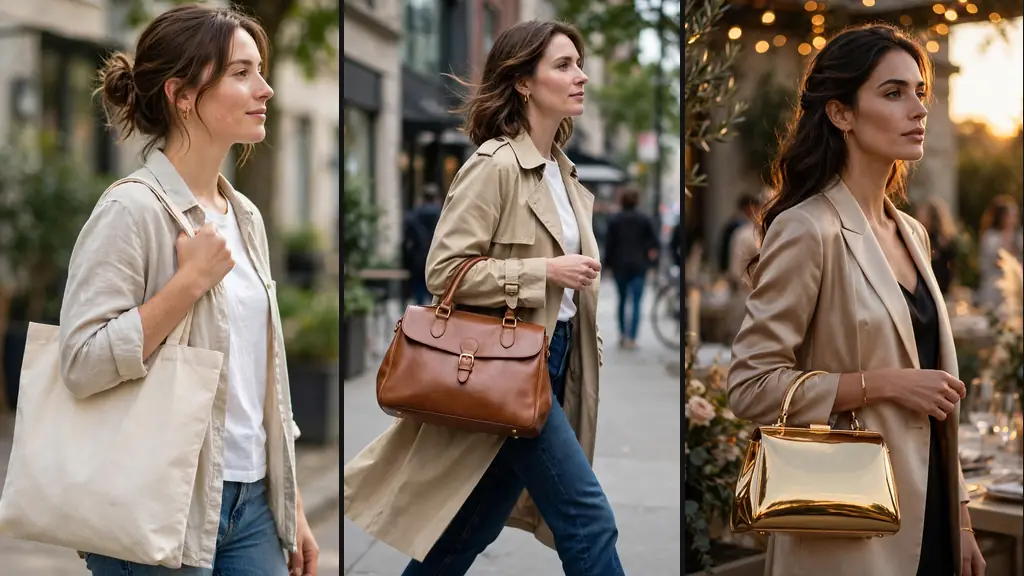
Handbag etiquette rules sound fussy until you watch someone plop a giant tote on a restaurant table or swing a studded bag into a stranger. Your bag goes everywhere with you, which means its manners matter as much as yours. These seven rules — gathered from etiquette experts and well-traveled women — keep you polished in every setting.
Table of Contents
Never Put Your Bag on the Table
The number one handbag etiquette rule: bags don’t belong on dining tables — ever. It’s unhygienic (your bag has been on floors, car seats, and public benches) and it crowds the shared space. At restaurants, hang it on a bag hook (many provide them — ask), place it on your lap under a napkin, or set it on an empty chair beside you. In a pinch, a clean bag can rest on the floor against your chair leg. The table is for food and conversation, not your tote.
Match the Bag to the Occasion
Carrying a gym duffel to a wedding or a tiny clutch to a work conference sends the wrong message. The rule is simple: the bag should suit the setting’s formality. Structured leather for the office, a clutch or small crossbody for evenings, a roomy tote for casual days. When in doubt, go smaller and simpler — an understated bag never looks wrong. Building a small rotation of three bags (work, evening, casual) covers nearly every situation without a closet full of options.
Keep It Off the Floor (When Possible)
Bathroom floors, public transit floors, restaurant floors — your bag picks up bacteria everywhere it lands. Beyond hygiene, a bag on the floor is a tripping hazard and an invitation to theft. Use hooks, your lap, the back of your chair, or a bag hanger (those folding discs that grip table edges are brilliant). At home, designate a shelf or hook by the door so the bag never touches the entryway floor either. Your bag — and your health — will thank you.
Mind Your Swing in Crowds
A shoulder bag becomes a weapon in crowded spaces. On packed trains, in elevators, and in busy shops, pull your bag in front of you or hold it close. Nobody enjoys being smacked by someone’s tote, and pickpockets love a bag swinging unattended behind you. This is one of those handbag etiquette rules that’s really about spatial awareness: your bag extends your personal space, so manage it like you’d manage your elbows in a crowd.
Don’t Rummage Endlessly
We’ve all watched someone dig through a bottomless bag at a checkout line while everyone waits. Keep essentials — wallet, phone, keys — in an accessible pocket or a small pouch inside. If you can’t find something in ten seconds, your bag needs organizing, not a bigger size. A little internal order (pouches for makeup, tech, and documents) means you retrieve things gracefully instead of performing an archaeological dig in public. Fellow shoppers and baristas will silently thank you.
Respect Shared Spaces
Your bag doesn’t get its own seat on a crowded bus, its own spot on a shared office desk, or half the conference table. In shared spaces, keep your bag compact and contained — on your lap, under your seat, or in your designated area. At work, a bag that sprawls across communal surfaces reads as inconsiderate, no matter how nice the bag is. The same organization principles that keep homes tidy apply to shared spaces: everything in its place, nothing overflowing.
Keep the Inside as Tidy as the Outside
An expensive bag full of crumpled receipts, loose mints, and mystery crumbs undermines the whole look. Once a week, empty your bag completely, wipe the lining, and toss the accumulated debris. You’ll often rediscover lost items and occasionally money. A tidy interior also means the bag keeps its shape instead of bulging oddly. True handbag etiquette isn’t just about where the bag goes — it’s about the care you show the things you carry. For more on polished daily habits, the Etiquette Expert handbag guide covers formal settings in detail.
Traveling With Handbags
Handbag etiquette gets trickier when traveling. Choose a crossbody with a locking zipper for sightseeing — it’s secure and hands-free. Pack a foldable tote inside for shopping overflow so your good bag isn’t overstuffed. At airport security, place your bag in the bin with zippers closed and facing up. In hotels, use the room safe for your best bag when heading to the beach or pool. And always keep essentials (passport, phone, cards) on your person, not just in the bag. Smart travel habits protect both your belongings and your peace of mind.