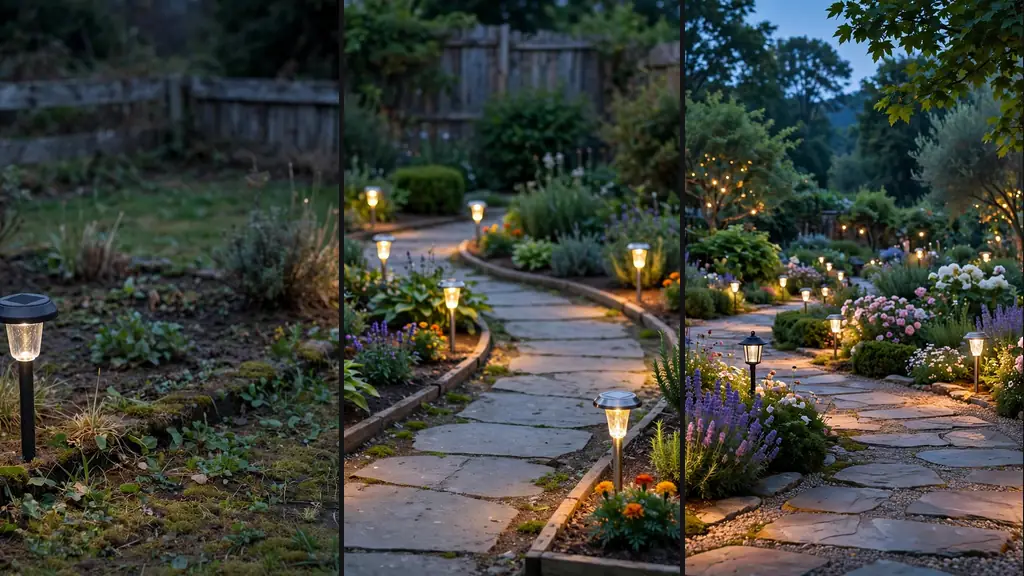
Solar garden lights are one of those rare upgrades that are cheap, easy, and genuinely delightful — which is why they’ve quietly taken over yards everywhere. No wiring, no electrician, no power-bill spike: stake them in and the sun does the rest. But not all are good, and placement matters more than people think. Here’s how solar garden lights actually work, which types are worth buying, how to choose brightness and placement, a dead-simple installation walkthrough, and the small maintenance habits that keep them glowing for years.
Solar Garden Lights: How They Actually Work
Every solar light is the same little machine in different outfits. A panel converts sunlight to electricity by day, a rechargeable battery stores it, and a sensor flips the LED on at dusk. No outlets, no trenches. Self-contained is why installation takes minutes.
The key variable is sun on the panel. Six to eight hours of direct sun means a full night of light; a shade-parked panel fades by midnight. That’s the top reason people think solar garden lights “don’t work” — the light is fine, it’s starving. Scout sunlight, not just pretty spots.
Modern LEDs changed everything. Old units were dim and bluish; today’s sip power, throw useful light, and come in warm tones that flatter gardens. ENERGY STAR has good background reading on LED efficiency for the curious.
Worth It — and Where They Fall Short
Zero wiring cost, zero electricity cost, installation with bare hands. Renters can take them along when moving. For owners, it’s the cheapest way to test a lighting layout before committing to wired anything — a $40 path set teaches more than an hour of theorizing.
Honest limits: solar won’t match wired lighting for brightness or consistency. Short winter days and storm weeks shrink runtimes to hours. And bargain sets are bargain for a reason — flimsy stakes, cloudy lenses, one-season batteries. Spending a bit more avoids rebuying every spring.
Treat solar as accent and ambiance lighting — paths, beds, patios — not security floodlighting. Planning bigger outdoor work? Knowing roughly how much it costs to build a tiny home before trenching for wired lines keeps perspective: solar keeps small projects small.
Solar Garden Lights Types, Compared
Path lights are the classic: short stakes washing soft pools onto walkways. Buy sets of six to ten, spaced six to eight feet apart — tighter looks like a runway. Guidance and charm, not reading light.
Spotlights aim up at trees and walls — brightest of the bunch, the drama-makers. String lights drape patios and shrubs for atmosphere. Lanterns perch on tables as portable glow. Motion-sensor models stay dark until triggered: the practical pick for gates and dark corners. The Spruce runs tested roundups of each type.
Choose warm white (2700–3000K) for gardens — it enriches foliage and gilds stone, while cool white feels clinical. And keep one color temperature across the yard. Mixed temperatures make even pricey lights look cheap.
Choosing Brightness and Nailing Placement
Brightness runs in lumens, and the useful band is narrow: 10–50 for path and accent lights, 100–300 for spotlights, 300-plus for motion entries. More isn’t better — a path at 15 lumens per fixture feels magical; at 200 it feels like a work site. Restraint is the aesthetic.
Three placement rules. Panels need midday sun, not just morning. Stagger path lights on alternating sides — natural-looking and fewer fixtures. Light what people look at: aim spots at the tree, wash beds, tuck strings where they’ll reflect.
Sketch before buying, and walk the yard at night with a flashlight to audition spots. Five minutes of this belongs in any garden landscape design ideas session — and stops you buying twice the lights you need.
Solar Garden Lights: Installation and Care
Charge before installing. Remove the battery pull-tab, flip the switch on, and sun-soak units a full day first. Skipped pre-charging explains most “dead on arrival” reviews. Then soften hard ground — water spots ahead or pre-poke with a screwdriver — and push stakes straight until stable and level.
Aim spots at targets, set motion sensors to trigger where wanted (not at every cat), then walk the yard after dark on night one. You’ll catch the too-bright fixture, the missed gap, the fence-shaded panel. Ten minutes of day-one adjusting beats a summer of mild regret.
Care is mostly wiping panels — dust and pollen films quietly starve batteries, so a damp cloth monthly restores charging. When all-night lights start dying at 10 p.m., swap the rechargeable AAs (a two-dollar fix in many fixtures). Clear snow off panels after storms and bring delicate lanterns in before hard freezes, the same seasonal sense as remembering to protect your garden from winter pests.
Creative Ways to Use Them Around Your Yard
Beyond the path line: uplight one specimen tree and it becomes nighttime sculpture. Edge a deck with low stakes and the space feels bigger after dark. Tuck waterproof fairy strands into shrubs or along fence tops for glow that looks expensive and cost nearly nothing.
Outdoor dining is where solar garden lights shine brightest. Lanterns on the table plus overhead strings turn a plain patio dinner into an event — no cords, no guttering candles. Stake path lights from back door to table and guests find their way unescorted.
Use them seasonally, too. Colored stakes for holidays, fairy lights outlining a bed for parties, markers along snowy walkways in winter. They move in seconds and cost nothing to run — the lowest-commitment way to experiment after dark. Try, live with it a week, move it.