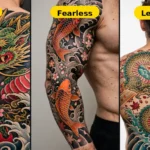
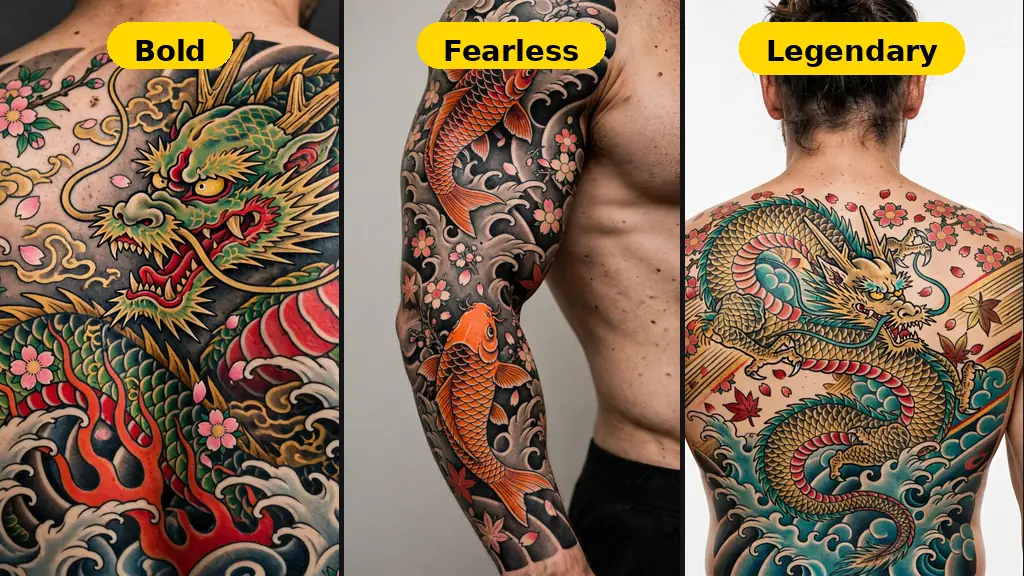
Some tattoos are decoration. Yakuza-style tattoos are a language — and every dragon, koi, and cherry blossom is speaking.
A yakuza tattoo is one of the most striking styles in the world: bold black outlines, vivid color, and mythical creatures flowing across a back, chest, and arms. But the truth surprises most people — this look has almost nothing to do with organized crime. It comes from irezumi, a centuries-old Japanese tattoo tradition built on symbolism, mythology, and storytelling. This guide decodes 25 designs, reveals each motif’s secret meaning, and covers pain, placement, and how to wear the style with respect.
In This Guide
What Is a “Yakuza Tattoo”? The Truth About Irezumi
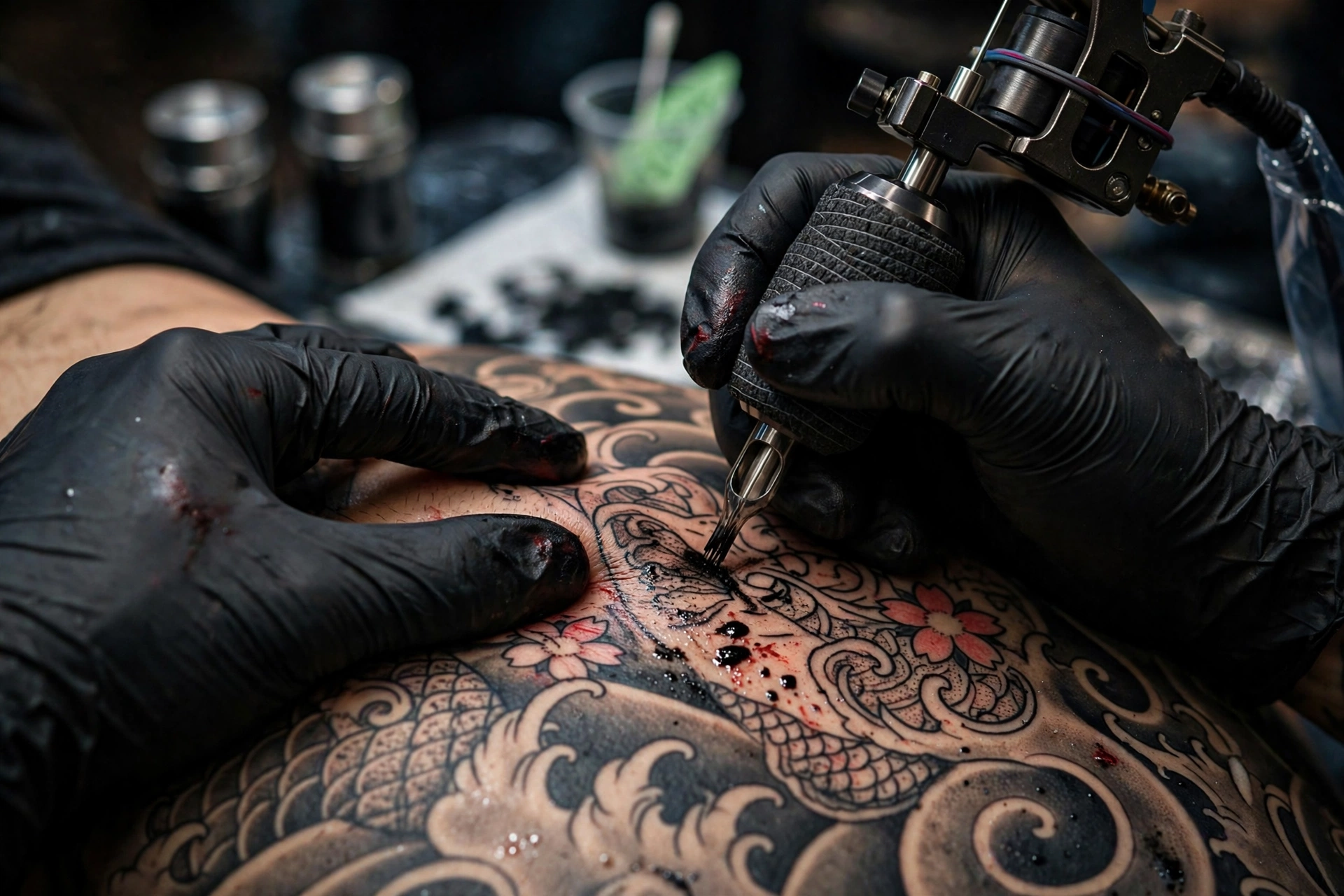
In the West, “yakuza tattoo” became shorthand for any Japanese-style bodysuit, because gang members were simply the most photographed wearers. But the real story is older and richer: irezumi, the traditional Japanese tattooing art, predates the yakuza by centuries, growing out of Edo-period woodblock prints, folklore, and heroic legends. Master artists applied it by hand (tebori) with wooden handles and metal needles, and a full bodysuit could take years to complete.
When tattoos were criminalized in the Meiji era, the art went underground — and that is how the gang association began. The art itself has always been about protection, courage, and beauty.
25 Yakuza Tattoo Ideas & Their Secret Meanings
Here are 25 classic yakuza-style designs with the hidden meaning each has carried for generations:
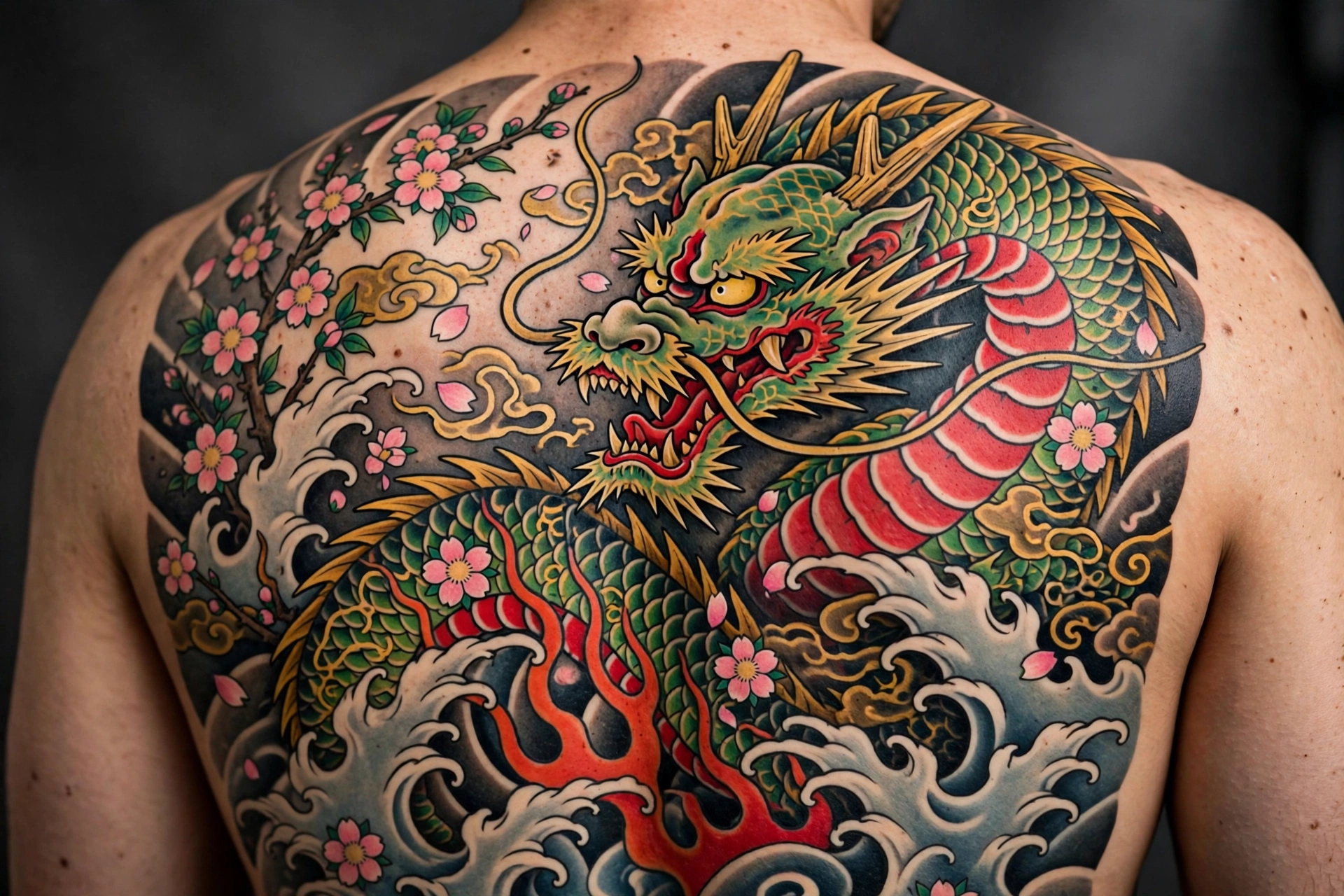
- Rising Dragon — wisdom and strength; a dragon climbing upward means ambition and rising fortune. A perfect centerpiece for bold back tattoo ideas.
- Descending Dragon — a downward-facing dragon symbolizes calm authority and protection from above.
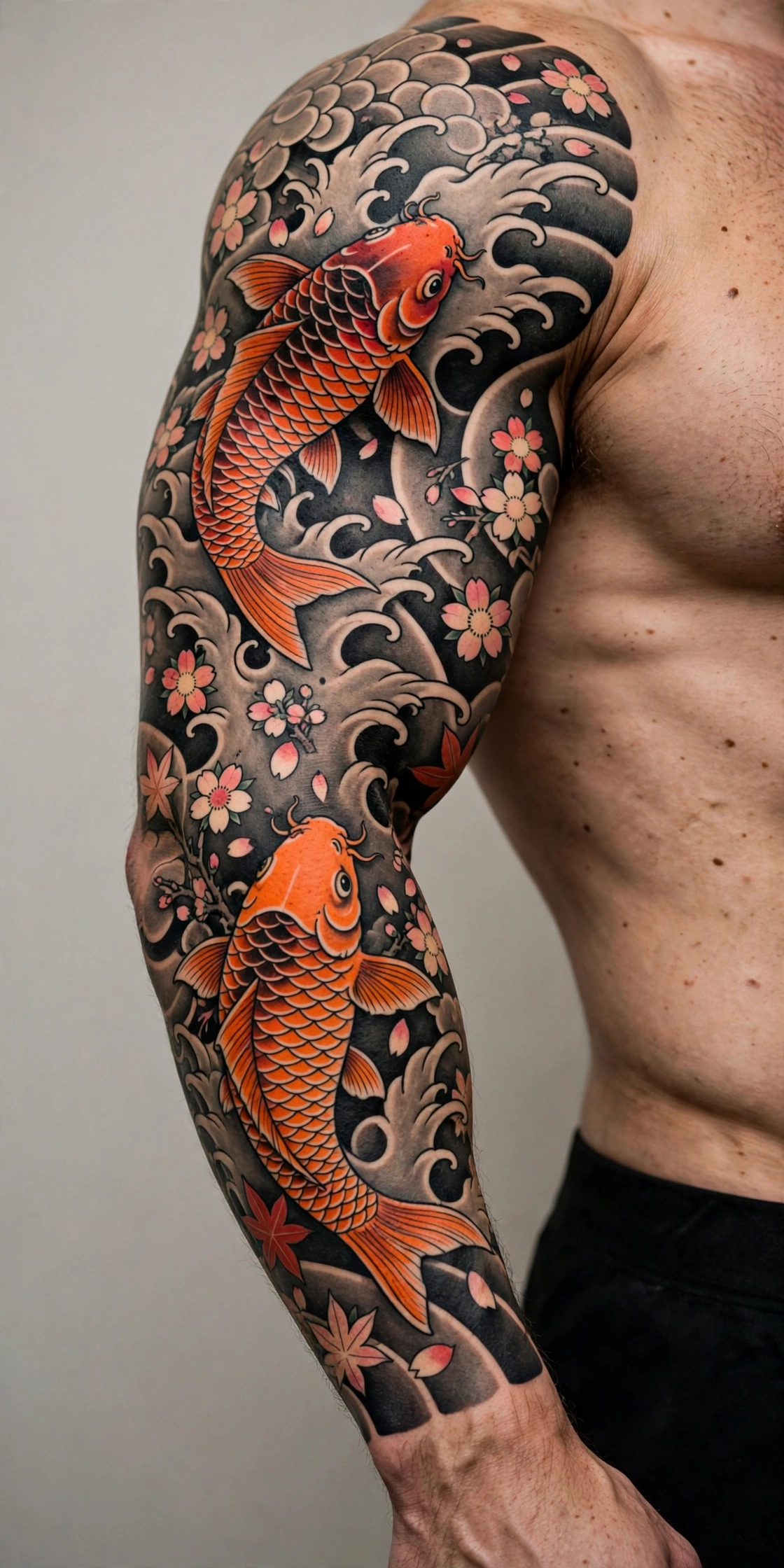
- Koi Swimming Upstream — perseverance against all odds; legend says the koi that climbs the waterfall becomes a dragon. A classic for full sleeve tattoo ideas.
- Koi Swimming Downstream — the struggle continues; a reminder that the fight is not over yet.
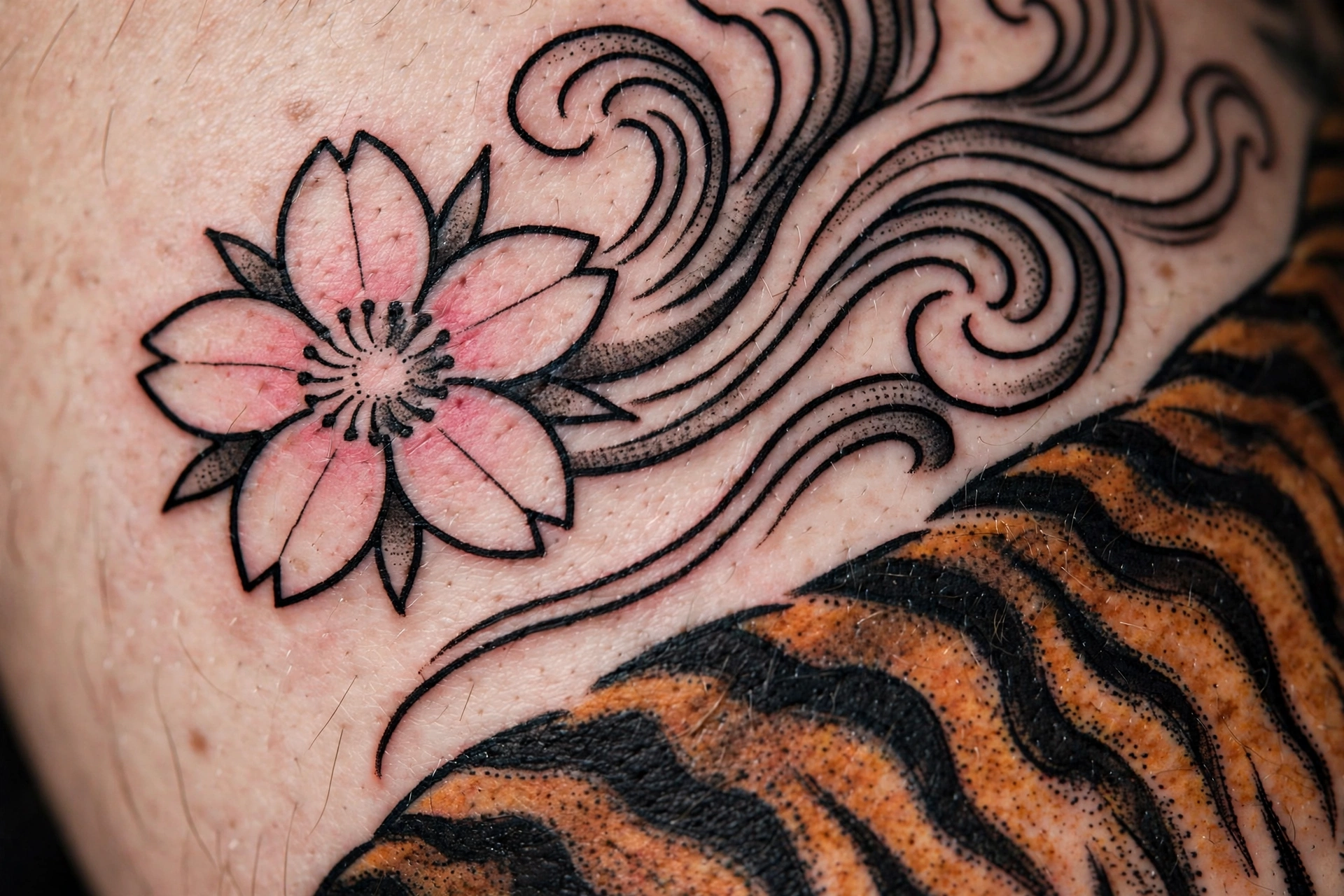
- Tiger — courage and warding off evil; irezumi tigers face forward, staring misfortune straight down.
- Cherry Blossoms (Sakura) — life’s fleeting beauty; samurai favored them as a reminder to live fully, because life is short.
- Oni Mask — a demon face that scares away evil spirits; a mark of facing your own darkness.
- Hannya Mask — a jealous female demon representing the complexity of human emotion and fierce protection.
- Samurai Warrior — honor, loyalty, and discipline; the warrior spirit made visible on skin.
- Foo Dog (Shishi) — guardian lion-dogs that stand watch over the wearer and block harm.
- Phoenix (Hou-ou) — rebirth and triumph over hardship; rising from the ashes.
- Crane (Tsuru) — longevity and good fortune; cranes mate for life, so they mean loyalty too.
- Peony (Botan) — wealth, bravery, and a life well-lived; often paired with lions and warriors.
- Chrysanthemum (Kiku) — the imperial flower of Japan; nobility, dignity, and determination.
- Lotus — purity rising from muddy water; spiritual growth earned through struggle.
- Maple Leaves (Momiji) — the passage of time and the quiet beauty of change.
- Snake (Hebi) — protection from illness and misfortune; also wisdom and regeneration.
- Waves & Water — life’s constant flow; the background tying a whole bodysuit together.
- Wind Bars — movement and drama; bold black bands that frame the larger scenes.
- Geisha — beauty, grace, and artistry; often shown drifting among cherry blossoms.
- Daruma Doll — perseverance and luck; one eye is filled when a goal is set, the other when it is achieved.
- Raijin & Fujin — the thunder and wind gods; raw, dramatic natural power.
- Tengu — a mountain spirit of mischief, protection, and martial skill.
- Kabuki Face (Kumadori) — theatrical makeup patterns; a bold personality worn openly.
- The Full Bodysuit (Munewari) — the ultimate statement: back, chest, and sleeves telling one continuous story.
Why Each Motif Is Chosen: The Secret Language of Irezumi
In irezumi, nothing is random. Direction matters: a koi swimming up means ambition; swimming down, the journey continues. Dragons face outward to confront the world. Backgrounds — wind, water, clouds — are never filler; they give the piece flow, like a landscape gives a painting depth.
Motifs are paired deliberately: cherry blossoms soften a fierce dragon, peonies honor a warrior’s bravery. Even color speaks — red for protection, black for experience, gold for wealth. A true Japanese-style artist designs the whole body as one composition, never a sticker collection.
Pain, Placement & Session Realities of a Yakuza Tattoo
A large irezumi piece is a commitment measured in years, not hours. Here is what to realistically expect:
- Pain: the back and outer arms are moderate; ribs, chest, and inner arms sting more; the armpit and sternum are famously intense.
- Sessions: a full back piece can take 20–40 sessions of 3–5 hours each, spaced weeks apart for healing.
- Cost: quality Japanese-style work is priced per session — budget for the long haul, not a single sitting.
- Healing: large color pieces demand careful aftercare, and sun exposure fades bold color fastest.
Pro tips: eat before every session, wear loose dark clothing, bring water, and never rush your artist. If a full bodysuit feels like too much, start with one motif — a single koi or tiger carries the style’s whole spirit.
Wearing a Yakuza Tattoo With Respect in the Modern World
In Japan, tattoos still carry real stigma — many onsen, gyms, and beaches bar inked visitors, a legacy of the gang association. If you love the art, honor it: learn the meanings first, choose a Japanese-work specialist, and wear it for the mythology — not the “tough” image.
Modern wearers often blend irezumi with personal touches — some pair a dragon sleeve with softer modern motifs like those in our guide to moth tattoo meanings — and that fusion is fine, as long as the symbolism is understood and respected. Appreciation, not costume: that is the line.
Final Thoughts
A yakuza-style tattoo is more than ink — it is a centuries-old visual language of courage, beauty, and resilience. You now know what each symbol is really saying. Choose your artist carefully, and wear the story well.
Which one is your favorite? Tell us in the comments — we read every single one.