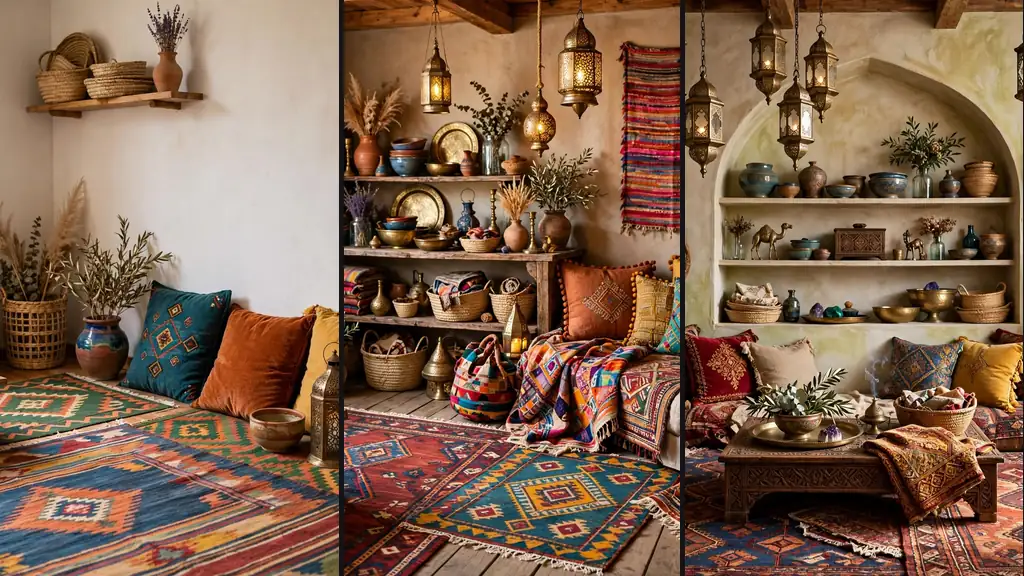
There’s a reason bazaar-style interiors photograph so well: they’re layered, personal, and full of stories. Bazaar home decor pulls from global markets — Moroccan lanterns, Turkish kilims, Indian block prints, African baskets — and mixes them into spaces that feel collected rather than decorated. The best part? This look thrives on affordable finds, not designer budgets.
Table of Contents
What Defines Bazaar Home Decor Style
Bazaar style — sometimes called global eclectic or boho-global — is built on three pillars: rich textiles, handcrafted objects, and layered pattern. Think low seating with piles of cushions, walls hung with woven tapestries, floors layered with overlapping rugs, and every surface holding something with a story: a brass tray from a flea market, ceramics from a holiday, baskets woven by hand.
The color palette runs warm and saturated: terracotta, saffron, deep teal, indigo, and plenty of natural wood and brass. Unlike minimalism, which edits down, bazaar style builds up — but with intention. Every piece should earn its place through craft, color, or memory. The difference between “curated bazaar” and “cluttered” is editing: group objects in odd numbers, vary heights, and leave some breathing room so the eye can rest.
Key Pieces for the Bazaar Look
Start with textiles — they’re the fastest transformation per dollar. A kilim or kilim-style rug instantly sets the global tone; layer a smaller patterned rug over a large neutral jute rug for depth. Cushion covers in block prints, mudcloth, or suzani embroidery (even good reproductions) pile beautifully on sofas and floor cushions.
Lighting does heavy lifting in bazaar interiors. A pierced-metal Moroccan pendant casts patterned shadows that transform a room after dark — one dramatic light beats three boring ones. Add woven baskets for storage that doubles as decor, brass or copper trays as coffee-table centerpieces, and a mix of plants in terracotta pots for life and color. These foundational pieces of bazaar home decor work in any room and mix effortlessly with furniture you already own.
Bazaar Home Decor on a Tight Budget
You don’t need to fly to Marrakech. Thrift stores are goldmines for brass, baskets, and wooden pieces — look past the dust and see the shape. Online marketplaces offer handmade textiles from global artisans at fair prices, often cheaper than mass-market “boho” lines. And DIY helps: a plain lampshade becomes bazaar-worthy with a stencil and some paint; bare walls warm up with a simple woven wall hanging you make yourself.
The smartest budget move is prioritizing high-impact pieces: one great rug, one dramatic light, and rich cushions will carry a whole room. Fill in with small finds over time — bazaar style is supposed to look collected gradually, so there’s no shame in building slowly. For more ways to stretch a decorating budget, see these tips to make your home look expensive on a budget.
Styling Tips: Layer Without Clutter
Layering is the soul of bazaar style, but it needs discipline. Follow the “three-layer” rule for surfaces: something tall (a vase with branches), something medium (a stack of books or a bowl), something small (a candle or tiny sculpture). Vary textures deliberately — smooth brass against rough jute, soft wool against hard wood — because texture contrast is what makes layered rooms feel rich instead of messy.
Give pattern a hierarchy: one dominant pattern (usually the rug), one supporting pattern (cushions or curtains), and small accents elsewhere. Too many competing large patterns causes visual chaos. And remember negative space: a bazaar room still needs a few calm spots — a plain wall, an uncluttered corner — so the rich areas can shine. If a corner starts feeling chaotic, remove one thing; editing is styling too.
Where to Shop for Bazaar Finds
Beyond thrift stores, explore fair-trade marketplaces that work directly with artisans — you’ll get authentic pieces while supporting makers. Flea markets and estate sales reward early arrival and friendly haggling. Even big retailers now carry decent global-inspired lines; the trick is mixing one or two of those accessible pieces with genuine vintage or handmade finds so the room doesn’t look catalog-styled.
Travel, when you can, is the ultimate source — a textile bought in person carries a memory no store can replicate. But the design world’s embrace of global style means inspiration and sources are everywhere now. Start with textiles and lighting, layer patiently, and let your home tell the story of the world you love.
Remember: the most beautiful bazaar rooms are never finished. Leave space for the next treasure you’ll find — that’s the quiet joy of this style.
Bazaar home decor isn’t about perfection — it’s about warmth, craft, and personality. A room that feels collected over time will always outshine a room that was decorated in a weekend.