
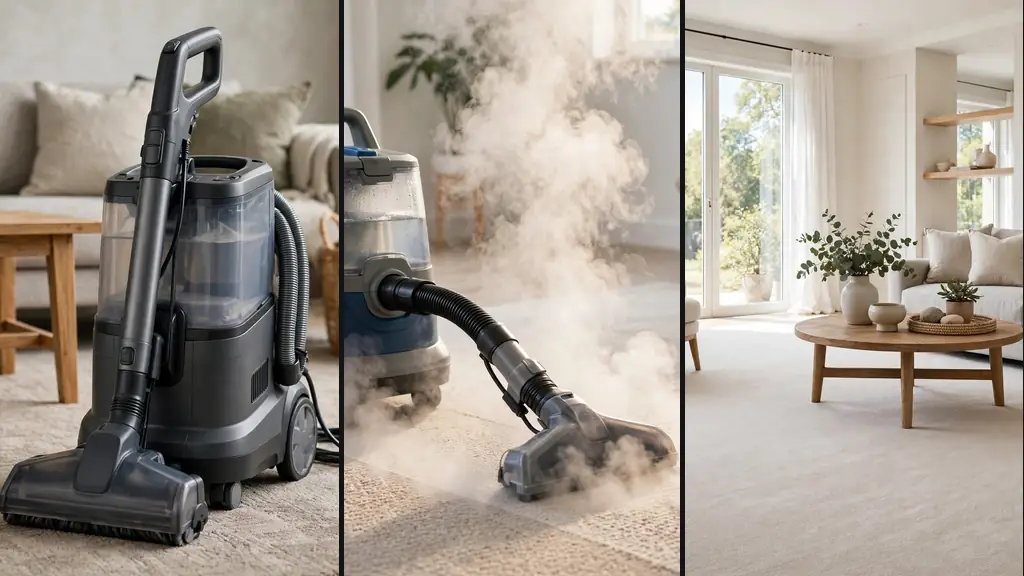
A carpet steam cleaner can be one of the most satisfying purchases you ever make — or one of the most disappointing. The difference almost always comes down to buying the right machine for your actual life, not the one with the flashiest box. If you’ve got kids, pets, light-colored carpet, or just a busy household, a good steam cleaner pays for itself fast compared to renting one twice a year. Here’s how to pick one you won’t regret.
Table of Contents
- What a Carpet Steam Cleaner Actually Does
- Steam Cleaners vs. Carpet Shampooers: What’s the Difference?
- Carpet Steam Cleaner Features Worth Paying For
- Tank Size and Heat-Up Time: The Two Specs That Matter Most
- Attachments You’ll Actually Use
- How Much Should You Spend on a Carpet Steam Cleaner?
- Caring for Your Machine So It Lasts for Years
What a Carpet Steam Cleaner Actually Does
Despite the name, most home “steam cleaners” don’t blast carpet with dry, scorching steam the way a commercial unit does. What they really do is spray hot water and cleaning solution deep into the fibers, scrub with rotating brushes, then suck the dirty water back into a separate tank. The heat loosens grime and kills dust mites, while the suction pulls it all out — along with allergens your vacuum leaves behind.
This matters because a regular vacuum only handles surface dirt. Over months, carpet fibers trap cooking grease, pet dander, pollen tracked in on shoes, and fine dust that settles deep where suction alone can’t reach. A carpet steam cleaner restores that springy, like-new feel underfoot — and for allergy sufferers, the difference can be noticeable within a day or two of a deep clean.
Steam Cleaners vs. Carpet Shampooers: What’s the Difference?
The terms get used interchangeably online, but there’s a real distinction worth knowing. Traditional carpet shampooers rely mostly on foamy detergent and agitation — they can leave behind soapy residue that attracts dirt faster afterward, which is why some carpets seem to get dirty again within weeks of a shampoo. True steam cleaners use hotter water and stronger extraction, with less reliance on heavy detergents.
Most modern home machines sit somewhere in the middle: they use heated water plus a modest amount of solution, then extract thoroughly. When you’re comparing models, look for one with strong suction (measured in air watts or just described as “dual” or “heated” extraction) and a separate dirty-water tank — that’s your guarantee the filth is leaving your carpet, not being pushed around. If deep-cleaning day is already part of your routine, pairing it with solid kitchen cleaning habits on the same weekend keeps the whole house feeling reset at once.
Carpet Steam Cleaner Features Worth Paying For
Manufacturers love to pile on features, but only a handful genuinely change your results. Heated cleaning is the big one — machines that actively heat the water (not just use hot tap water) clean noticeably better, especially on old stains. A dual-tank system (clean water in, dirty water out) is non-negotiable; single-tank models that recirculate dirty water are a false economy.
Rotating brush rolls make a real difference on matted, high-traffic areas like hallways. Adjustable suction or a “dry pass” mode helps carpets dry faster — and drying time matters, because damp carpet left too long can develop a musty smell. Built-in heaters, edge-cleaning brushes for baseboards, and a powered hand tool for stairs and upholstery round out the features actually worth a premium.
Tank Size and Heat-Up Time: The Two Specs That Matter Most
Here’s the practical reality nobody puts on the box: a small tank means constant trips to the sink. If you’re cleaning a whole living room, a tank under half a gallon will have you refilling every ten minutes. For apartments or single rooms, a compact tank is fine and keeps the machine light. For a full house with wall-to-wall carpet, go bigger — a gallon or more — even if the unit weighs a few extra pounds.
Heat-up time is the other spec that shapes your experience. Budget machines can take 8–10 minutes to get hot, and if the heater cycles off mid-job, you’re standing around waiting. Mid-range and up typically heat in under five minutes and hold temperature steadily. The carpet cleaner reviews at The Spruce are a solid independent reference for comparing real-world heat-up and dry times across models.
Attachments You’ll Actually Use
Every machine ships with a handful of attachments, and honestly, most people use two of them forever and lose the rest in a closet. The ones worth caring about: a powered stair/upholstery tool (hiring someone to do stairs is expensive), a crevice tool for edges and car interiors, and a tough-stain brush for spot treatment. Before buying, check whether replacement belts, filters, and brushes are easy to find for that model — a machine you can’t get parts for in three years is a disposable machine, no matter the price.
How Much Should You Spend on a Carpet Steam Cleaner?
For most households, the sweet spot is the mid-range: enough for heated cleaning, dual tanks, and a decent brush system, without paying for commercial-grade power you’ll never need at home. Budget machines absolutely work for small spaces and occasional use — a studio apartment with one rug doesn’t need a flagship.
Do the rental math, too. Renting a machine typically costs a meaningful chunk of a purchase price each time, plus the detergent, plus the trip to pick it up and return it. If you deep-clean twice a year, owning pays for itself surprisingly quickly — and you can spot-treat spills the day they happen instead of watching a stain set for weeks. A good seasonal maintenance routine reminds you when the next deep-clean round is due.
Caring for Your Machine So It Lasts for Years
The number one killer of home carpet cleaners is neglect after the job. Always empty both tanks when you finish, rinse them, and run clean water through the machine for a minute so solution doesn’t dry inside the hoses. Pull hair off the brush roll — it takes thirty seconds and prevents the motor from straining. Store it with the tank lids open so nothing gets musty inside.
Use the manufacturer’s recommended solution ratio; more soap doesn’t mean more clean — it means more residue and a carpet that re-soils faster. If you have hard water, distilled water in the clean tank reduces mineral buildup on the heater. The EPA’s guidance on caring for indoor air quality also notes that regular deep cleaning of carpets and soft furnishings reduces dust and allergens — so that maintenance isn’t just about looks. Treat the machine well and a good one will serve you for the better part of a decade.