
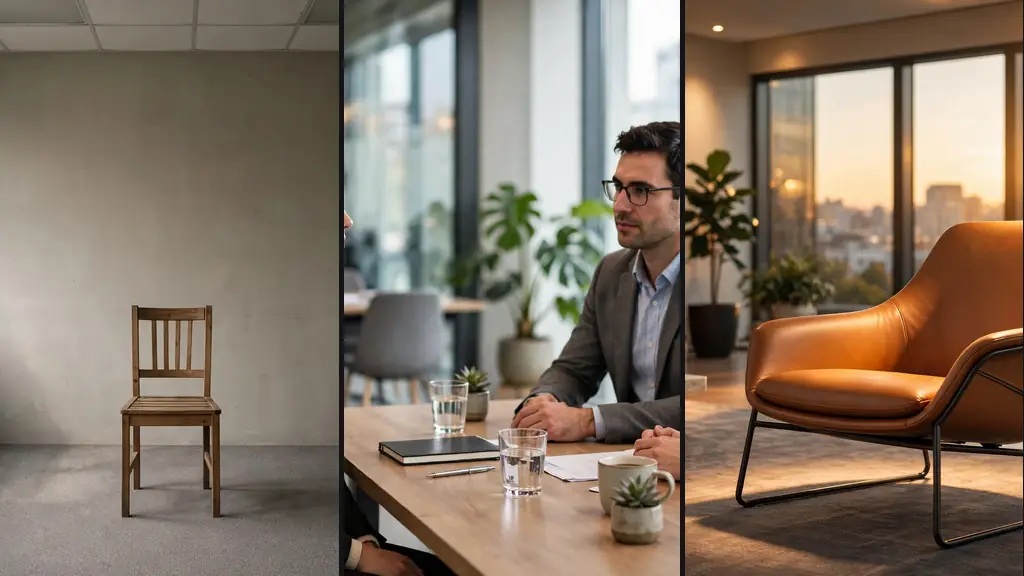
You walk into the interview room, and the recruiter gestures to a chair that’s slightly too far from the desk, or wobbles a little, or sits lower than theirs. What you do next is being evaluated. The “chair test” is one of several subtle job interview tips insiders share: recruiters watch how candidates handle small, unexpected inconveniences to gauge confidence, adaptability, and social awareness. Here’s how it works and how to pass it.
Table of Contents
What the Chair Test Actually Is
The premise is simple: the interview setup includes a minor physical awkwardness — a chair positioned oddly, a wobbly seat, or a slightly uncomfortable arrangement. There’s no trick to “solving” it; the test is entirely about your reaction. Do you freeze? Complain? Fidget silently? Or do you handle it with easy confidence? Among job interview tips, understanding that everything in the room is data for the interviewer is the meta-skill that matters most.
What Recruiters Are Watching For
Recruiters say the chair test reveals three things: composure under minor stress, willingness to speak up appropriately, and body language awareness. A candidate who calmly adjusts the chair or lightheartedly notes the wobble signals confidence. One who suffers in silence may read as passive; one who complains excessively may read as difficult. It’s an imperfect test, but it exists — and now you know about it.
How to Handle It Gracefully
The winning move is simple: address it briefly, warmly, and move on. “Mind if I pull this up a bit?” with a smile is perfect. Don’t launch into a monologue about the chair, and don’t ignore obvious discomfort to the point of distraction. The broader of these job interview tips: treat small obstacles as neutral facts to manage, not as tests to ace or injustices to endure.
Other Hidden Tests to Know
The chair isn’t the only subtle evaluation. Some recruiters note whether you treat the receptionist kindly, whether you arrive with thoughtful questions, and how you handle a deliberate pause after your answer (they’re checking if you’ll ramble to fill silence — don’t). The “coffee cup test” — whether you offer to take your cup to the kitchen — supposedly reveals humility. Take these stories with a grain of salt, but the underlying principle holds: everything is being observed.
Job Interview Tips That Always Work
Beyond hidden tests, the fundamentals still decide most hires: research the company deeply, prepare three specific stories that show your impact, and ask questions that reveal genuine curiosity about the role’s challenges. Follow up with a brief thank-you note referencing something specific from the conversation. These job interview tips are unglamorous but they work every time. For more career and life advice, check our lifestyle guides, and Indeed’s interview preparation hub has excellent practice resources.
Should You Call Out the Test?
Never. Naming the test (‘I see what you’re doing with this chair’) comes across as arrogant or paranoid, even if you’re right. The graceful handling described above works precisely because it’s natural, not performative. Among job interview tips, this one is counterintuitive: the highest-status move is treating the situation as completely normal.
What If the Interview Goes Badly Anyway?
Not every awkward moment is a test — sometimes chairs just wobble. Don’t spiral analyzing every detail; focus on the substance of your answers. The candidates who obsess over hidden tests often underperform on the actual questions. These job interview tips are seasoning, not the meal: strong stories about your work matter 100x more than chair diplomacy.
Body Language Fundamentals
Beyond any specific test, your body language broadcasts constantly in interviews. Sit with open posture (uncrossed arms, leaning slightly forward), maintain comfortable eye contact (not staring), and keep hands visible and still. Mirror the interviewer’s energy level — if they’re relaxed, relax; if formal, match it. These fundamentals outweigh every hidden test combined. Recruiters may note the chair moment, but they hire based on the overall impression of confidence, warmth, and competence you project across the whole conversation.