
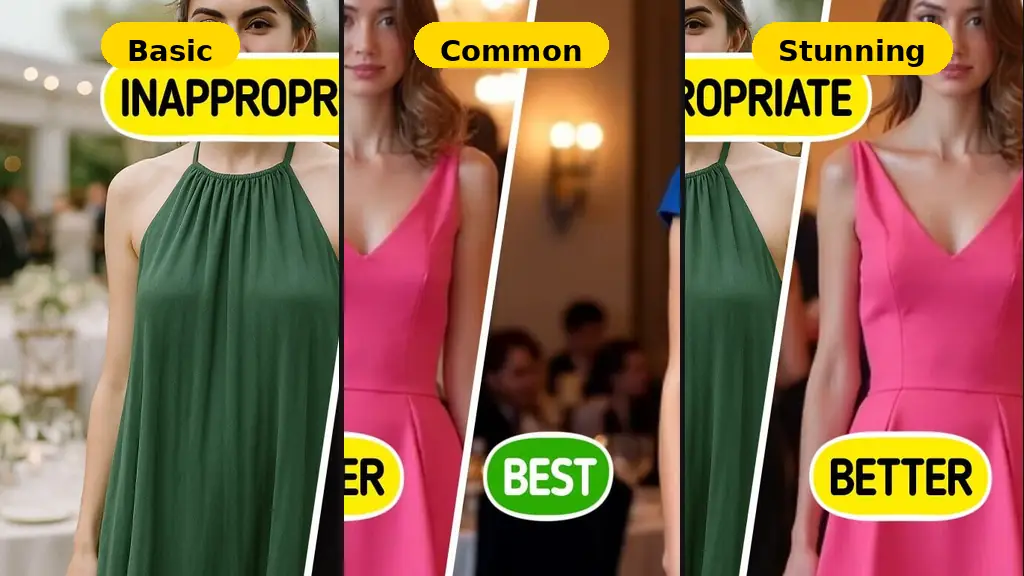
Wedding guest outfit mistakes are the stuff of group-chat legend — the guest who wore white, the one who dressed for a gala at a barn wedding, the stilettos sinking into lawn grass. Dressing for someone else’s big day has unwritten rules, and breaking them (even accidentally) makes you memorable for the wrong reasons. Here’s how to get it exactly right.
Table of Contents
Wearing White (or Anything Close)
The cardinal rule of wedding guest dressing: don’t wear white. This includes ivory, cream, champagne, and anything that photographs white — the bride owns that color for the day. Even white with a pattern is risky in photos. When in doubt, choose literally any other color. This is the most infamous of all wedding guest outfit mistakes, and it’s entirely avoidable with thirty seconds of thought in front of your closet.
Ignoring the Dress Code
The invitation’s dress code isn’t a suggestion — it’s instructions. Black tie means formal gowns and tuxedos; cocktail means knee-to-midi dresses and suits; garden formal means dressy but practical; casual still means neat and intentional. If there’s no dress code listed, match the venue and time: evening ballroom skews formal, daytime garden skews relaxed. When truly uncertain, ask someone in the wedding party. Showing up dramatically over- or under-dressed signals you didn’t care enough to check.
Dressing Too Casually
Even “casual” weddings aren’t jeans-and-sneakers occasions. Casual wedding attire still means a nice sundress, pressed chinos with a button-down, or a polished jumpsuit. The effort matters more than the expense — a $40 dress that’s clean, pressed, and well-fitted beats a wrinkled expensive one. One of the most common wedding guest outfit mistakes is treating “casual” as “whatever,” which reads as disrespectful to the couple who planned a celebration.
Going Overboard on Formality
The flip side: don’t outshine the wedding party. A full ball gown at a cocktail-attire wedding, or a tuxedo when the groomsmen wear suits, makes you look like you misunderstood the assignment — or worse, like you’re competing. Aim to be among the best-dressed guests, never better-dressed than the bridal party. Elegant restraint always wins. If your outfit could plausibly be mistaken for the bride’s or groom’s in a photo, change.
Wearing All Black Without Thought
All-black at a wedding walks a fine line. In some cultures and modern weddings it’s perfectly chic; in others it reads funereal. The safe play: break up black with accessories, texture, or a colorful shoe — or choose a deep jewel tone instead. If you do wear black, make it celebratory: interesting fabric, good fit, festive accessories. Context matters enormously here, so consider the couple’s culture and the wedding’s overall vibe before committing to noir.
Uncomfortable Shoes You’ll Regret
Weddings mean hours on your feet — ceremony, cocktail hour, dinner, dancing. Towering stilettos you can’t walk in will ruin your night and everyone’s photos of you wincing. Choose block heels, elegant flats, or wedges you can actually stand in for six hours. For outdoor weddings, heel protectors prevent the classic stilettos-in-grass disaster. Break shoes in before the day. Among wedding guest outfit mistakes, painful shoes are the most personally punishing — you’ll remember the blisters longer than anyone remembers your dress.
Forgetting About the Venue
A beach wedding, a mountain lodge, a historic church — each demands different practical choices. Outdoor venues mean wind (skip the short floaty skirt), sun (bring sunglasses, consider a hat), and terrain (wedges over stilettos on grass). Religious venues may require covered shoulders — pack a wrap just in case. Check the weather the morning of and have a backup layer. The best-dressed guest is the one who looks great and comfortable in the actual setting. For more event-dressing guidance, the Brides wedding guest dress code guide breaks down every formality level with examples.
What to Wear as a Plus-One
Attending as someone’s plus-one adds pressure — you want to impress without overstepping. Default to the middle of the dress code range rather than the edge. Avoid anything that could read bridal (white, ivory, very formal) since you don’t know the couple’s sensitivities. Introduce yourself warmly; nobody expects you to know anyone. And follow your date’s lead on formality — if they’re in the wedding party, match their energy. Being a gracious, well-dressed plus-one is one of the most underrated social skills.