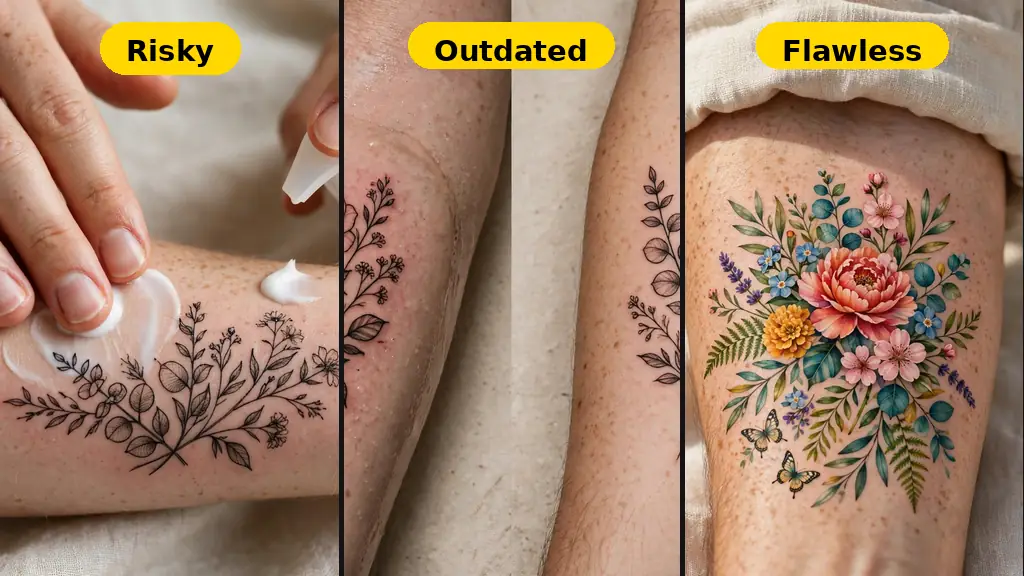
You left the studio with the coolest ink of your life. But the tattoo you admire on day one is only about 80 percent finished. The last 20 percent — the part that decides whether your ink stays crisp and bright or fades into a blurry mess — happens over the next four weeks, and it is entirely in your hands.
Good tattoo aftercare is the difference between a masterpiece that turns heads five years from now and a regret that needs a laser appointment. This guide covers the healing timeline, the ten golden rules, the mistakes that ruin ink, and the products that actually work.
📑 In This Article
Why Aftercare Decides How Your Tattoo Looks in 5 Years
A fresh tattoo is an open wound. Needles have pushed pigment into your skin’s second layer, and your body treats it like an intruder — trying to push the ink back out. Your aftercare is the counter-strategy. Done right, most ink stays exactly where the artist placed it. Done wrong, you get patchy color and scabbing that pulls pigment out.
Most “bad tattoos” are not bad artwork; they are good artwork healed badly. Over-moisturizing suffocates skin, scratching tears healing tissue, and sun breaks down pigment. The upside? You control the long-term quality completely — at almost no cost.
The Day-by-Day Healing Timeline
Healing happens in four phases — know which you are in.
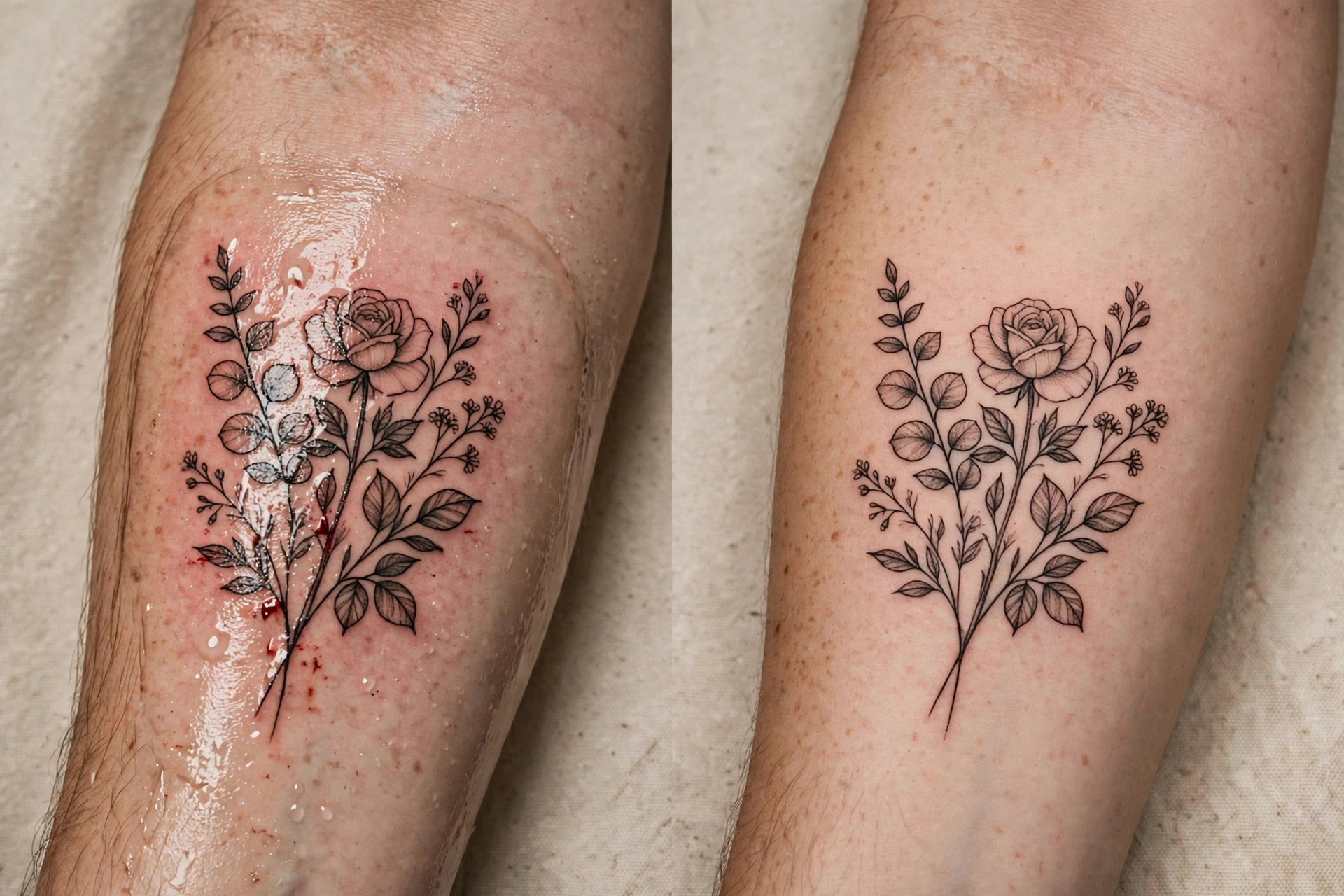
Days 1–3: The Leaky Phase
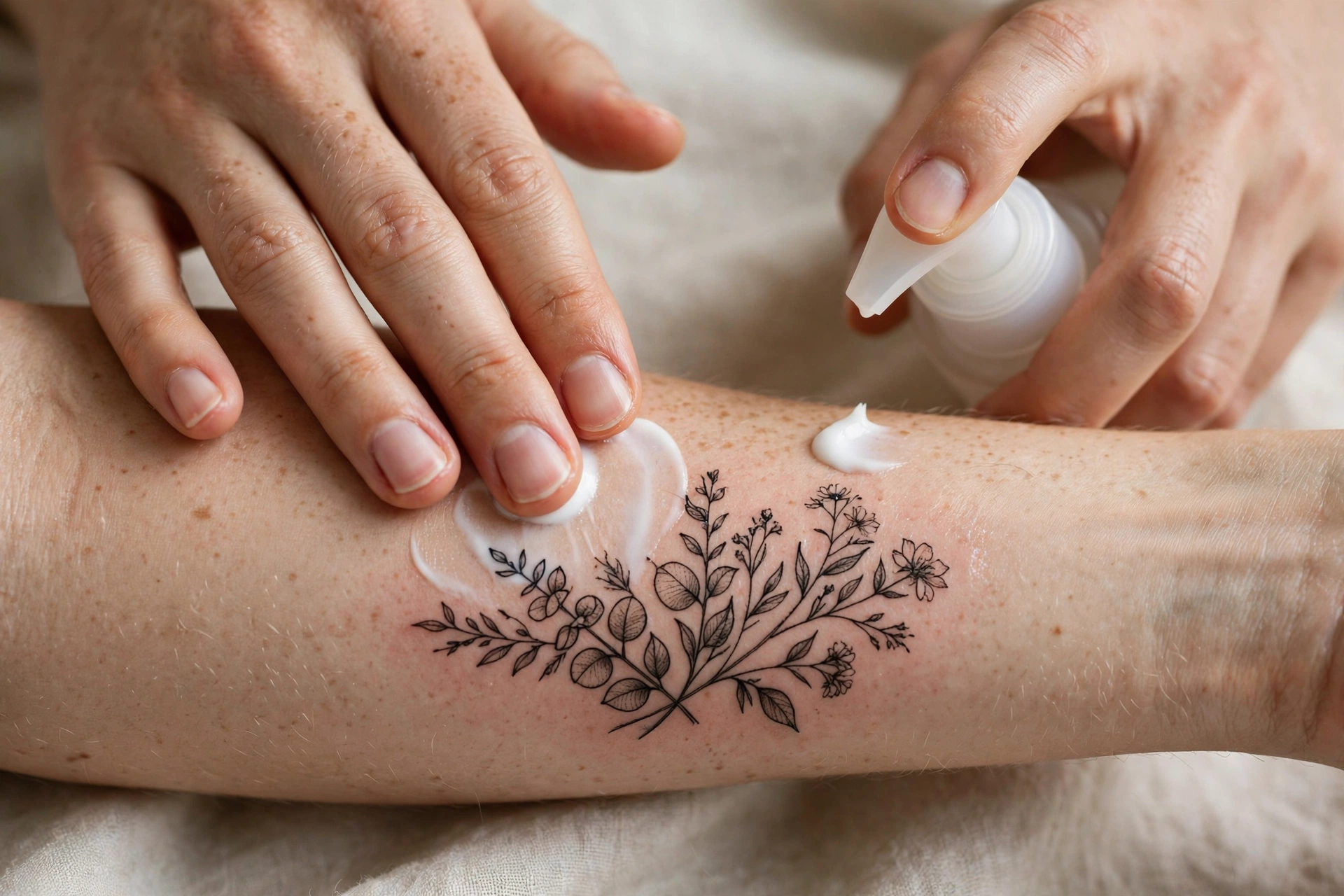
The tattoo weeps plasma and excess ink — normal. Keep the wrap on as advised, then wash gently with lukewarm water and fragrance-free soap, pat dry, and apply a thin layer of moisturizer.
Days 4–7: The Itchy Phase
Scabbing starts and itching hits hard. Do NOT scratch or pick flakes — let them fall off alone. Moisturize thin 2–3 times daily; thick layers suffocate healing skin.
Week 2: The Peeling Phase
Big flakes come off, the itch peaks then fades. Do not rush back to the gym, pool, or sun — the surface looks closed but the skin beneath is still fragile.
Weeks 3–4: The Settlement Phase
The tattoo looks near-final, but deeper layers are still rebuilding. Keep light moisturizing up, and by week 4 you can resume normal life — swimming, sunbathing (sunscreen on the tattoo, always), and workouts.
The 10 Golden Rules of Tattoo Aftercare
Follow these ten rules for healing that is boring in the best way — no drama, no patchiness.
- Follow YOUR artist’s instructions first. Their word beats any guide.
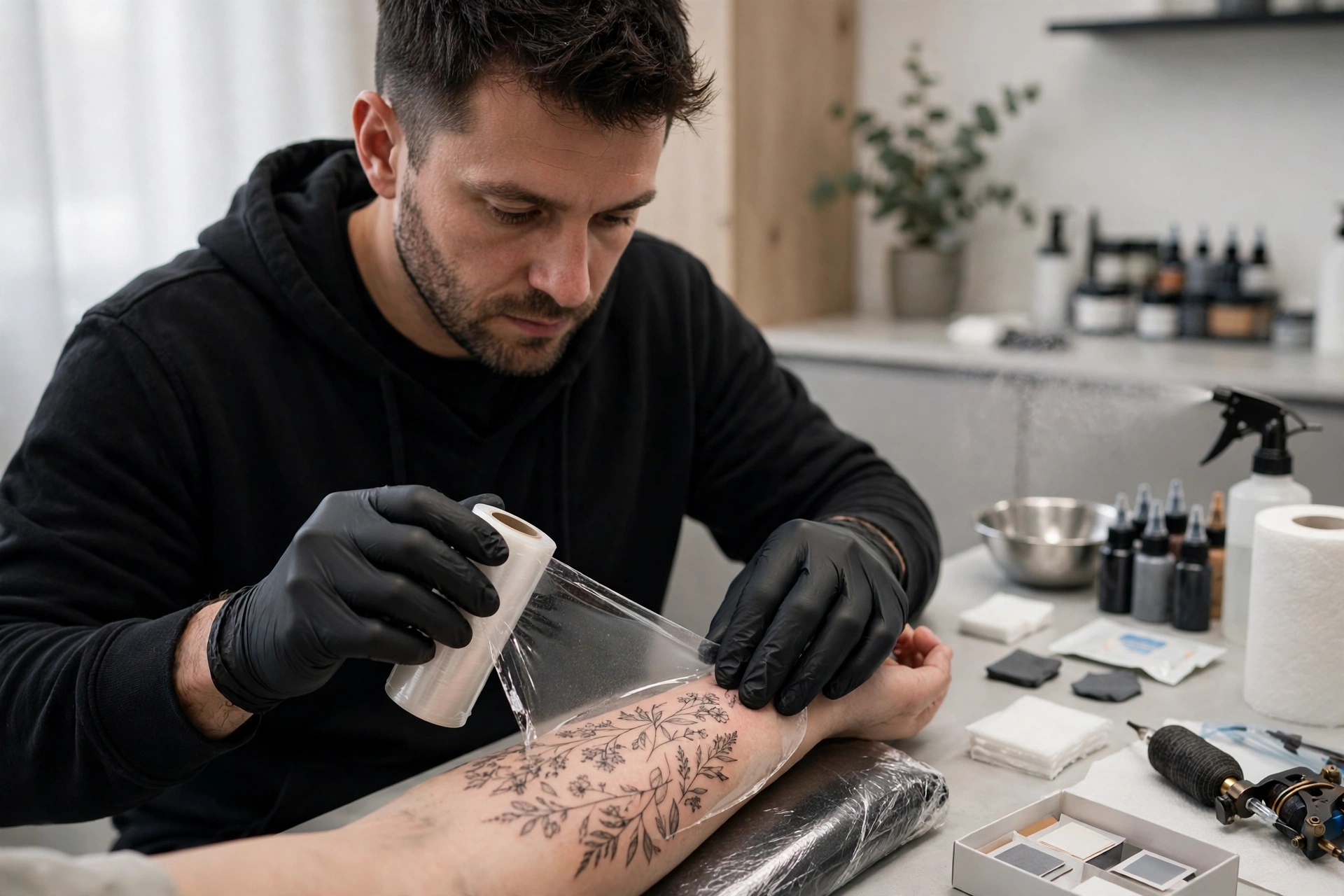
- Keep the initial wrap on as long as advised. Removing it early invites bacteria.
- Wash twice daily with gentle, fragrance-free soap. Lukewarm water, clean hands, fingertip circles.
- Pat dry, never rub. Rubbing tears healing skin.
- Moisturize thin, moisturize often. A pea-sized amount 2–3 times a day — barely shiny, never greasy.
- Keep it out of the sun for 2–3 weeks. Then SPF 30+ on the tattoo for life.
- No soaking. Showers fine; no baths, pools, hot tubs, or oceans for 2–3 weeks.
- Do not scratch, pick, or peel. Slapping the area gently is the only legal move.
- Wear loose, breathable clothing. Tight clothes rub the tattoo raw.
- No shaving or waxing over it until fully healed. Give it the full 3–4 weeks.
7 Mistakes That Ruin Perfectly Good Ink
The seven crimes against tattoos artists see most — each with its ugly consequence.
1. Peeling scabs early → patchy, inkless spots
The scab looked ready but the ink was not — now a pale bald spot sits in your design.
2. Swimming too early → infection and color bleed
Pools and hot tubs are bacteria buffets, and chlorine bleeds color out of fresh pigment.
3. Tanning fresh ink → faded, blurry lines
Two sunny afternoons without protection can soften a bold black line into a gray smudge.
4. Scented lotions or alcohol products → chemical irritation
Fragrance and alcohol sting, dry out, and inflame healing skin.
5. Over-moisturizing → suffocated, soggy healing
Thick layers trap moisture against the wound. Scabs go mushy and ink leaches out.
6. Gym too soon → sweat, friction, and bacteria
Sweat plus gym equipment attacks open micro-wounds; friction sandpapers fresh ink.
7. Ignoring infection signs → a small problem becomes a big one
Spreading redness, heat, pus, or fever are never “part of healing.” Call a doctor the same day.
Planning your next piece? Check how much tattoos cost in 2026 — and browse our fine-line tattoo ideas guide, since delicate designs need the most careful aftercare.
Products That Actually Work (and What to Avoid)
Three things cover everything — and dermatologists agree on them.
The essentials
1. Gentle, fragrance-free cleanser. Look for “fragrance-free” and “for sensitive skin” with no harsh sulfates — the same approach the American Academy of Dermatology recommends.
2. Fragrance-free moisturizer. Simple unscented lotion, thin layers 2–3 times daily. This is what most artists actually recommend.
3. Broad-spectrum sunscreen (after healing). From week 3+, SPF 30+ every time the tattoo sees sun. Faded ink is almost always sun-damaged ink.
What to avoid
Anything with fragrance, alcohol, or menthol. Petroleum-heavy ointments beyond day two. Exfoliants, retinol, and glycolic acid until fully healed. Homemade remedies like coconut oil in week one — they are not sterile. For what can go wrong, see the Mayo Clinic’s tattoo risks and aftercare overview.
Tattoo Aftercare FAQ
When can I shower after getting a tattoo?
The same day or the next — short and lukewarm. But no soaking for at least 2–3 weeks.
How long does a tattoo take to heal?
Surface: 2–3 weeks; full healing: 3–4 (up to 6 for large pieces). Week 2 looks healed but is not.
Can I put sunscreen on a fresh tattoo?
Not until fully healed — sunscreens irritate open healing skin. From week 3–4 on, sunscreen is non-negotiable.
Why is my tattoo peeling?
Completely normal, starting day 4–7 — like a sunburn. Never pick the flakes.
When should I call a doctor?
Guidance, not medical advice. Call promptly for spreading redness, worsening pain after day 3, swelling, pus, red streaks, or fever.
A great tattoo is a team project: the artist brings the skill, you bring the aftercare. Gentle washes, thin moisturizer, no sun, no scratching — and your ink will look great years from now.
Which one is your favorite? Tell us in the comments — and share this with someone healing their first tattoo!