
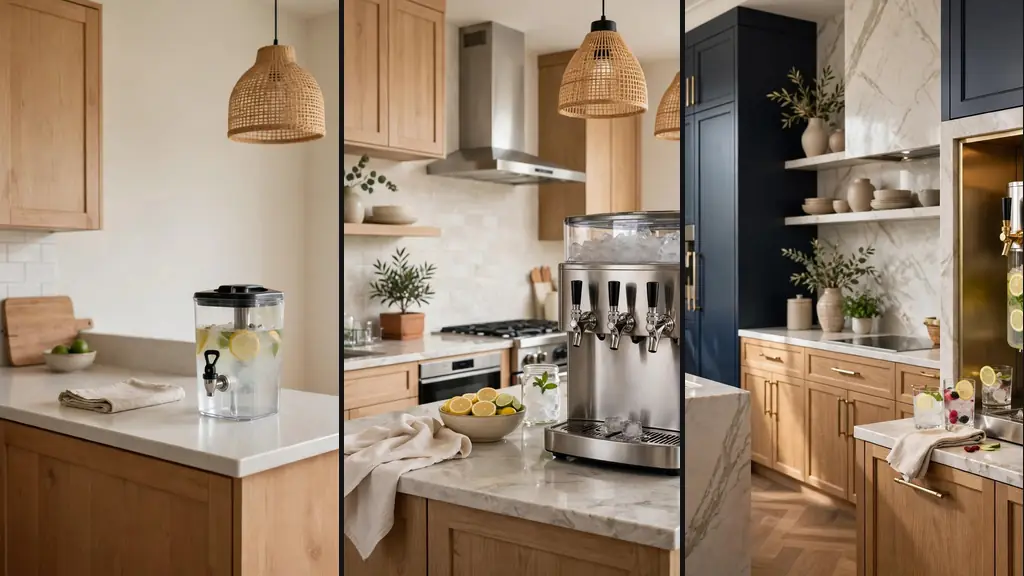
There’s something undeniably fun about pressing a lever and watching your glass fill with fizzy soda — and a home soda machine brings that little joy right into your kitchen. Whether you’re picturing a true fountain-style dispenser or a compact countertop carbonator, making your own sparkling drinks at home is cheaper per glass than store-bought, cuts down on plastic bottles, and lets you control exactly how sweet or fizzy things get. Here’s what to know before you buy.
Table of Contents
What a Home Soda Machine Actually Is
When people say “home soda machine,” they usually mean one of two things. The first is a countertop carbonator: a small appliance that injects CO2 into plain water, giving you sparkling water in about thirty seconds. You then add flavor — syrups, fruit, or cordials — to make soda. The second is a true fountain-style dispenser, the kind with levers that mixes carbonated water and syrup automatically as it dispenses, like the machines at restaurants.
Both count as a home soda machine, but they suit different households. Carbonators are compact, affordable, and dead simple; fountain dispensers are the full experience — multiple flavors on tap, that satisfying lever pull — but they need more counter space and a bigger upfront investment. Knowing which experience you’re actually after saves you from buying the wrong category entirely.
Fountain Dispensers vs. Countertop Carbonators
Countertop carbonators win on simplicity. There’s no plumbing, no syrup lines to clean, and the whole thing fits in a corner of the counter. You carbonate a reusable bottle of cold water, add your flavor of choice, and you’re done. For households that mainly want sparkling water with occasional soda, this is the sweet spot — and the entry price is genuinely affordable.
Fountain-style dispensers are the showpiece option. They typically hold multiple syrup cartridges or bag-in-box syrups and dispense finished soda at the press of a lever, with carbonation built in. The appeal is obvious if you host often or have kids who’d lose their minds over a soda fountain at home. The trade-offs: they cost several times more upfront, take up real estate, and the syrup lines need regular cleaning to taste right. Be honest about which one matches your actual daily habits — the fancier machine gathering dust is never the affordable choice. Either way, keeping the surrounding area tidy matters; our small kitchen habits guide helps new appliances earn their counter space instead of becoming clutter.
What to Look for in an Affordable Home Soda Machine
Start with carbonation control. The best machines let you adjust fizz levels — some people want a gentle sparkle, others want aggressive bubbles that sting a little. Next, check the CO2 system: how big are the canisters, how many liters does each one carbonate, and — critically — how easy and cheap are refills or exchanges where you live? A cheap machine with expensive, hard-to-find CO2 is no bargain.
For carbonators, look at bottle compatibility and whether spare bottles are reasonably priced; you’ll want at least two so one can chill while you use the other. (Cold water carbonates noticeably better than room-temperature water — that’s physics, not marketing.) For fountain dispensers, check how many flavors it supports, whether it takes standard syrup formats or locks you into proprietary cartridges, and how the drip tray and lines come apart for cleaning. A machine that’s annoying to clean will taste off within a month. The Spruce’s soda maker reviews at The Spruce compare carbonation quality and running costs across popular models.
The Real Cost: Machine, CO2, and Syrups
Let’s talk numbers honestly, because “affordable” depends on your drinking habits. A countertop carbonator plus a year of CO2 refills and syrup typically still costs less than buying the equivalent volume of brand-name soda or sparkling water — heavy sparkling-water drinkers often break even within months. Fountain dispensers take longer to pay off because the machine costs more, but per-glass costs drop to pennies once you’re set up, especially with bag-in-box syrups.
The ongoing costs people forget: CO2 exchanges (prices vary a lot by region, so check local options before buying), replacement bottles or seals every year or two, and syrup if you want real soda rather than just sparkling water. Syrup math is worth doing — a little goes a long way, and diluting to your own taste usually means the box lasts longer than the label suggests. If your household goes through cases of canned soda weekly, almost any home soda machine pays for itself; if it’s an occasional novelty, keep the upfront spend modest.
Setting It Up in Your Kitchen
Placement matters more than you’d think. Carbonators just need a stable, level spot near where you fill water — under-cabinet clearance matters if your model is tall, so measure before it arrives. Keep it out of direct sunlight and away from the stove; heat and CO2 canisters aren’t friends, and warm water carbonates poorly anyway.
Fountain dispensers need more planning: a dedicated stretch of counter, nearby power, and easy access for syrup swaps and cleaning. Some units can be plumbed to a water line, which is wonderful if you’re handy (or know someone who is) — no more refilling reservoirs. If you’re adding any new appliance to the mix, it’s a good moment to review your kitchen cleaning routine so the new setup stays hygienic, and smart home ideas like a leak sensor under a plumbed unit are cheap insurance.
Keeping It Clean and Tasting Fresh
A soda machine only tastes as good as its maintenance. Rinse bottles after every use and wash them regularly — sugary residue turns fast. Wipe down nozzles and dispensing areas weekly; dried syrup is both gross and a flavor-killer. For fountain dispensers, flush the lines on the schedule the manual gives (usually every few weeks), and replace any water filters on time — stale filter taste is the number one complaint in neglected machines.
Use fresh, cold, filtered water for the best results; off-tasting tap water makes off-tasting soda, and the EPA’s drinking water resources at epa.gov can help you understand what’s in yours. Descale or deep-clean per the manufacturer’s instructions, and store CO2 canisters upright in a cool spot. Do the boring maintenance and your home soda machine will keep delivering that little fountain-style thrill — crisp, fizzy, and exactly as sweet as you like it — for years.