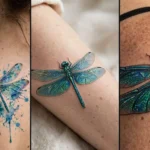
A dragonfly lives two lives: years underwater as a nymph, then a few dazzling weeks in the air — and that is exactly why a dragonfly tattoo hits so hard. It is not just a pretty insect; it is transformation you can wear, a reminder that change is not something that happens to you but something you grow through. In this guide you will find 40 dragonfly tattoo ideas, each with its own design, meaning, best placement, and honest downside, plus the pain, cost, and healing facts that decide whether a design is right for you — so you can pick the one that actually fits your story, not just the prettiest picture on the page.
⚡ Quick Answer
A dragonfly tattoo symbolizes transformation, adaptability, and living in the moment. Most dragonfly tattoos cost $50–$800 depending on size and detail, take 1–4 hours, and heal on the surface in 2–4 weeks. Tiny fine-line dragonflies are the cheapest and gentlest first tattoos, while large watercolor or realistic wingspan pieces cost more and need earlier touch-ups because colour fades faster than bold blackwork.
📑 In This Article
- What Does a Dragonfly Tattoo Mean?
- Classic & Minimal Dragonfly Tattoos
- Watercolor & Colour Dragonfly Tattoos
- Dragonfly Tattoos With Nature
- Bold & Ornamental Dragonfly Tattoos
- Statement Placements
- Dragonfly Tattoo Pain Levels by Placement
- How Much Does a Dragonfly Tattoo Cost?
- Healing Time & Aftercare Essentials
- Best Placements: Pros & Cons
- Common Dragonfly Tattoo Mistakes to Avoid
- Dragonfly Tattoo Styles Compared
- FAQ — Dragonfly Tattoos
- Quick Summary
- References
What Does a Dragonfly Tattoo Mean?
The dragonfly tattoo meaning starts with its life story. A dragonfly spends most of its life underwater as a nymph, then climbs out, splits its old skin, and takes to the air — so the oldest and most universal meaning is transformation and change: personal growth, surviving hardship, and starting again. Because the adult dragonfly only lives a few weeks, it also means living in the moment — a small, daily reminder not to waste today worrying about yesterday. Its darting flight adds agility and adaptability, the ability to change direction mid-air without losing grace, and its shimmering wings carry the idea of light and illusion: seeing past the surface to what is real. Across cultures the reading stays close: Native American traditions link the dragonfly to swift movement and self-realization, Japanese culture treats it as a symbol of strength and victory, and modern wearers choose it for independence, resilience, and the courage to outgrow an old version of themselves. Colour deepens the message — blue for calm and loyalty, green for growth and healing, red for passion and courage, purple for spirituality, black for power or quiet remembrance. If you love layered symbolism, our tattoo meanings guide shows how dragonflies sit alongside fifty other symbols you might pair them with.
Classic & Minimal Dragonfly Tattoos
Small, clean, and impossible to regret: these are the dragonfly tattoos people get first — and the ones they still love ten years later.
1. Tiny Fine-Line Dragonfly on the Wrist
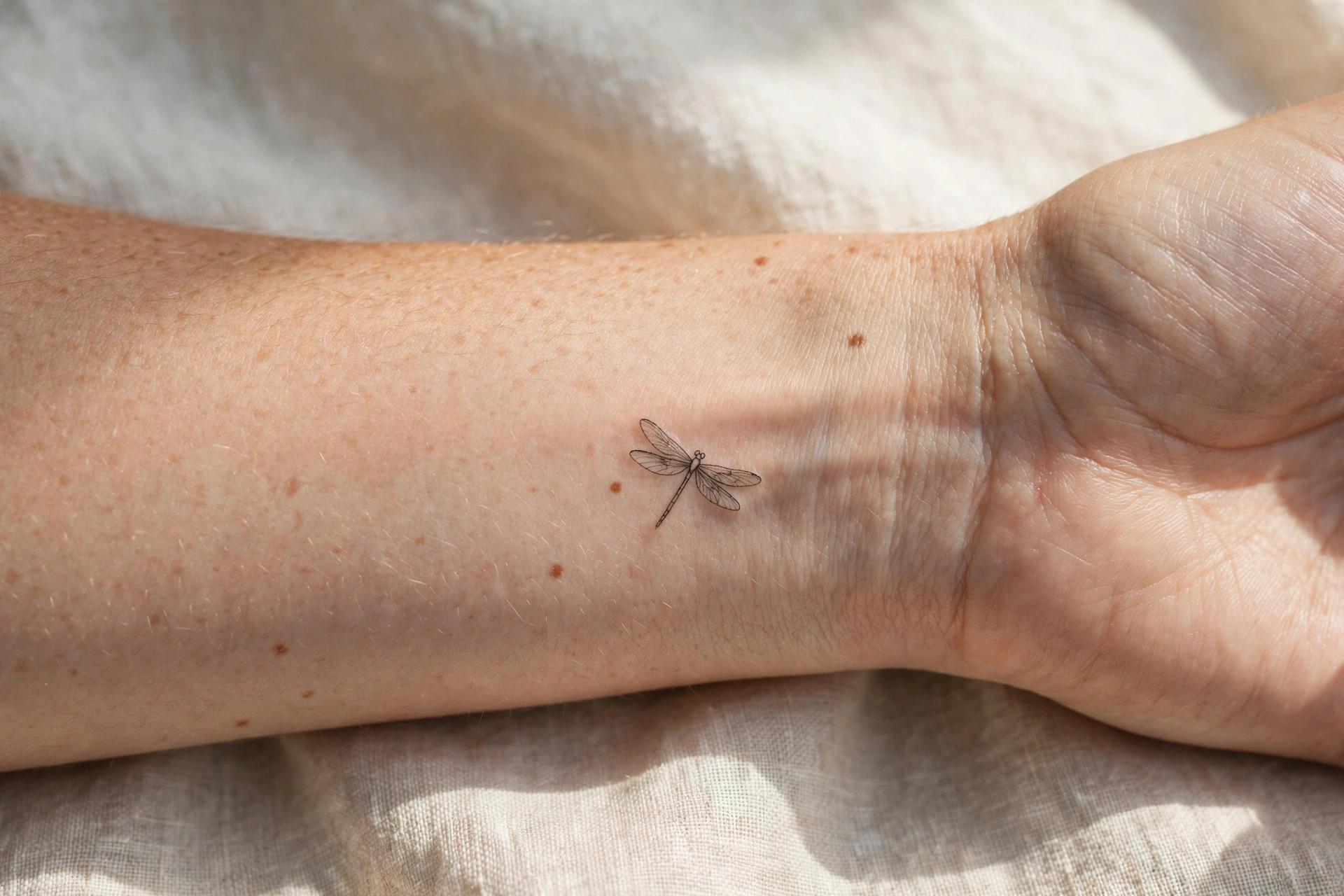
A tiny fine-line dragonfly on the wrist is the classic first dragonfly tattoo: delicate, subtle, and easy to cover with a watch or sleeve when you need to. It means quiet transformation — change you carry close, not change you announce. Honest downside: fine lines fade fastest of any style here, so budget for a touch-up in five to eight years.
2. Minimalist Single-Line Dragonfly
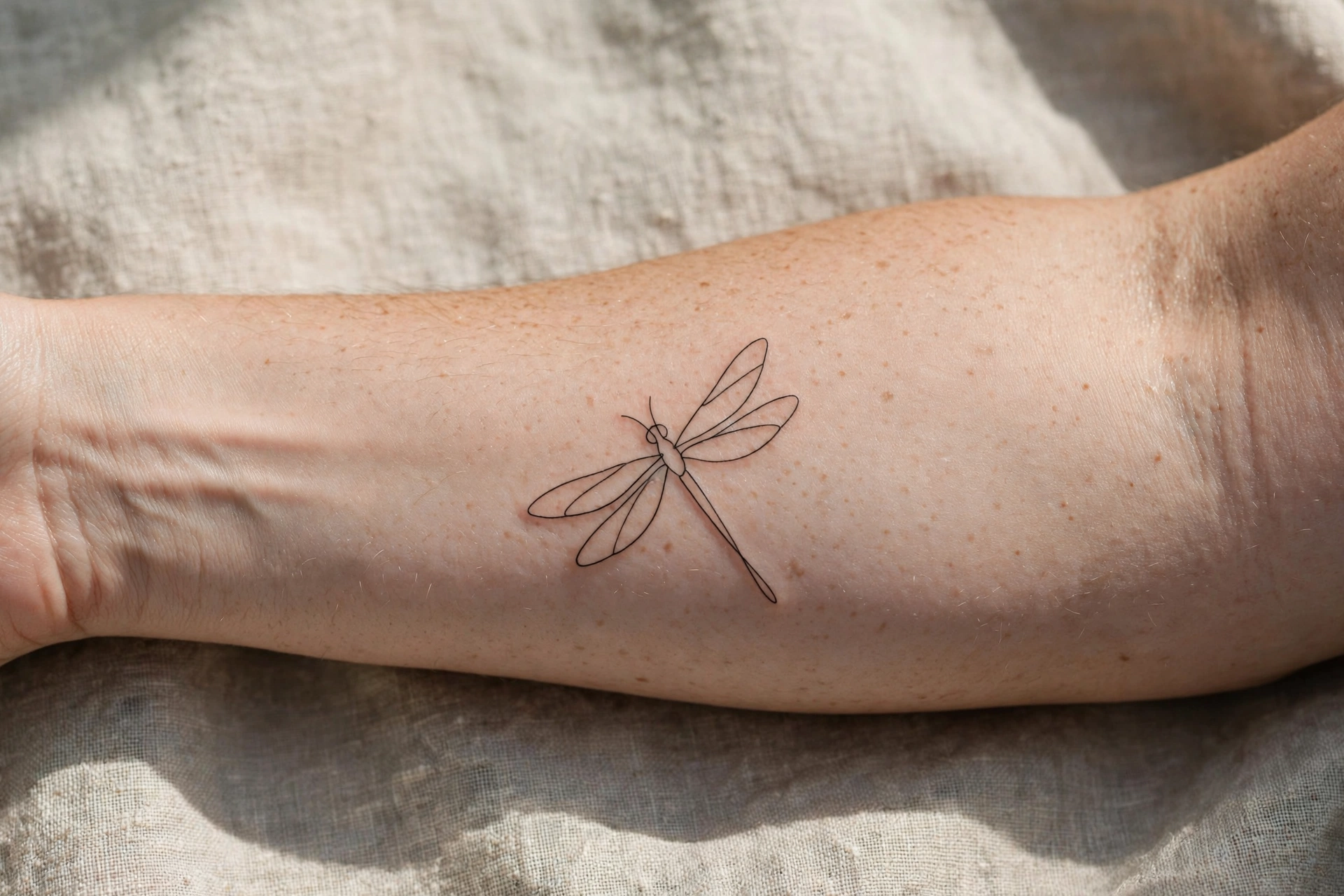
One continuous line, one dragonfly, nothing extra. The minimalist single-line dragonfly suits people who like their symbolism stripped down: the essence of change, drawn in a single breath. It works on the forearm, ankle, or collarbone. Downside: a single-line design shows every wobble, so pick an artist whose linework is steady at small scale.
3. Bold Blackwork Dragonfly

Solid black wings and a strong silhouette make the blackwork dragonfly the longest-lasting design in this guide. It means power and clarity — transformation with no decoration to hide behind. It fits the upper arm or shoulder, where the bold shape has room. Downside: heavy black fill is the hardest style to cover or remove later, so be sure before you commit.
4. Dotwork Dragonfly
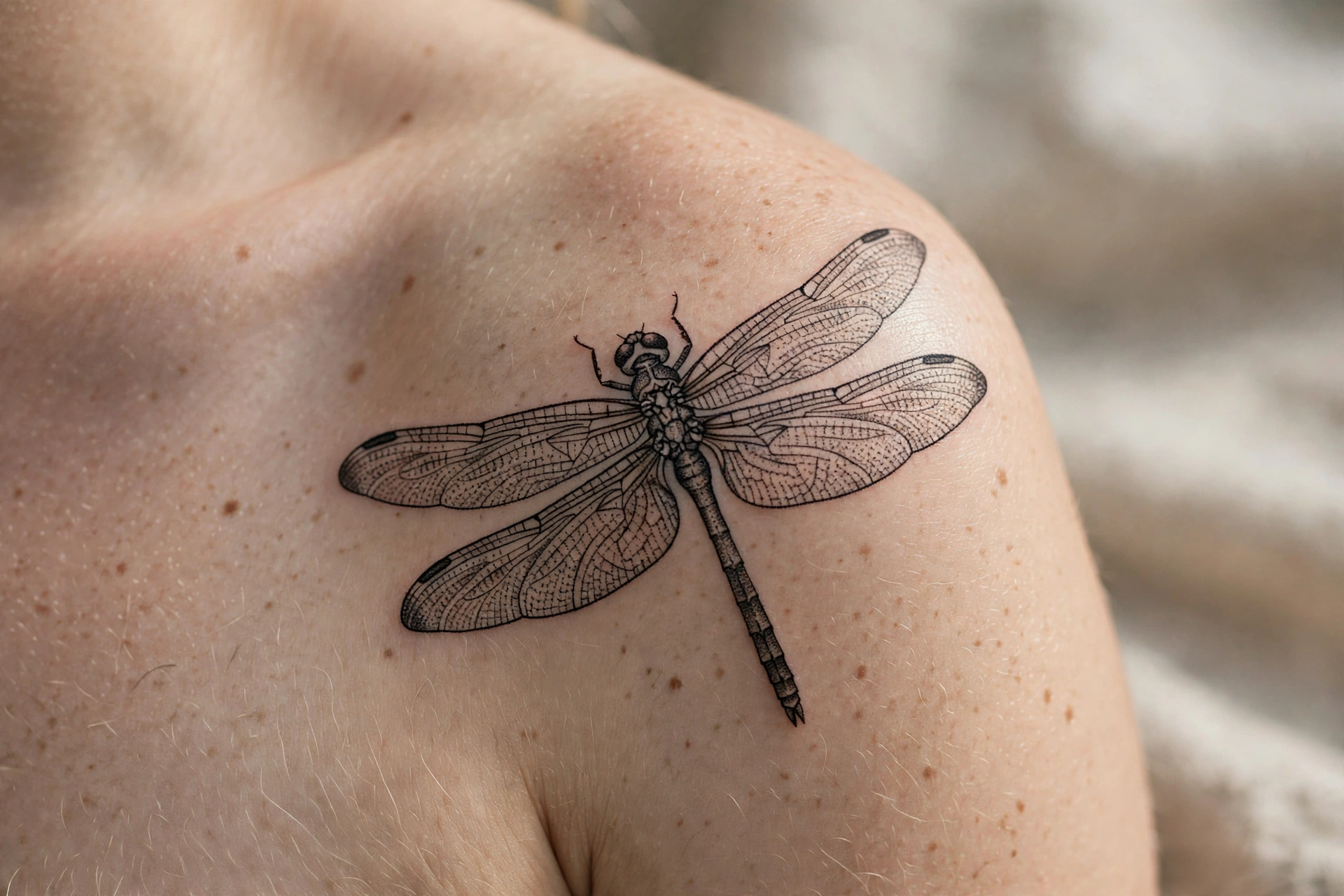
Dotwork builds the dragonfly out of thousands of tiny dots, giving the wings a soft, almost dusty texture that shading alone cannot match. It means patience and detail — a transformation built slowly, dot by dot. It suits the shoulder or thigh. Downside: dotwork takes longer per square inch than linework, so even a small piece can run a longer session.
5. Geometric Dragonfly

Sharp triangles and clean facets turn the dragonfly into a piece of modern art. The geometric dragonfly means balance and deliberate change — transformation you planned, not change that happened to you. It is made for the forearm, where the angles stay readable. Downside: geometry punishes asymmetry, so the stencil placement has to be perfect before the needle starts.
6. Simple Outline Dragonfly
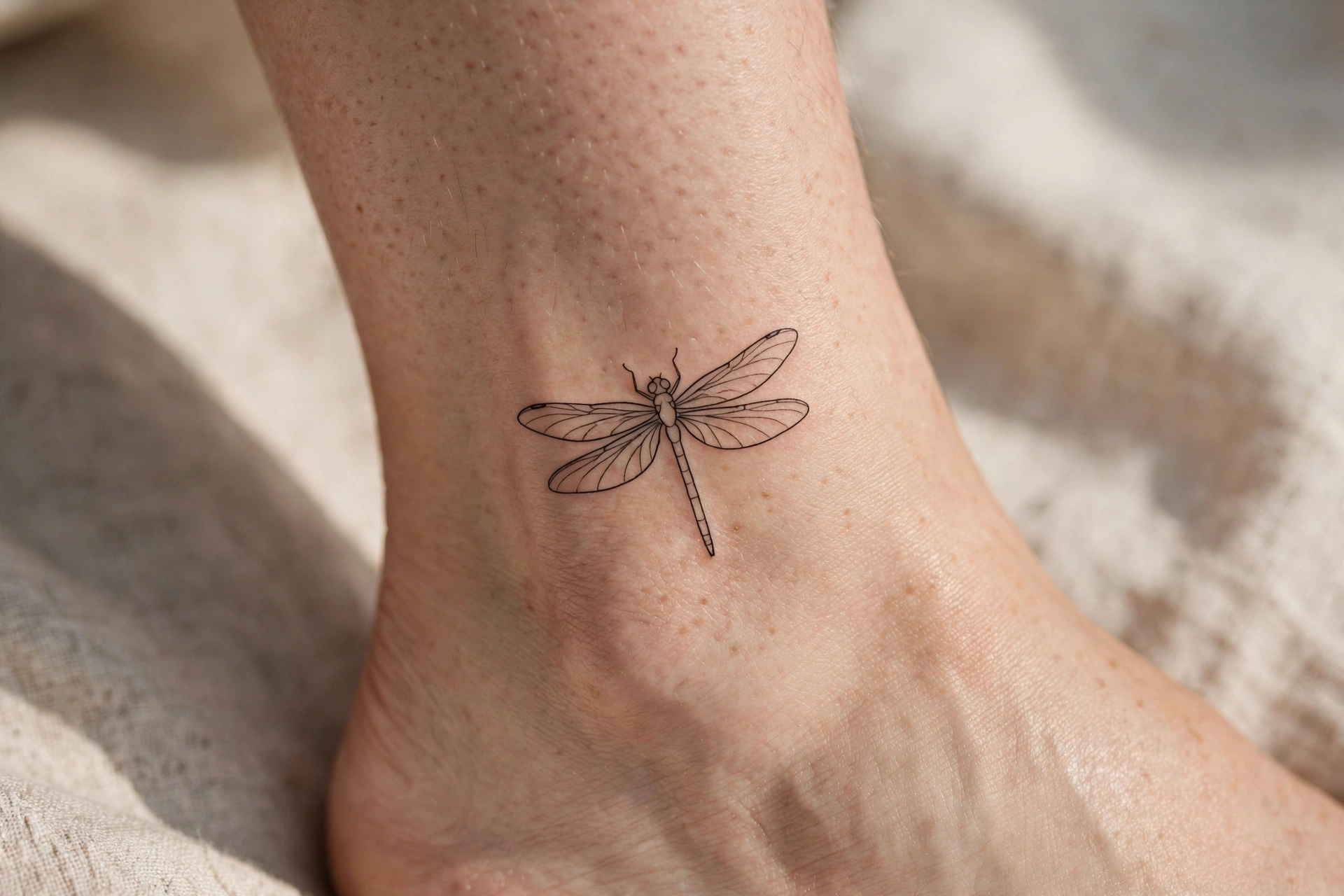
Just the outline, no fill: the simplest dragonfly tattoo you can get, and often the most elegant. It means lightness and freedom — the dragonfly reduced to its flight path. It is perfect for the ankle or wrist. Downside: at very small sizes an outline-only design can look unfinished to other eyes, so keep it at least an inch and a half wide.
7. Micro Dragonfly on the Ankle
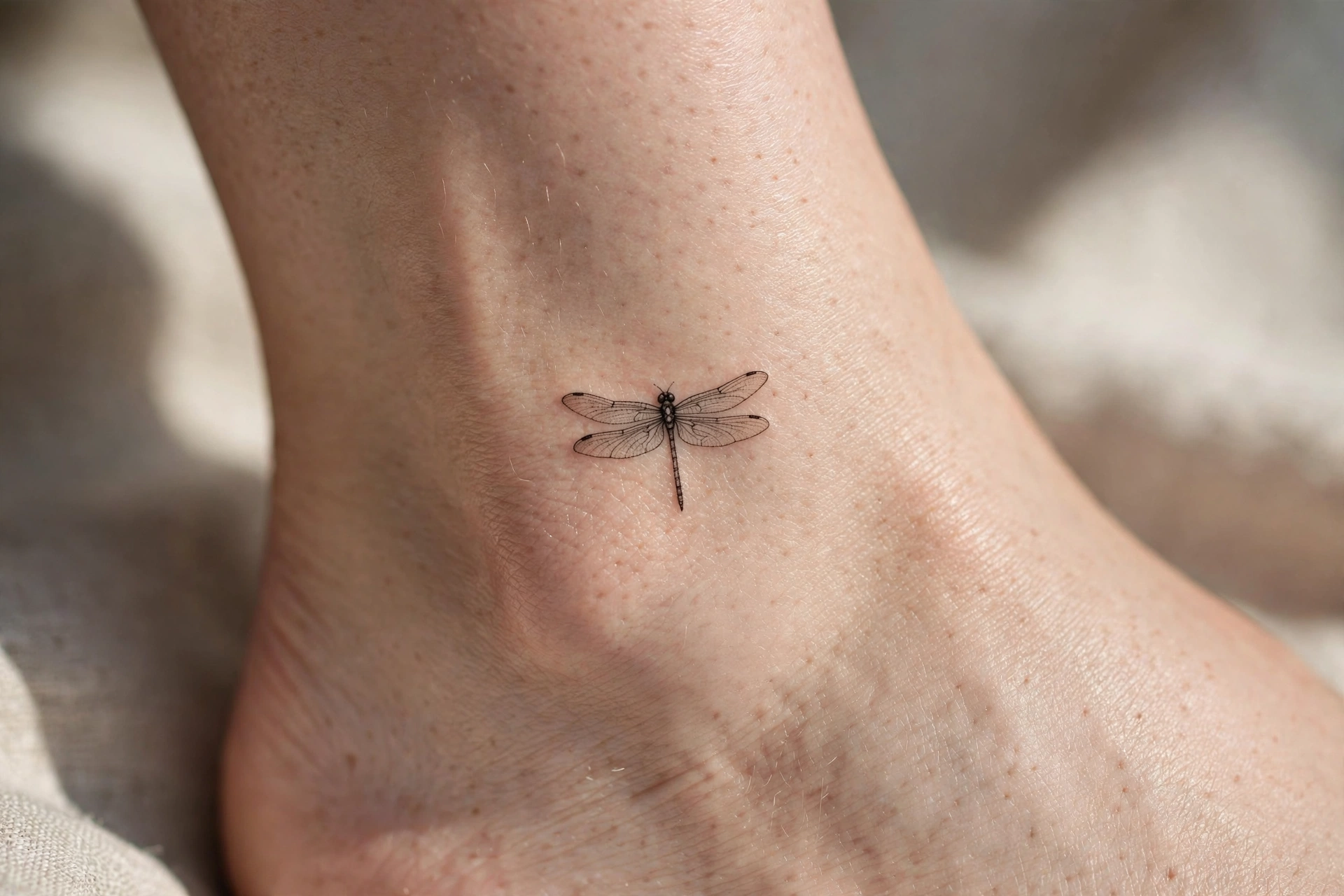
Barely an inch wide, the micro dragonfly on the ankle is a secret tattoo: yours first, everyone else’s second. It means a private transformation — a chapter you do not need to explain. Downside: ankle skin is thin and bony (around 6–7/10 pain), and micro detail blurs sooner than larger work, so keep the design simple.
8. Tiny Dragonfly Behind the Ear
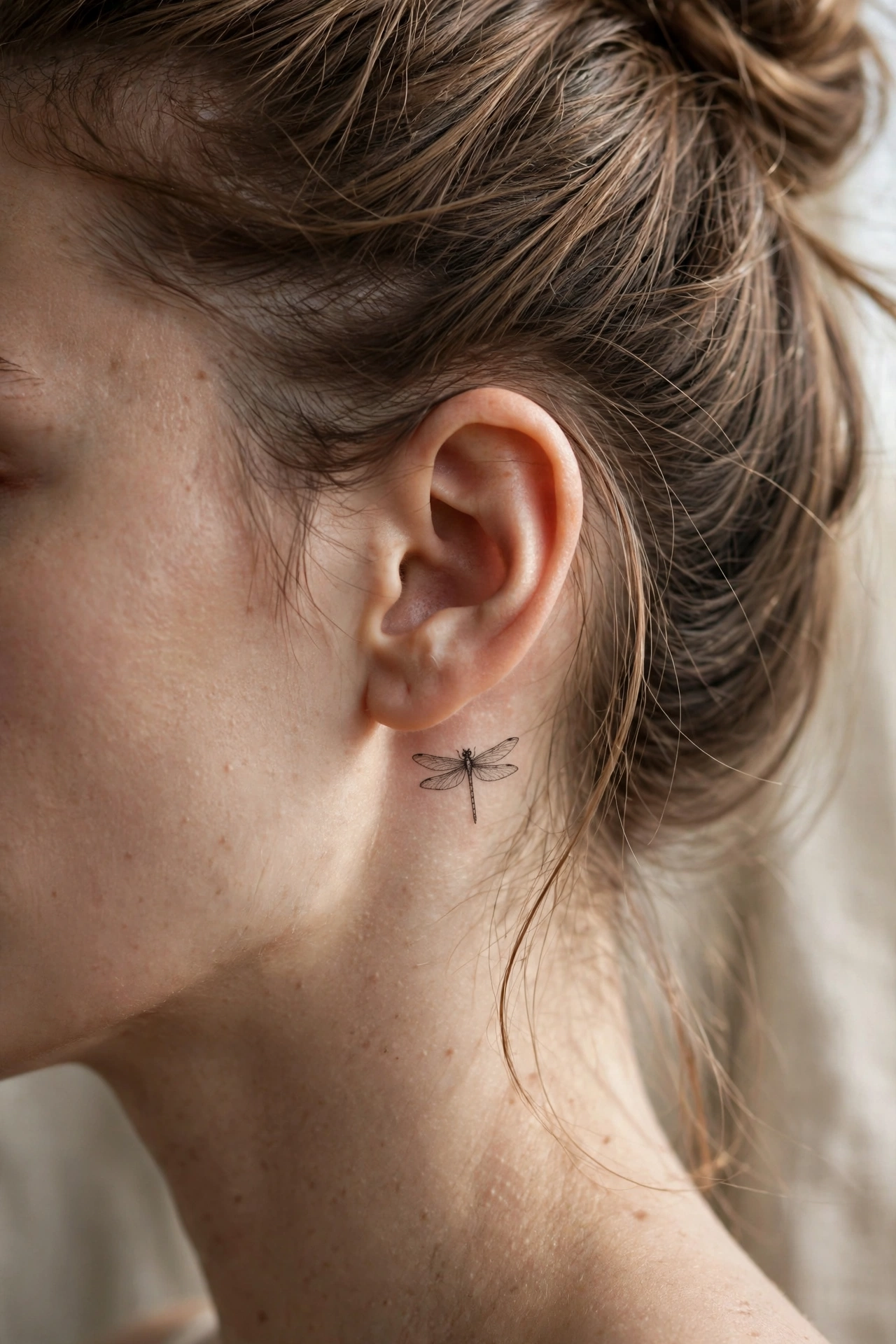
Behind the ear is the dragonfly’s natural hiding place: visible when your hair is up, invisible when it is down. It means transformation you reveal on your own terms. It is also one of the quickest tattoos to get — often under an hour. Downside: the skin behind the ear is thin and the area fades faster with sun and hair products, so expect earlier fading than a forearm piece.
Watercolor & Colour Dragonfly Tattoos
This is where the dragonfly’s famous wings do the talking — iridescent, painterly colour that looks like it just flew off a watercolour page.
9. Watercolor Blue Dragonfly
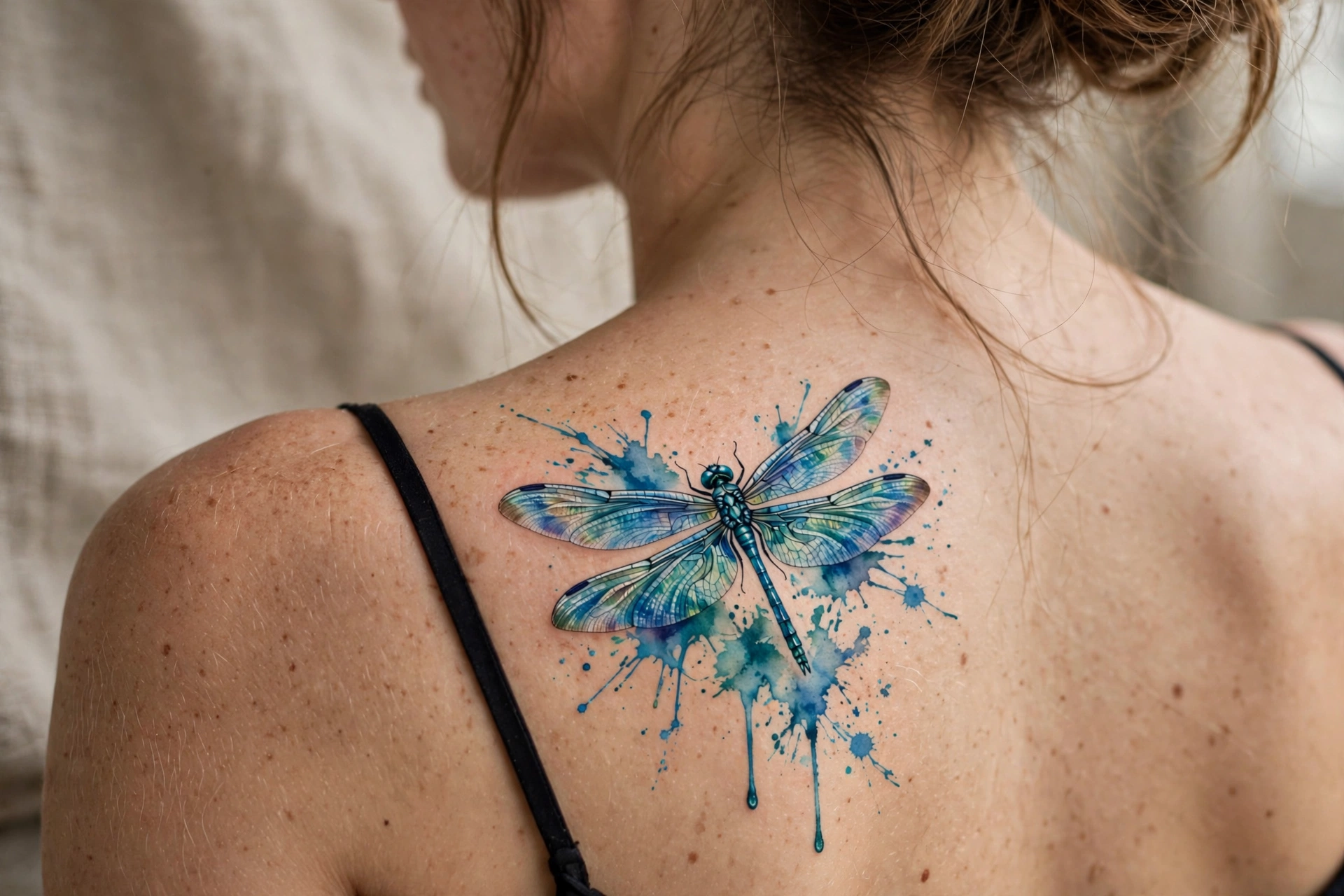
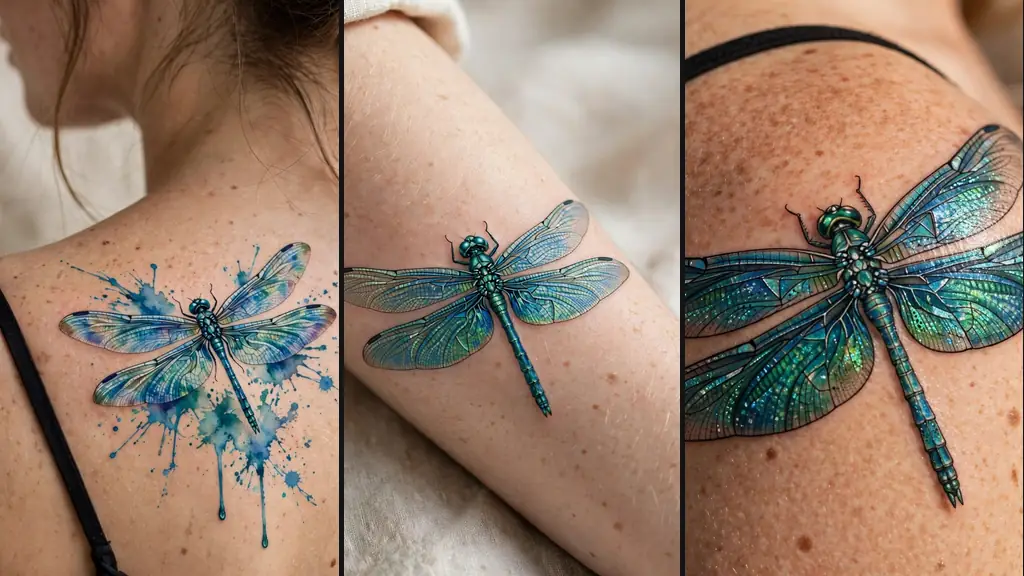
Flowing blue and teal washes mimic the real insect’s iridescent wings, and the watercolor blue dragonfly is the single most requested dragonfly design in studios. It means calm, clarity, and emotional depth. It suits the shoulder blade, where the colour has room to bleed beautifully. Downside: watercolor fades faster than blackwork, so sunscreen and touch-ups are part of the deal.
10. Watercolor Rainbow Dragonfly
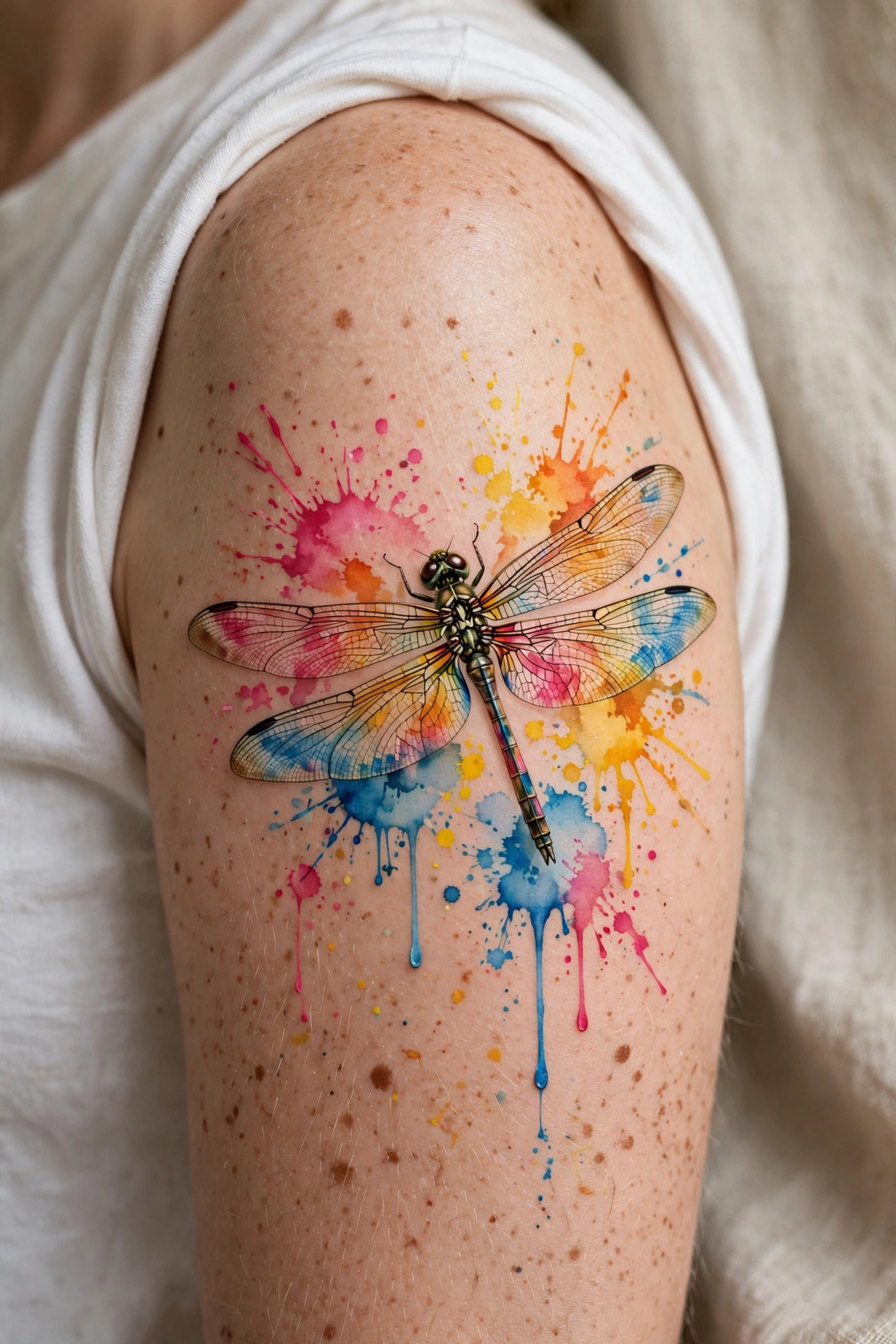
Every colour at once: the rainbow dragonfly means joy, hope, and a life lived in full colour after a grey chapter. It pops on the upper arm or thigh. If you want colour that stays readable for years, ask your artist to anchor the splashes with a thin dark outline — pure wash without any line is the fastest to soften. Downside: rainbow pieces are the most expensive small designs here because each colour is a separate pass.
11. Pastel Pink Dragonfly
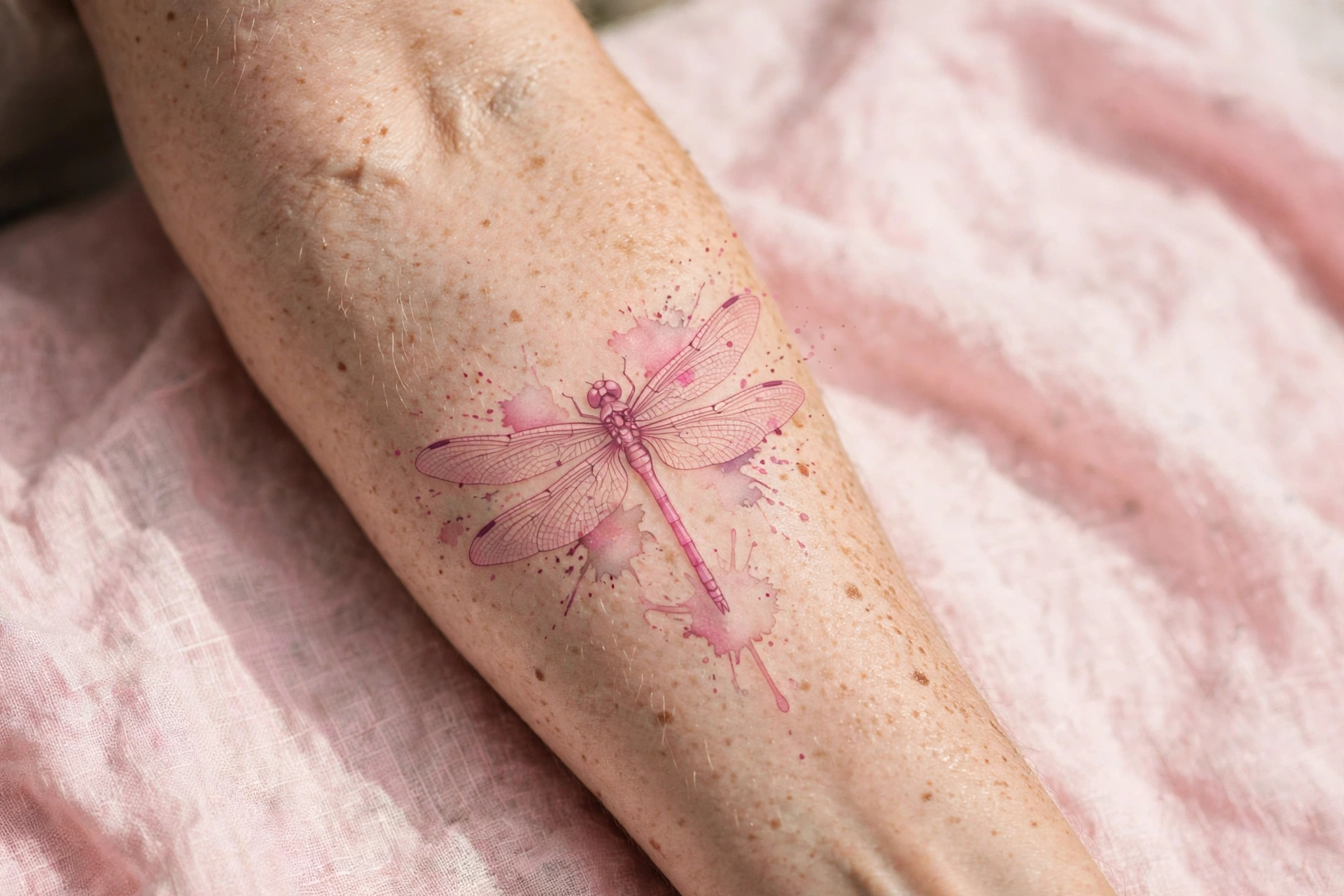
Soft pink washes make this the gentlest dragonfly in the guide — tenderness, new love, and a softer kind of strength. It is a favourite for the forearm or wrist. Downside: pastel ink is the palest ink there is, so it will lighten noticeably within a few years; what starts as pink may settle into a whisper of colour.
12. Iridescent Blue-Green Dragonfly
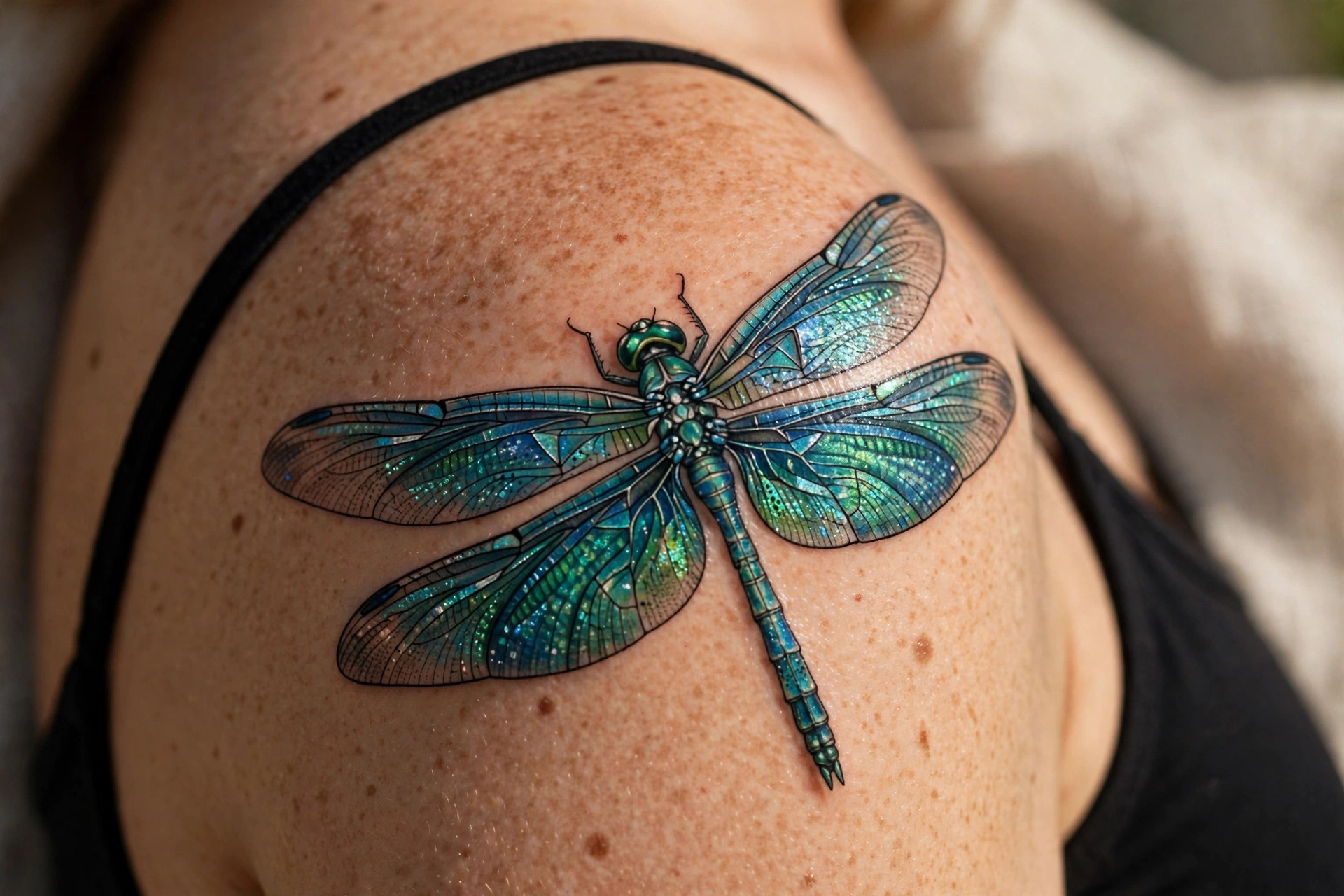
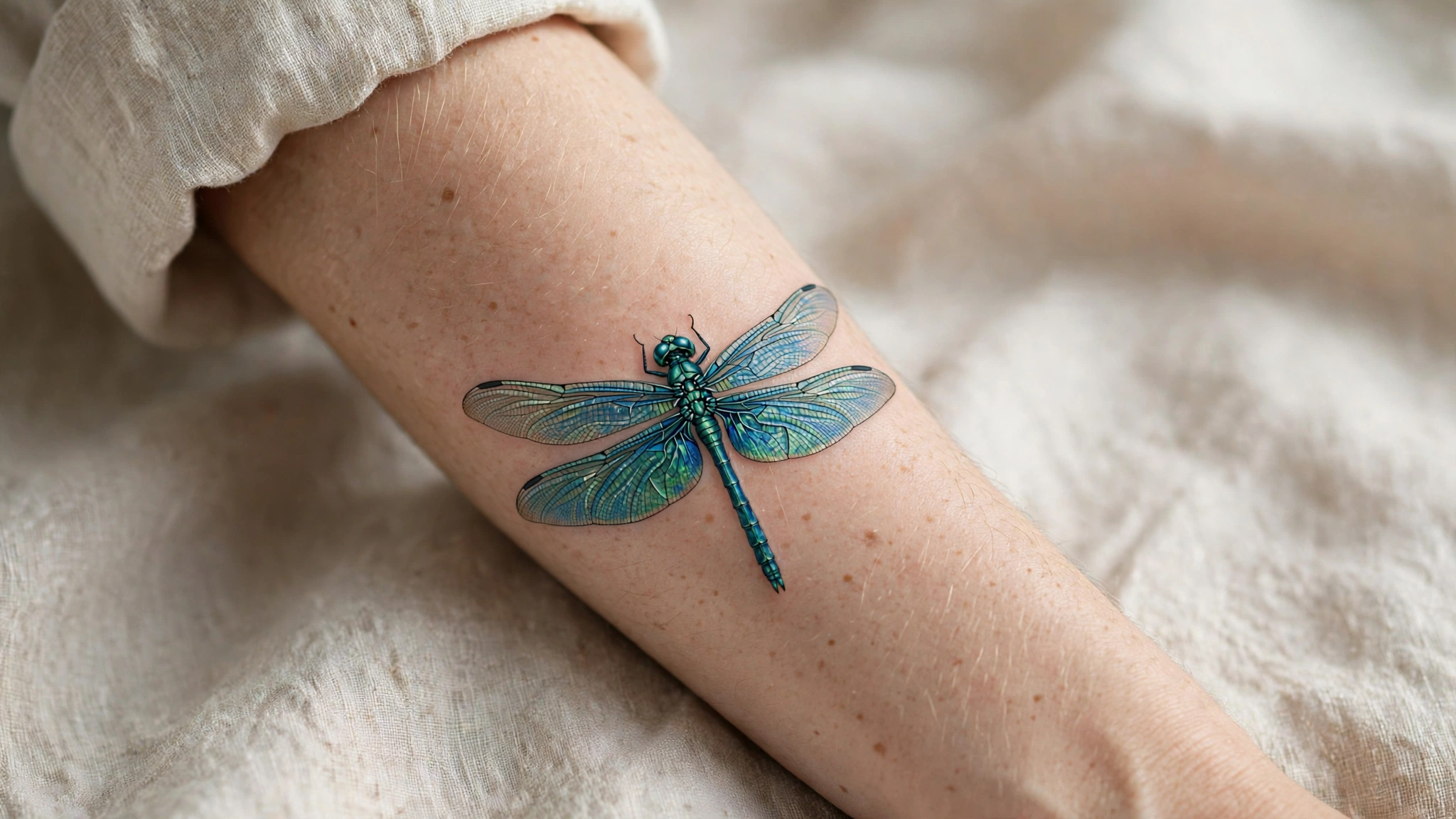
Jewel-toned wings that shift between blue and green in the light — the iridescent dragonfly is the closest ink gets to the real insect. It means adaptability and emotional balance, the ability to shine differently in different light. It suits the shoulder, where the wingspan catches the eye. Downside: iridescence is hard to photograph and harder to tattoo; see healed photos of the artist’s colour work before you book.
13. Watercolor Splash Dragonfly

Paint splatter and loose splashes around the dragonfly make this one feel alive, mid-flight, unfinished in the best way. It means creativity and going with the flow — change that is still in motion. It works on the upper back or thigh. Downside: splash placement is improvisational, so the final piece will differ from the reference photo; if you need exact control, this is not your style.
14. Galaxy-Winged Dragonfly
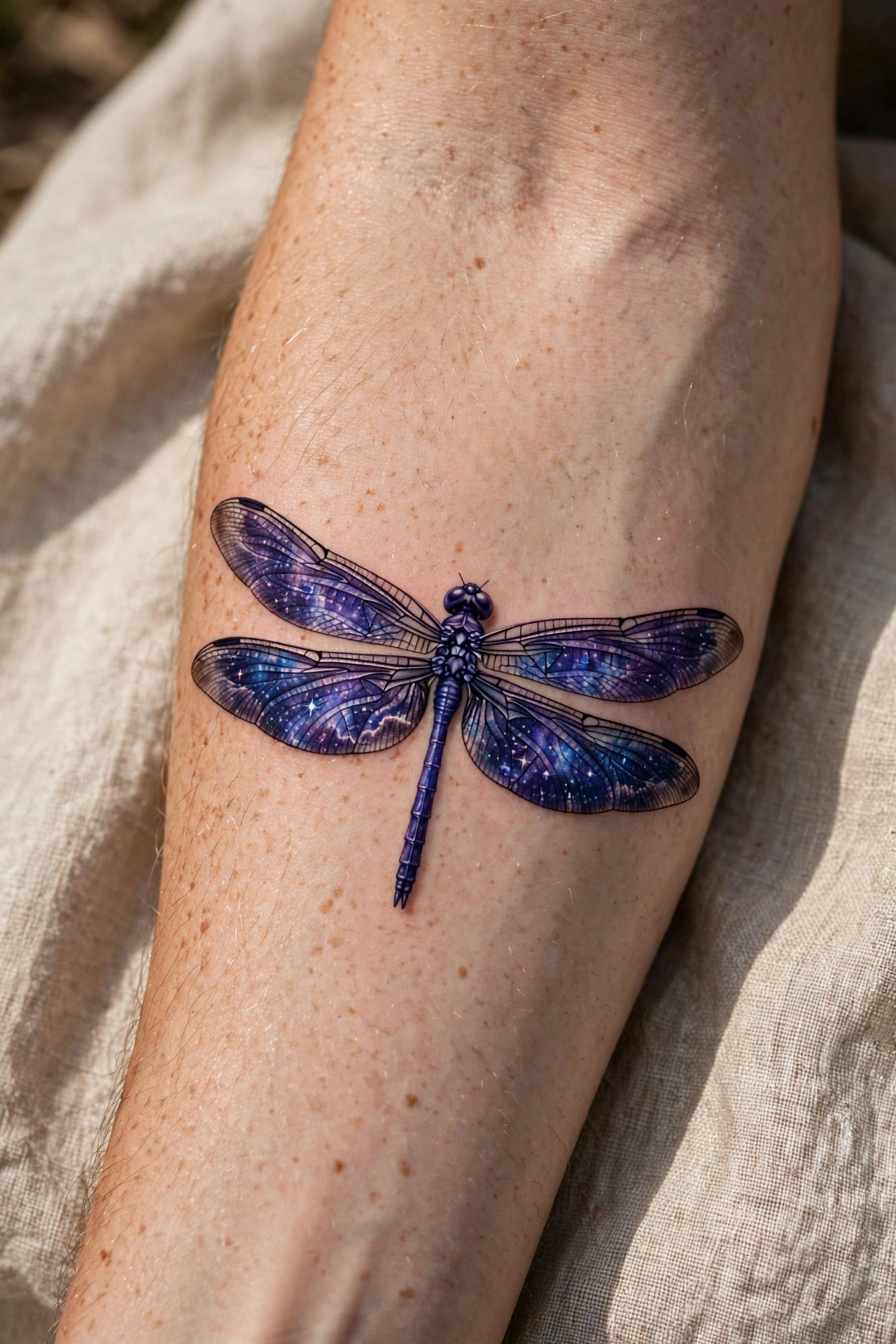
Deep purple and blue wings scattered with tiny stars turn the dragonfly into a piece of the night sky. The galaxy dragonfly means mystery, dreams, and transformation on a cosmic scale — the biggest change of your life, worn small. It fits the forearm. Downside: dark galaxy backgrounds can swallow the dragonfly’s shape if the contrast is wrong, so the body needs to stay lighter than the wings.
15. Sunset Gradient Dragonfly
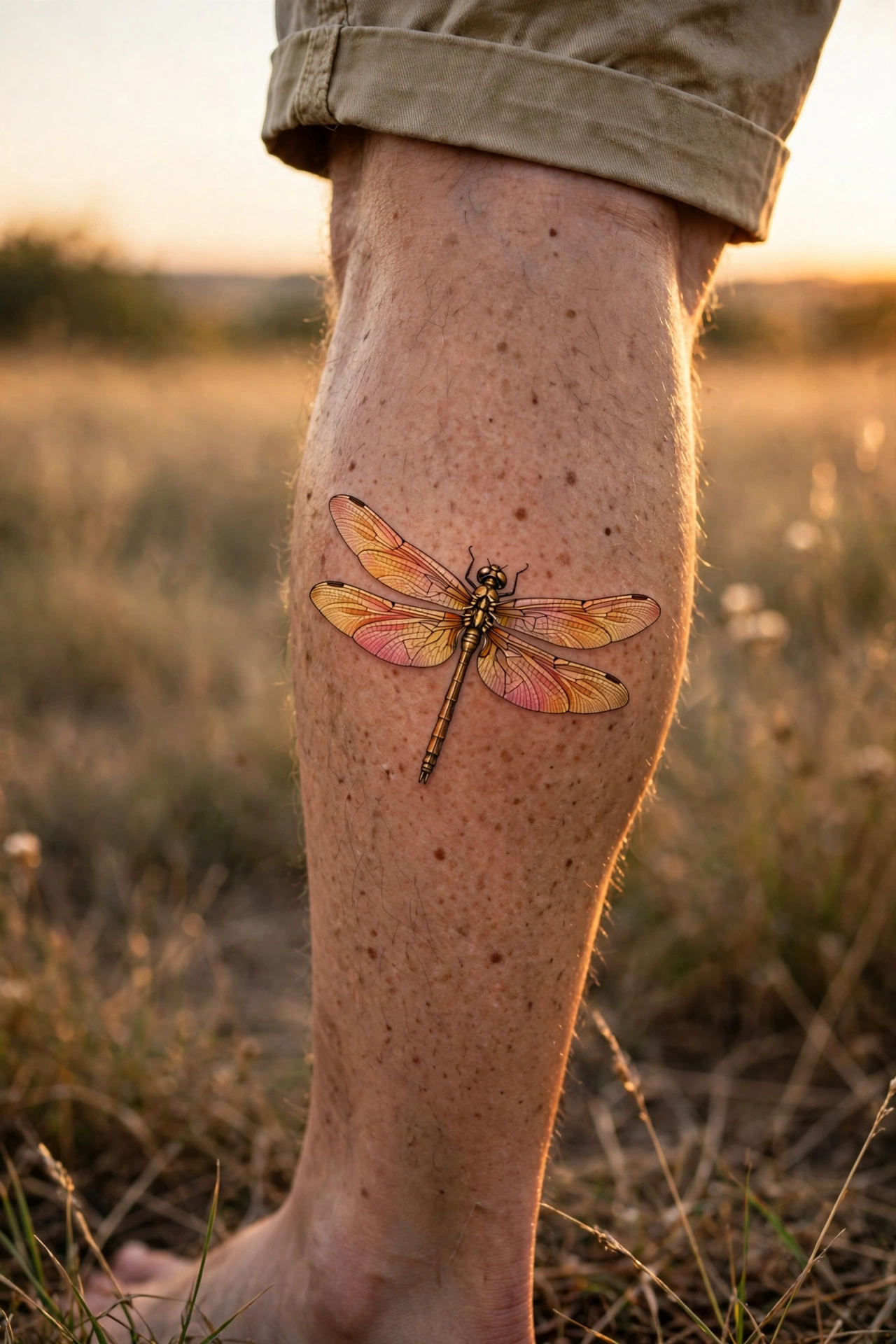
Warm orange, pink, and gold wings like the last hour of daylight: the sunset dragonfly means endings that were beautiful, and the courage to let a chapter close. It suits the calf, where the long wings follow the leg. Downside: warm colours fade unevenly in the sun, so this one needs sunscreen discipline more than most.
16. Neon Dragonfly
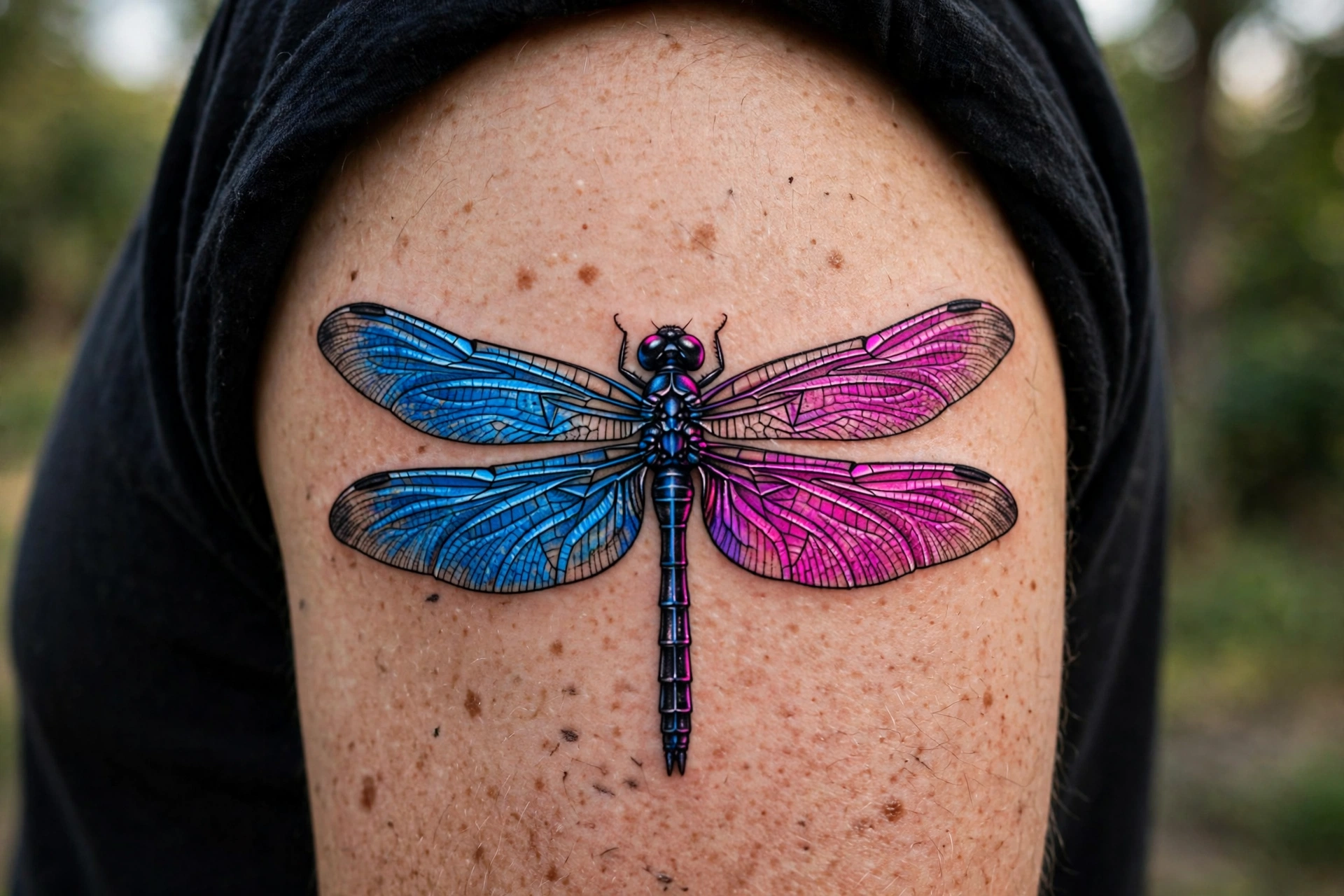
Electric blue and magenta wings that look lit from within — the neon dragonfly is for people whose transformation was loud, not quiet. It means energy, confidence, and refusing to blend in. It pops on the upper arm. Downside: neon-bright ink relies on high-saturation pigment that some skin tones hold less vividly, so ask for a healed-photo check on similar skin first.
Dragonfly Tattoos With Nature
Pair the dragonfly with something else and the meaning doubles — these combinations are where a simple insect becomes a personal story.
17. Dragonfly With a Lotus Flower
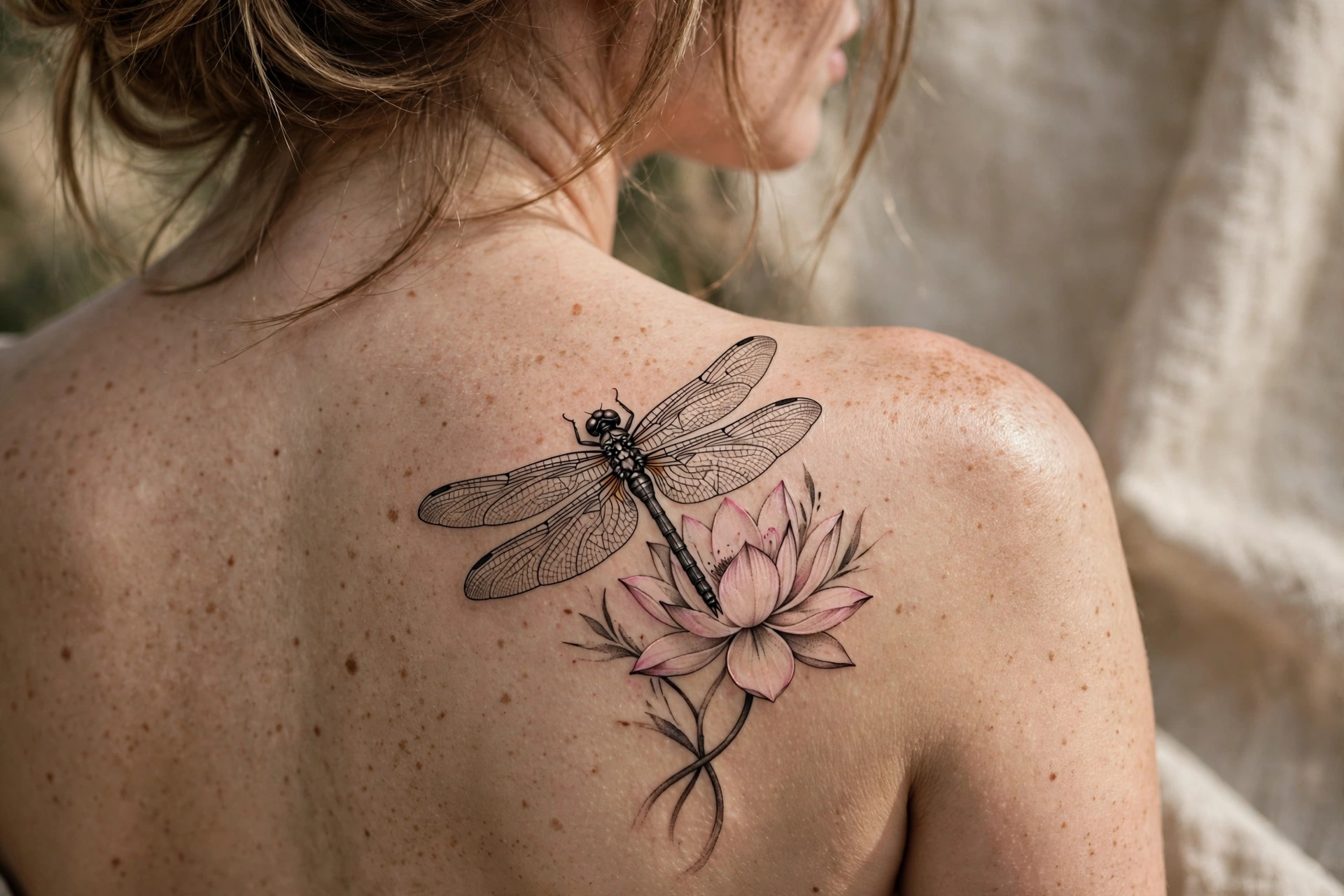
The lotus rises from murky water to bloom clean, and the dragonfly rises from water to air — together they are the strongest transformation pairing in tattooing. It means rising from a hard chapter into purity and peace. It suits the shoulder blade, where both subjects have room. Downside: two detailed subjects need a medium size at least, or the lotus petals crowd the wings.
18. Dragonfly With Cherry Blossom
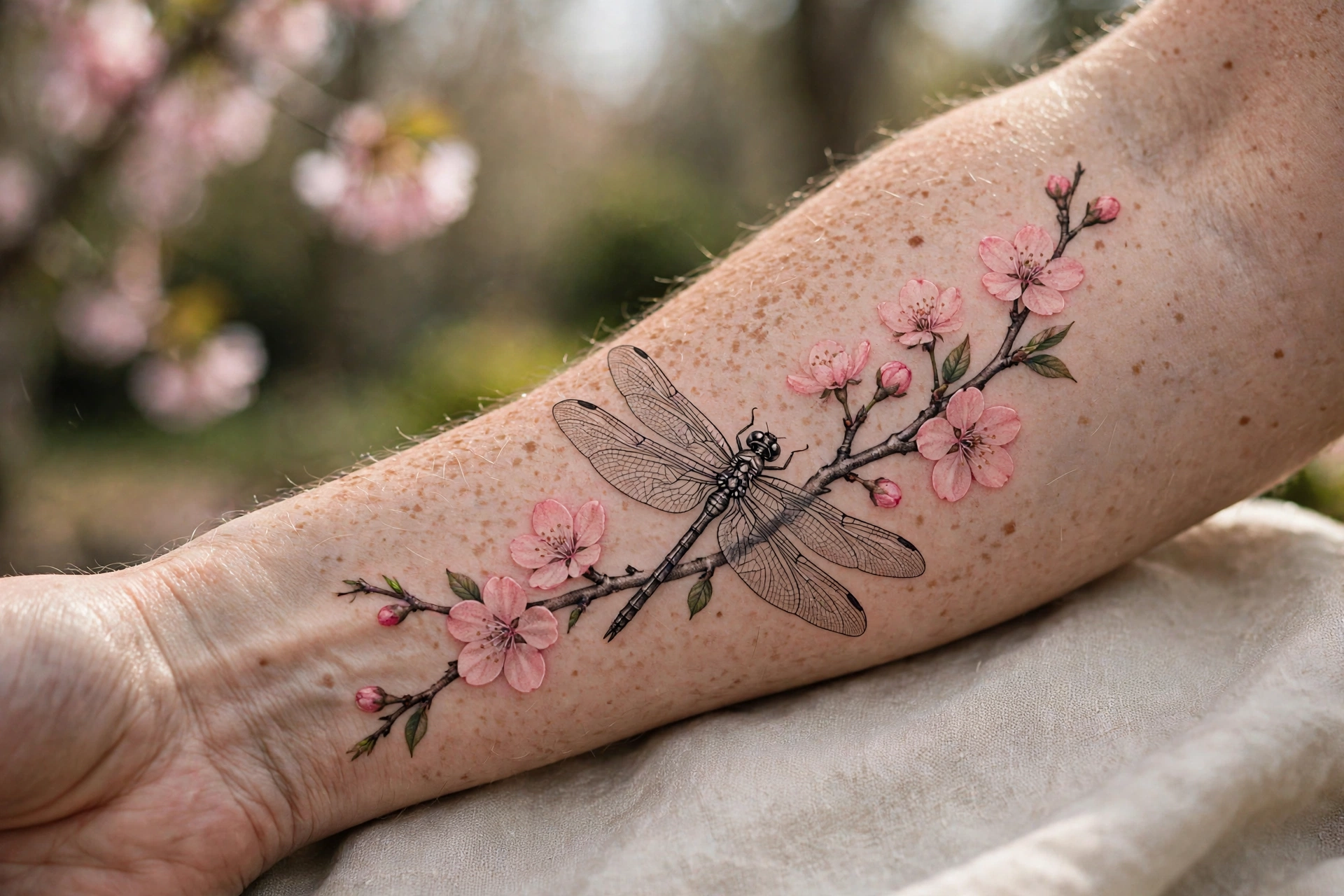
Cherry blossom means life is beautiful because it is brief — and so does the dragonfly, whose adult life lasts only weeks. Together they are a reminder to love the moment while it lasts. This pairing fits the forearm beautifully. Downside: blossom petals are small and pink, the first details to fade, so keep the branch bold enough to survive.
19. Dragonfly With a Lavender Sprig
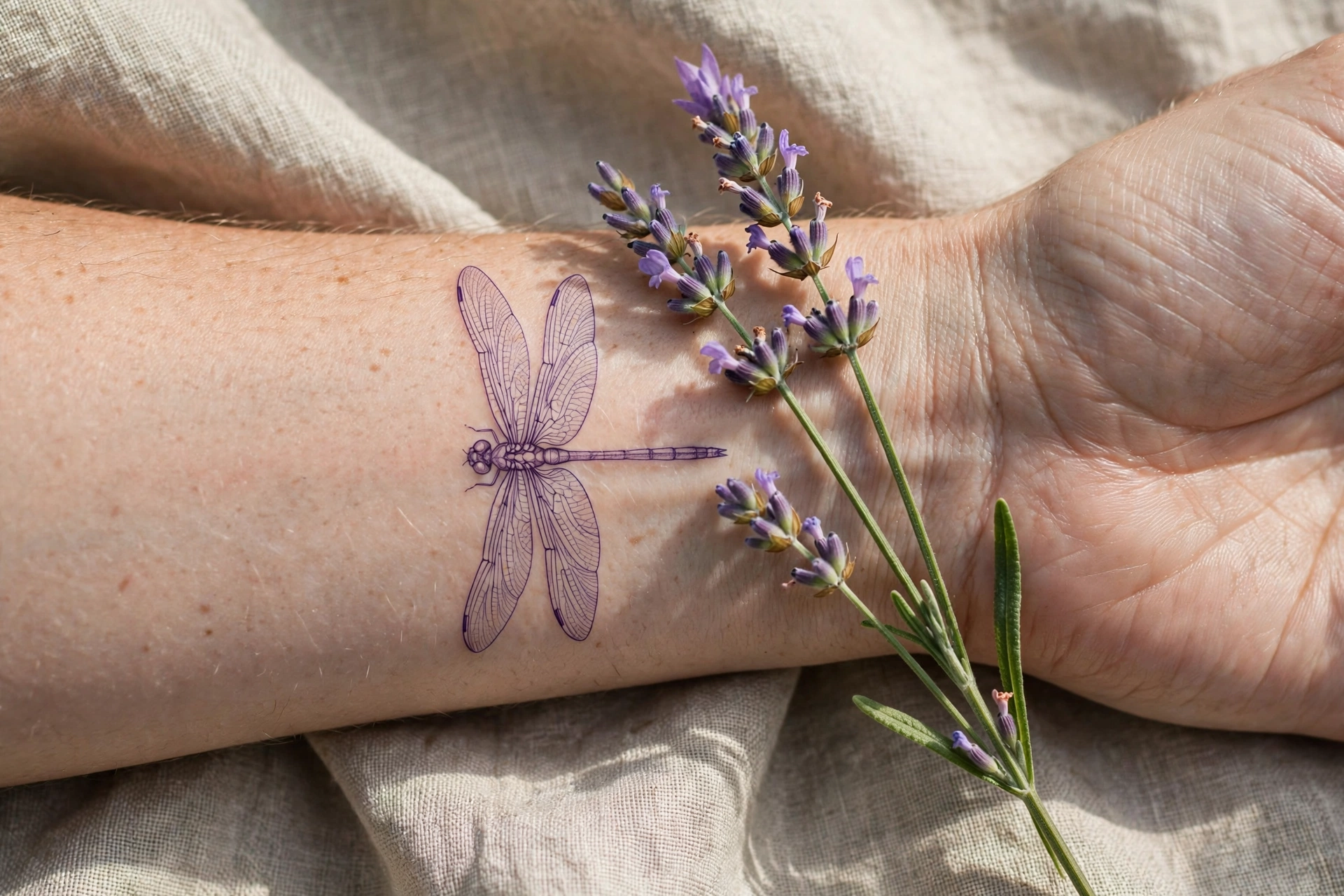
Lavender means calm, devotion, and healing, and a fine-line sprig beside a dragonfly turns the design into a small act of self-care. It is perfect for the wrist, where you will actually see it on hard days. Downside: lavender stems are thin by nature, so the linework needs to be slightly bolder than the reference photo or it will vanish early.
20. Dragonfly Among Wildflowers
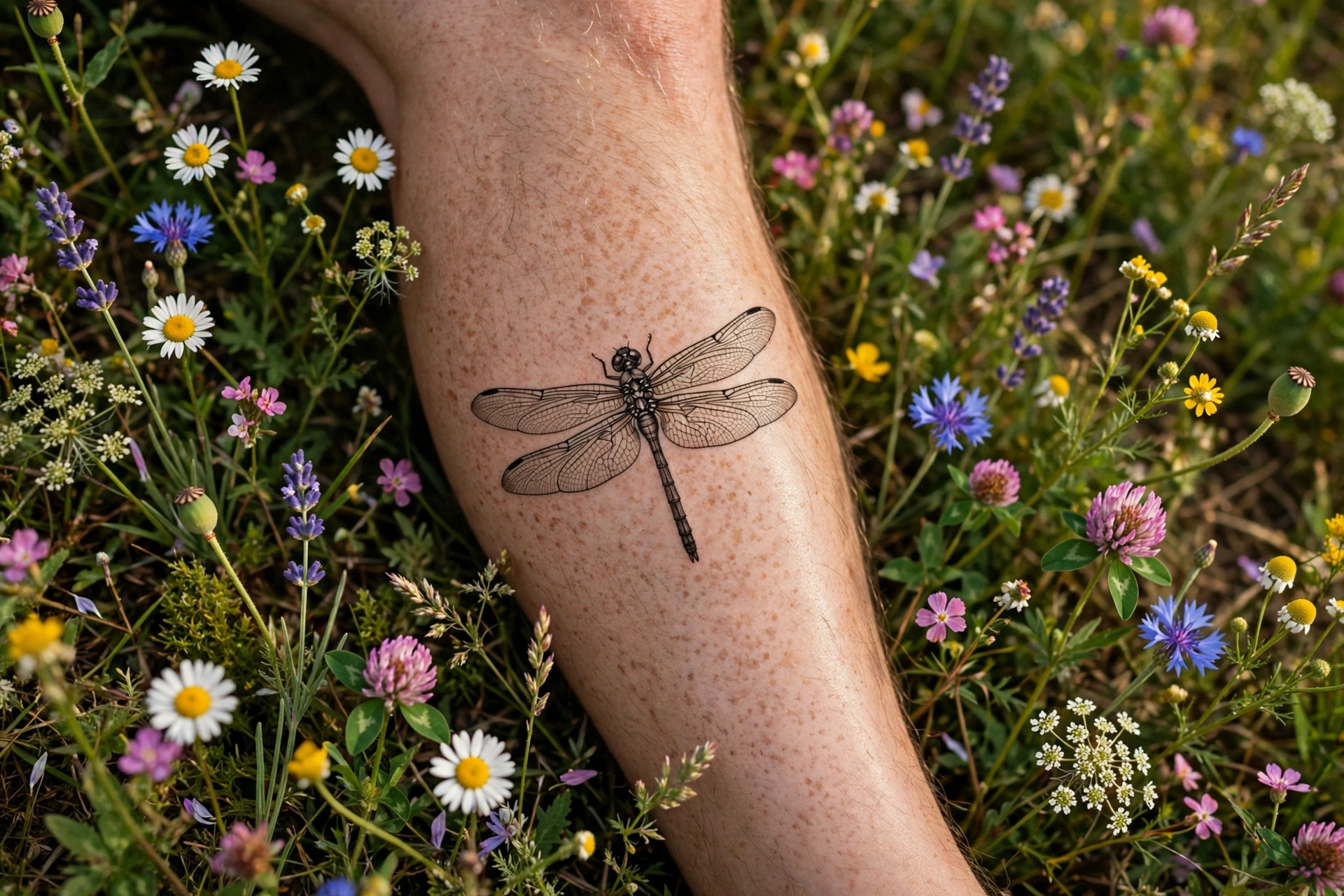
A meadow scene in miniature: the dragonfly hovering over wildflowers means freedom, joy, and a life that grew wild instead of planned. It suits the calf, where the vertical meadow can run. Downside: busy flower scenes blur fastest at small sizes, so this one needs at least a medium size to stay readable in ten years.
21. Dragonfly With a Crescent Moon
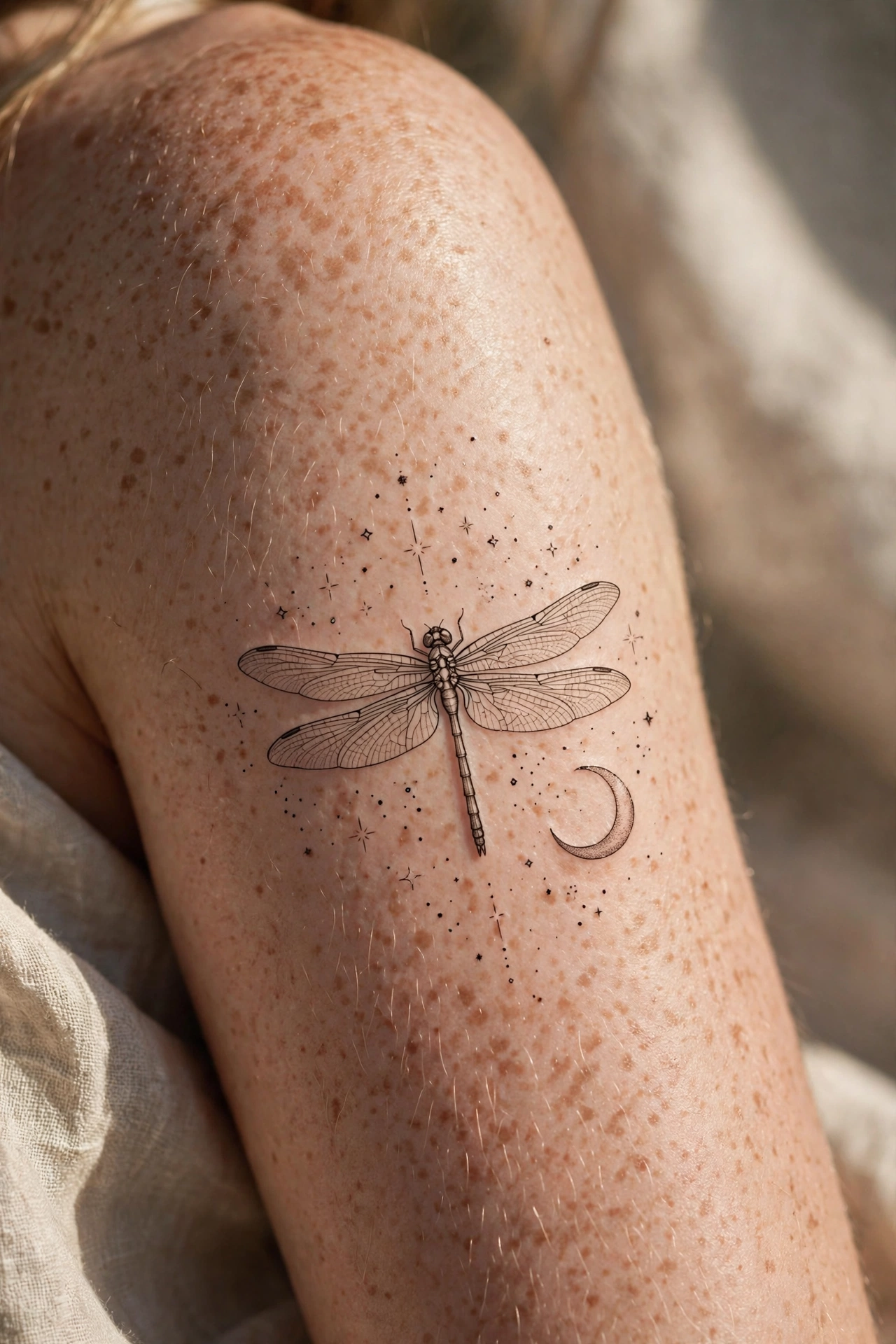
The crescent moon means intuition, cycles, and becoming — the phase of the moon that is still growing. Paired with a dragonfly it doubles the message of change in progress. It works on the upper arm. If moon symbolism speaks to you, our small meaningful tattoos collection has more moon-and-nature pairings. Downside: thin crescent tips are fragile, so ask for slightly rounded tips that hold their shape.
22. Dragonfly With the Sun
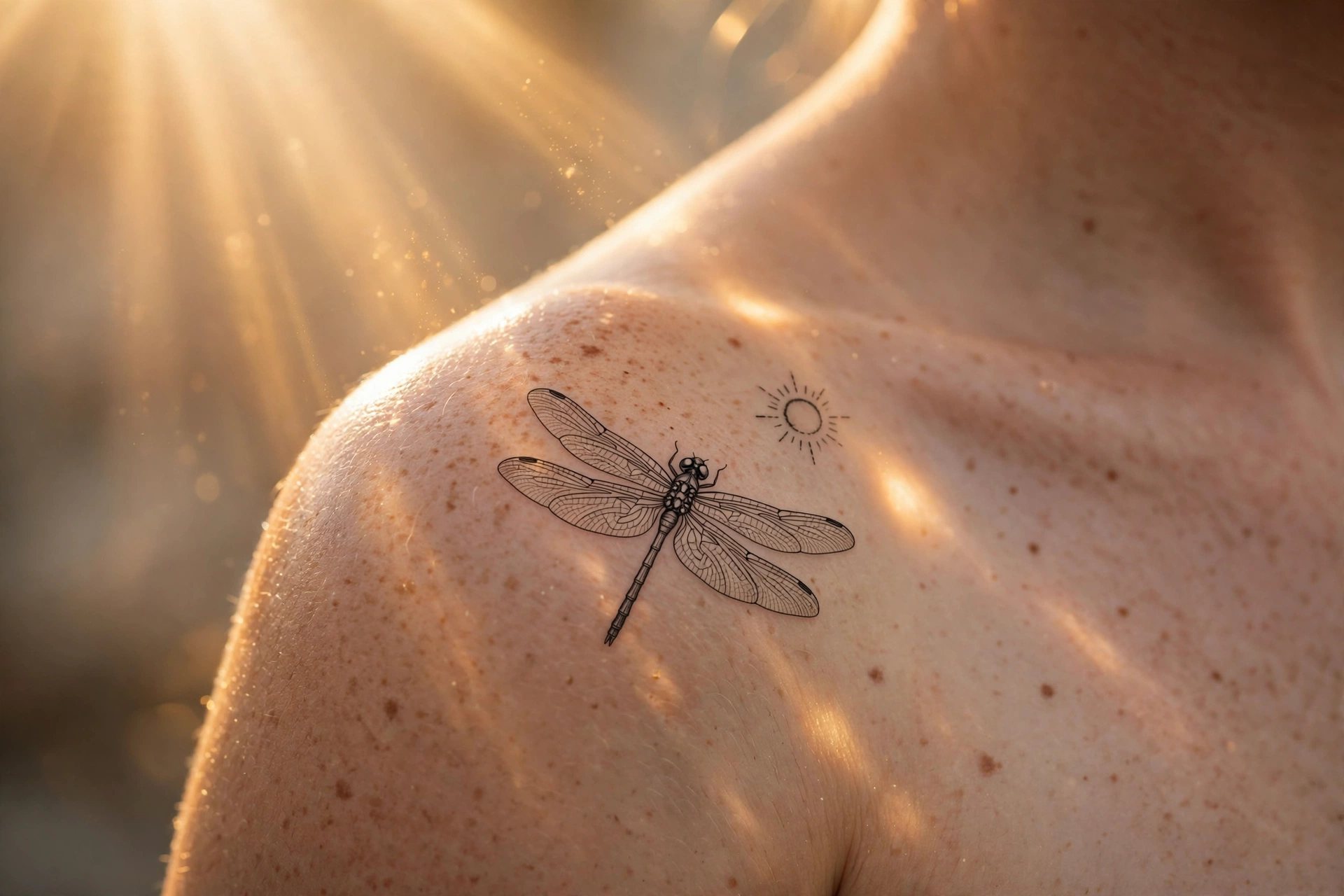
Sun and dragonfly together mean energy, optimism, and a new day after a long night — the transformation, and the light it led to. It suits the shoulder. Downside: sun rays add a lot of fine lines around the dragonfly, so the composition can get busy; a simple ray pattern ages better than a detailed one.
23. Dragonfly and Butterfly Together
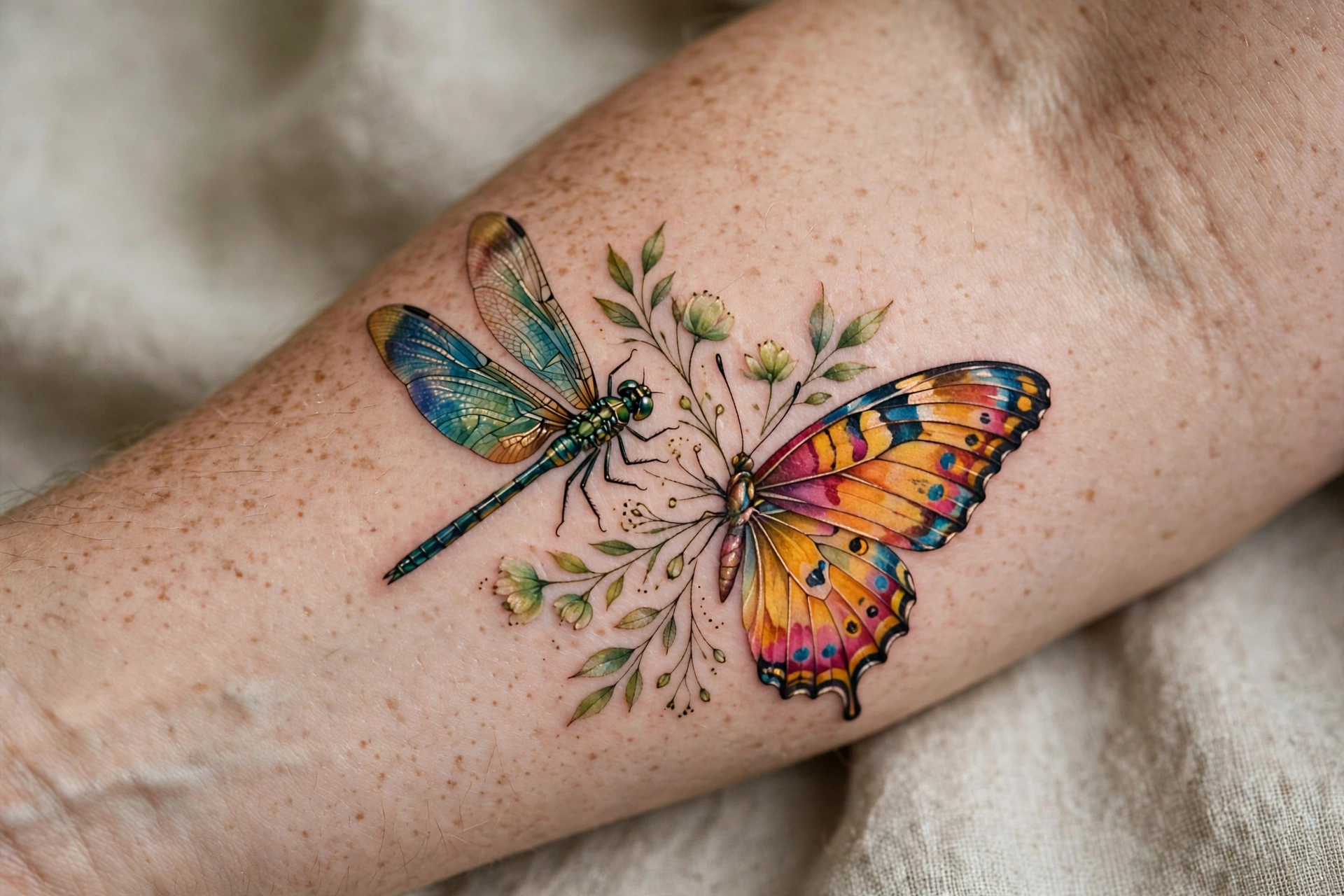
Two metamorphoses in one design: the butterfly means rebirth, the dragonfly means adaptability, and together they mean total transformation — a life changed twice over. It is a powerful choice for marking recovery or a major reinvention, and it fits the forearm. For the butterfly half of the story, our butterfly tattoo meanings guide goes deep on every colour and species. Downside: two winged insects compete for attention, so one should be clearly larger or bolder than the other.
24. Dragonfly on Pond Reeds
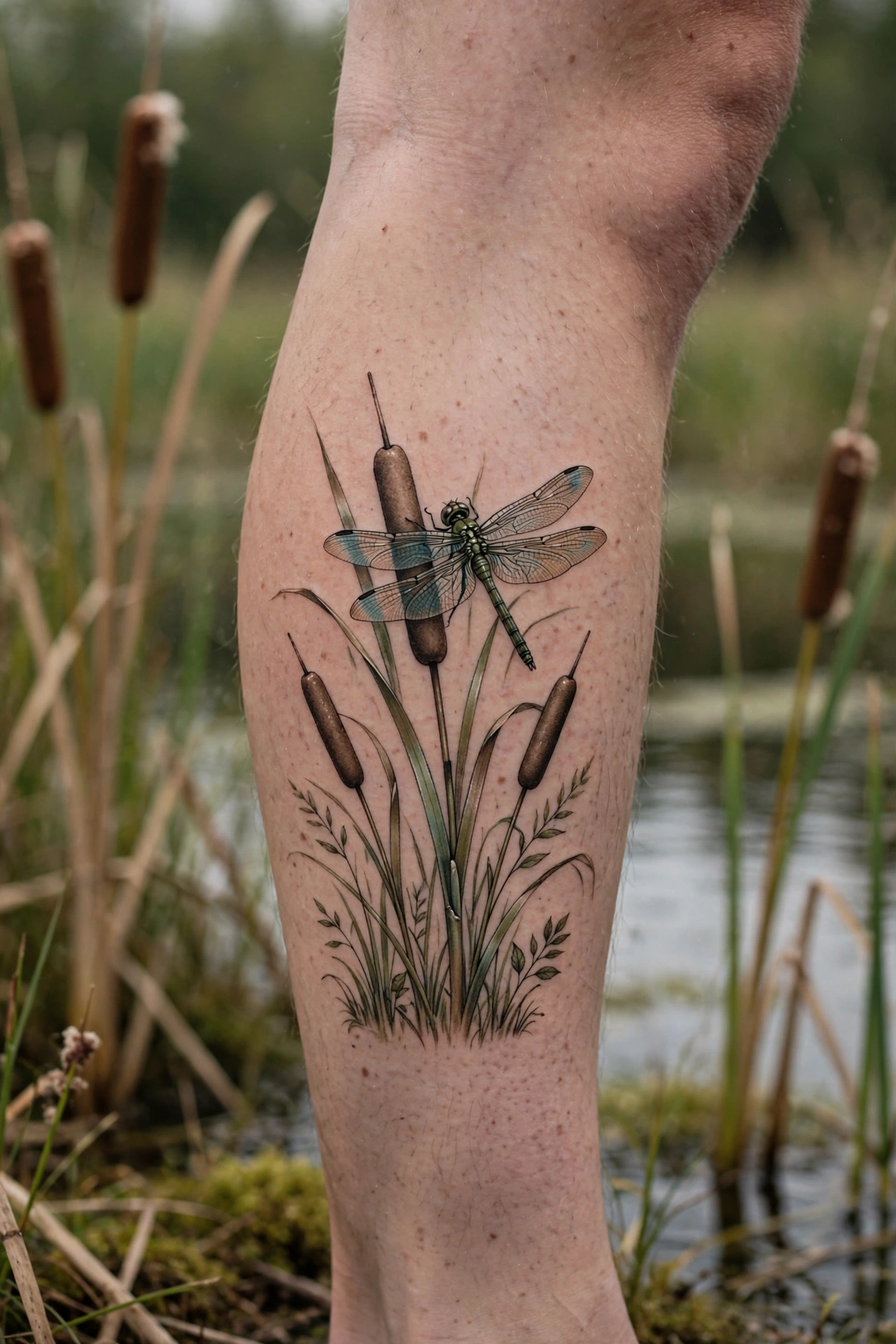
A dragonfly perched on cattails and reeds is the insect in its real home — water, stillness, and the patience of waiting for the right moment to fly. It means emotional depth and quiet strength. It suits the calf, where the vertical reeds follow the leg. Downside: muted green scenes can look muddy on some skin tones, so ask your artist to keep the dragonfly itself high-contrast against the reeds.
Bold & Ornamental Dragonfly Tattoos
When you want the dragonfly to be a statement rather than a whisper, these styles bring the drama.
25. Hyper-Realistic Dragonfly
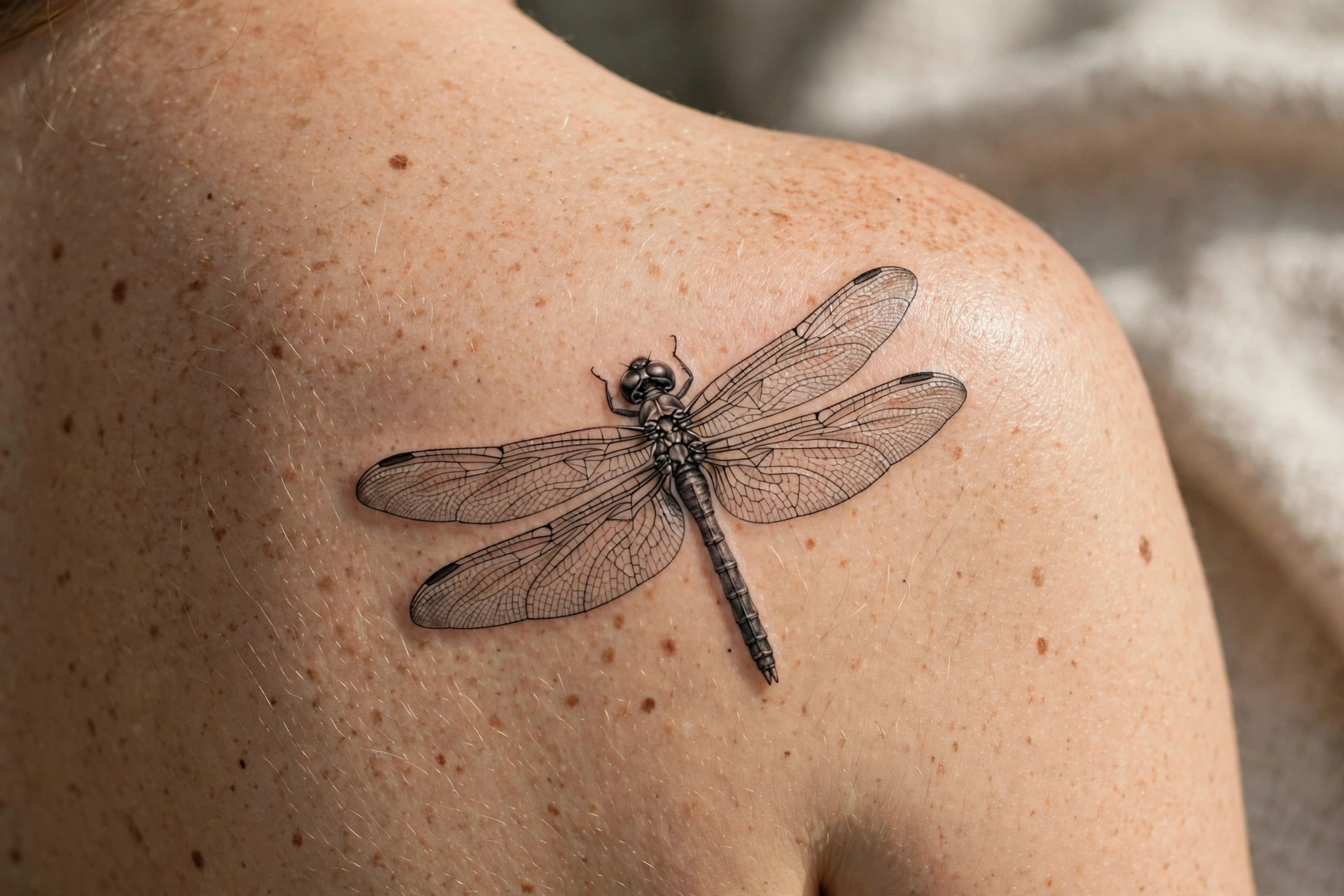
Veined wings, segmented body, light caught on the thorax — the realistic dragonfly is a small masterpiece of patience. It means seeing things exactly as they are: clarity without illusion, which is one of the dragonfly’s oldest meanings. It needs the shoulder blade or thigh to show the detail. Downside: realism is the most expensive style per inch and the most artist-dependent; a mediocre realistic dragonfly looks worse than a simple one.
26. Tribal Dragonfly
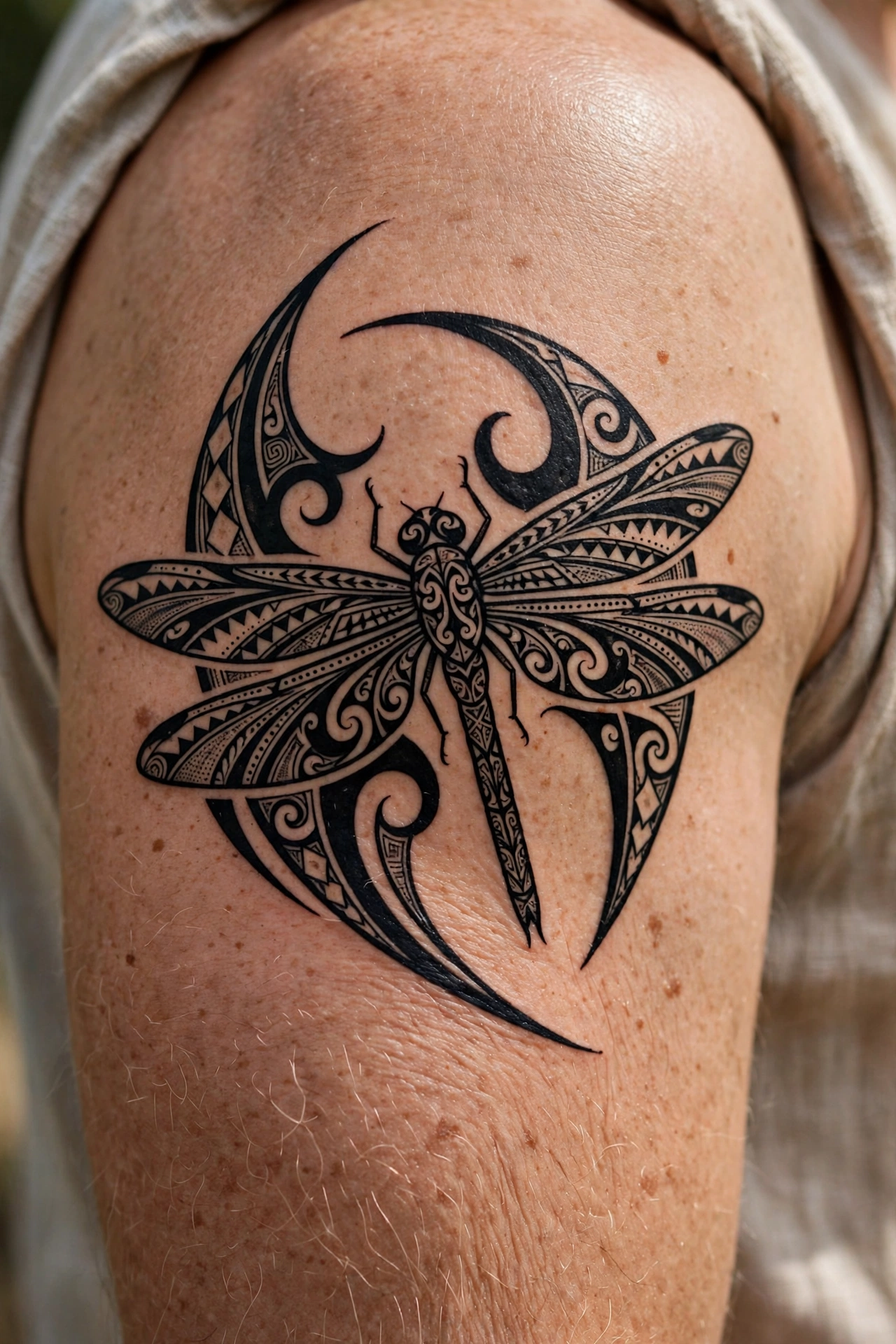
Sweeping black tribal patterns turn the dragonfly into a bold emblem of heritage and power. It means strength and connection to something older than yourself. It suits the upper arm, where the sweeping lines follow the muscle. Downside: tribal is the least flexible style for later additions — its bold shapes dominate whatever you place nearby, so plan the surrounding skin.
27. Mandala Dragonfly
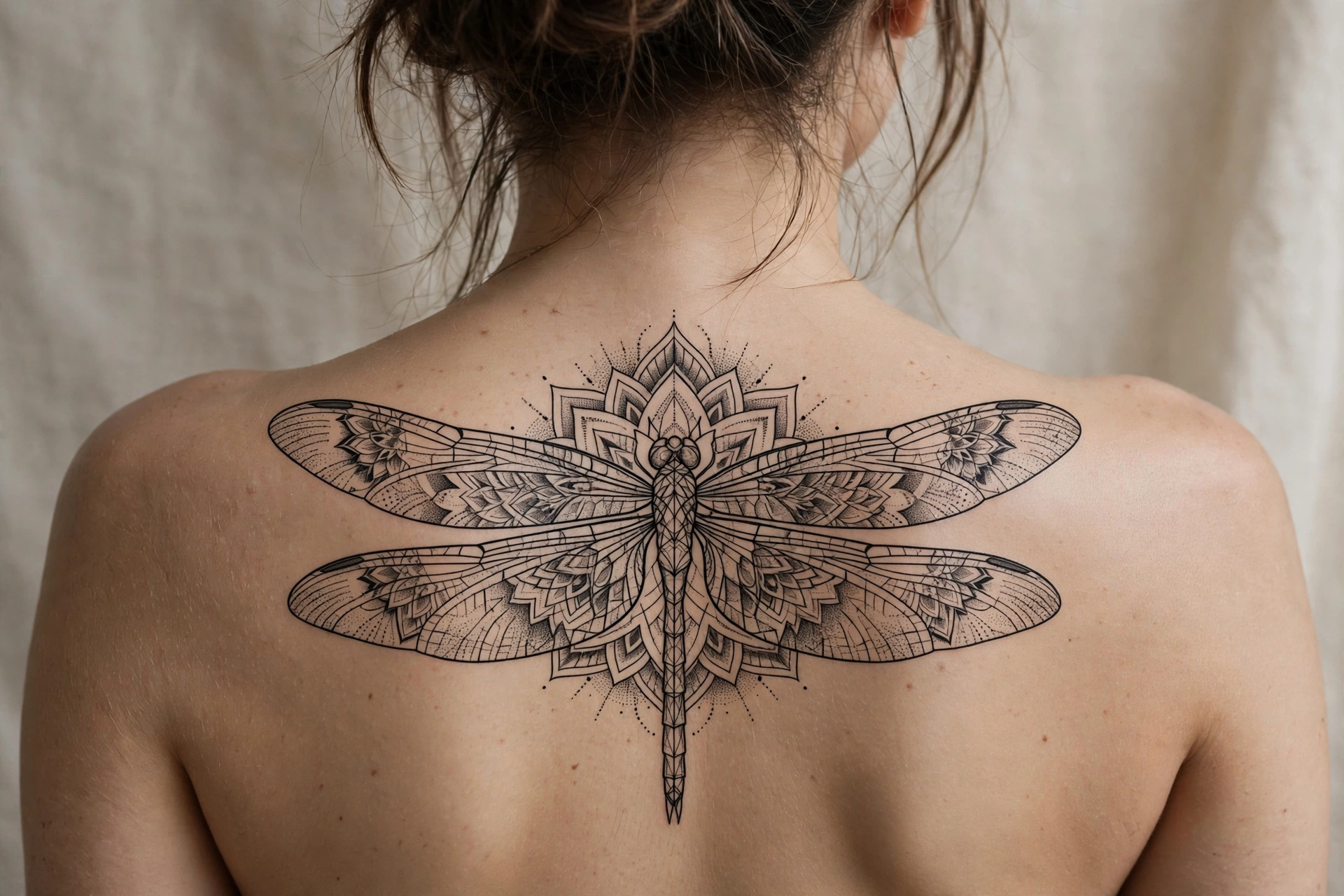
Perfectly symmetrical mandala wings mean balance, harmony, and the universe in miniature — transformation held in perfect order. It is made for the upper back, where symmetry can breathe. Downside: mandala work is slow and exacting, so sessions run long, and any asymmetry in the stencil will show forever.
28. Art Nouveau Dragonfly
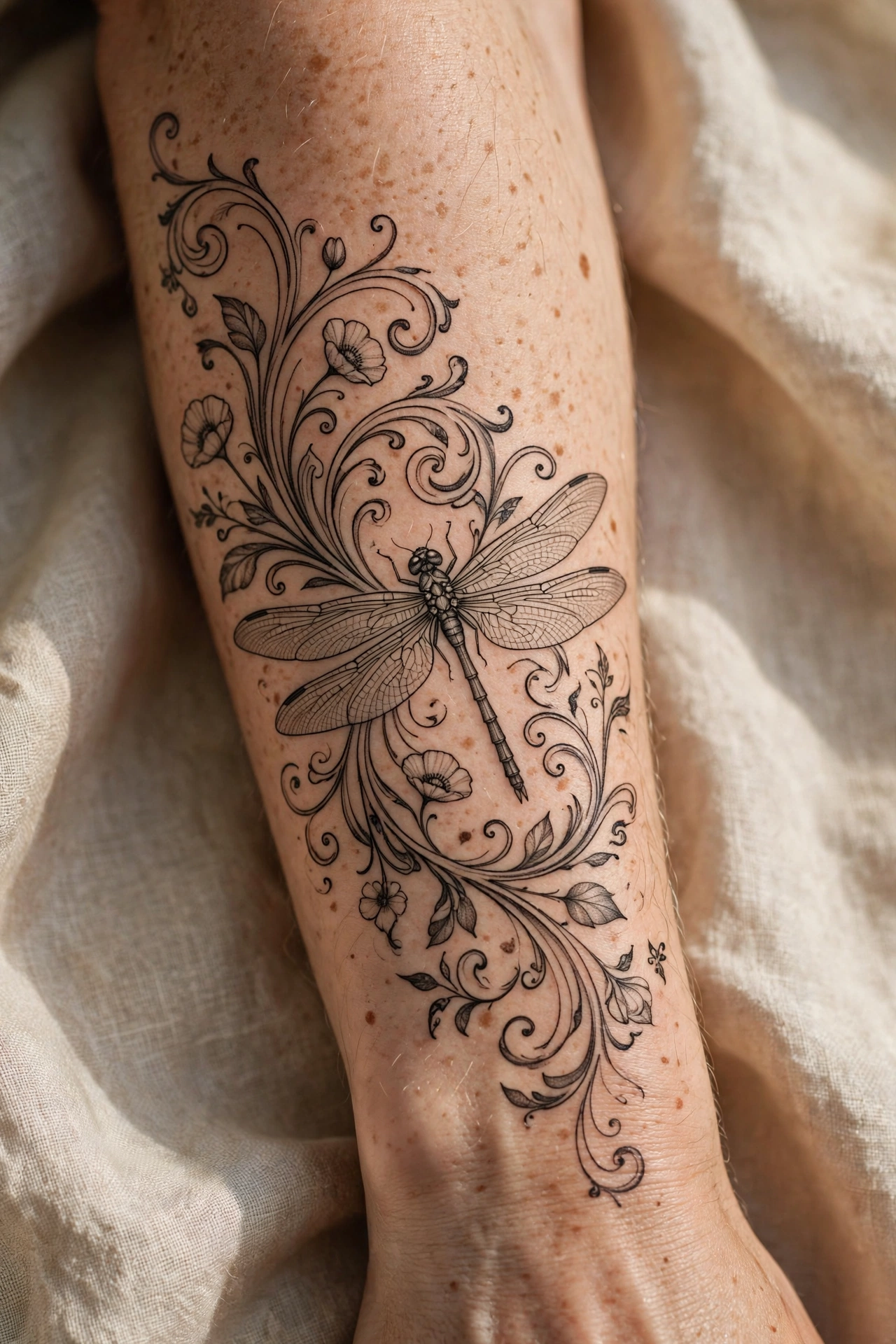
Flowing curves, whiplash lines, and floral swirls straight out of the art nouveau era — the dragonfly as jewellery, not just ink. It means beauty, elegance, and the freedom of the natural line. It suits the forearm beautifully. Downside: the flowing lines need a longer, flatter area, so it fights for space on curved spots like the ankle or wrist.
29. Stained-Glass Dragonfly
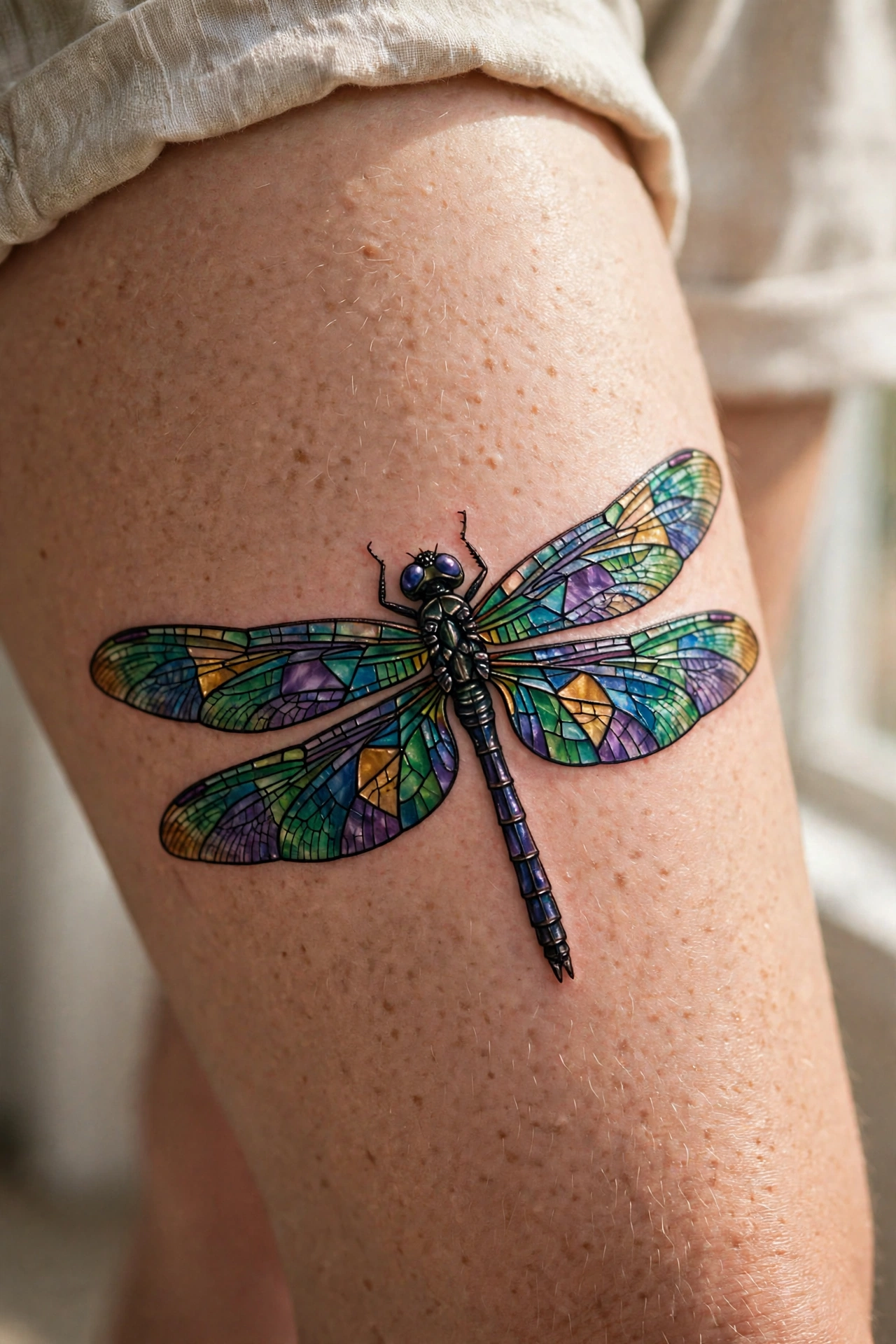
Jewel-coloured wing panels held together by dark outlines, like a church window on skin. The stained-glass dragonfly means light through darkness — hope made visible. It is stunning on the thigh, where the panels have room. Downside: every colour panel is a separate healing area, so the first two weeks of aftercare matter more than usual.
30. Gothic Dragonfly
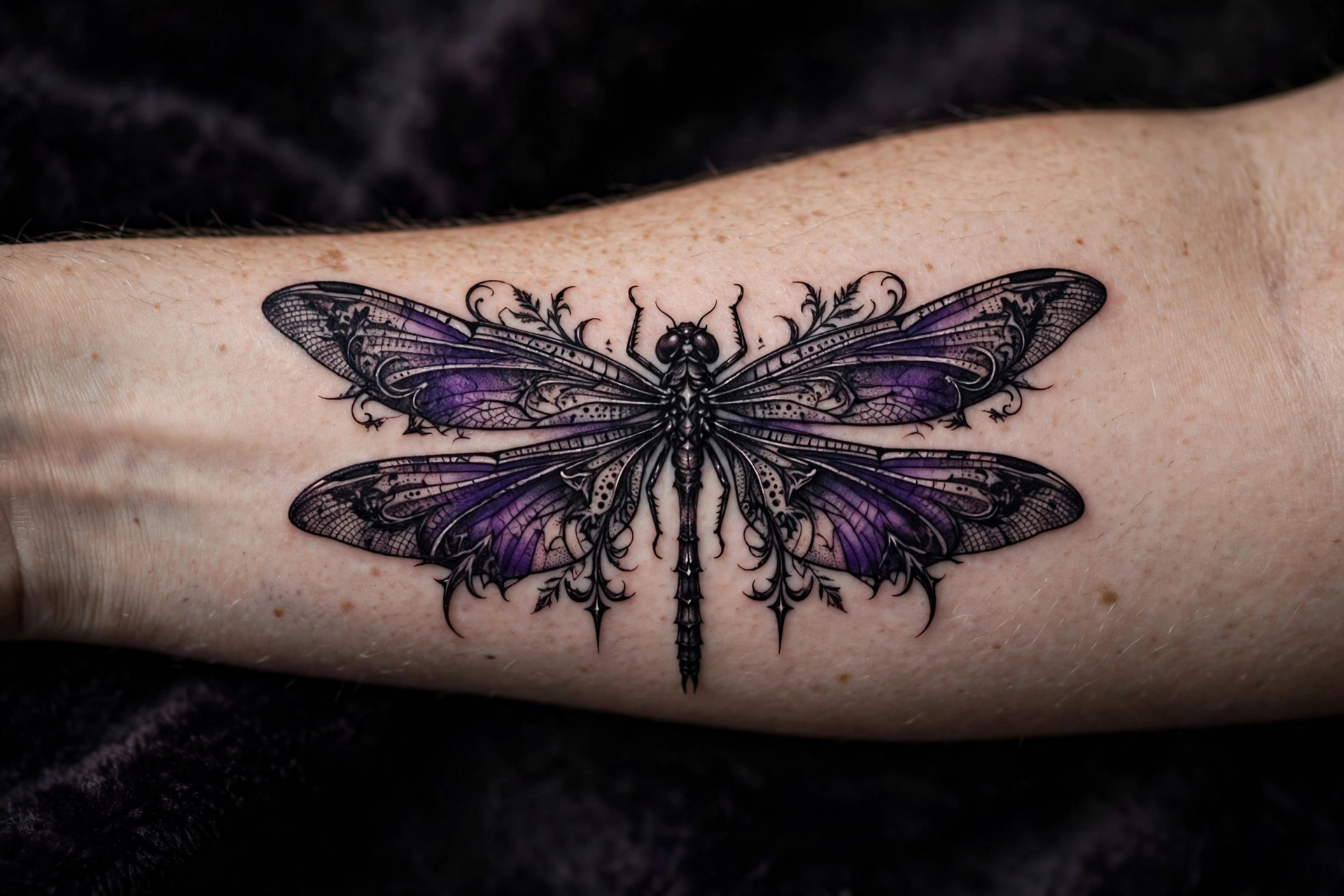
Black and deep purple, moody and elegant: the gothic dragonfly means transformation with an edge — change that came through darkness, not around it. It suits the forearm. Downside: very dark palettes can lose the dragonfly’s delicate shape at a distance, so the wing outline needs to stay crisp and lighter than the fill.
31. Steampunk Dragonfly
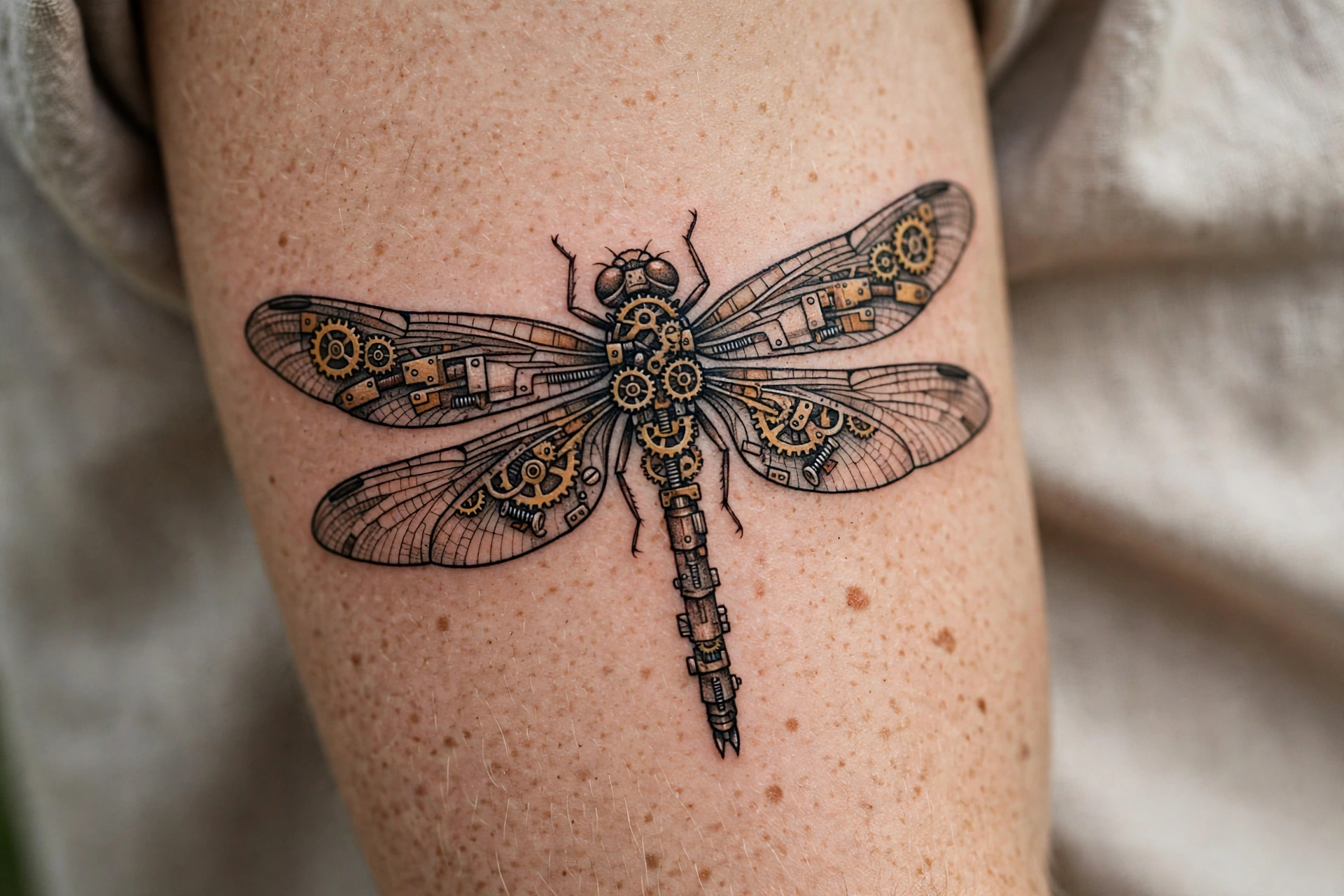
Brass gears, rivets, and mechanical wings: the steampunk dragonfly means invention, curiosity, and a mind that builds its own wings. It is a favourite for engineers, makers, and anyone whose transformation was self-engineered. It fits the upper arm. Downside: mechanical detail is dense, so this design needs a medium size or the gears merge into noise.
32. Celtic Knot Dragonfly

Interwoven knotwork with no beginning and no end turns the dragonfly into a symbol of eternity — transformation as a loop, not a line. It means continuity, heritage, and a journey that never truly ends. It suits the shoulder. Downside: knotwork is unforgiving of mistakes, so only book an artist with proven knotwork in their portfolio.
Statement Placements
These are the dragonflies people plan whole outfits around — big, placed with intent, and impossible to ignore.
33. Large Shoulder-Blade Dragonfly
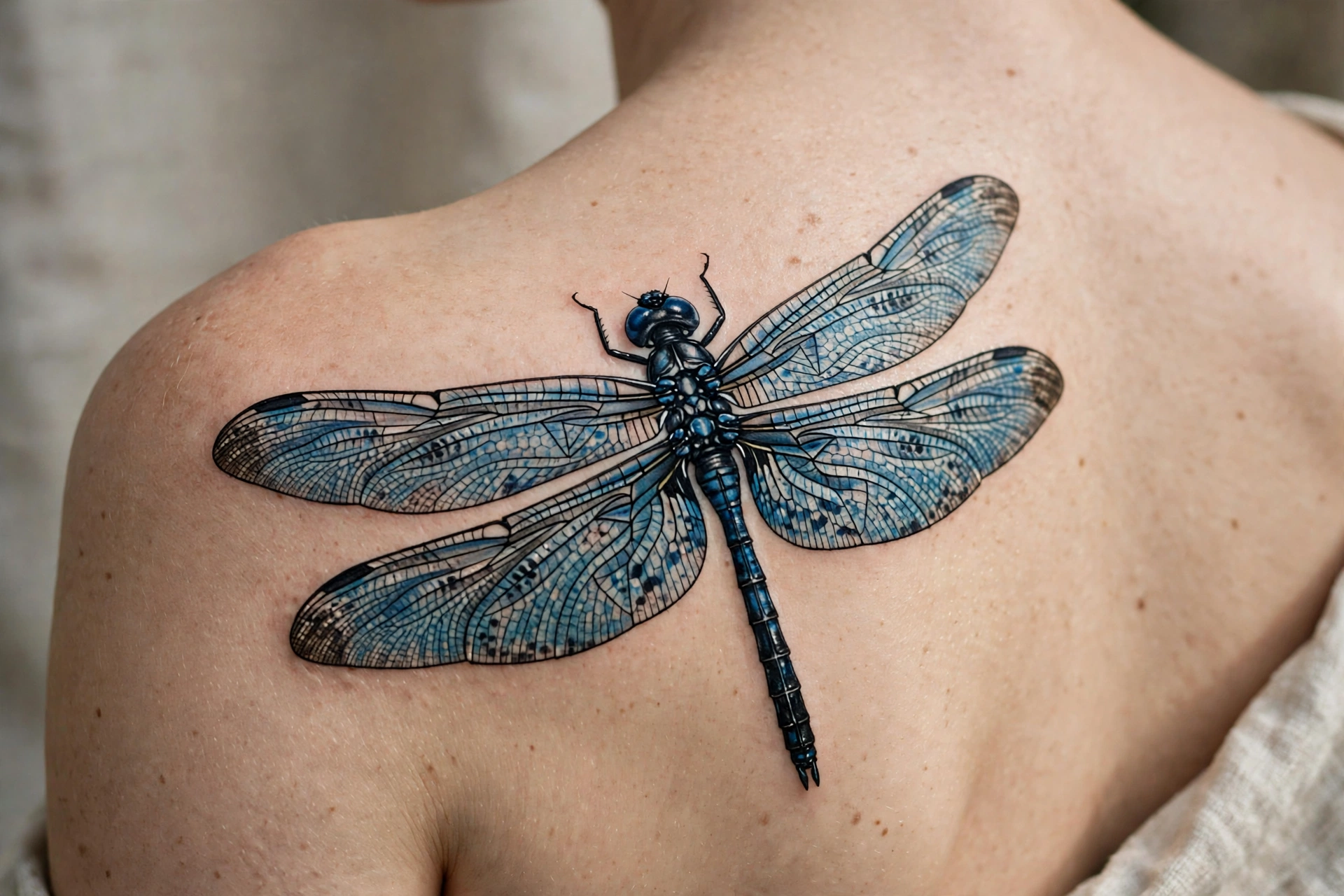
Wings spread wide across the shoulder blade: the classic statement dragonfly, visible in backless tops and unforgettable from behind. It means transformation worn proudly, not hidden. Downside: shoulder-blade skin moves a lot, so the stencil must be checked with your arms in several positions, not just standing still.
34. Vertical Spine Dragonfly Trail
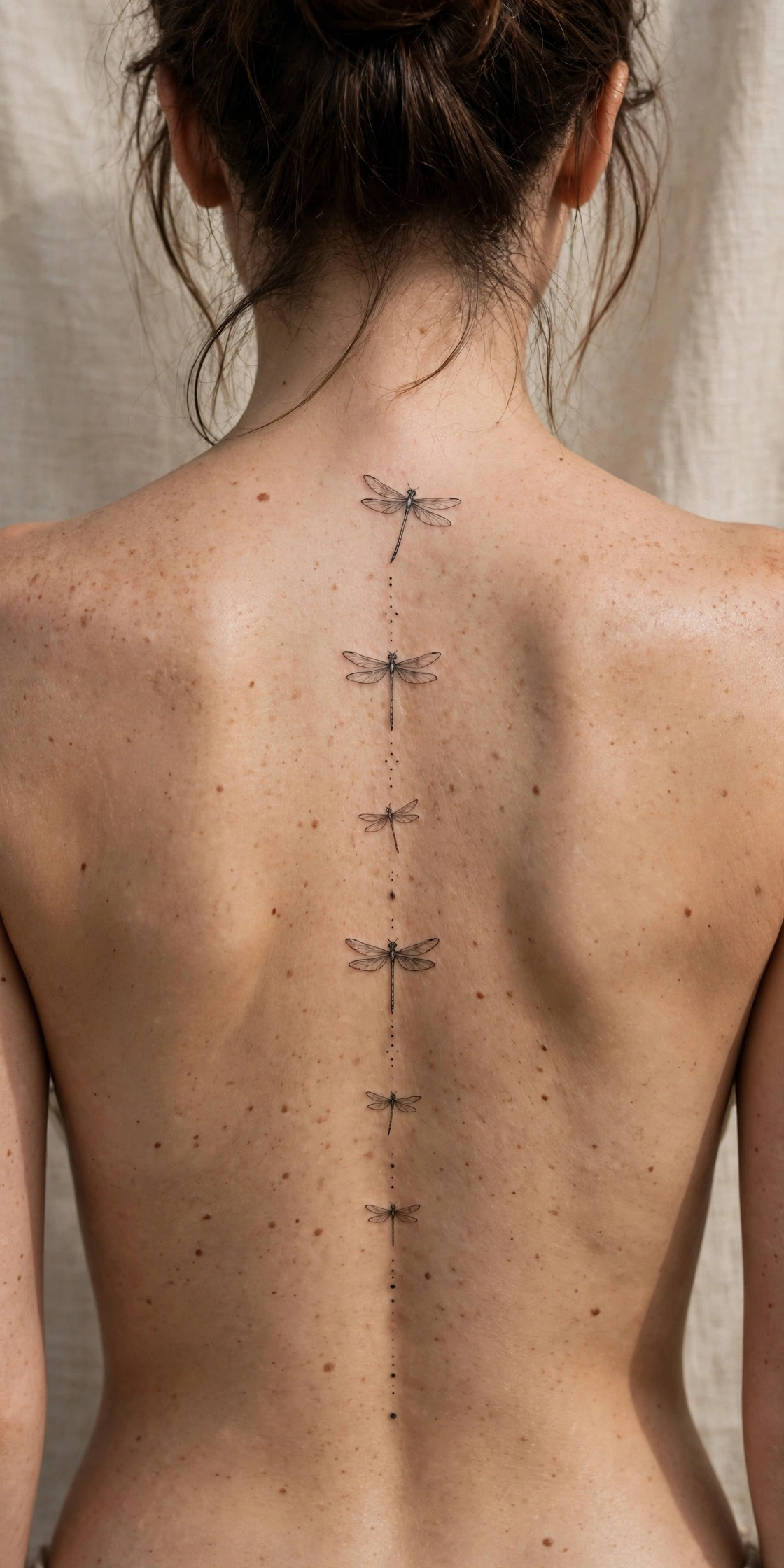
A column of small dragonflies and dots running down the spine turns the body’s centre line into a flight path. It means a journey upward — growth along the core of who you are. Downside: spine pain runs 7–8/10 and the area is hard to reach for aftercare, so you will need help with the first week’s ointment routine. For the full pain picture, see our tattoo pain chart.
35. Dragonfly Forearm Nature Sleeve
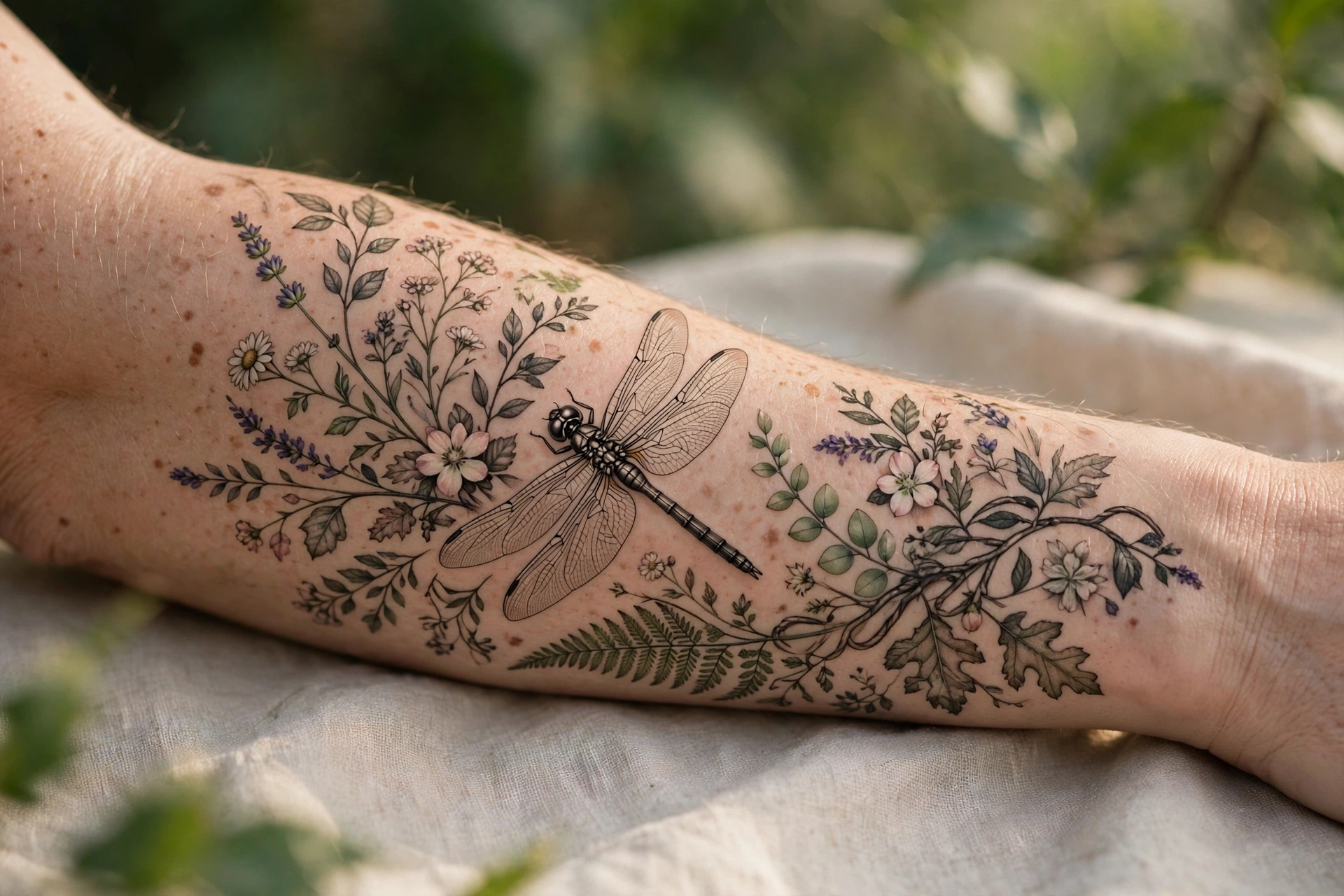
The dragonfly as the centrepiece of a flowing forearm sleeve, with leaves and flowers winding around the arm. It means a life in full bloom — transformation as an ongoing garden, not a single event. Downside: sleeves are built over multiple sessions and a real budget; a dragonfly sleeve is a project, not a walk-in.
36. Delicate Collarbone Dragonfly
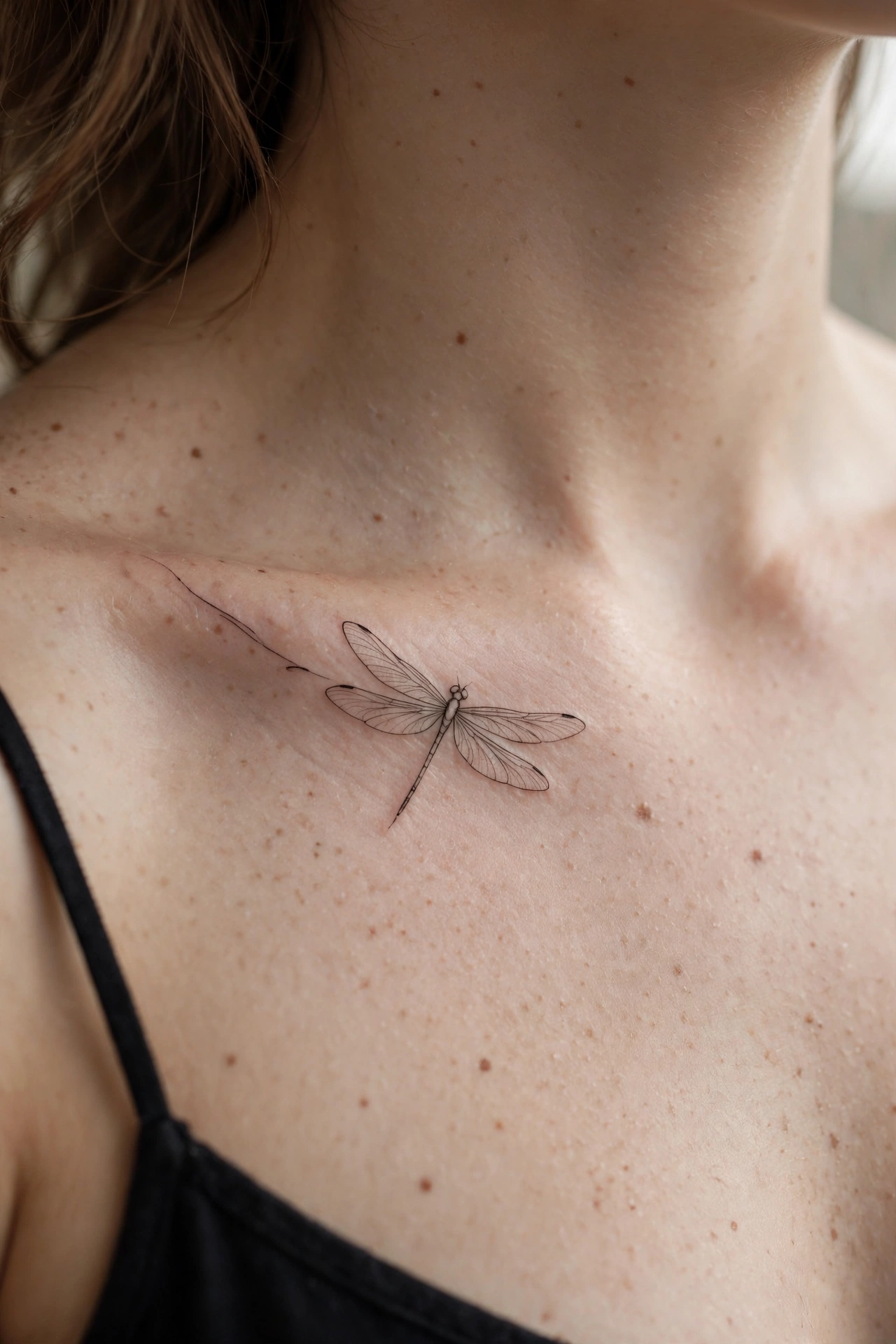
Fine-line and graceful along the collarbone, the dragonfly here frames the face and catches the eye in every neckline. It means elegance and quiet confidence. Downside: collarbone pain runs 6–7/10 on thin skin over bone, and neckline sun exposure fades colour faster, so sunscreen is daily work.
37. Large Thigh Dragonfly
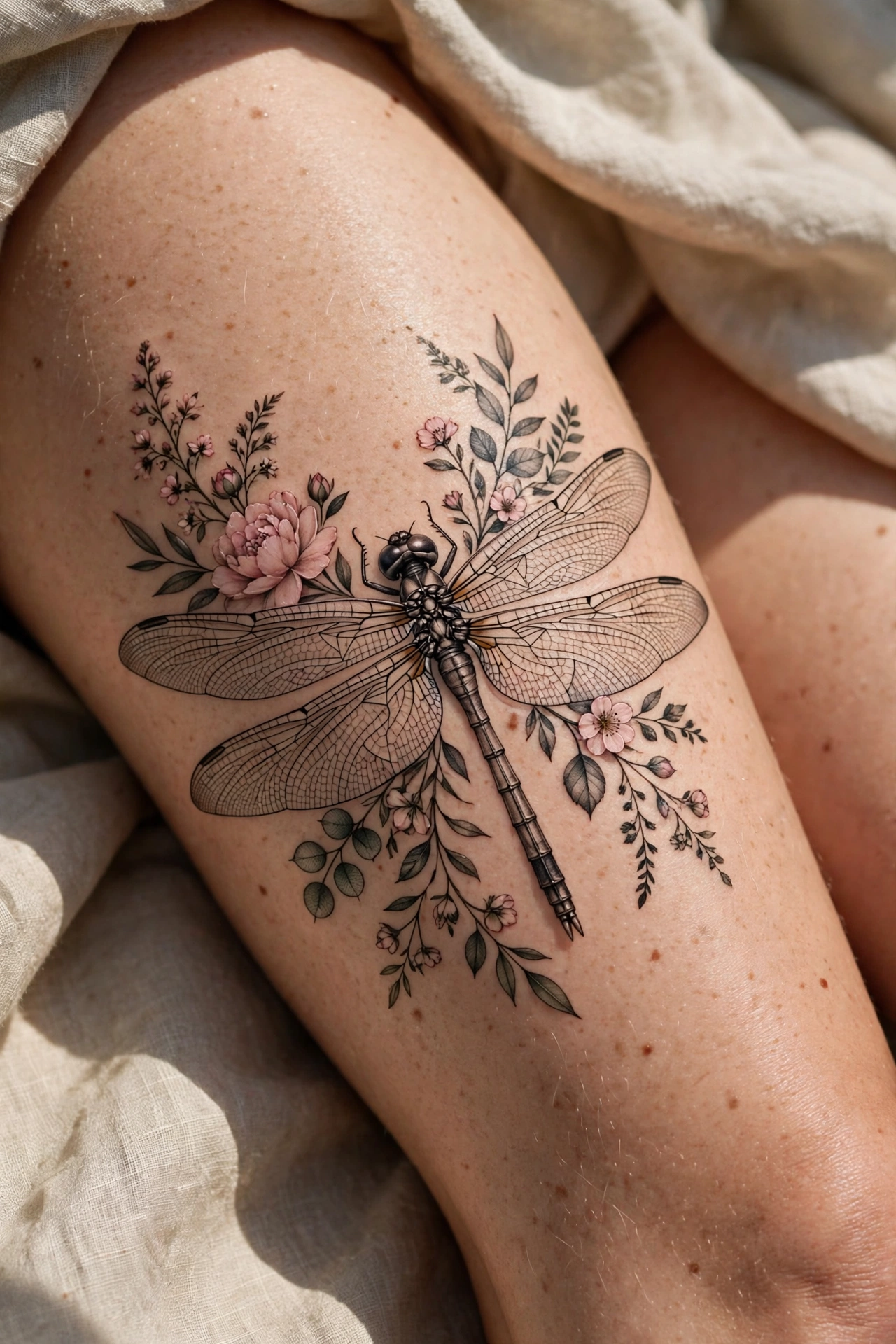
The thigh gives a dragonfly the canvas it deserves: detailed wings, floral accents, and room for the artist to show everything they can do. It means a transformation you chose for yourself, in a place you control who sees. Downside: thigh tattoos are easy to forget during healing because you cannot see them well — set phone reminders for the aftercare routine.
38. Ankle-Wrap Dragonfly
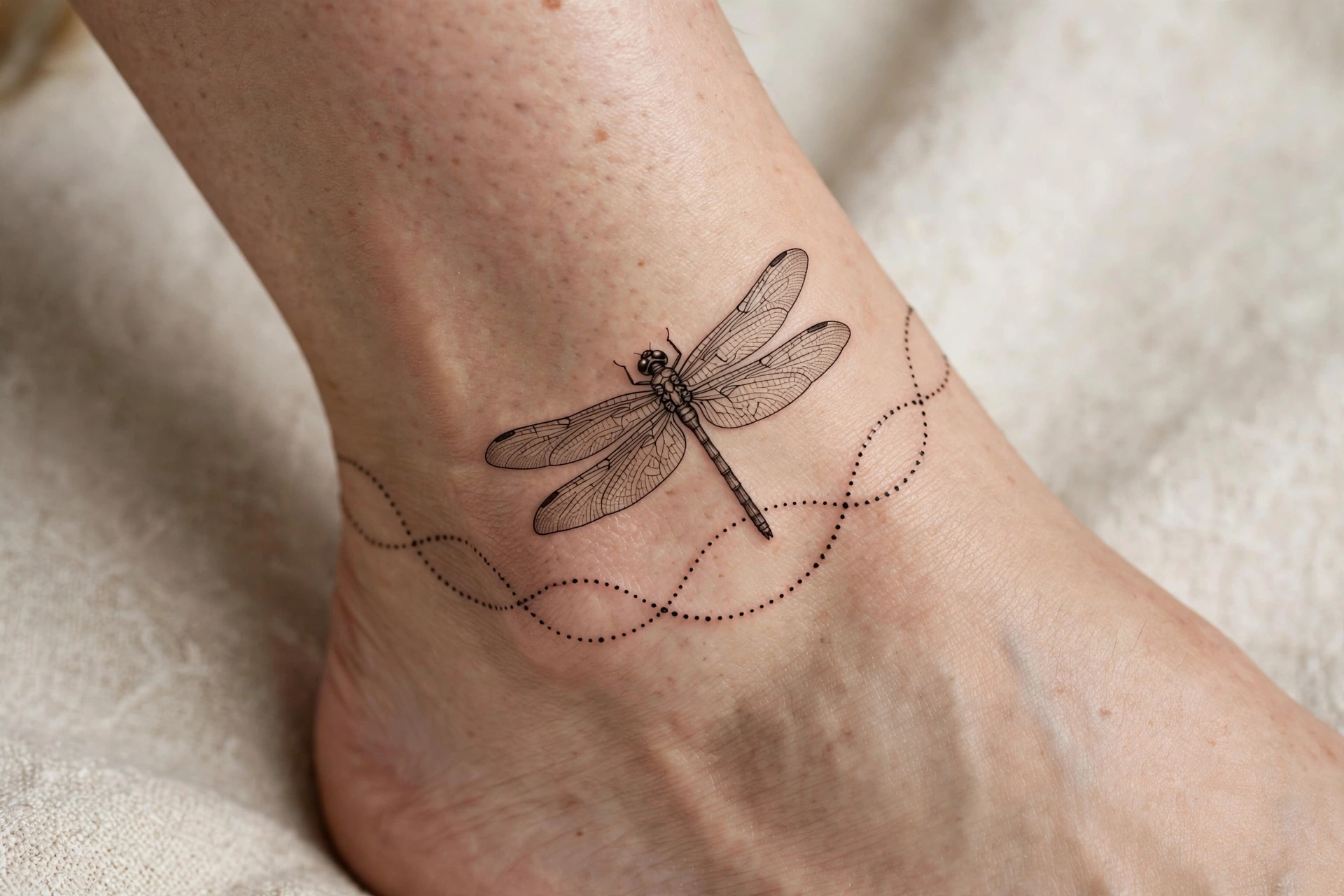
A dragonfly with a fine dotted trail wrapping around the ankle like a delicate chain — jewellery you never take off. It means freedom with a touch of elegance. Downside: ankles swell, rub against shoes, and heal slower than most spots, so plan loose footwear for the first two weeks.
39. Full Wingspan Upper-Back Dragonfly
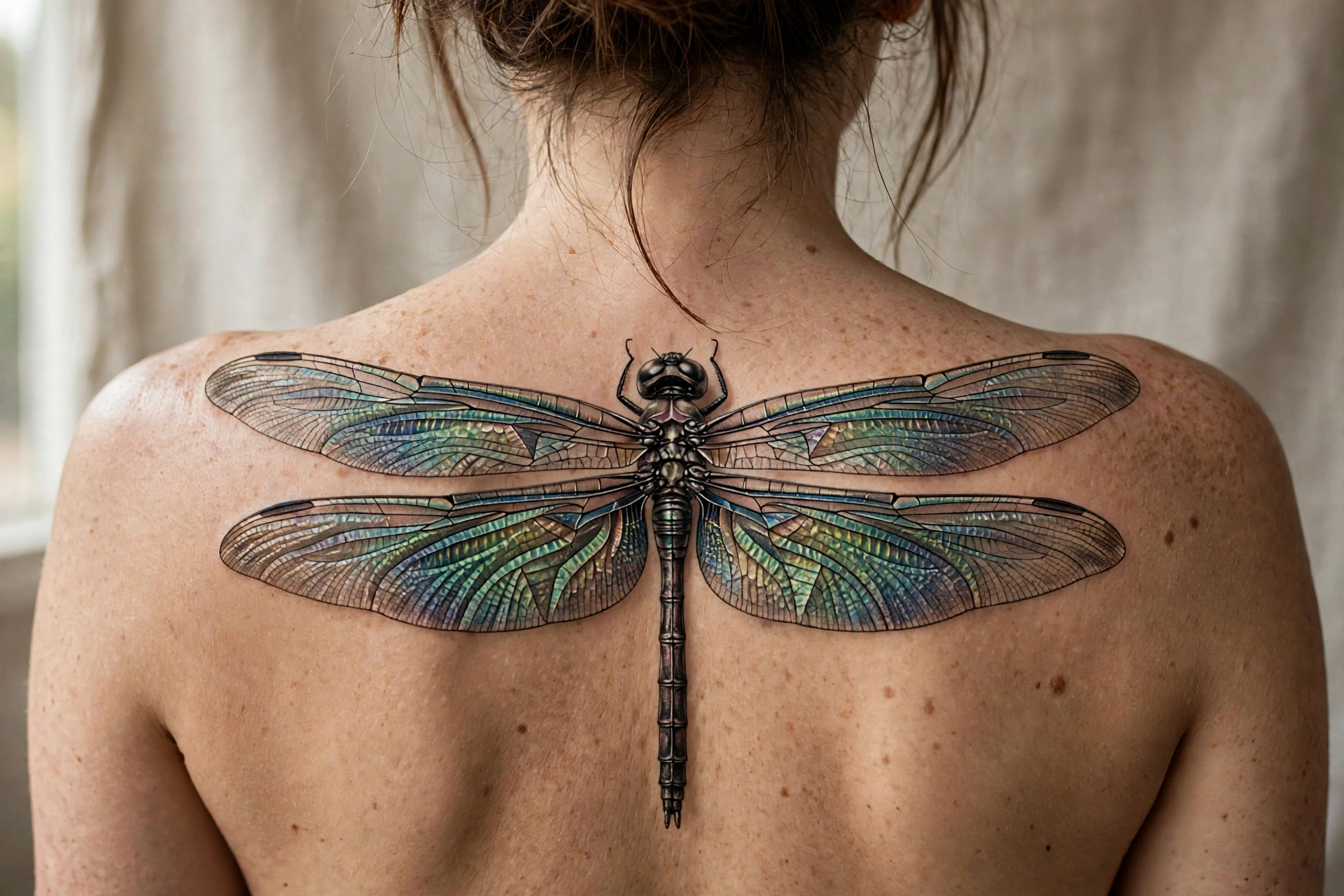
The showstopper: a dragonfly whose wings stretch across the whole upper back, iridescent and impossible to miss. It means the biggest transformation of your life, worn at full scale. Downside: this is a multi-hour, multi-session piece with a four-figure price tag for top artists — and you will need a second person to photograph it properly.
40. Matching Pair of Dragonflies
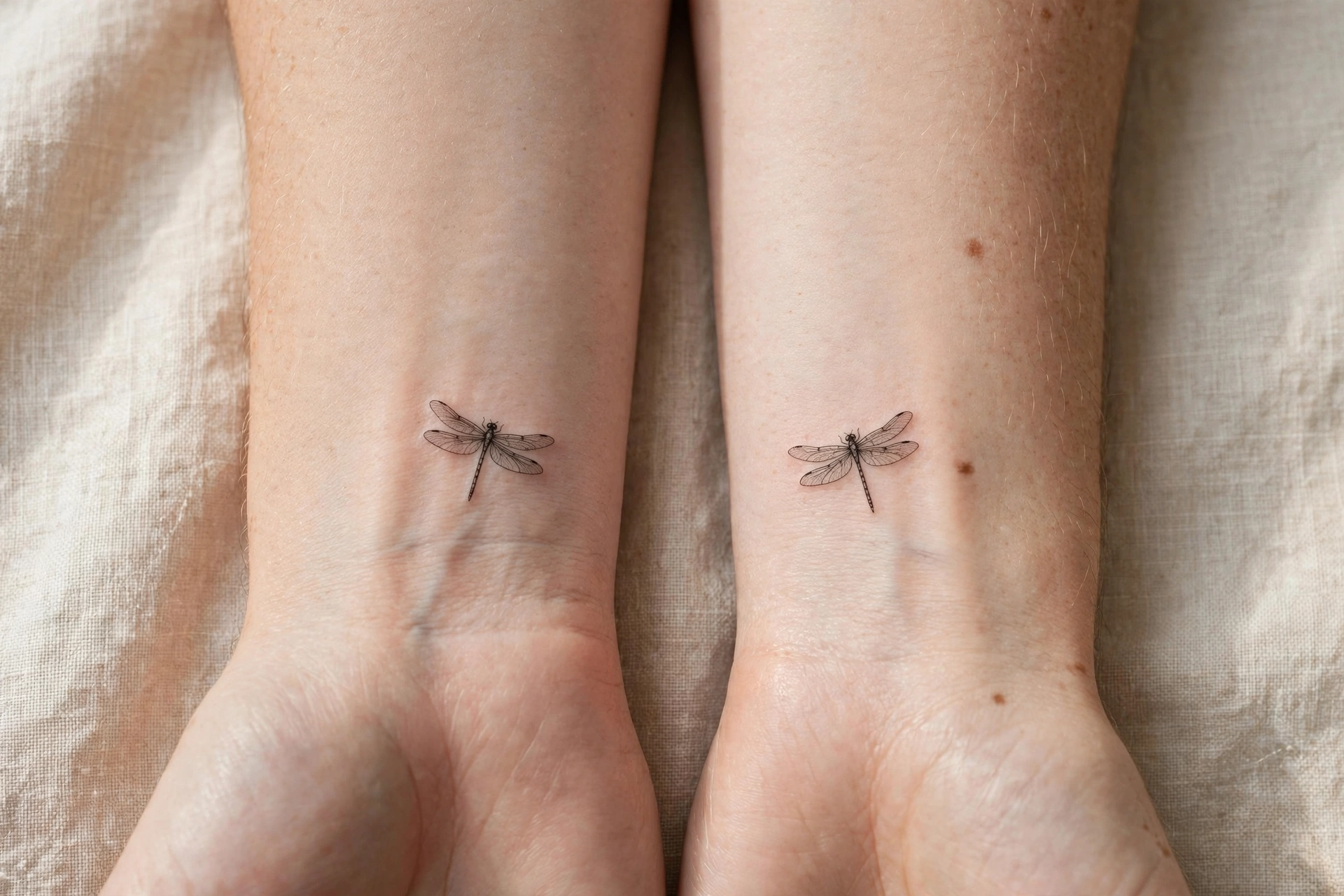
Two small dragonflies, one on each wrist — for best friends, sisters, or partners who changed together. It means a shared journey: two lives, one transformation. It is also the sweetest first tattoo to get with someone. Downside: matching tattoos age differently on two bodies, so agree in advance that a future touch-up might be needed on one and not the other — and never get a matching tattoo with someone else’s name attached.
Dragonfly Tattoo Pain Levels by Placement
Dragonfly tattoos are usually small, so the pain is more about placement than size. Most wearers describe it as a scratching or buzzing pressure rather than sharp pain, and small pieces are over quickly.
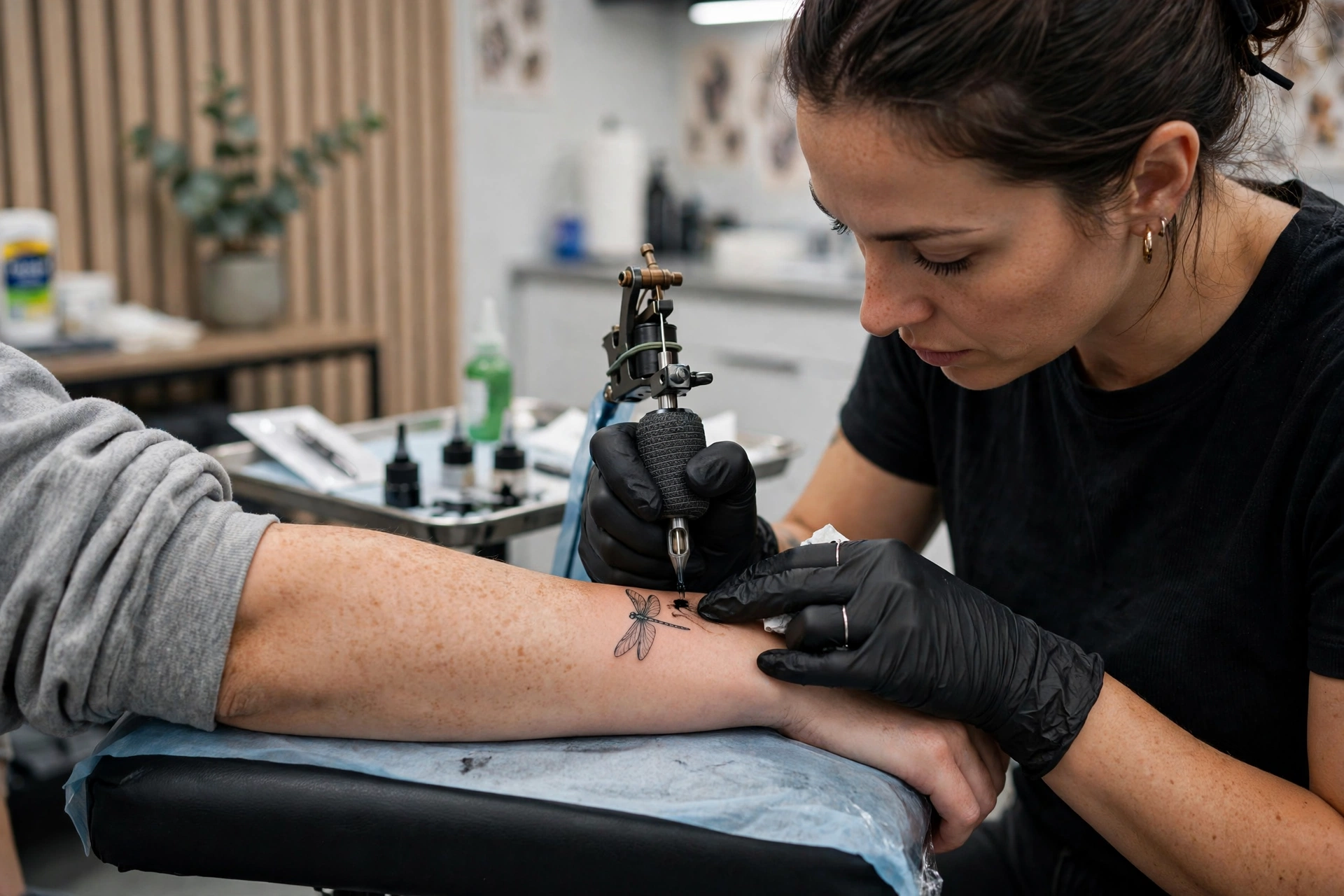
- Outer forearm — 2–3/10: the easiest dragonfly placement, and the best first-tattoo spot in this guide.
- Upper arm / shoulder — 3–4/10: fleshy, forgiving, and ideal for medium and watercolor pieces.
- Thigh — 3–4/10: roomy and low-pain, which is why large statement dragonflies live here.
- Wrist — 5–6/10: thin skin and tendons make small pieces sting more than they look like they should.
- Ankle — 6–7/10: bony, with a vibrating feeling that surprises first-timers.
- Collarbone — 6–7/10: the bone underneath amplifies every pass of the needle.
- Spine — 7–8/10: the most painful dragonfly placement in this guide; the vertical trail design earns its drama.
- Behind the ear — 5–6/10: quick, but the buzzing sound close to the ear unnerves some people more than the pain itself.
- Upper back / shoulder blade — 4–5/10: moderate, and large wingspan pieces here mean longer sessions rather than sharper pain.
Pain also depends on session length: a one-hour tiny dragonfly is easy almost anywhere, while a four-hour wingspan piece tests patience even on the forgiving thigh. If pain is your main worry, choose the outer forearm and keep the first piece small — you can always go bigger next time.
How Much Does a Dragonfly Tattoo Cost?
Dragonfly tattoo prices follow size and detail far more than the insect itself. Shop minimums usually set the floor, and artist reputation sets the ceiling.
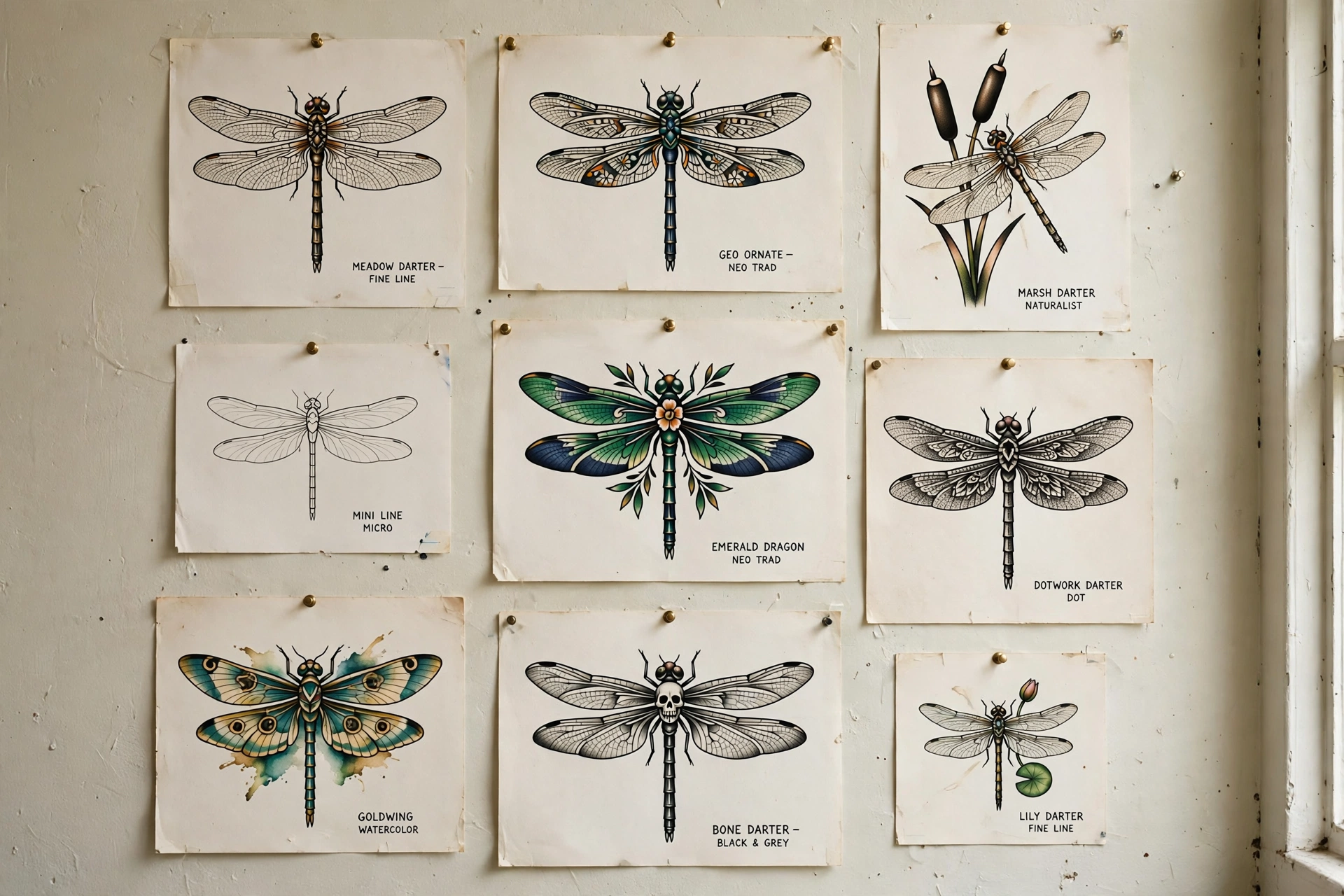
- Tiny / micro (under 2 inches): $50–$150 — simple linework, one session under an hour.
- Small (2–4 inches): $100–$300 — the sweet spot for most dragonfly designs, including fine-line and small watercolor.
- Medium detailed (4–7 inches): $300–$800 — realistic, stained-glass, mandala, and detailed watercolor pieces.
- Large statement (wingspan / sleeve element): $800–$2,000+ — multi-session work from experienced artists.
Colour adds cost because each colour is a separate pass and more healing attention. City matters too: the same 3-inch watercolor dragonfly can cost double in a big-city studio versus a small-town shop. Always confirm the full price before the needle starts, including any touch-up policy — many artists include one free touch-up within the first year. For the wider pricing picture, our tattoo prices guide breaks down shop minimums, hourly rates, and tipping.
Healing Time & Aftercare Essentials
A dragonfly tattoo heals like any tattoo of its size, and the rules are simple but non-negotiable.
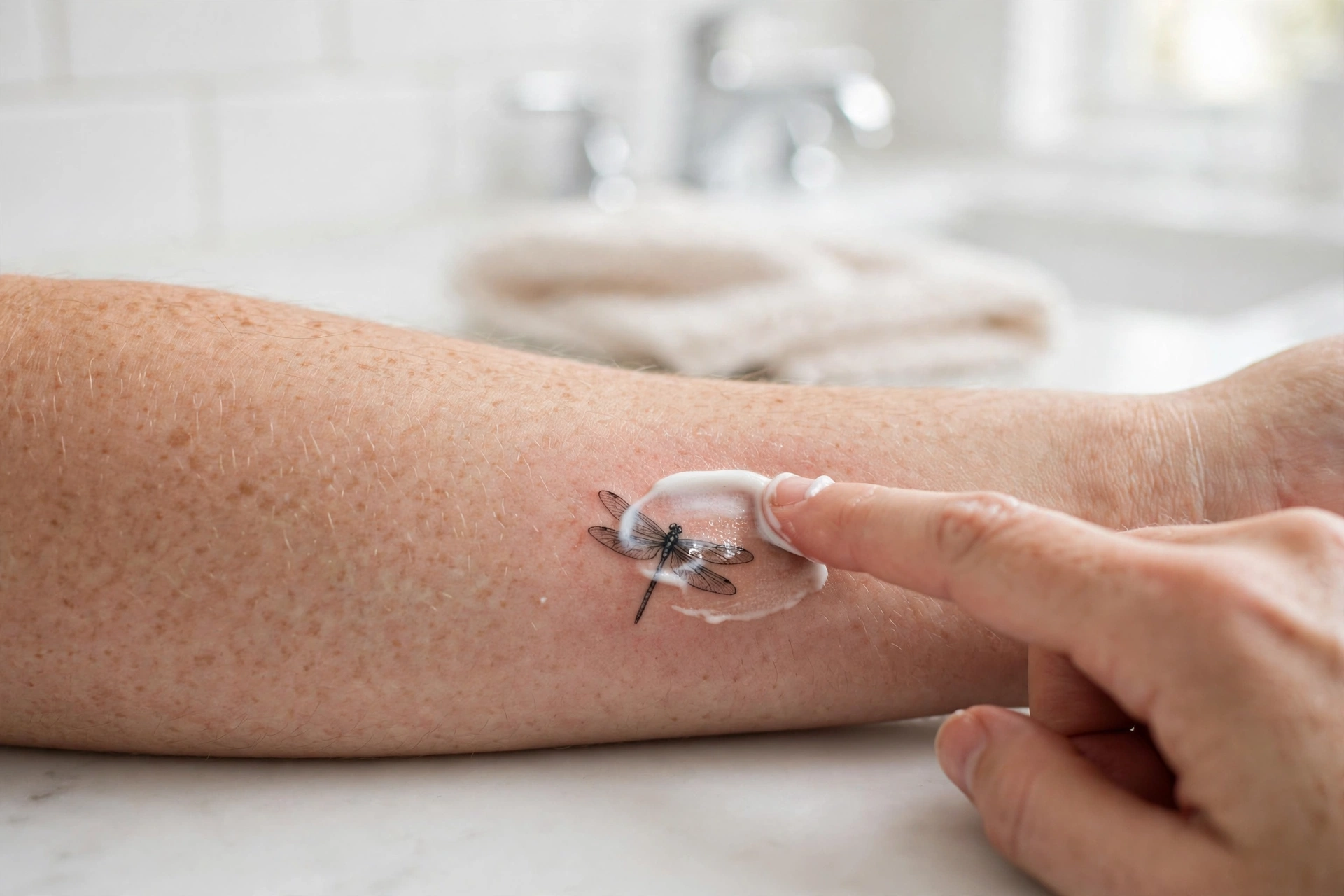
- Surface healing: 2–4 weeks. The top layer closes, flaking and light scabbing are normal, and the itching peaks around week two.
- Full settle: 3–6 months. The ink settles into its final tone underneath; watercolor and pastel pieces may look slightly muted at first and then sharpen.
- Keep it clean: wash gently with mild, fragrance-free soap, pat dry, and apply a thin layer of fragrance-free ointment — never a thick coat.
- Hands off: no scratching, picking, or peeling, even when it itches. Picking pulls ink out and leaves patchy spots.
- No water, no sun: no swimming, baths, or saunas for at least two weeks, and no direct sun on the fresh tattoo — sunscreen only once fully healed.
- Loose clothing: tight fabric rubs fresh ink, especially on the ankle, collarbone, and thigh placements in this guide.
- Colour care for life: watercolor, pastel, and rainbow dragonflies fade faster than blackwork, so daily sunscreen on the healed tattoo is the single best habit for keeping colour bright.
If redness spreads, swelling grows after the third day, or you see pus, contact your artist or a clinician promptly — infection is rare with proper care, but it is not something to wait out. Our full tattoo aftercare guide covers the day-by-day timeline in detail.
Best Placements: Pros & Cons
- Forearm: easiest pain, most visible, ages well. Con: hard to hide for strict workplaces.
- Wrist: always visible to you, deeply personal. Con: fades faster from hand-washing and sun.
- Shoulder blade / upper back: best canvas for large and detailed wings. Con: you cannot see it without a mirror, and aftercare needs help.
- Thigh: low pain, big canvas, easy to cover. Con: easy to forget during healing.
- Ankle: delicate and jewellery-like. Con: slower healing, shoe friction, bony pain.
- Behind the ear: subtle, quick, charming. Con: fastest fading spot in this guide.
- Spine: dramatic and meaningful. Con: highest pain, hardest aftercare reach.
- Collarbone: elegant and face-framing. Con: bony pain and daily sun exposure.
Common Dragonfly Tattoo Mistakes to Avoid
- Going too small. The most common dragonfly regret: a beautiful design shrunk until the wing veins merge into a blur within a few years. Trust the artist’s minimum size.
- Choosing watercolor with no outline for your first tattoo. Pure wash softens fastest; a thin dark anchor line keeps the dragonfly readable for years.
- Skipping the healed-work check. Fresh tattoos always look good. Ask to see the artist’s healed dragonfly and colour work — that is the tattoo you will actually live with.
- Copying someone else’s exact design. Taking another artist’s custom dragonfly without permission is frowned on in every studio; bring it as inspiration and let your artist draw yours.
- Ignoring aftercare because “it’s small.” Small tattoos get infected just like big ones, and small colour pieces lose the most from a bad heal.
- Booking on impulse for a trend piece. Neon and galaxy dragonflies are gorgeous, but ask yourself whether you will still love the style in ten years before it goes on your skin.
Dragonfly Tattoo Styles Compared
| Style | Pain (typical spot) | Session length | How it ages | Best for |
|---|---|---|---|---|
| Fine-line / minimalist | 2–6/10 | Under 1–2 hours | Fades fastest; touch-ups likely | First tattoos, subtle wearers |
| Blackwork / tribal | 3–5/10 | 1–3 hours | Holds longest, boldest lines | Long-term collectors |
| Watercolor | 3–5/10 | 2–4 hours | Softens in 5–10 years; needs sunscreen | Colour lovers, shoulder pieces |
| Geometric / mandala | 3–5/10 | 2–4 hours | Holds well if lines stay bold | Symmetry lovers, back pieces |
| Realistic | 4–6/10 | 3–6 hours, sometimes 2 sessions | Detail softens first; needs top artists | Statement pieces, thigh/back |
| Dotwork | 3–5/10 | 2–4 hours | Ages gracefully if dots stay spaced | Texture lovers, patience wearers |
Style choice is also a budget choice: fine-line and blackwork are the cheapest routes to a dragonfly, while realistic and large watercolor pieces are the premium end. If you are still choosing a style overall, our tattoo styles explained guide matches every major style to the personality it suits.
FAQ — Dragonfly Tattoos
What does a dragonfly tattoo mean?
A dragonfly tattoo most often means transformation and change, because the insect transforms from a water nymph into a winged adult. It also means living in the moment, adaptability, independence, and seeing beyond illusion — and its colour adds a second layer, from blue calm to red passion.
How painful is a dragonfly tattoo?
Most dragonfly tattoos are low to moderate pain. The outer forearm rates about 2–3/10, the wrist 5–6/10, the ankle 6–7/10, and the spine 7–8/10. Because most dragonfly pieces are small, sessions are short, which keeps the total discomfort low.
How much does a dragonfly tattoo cost?
Tiny dragonflies start around $50–$150, small designs run $100–$300, detailed medium pieces $300–$800, and large wingspan or sleeve work $800–$2,000+. Colour, artist reputation, and city all move the price.
How long does a dragonfly tattoo take?
A tiny dragonfly takes under an hour, a small one 1–2 hours, and a detailed medium piece 2–4 hours. Large wingspan designs may need two sessions. Setup and stencil time are included in those ranges.
Where is the best placement for a dragonfly tattoo?
The forearm is the best all-round placement for pain, healing, and visibility. The shoulder blade suits large wings, the wrist suits tiny personal pieces, and the thigh suits big detailed work. Avoid the spine for a first tattoo because of the higher pain and harder aftercare.
Do dragonfly tattoos fade fast?
It depends on style. Bold blackwork holds for decades, while fine-line, watercolor, and pastel dragonflies fade noticeably within 5–10 years and need touch-ups. Daily sunscreen on the healed tattoo is the best way to slow fading for any style.
What goes well with a dragonfly tattoo?
Lotus flowers (rising from hardship), cherry blossom (fleeting beauty), the crescent moon (intuition and cycles), butterflies (double transformation), lavender (calm and healing), and wildflowers (freedom) are the most popular pairings — each one changes the story the tattoo tells.
Is a dragonfly tattoo a good first tattoo?
Yes — it is one of the best first tattoos. Small sizes, short sessions, low pain on the forearm, and a meaning that grows with you make it a gentle introduction to ink. Start small and on the forearm, and you can always add a bigger piece later.
What does a blue dragonfly tattoo mean?
A blue dragonfly tattoo means tranquility, loyalty, wisdom, and a connection to water and emotion. Blue is also the colour closest to the real insect’s iridescent wings, so it reads as the most natural and timeless dragonfly choice.
Can I combine a dragonfly with a lotus or butterfly?
Absolutely — those are the two most popular dragonfly combinations. A dragonfly with a lotus means rising from difficulty into peace, while a dragonfly with a butterfly means total transformation. Just keep the design at a medium size so both subjects stay readable as they age.
Quick Summary
A dragonfly tattoo means transformation, adaptability, and living in the moment — and the 40 ideas above cover every way to wear that meaning, from a micro ankle dragonfly to a full upper-back wingspan. Tiny fine-line pieces are the cheapest and gentlest way in at $50–$150, watercolor wings are the most beautiful and the most maintenance-hungry, and bold blackwork is the longest-lasting choice. The forearm remains the smartest first placement for pain, healing, and visibility, and daily sunscreen is the one habit that protects every style. Pick the size your artist recommends, check their healed work, and give even a tiny dragonfly the full aftercare routine — the best dragonfly tattoo is the one that still means something to you when the trend has flown past.
Which one is your favorite?
References
- American Academy of Dermatology — Tattoos: Risks, safety, and aftercare guidance (aad.org).
- U.S. Food and Drug Administration — Tattoo inks and tattoo safety information (fda.gov).
- Smithsonian Magazine — The history of tattooing and insect symbolism in body art (smithsonianmag.com).
- Britannica — Dragonfly: life cycle and metamorphosis (britannica.com).
- Tatuagem Blog — “Dragonfly Tattoo: Ideas, Meaning and Design” — meaning table and style breakdown.
- EatHealthy365 — “The Historical Meaning of a Dragonfly Tattoo” — cultural meanings and colour symbolism.
- TattooStash — “20+ Dragonfly Tattoo Ideas” — gallery designs and placement inspiration.