
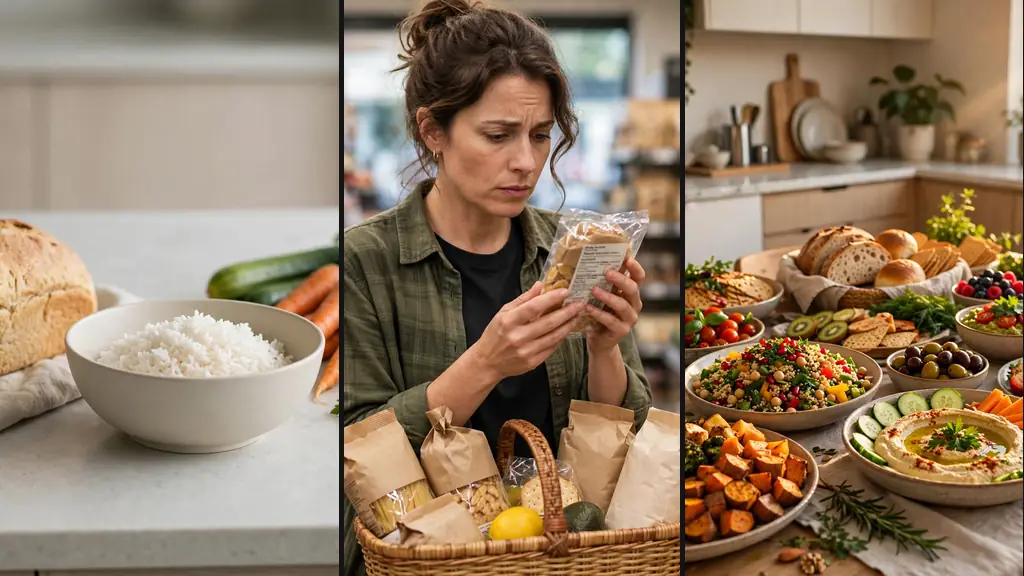
Whether for celiac disease, sensitivity, or personal choice, going gluten-free sounds straightforward — until you discover gluten hiding in soy sauce, the social minefield of dinner invitations, and the weird grief of never eating a croissant again. These ten gluten free struggles surprise almost everyone, and knowing them in advance makes the transition dramatically easier.
Table of Contents
Gluten Hides Everywhere
Soy sauce, salad dressings, soups, sausages, beer, even lipstick — gluten lurks in hundreds of products where wheat has no business being. The first of the gluten free struggles is learning to read labels like a detective: look for “wheat,” “barley,” “rye,” “malt,” and “modified food starch” from unknown sources. The learning curve is steep for about a month, then it becomes second nature.
The Social Awkwardness
Declining food people cooked with love feels terrible, and explaining for the tenth time that “just a little won’t kill me” (or worse, that it actually might) is exhausting. Among gluten free struggles, the social dimension is the most emotionally draining. The scripts that help: “I have a medical restriction — but I’d love the recipe to adapt it!” frames it positively without oversharing.
Eating Out Becomes a Project
Spontaneous restaurant meals are over — now it’s menus researched in advance, questions for the server, and cross-contamination roulette. Dedicated gluten-free restaurants are a joy when you find them; elsewhere, cuisines that are naturally gluten-free (Mexican corn-based dishes, Japanese rice-based meals, Indian lentil dishes) are your safest bets. These gluten free struggles ease as you build a personal roster of trusted spots.
Nutrient Gaps Sneak Up
Many gluten-free substitute products are less fortified than their wheat counterparts, leading to gaps in B vitamins, iron, and fiber — the sneakiest of gluten free struggles because they develop silently. Counter it by building meals around naturally gluten-free whole foods (rice, quinoa, potatoes, vegetables, legumes, meat) rather than processed substitutes. A dietitian visit early on prevents most issues.
The Cost Shock
Gluten-free bread at $7 a loaf, specialty flours at triple the price — the grocery bill jumps noticeably. The workaround is the same as above: whole foods are naturally gluten-free and cheap. Rice, beans, potatoes, eggs, and seasonal produce cost no premium. Reserve the expensive substitutes for occasional treats, not daily staples, and these gluten free struggles stay manageable.
Making It Sustainable
The people who thrive gluten-free long-term share habits: they meal-prep, they have 10 go-to recipes memorized, they keep safe snacks everywhere, and they’ve found one great gluten-free bakery for morale. It stops feeling like a restriction and starts feeling like just… how you eat. For more lifestyle transitions, see our healthy living guides. The Celiac Disease Foundation’s living guide is the gold standard resource — and if you suspect celiac, get tested before going gluten-free, since testing requires gluten exposure.
Traveling Gluten-Free
Travel magnifies gluten free struggles — airports, hotels, foreign languages. Veterans pack a kit: safe snacks for transit, translation cards explaining celiac in the local language, and a researched restaurant list. Apps like Find Me Gluten Free crowdsource safe spots worldwide. With preparation, travel stays joyful rather than stressful.
The Emotional Side
There’s real grief in dietary restriction — mourning spontaneity, favorite foods, the ease you once had. These gluten free struggles are valid even when the diet is medically necessary. Give yourself grace, find community (online celiac groups are wonderfully supportive), and celebrate what you can eat rather than fixating on what you can’t.
Reading Labels Like a Pro
Mastering gluten free struggles means becoming fluent in label language. Beyond obvious wheat/barley/rye, watch for malt (usually barley), brewer’s yeast, wheat starch (unless certified gluten-free), and ‘natural flavors’ of unknown origin. ‘Gluten-free’ certification (not just ‘no gluten ingredients’) means tested below 20ppm — the safety threshold. When in doubt, contact manufacturers; most respond quickly.