
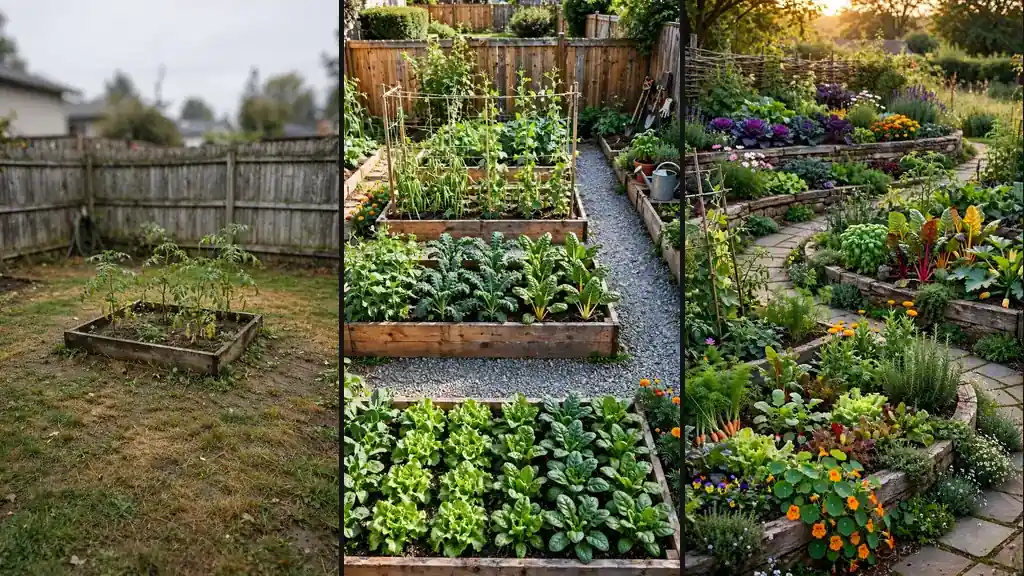
Raised bed garden ideas have taken over backyards for good reason: they grow more food in less space, with less weeding and less back pain than traditional in-ground plots. Whether you have a sprawling yard or a tiny patio, there’s a raised bed design that fits. Here are fifteen creative approaches to get you growing.
Table of Contents
Classic Raised Bed Garden Ideas
The standard 4×8-foot wooden raised bed remains the gold standard for a reason. At four feet wide, you can reach the center from either side without stepping on the soil — and never stepping on the soil is the whole point, since uncompacted soil grows dramatically better roots. Twelve inches deep handles most vegetables; eighteen inches lets you grow carrots and parsnips without forking.
Cedar and redwood are the classic lumber choices because they naturally resist rot for a decade or more without chemical treatments. Avoid pressure-treated lumber from before 2004 (it contained arsenic), though modern ACQ-treated lumber is considered safe. Arrange beds in a grid with 2-3 foot paths between them — wide enough for a wheelbarrow — and orient them north-south so tall plants don’t shade short ones. These fundamentals of raised bed garden ideas never go out of style because the physics of sun, soil, and reach don’t change.
Creative Materials for Raised Beds
Wood isn’t the only option. Corrugated metal beds — the trendy silver troughs all over garden Instagram — last 20+ years, heat up fast in spring, and look strikingly modern. They’re more expensive upfront but you may never replace them. Stone or brick beds are permanent landscape features; they absorb daytime heat and release it at night, effectively extending your growing season by weeks.
For the budget-minded, straw bale gardening skips the frame entirely: condition bales with nitrogen for two weeks, then plant directly into them. Fabric grow bags (5-20 gallons) are the cheapest entry point and perfect for renters — they air-prune roots, preventing the circling that stunts container plants. Even cinder blocks work, with the bonus that the block holes become mini-planters for herbs. The Old Farmer’s Almanac raised bed guide has excellent material comparisons if you’re deciding.
Small-Space Raised Bed Garden Ideas
No yard? Raised beds scale down beautifully. A 2×4-foot bed on a sunny balcony grows a full salad garden — lettuce, radishes, herbs, and a cherry tomato. Elevated beds on legs bring the garden to waist height, a game-changer for anyone with back or knee issues, and they fit on patios and decks where ground planting is impossible.
Go vertical within the bed: a trellis at the north end lets cucumbers, pole beans, and peas climb instead of sprawl, effectively doubling your square footage. Keyhole beds — circular beds with a compost basket in the center and a wedge cut out for access — are brilliant for small yards because you feed the soil just by tossing scraps in the middle. Pair your beds with smart vegetable garden ideas for succession planting, and a tiny space can produce an astonishing amount of food.
Soil, Watering, and Planting Tips
The biggest beginner mistake is filling beds with cheap topsoil or, worse, garden dirt. The proven mix — often called “Mel’s Mix” — is one-third compost, one-third peat moss or coconut coir, and one-third coarse vermiculite. It holds moisture, drains well, and starts weed-free. Yes, quality soil costs more upfront; it’s also the single highest-return investment in your garden.
Water deeply but less often to train roots downward, and mulch the surface with straw or shredded leaves to cut watering needs by half. Drip irrigation on a timer is the ultimate raised bed upgrade — consistent moisture, no fungal splash on leaves, and you can leave for a weekend without worry. Plant intensively: raised beds thrive on dense planting (square-foot gardening spacing), which shades out weeds and maximizes every inch. Feed the soil yearly with fresh compost, and rotate plant families to prevent disease buildup.
Raised Beds Through the Seasons
Raised beds shine in the shoulder seasons. They warm up 1-2 weeks faster than ground soil in spring, so you can plant peas and greens while your neighbors are still waiting. In fall, drape row cover or plastic over hoops to create a mini-greenhouse that keeps salads growing weeks past the first frost.
Winter is for feeding the bed: pile on fallen leaves or plant a cover crop like clover, which fixes nitrogen and prevents erosion. Come spring, chop it in and plant directly. Year after year, this cycle builds soil so rich it practically glows. That’s the quiet magic of raised bed garden ideas — each season’s work compounds into the next season’s harvest, and a well-tended bed just keeps getting better.
Start with one bed this weekend. Fill it right, plant it densely, mulch it well. By midsummer you’ll be giving away zucchini to neighbors — the universal sign of a gardener who’s figured it out.