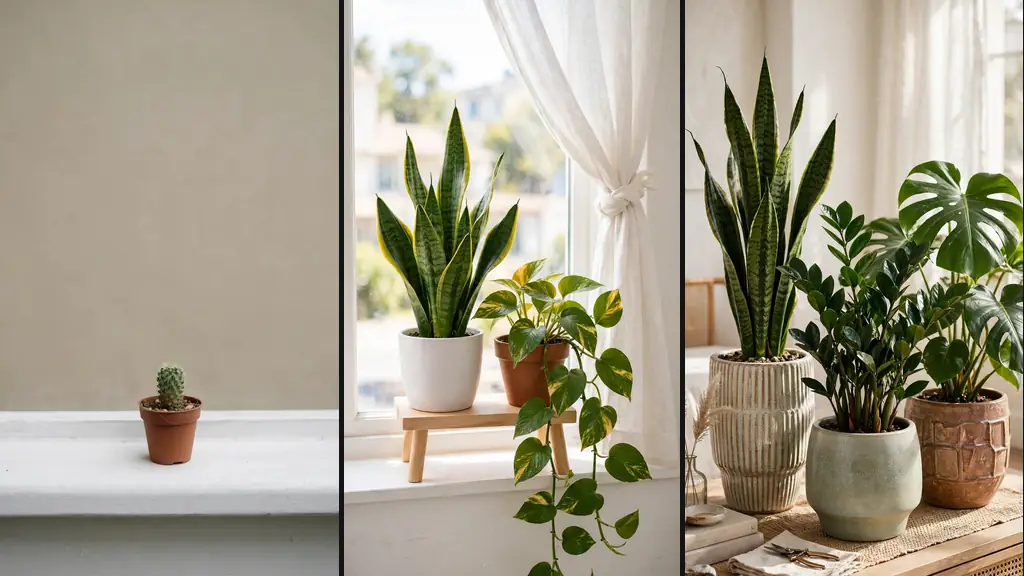
Indoor plants for health are having a well-deserved moment. Beyond looking good, the right houseplants filter air, humidify dry rooms, reduce stress, and even help you focus. And the best part: the healthiest plants for beginners are nearly indestructible. Here are ten worth owning.
Table of Contents
Snake Plant: The Air-Purifying Workhorse
Snake plants (Sansevieria) topped NASA’s famous clean-air study, filtering formaldehyde, benzene, and other common indoor pollutants. Uniquely, they convert CO2 to oxygen at night, making them ideal bedroom companions — most plants do this only in daylight.
Care is laughably easy: bright or low light, water every 2–3 weeks, ignore otherwise. Overwatering is the only real way to kill one. For indoor plants for health with zero effort, start here.
Peace Lily: Humidity and Calm
Peace lilies raise room humidity as they transpire, which soothes dry winter skin, scratchy throats, and static-shocked hair. They also filter common toxins and bloom beautiful white flowers in low light — rare for a flowering houseplant.
They droop dramatically when thirsty, then perk up within hours of watering — a built-in reminder system beginners love. Note: peace lilies are toxic to cats and dogs, so pet owners should place them out of reach or choose alternatives.
Spider Plant: Easiest Win for Beginners
Spider plants are the golden retrievers of houseplants: cheerful, hardy, and constantly producing babies you can propagate. They scored high in air-purification research and tolerate the neglect that kills fussier plants — irregular watering, low light, general forgetfulness.
Hang them where the arching leaves and dangling plantlets show best. They also help with indoor plants for health in offices: studies link desk plants to better concentration and lower stress, and spider plants are the lowest-maintenance way to get there.
Aloe Vera: Skincare on Your Windowsill
Aloe’s gel soothes sunburns, minor cuts, and dry skin — a living first-aid kit. Beyond the medicine cabinet, aloe filters air and asks almost nothing: bright light, infrequent deep watering, and well-draining soil.
To use: snip an outer leaf, split it, and apply the gel directly. The plant heals itself. One healthy aloe replaces a surprising number of drugstore products, and watching it thrive on neglect is deeply satisfying.
Lavender: Natural Stress Relief
Lavender’s scent is one of the best-studied natural calmatives — research links it to reduced anxiety, lower heart rate, and better sleep. A pot on the nightstand or desk delivers aromatherapy on demand, no diffuser required.
Indoor lavender needs the brightest spot you have and excellent drainage; it’s fussier than the others here but worth it. Brush the leaves as you pass to release the scent. For stress-focused indoor plants for health, nothing beats it.
Boston Fern: The Humidity Booster
Boston ferns are humidity machines, transpiring generously — great for dry apartments, winter heating season, and anyone with dry skin or sinuses. They’re also top-tier air purifiers and non-toxic to pets, a rare combination.
The tradeoff: they like consistent moisture and humidity, so they’re thirstier than snake plants. A bathroom with natural light is fern paradise. Mist occasionally, water when the top inch dries, and enjoy the lushest plant on this list.
Pothos: The Unkillable Mood-Lifter
Pothos trails beautifully from shelves, tolerates low light and irregular watering, and propagates in water endlessly — snip, stick in a jar, gift to friends. Its heart-shaped leaves and variegated patterns add life to dim corners where nothing else thrives.
Greenery visibility alone is linked to mood and productivity benefits — you don’t need a jungle, just green in your sightline. A pothos on a bookshelf is the minimum effective dose of indoor plants for health, and it multiplies for free.
How Many Plants Do You Actually Need?
Forget the old “one plant per 100 square feet” air-purifying math — you’d need a greenhouse for measurable air-quality change. The real benefits are humidity, stress reduction, and the psychological lift of living things, which kick in with just a few well-placed plants.
Start with three: a snake plant for the bedroom, a pothos for a shelf, and one you simply love looking at. Learn their rhythms, then expand. The NASA clean air study remains the classic reference, but the best plant is the one you’ll actually keep alive — and these ten make that easy.