
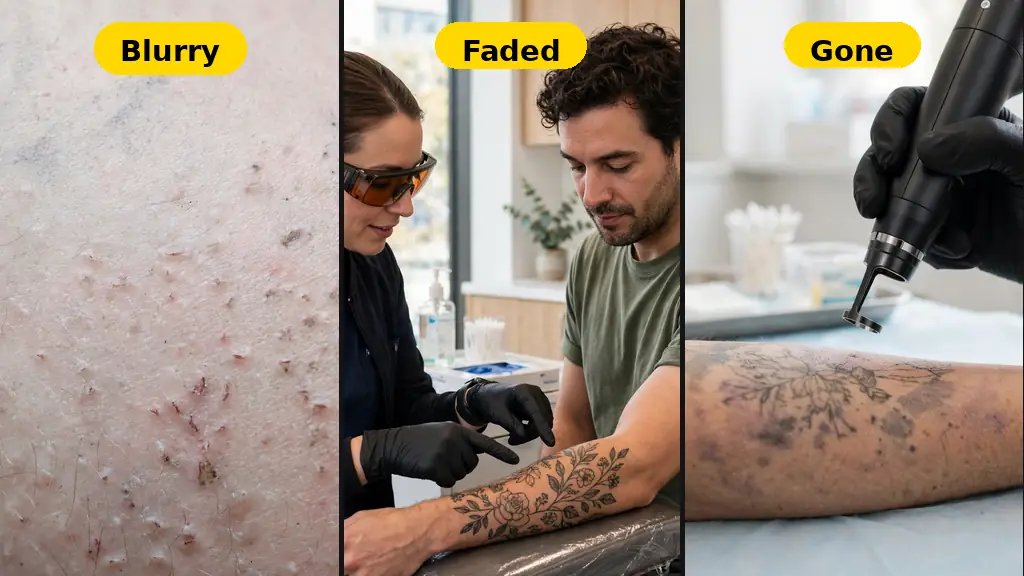
That tattoo you loved at 22 now makes you cringe at 32 — join the club. But before you book the first laser tattoo removal session, know this: erasing ink is slower, pricier, and weirder than clinic Instagram photos suggest. Some colors refuse to budge, some tattoos take two years to clear, and the pain is its own adventure.
This no-hype 2026 guide covers how laser tattoo removal actually works, the honest pain level, how many sessions your ink really needs, real cost per session, the side effects nobody mentions, and aftercare that genuinely speeds fading.
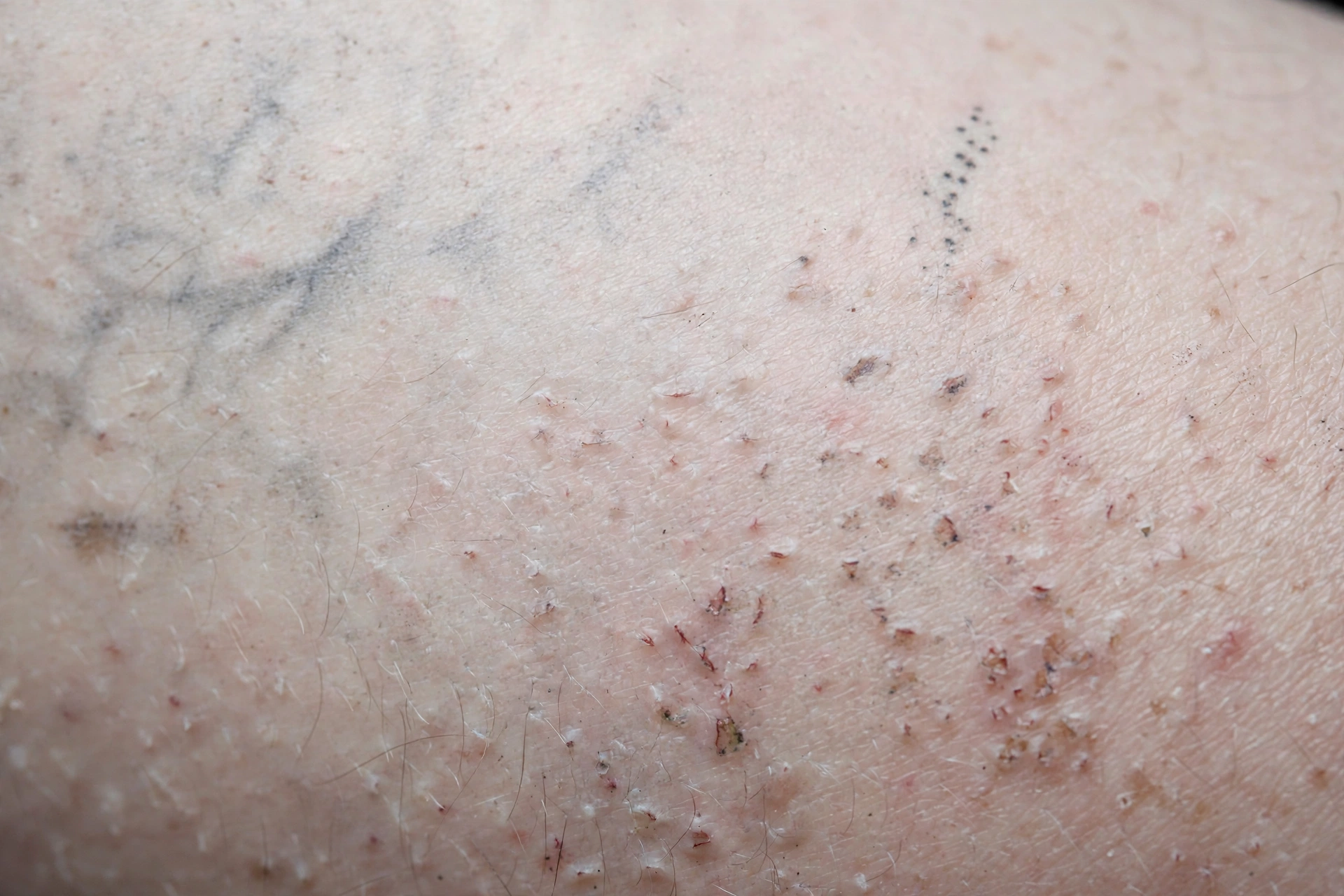
📑 In This Article
How Laser Tattoo Removal Actually Works
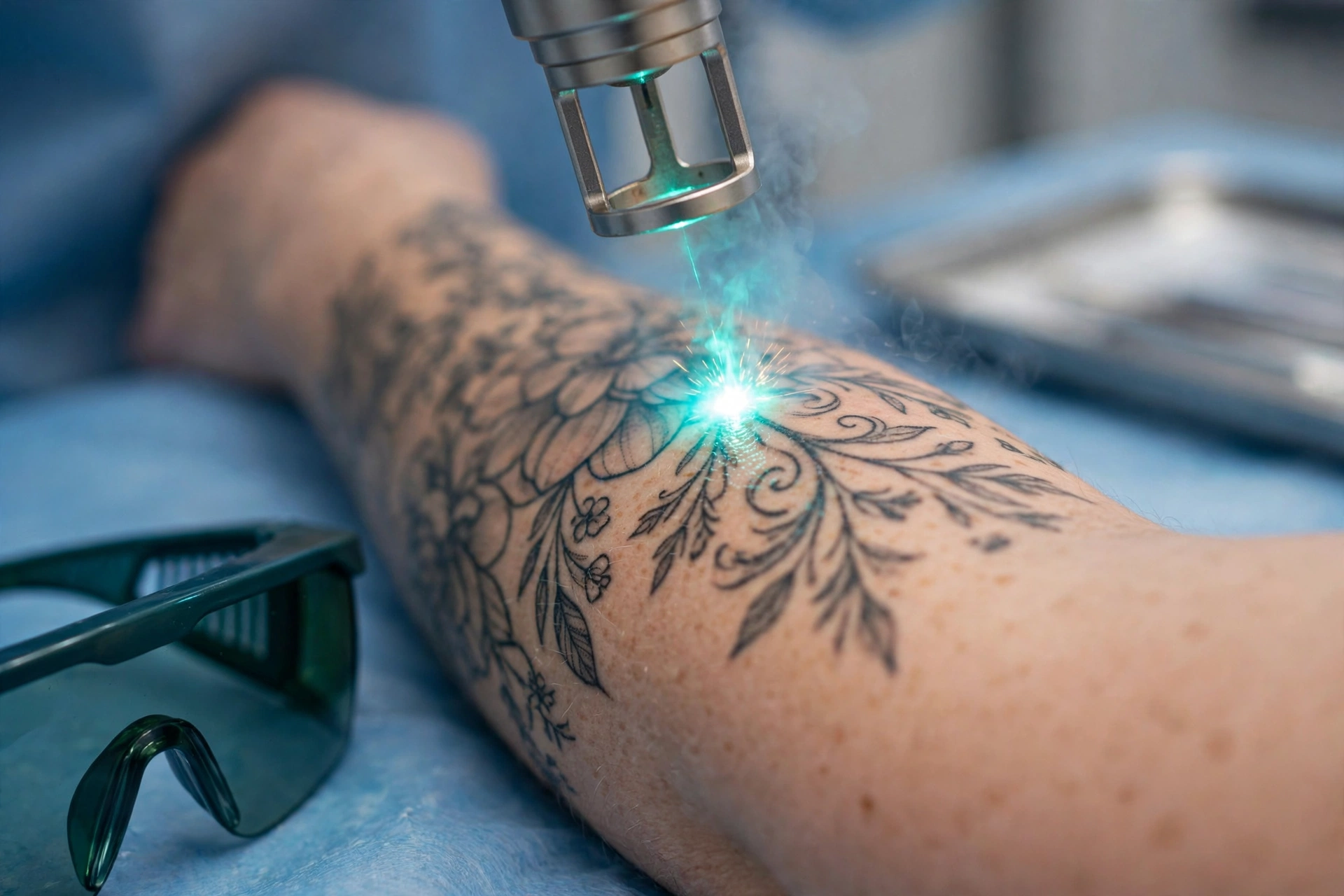
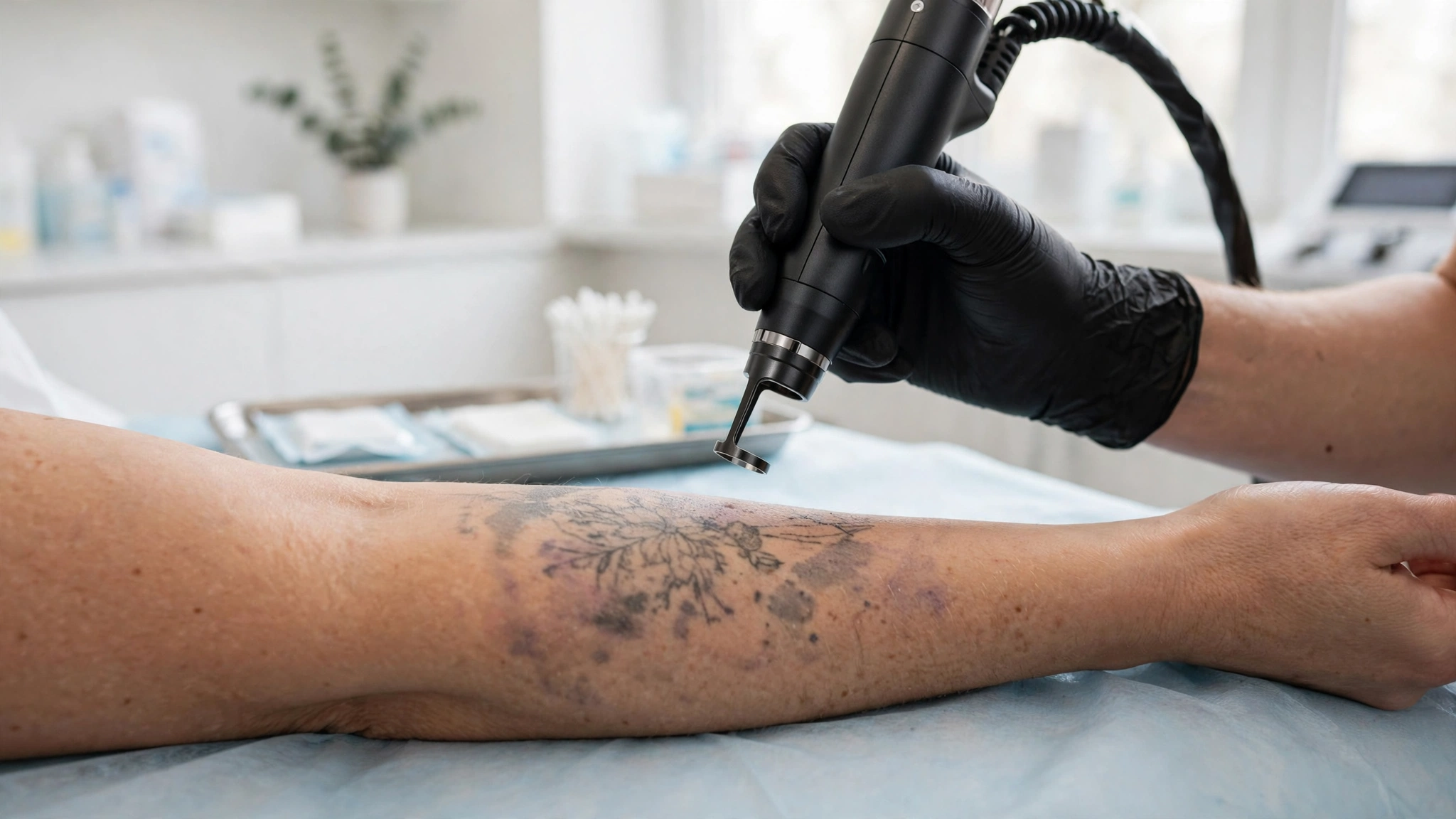
No laser “melts” your tattoo off. Modern treatments fire ultra-short pulses of targeted light energy through your skin. The tattoo pigment absorbs that light and shatters into tiny fragments — then your own immune system clears the ink particles through the lymphatic system over the following weeks.
That’s why there’s a 6–10 week gap between sessions: your body needs weeks to flush the debris. Q-switched lasers are the workhorses; picosecond lasers pulse faster and cost more (Nd:YAG 1064nm is the gold standard for black ink). The American Academy of Dermatology confirms it’s a safe and effective, non-invasive treatment.
The Brutal Truth: Does Laser Tattoo Removal Hurt?
Yes — most people describe each laser pulse as a rubber band snap against sunburned skin. A small tattoo takes under a minute to treat, but that minute earns its reputation. Ask for topical numbing cream before the session — it takes the edge off dramatically.
Removal pain maps like getting inked: bony spots sting worst; fleshy areas are kinder. Compare every spot on our 2026 tattoo pain chart.
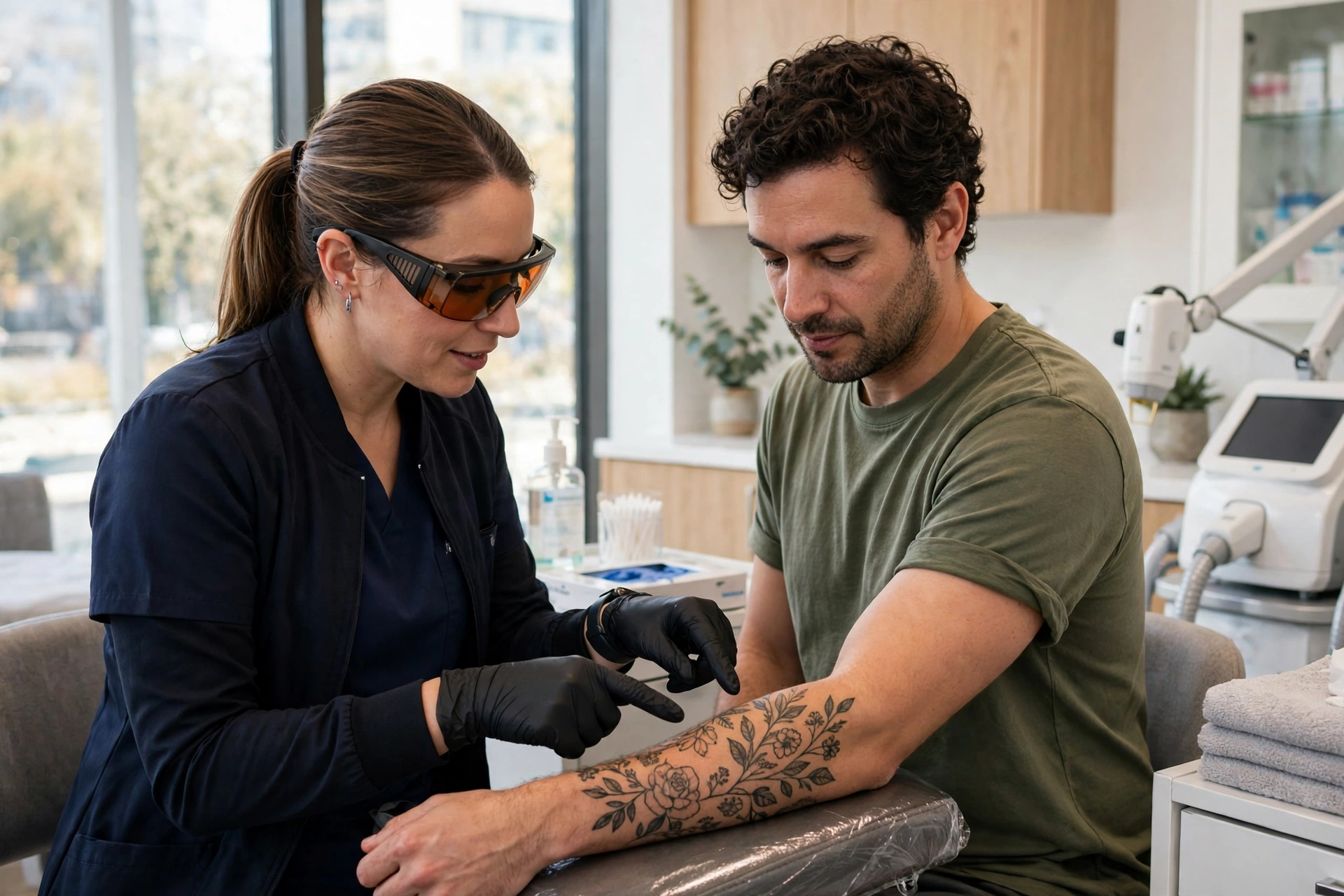
How Many Laser Tattoo Removal Sessions Will Your Tattoo Need?
Expect anywhere from 4 to 30 treatments — most everyday tattoos need 6–12. What decides the number of sessions:
- Colors of ink — black and dark blue absorb laser light best and fade fastest. Green, purple, and light blue are stubborn. White, flesh-tone, and yellow barely respond at all.
- Tattoo size and density — a palm-sized piece clears far faster than a full sleeve; thick professional tattoo ink needs far more sessions than light amateur work.
- Tattoo age — older tattoos fade faster; sun and cell turnover have already broken down pigment.
- Placement — ink near the heart clears quicker thanks to better circulation; hands and feet are slowest.
- Your habits — smoking slows immune function and fading; staying hydrated and sun-free helps.
Reality check: many people only need partial tattoo removal. Fading a tattoo for a cover-up takes just 2–4 sessions — if you want fresh ink over old ink, say so at your laser tattoo removal consultation and save a fortune.
Laser Tattoo Removal Cost in 2026: The Real Numbers
Clinics price by tattoo size, per session — you’ll pay it 6–12+ times. Typical laser tattoo removal cost in 2026:
- Tiny (under 2 inches): $100–$200 per session
- Small (2–4 inches): $150–$300 per session
- Medium (palm-sized): $250–$500 per session
- Large (half sleeve / back): $400–$800+ per session
Do the math: a medium tattoo at $300 × 8 sessions = $2,400 — far more than getting inked cost (see our 2026 tattoo price guide). Ask about multi-session packages and start with a tattoo removal test spot before buying a bundle.
7 Things Your Laser Clinic Won’t Tell You
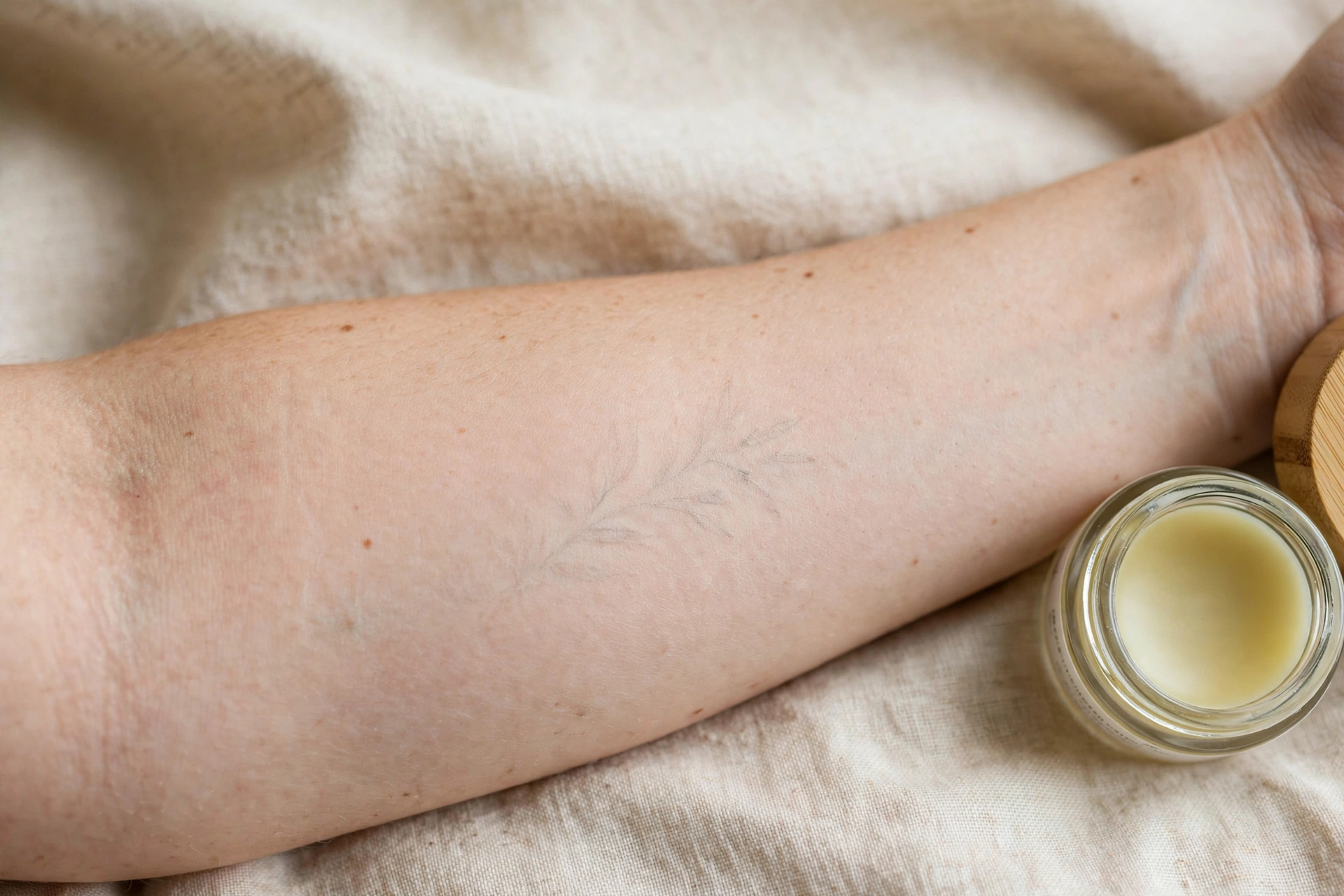
- Ghost tattoos are real. Faint shadows or outlines can remain even after successful treatment — complete removal is never guaranteed.
- Some colors darken first. Paradoxical ink darkening hits white, flesh-tone, and red pigments — they oxidize grey or black before fading.
- Side effects of laser tattoo removal include blistering. Redness, swelling, and blisters are normal healing, not a botched job. Scarring is rare — mostly from picking blisters.
- Dark skin needs specialist care. Melanin absorbs laser energy too, so the right wavelength matters enormously.
- Removal creams are a scam. They can’t reach the dermis where ink lives — the FDA has flagged them, and they can chemically burn skin.
- Progress plateaus. Fast fading early, then stubborn patches that refuse to move. That’s normal, not failure.
- Before-and-after photos lie by lighting. Ask for healed, unedited results in normal daylight — not filtered gallery shots.
Who Should NOT Get Laser Tattoo Removal
Pregnant or breastfeeding? Wait — no safety data exists, and no ethical clinic will treat you. Keloid scarring, very dark skin, or active skin conditions on the tattoo demand a specialist. On isotretinoin? Most techs make you wait months after stopping. A dermatologist consult beats a sales pitch.
Aftercare That Actually Speeds Up Fading
Your immune system does the heavy lifting between sessions — aftercare is about not sabotaging it. Treat the treated area like a mild sunburn, following the same gentle wound care our complete tattoo aftercare guide recommends:
- Ice for 10–15 minutes right after each session to calm swelling.
- Keep it clean and covered; never pop blisters — they protect healing skin.
- Avoid sun exposure while healing, then use high-SPF sunblock on the area — UV darkens fading pigment.
- Wear loose clothing to prevent irritation on the treated skin.
- Stay hydrated and don’t smoke — both affect how fast ink fragments clear.
- Wait the full 6–10 weeks between sessions; rushing just inflames skin that was still clearing.
FAQ — Laser Tattoo Removal Questions
Will laser tattoo removal leave a scar?
Rarely — the laser targets pigment, not skin. Scarring usually comes from infection, picking blisters, or sun damage during healing.
How long between tattoo removal sessions?
Six to ten weeks. The wait lets your immune system flush shattered ink — shorter gaps don’t fade ink faster, they just irritate skin.
Can a tattoo be removed completely?
Often yes for black ink, but green, yellow, and white are the hardest — complete removal is never guaranteed. Expect significant fading at minimum.
Is laser tattoo removal safe on dark skin?
Yes, with the right laser (typically Nd:YAG 1064nm) and an experienced technician. Always book a test spot first.
Is a cover-up cheaper than full removal?
Far cheaper — fading for a cover-up takes just 2–4 sessions. Say so upfront and skip the full-removal price tag.
Laser tattoo removal isn’t magic — it’s patience, money, and your immune system doing quiet work between sessions.
Which part surprised you most — the cost, the pain, or the ghost tattoos? Tell us in the comments — and share this with someone thinking of erasing their ink!