
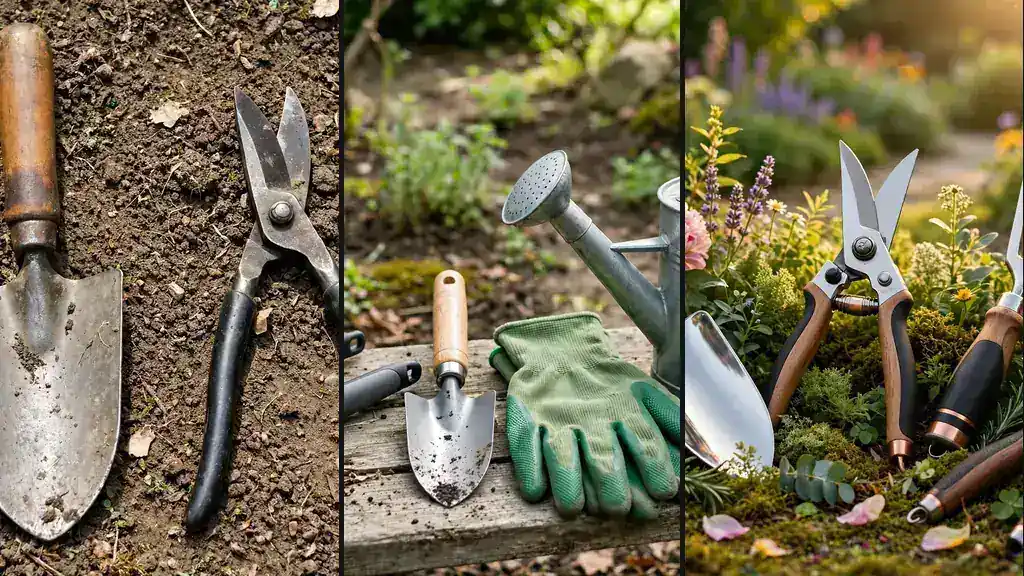
The best gardening tools don’t just feel nicer in your hands — they quietly give you your weekends back. A sharp bypass pruner turns a twenty-minute deadheading session into five minutes; a good hoe weeds a bed in one pass instead of three. Most gardeners own a shed full of almost-right tools and reach for the same two or three. These five are the ones worth upgrading, because each replaces a slower, more frustrating way of doing the same job. Here’s what each tool does, why it saves time, and how to choose one that lasts.
Why the Best Gardening Tools Save You Hours
Garden time disappears in three places: fighting dull blades, making repeat trips to the shed, and redoing work a better tool would have finished in one pass. Quality tools attack all three. A sharp edge cuts cleanly the first time instead of chewing stems that need tidying. A tool that does two jobs means fewer walks back for the right implement. And a tool that fits your hand lets you work longer without the fatigue that ends sessions early.
There’s a cost argument too. A fifteen-dollar pruner that dulls in a season and a sixty-dollar one that lasts a decade aren’t in the same category — the cheap one costs more per year and wastes your time every use. That doesn’t mean buying the priciest everything; it means spending where the tool meets resistance daily. If you’re just starting out, these flower gardening tips for beginners pair well with the tool choices below.
Bypass Pruners
If you buy one tool this year, make it bypass pruners — the consensus first pick among the best gardening tools. They work like scissors, two curved blades sliding past each other, giving a clean cut that heals fast on live stems. Deadheading roses, harvesting herbs, cutting back perennials, trimming branches up to three-quarters of an inch, opening every bag of soil you own: nothing else in the shed gets this much daily use.
Look for replaceable blades (this alone separates lasting pruners from disposable ones), a grip that fits your hand size, and a blade that opens easily for cleaning. Wipe blades with rubbing alcohol between plants when cutting anything diseased, and add a drop of mineral oil after each session. A quick pass with a diamond file once or twice a season keeps them cutting like new.
Hori-Hori Soil Knife
The hori-hori is a Japanese gardening knife — one serrated edge, one straight edge, pointed tip, depth markings along the blade — and the closest thing to a multi-tool the garden world has. It digs planting holes, cuts roots and sod, divides perennials, weeds tight spots, opens bags, and measures planting depth. Gardeners who carry one stop walking back to the shed entirely, which is where the time savings quietly pile up.
Choose a full-tang model in stainless or carbon steel with a comfortable molded grip; the blade should feel substantial, since flimsy imitations bend on the first root. Rinse after use, dry fully, and oil carbon-steel blades lightly against rust. It earns its keep on bigger weekend work like how to build a garden fence or any of these DIY projects for a better home and garden, where one tool that digs, cuts, and pries works all day.
Oscillating Hoe
Traditional chopping hoes exhaust you because every stroke is lift-and-slam. An oscillating hoe — also called a stirrup or shuffle hoe — works on push and pull, its hinged blade skimming just under the soil surface and severing weed roots in both directions. You cover a bed in a fraction of the time, standing upright. For a vegetable patch or long borders, this one change turns weeding from a dreaded chore into a ten-minute glide, which is why it belongs on any best gardening tools list.
Technique matters: work when soil is dry and weeds are small, and the severed seedlings simply wither on the surface — no bending, no collecting. Keep the blade sharp with a file; a dull stirrup hoe just pushes weeds around. Used weekly through the season, it prevents weeds from establishing, so each session stays short. The tool doesn’t just work faster — it keeps the job small.
Watering Wand With a Timer
Watering eats more garden time than almost anything else, and most of it is wasted on the wrong method. A watering wand — a long-handled breaker head delivering a gentle rain — reaches hanging baskets and the backs of borders without dragging a hose through the plants, and the soft spray soaks soil instead of blasting it from roots. Pair it with a simple hose timer or basic drip line, and daily watering stops being a daily task.
The timer is the real saver: set it for deep watering in the early morning, when evaporation is lowest and foliage dries fast enough to discourage disease. Deep, infrequent watering builds deeper roots than a daily sprinkle, so plants get tougher while you do less. Look for a wand with an adjustable head and shut-off valve at the grip, and a mechanical timer for dead-simple reliability — no batteries, no apps, just a dial.
Best Gardening Tools Buying Guide: Quality and Maintenance
Comparing the best gardening tools side by side, a few markers separate keepers from landfill. Forged steel heads beat stamped ones — denser, hold an edge longer, don’t bend. Handles should be smooth hardwood like ash or hickory, or a comfortable composite; reject anything with a wobble at the joint, because a loose head is inefficient and dangerous. Comfort isn’t a luxury: grips that fit your hands mean longer sessions and fewer blisters, so hold the tool before buying whenever possible.
Maintenance turns a good purchase into a decade-long one, and it takes minutes. Knock soil off after every use — dried soil holds moisture against metal. Sharpen blades a few times a season; you’ll feel the difference immediately. Wipe metal with an oily rag before winter storage and hang tools rather than piling them. A garden multi-tool with interchangeable heads rounds out the kit for pruning, sawing, and lopping in one package. For seasonal care calendars and tool reviews, Gardeners’ World and The Spruce both maintain solid, regularly updated guides.