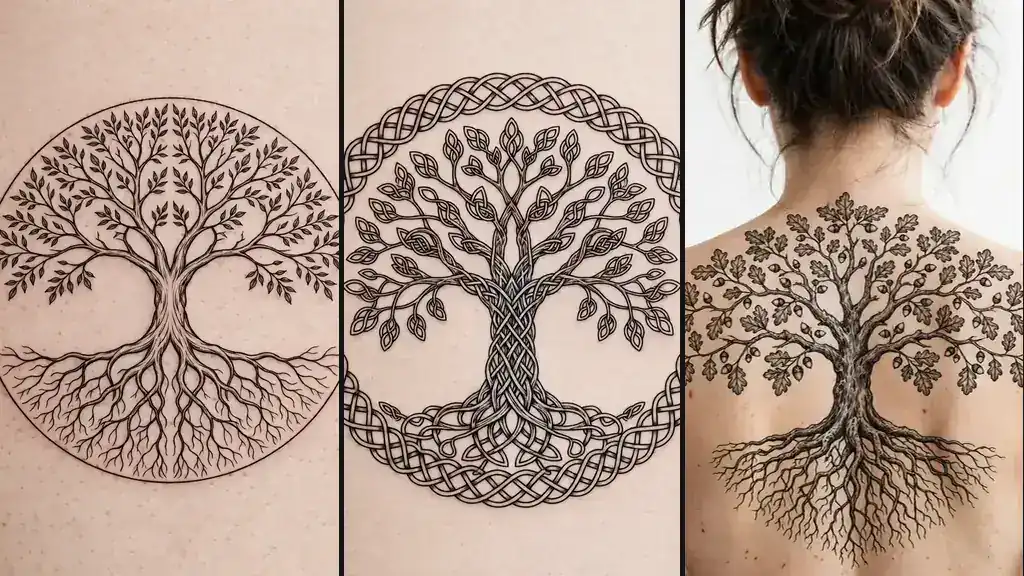
One symbol has outlasted almost every tattoo trend: the tree of life. It is deep-rooted and wide-reaching, personal and universal at the same time — a single image that can mean growth, family, resilience, balance or a fresh start. That is why a tree of life tattoo works on a wrist, a back, a forearm or a ribcage, in fine line or in bold blackwork, in colour or in black and grey.
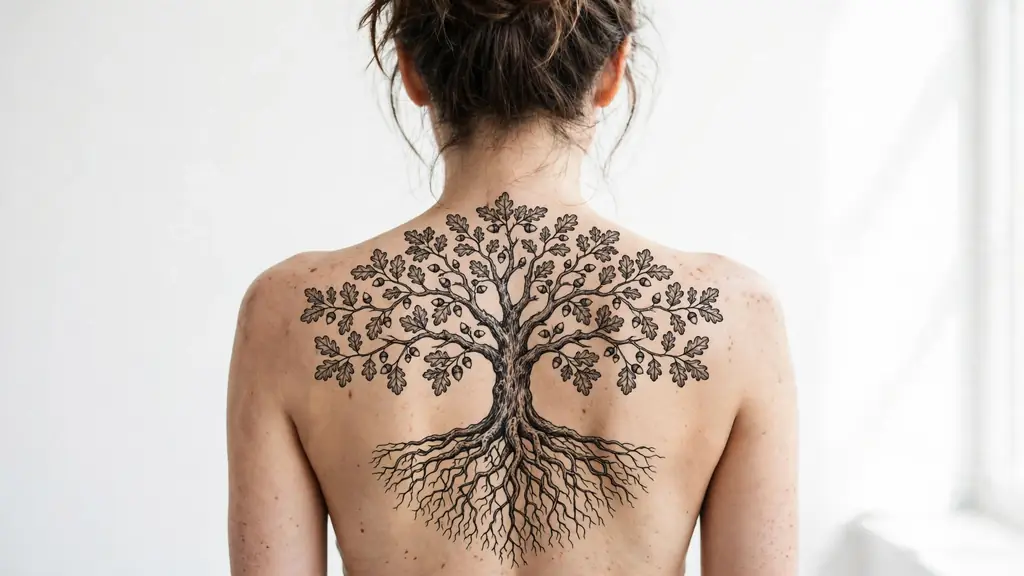
Quick Answer: A tree of life tattoo usually symbolises growth, strength, connection and new beginnings. Roots stand for grounding and family, the trunk for resilience, and the branches for freedom, wisdom and reaching upward. The best placement depends on size: small designs suit the wrist, ankle or behind the ear, while large, detailed trees suit the back, thigh or chest. Pain is usually low to moderate on the forearm and thigh, and higher on the spine, ribs and ankle.
Contents
- What a Tree of Life Tattoo Really Means
- Classic & Cultural Tree of Life Designs
- Tree of Life Designs by Style
- Seasonal & Nature Tree of Life Designs
- Tree of Life Designs by Placement
- Symbolic & Companion Tree of Life Designs
- Pain Levels by Placement
- Cost & Session Time
- Styles Compared
- Placement Pros & Cons
- Healing Time & Aftercare
- Common Mistakes to Avoid
- Frequently Asked Questions
- Quick Summary
- References
What a Tree of Life Tattoo Really Means
Across cultures, the tree of life is a map of a life well lived. Roots anchor it in the past — family, home, heritage. The trunk is the present — strength, patience, survival. The branches reach toward the future — growth, learning, hope, and freedom. Put together, the image says: I know where I come from, I can stand through hard seasons, and I am still growing.
That broad meaning is why the design is so personal. Two people can wear the same tree and mean completely different things: one marks a new chapter after illness, another honours parents and children, another simply loves the balance of a circle with roots below and branches above. For more on how symbols change meaning, see our guide to tattoo meanings.
The cultural versions add another layer. A Celtic tree honours Irish and Scottish heritage and the idea of an unbroken cycle. A Norse Yggdrasil connects nine worlds and carries a sense of fate and wisdom. A Kabbalah tree maps spiritual paths. A Bodhi tree recalls the Buddha’s enlightenment under a fig tree. A family tree with birds turns the symbol into a portrait of the people you love most.
Classic & Cultural Tree of Life Designs
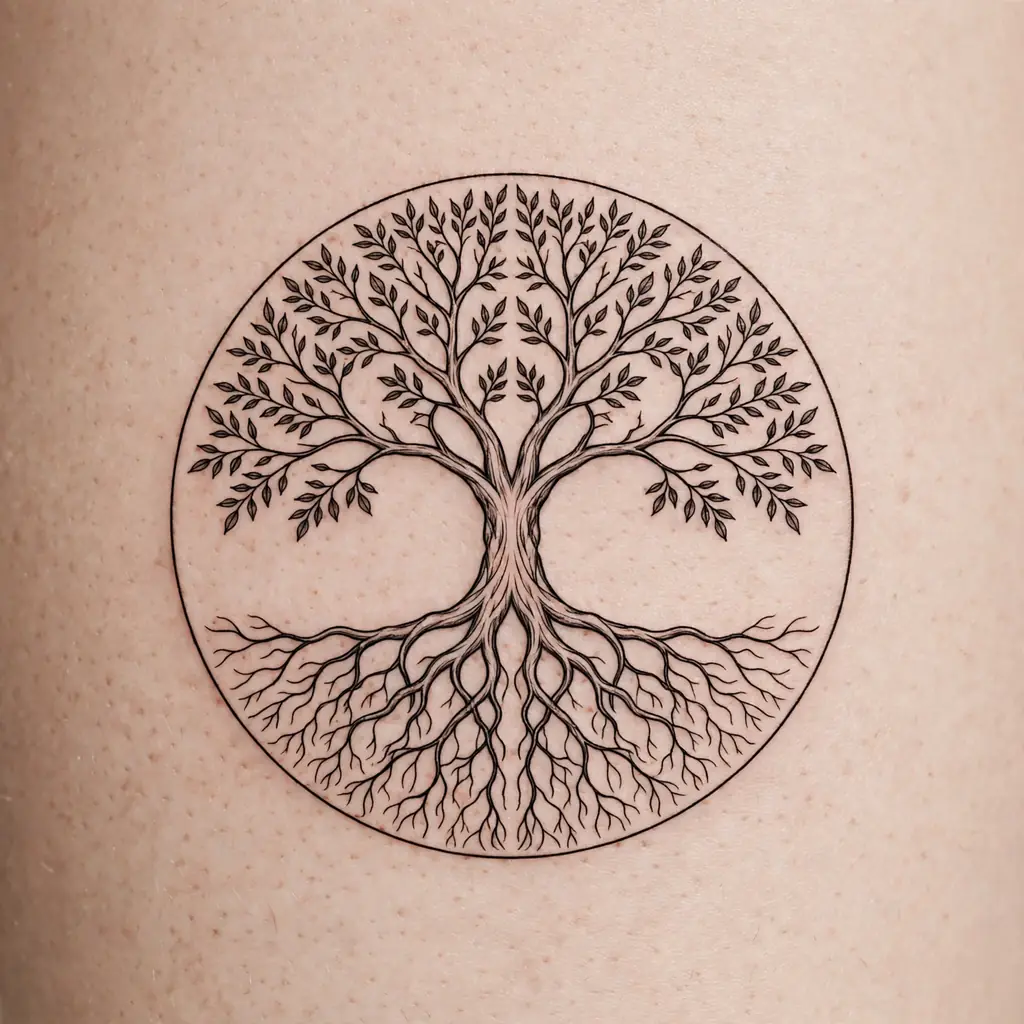
1. Classic Circle Tree
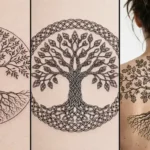
The most recognisable tree of life: a full tree, roots and branches mirrored, held inside a perfect circle. It reads instantly, photographs beautifully, and suits almost any placement that can hold a round shape — upper arm, shoulder blade, thigh or back.
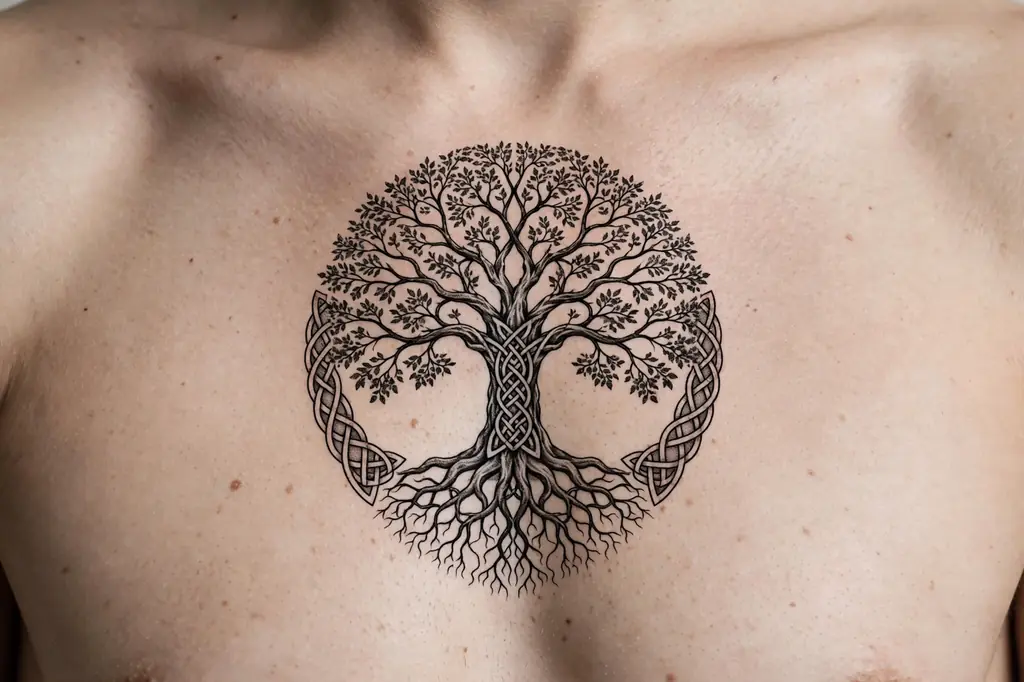
2. Celtic Knotwork Tree
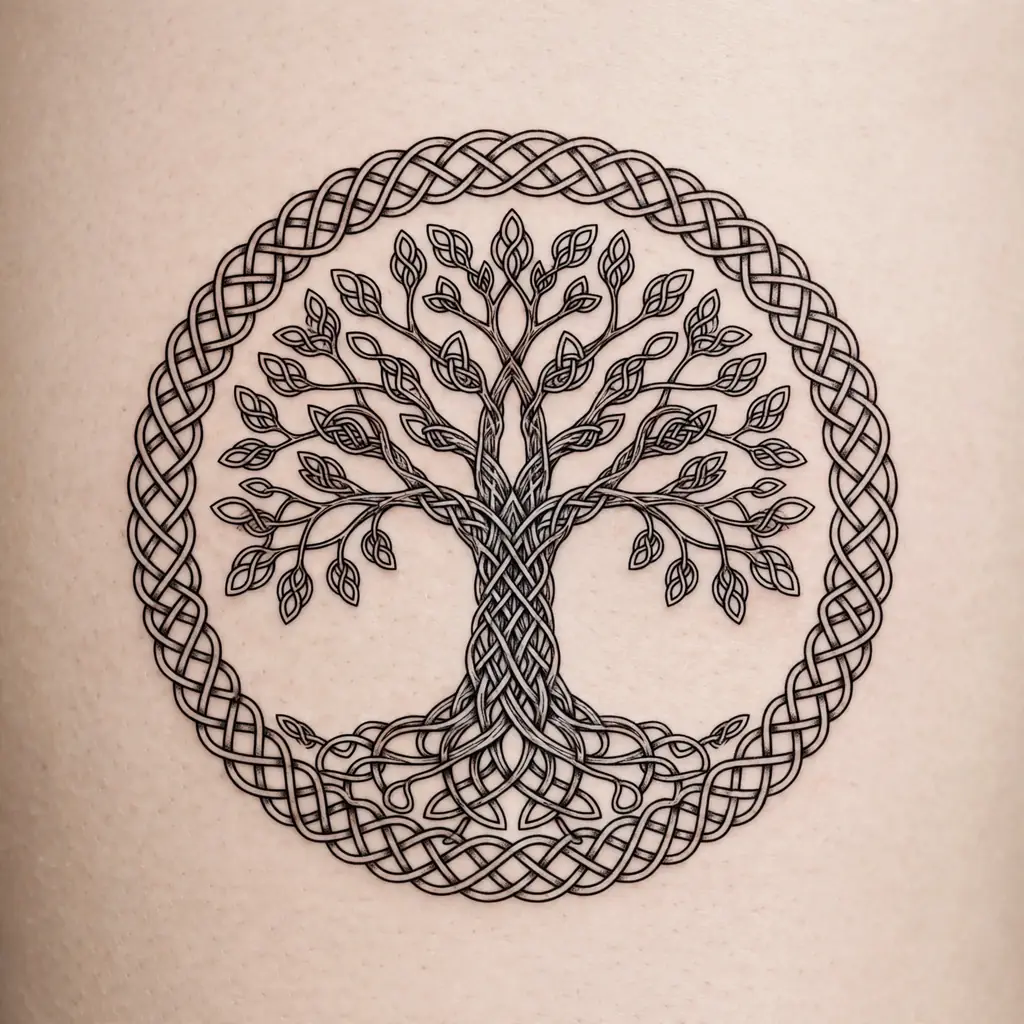
Celtic knotwork has no beginning and no end, so a Celtic tree becomes a symbol of eternity: life, death and rebirth in one continuous line. Look for interlaced branches and roots, often with a knot border. It pairs well with other Celtic work and ages gracefully in black ink.
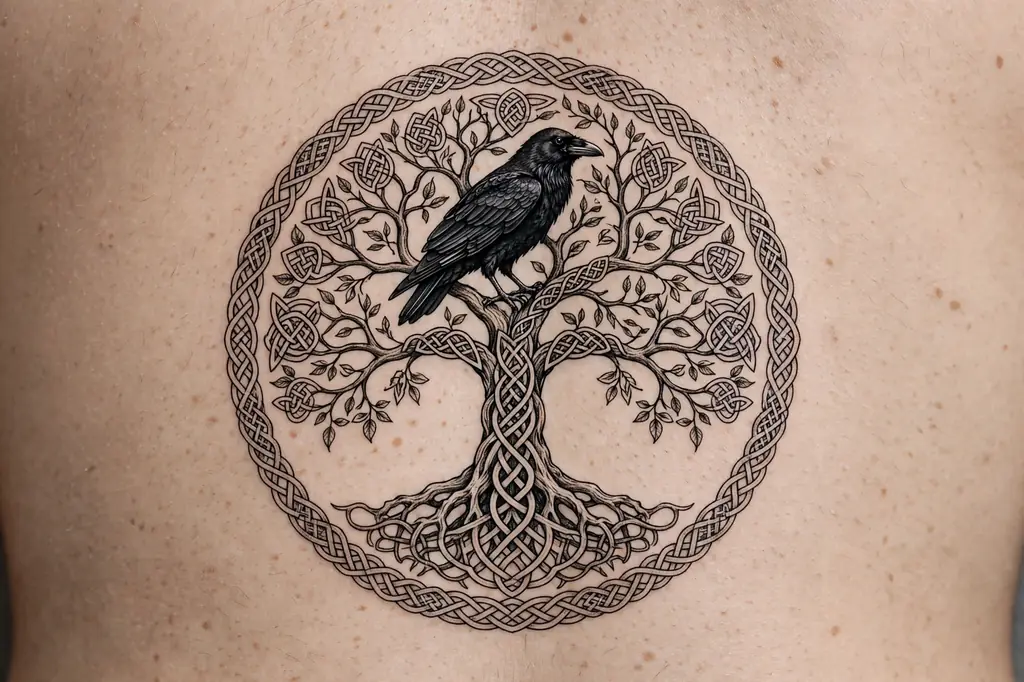
3. Yggdrasil
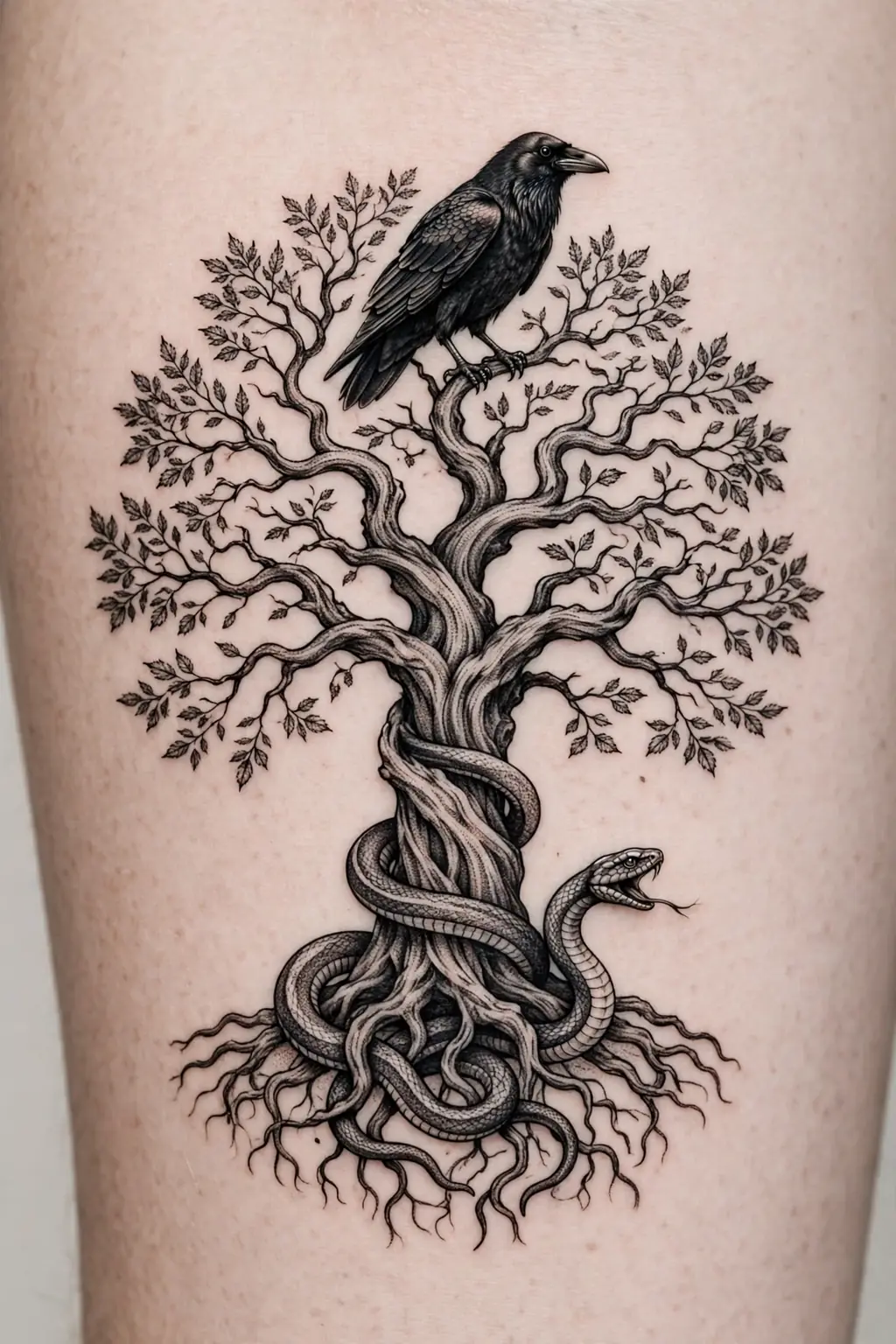
In Norse myth, Yggdrasil is the great ash that holds the nine worlds together. A Yggdrasil tattoo often adds a raven, a serpent, or runes, and suits people drawn to mythology, wisdom and fate. Keep the trunk strong and vertical so the design reads as a world-tree, not just a decorative tree.
4. Family Tree with Birds
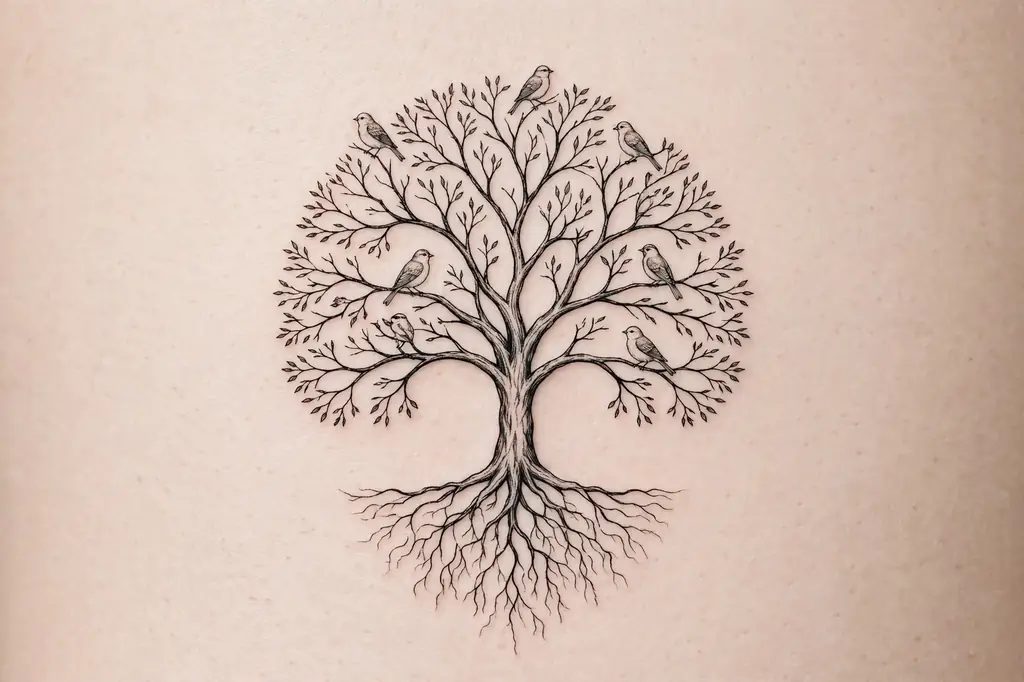
Each bird can stand for a family member — a parent, a partner, a child, a lost loved one. This is the most emotional version of the design, and the most customisable: add initials, birth flowers or a small date to make it unmistakably yours.
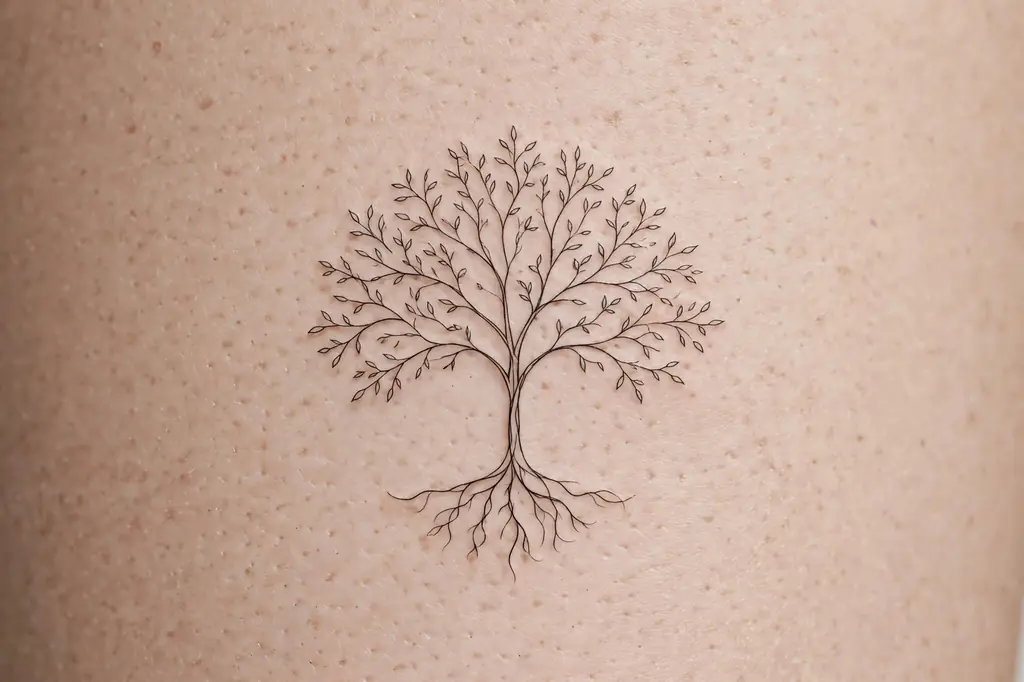
5. Minimalist Fine-Line Tree
One delicate line, no shading, no colour — just the outline of a tree. Fine-line trees suit small placements and first tattoos, and they pair well with a single word or date. For the technique in general, see our fine line tattoo guide.
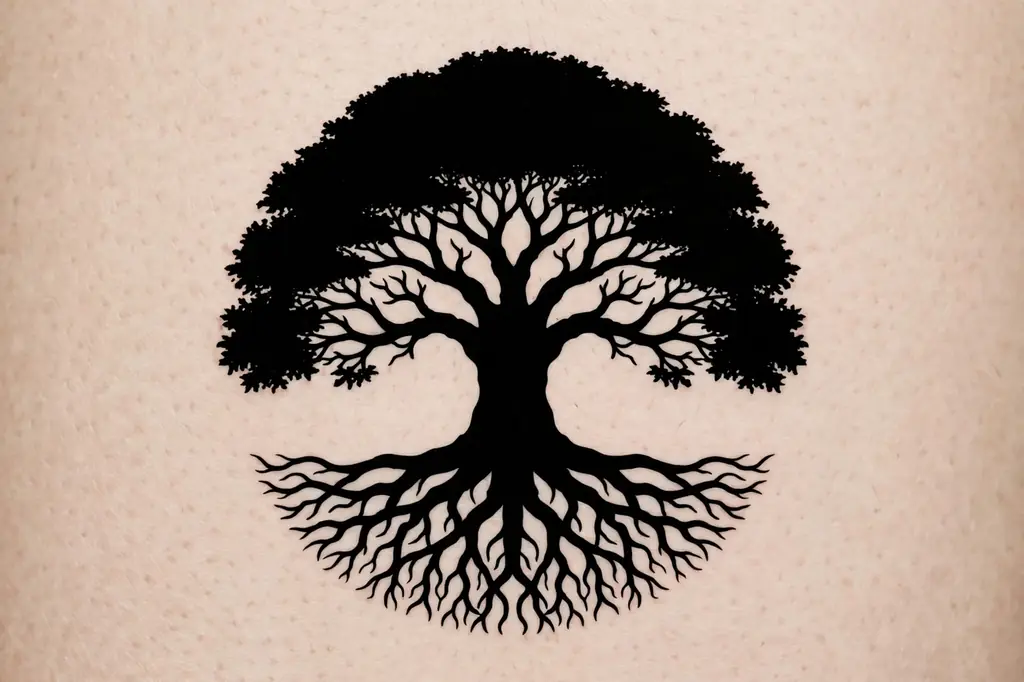
6. Blackwork Silhouette Tree
A solid black canopy and roots make a bold, graphic statement that reads from across a room. Blackwork suits larger placements where the silhouette has room to breathe, and it holds up well over time because there is no fine detail to blur.
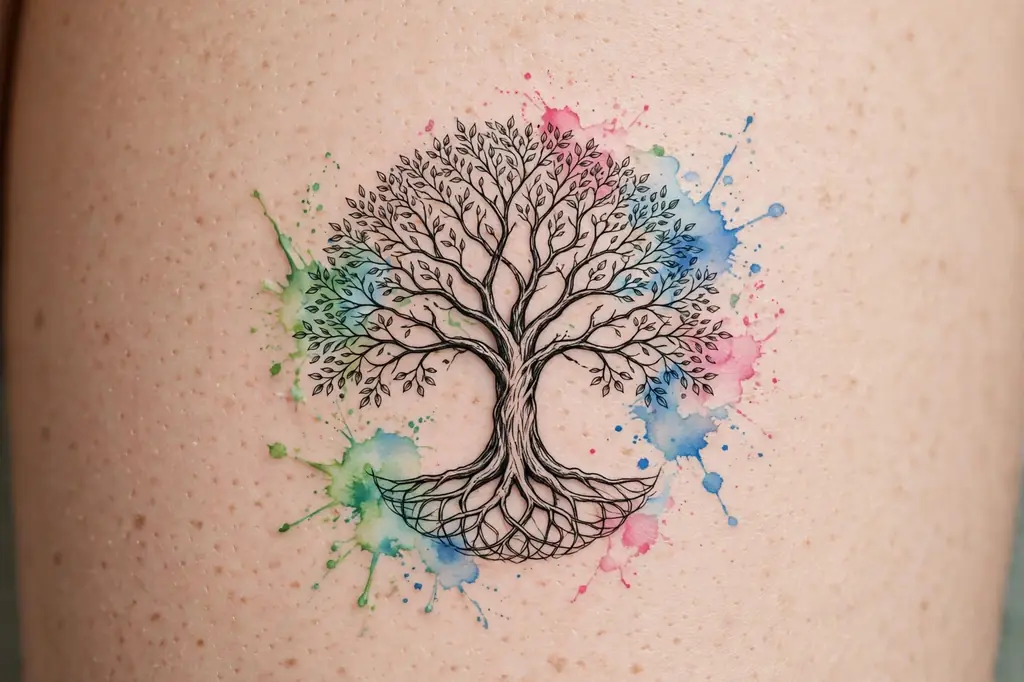
7. Watercolor Bloom Tree
Soft washes of colour bleed beyond the outline like paint on paper. Watercolor trees feel dreamy and artistic, especially in greens, blues and pinks. Ask your artist how they protect colour over time — a strong black outline helps the washes stay readable as they soften.
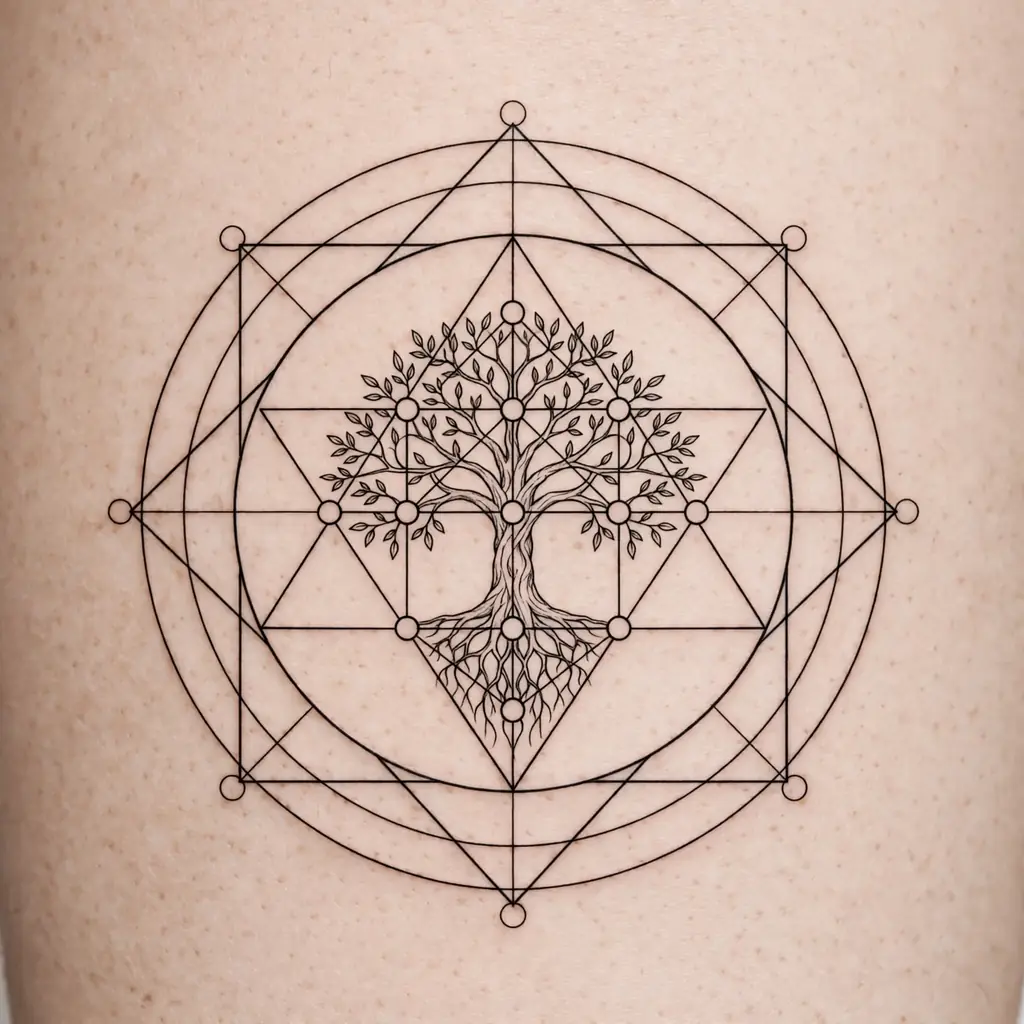
8. Geometric Sacred Geometry Tree
Triangles, circles and dotwork turn the tree into a piece of sacred geometry. The symmetry is calming, the linework is precise, and the design suits people who love structure as much as nature. This style rewards a very steady hand, so choose an artist with a strong geometric portfolio.
Tree of Life Designs by Style
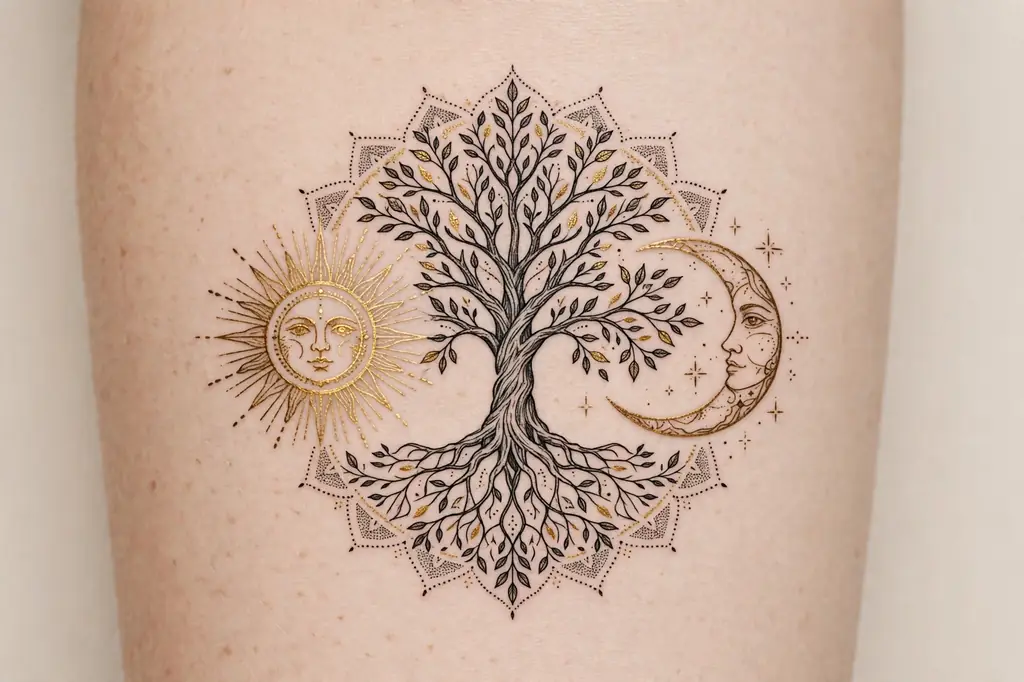
9. Sun and Moon
A sun on one side and a crescent moon on the other turns the tree into a balance symbol: day and night, light and shadow, masculine and feminine energy. It is a popular choice for couples, for new parents, and for anyone marking a period of balance after change.
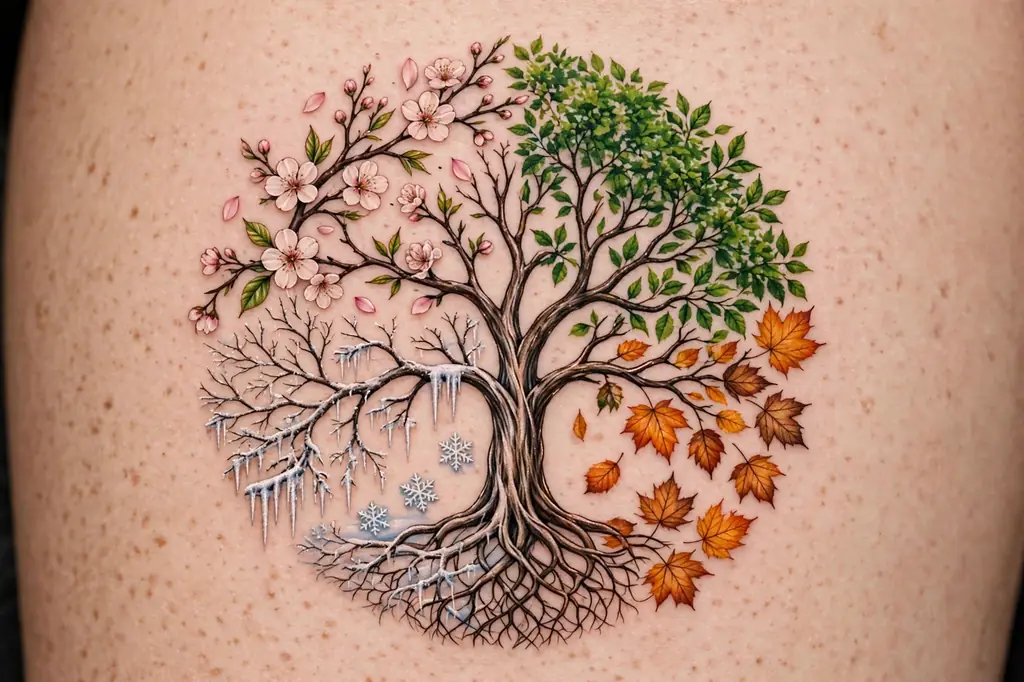
10. Four Seasons
Split the canopy into four quarters — blossom, green, orange and bare — and you get a whole year in one tattoo. It is a beautiful way to mark the passage of time, a child’s first year, or the idea that every season has its purpose.
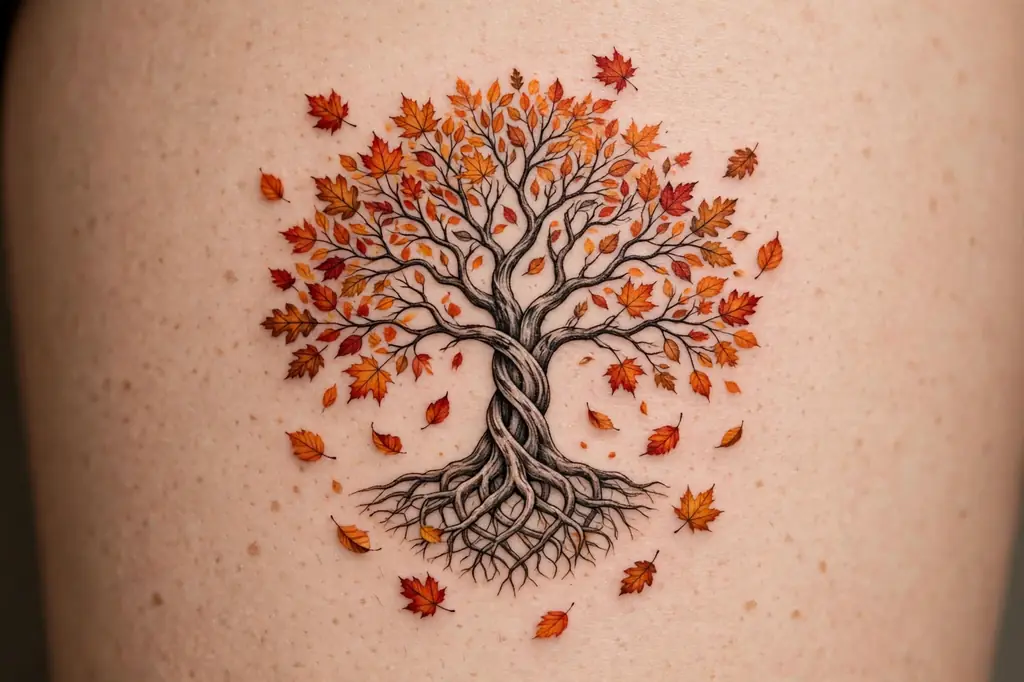
11. Autumn Falling Leaves
Orange and red leaves drifting from the branches suggest letting go, change and the beauty of impermanence. Autumn trees suit warm colour palettes and slightly larger placements where the falling leaves have room to move.
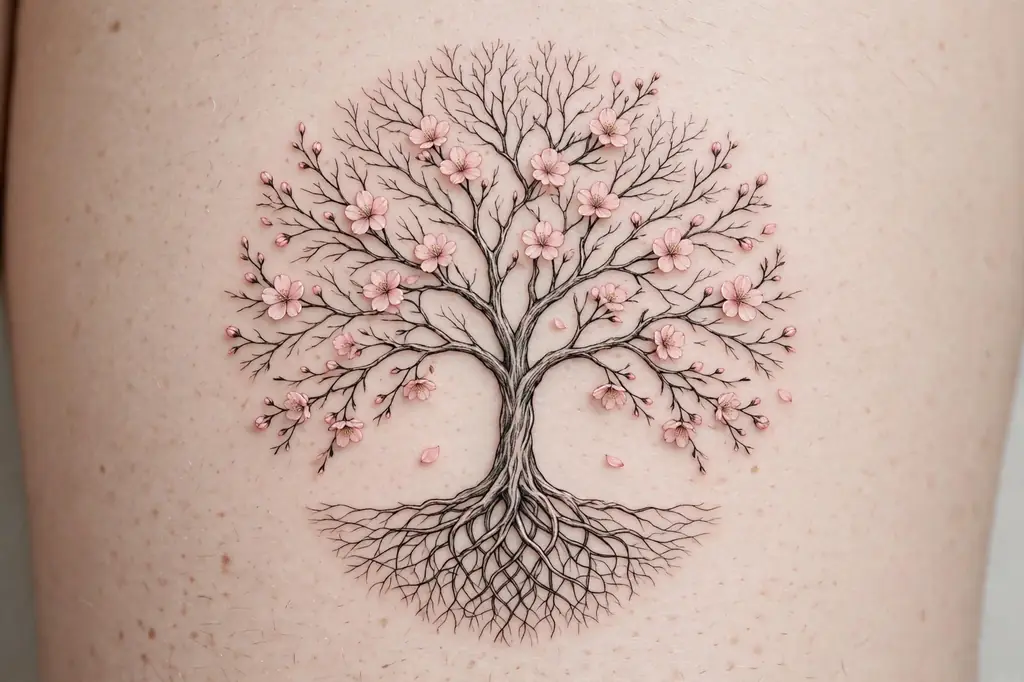
12. Spring Cherry Blossom
Delicate pink blossoms turn the tree into a symbol of renewal and fleeting beauty. Cherry blossom trees are especially popular in spring, after a recovery, or to mark a new beginning. Keep the blossoms light — heavy pink can overwhelm a small design.
13. Winter Bare Branches
Bare branches with a dusting of snow look stark, elegant and honest: growth is not always green. Winter trees suit people who have survived a hard season and want to honour resilience without pretending it was easy.

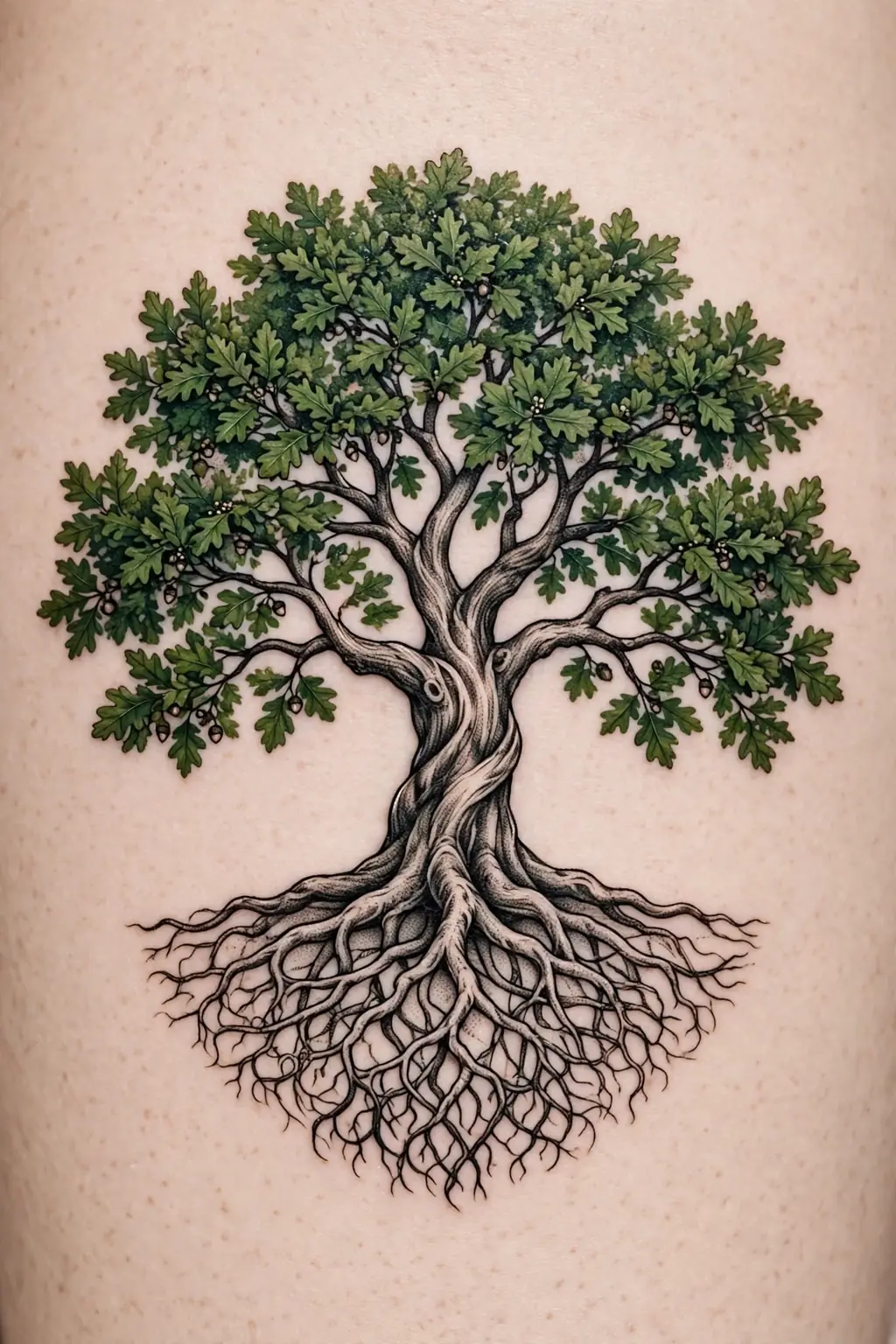
14. Full Summer Oak
A dense green canopy and deep roots make the classic summer oak the most grounded version of the design. Oaks stand for strength, endurance and protection, and a full oak needs space — think back, thigh or upper arm rather than a wrist.
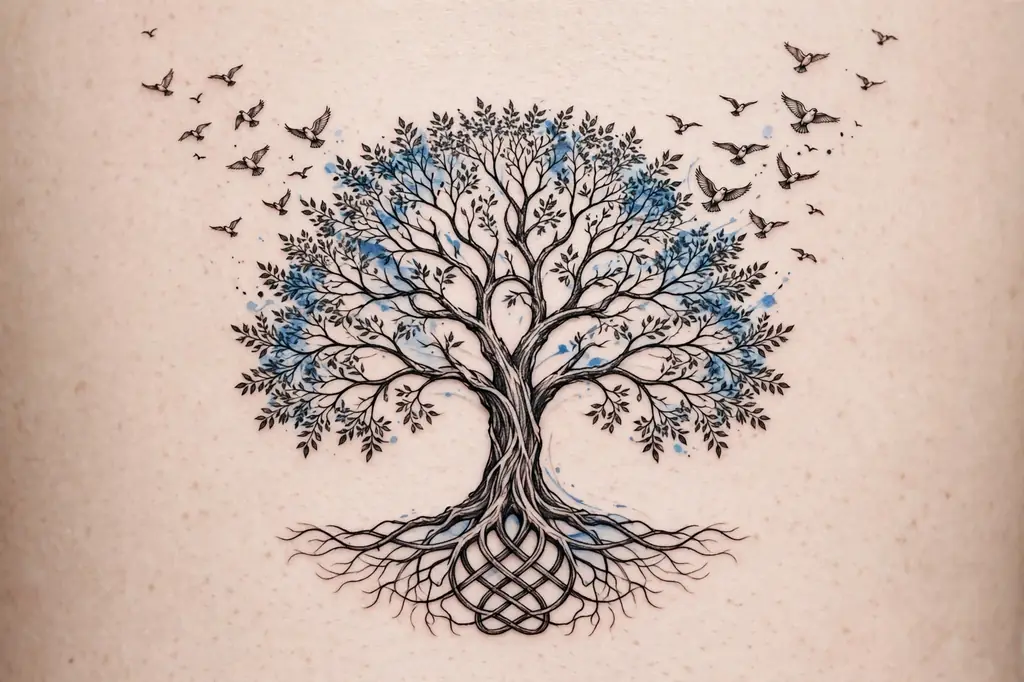
15. Birds Flying Free
Birds leaving the branches add movement and a sense of release. This version suits graduations, moves, breakups and any moment when freedom mattered more than roots. Keep the birds small and simple so the tree remains the focus.
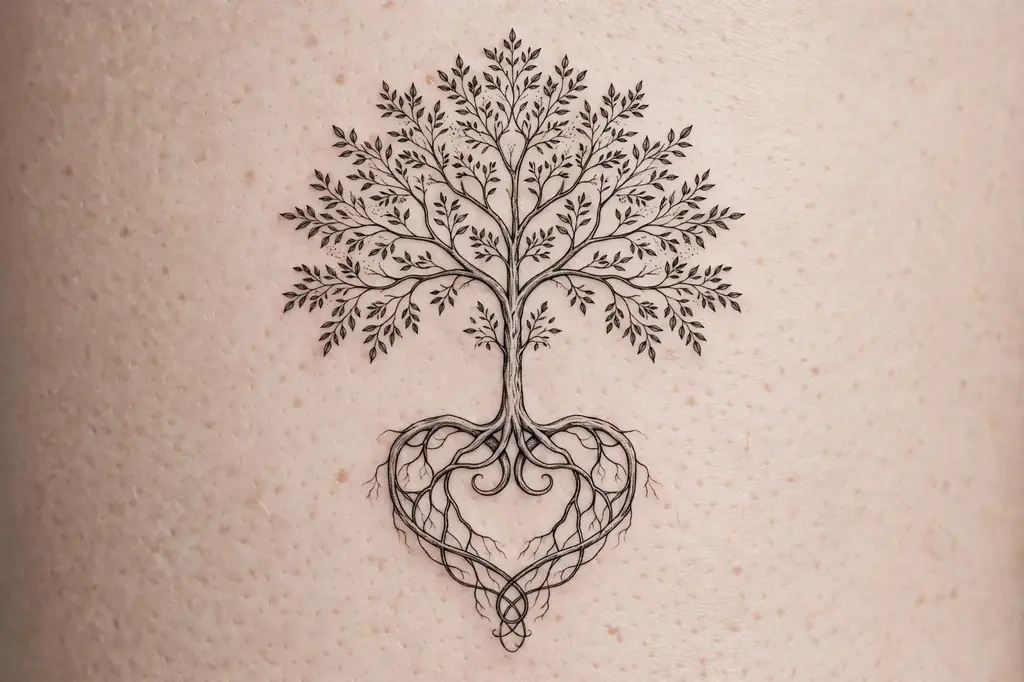
16. Roots as a Heart
When the roots curl into a heart, the message is unmistakable: love is what grounds you. This is a popular choice for anniversaries, for parents, and for memorial tattoos where the heart is both literal and symbolic.
Seasonal & Nature Tree of Life Designs
Tree of Life Designs by Placement
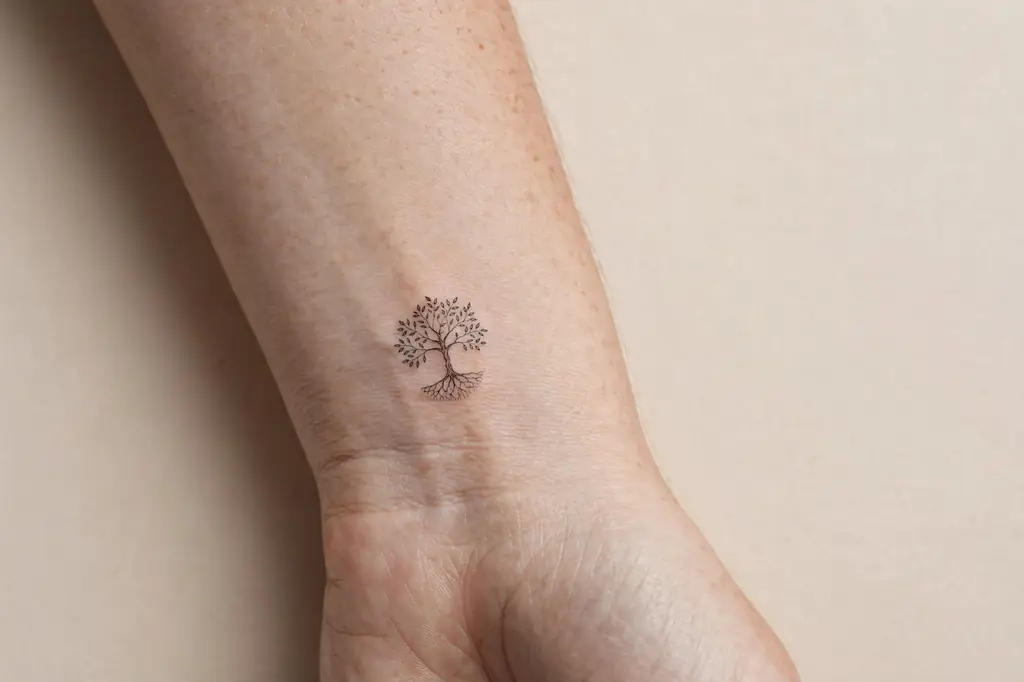
17. Tiny Wrist
A wrist tree has to be simple: a clean outline, minimal branches, no tiny text. At this size, fine line works best, and the design reads as a quiet personal reminder rather than a statement piece.
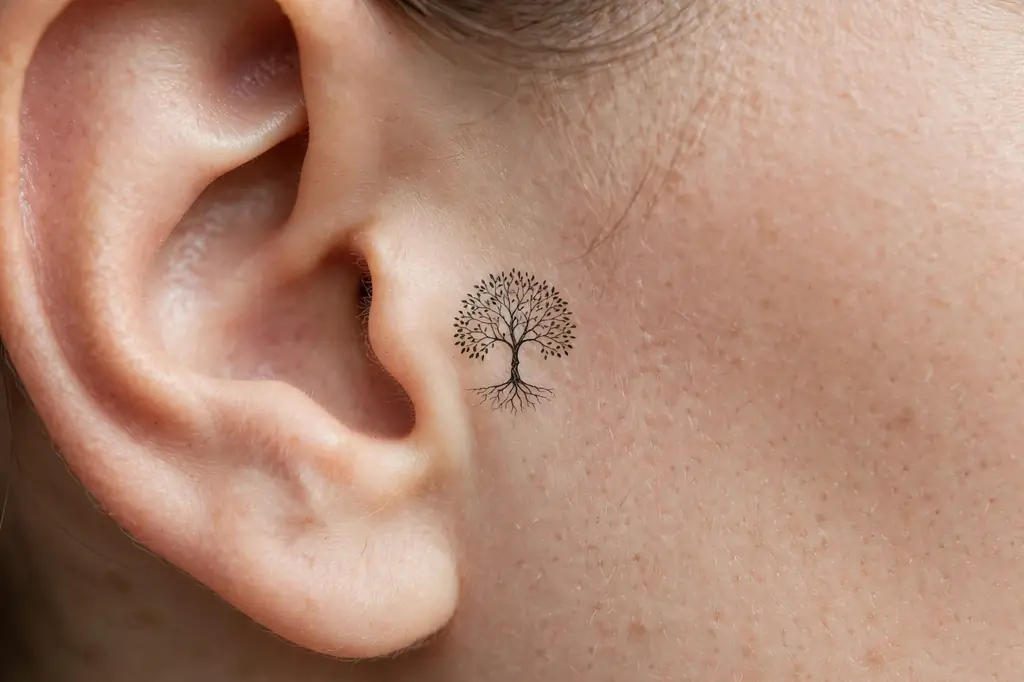
18. Tiny Behind-the-Ear
Behind the ear is discreet, delicate and surprisingly visible when hair is tied up. Keep the tree tiny and vertical, and expect a sharper sensation than the wrist because the skin is thin and close to bone.
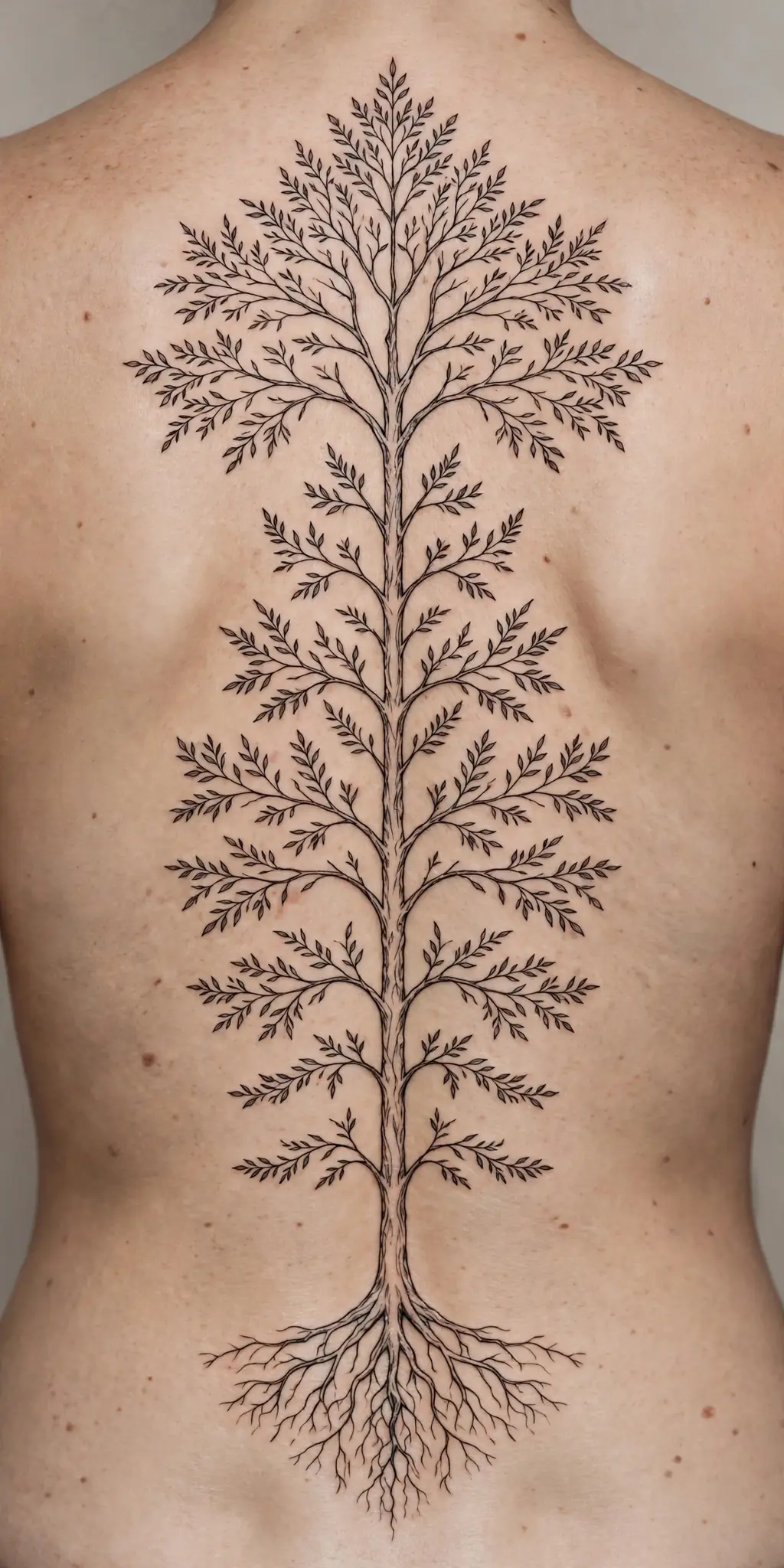
19. Tall Spine
A spine tree uses the body’s natural vertical line: a long trunk down the spine, branches spreading across the shoulder blades, roots near the lower back. It is dramatic, symmetrical and best done in stages if the design is large. For placement ideas in general, see our forearm tattoo ideas and related placement guides.
20. Large Back Oak
The back is the canvas for the fullest tree of life: an expansive canopy, a detailed trunk, a root system that can spread across the lower back. Back pieces take multiple sessions and heal slowly, but they reward patience with the most detailed version of the design.

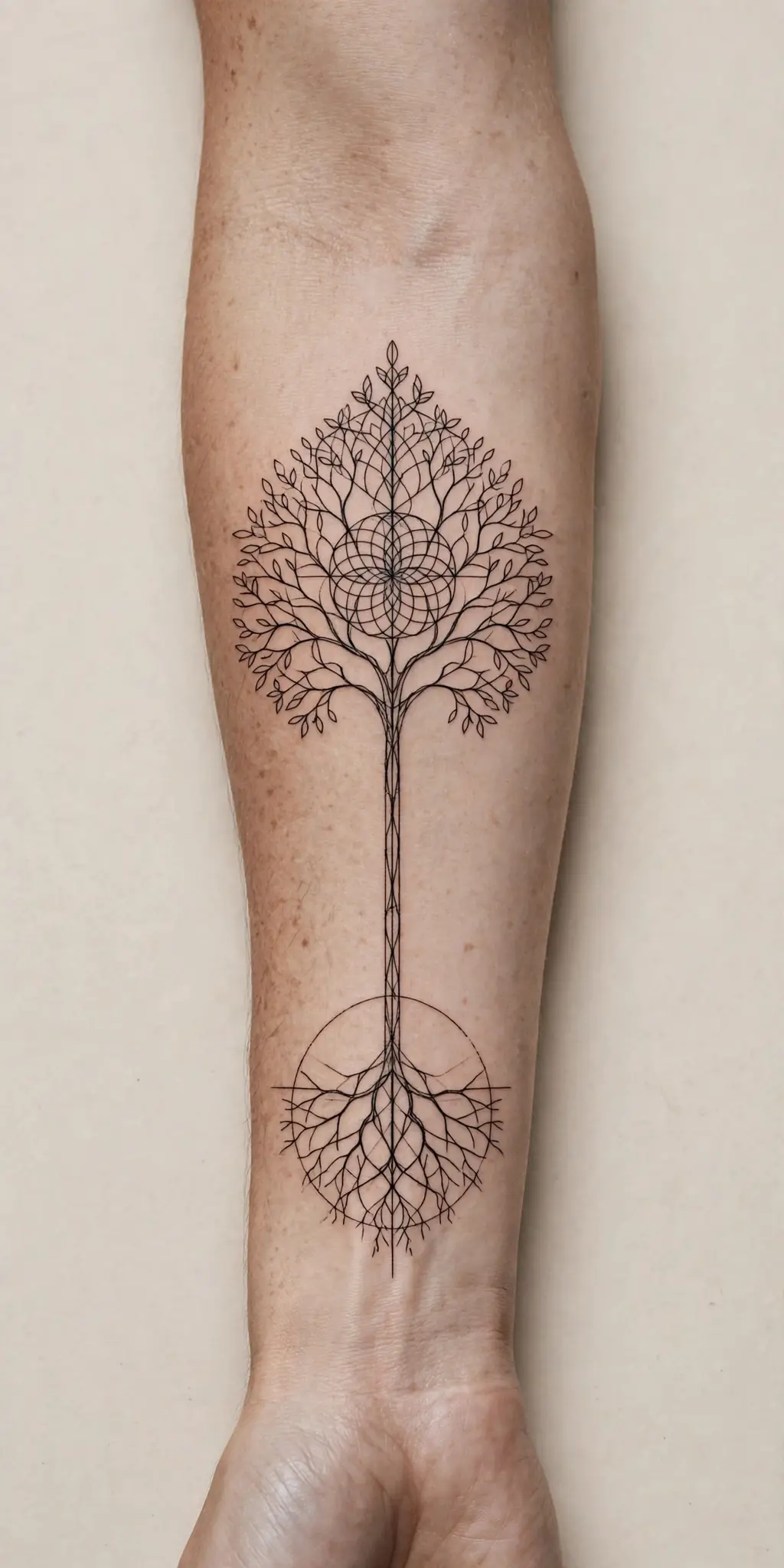
21. Forearm Linear
The forearm suits a vertical tree that follows the arm’s length. It is visible, easy to show or cover with a sleeve, and one of the least painful placements. A linear forearm tree also ages well because the skin there is relatively stable.
22. Chest Centrepiece
A symmetrical chest tree, centred over the sternum, makes a powerful statement. The centre line of the body mirrors the trunk, and the branches can spread toward the collarbones. Expect moderate to high pain near the sternum and collarbone.
23. Thigh Statement
The thigh offers a large, relatively low-pain canvas that is easy to hide. Flowers at the base soften the design, and the flat surface suits detailed canopies. Thigh trees are a good choice for a first large tattoo.
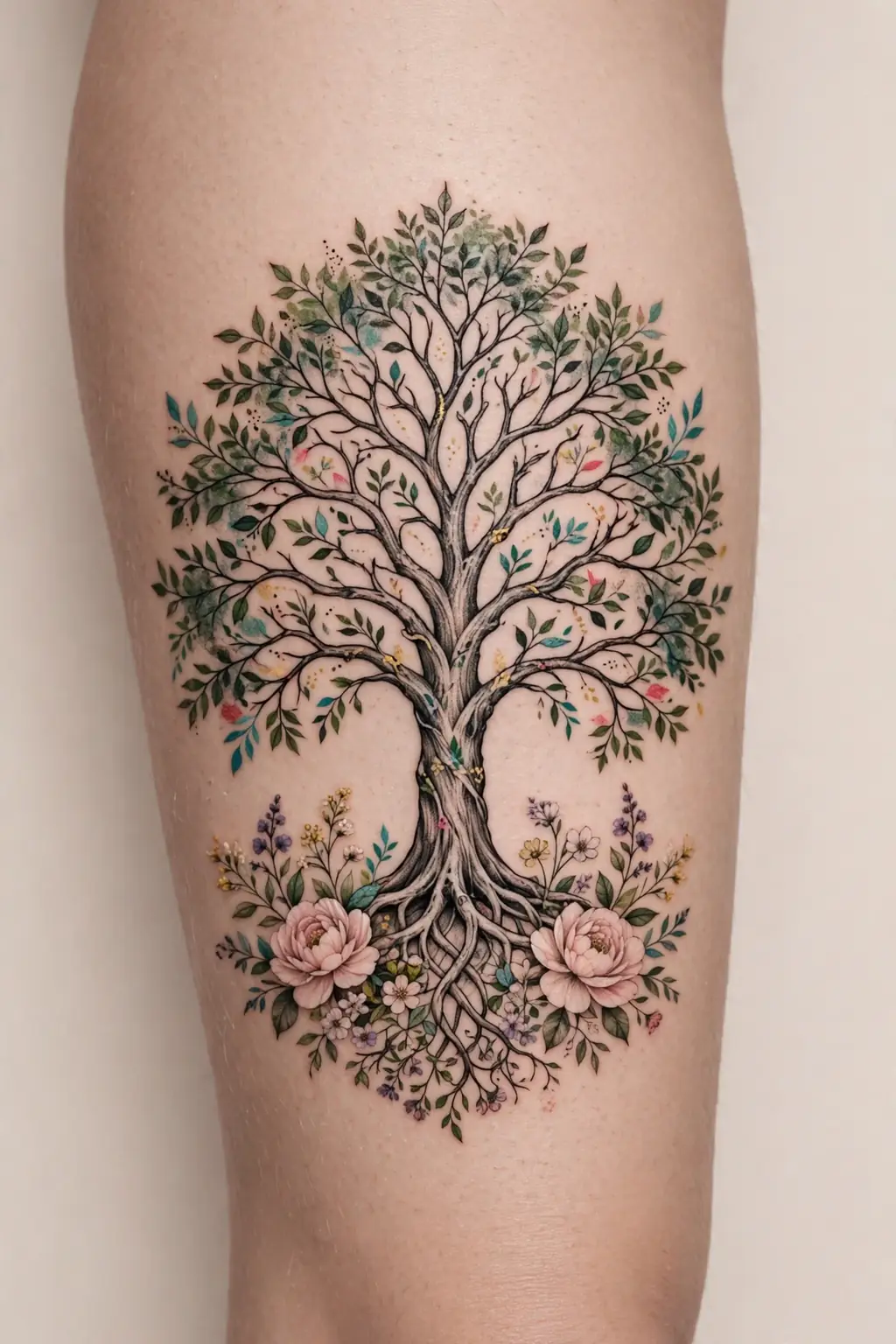
24. Calf Vertical
A tall, slim tree that follows the calf’s shape looks natural and athletic. The calf is a good middle ground: visible in shorts, easy to cover, and moderate in pain. Vertical designs work better here than round ones.
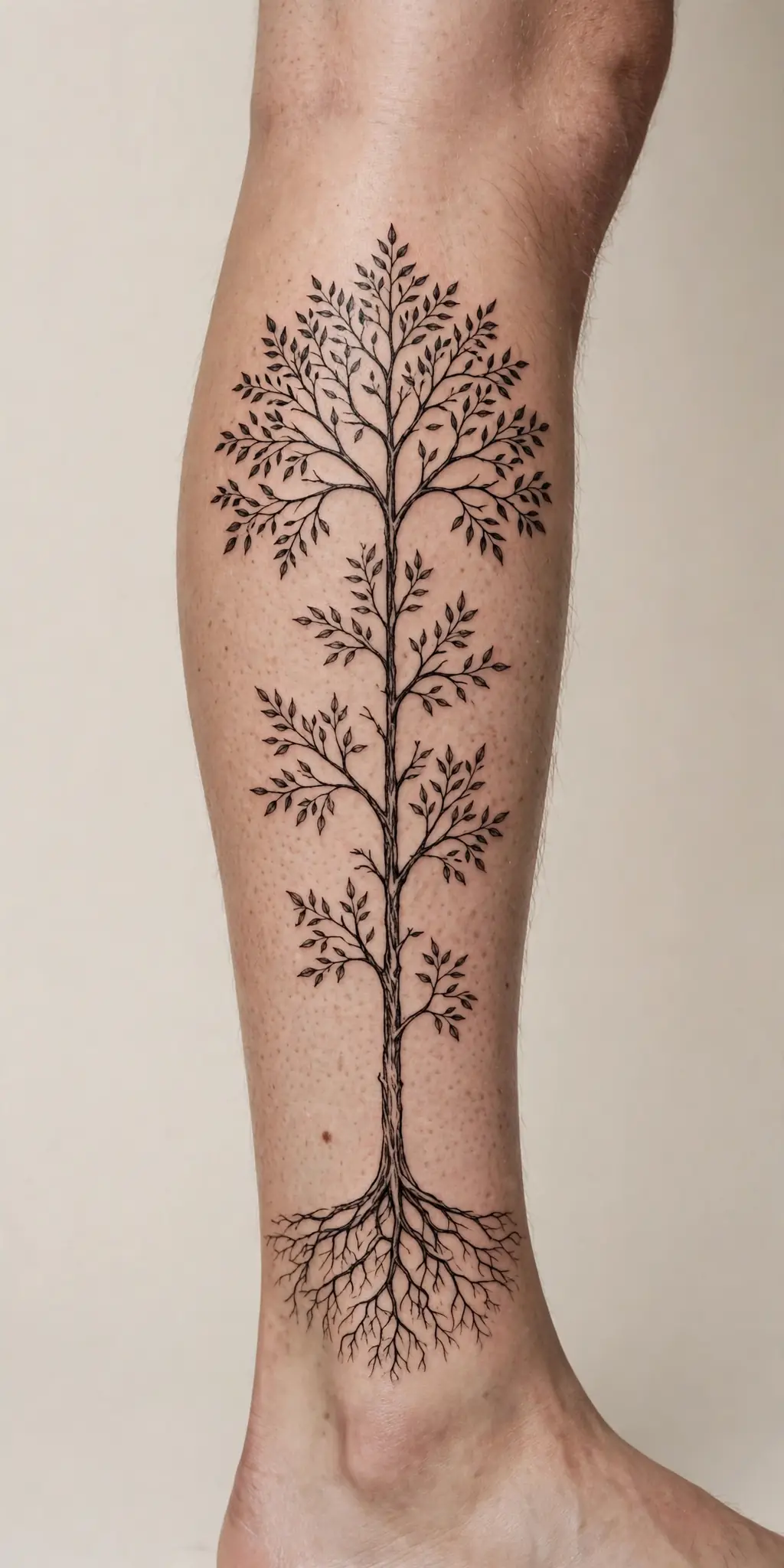
25. Ankle Wrap Roots
Roots wrapping around the ankle turn a small tattoo into a piece of jewellery. Ankle tattoos are more painful than they look — thin skin, close bone, and constant movement during healing — so keep the design small and simple.
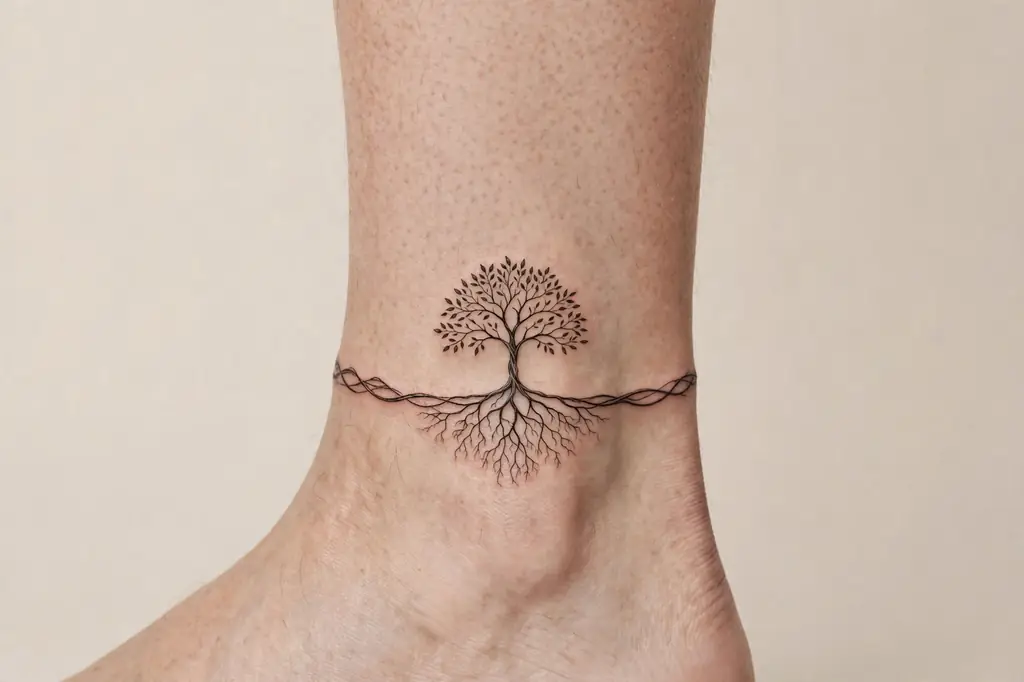
26. Shoulder Blade Circle
A circular tree on the shoulder blade sits naturally on the body’s curve. It is easy to show with a tank top and easy to hide with a shirt, and the flat bone underneath gives the artist a stable surface for a clean circle.
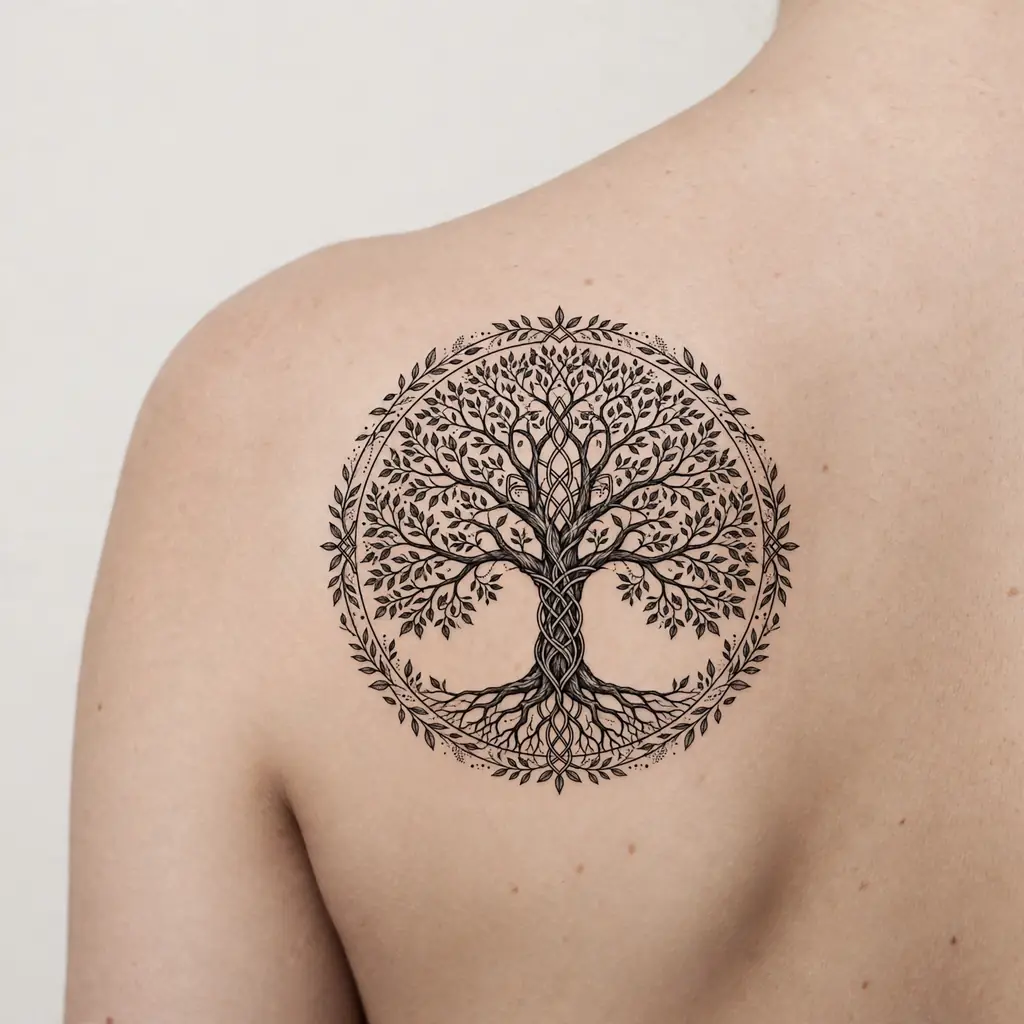
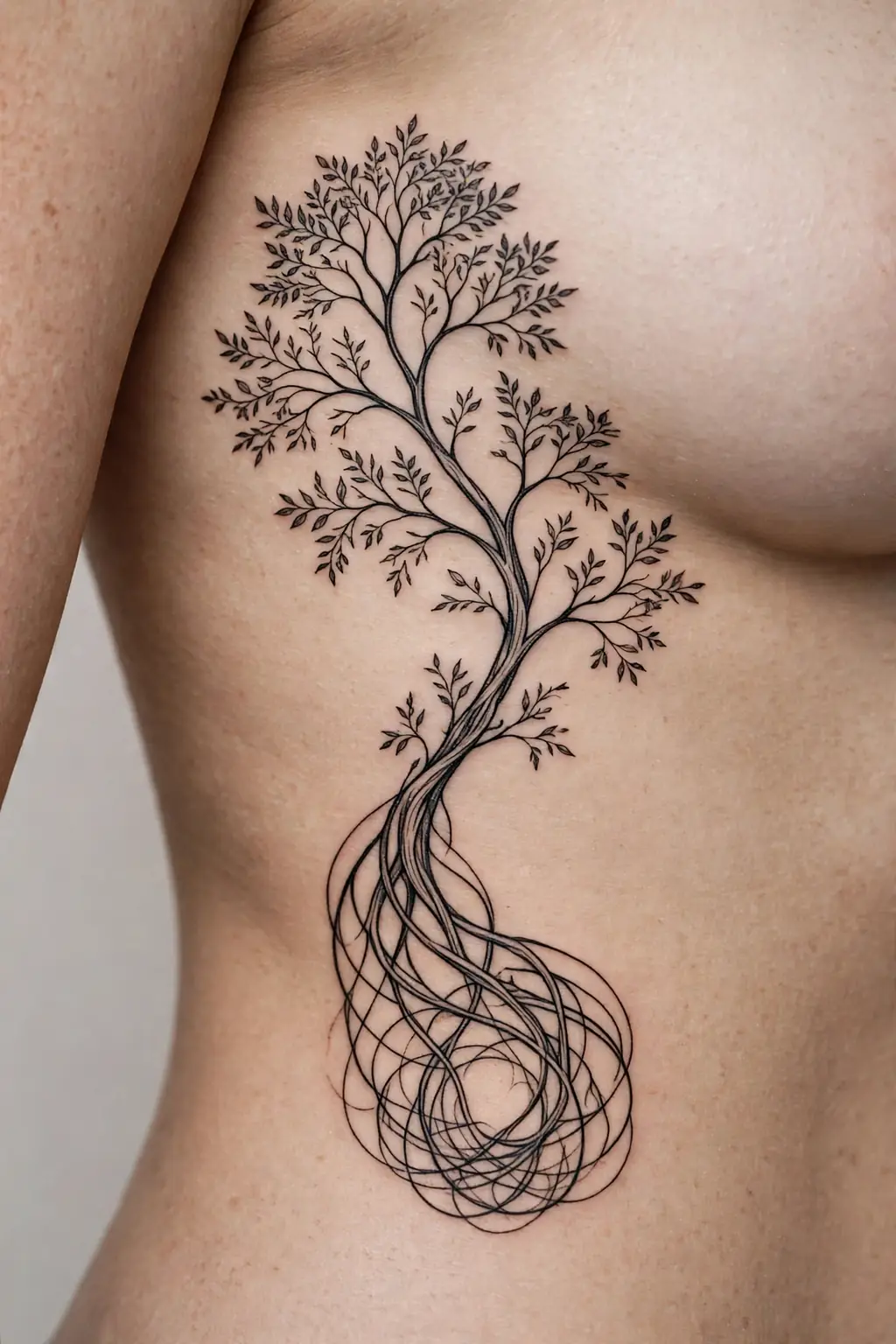
27. Ribcage Flowing
A ribcage tree curves with the ribs, so the design moves with the body. It is one of the more painful placements and one of the most private — a design you see in the mirror, not one you show off daily. Flowing, organic lines work better here than rigid symmetry.
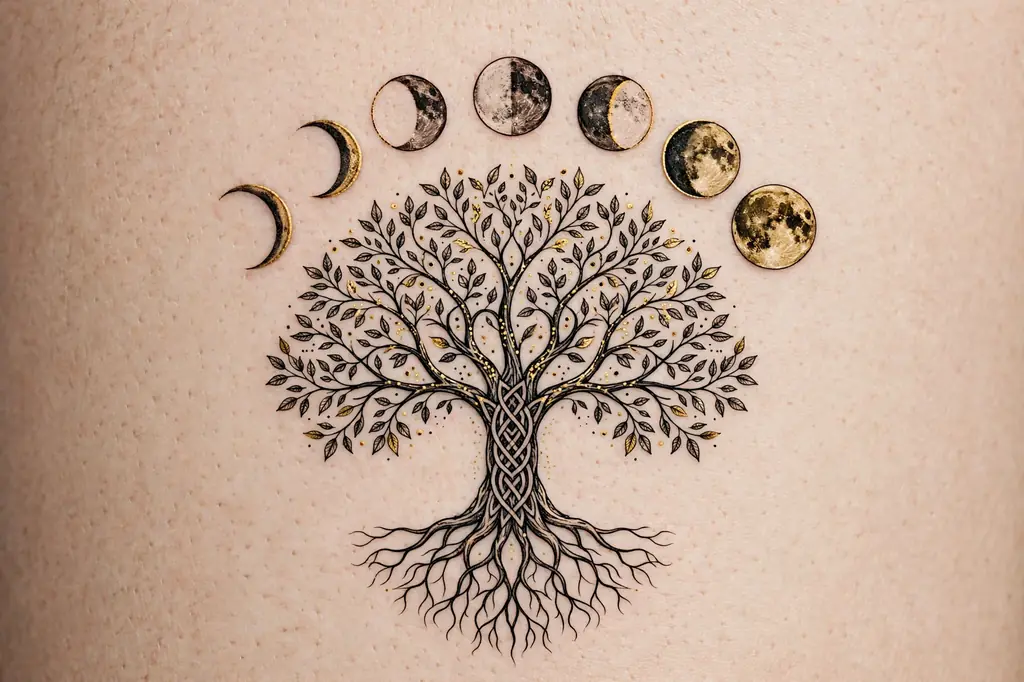
28. Moon Phases
An arc of moon phases above the branches adds a cycle to the cycle: waxing, full, waning, new. Moon-phase trees suit people who track cycles, honour intuition, or simply love the night sky. The small moons need clean linework to stay readable.
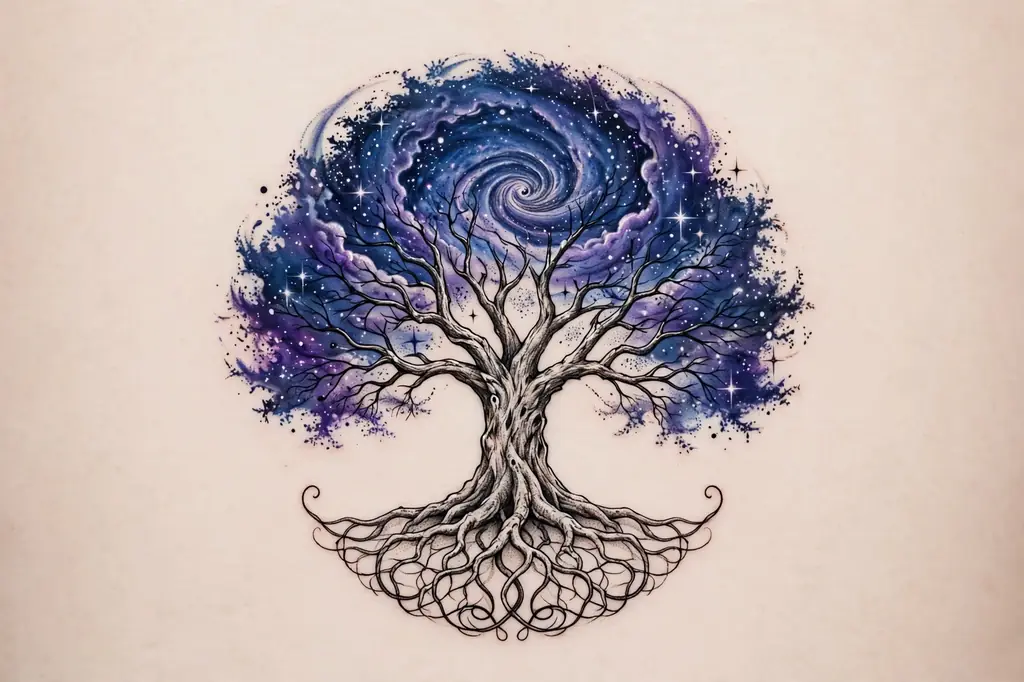
29. Galaxy Night Sky
Stars and a galaxy swirl in the canopy turn the tree into a universe. This version suits colour work, dotwork, or a mix of both, and it pairs beautifully with a dark background or negative space. Keep the stars varied in size so the canopy does not look flat.
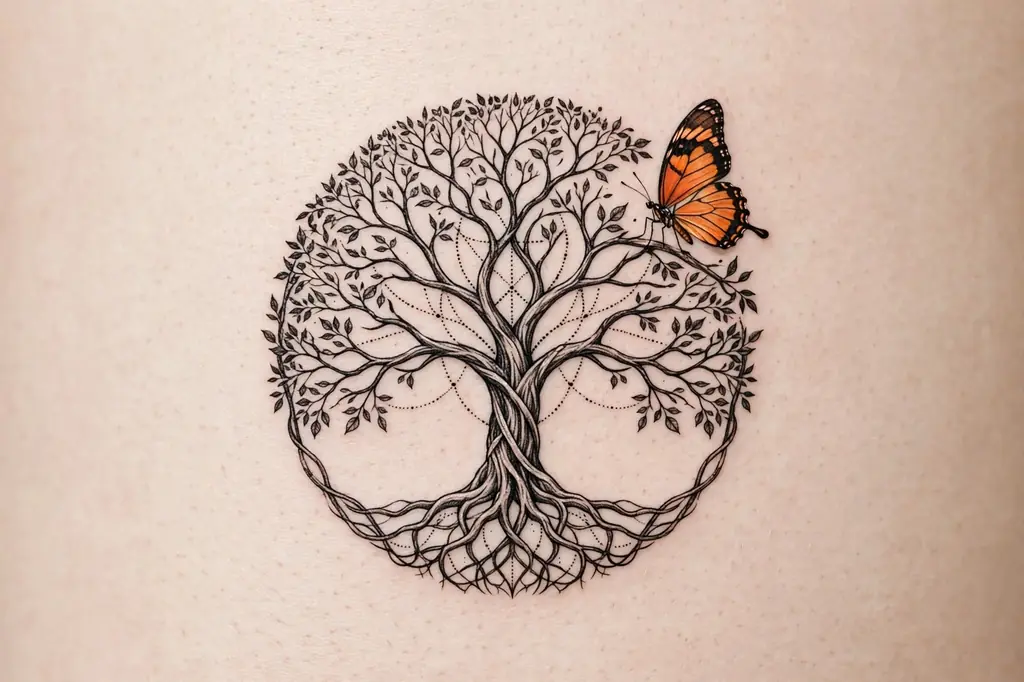
30. Tree with Butterfly
A butterfly resting on a branch adds transformation to growth: the tree is where you come from, the butterfly is what you are becoming. For butterfly symbolism in general, see our butterfly tattoo meaning guide.
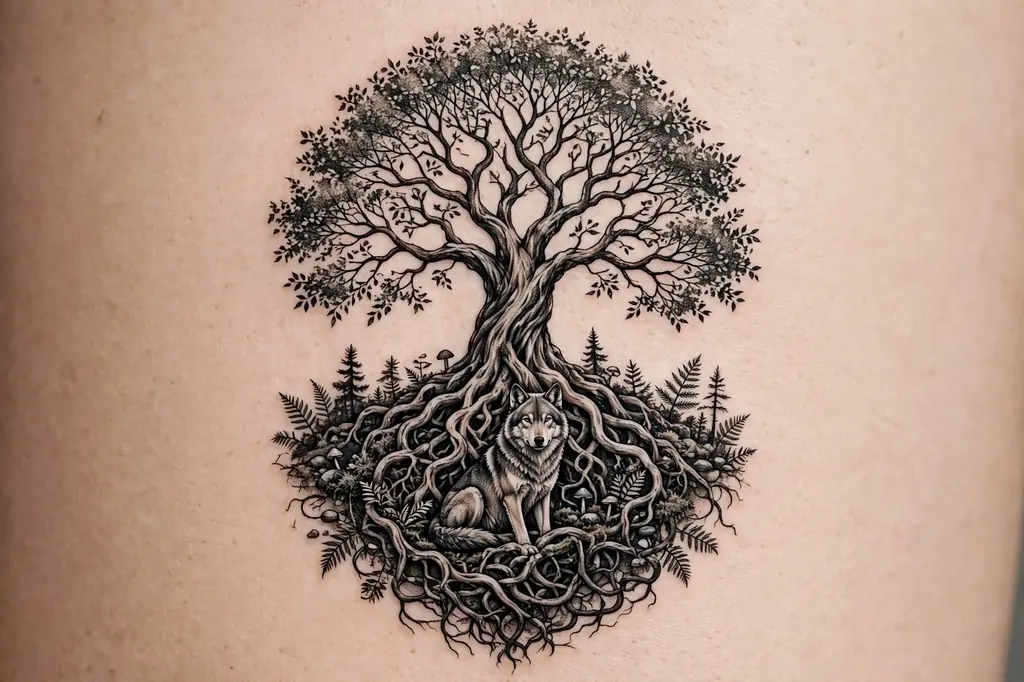
31. Wolf at the Roots
A wolf guarding the roots adds loyalty, protection and wild instinct. This is a strong choice for people who see family as a pack, or who want a guardian at the base of their tree. The wolf needs enough size to read — do not shrink it into a tiny design.
32. Raven in the Branches
Ravens bring wisdom, mystery and, in Norse myth, the memory of Odin. A black raven in the branches contrasts beautifully with a lighter canopy, and it suits a slightly darker, more gothic take on the tree of life.
Symbolic & Companion Tree of Life Designs
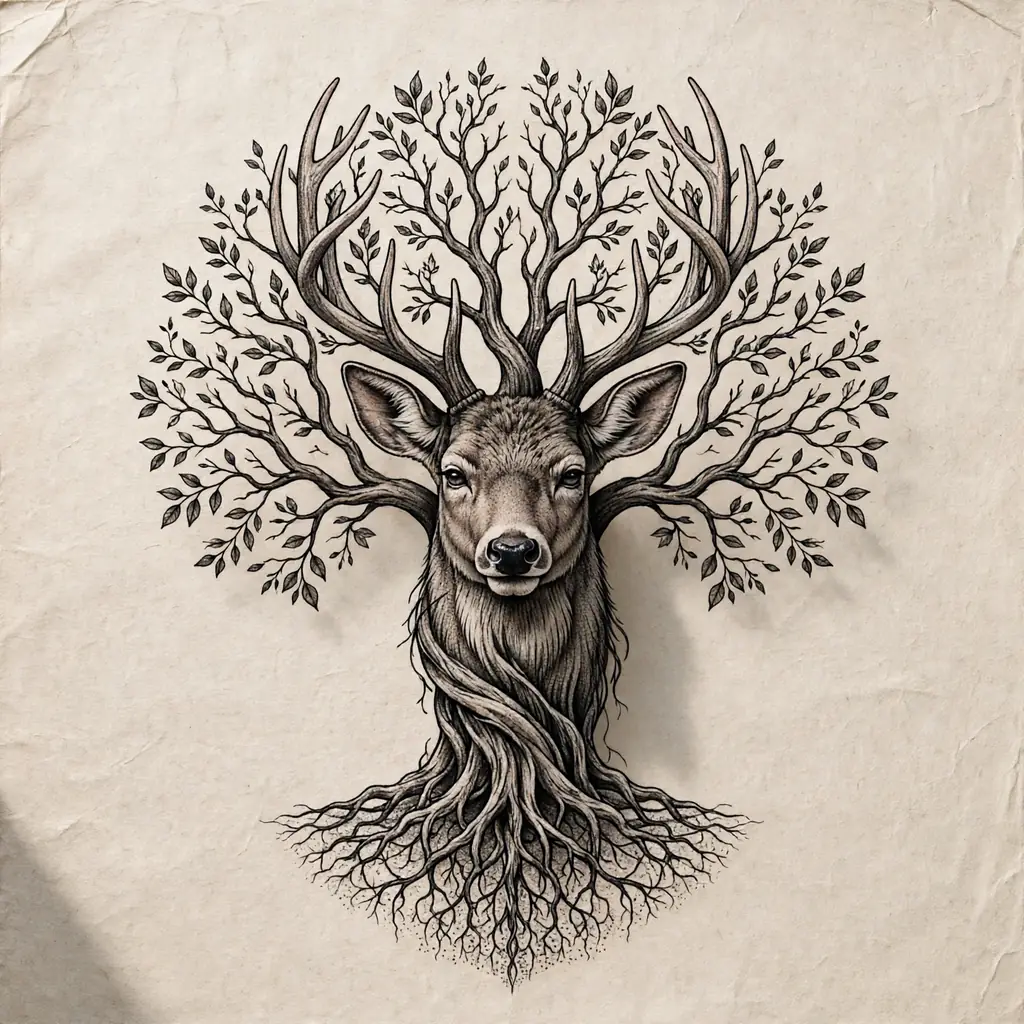
33. Deer Antlers
When a deer’s antlers become branches, the animal and the tree become one symbol: gentleness and strength, nature and spirit. This design suits a larger placement where both the deer and the branches have room to breathe.
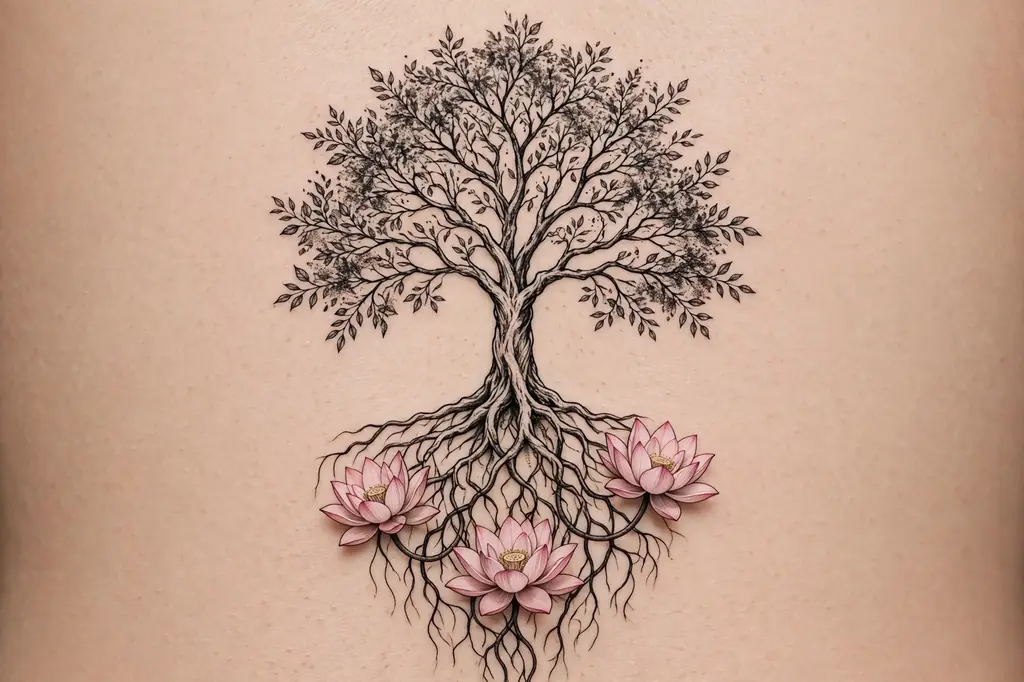
34. Lotus Roots
Lotus flowers growing from the roots combine two powerful symbols: the lotus rises from mud into beauty, the tree grows from roots into light. Together they speak of resilience, purity and spiritual growth, especially after a difficult period.
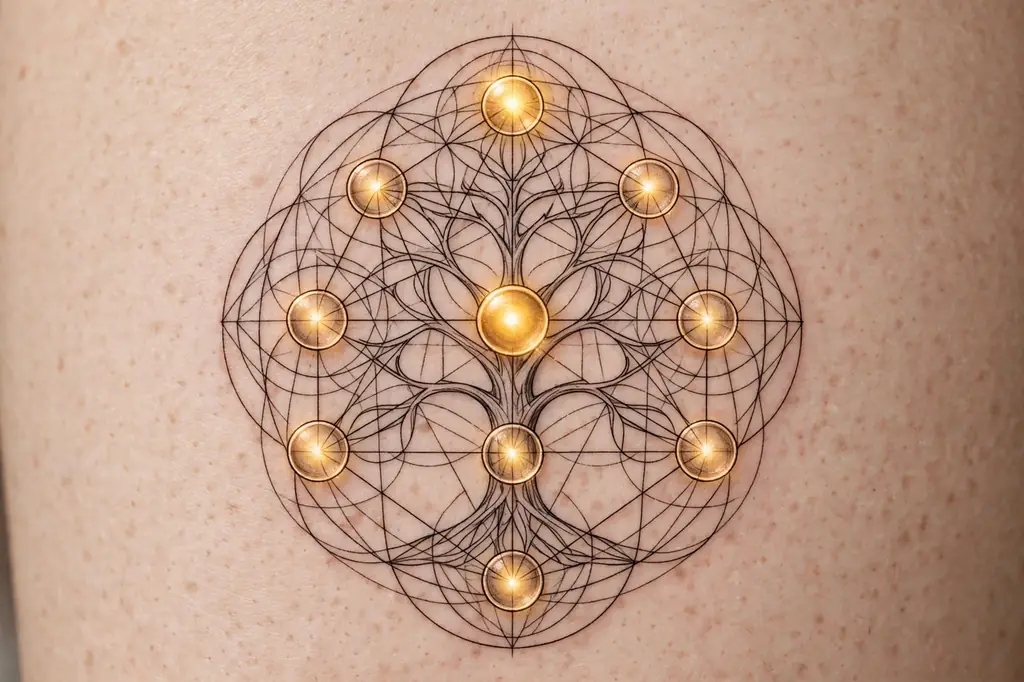
35. Kabbalah
The Kabbalistic tree of life is a diagram of ten spheres connected by paths — a map of creation and consciousness. It is precise, geometric and deeply symbolic, and it suits people who want their tattoo to be a study as much as a picture.
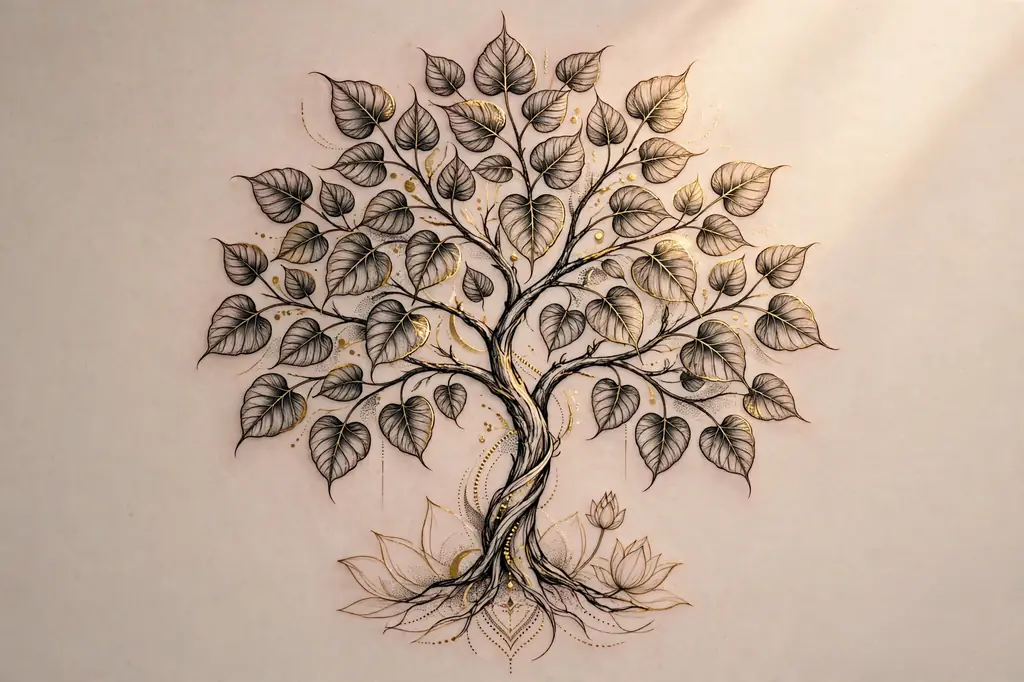
36. Bodhi Meditation
The Bodhi tree is the tree under which the Buddha found enlightenment. A Bodhi tattoo, often with soft golden light, speaks of stillness, awareness and the search for peace. It suits a calm, minimal style with plenty of negative space.
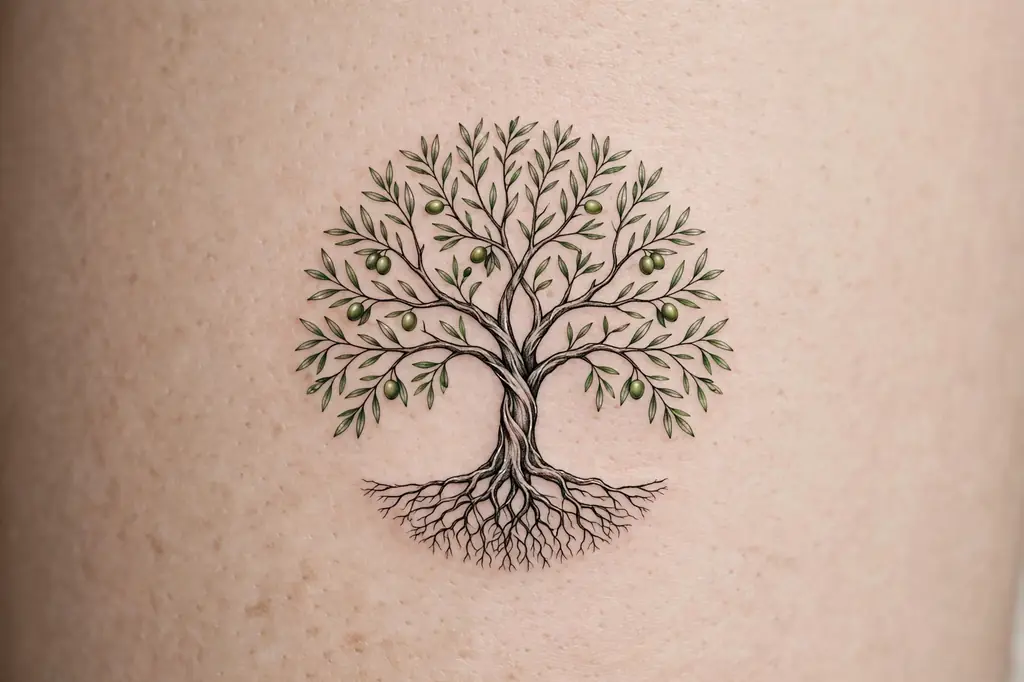
37. Olive Peace
An olive tree, with its branches and small olives, is an ancient symbol of peace, wisdom and endurance. Olive trees survive drought and live for centuries, so an olive tree of life suits people marking longevity — a long marriage, a long recovery, a long friendship.
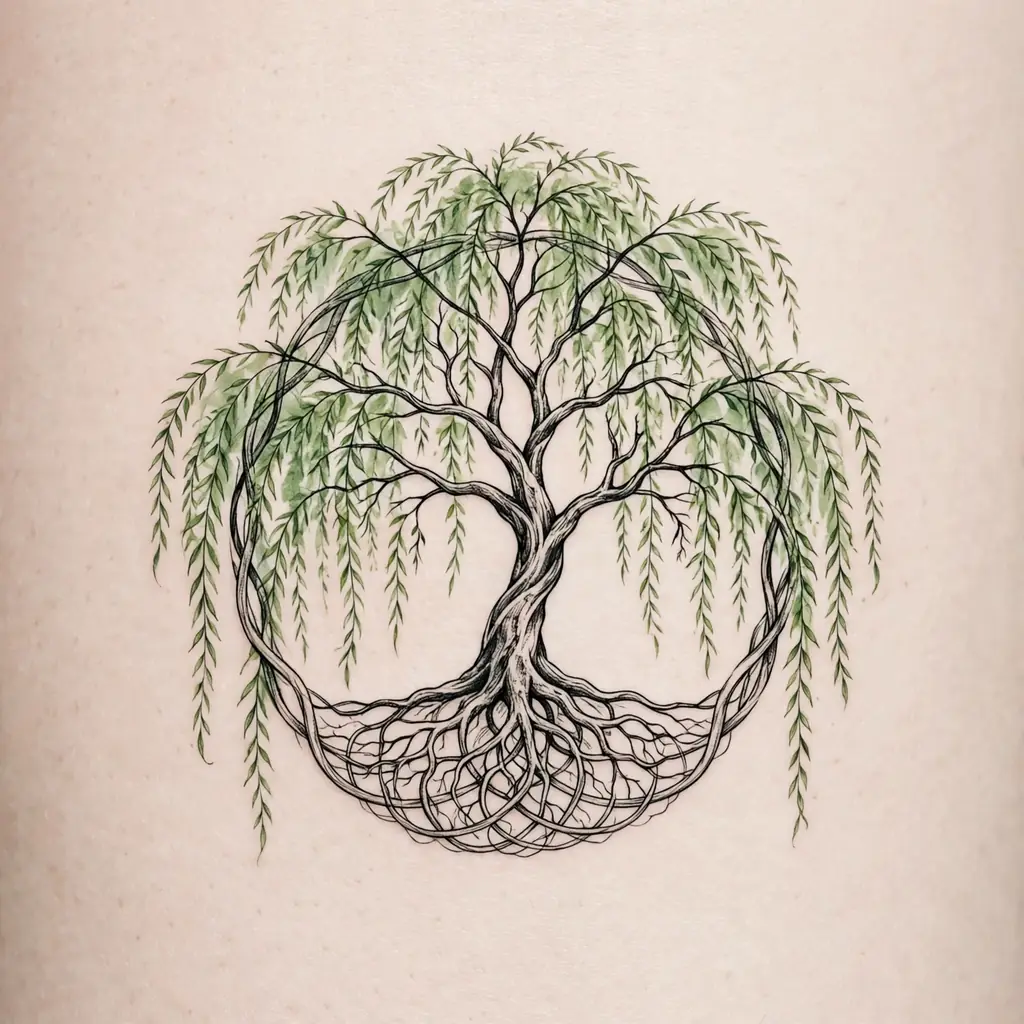
38. Weeping Willow
Long, drooping branches give the weeping willow a gentle, mournful beauty. Willow trees suit memorial tattoos, or designs about grief, grace and letting go. The drooping lines also flatter curved placements like the shoulder or thigh.
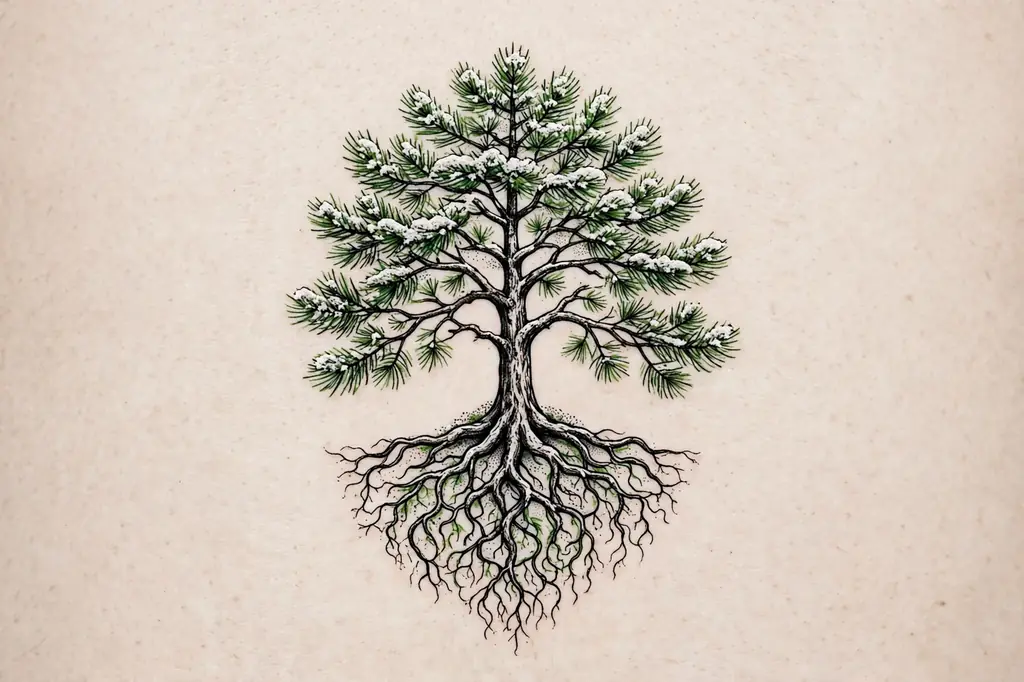
39. Evergreen Pine
A pine stays green through winter, so an evergreen tree of life stands for endurance, loyalty and hope in hard times. Snow-dusted branches add a seasonal touch without losing the tree’s year-round strength.
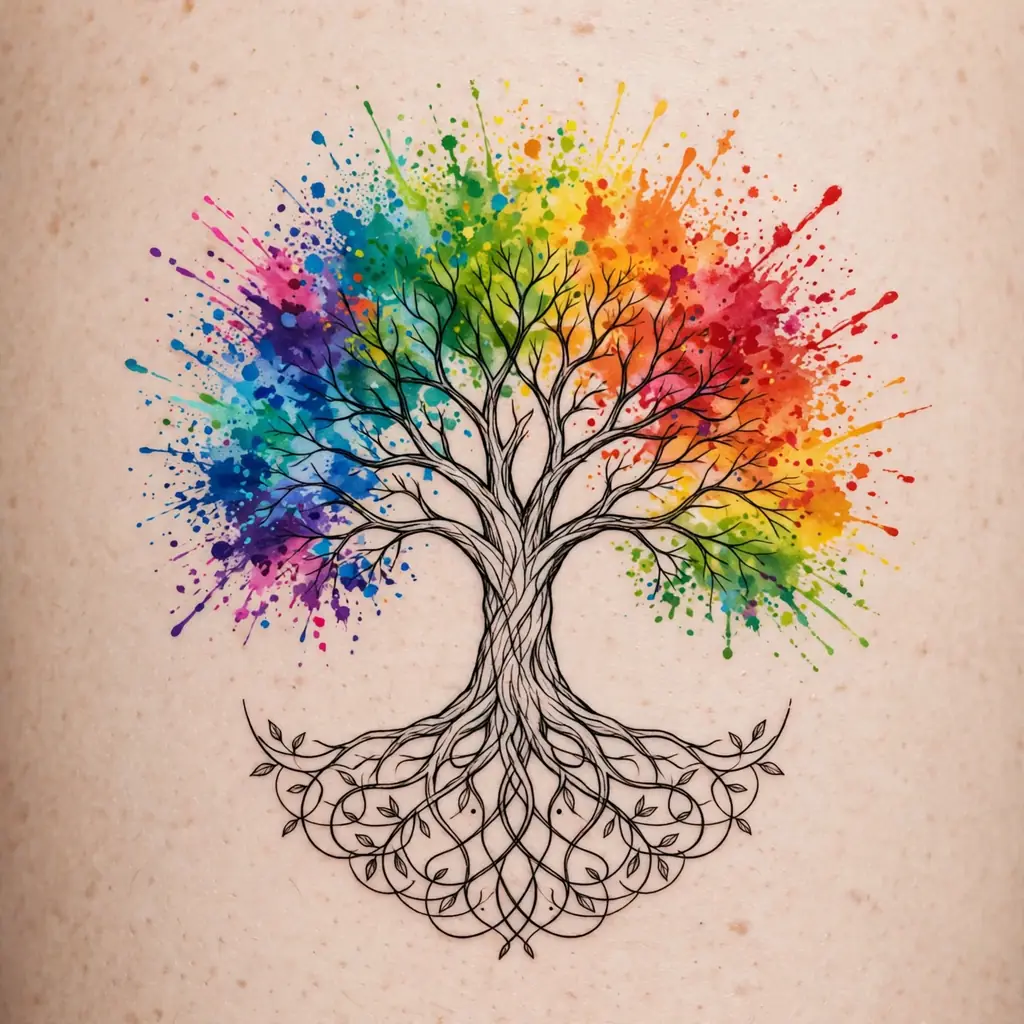
40. Rainbow Colour Burst
A vibrant, multicoloured canopy turns the tree into a celebration: joy, diversity, pride, or simply a love of colour. Rainbow trees suit larger placements where the colours have room to blend, and they photograph beautifully in natural light.
Pain Levels by Placement
Pain is personal, but placement patterns are consistent. Areas with more fat and muscle and fewer nerve endings hurt less; areas over bone, with thin skin, or with many nerves hurt more. Use this table as a starting point, then check our full tattoo pain chart for a body-wide map.
| Placement | Pain Level (1–10) | Notes |
|---|---|---|
| Forearm | 3–4 | Good first-tattoo placement; easy to sit for. |
| Thigh | 3–4 | Large, fleshy canvas; low pain for its size. |
| Upper arm / shoulder blade | 3–5 | Comfortable for medium designs. |
| Wrist | 4–5 | Thin skin; small designs are quick. |
| Calf | 4–5 | Moderate; the back of the calf is more sensitive. |
| Chest (centre) | 5–7 | Higher near the sternum and collarbone. |
| Back (upper) | 4–6 | Varies by proximity to the spine and shoulder blades. |
| Spine | 6–8 | Directly over bone; long sessions are tiring. |
| Ribcage | 7–9 | Thin skin, close bone, movement with breathing. |
| Ankle | 6–8 | Bony and sensitive; healing is slowed by shoes. |
| Behind the ear | 5–7 | Sharp but very quick for tiny designs. |
Cost & Session Time
Prices vary by city, artist experience and detail, but these ranges are typical for a professional studio in the US, UK or Australia. For a fuller breakdown, see our tattoo prices guide.
| Size / Style | Typical Cost | Session Time |
|---|---|---|
| Tiny (wrist, behind ear, ankle) | $80–$200 | 30–60 minutes |
| Small–medium (forearm, shoulder blade, calf) | $200–$500 | 1–3 hours |
| Medium–large (thigh, chest, upper back) | $500–$1,200 | 3–6 hours, possibly 2 sessions |
| Large back piece | $1,200–$3,000+ | Multiple sessions over months |
| Colour / watercolor add-on | + $100–$400 | Adds 1–2 hours |
Tips to keep costs fair: book a consultation first, ask for a flat quote for the whole design rather than an hourly rate if you prefer certainty, and avoid choosing an artist on price alone — a cheap tree that blurs in two years is not a bargain.
Styles Compared
| Style | Best For | Watch Out For |
|---|---|---|
| Fine line | Small, delicate, first tattoos | Fades faster; needs touch-ups |
| Blackwork | Bold, graphic, long-lasting | Hard to cover or remove later |
| Watercolor | Colourful, artistic, soft | Colour softens over time |
| Geometric | Symmetry, precision, structure | Needs a very steady artist |
| Black and grey realism | Detailed, lifelike trees | Needs a larger placement |
| Traditional / neo-traditional | Bold outlines, classic feel | Less detail in small sizes |
Placement Pros & Cons
| Placement | Pros | Cons |
|---|---|---|
| Wrist | Visible daily reminder; quick session | Small only; fades with sun and washing |
| Forearm | Visible, low pain, ages well | Hard to hide in formal work |
| Back | Largest canvas; most detail | Multiple sessions; slow healing |
| Thigh | Large, low pain, easy to hide | Changes with weight and muscle |
| Chest | Symmetrical, powerful | Pain near sternum; sun exposure |
| Ribcage | Private, flowing with the body | High pain; stretches with breathing |
| Ankle | Delicate, jewellery-like | Painful; slow healing with shoes |
Healing Time & Aftercare
Most tree of life tattoos heal on the surface in 2–3 weeks, with full healing underneath taking 4–6 weeks. Larger, colour or heavily shaded pieces may take longer. Follow your artist’s instructions first, and use our tattoo aftercare guide for the full routine: keep the wrap on as directed, wash gently with lukewarm water and fragrance-free soap, pat dry, apply a thin layer of recommended ointment, and avoid sun, pools, baths and tight clothing until healed.
Do not pick scabs, do not over-moisturise, and do not expose a fresh tattoo to direct sun. If redness spreads, swelling increases after day three, or you see pus or a fever, contact your artist or a healthcare professional promptly.
Common Mistakes to Avoid
- Too small, too detailed: Tiny branches and tiny text blur together within a few years. If you love detail, go larger.
- Ignoring the body’s shape: A round tree on a long, narrow calf, or a tall tree squeezed onto a wrist, will look awkward. Match the shape to the placement.
- Choosing on price alone: A tree of life lives on your skin for decades. A skilled artist is worth the wait and the cost.
- Skipping aftercare: Sun, swimming and picking at scabs are the fastest ways to ruin a beautiful tree.
- Copying without personalising: The best trees have one personal touch — a bird, a date, a flower, a colour — that makes the design yours. If you later regret a tattoo, see our laser tattoo removal guide before making any rushed decision.
Frequently Asked Questions
What does a tree of life tattoo mean?
Growth, strength, family, connection and new beginnings. Roots mean grounding and heritage, the trunk means resilience, and branches mean freedom and reaching upward.
Is a tree of life tattoo religious?
It can be, but it does not have to be. The tree appears in many faiths and cultures, and many people wear it as a general symbol of life and growth without a religious meaning.
Where is the best placement for a tree of life tattoo?
For small designs, the wrist, ankle or behind the ear. For medium designs, the forearm, shoulder blade or calf. For large, detailed designs, the back, thigh or chest.
How painful is a tree of life tattoo?
Most placements are low to moderate (3–5 out of 10). Spine, ribs and ankle are higher (6–9 out of 10). Size and session length matter as much as placement.
How much does a tree of life tattoo cost?
Tiny designs typically cost $80–$200, small–medium designs $200–$500, medium–large designs $500–$1,200, and large back pieces $1,200–$3,000 or more, depending on detail, colour and location.
Does a tree of life tattoo suit men and women?
Yes. The design is unisex, and the style, size and placement change its feel far more than gender does. Bold blackwork reads differently from fine line, and a back oak reads differently from a wrist tree, regardless of who wears it.
Quick Summary
A tree of life tattoo is one of the most versatile symbols you can wear: rooted, resilient and still growing. Choose a style that matches your story — Celtic for heritage, Yggdrasil for myth, family birds for loved ones, fine line for subtlety, blackwork for boldness — then match the size to the placement, and give it the space it needs to stay readable for decades.
References
- Encyclopaedia Britannica — Yggdrasil and world trees in Norse mythology
- The Metropolitan Museum of Art — Tree of life motifs across cultures
- Victoria and Albert Museum — Celtic knotwork and interlace design
Which one is your favorite?