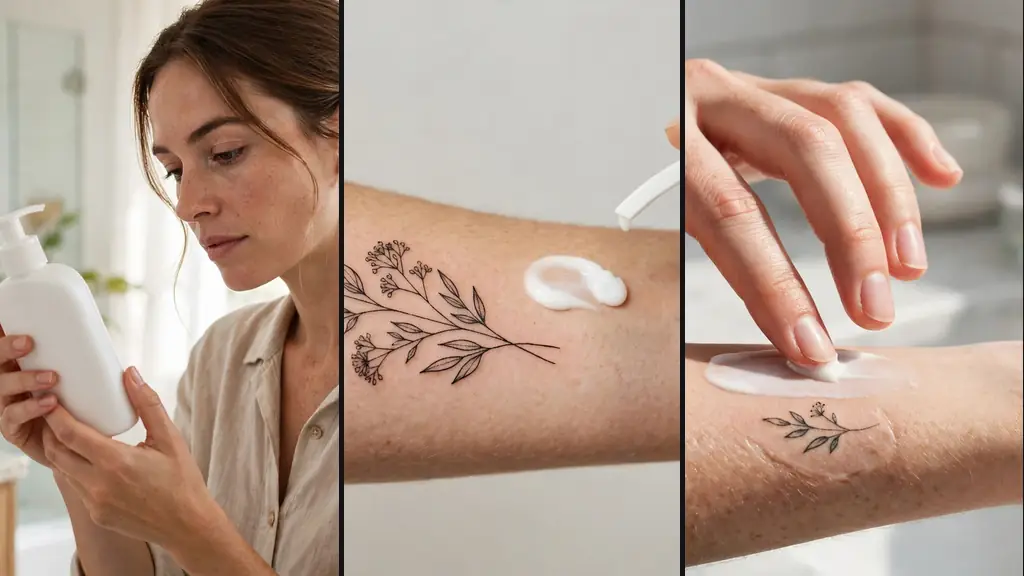
Your tattoo artist just handed you the aftercare sheet, and one line is underlined twice: fragrance-free lotion only. It sounds fussy — until the first night your new tattoo starts peeling and itching, and the scented body butter on your shelf suddenly feels like a gamble you do not want to take. The truth is simple: a fragrance free lotion for tattoos is not a luxury upgrade, it is the cheapest insurance your ink will ever get. In this guide you will find the 9 best fragrance-free lotions for tattoos, what each one costs, when to switch from ointment to lotion, how to read a label like a dermatologist, and the mistakes that quietly ruin fresh ink — so your tattoo heals crisp, calm, and bright instead of patchy and irritated.
⚡ Quick Answer
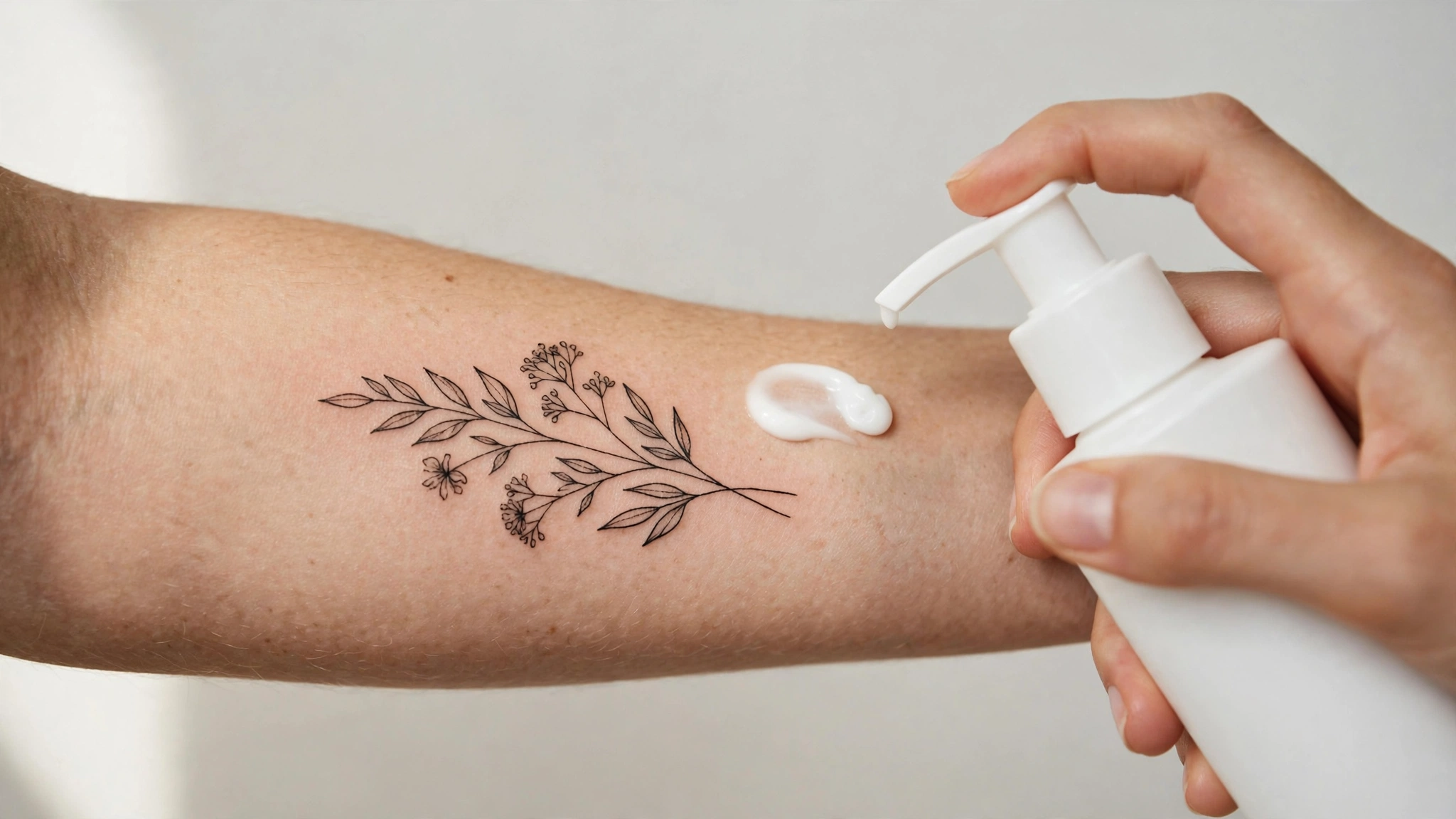
The best fragrance free lotion for tattoos for most people is a plain drugstore lotion used thinly 2–3 times a day: Lubriderm Daily Moisture Fragrance Free for everyday healing, Aveeno Daily Moisturizing Fragrance-Free for itchy peeling skin, or CeraVe Daily Moisturizing Lotion if you want a formula with no petrolatum at all. Start lotion only after the first 2–3 days of thin ointment, keep using it for 2–3 weeks while the skin peels and settles, and never use a scented lotion, essential oil, or perfumed body butter on unhealed ink.
📑 In This Article
- Why Fragrance-Free Matters So Much on a New Tattoo
- When to Start Lotion: The Day-by-Day Timeline
- The 9 Best Fragrance-Free Lotions for Tattoos
- Fragrance-Free Tattoo Lotions Compared
- How to Read a Lotion Label Like a Dermatologist
- How to Apply Lotion to a New Tattoo (Without Ruining It)
- Pain, Itching & Healing Time: What Lotion Can and Cannot Fix
- How Much Does Tattoo Aftercare Lotion Cost?
- Lotion by Placement: Hands, Feet, Ribs & Everywhere Else
- Sensitive Skin, Eczema & Allergies: The Extra-Careful Routine
- Common Fragrance-Free Lotion Mistakes to Avoid
- FAQ — Fragrance-Free Lotion for Tattoos
- Quick Summary
- References
Why Fragrance-Free Matters So Much on a New Tattoo
A new tattoo is not finished skin with a picture on it — it is thousands of tiny punctures, an open wound that your body is working hard to close. Anything you put on it in the first weeks goes straight into skin whose barrier is broken, which is why fragrance matters far more here than it does on normal skin. Fragrance, listed on labels as “fragrance” or “parfum”, is one of the most common causes of contact allergy in skincare, and on broken skin it can sting, itch, redden, and in sensitive people trigger a rash that looks worryingly like an infection. Essential oils are not a safe loophole either: lavender, citrus, mint, and tea tree oils are all frequent irritants on healing skin, even when the bottle calls them “natural”. The American Academy of Dermatology advises a water-based, fragrance-free lotion or cream on tattooed skin when it feels dry — plain, boring, and exactly right. That is the whole philosophy of this guide: boring is beautiful while ink heals. Save the scented body butter for the day your artist would call the tattoo fully healed, usually around 4–6 weeks, and even then patch-test it first. If you are still deciding on your next design, our flash tattoo ideas show how small, simple pieces heal fastest — and need the least aftercare fuss of all.
There is a second, quieter reason fragrance-free wins: you can actually tell what your skin is doing. When a scented lotion stings, you cannot tell whether the sting is the fragrance, the tattoo healing normally, or the start of a reaction. With a fragrance-free lotion, any new redness, heat, or itching is a real signal, not noise from perfume. That clarity matters most in week two, when peeling and itching peak and every sensation feels alarming. A plain lotion also keeps your routine consistent: the same bottle from day 4 to day 21, no switching products mid-heal because a scented one started to irritate you. Consistency is what healing skin likes best.
When to Start Lotion: The Day-by-Day Timeline
The single most common aftercare mistake is starting lotion too early — or staying on ointment too long. Tattoo aftercare runs in two stages, and lotion belongs to the second one. Days 1–3 are the ointment stage: your artist will cover the tattoo, and once you remove that covering you wash gently with a mild, fragrance-free soap and apply a very thin layer of ointment or balm, exactly as your artist directs. Ointment seals and protects while the surface is rawest. Around day 3–4, when the tattoo stops feeling wet and starts feeling tight and dry, you switch to lotion — and you stay on lotion for the next 2–3 weeks. That switch is the moment this guide is really about. Lotion is lighter than ointment, absorbs faster, and lets the skin breathe while it peels, which is why artists move you onto it as soon as the raw stage passes.
Here is the timeline most healthy tattoos follow. Days 1–3: ointment stage, gentle washing twice a day, thin protective layer, no soaking, no sun, no scratching. Days 4–7: lotion stage begins, skin feels tight, light flaking may start, lotion 2–3 times a day in thin layers. Days 7–14: peak peeling and itching, lotion is now doing its main job — stopping cracks and calming the itch — and this is the week people over-apply, so keep layers thin. Days 14–21: flaking mostly done, skin looks slightly dull or milky as the new layer settles, keep lotioning once or twice a day. Weeks 4–6: surface healing complete for most tattoos, though deeper settling continues for months; switch to normal daily moisturising plus sunscreen. If your tattoo is large, heavily shaded, or on a high-movement area like a hand or foot, add a few days to each stage and follow your artist’s sheet over any general timeline here. Our full tattoo aftercare guide walks through washing, covering, and sleeping with a new tattoo in the same day-by-day detail.
The 9 Best Fragrance-Free Lotions for Tattoos
Every lotion below is genuinely fragrance-free — no “fragrance”, no “parfum”, no essential-oil scent hiding in the ingredient list. Prices are typical US drugstore or online ranges and move with size and store; the bottle you already own beats the perfect bottle you have not bought yet, so start with whatever plain lotion passes the label test in the next section.
1. Lubriderm Daily Moisture Lotion — Fragrance Free (Best Everyday Pick)
The artist-favourite drugstore pick, and the one most studios name first. Lubriderm Daily Moisture Fragrance Free is light, non-greasy, and absorbs fast, with glycerin to draw moisture in and a formula that supports the skin barrier without sitting heavy on a peeling tattoo. It is the easiest lotion to use thinly, which is the skill that matters most in week two. Typical price: around $6–$10 for a 16 oz bottle, which easily covers a whole healing period and months after. Honest downside: it is deliberately lightweight, so very dry skin or a large tattoo in winter may need a richer cream on top or a second thin layer once the first has absorbed.
2. Aveeno Daily Moisturizing Lotion — Fragrance-Free (Best for Itchy Peeling Skin)
Aveeno’s fragrance-free daily lotion is built around colloidal oatmeal, the ingredient dermatologists reach for when skin itches and flakes. On a tattoo in the peeling stage, that oatmeal base takes the edge off the itch without adding scent or sting, and the lotion spreads easily over larger pieces like thighs and backs. Typical price: around $8–$13 for an 18 oz bottle. Honest downside: it is slightly richer than Lubriderm, so on small tattoos it is easy to over-apply — use a pea-sized amount for a palm-sized tattoo and add more only if the skin still feels tight after a minute.
3. CeraVe Daily Moisturizing Lotion (Best With No Petrolatum)
CeraVe’s daily lotion carries ceramides and hyaluronic acid to rebuild the skin barrier, and — the detail that makes it the pick for label-readers — it contains no petrolatum at all. That matters if you want to follow the strictest dermatologist advice about petroleum products on tattoos to the letter, or if your skin simply dislikes heavy occlusive formulas. It is light, fast-absorbing, and widely stocked. Typical price: around $10–$15 for a 12 oz bottle. Honest downside: it costs a little more per ounce than Lubriderm or Aveeno, and its pump bottle makes it tempting to dispense too much — one short pump is usually enough for a medium tattoo.
4. Cetaphil Moisturizing Lotion (Best for Sensitive, Reactive Skin)
Cetaphil is the quiet, dependable choice for skin that reacts to everything. Its moisturizing lotion is fragrance-free, non-comedogenic, and famously gentle — the bottle many dermatologists hand to eczema patients, which tells you how low its irritation risk is. On a new tattoo it absorbs cleanly and rarely stings, even on tender placements. Typical price: around $10–$14 for a 16 oz bottle. Honest downside: it is not the most hydrating lotion on this list, so in dry climates or on a big piece you may need to apply it three times a day rather than two, always in thin layers.
5. Eucerin Advanced Repair Lotion — Fragrance Free (Best for Very Dry Skin)
When the rest of the list feels too light, Eucerin Advanced Repair steps in. It is fragrance-free, clinically aimed at very dry skin, and richer than the everyday picks without crossing into greasy ointment territory — the right call for large tattoos, winter healing, or skin that cracks every January. Typical price: around $9–$13 for a 16.9 oz bottle. Honest downside: that richness means it absorbs more slowly, so give it a few minutes before clothing touches the tattoo, and never use it as an excuse to apply a thick layer — thin still wins.
6. Vanicream Moisturizing Lotion (Best for Allergy-Prone Skin)
Vanicream is the minimalist of this list: no fragrance, no dyes, no lanolin, no parabens, and almost nothing else that commonly triggers reactions. If you have a history of contact allergy, eczema, or a previous tattoo that reacted to a product, this is the lotion to patch-test first. It is light, clean, and boring in exactly the right way. Typical price: around $10–$14 for a 16 oz bottle. Honest downside: it is a touch less cosmetically elegant than Aveeno or CeraVe — it does the job without feeling luxurious — and it can be harder to find in smaller drugstores, so buy it before tattoo day.
7. Aveeno Eczema Therapy Daily Moisturizing Cream (Best When the Itch Is the Problem)
This is the step up when ordinary lotion is not calming the itch. Aveeno Eczema Therapy cream carries 1% colloidal oatmeal as a regulated skin-protectant active, labelled to temporarily relieve minor irritation and itching, in a thicker cream that stays put on peeling skin. Use it only when itching is genuinely bad, not as your default from day one — it is a treatment for a symptom, not a daily moisturiser. Typical price: around $10–$15 for a 12 oz tube. Honest downside: it is thicker than the lotions above, so it is easier to over-apply, and if itching worsens or lasts beyond a week, that is a doctor visit, not a cue to use more cream.
8. Curel Fragrance Free Moisturizing Lotion (Best Budget Runner-Up)
Curel’s fragrance-free lotion is the sleeper pick artists mention when Lubriderm is out of stock: light, fast-absorbing, genuinely unscented, and usually the cheapest bottle on the shelf. It handles the daily 2–3-times routine without fuss and works well on medium tattoos where you will go through a lot of product. Typical price: around $6–$10 for a 20 oz bottle. Honest downside: it is the least rich lotion here, so very dry or heavily shaded tattoos may outgrow it in week two — if skin still feels tight minutes after applying, step up to Aveeno or Eucerin.
9. After Inked Tattoo Aftercare Lotion (Best Tattoo-Specific Lotion)
After Inked is the tattoo-specific option: a vegan, petroleum-free lotion made for tattoos, light enough to absorb quickly but rich enough to use from the early days onward. It is the pick if you want a product designed for ink rather than a drugstore generalist, and it travels well in its smaller tube for touch-ups at work. Typical price: around $12–$20 for a 3 oz tube — noticeably more per ounce than the drugstore picks, which is the trade for a tattoo-specific formula and a pocket-sized tube. Honest downside: the small tube runs out fast on a large tattoo, so pair it with a drugstore bottle for a big piece rather than buying three tubes. For a first tattoo, our fine-line tattoo guide explains why small, delicate designs are the most forgiving while you learn this routine.
Fragrance-Free Tattoo Lotions Compared
| Lotion | Type | Best stage | Texture | Typical price | Best for |
|---|---|---|---|---|---|
| Lubriderm Daily Moisture Fragrance Free | Drugstore lotion | Days 4–21 | Light, fast-absorbing | $6–$10 | Everyday healing |
| Aveeno Daily Moisturizing Fragrance-Free | Drugstore lotion | Days 4–21 | Light-medium, oatmeal | $8–$13 | Itchy peeling skin |
| CeraVe Daily Moisturizing Lotion | Drugstore lotion | Days 4–21 | Light, barrier repair | $10–$15 | No petrolatum |
| Cetaphil Moisturizing Lotion | Drugstore lotion | Days 4–21 | Light, gentle | $10–$14 | Sensitive skin |
| Eucerin Advanced Repair Fragrance Free | Drugstore lotion | Days 7–21 | Rich | $9–$13 | Very dry skin |
| Vanicream Moisturizing Lotion | Drugstore lotion | Days 4–21 | Light, minimal | $10–$14 | Allergy-prone skin |
| Aveeno Eczema Therapy Cream | Medicated cream | Itchy days only | Thick cream | $10–$15 | Bad itching |
| Curel Fragrance Free Lotion | Drugstore lotion | Days 4–21 | Very light | $6–$10 | Budget healing |
| After Inked Tattoo Lotion | Tattoo-specific lotion | Days 4–21 | Light-medium | $12–$20 | Tattoo-specific pick |
The table makes the real choice obvious: for most tattoos, pick one light drugstore lotion and one richer backup, and you are done. A $6 bottle used correctly beats a $25 tattoo balm used thickly, every time. If your tattoo is small, one bottle covers the whole heal; if it is a back piece or sleeve, buy the big pump size now, because running out in week two is how people end up borrowing a scented lotion from a friend.
How to Read a Lotion Label Like a Dermatologist
“Unscented” and “fragrance-free” are not the same thing, and this distinction catches more people than any other label trap. Fragrance-free means no fragrance chemicals were added at all. Unscented can mean a masking fragrance was added to cover the smell of the raw ingredients — still a fragrance, still a risk on broken skin. Always buy bottles that say “fragrance-free” on the front, then flip the bottle and check the ingredient list for “fragrance” or “parfum” anyway, because front labels and back lists do not always agree. If you see either word anywhere on the list, put the bottle back.
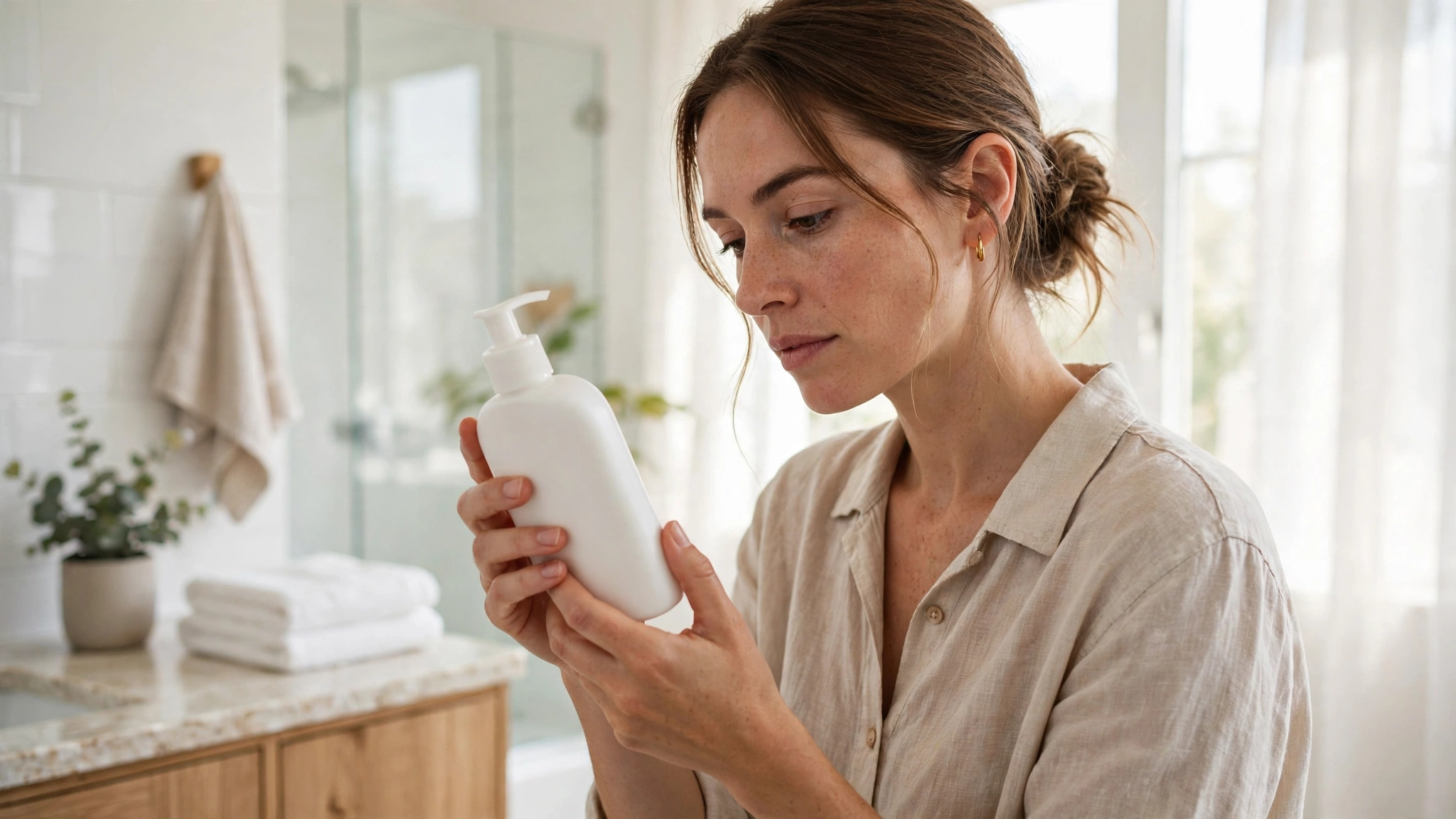
Ingredients to look for are the quiet workers: glycerin and hyaluronic acid draw water into the skin, ceramides help rebuild the barrier, colloidal oatmeal calms itching, and shea butter or simple plant oils add softness without drama. Ingredients to avoid on unhealed ink are just as clear: fragrance and parfum, alcohol denat (drying and stinging), dyes and colourants, lanolin (a common allergen), retinol and alpha-hydroxy acids (too active for healing skin), and chemical sunscreen filters (save SPF for after full healing, and then use a mineral sunscreen first). Petroleum is the grey area: some dermatologists warn against heavy petrolatum on tattoos, others use it in the ointment stage without issue — the safe middle ground is a petrolatum-free lotion like CeraVe for the lotion stage, and your artist’s exact ointment instructions for days 1–3. Never trust a “tattoo-safe” claim on the front of a bottle without checking the back: if the ingredient list contradicts the claim, the list wins. The U.S. Food and Drug Administration publishes tattoo safety information that is worth a read before you buy anything marketed specifically for ink.
How to Apply Lotion to a New Tattoo (Without Ruining It)
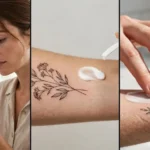
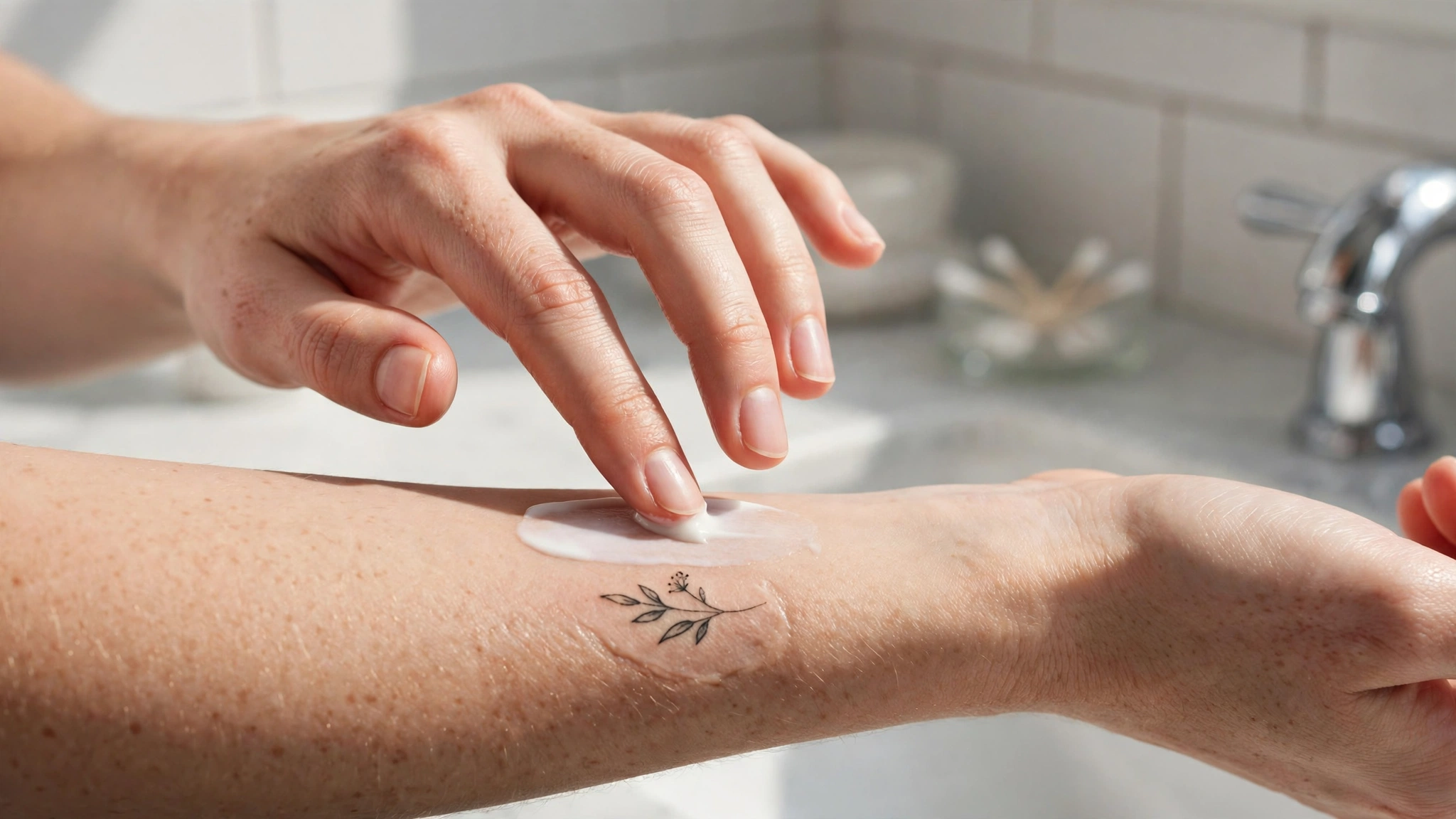
Technique matters more than brand, and it is where most healing problems start. Wash your hands first, every single time — a tattoo is a wound, and dirty hands are the fastest route to infection. Wash the tattoo gently with lukewarm water and a mild, fragrance-free soap, pat it dry with a clean towel or paper towel (never rub), and wait a minute until the skin is fully dry. Then take a pea-sized amount of lotion for a palm-sized tattoo — less than you think — warm it between clean fingertips, and spread it in a very thin, even layer with light pressure. The skin should look lightly moisturised, not shiny or wet. If it looks greasy, you used too much; blot the excess gently with a clean paper towel rather than leaving it to sit.
Repeat 2–3 times a day, and always after washing. Morning, after a shower, and before bed covers most tattoos; add a midday application only if the skin feels tight again. Do not reapply over a layer that has not absorbed, do not cover a freshly lotioned tattoo with tight clothing or plastic wrap (unless your artist specifically told you to), and do not scratch, pick, or peel flaking skin no matter how tempting it is — lotion calms the itch, picking restarts the wound. Stop and call your artist or a doctor if you see spreading redness, increasing heat, swelling, pus, red streaks, or fever: those are infection signs, and no lotion fixes an infection. Our tattoo pain chart also helps set expectations for how each placement feels during this stage, so normal tenderness does not panic you into over-applying.
Pain, Itching & Healing Time: What Lotion Can and Cannot Fix
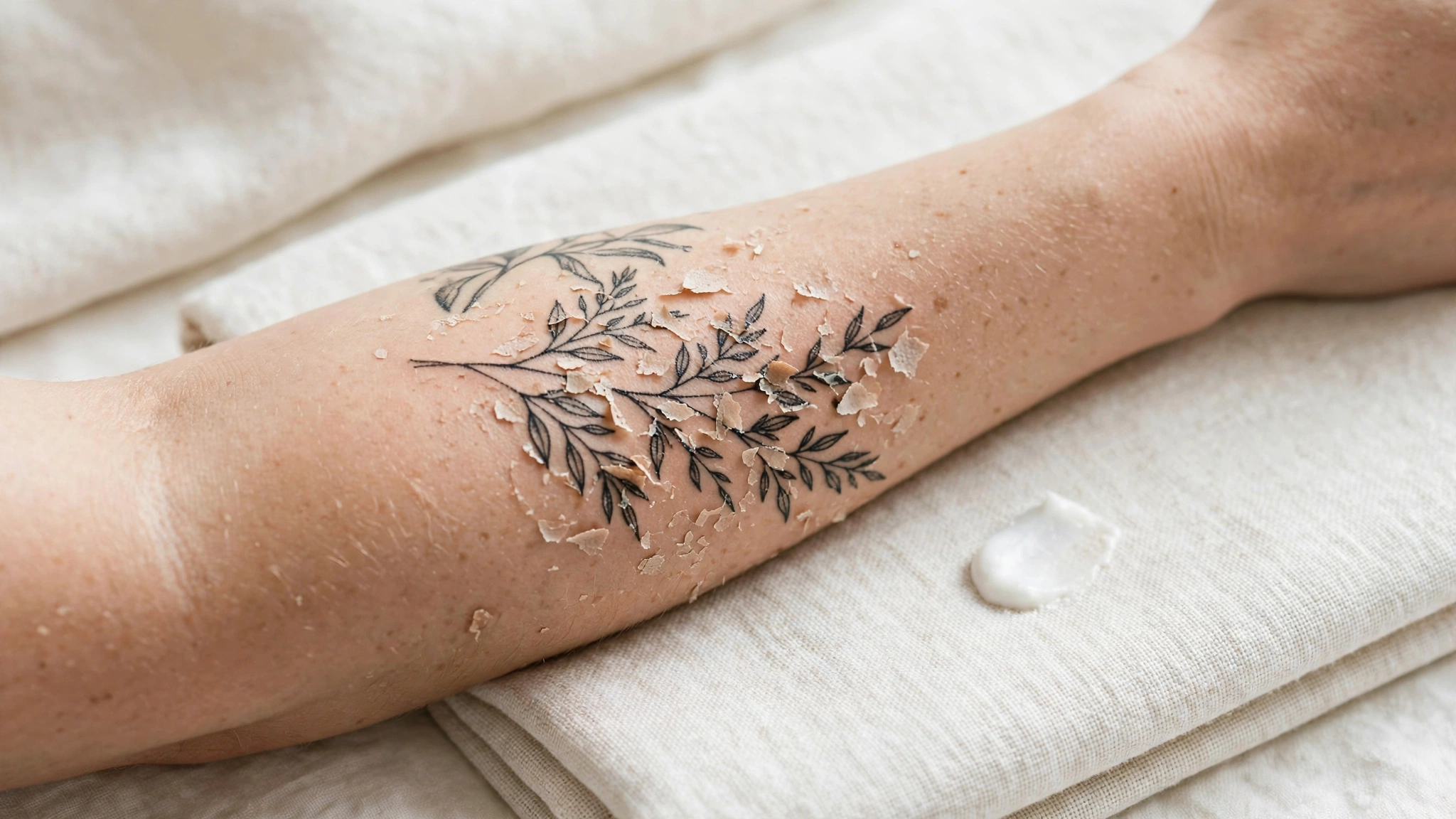
Lotion is not pain relief, and expecting it to be will disappoint you. The tattoo itself hurts during the session — placement pain runs roughly 2–3/10 on the outer forearm, 5–6/10 on the wrist, 6–7/10 on the collarbone and ankle, 7–8/10 on the spine, and 8–10/10 on the ribs — but once the needle stops, lotion’s job is comfort, not anaesthesia. What it genuinely fixes is the tight, dry, itchy feeling that peaks in week two. Dry healing skin cracks, cracks itch, and itching leads to scratching, which is how ink gets pulled out of a healing tattoo. A thin layer of fragrance-free lotion breaks that chain: it keeps the new skin flexible, so it flakes in small pieces instead of cracking in sheets, and it takes the itch from distracting down to ignorable. If itching stays severe despite correct lotion use, an oatmeal cream like Aveeno Eczema Therapy can help for a few days — but worsening itch, especially with new redness or heat, is a reason to seek advice, not to lotion harder.
Healing time follows a pattern lotion supports but cannot shortcut. Surface healing takes 2–4 weeks for most tattoos, with deeper settling over 3–6 months; fine-line and watercolour work fades fastest and needs the most careful lotion routine, while bold blackwork holds longest and forgives small mistakes. Lotion does not speed the biology — your body does the healing, lotion just keeps the skin from dehydrating while it works — but skipping lotion or using the wrong product can slow it: cracked skin heals in patches, over-moisturised skin stays soft and vulnerable, and scented products can add a reaction on top of normal healing. Think of lotion as removing obstacles, not adding speed. And one honest limit: no lotion, however expensive, rescues a tattoo that was overworked, infected, or sunburned during healing. Prevention — thin layers, clean hands, no sun, no swimming until healed — is the whole game.
How Much Does Tattoo Aftercare Lotion Cost?
Aftercare lotion is the cheapest part of getting a tattoo, and that is worth celebrating: the tattoo itself costs $50–$150 for a tiny design, $100–$300 for a small piece, $300–$800 for a medium detailed tattoo, and $800+ for a large statement piece, while the lotion that protects all of it costs less than a takeaway lunch. A drugstore bottle ($6–$15) covers one small-to-medium tattoo’s full healing period with plenty left over, and even a large back piece rarely needs more than two bottles ($12–$30 total). Tattoo-specific lotions run $12–$25 per small tube, so they cost two to three times more per ounce — worth it for a small tattoo or as a travel tube, wasteful as the only bottle for a big piece. The expensive mistake is not the bottle price, it is buying the wrong product twice: a scented lotion you have to throw away, then the fragrance-free one you should have bought first. Buy the fragrance-free bottle before tattoo day, check the label in the shop, and the total aftercare spend for most people lands between $10 and $25, including soap. For the full picture of studio pricing, our tattoo prices guide breaks down what drives the tattoo itself up or down.
Lotion by Placement: Hands, Feet, Ribs & Everywhere Else
Placement changes the lotion routine more than most guides admit, because skin thickness, movement, and washing frequency all differ. Hands and fingers need the most frequent thin layers — you wash your hands constantly, which strips lotion away — but each layer must be extra thin, because hands also sweat and stay covered, and trapped moisture softens scabs. Feet and ankles are similar: socks and shoes rub, so apply lotion, wait until it has fully absorbed, and only then put socks on. Ribs and spine tattoos hurt more and move with every breath, so they itch and tighten more noticeably; keep layers thin but never skip an application, and wear loose clothing that does not drag across the area. Arms, legs, thighs, and backs are the forgiving placements: standard 2–3 thin applications a day, easy to reach, easy to keep clean. Wherever your tattoo sits, the rule never changes — thin layer, clean hands, fully absorbed before clothing — only the frequency and the patience required change. If you are choosing a placement and want the easiest heal of all, a small meaningful tattoo on the forearm is the most forgiving combination of size and spot.
Sensitive Skin, Eczema & Allergies: The Extra-Careful Routine
If your skin reacts to most products, or you live with eczema, your tattoo aftercare needs one extra step before anything else: a patch test. Three to four days before your appointment — or, if the tattoo is already done, on the skin next to it, never on the tattoo itself — apply a small amount of your chosen fragrance-free lotion to a coin-sized patch of inner-arm skin twice a day and watch for redness, itching, or bumps. No reaction in 48 hours means the lotion is very likely safe for the healed skin around your tattoo, and it is the best predictor you will get. During healing, stick to the most minimal formula you tolerated — Vanicream or Cetaphil are the usual winners here — and do not switch products mid-heal unless a reaction forces you to. Keep showers lukewarm rather than hot, skip exfoliants and active skincare anywhere near the tattoo until it is fully healed, and tell your artist about your skin history before the appointment, not after: they may adjust the ointment they recommend for days 1–3. Eczema flare-ups near a healing tattoo, or any reaction that spreads beyond the tattoo, deserve a dermatologist’s opinion rather than a stronger cream from the shelf.
Common Fragrance-Free Lotion Mistakes to Avoid
1. Starting lotion on day one. Days 1–3 belong to ointment, as your artist directs. Lotion too early cannot protect raw skin the way ointment does, and it washes away faster. 2. Using a thick layer. More lotion does not mean more healing — thick layers clog pores, soften scabs, and keep the tattoo too moist, which can pull ink and invite infection. Thin always wins. 3. Trusting “unscented” instead of “fragrance-free”. Unscented products can hide masking fragrance; only a fragrance-free front label plus a clean ingredient list counts. 4. Borrowing someone else’s scented lotion in week two. This is how most reactions happen — a friend’s bottle, a hotel lotion, a scented hand cream after washing hands. Keep your own bottle with you. 5. Lotioning over dirty skin. Lotion seals in whatever is underneath it, so always wash first, then lotion. 6. Scratching through the itch. Lotion calms itching; scratching restarts the wound. Pat or press the area through clothing instead, and reapply a thin layer if the skin feels tight. 7. Sun and swimming too soon. No lotion protects a healing tattoo from sunburn or pool water — stay out of both until your artist clears you, then use sunscreen daily on healed ink. 8. Stopping at day 14. Flaking may be done, but the skin is still settling; keep lotioning once a day into week three and beyond, and make daily moisturising plus sunscreen a permanent habit for bright ink. If removal ever crosses your mind instead, our laser tattoo removal guide covers the real costs and pain before you book anything.
FAQ — Fragrance-Free Lotion for Tattoos
Can I use regular lotion on a new tattoo?
Yes, as long as it is genuinely fragrance-free and gentle — plain drugstore lotions like Lubriderm, Aveeno, CeraVe, or Cetaphil in their fragrance-free versions are exactly what most artists recommend. Scented lotions, even “lightly scented” ones, are the ones to avoid until the tattoo is fully healed.
When can I start putting lotion on my tattoo?
Usually around day 3–4, when the tattoo stops feeling wet and starts feeling tight and dry, and after your artist’s ointment stage ends. Follow your artist’s sheet if it gives a different day — they saw your skin and your tattoo, and their instruction outranks any general guide.
Is fragrance-free lotion really necessary for tattoos?
Yes, during healing. Fragrance is a leading contact allergen, and broken skin absorbs irritants far more easily than intact skin. A reaction on a healing tattoo can look like an infection, delay healing, and in bad cases affect how the ink settles — all avoidable with a plain bottle.
What is the best fragrance-free lotion for tattoos?
For most people, Lubriderm Daily Moisture Fragrance Free for everyday healing, Aveeno Daily Moisturizing Fragrance-Free when peeling itches, or CeraVe Daily Moisturizing Lotion if you want no petrolatum. All three are cheap, widely available, and proven on healing skin.
How often should I put lotion on a new tattoo?
Two to three times a day in very thin layers, always after washing and with clean hands. More often is not better — if the skin still looks shiny minutes after applying, you used too much, and you should blot the excess rather than add another layer.
Can lotion ruin a tattoo?
The wrong lotion or the wrong amount can hurt healing: scented lotion can cause a reaction, and thick layers can soften scabs and pull ink. A thin layer of fragrance-free lotion used correctly does the opposite — it protects the ink by keeping new skin flexible while it heals.
What lotion should I avoid on a new tattoo?
Anything scented or perfumed, essential-oil blends, heavily fragranced body butters, products with alcohol denat, retinol, or AHAs, and antibiotic ointments unless a professional advised them. Also avoid petroleum-heavy ointments beyond the first few days unless your artist told you otherwise.
Is Aquaphor or lotion better for a new tattoo?
They belong to different stages, not a contest. Aquaphor-style ointment protects the raw tattoo in days 1–3; lotion takes over from around day 4 because it is lighter, absorbs faster, and lets peeling skin breathe. Using ointment for the whole heal, or lotion from day one, both miss what each stage needs.
Quick Summary
A fragrance free lotion for tattoos is the simplest, cheapest way to protect new ink: start it around day 3–4 after the ointment stage, use a thin layer 2–3 times a day for 2–3 weeks, and pick a genuinely fragrance-free bottle — Lubriderm for everyday healing, Aveeno for itchy peeling, CeraVe for a petrolatum-free formula, or After Inked if you want a tattoo-specific lotion. Read the back label, not just the front: no fragrance, no parfum, no essential oils, no alcohol denat on unhealed skin. Keep layers thin, hands clean, and sun and swimming off the agenda until healing is complete, and your tattoo will settle crisp and bright instead of patchy and irritated.
References
- American Academy of Dermatology — Tattoo aftercare guidance: fragrance-free, water-based moisturiser on tattooed skin (aad.org).
- U.S. Food and Drug Administration — Tattoo inks and tattoo safety information (fda.gov).
- Journal of Cosmetic Dermatology (2021) — European tattoo aftercare routine: ointment for the first 2–3 days, then non-perfumed moisturising lotion for 2–3 weeks (as summarised in competitor label research).
- Byrdie — “The 15 Best Lotions for Tattoo Healing, According to Tattoo Artists” — artist guidance on fragrance-free formulas and skin-type choice.
- Inked and Faded — “Best Lotion for Tattoos: Fragrance-Free Picks, Checked Against the Label” — label-checked drugstore picks and the petrolatum discussion.
Which one is your favorite?