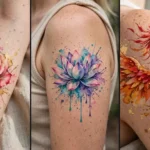
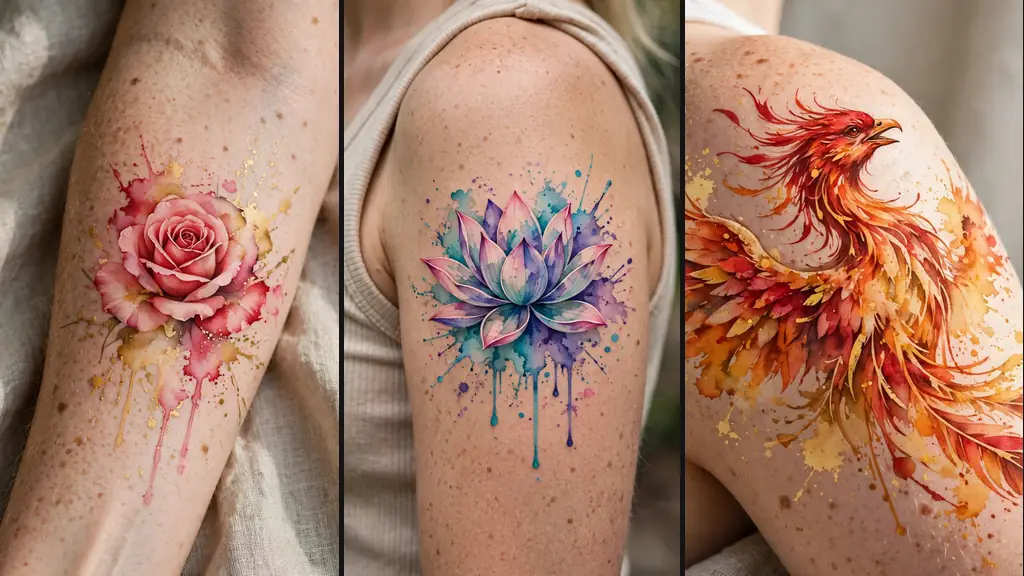
A watercolor tattoo does not look drawn on. It looks painted on — colour bleeding softly past the edges of a flower, a butterfly dissolving into a wash of pink and gold, a galaxy fading into bare skin like pigment on wet paper. It is the prettiest style in tattooing, and the one with the most honest question hanging over it: will it still look good in five years?
This guide gives you 40 watercolor tattoo ideas — each with its own design, meaning, best placement and honest downside — plus the fading truth, the pain and cost numbers, and the one trick that makes watercolor last.
Quick Answer
A watercolor tattoo is a tattoo that mimics watercolor painting: soft gradients, bleeding colour, faded edges, and little or no black outline. It lasts 5–10 years before colours soften noticeably, needs touch-ups every 3–5 years, and costs $150–$450 for a medium piece. The pieces that age best have a black linework skeleton under the wash and at least one dark anchor colour.
What Is a Watercolor Tattoo?
Unlike a traditional tattoo, a watercolor tattoo trades black outlines for transparent layers, letting colours blend and bleed the way pigment does on wet paper. There are no hard borders: a blue wing can fade into skin, a red petal can dissolve into a gold wash, and the whole piece can look like it was painted rather than inked. It is the closest tattooing gets to fine art.
The style is usually credited to New York artist Amanda Wachob, who began tattooing watercolour-inspired work in 2008 and proved a tattoo could hold a wash of colour without a black line. Other artists — Ondrash, Yatzil, Adrian Bascur — took it further, and today watercolor is one of the most requested tattoo styles in the world.
The Fading Truth: Will a Watercolor Tattoo Last?
Yes — but not like a traditional tattoo, and anyone who tells you otherwise is selling you something. All tattoos fade; watercolor fades faster, because it has no bold outline to hold the shape together. When pigment migrates a fraction of a millimetre over the years — which all pigment does — a black line still tells your eye where the shape ends. Take that line away and the softening becomes the whole design.
Three things decide how yours ages. Saturation: pieces where the artist packed real colour into the skin hold up; a translucent whisper of a wash can look like a faint smudge by year six. Colour choice: pale pinks, yellows, light blues and white fade fastest, while deep blues, purples and reds keep their contrast. Sun: ultraviolet light is the single biggest variable you control — the American Academy of Dermatology recommends covering healed tattoos or using broad-spectrum sunscreen on them, and for colour work that is non-negotiable. Plan a touch-up every 3–5 years as routine maintenance.
Floral Watercolor Tattoos
Florals are where watercolor earns its reputation. Petals are already soft-edged and layered, so the style feels native — and a flower that bleeds a little at the edges still reads as a flower in ten years.
Watercolor Rose
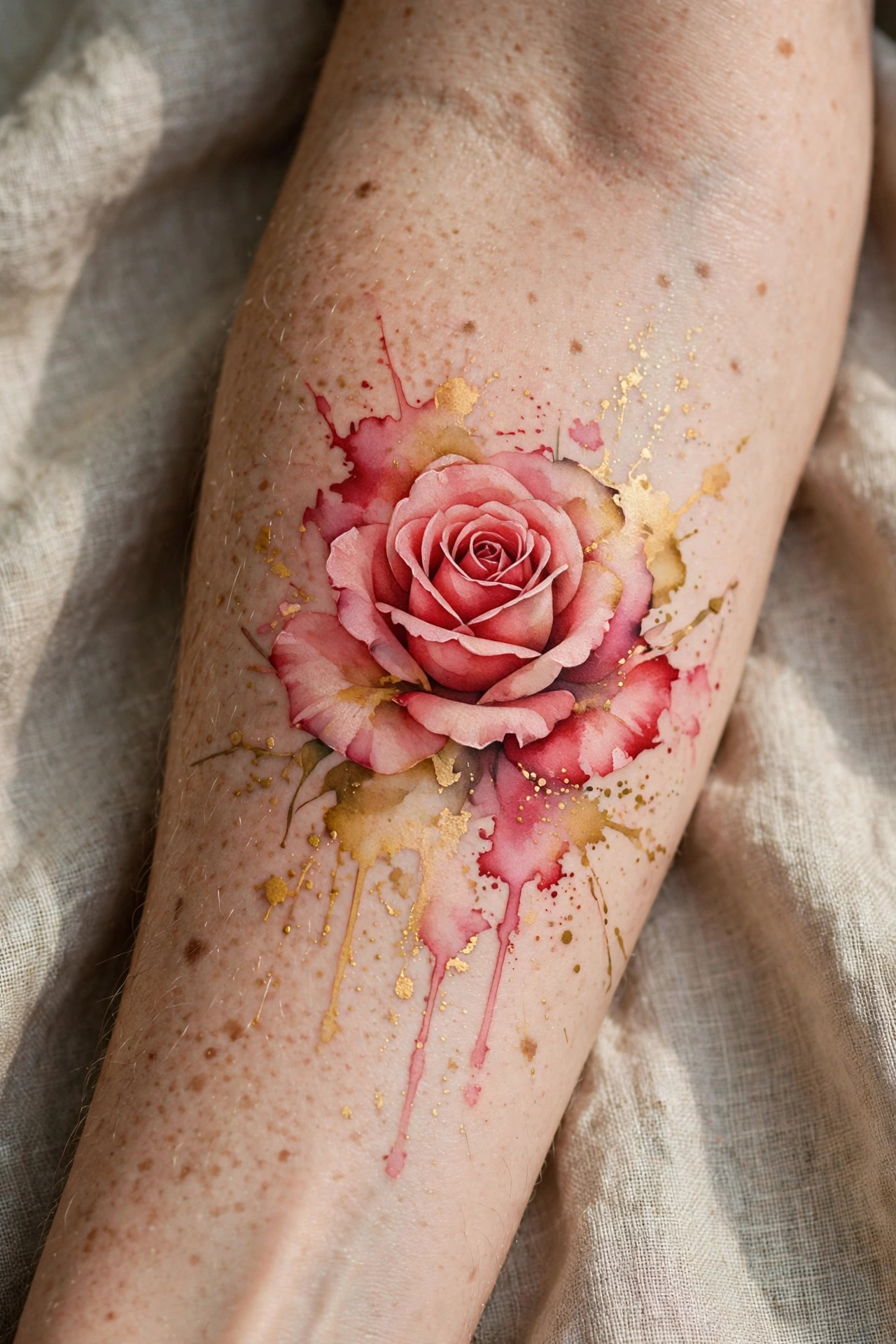
What it is: A classic rose painted in soft reds and pinks, its petals bleeding into gold — the single most popular watercolor design. Meaning: Love, beauty, and the willingness to carry a little thorn with the bloom. Best placement: Forearm or shoulder — flat skin lets the wash sit evenly. Honest downside: Pink fades fastest of the warm colours, so expect a touch-up by year four.
Watercolor Lotus
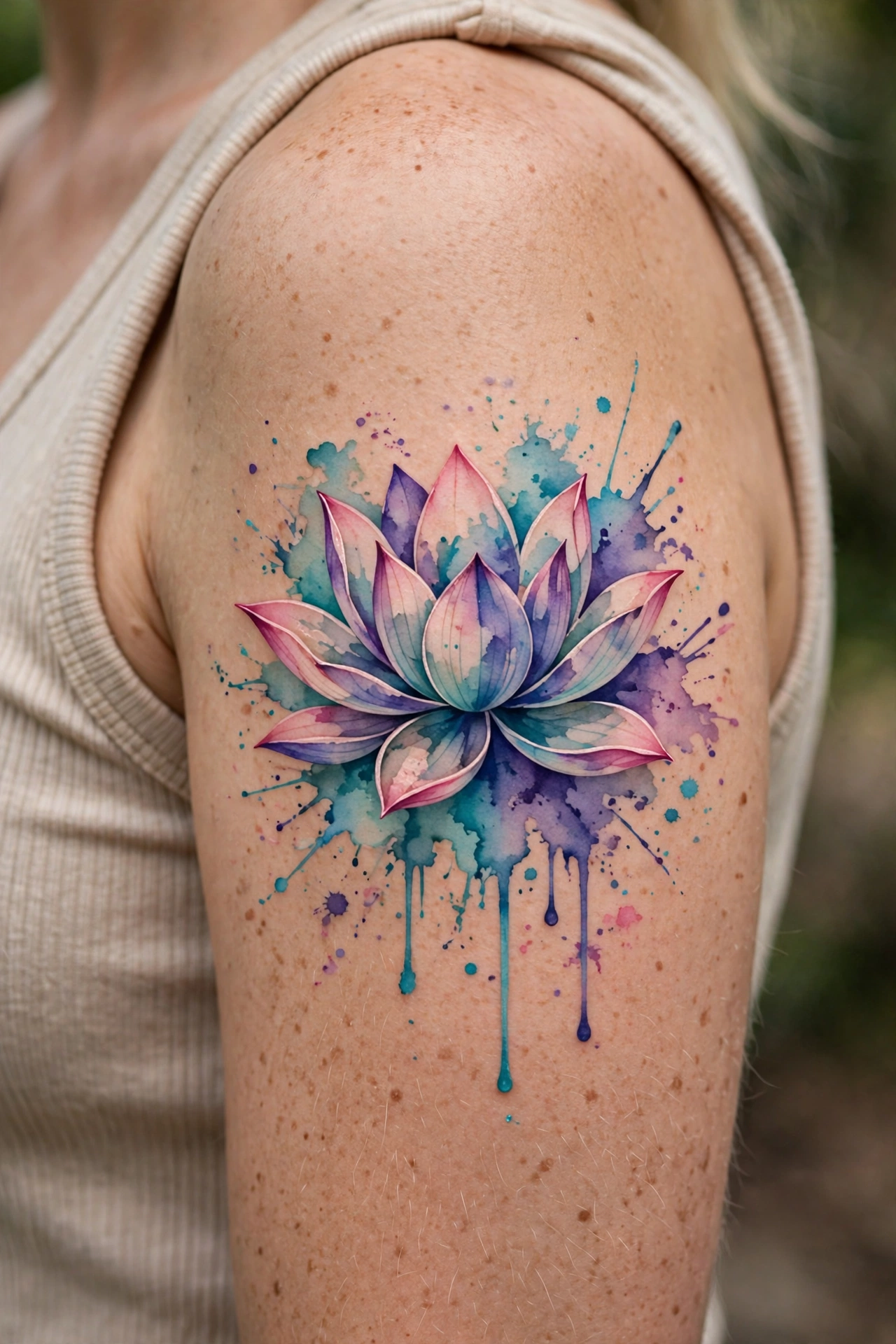
What it is: A lotus in teal and violet washes, its petals opening without a single hard line. Meaning: Rebirth and calm — the flower that rises clean from muddy water. Best placement: Upper arm or upper back, where the design has room to open. Honest downside: Teal and violet sit at different depths, so one petal can soften before the other.
Watercolor Cherry Blossom
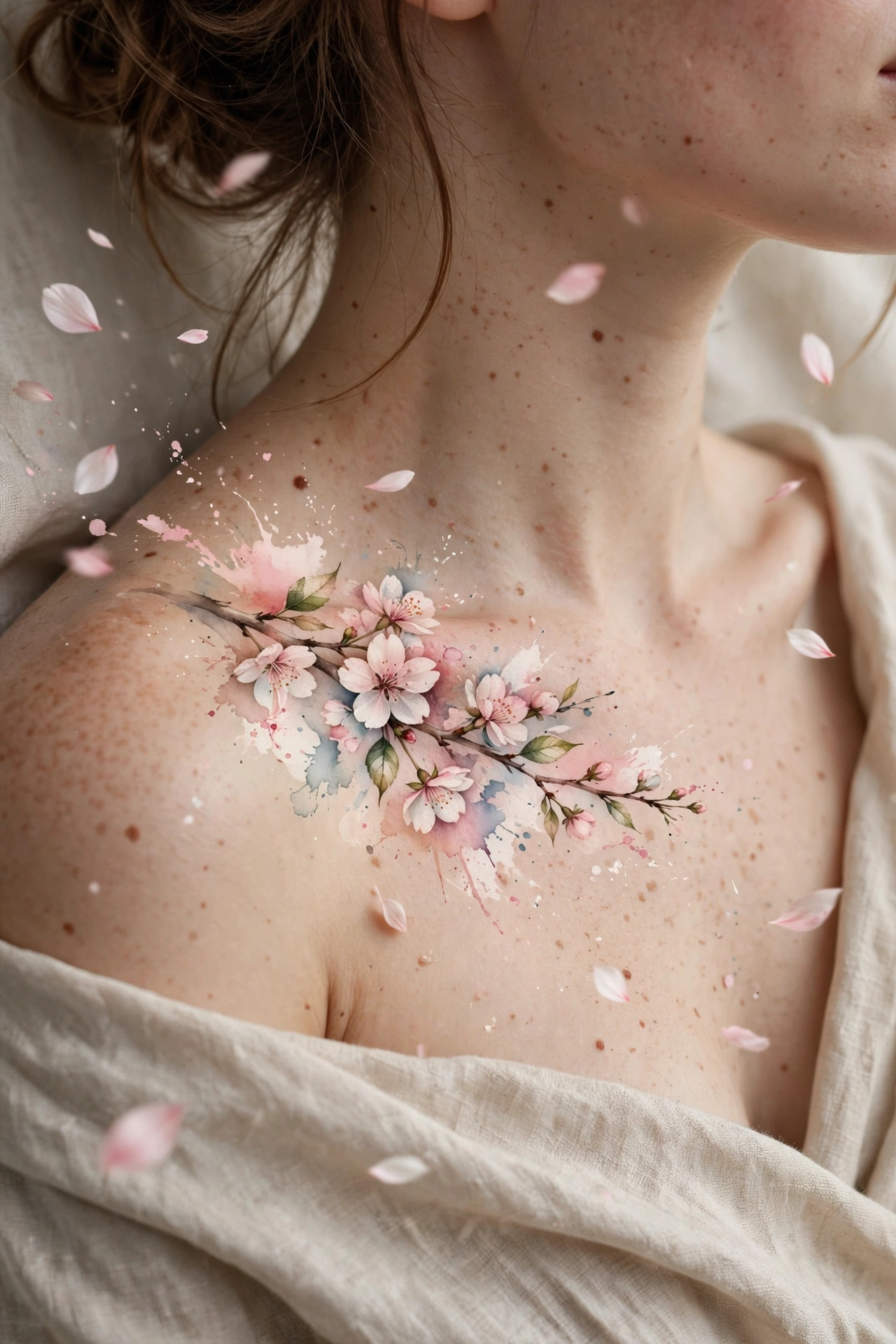
What it is: A branch of blush-pink blossoms drifting across the collarbone, petals softening into white at the edges. Meaning: The beauty of fleeting things — in Japanese tradition, a reminder that life is brief. Best placement: Collarbone or ankle, where the branch can follow the bone. Honest downside: The palest pinks can wash out within three years.
Watercolor Sunflower
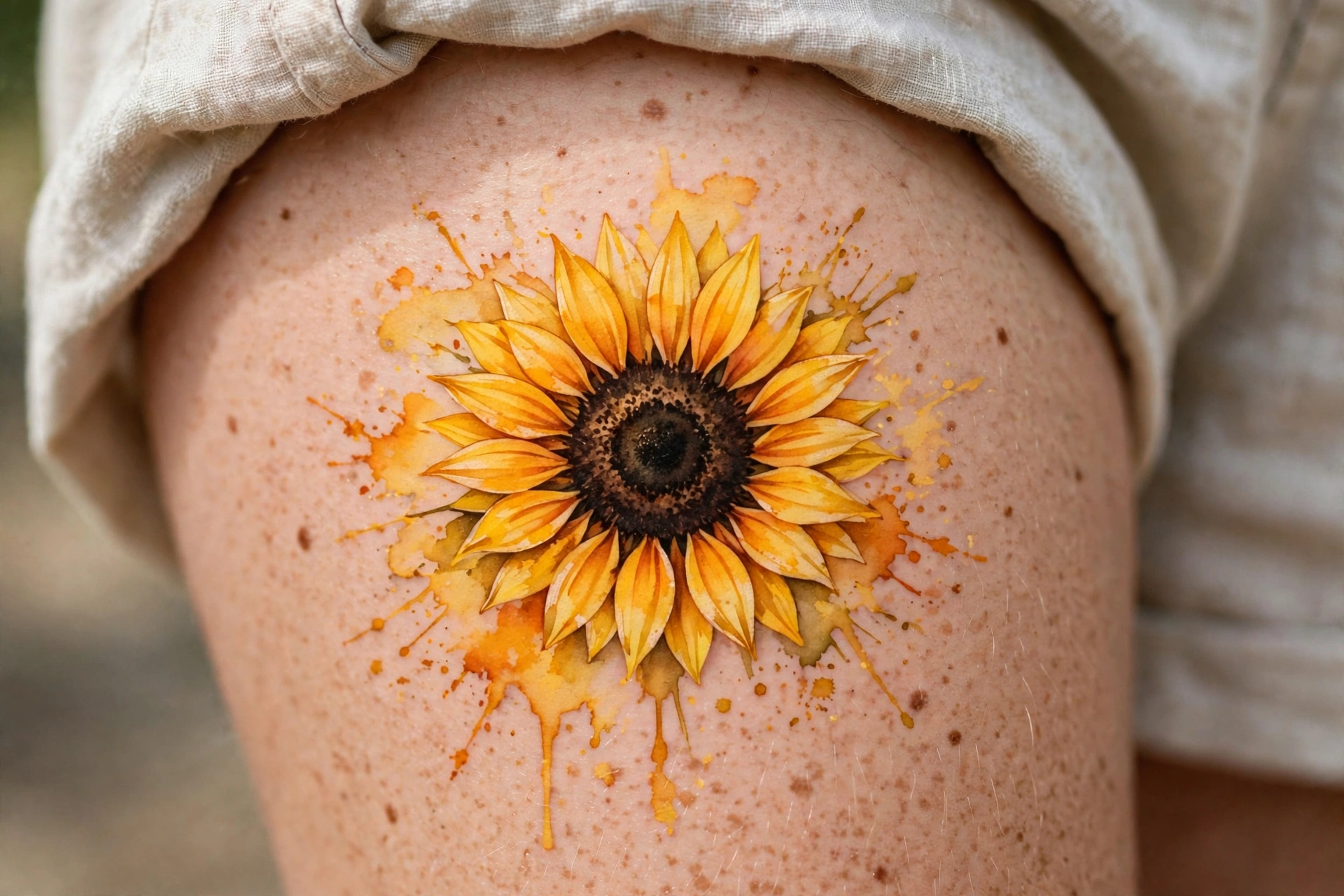
What it is: A sunflower in gold and orange, its centre dark enough to anchor the wash around it. Meaning: Loyalty and warmth — the flower that turns toward light. Best placement: Thigh or upper arm, where the large bloom fits. Honest downside: Large yellow areas need dense packing or they look patchy as they fade.
Watercolor Peony
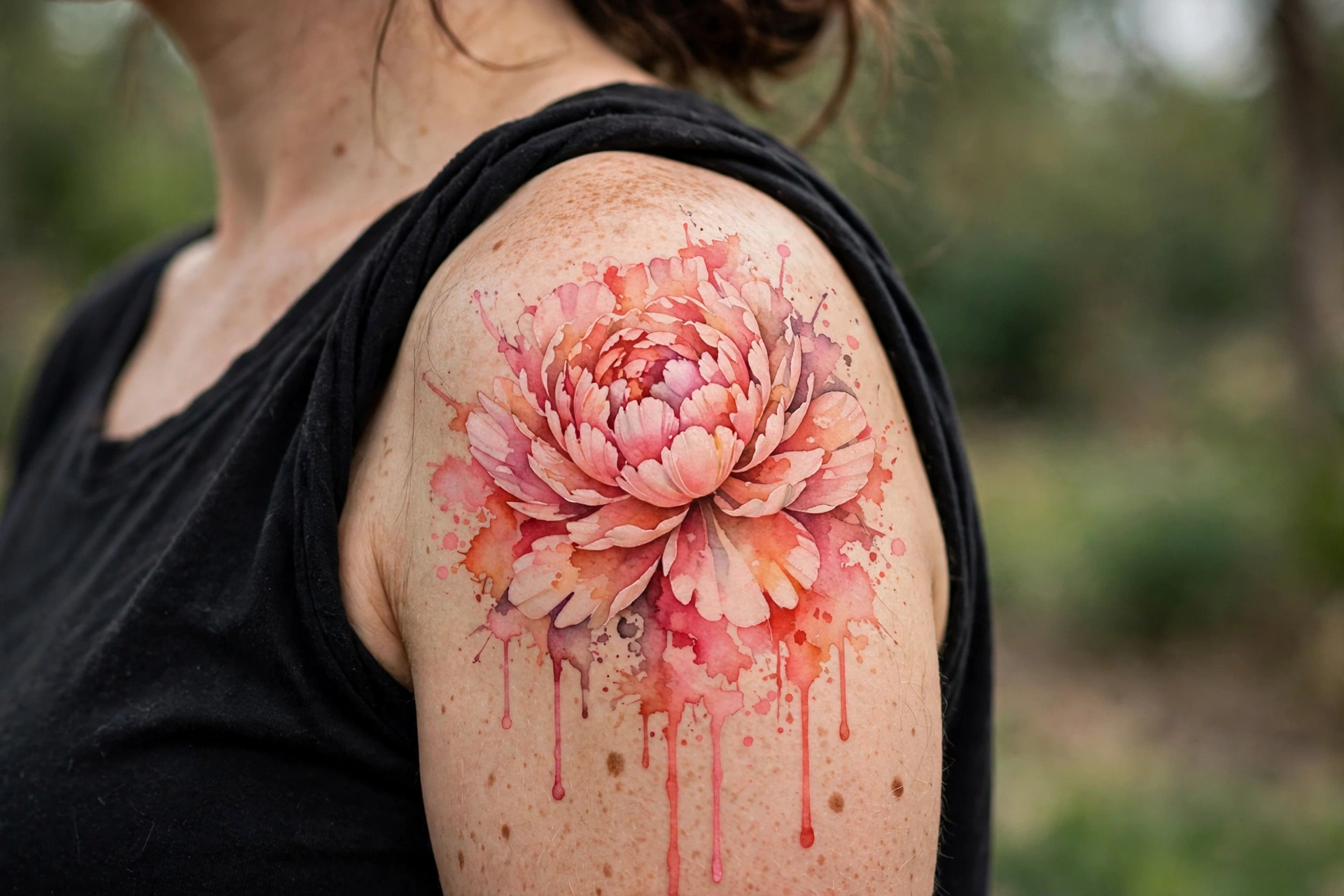
What it is: A peony in pink and coral, the most layered of all the florals, its ruffled petals made for bleeding colour. Meaning: Prosperity and a happy, honourable life. Best placement: Shoulder or thigh, where the round bloom has room. Honest downside: Fine detail inside the bloom can blur into the wash.
Watercolor Lavender
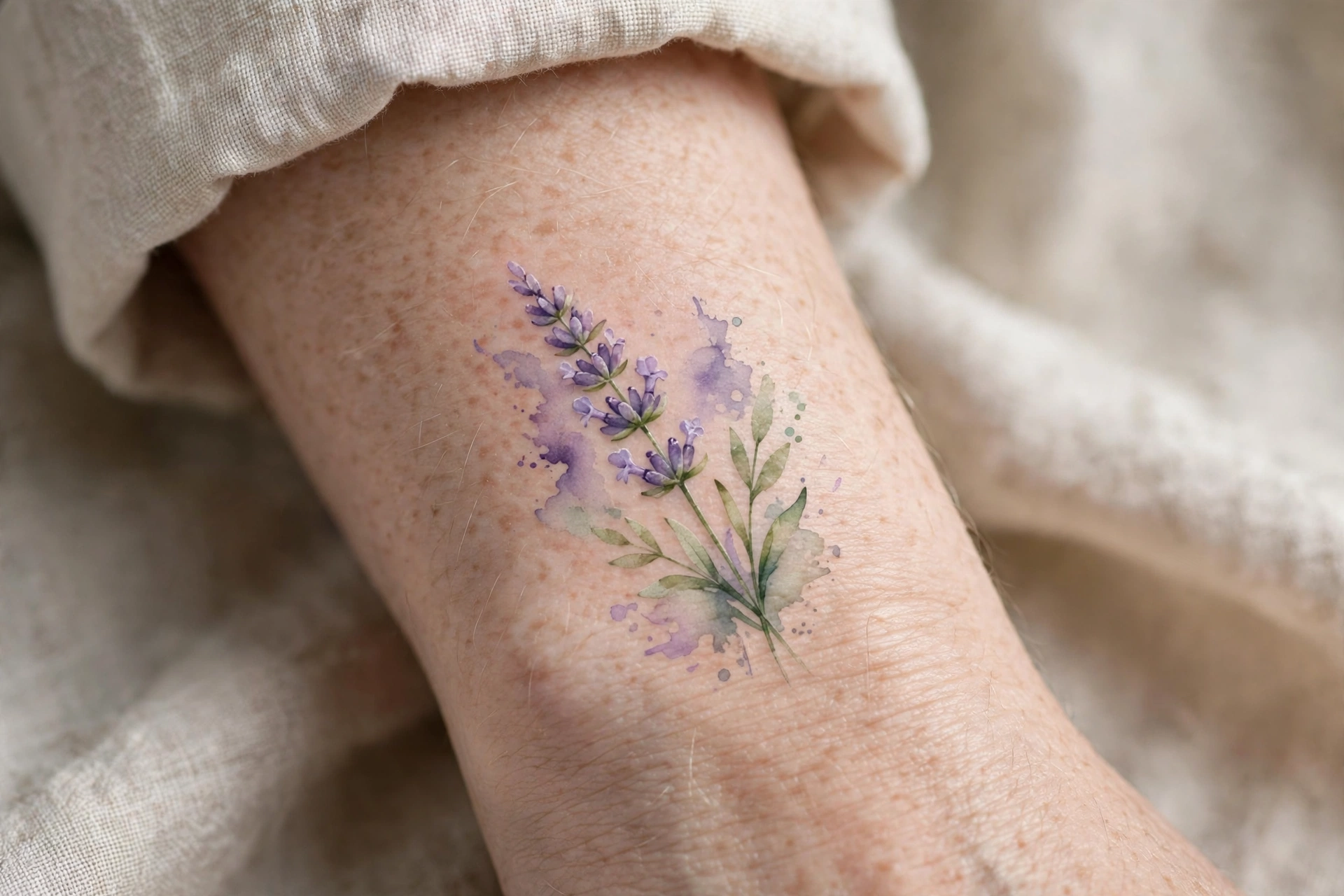
What it is: A single sprig of lavender, small, purple and green, the quietest design on this list. Meaning: Calm, grace, and devotion — the flower of quiet people. Best placement: Wrist or behind the ear, where a small piece belongs. Honest downside: Thin stems fade quickly, so keep the linework dark.
Watercolor Wildflower Bouquet
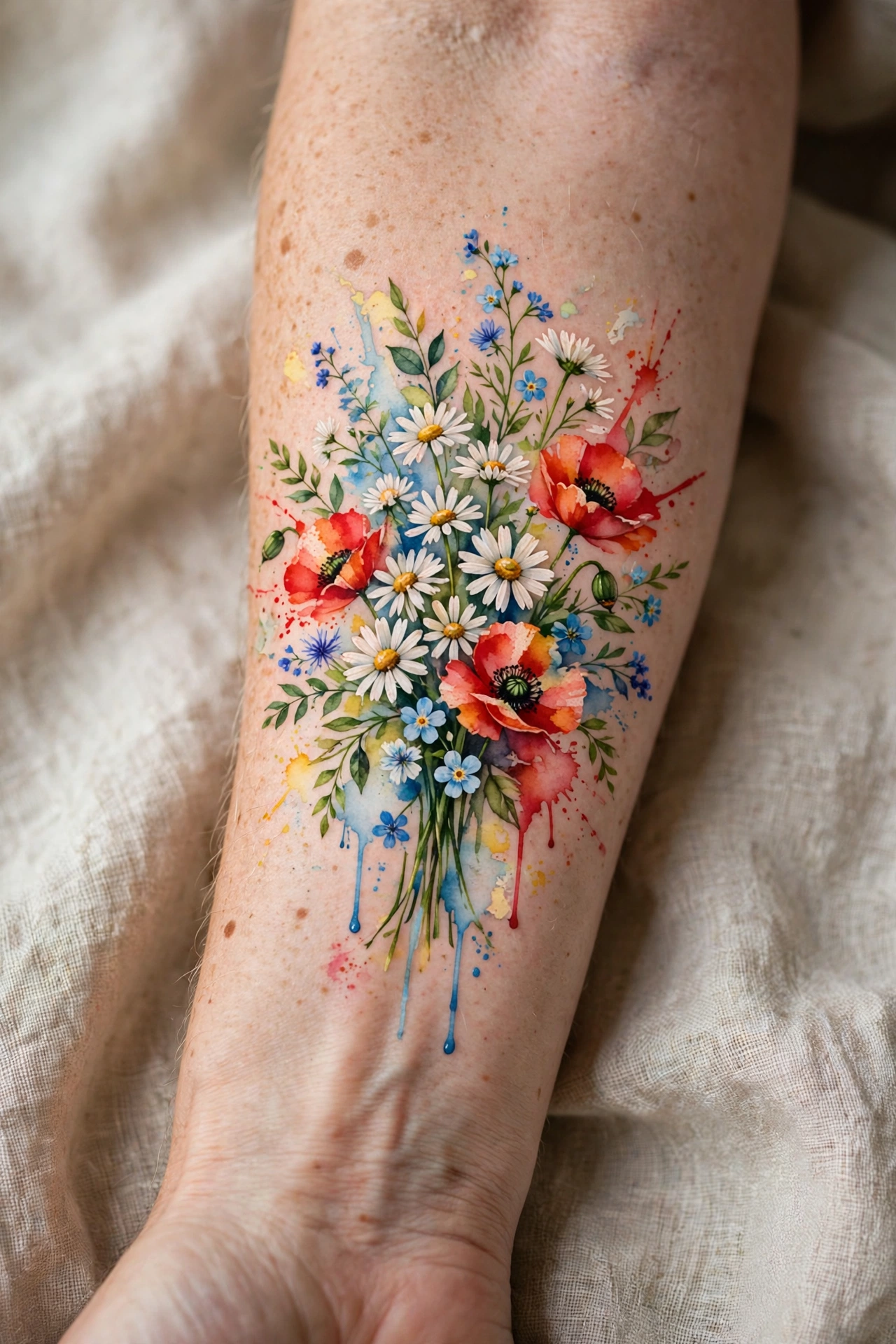
What it is: A loose bouquet — daisies, poppies and small blue blooms — gathered without a vase or a border. Meaning: Simplicity and freedom; a garden you carry with you. Best placement: Forearm, where the bouquet can run vertically. Honest downside: Many small colours mean many different fade rates — one flower will age faster than the rest.
Watercolor Poppy
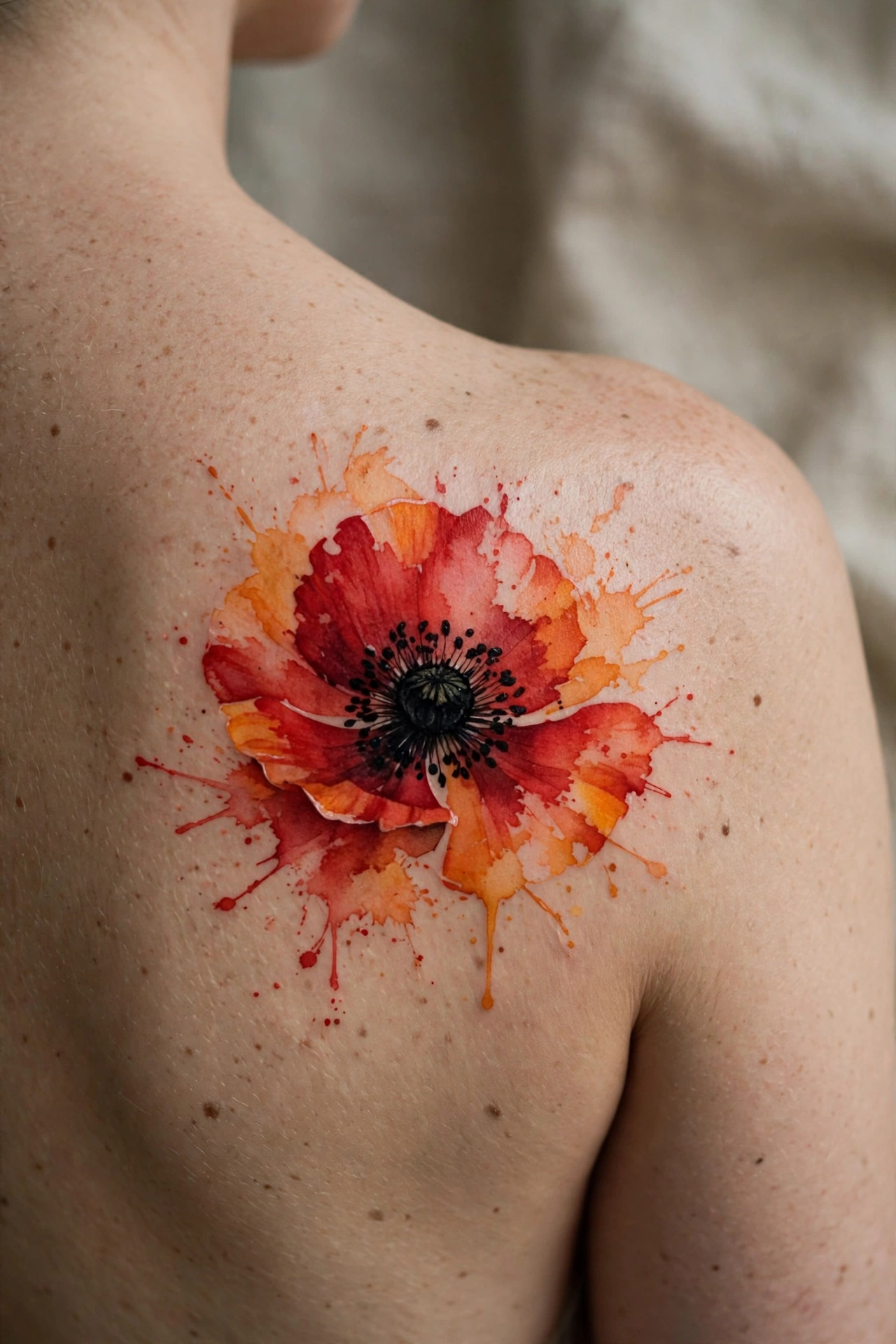
What it is: A red poppy with a black centre, the only flower on this list that carries its own anchor. Meaning: Remembrance and sleep — and, in red, consolation. Best placement: Shoulder blade or calf, where the bold red can breathe. Honest downside: Red ink is the most likely to cause a reaction, so patch-test first.
Animal Watercolor Tattoos
Animals are the hardest watercolor subject and the most rewarding: the style forces the artist to paint fur, feather and scale with colour alone, and when it works the creature looks alive on the skin.
Watercolor Butterfly
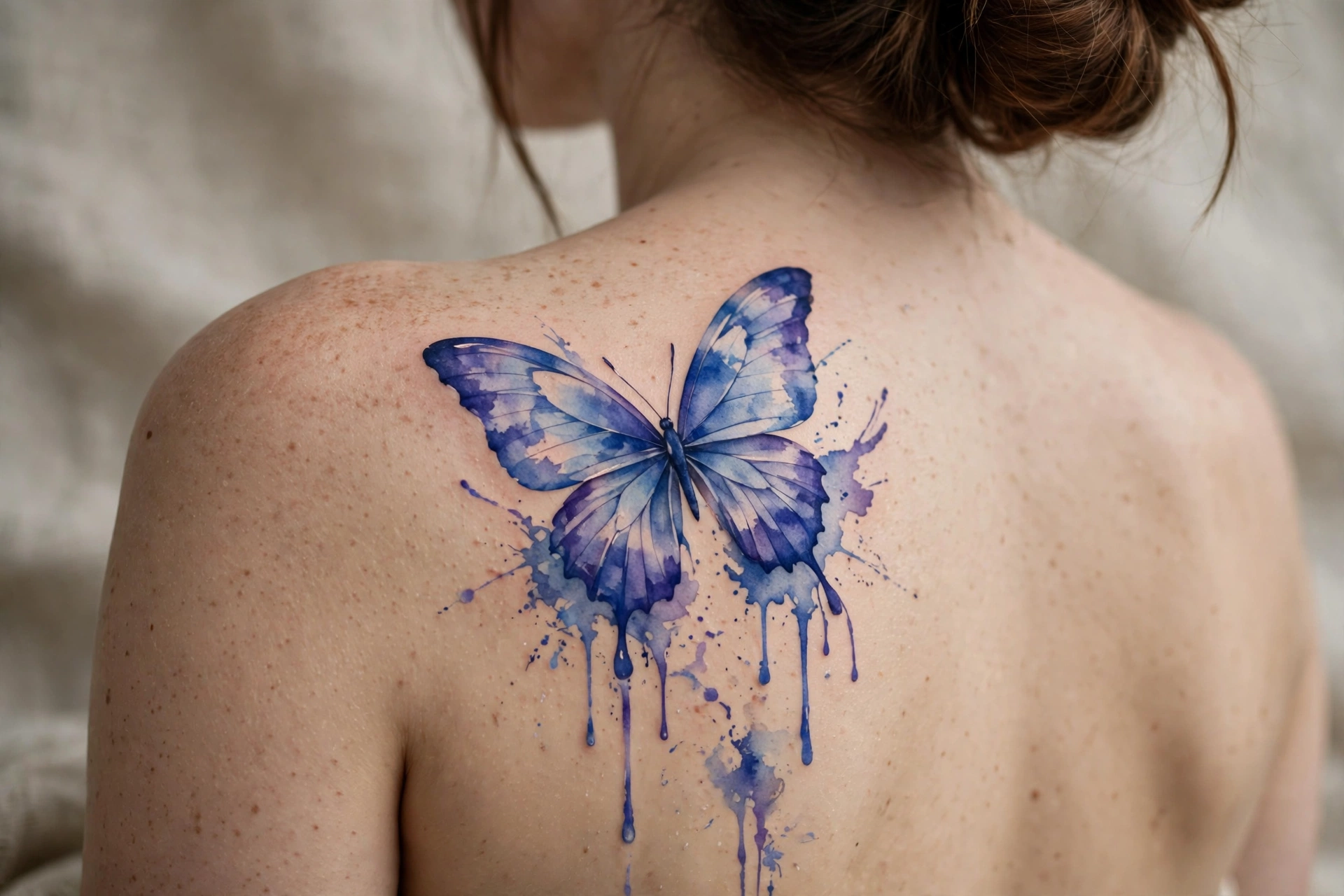
What it is: A butterfly in blue and violet washes, its wings dissolving into colour at the edges. Meaning: Transformation — the most-requested animal in watercolor, and the one the style suits best. Best placement: Shoulder blade or wrist, where the wings can open. Honest downside: Symmetrical wings fade at different rates if one side catches more sun. Read our full guide to butterfly tattoo ideas.
Watercolor Hummingbird
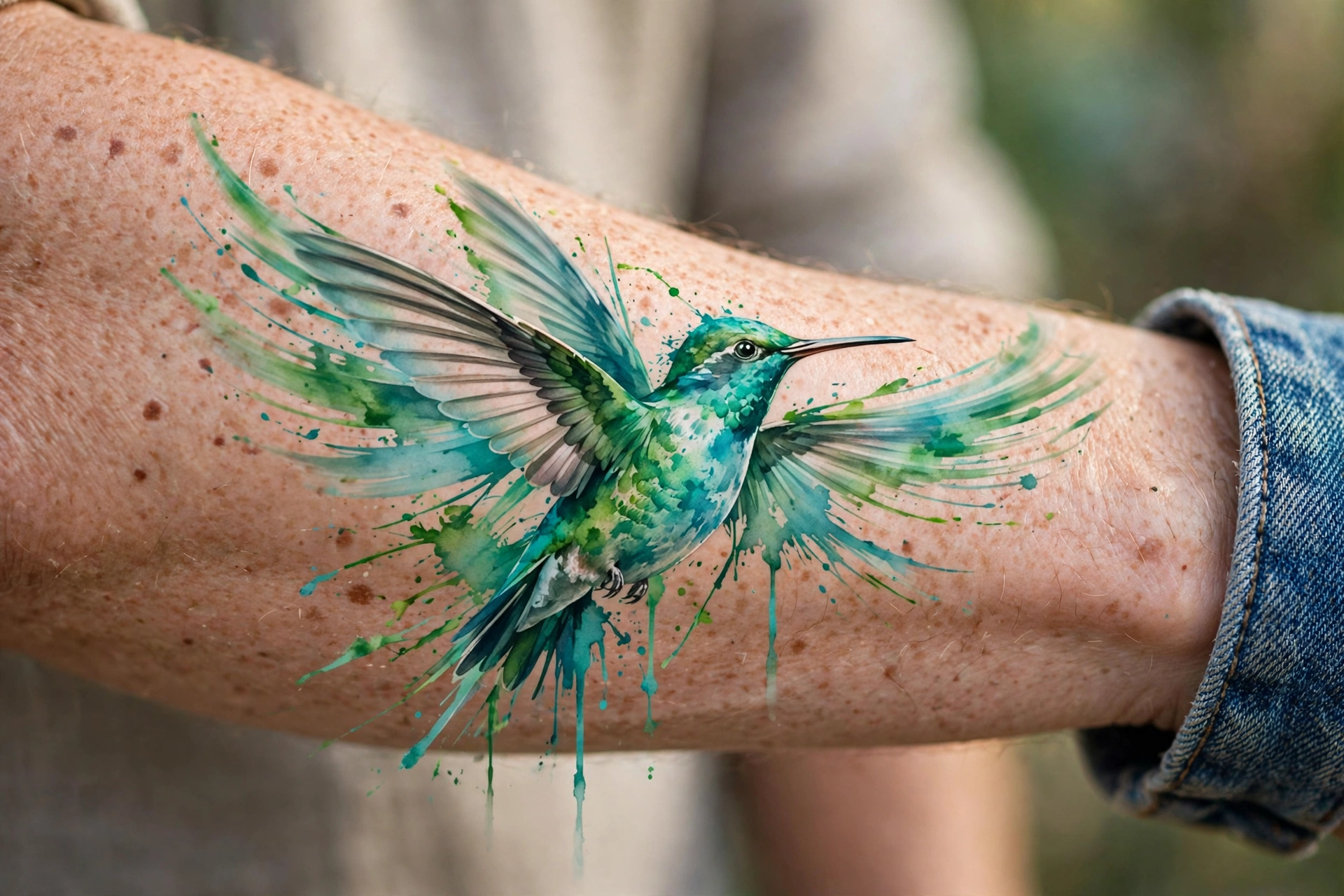
What it is: A hummingbird frozen mid-hover, green and turquoise, its wings a blur of wash. Meaning: Joy and resilience — a tiny creature that never sits still. Best placement: Forearm or ankle, where the bird looks like it is moving. Honest downside: Small green areas can turn grey as they fade.
Watercolor Wolf
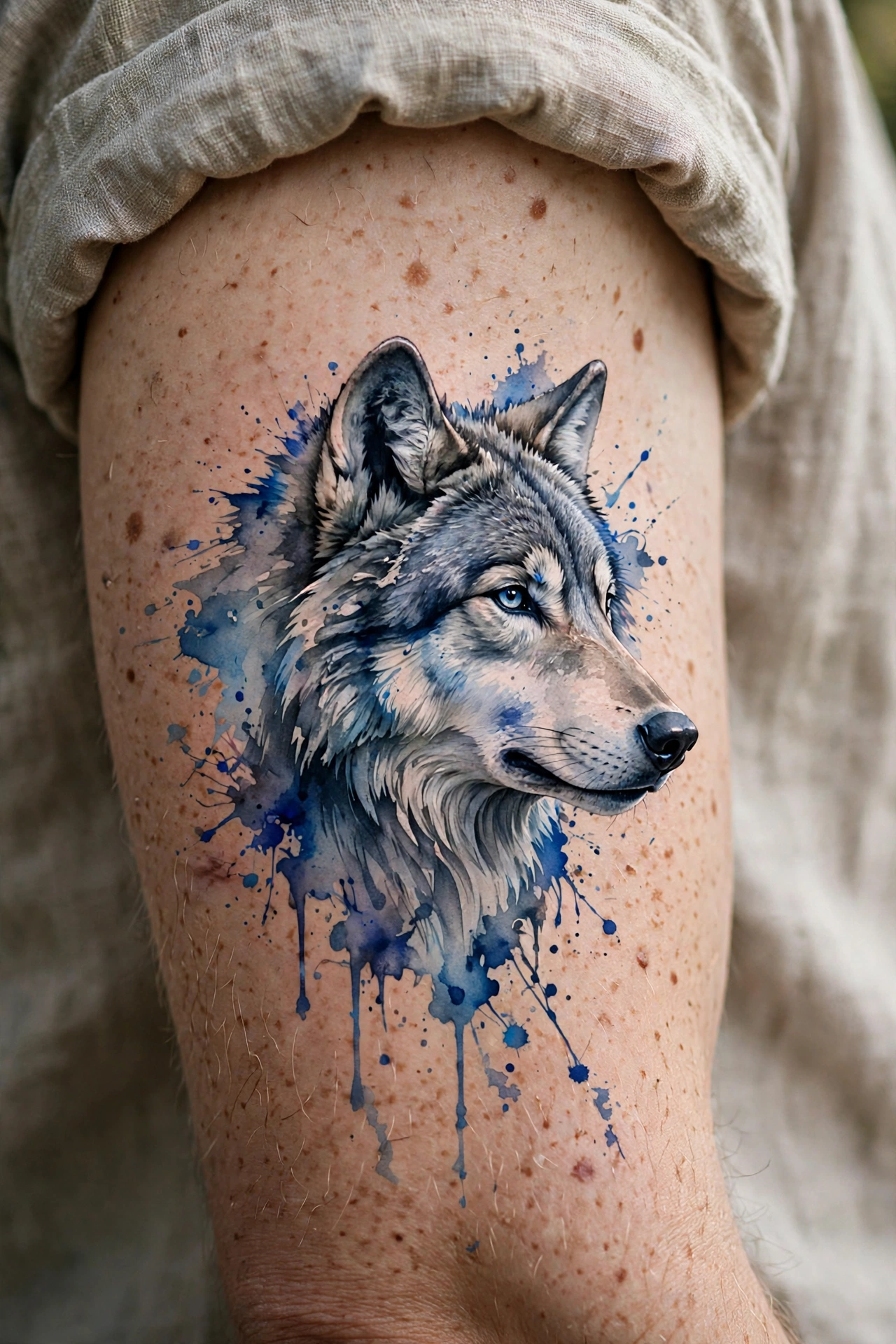
What it is: A wolf’s head in grey and indigo washes, its eyes the only sharp point in the piece. Meaning: Loyalty, instinct, and the freedom of the wild. Best placement: Upper arm or chest, where the head can be large enough to read. Honest downside: Grey wash fades to a soft haze — keep the eyes dark.
Watercolor Lion
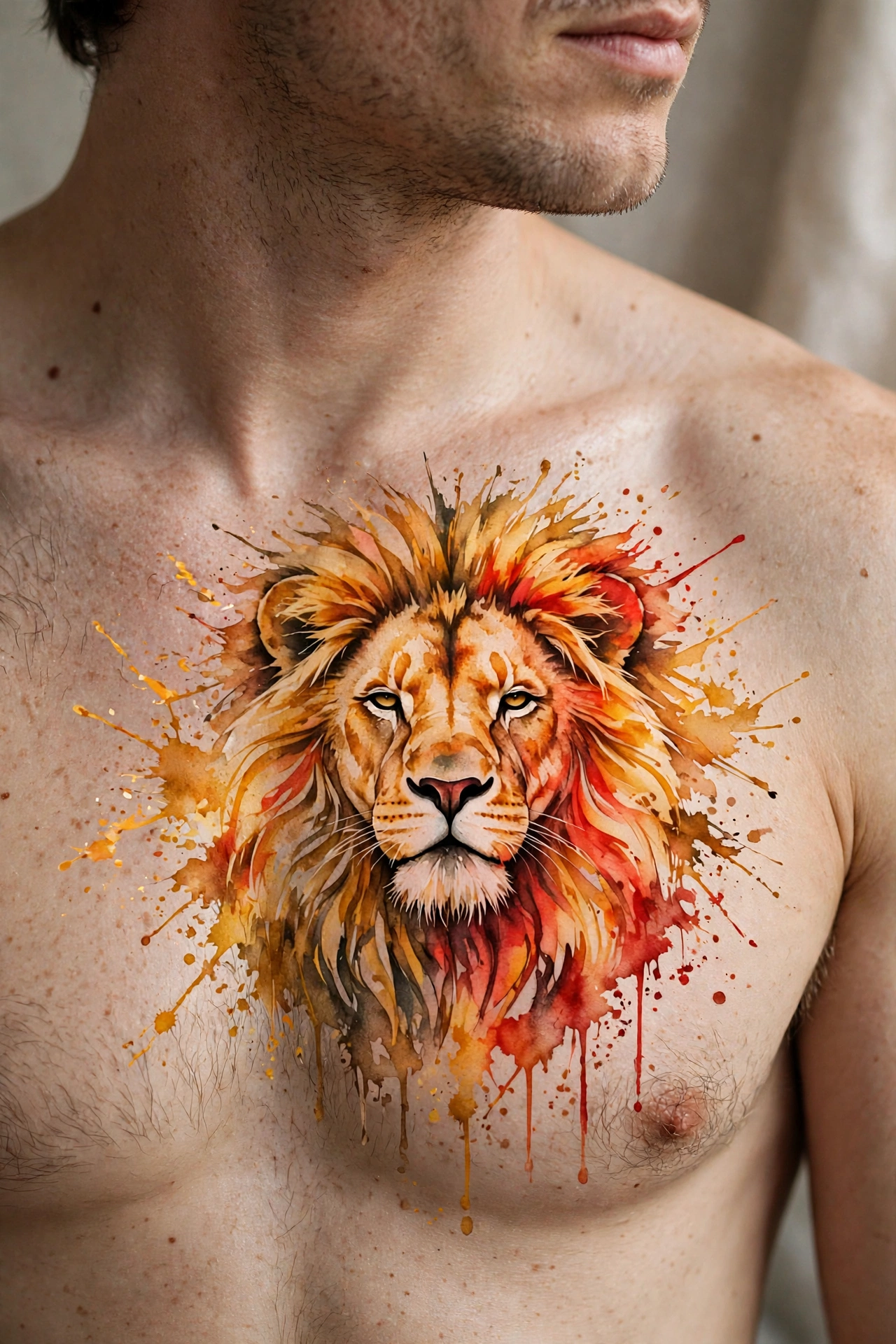
What it is: A lion in golden and amber washes, its mane bleeding into the surrounding colour. Meaning: Courage and quiet authority — the king, painted rather than drawn. Best placement: Chest or back, where the mane has space. Honest downside: Gold and amber need regular touch-ups to stay warm. Read our guide to lion tattoo ideas.
Watercolor Owl
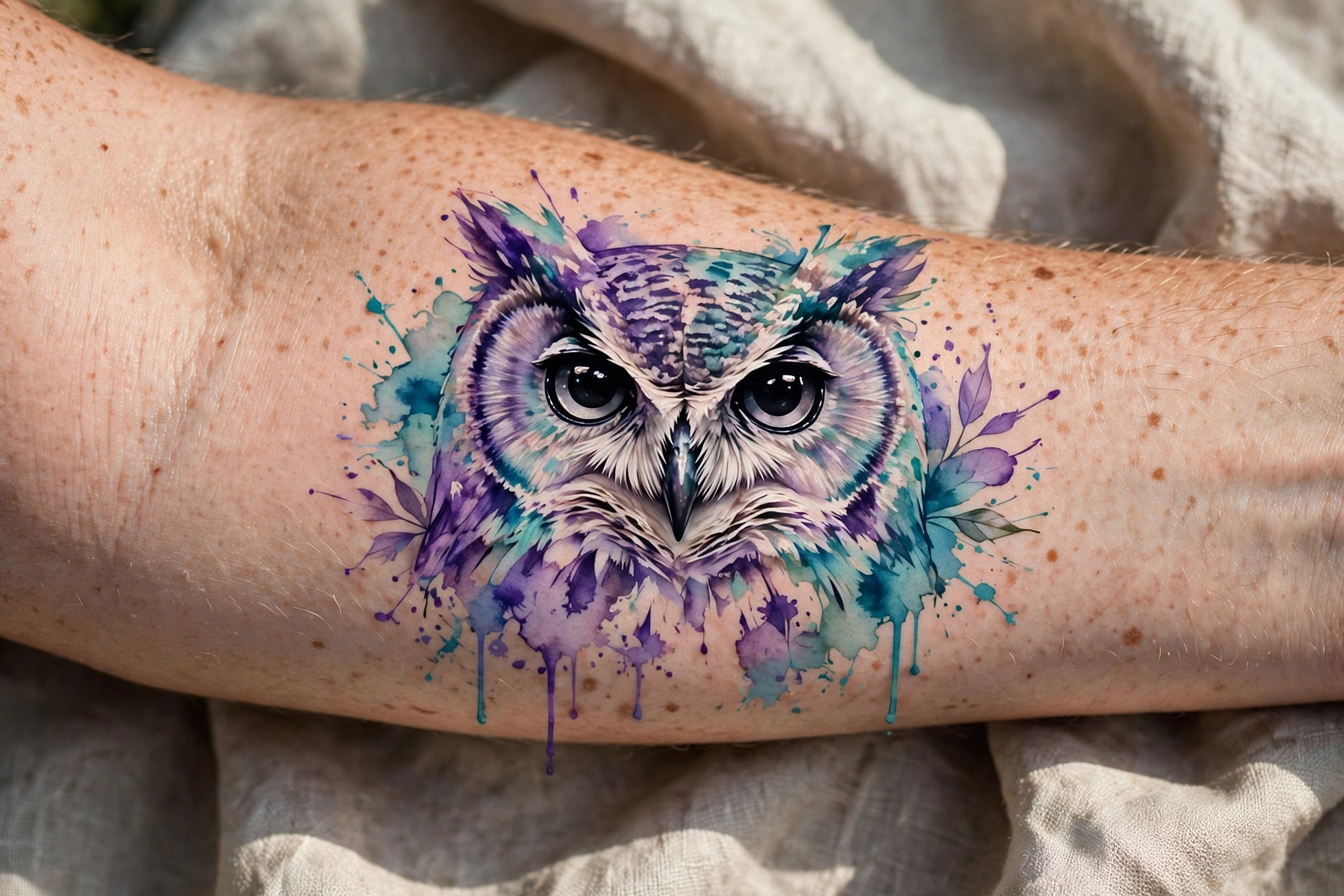
What it is: An owl in purple and teal washes, its large eyes holding the piece together. Meaning: Wisdom and the ability to see what others miss. Best placement: Forearm or thigh, where the bird can sit upright. Honest downside: Fine feather detail blurs fast — ask for bold eyes.
Watercolor Koi Fish
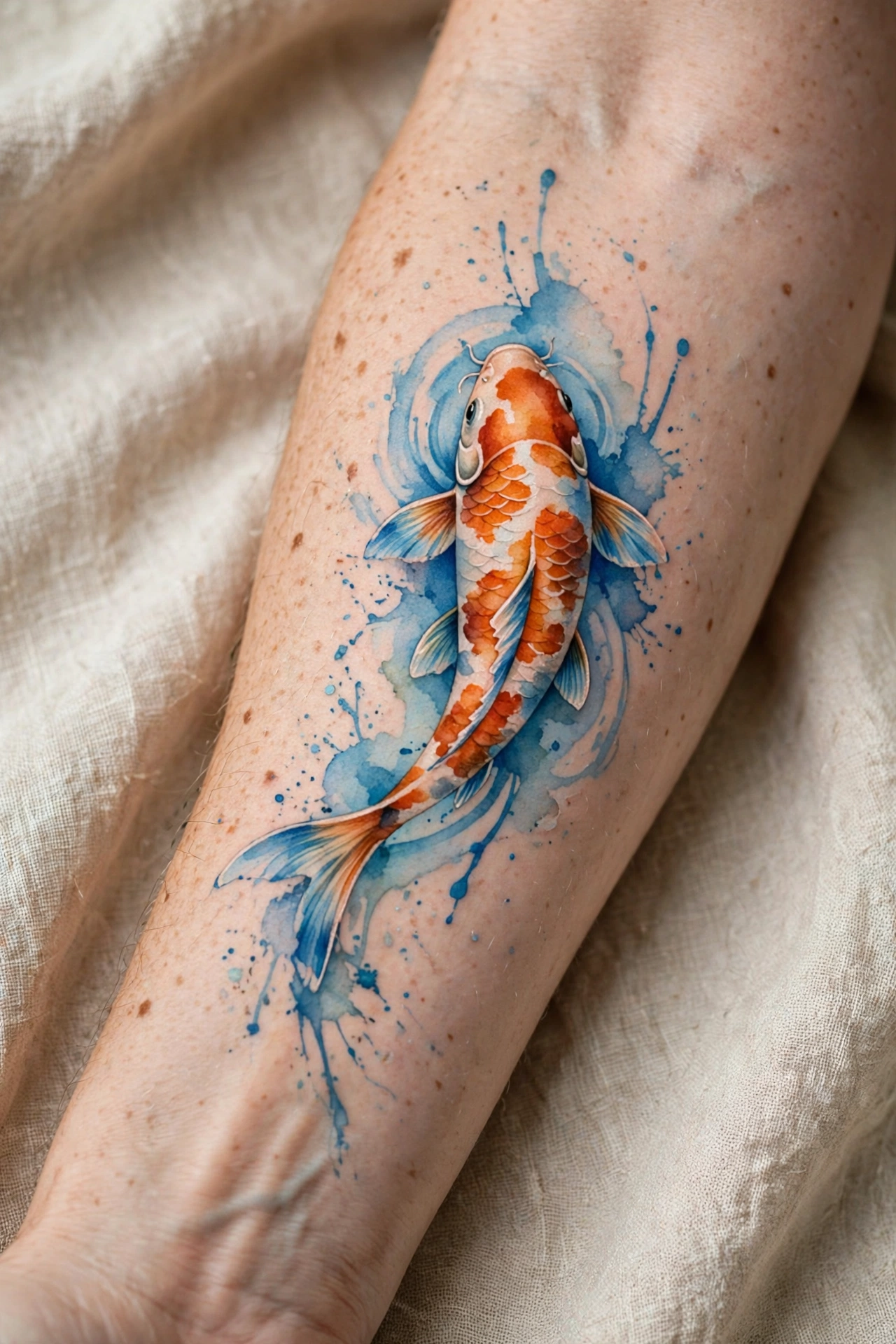
What it is: A koi in orange, white and blue, swimming up the arm through a wash of water. Meaning: Perseverance — the fish that swims upstream and becomes a dragon. Best placement: Forearm or calf, where the fish can follow the limb. Honest downside: White ink yellows over time, so keep the white minimal.
Watercolor Fox
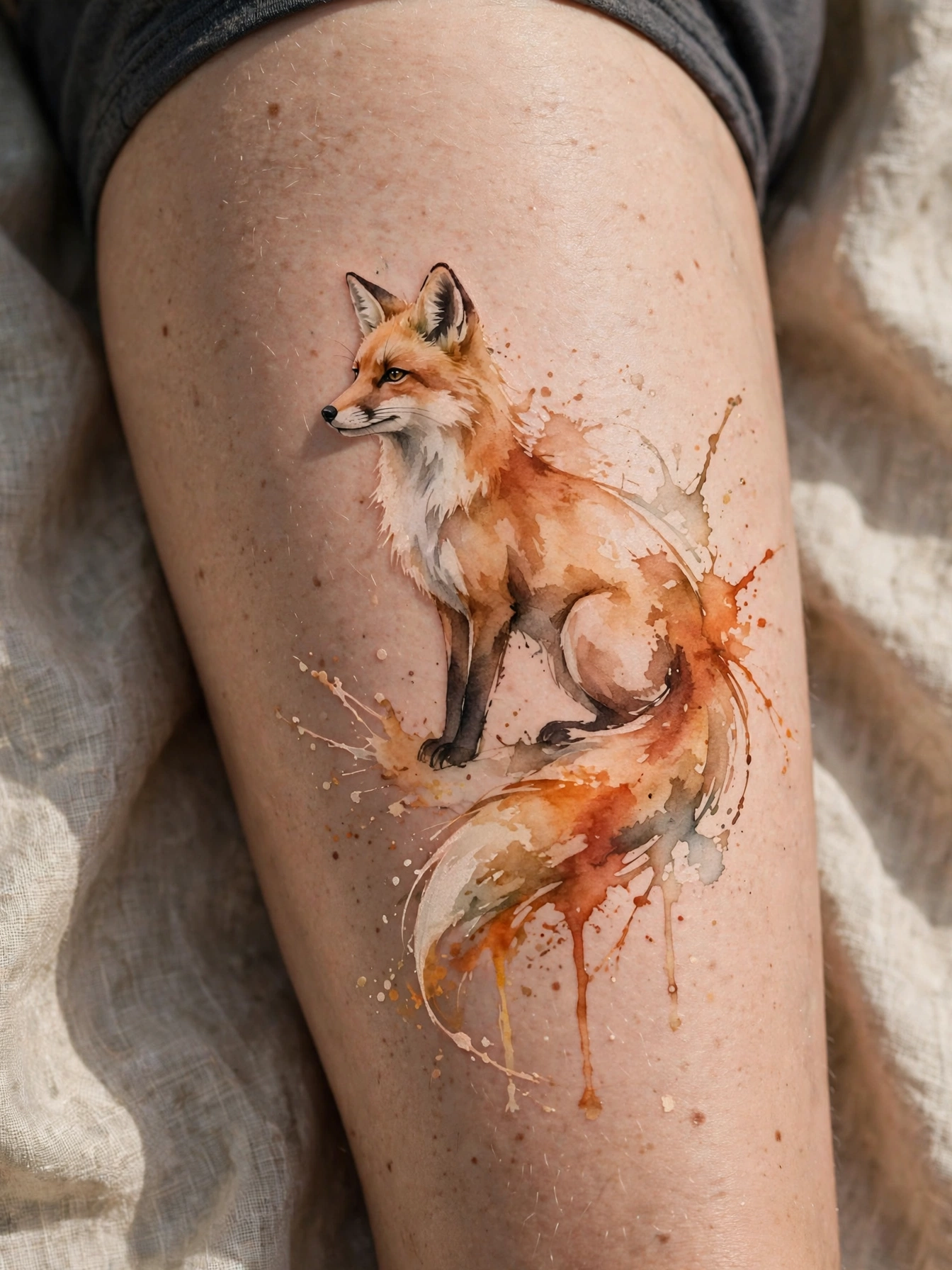
What it is: A fox in rust-orange and cream, its tail a sweep of colour across the thigh. Meaning: Cleverness and adaptability — the trickster, done beautifully. Best placement: Thigh or upper arm, where the tail can curl. Honest downside: Orange is one of the faster-fading warm colours.
Watercolor Elephant
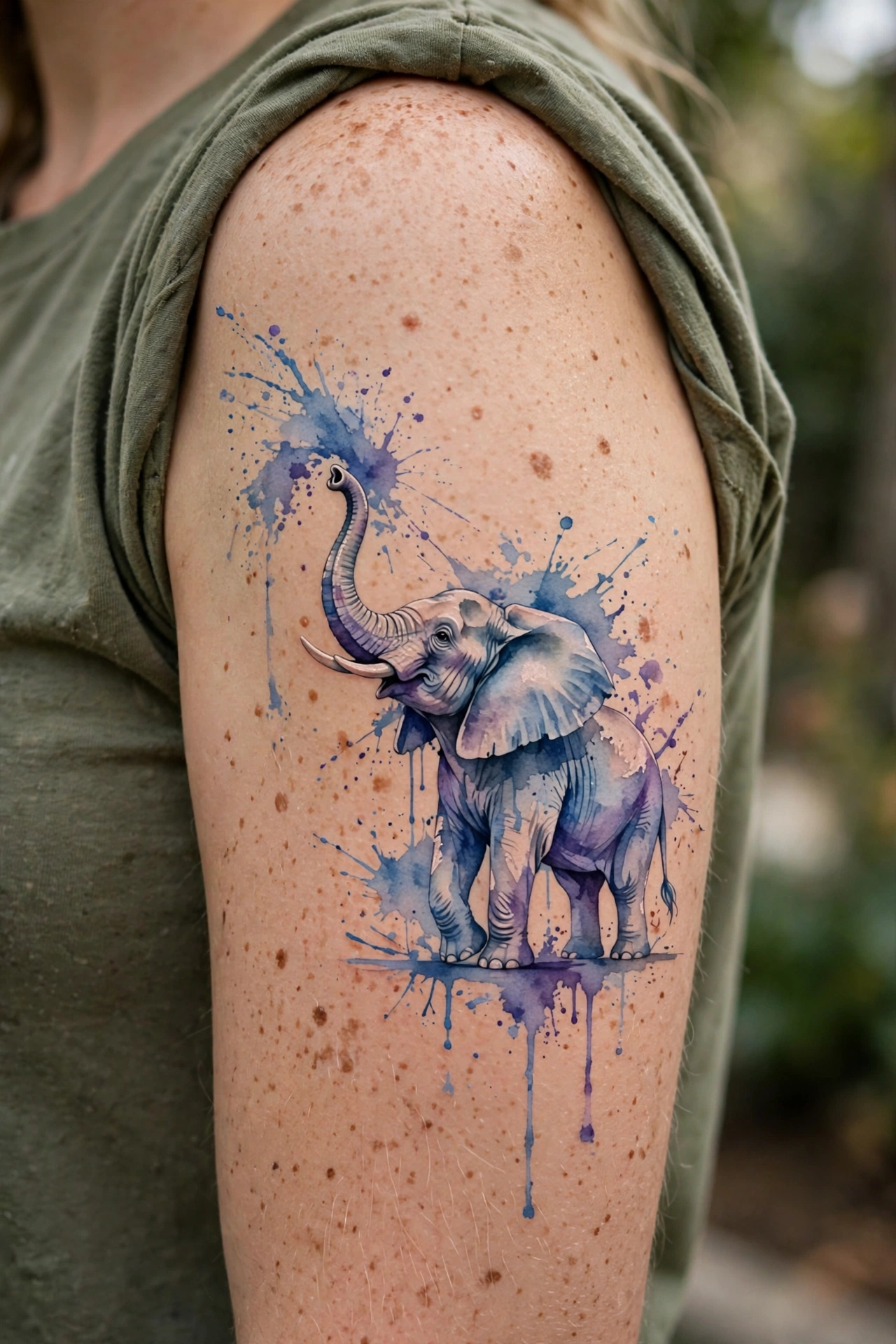
What it is: An elephant in dusty blue and violet, its trunk and ears washed in soft colour. Meaning: Memory, patience, and quiet strength. Best placement: Upper arm or back, where the large shape fits. Honest downside: Large blue areas can look patchy as they age — choose deep blue, not pale.
Sky, Sea and Landscape Watercolor Tattoos
Watercolor was made for skies and water: gradients, washes and bleeding edges are exactly how a sunset or a wave looks. These are the designs that age most gracefully, because a landscape that softens still looks like a landscape.
Watercolor Galaxy
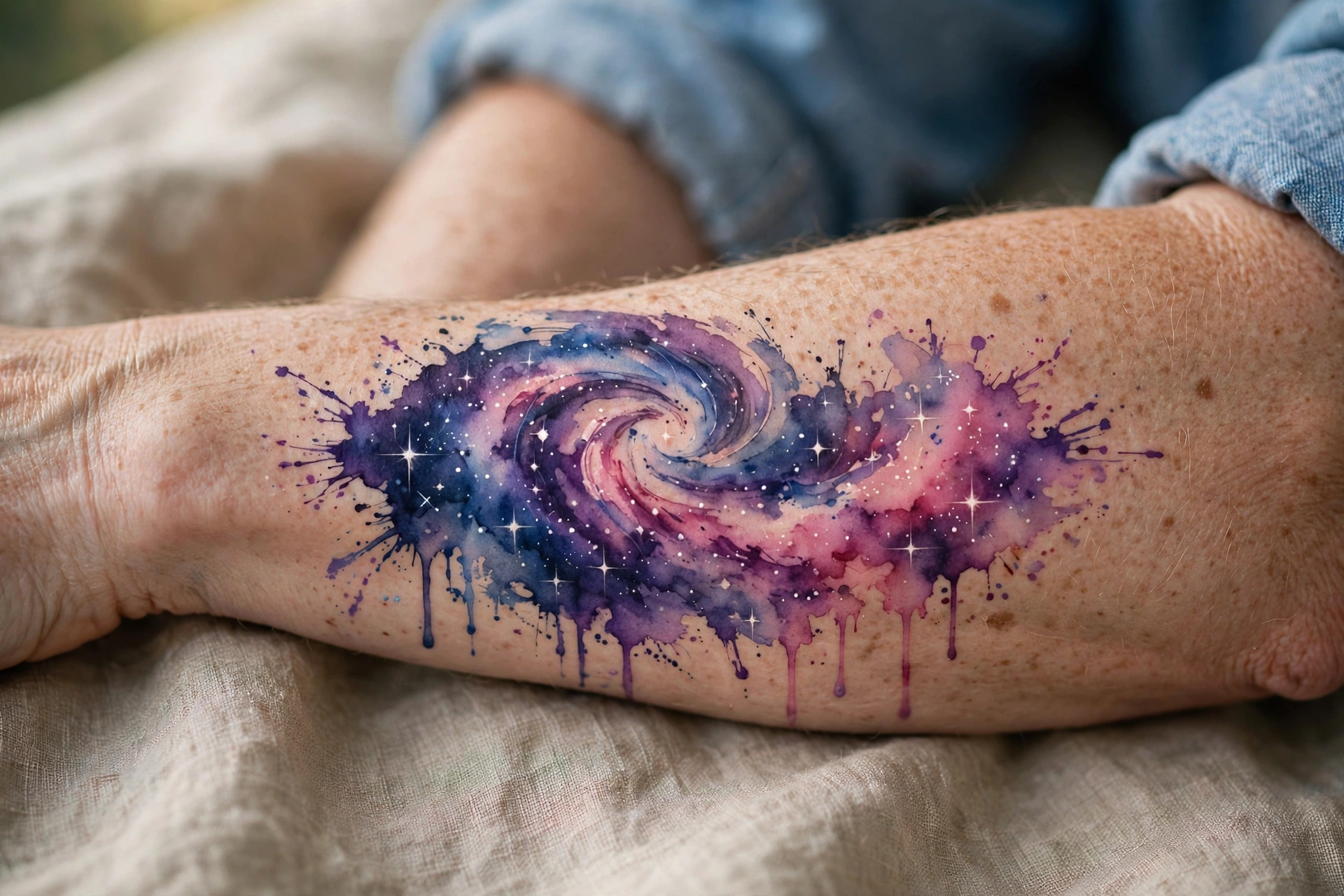
What it is: A galaxy in deep purple, blue and pink, stars scattered across the wash. Meaning: Wonder and the feeling of being small in a good way. Best placement: Forearm or shoulder, where the night sky can wrap. Honest downside: Dark washes can heal patchy — choose an artist with solid colour-packing.
Watercolor Sunset
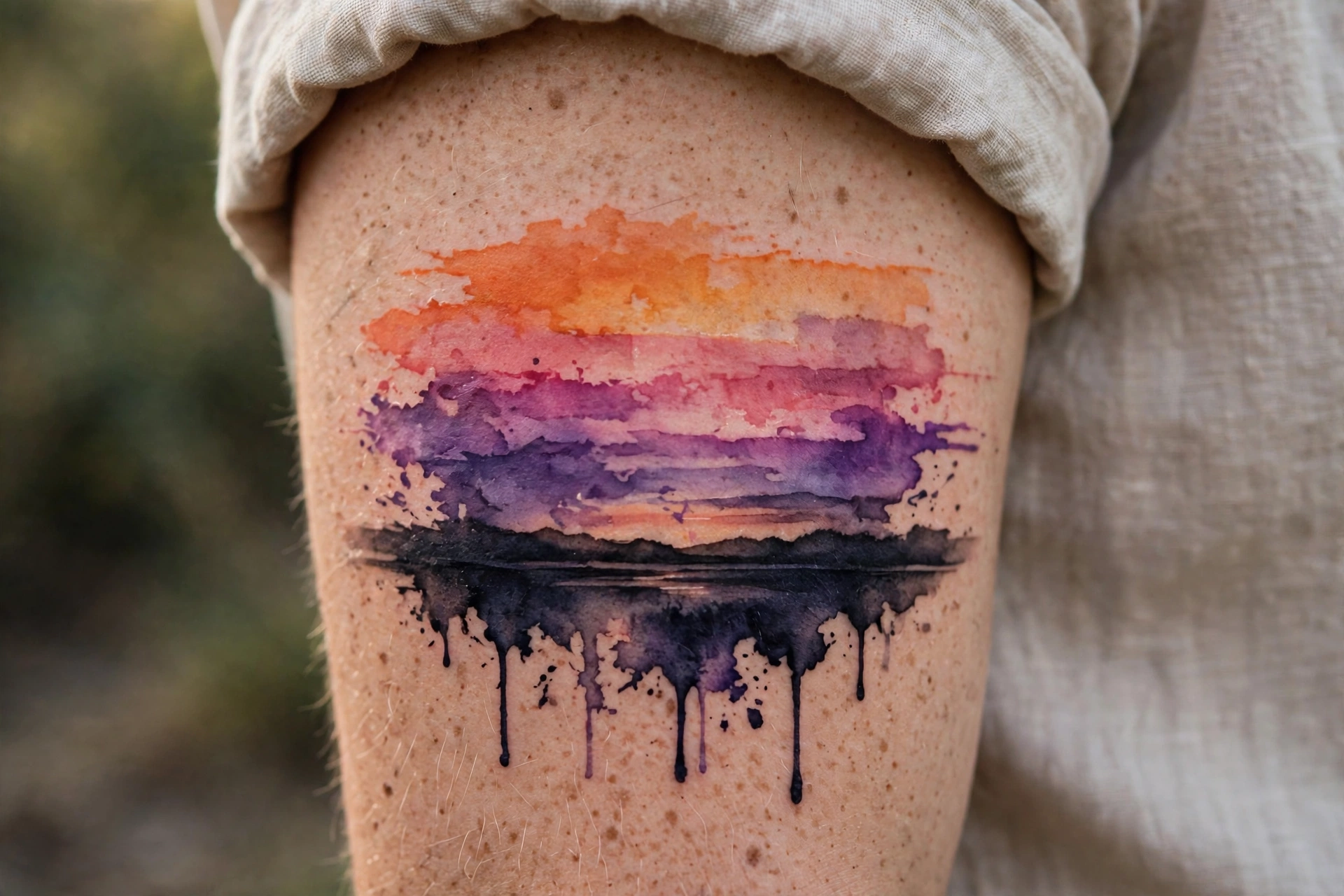
What it is: A sunset in bands of orange, pink and violet, the sun a soft disc in the middle. Meaning: Hope and the promise that the day ends well. Best placement: Upper arm or back, where the bands can run wide. Honest downside: Pink bands fade first, leaving the orange to dominate.
Watercolor Ocean Wave
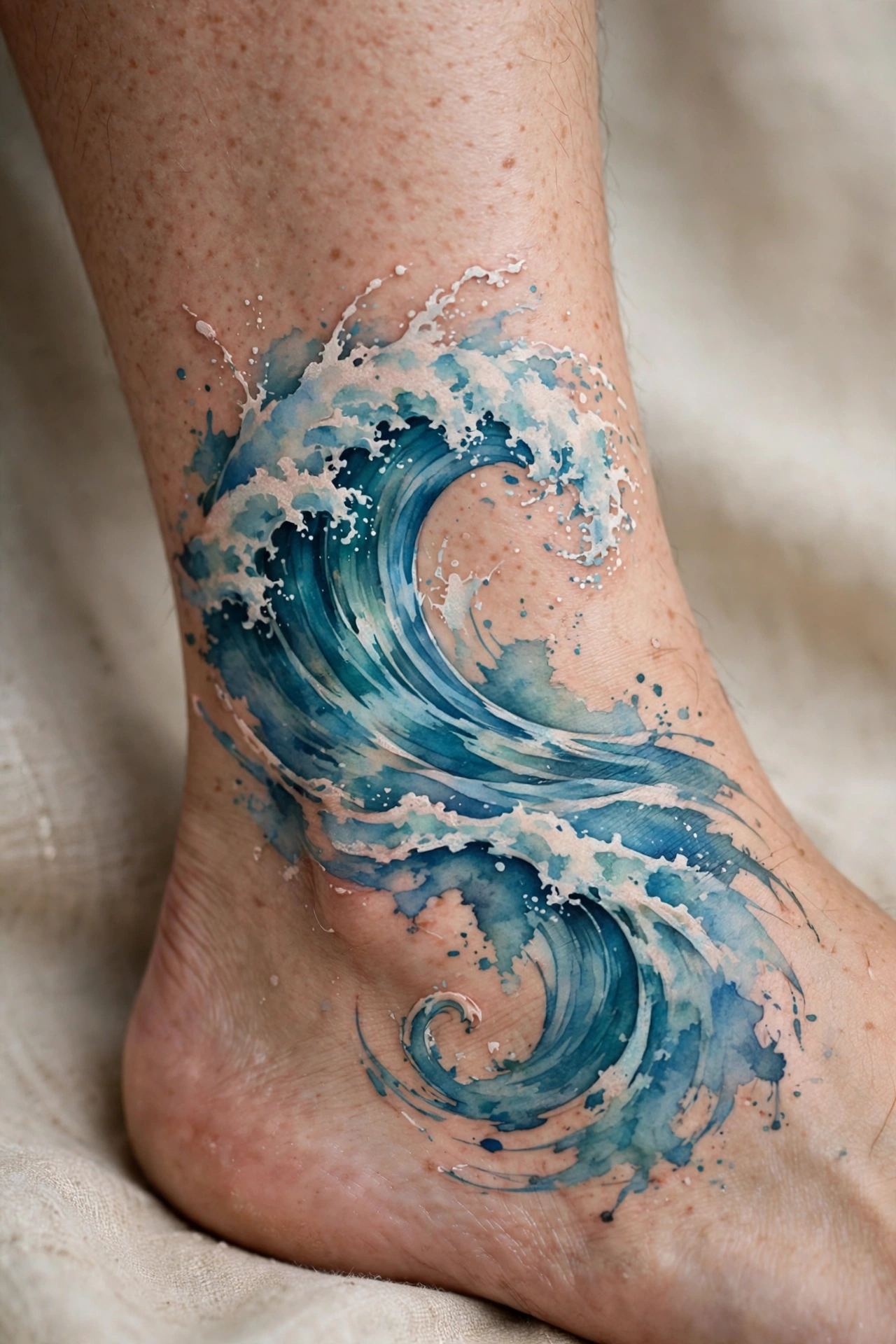
What it is: A wave in blue and teal, breaking around the ankle in a wash of foam. Meaning: Strength and the ability to keep moving. Best placement: Ankle or wrist, where the wave can wrap. Honest downside: Thin white foam lines disappear — keep them bold.
Watercolor Mountain Range
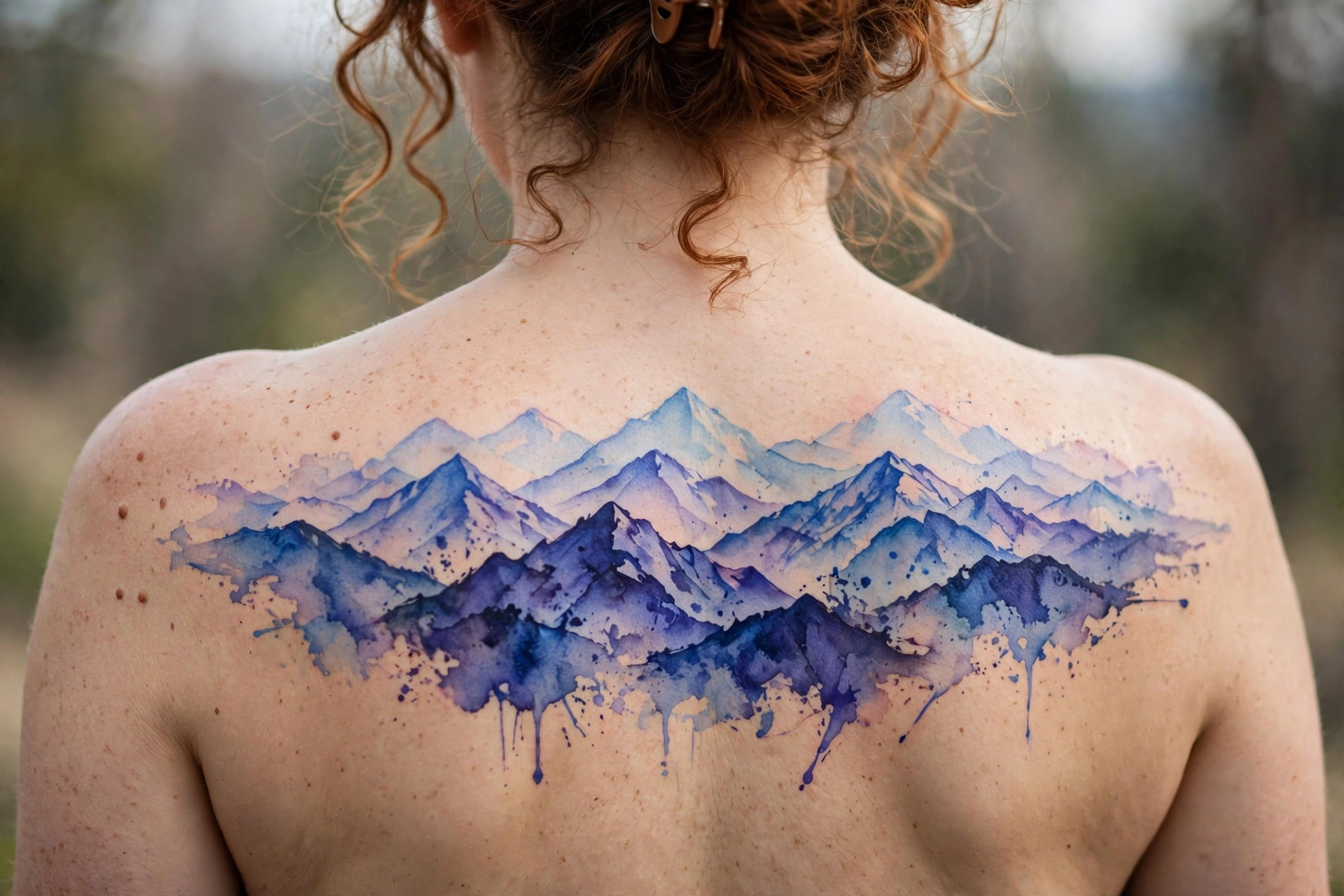
What it is: A mountain range in blue and violet, its peaks fading into mist. Meaning: Endurance and the long view. Best placement: Across the shoulder blades, where the range can stretch. Honest downside: Pale violet peaks can fade to grey — keep one dark ridge.
Watercolor Phoenix
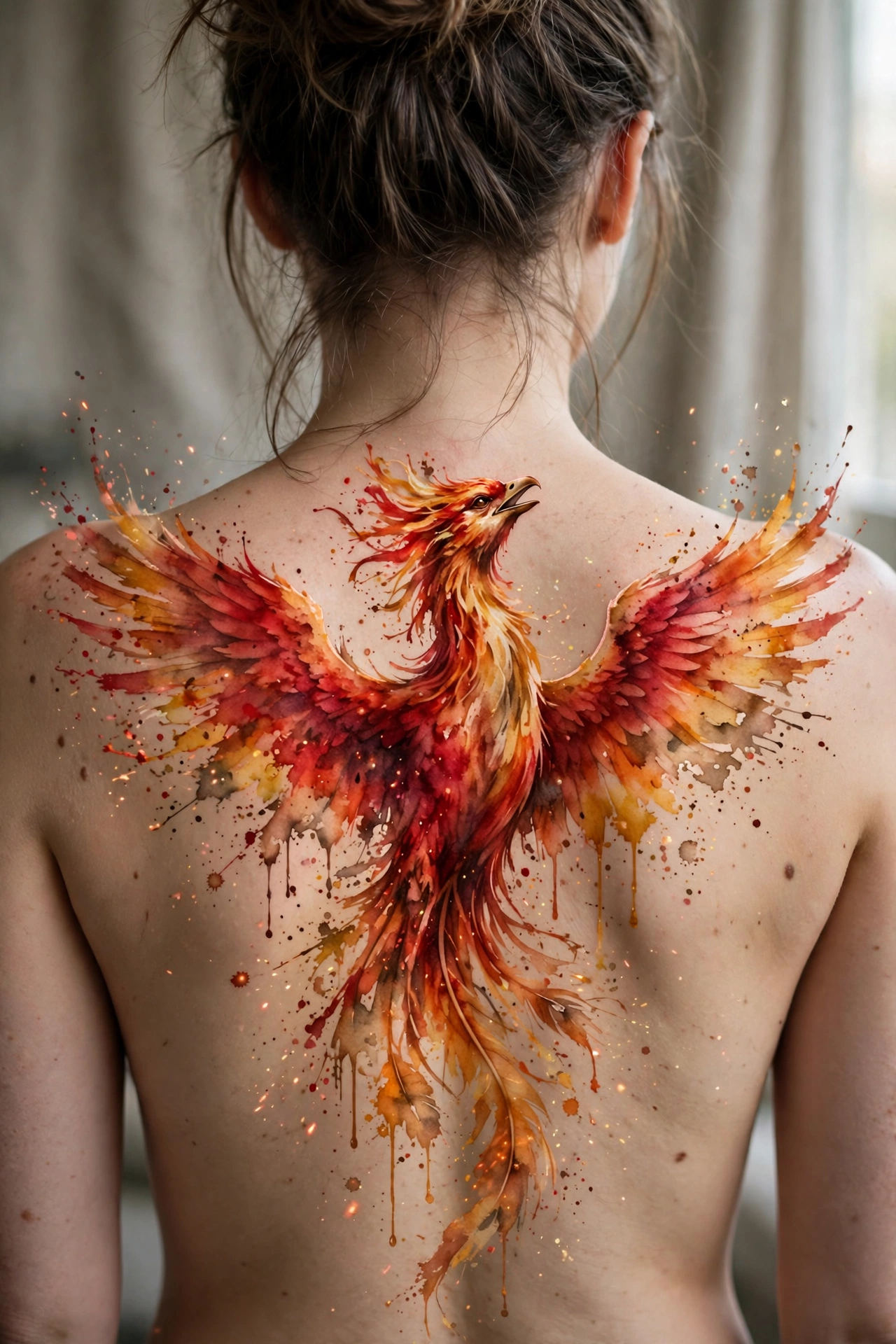
What it is: A phoenix in red, orange and gold, rising from flames that bleed into the skin. Meaning: Rebirth — the bird that burns and returns. Best placement: Back or thigh, where the wings can spread. Honest downside: Large red areas need a patch test and regular touch-ups.
Watercolor Feather
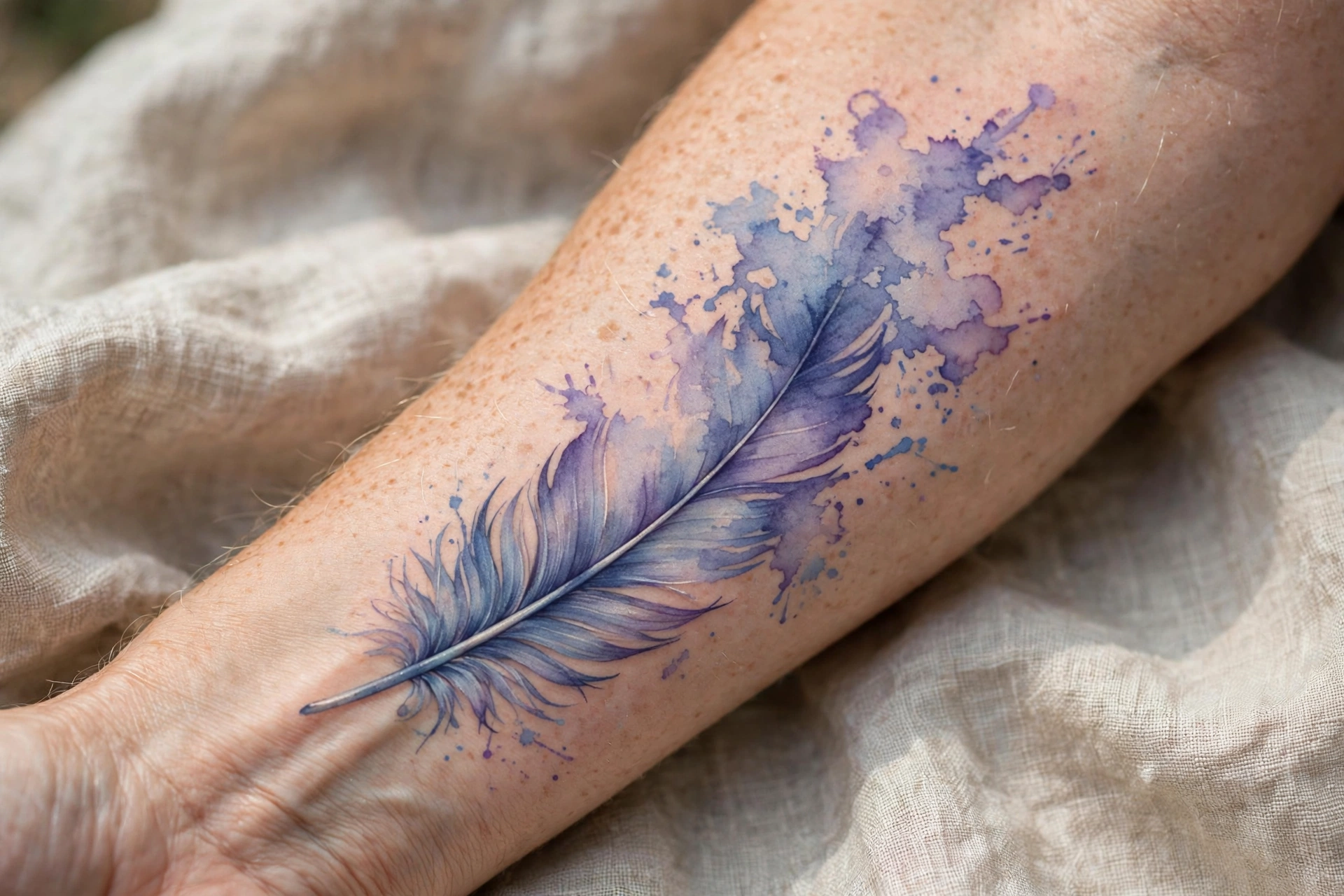
What it is: A single feather in soft blue and violet, its barbs dissolving into wash. Meaning: Freedom and the lightness of letting go. Best placement: Forearm or collarbone, where the feather can lie flat. Honest downside: Fine barbs blur into the wash within a few years.
Watercolor Tree
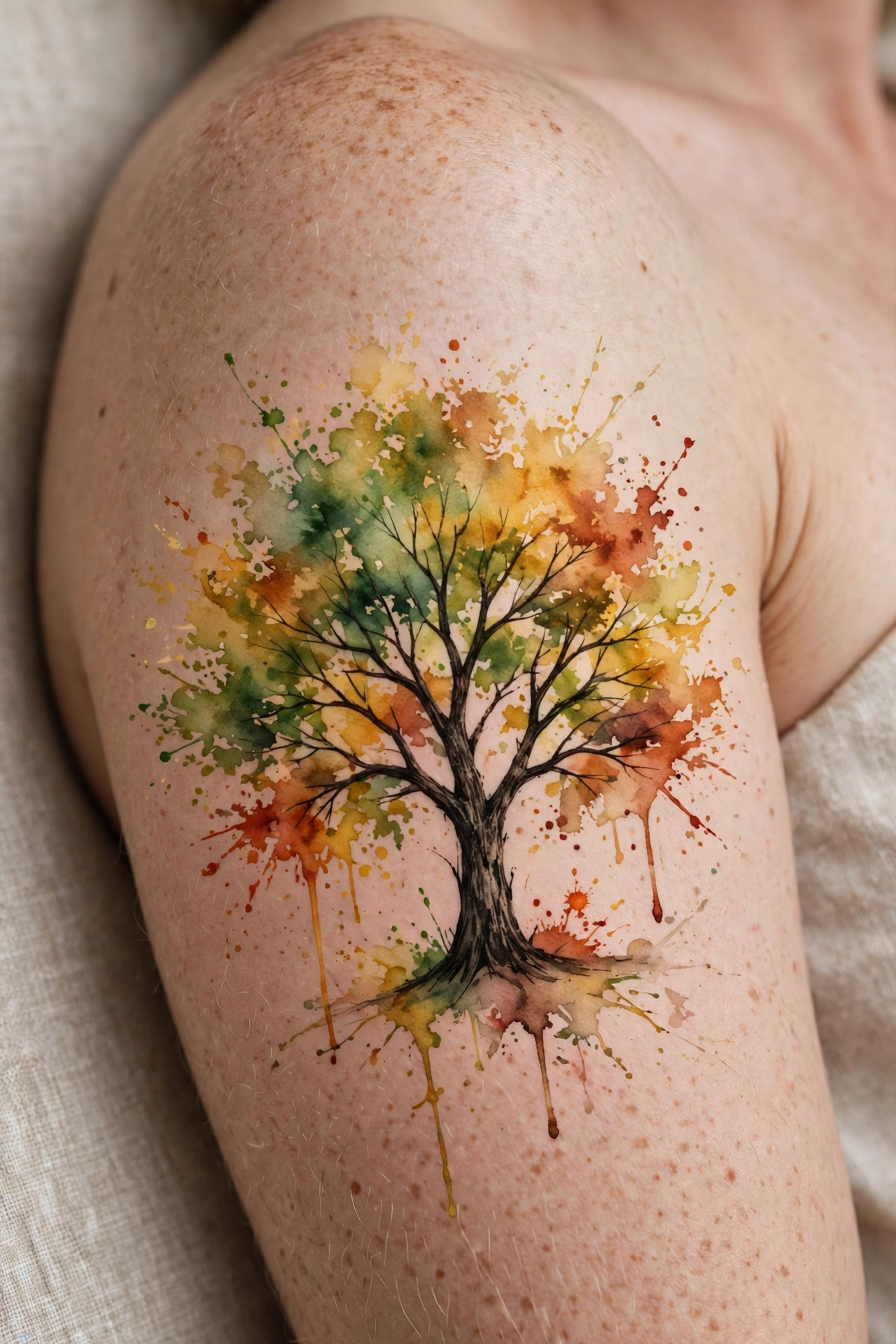
What it is: A tree with a dark trunk and a crown of green, gold and rust, its leaves a wash of autumn. Meaning: Growth and rootedness — the family tree, painted. Best placement: Upper arm or back, where the branches can spread. Honest downside: Green can fade to a dull olive — ask for deep green.
Watercolor Moon Phases
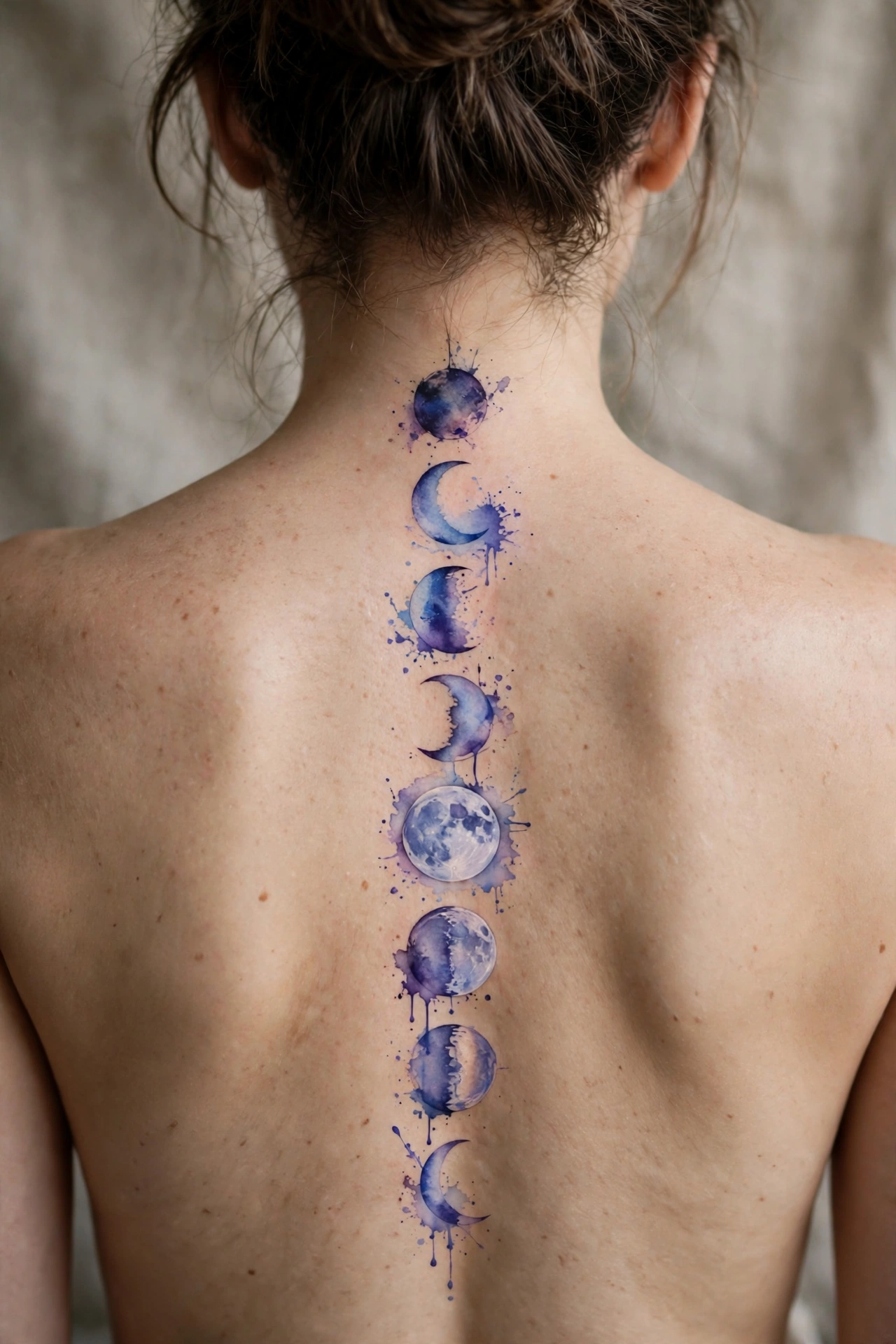
What it is: The phases of the moon in blue and violet, running down the spine in a line of washes. Meaning: Change and the cycles we all move through. Best placement: Spine or forearm, where the line can run straight. Honest downside: Small moons fade fast — keep them at least an inch wide.
Symbolic Watercolor Tattoos
Symbols are the safest watercolor choice: a simple shape with a wash behind it holds up well, because the symbol itself is the anchor and the colour is the decoration.
Watercolor Compass
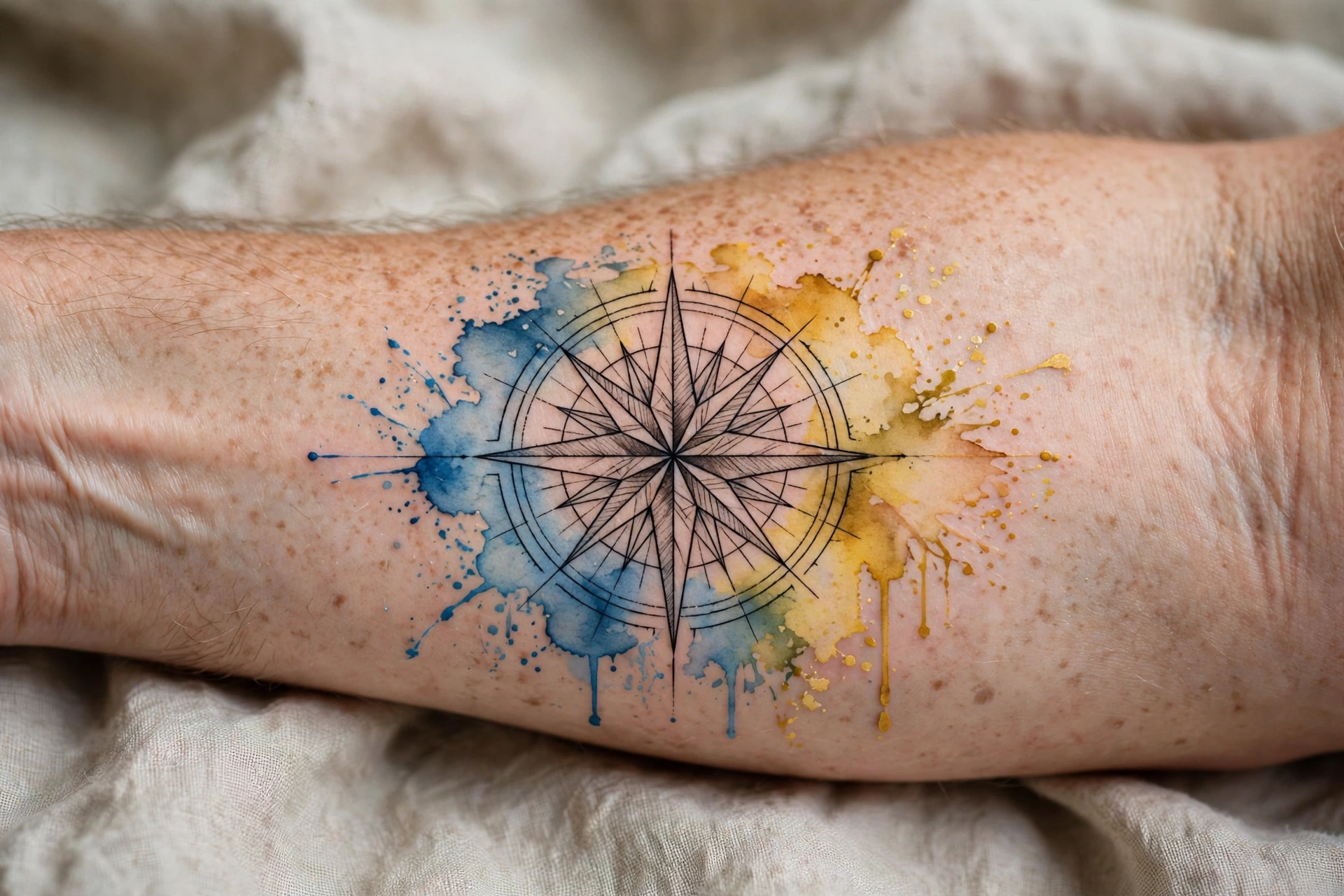
What it is: A compass in dark linework with blue and gold washes, its needle pointing north. Meaning: Direction and the refusal to get lost. Best placement: Forearm or chest, where the circle sits flat. Honest downside: Fine needle lines blur — keep the circle dark.
Watercolor Semicolon
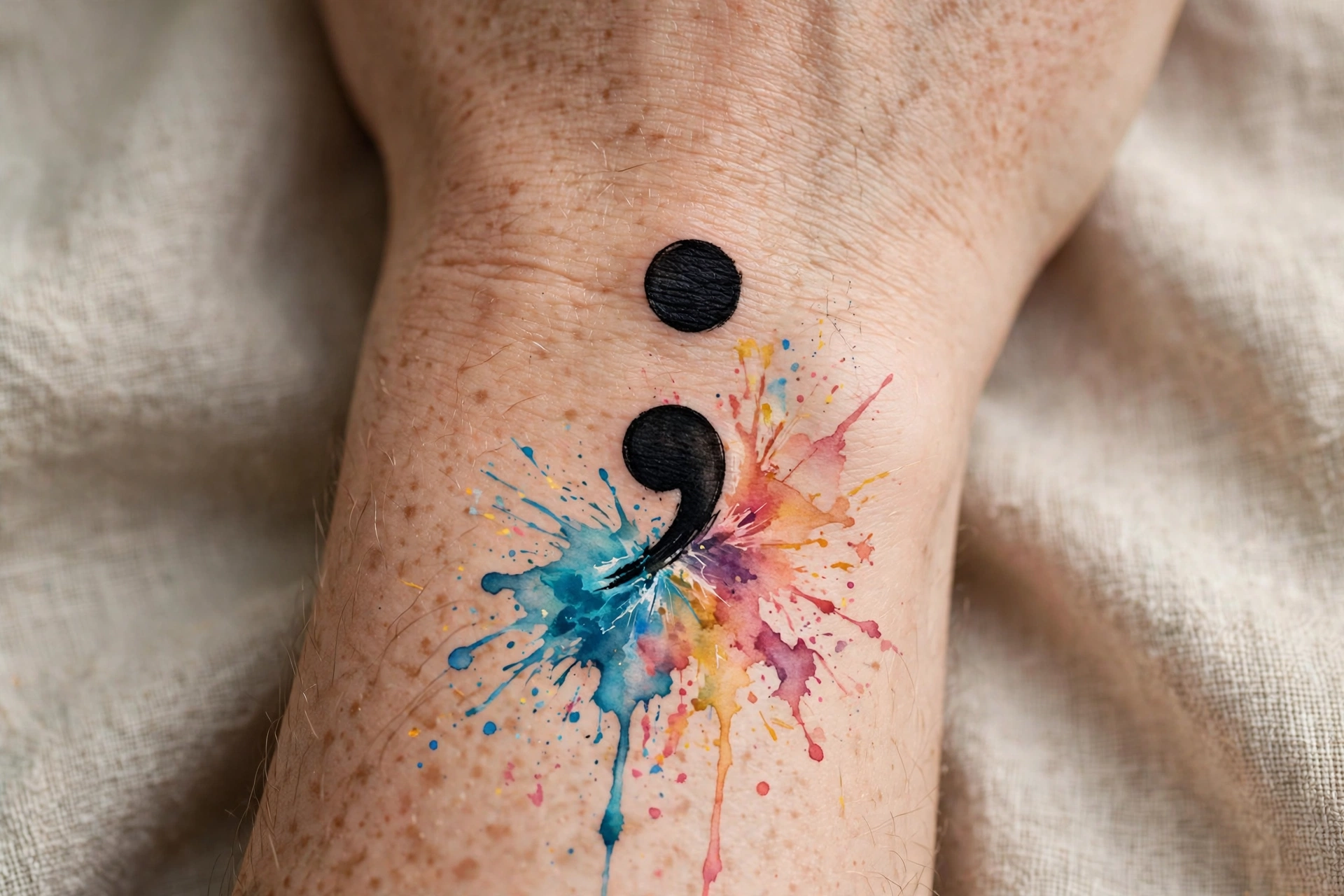
What it is: A semicolon in black with a splash of colour behind it, small and unmistakable. Meaning: A sentence that could have ended, but did not — the symbol of survival and mental-health awareness. Best placement: Wrist or behind the ear, where it stays visible to you. Honest downside: Tiny black shapes can bleed — keep it simple.
Watercolor Infinity
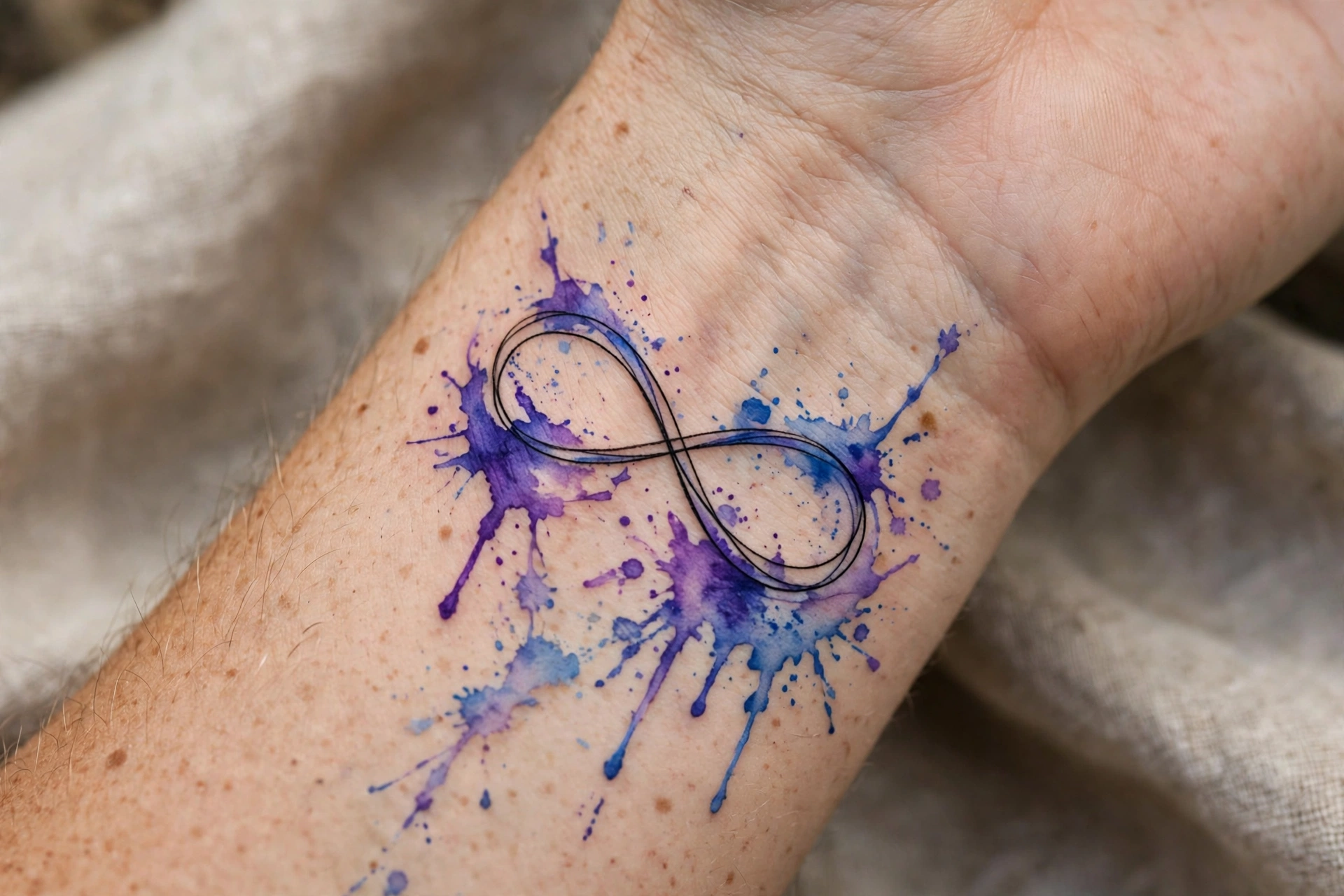
What it is: An infinity loop in violet and blue, its lines flowing without a beginning or an end. Meaning: Forever — love, friendship, or a promise that does not expire. Best placement: Wrist or ankle, where the loop can sit flat. Honest downside: Thin loops blur into a smudge — ask for a bold line.
Watercolor Heart
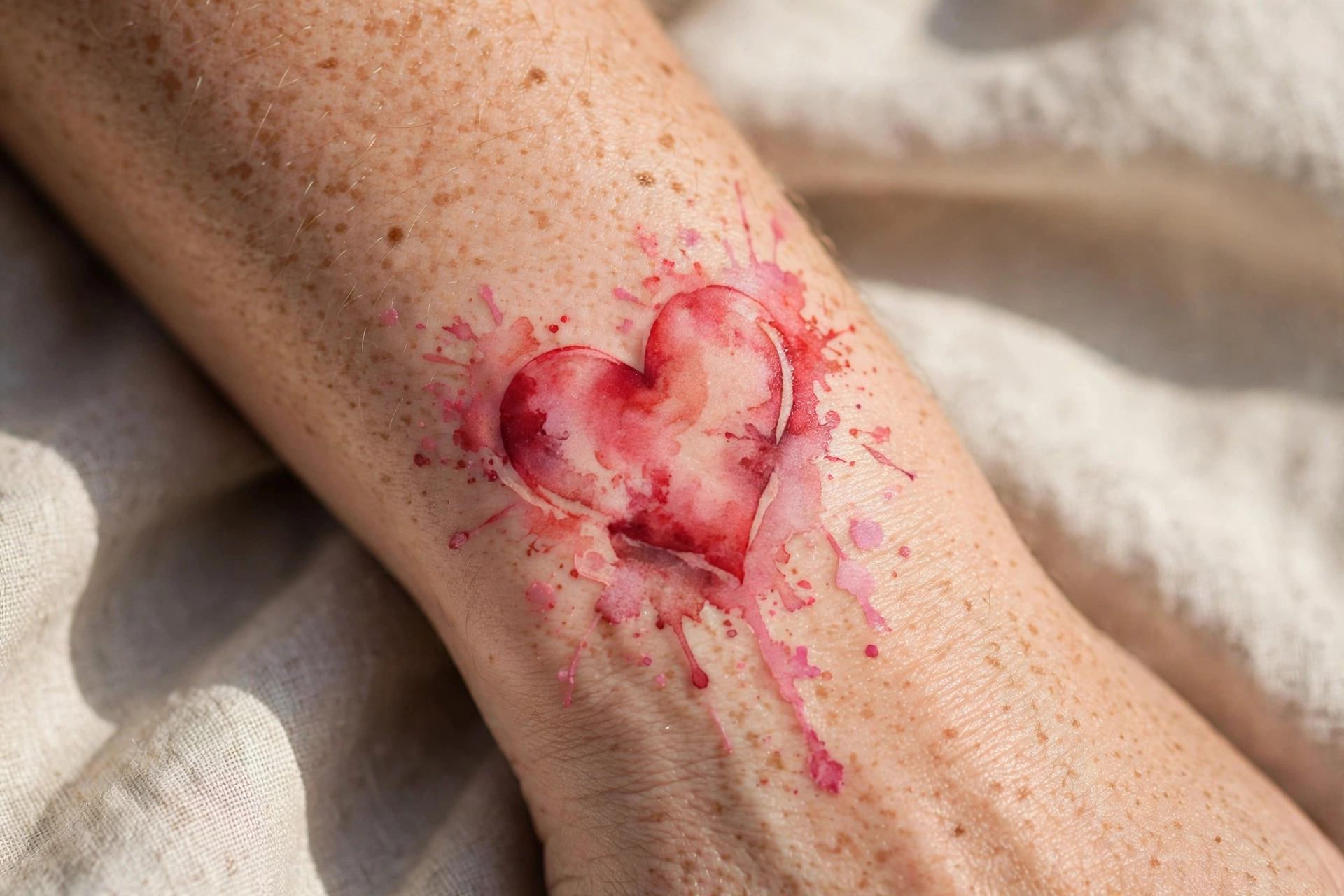
What it is: A heart in red and pink washes, its edges bleeding softly into the skin. Meaning: Love — the simplest symbol, and the one that never needs explaining. Best placement: Wrist or chest, where the heart belongs. Honest downside: Red fades to pink, so start with a deep red.
Watercolor Dreamcatcher
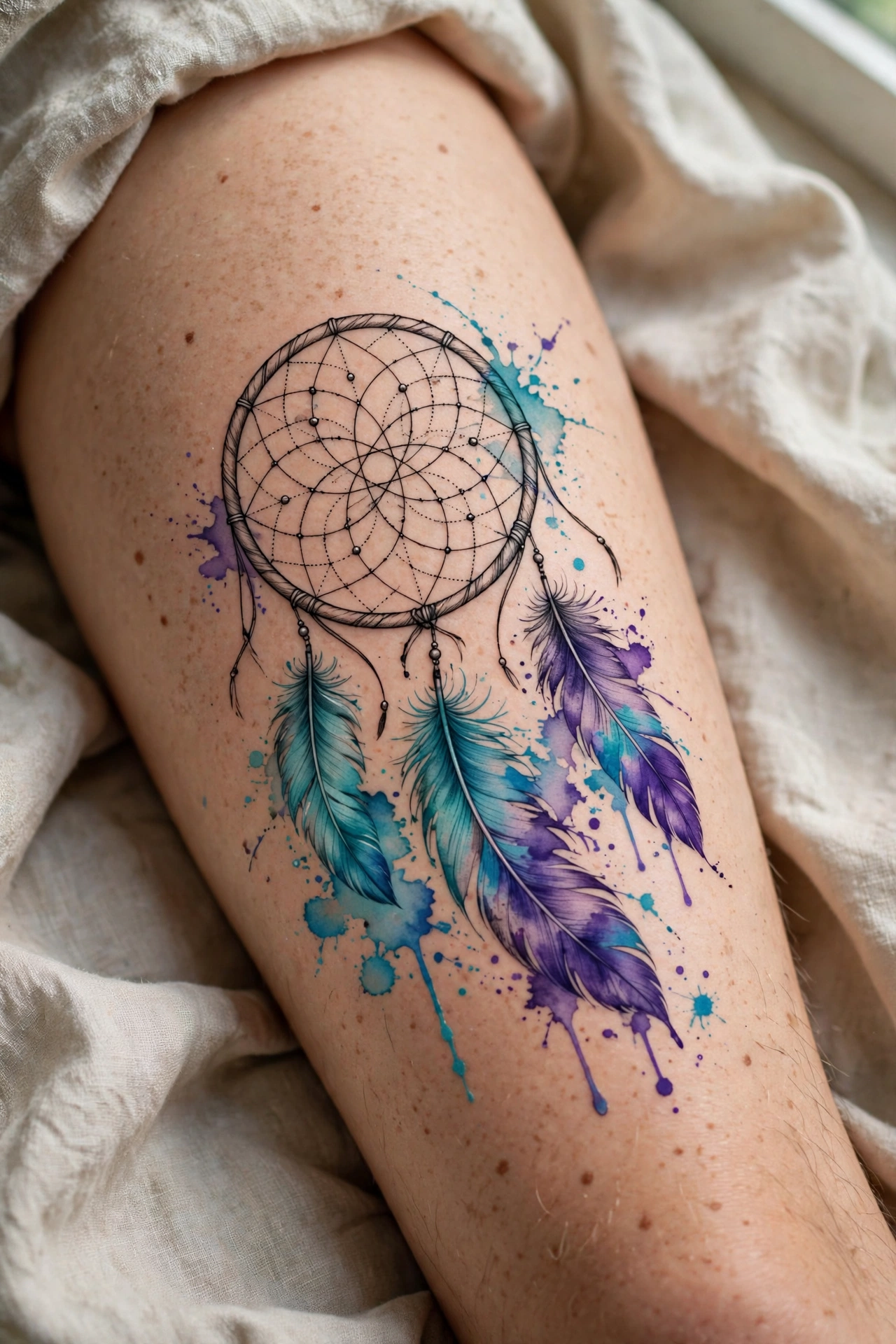
What it is: A dreamcatcher with turquoise and violet feathers, its web a fine wash of colour. Meaning: Protection from bad dreams — and from bad days. Best placement: Thigh or upper arm, where the circle has room. Honest downside: Fine web lines disappear — keep the feathers the focus.
Watercolor Anchor
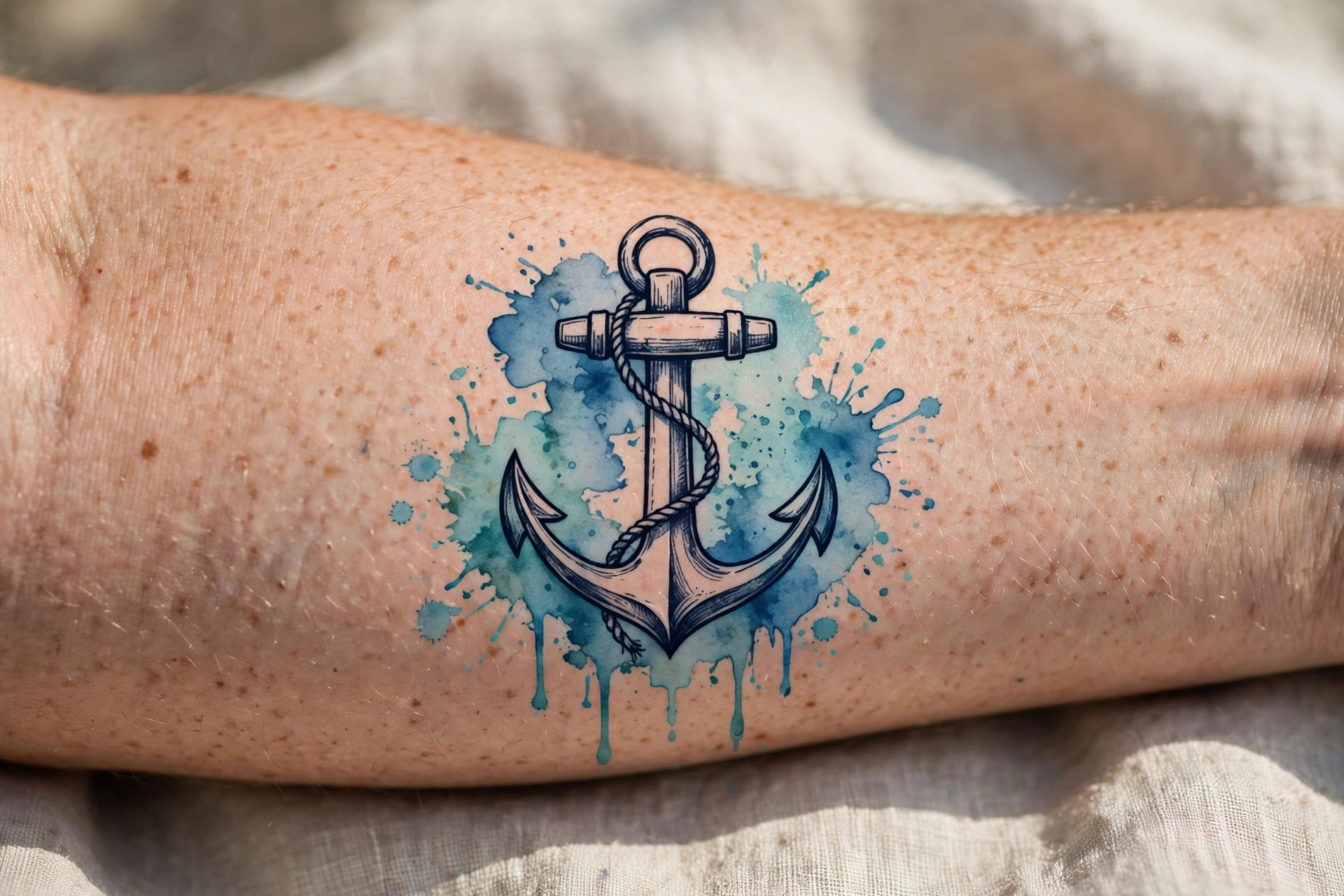
What it is: An anchor in dark navy linework with sea-blue washes, holding steady on the forearm. Meaning: Stability and the refusal to drift. Best placement: Forearm or ankle, where the anchor sits naturally. Honest downside: Navy can heal lighter than expected — plan a touch-up.
Watercolor Quote
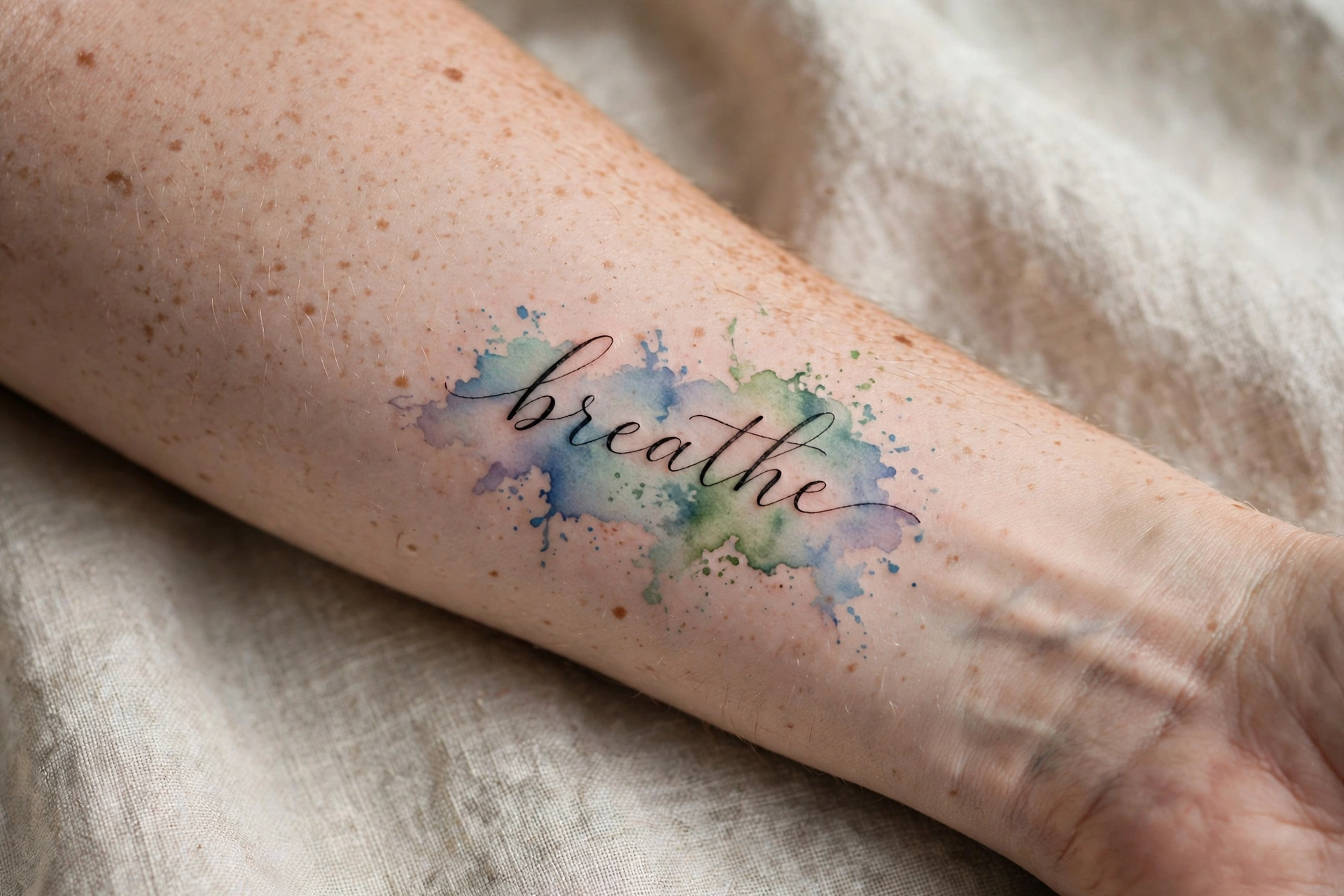
What it is: A line of script with a soft wash of colour behind the words, the text floating on paint. Meaning: Whatever the words say — the wash makes them yours. Best placement: Forearm or ribs, where the line can run straight. Honest downside: Script blurs fastest of all — keep the letters large and the wash light.
Watercolor Cross
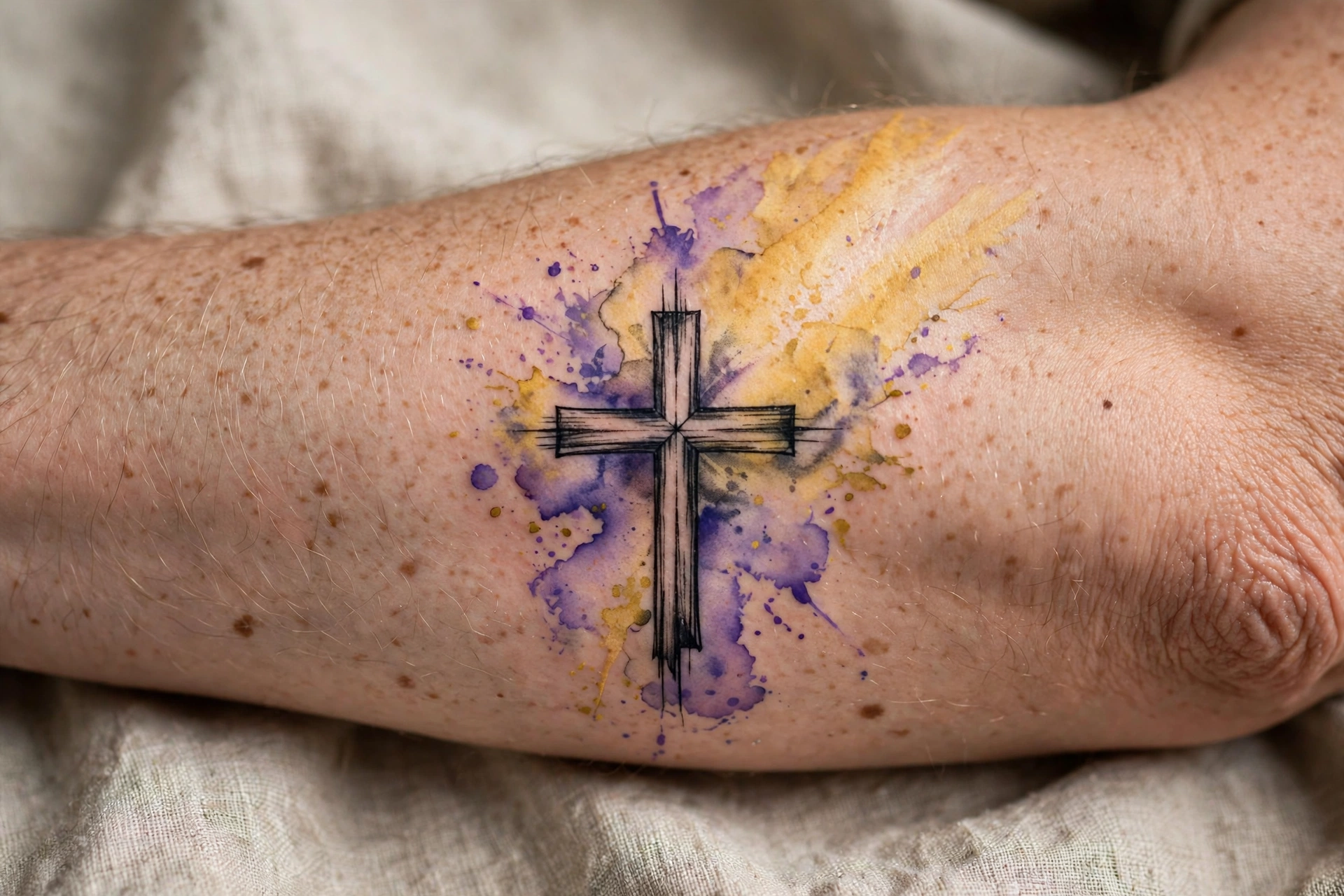
What it is: A cross in dark linework with gold and violet washes, its arms holding the colour. Meaning: Faith and the strength that comes with it. Best placement: Forearm or wrist, where the cross sits upright. Honest downside: Thin gold washes fade — keep the cross itself dark.
Bold and Artistic Watercolor Tattoos
These are the pieces that treat the skin as a canvas: abstract splashes, geometry, portraits and paint itself. They are the boldest watercolor choices — and the ones that need the best artist.
Watercolor Abstract Splash
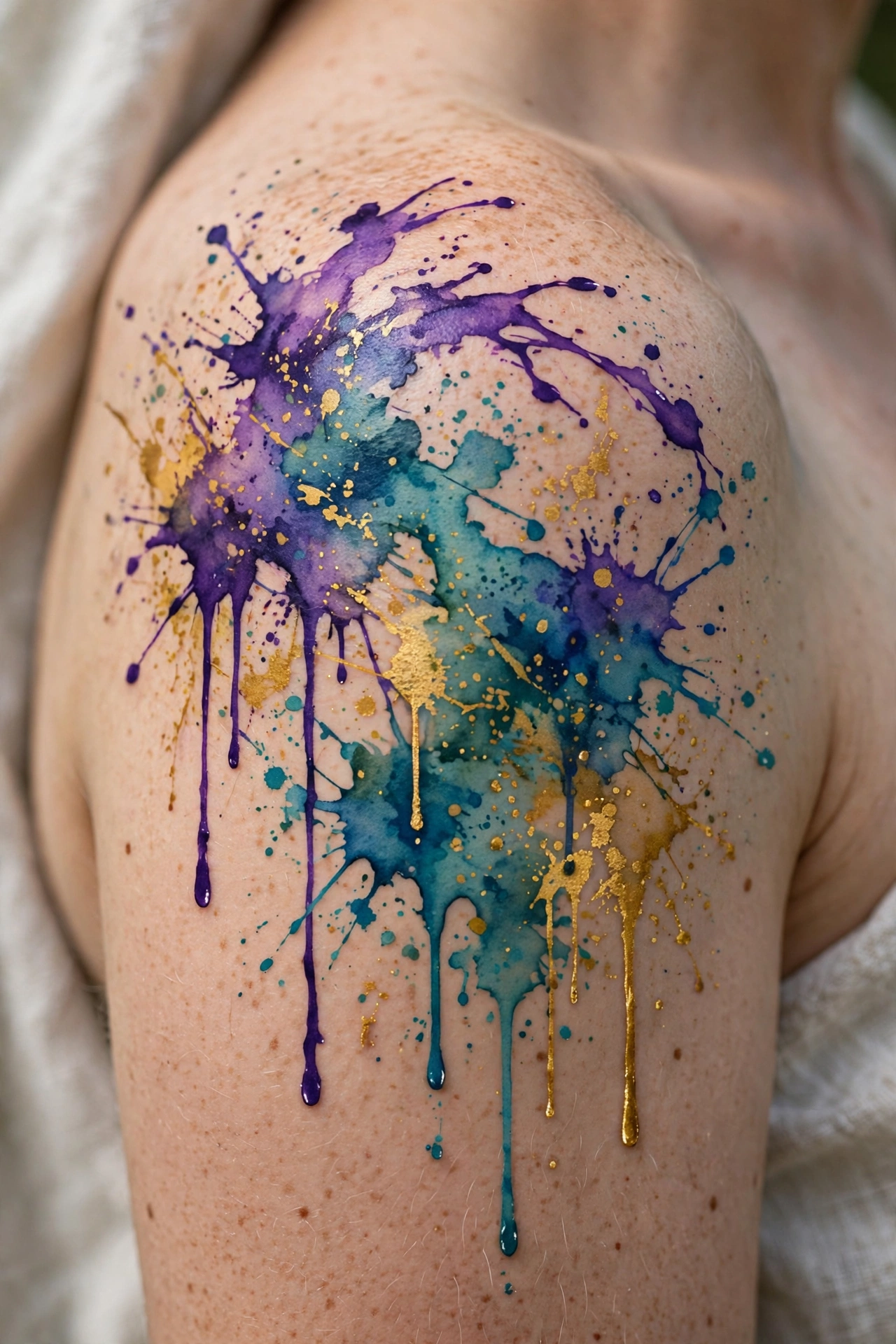
What it is: An abstract splash in violet, teal and gold, no shape at all — just colour thrown beautifully. Meaning: Pure feeling, with no symbol to explain it. Best placement: Shoulder or thigh, where the splash can spread. Honest downside: Abstract pieces fade unevenly — one colour will go first.
Watercolor Mandala
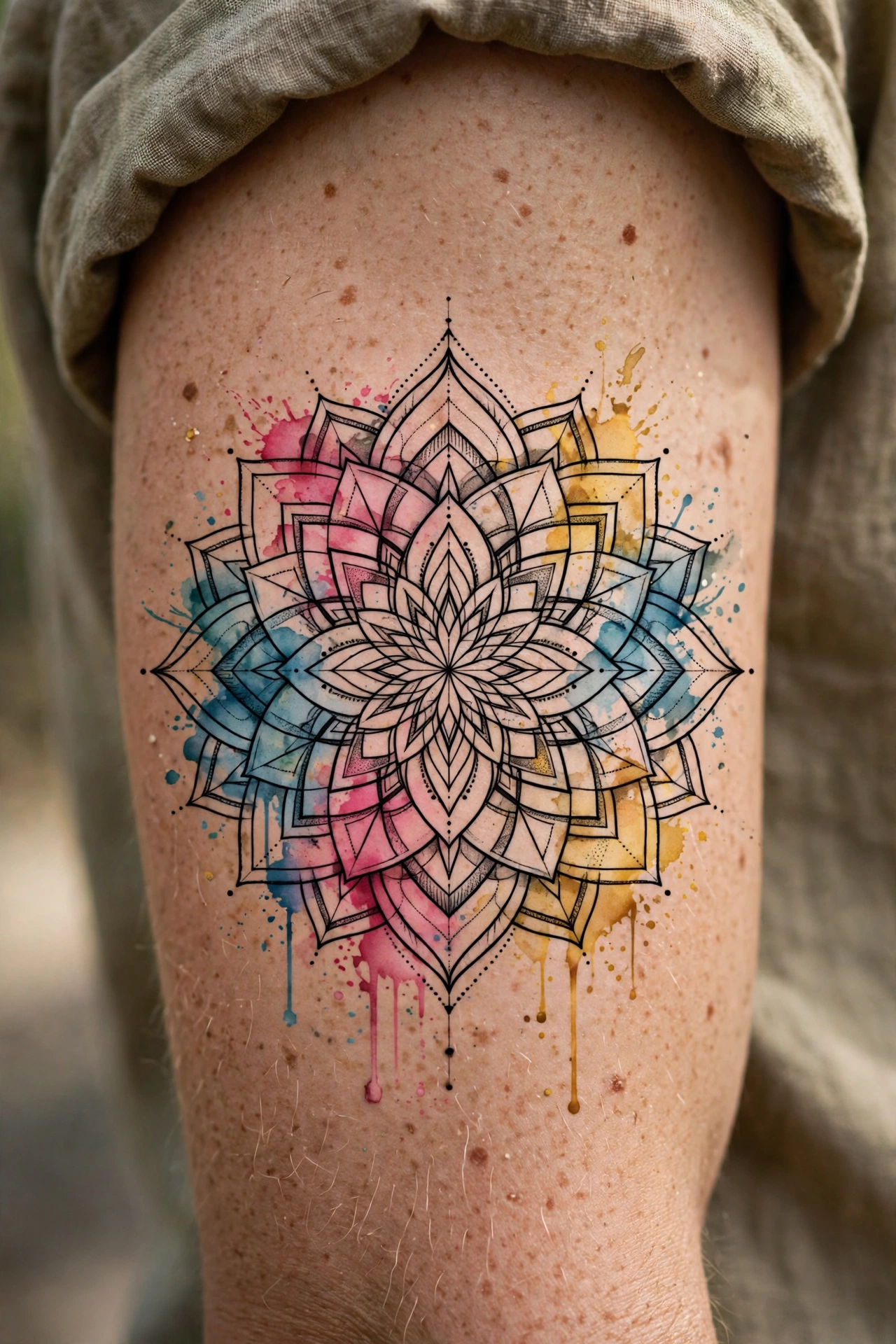
What it is: A geometric mandala in pink, blue and gold, its symmetry holding the wash together. Meaning: Balance and the order inside chaos. Best placement: Upper arm or back, where the circle can be large. Honest downside: Symmetry shows fading first — one side will soften before the other.
Watercolor Portrait Sketch
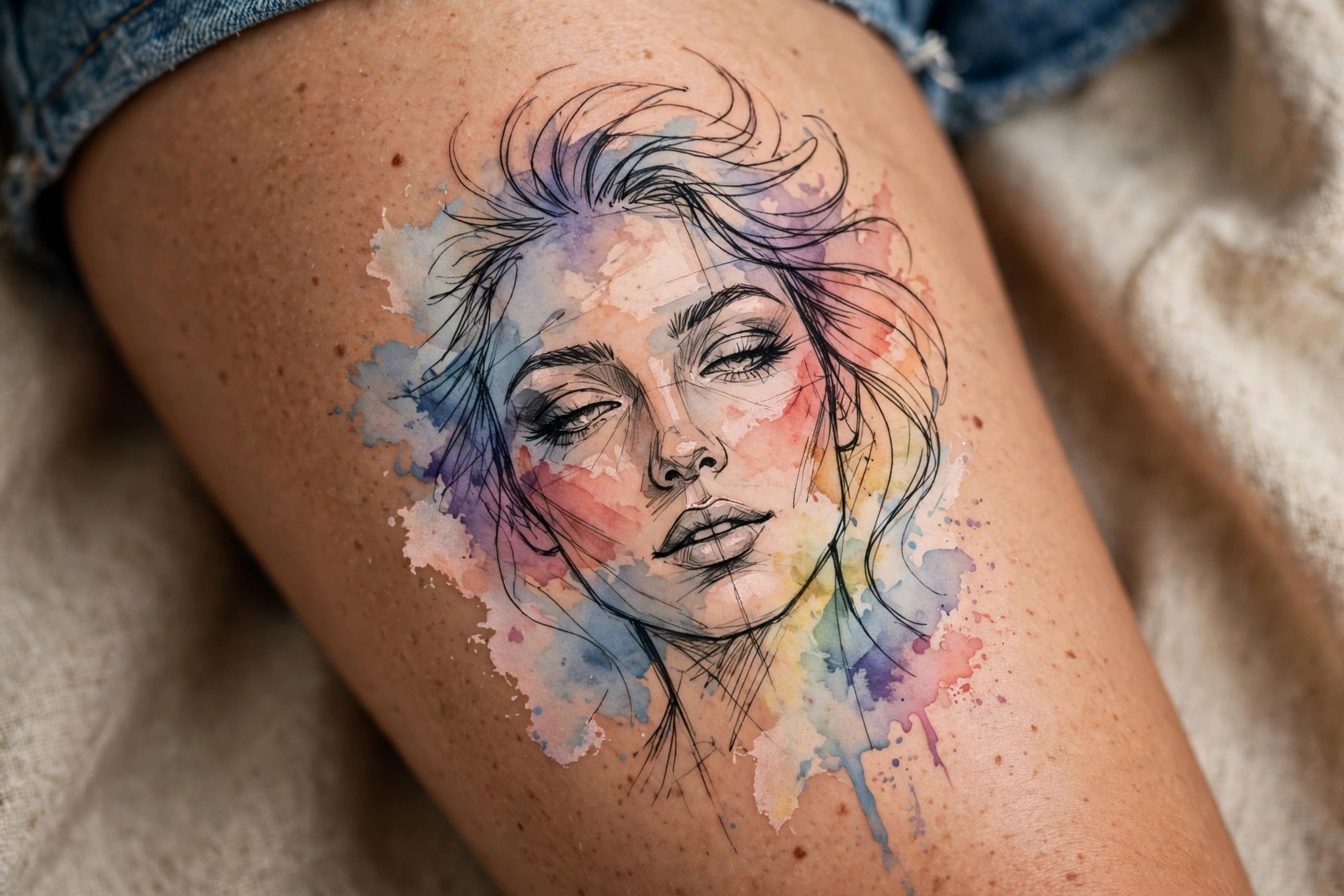
What it is: A woman’s face in loose black lines with colour washes, a sketch rather than a photograph. Meaning: A person, a memory, or an ideal — kept loose on purpose. Best placement: Thigh or upper arm, where the face has room. Honest downside: Faces are the hardest subject — choose an artist who draws portraits, not just tattoos.
Watercolor Paint Drip
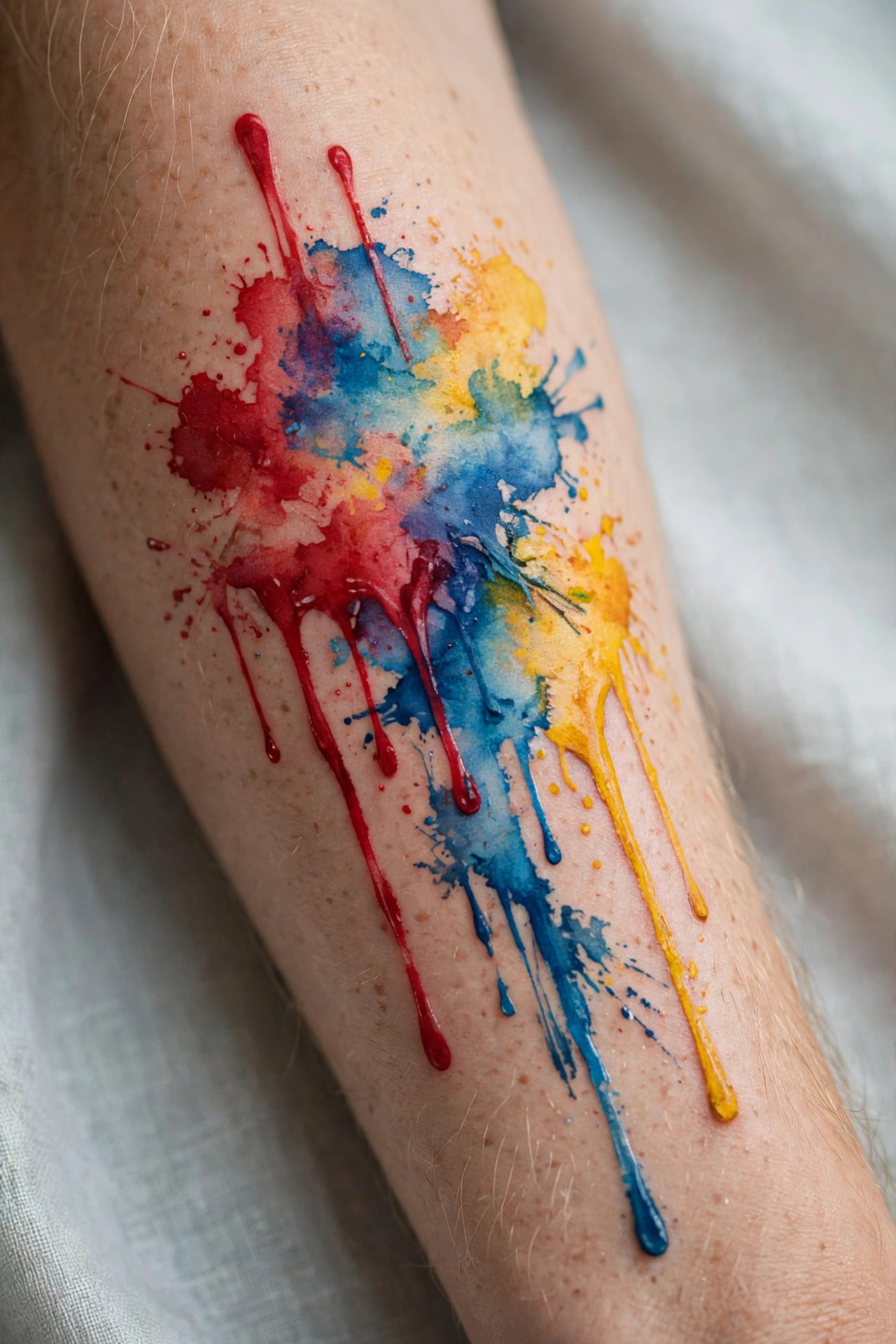
What it is: Paint drips in red, blue and yellow, running down the forearm as if the brush had just lifted. Meaning: Creativity and the mess that makes art. Best placement: Forearm or calf, where the drips can run. Honest downside: Drips are thin by nature — keep them bold or they vanish.
Watercolor Stained Glass
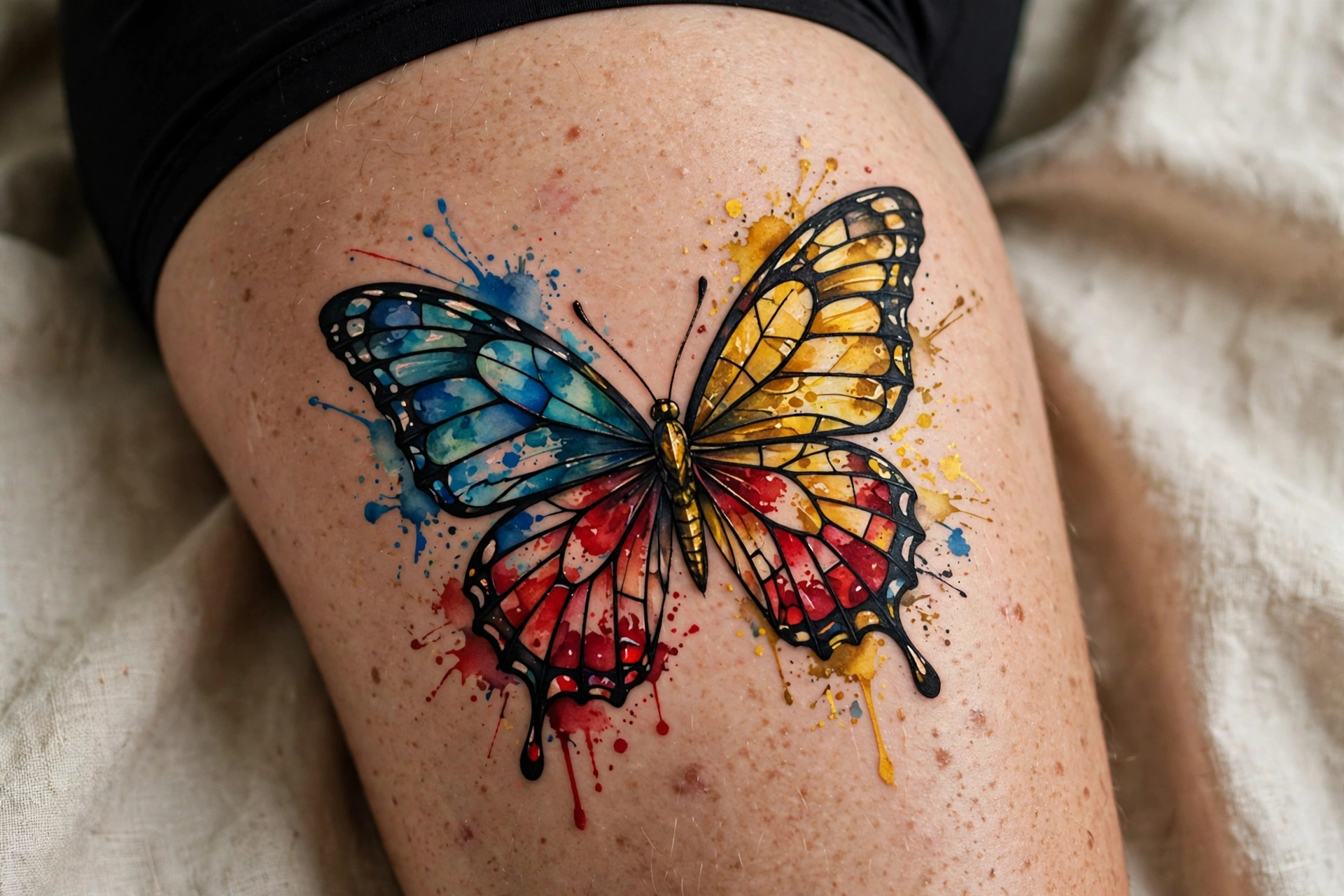
What it is: A stained-glass butterfly in jewel tones of blue, red and gold, its wings divided like a window. Meaning: Beauty made from broken pieces, held together by light. Best placement: Thigh or back, where the wings can be large. Honest downside: Small coloured panes blur — keep each pane at least a centimetre wide.
Watercolor Sugar Skull
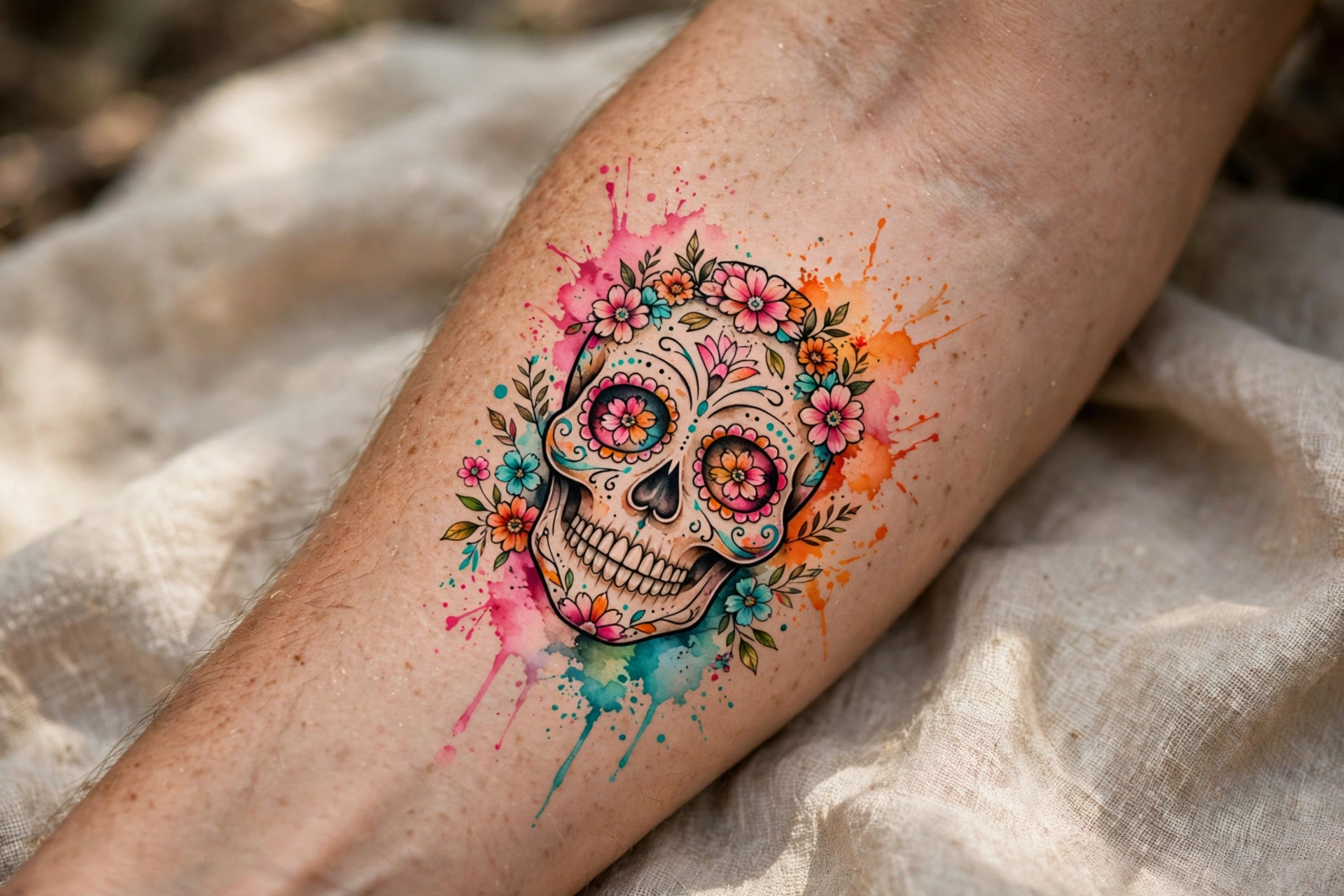
What it is: A sugar skull in pink, orange and turquoise, its decoration a wash of Day of the Dead colour. Meaning: Remembrance and the celebration of a life. Best placement: Forearm or thigh, where the skull can be large. Honest downside: Fine decoration blurs — keep the eyes and teeth dark.
Watercolor Dragonfly
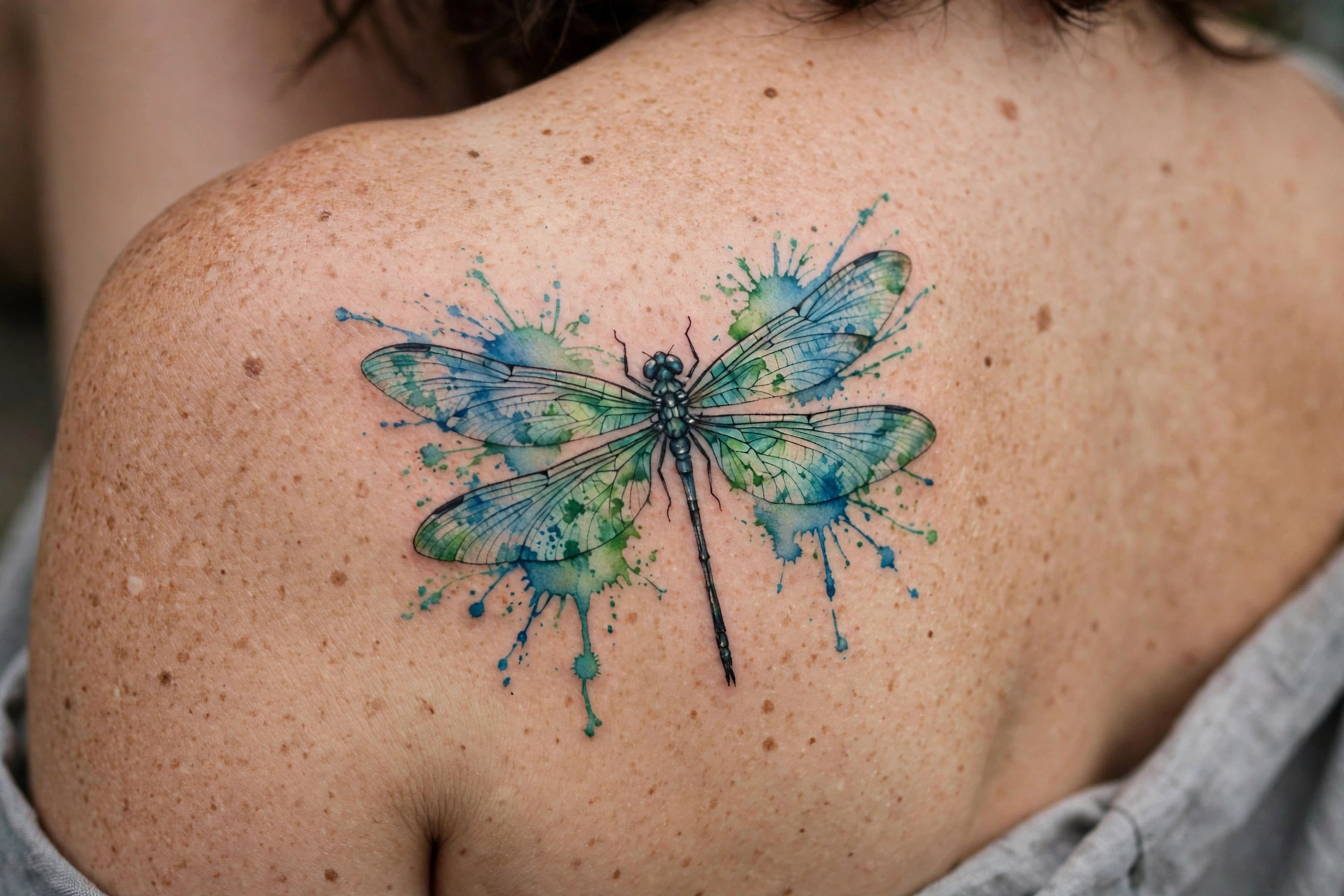
What it is: A dragonfly with iridescent blue and green wings, its body a thin dark line. Meaning: Change and the lightness of being — the insect that lives briefly and beautifully. Best placement: Shoulder blade or ankle, where the wings can spread. Honest downside: Iridescent colour is hard to hold — expect it to soften quickly. Read our full guide to dragonfly tattoo ideas.
Watercolor Snake
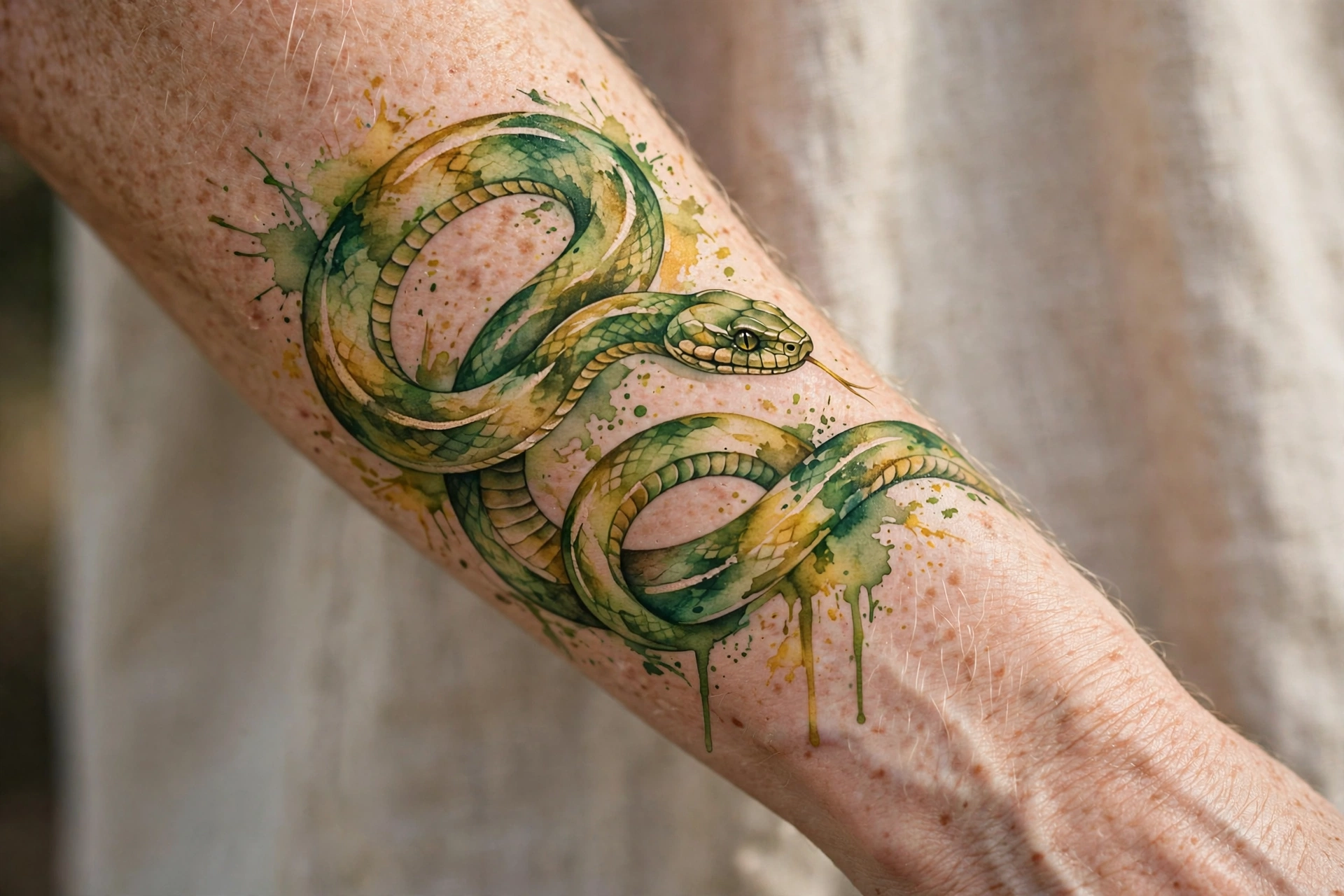
What it is: A snake in green and gold, wrapping the forearm in a wash of scales. Meaning: Transformation and the shedding of old skins. Best placement: Forearm or calf, where the snake can coil. Honest downside: Green fades to olive — keep the gold bright.
How Much Does a Watercolor Tattoo Hurt?
Watercolor hurts like any tattoo — the needle does not care what style you chose. What changes is where it goes and how long it takes. Shading a wash means the needle passes over the same skin many times, which can sting more than a single line. Most people rate watercolor 4–6 out of 10: a hot scratch that fades to a dull ache. The least painful spots are the outer arm, thigh and calf; the most painful are the ribs, spine, ankle and anywhere over bone. Read our tattoo pain chart before you book, and eat before your appointment — low blood sugar makes everything hurt more.
How Much Does a Watercolor Tattoo Cost?
A small watercolor tattoo (2–3 inches) costs $100–$250. A medium piece (4–6 inches) costs $150–$450. A large piece — a back phoenix, a full sleeve of florals — costs $500–$2,000 or more, usually across several sessions. Colour work costs more than blackwork, because shading a wash takes longer and uses more ink. Read our tattoo prices guide for the full breakdown by size, city and artist, and remember: a cheap watercolor tattoo is the most expensive tattoo you will ever get, because you will pay to fix it.
Healing Time and Aftercare Essentials
A watercolor tattoo heals like any tattoo: 2–3 weeks for the surface, 4–6 weeks for the deeper layers. The wash will look cloudy for the first few days as the skin heals over it — this is normal, and the colour will return as the skin settles. Keep it clean, moisturised and out of the sun; do not pick at the flakes, and do not swim for two weeks. Read our full tattoo aftercare guide for the day-by-day routine, and remember the one rule that matters most for watercolor: sunscreen, forever.
Placement Pros and Cons
Flat, fleshy skin takes watercolor best — the forearm, thigh and upper arm give the artist a smooth canvas and the wash room to breathe. Curved or bony areas — the wrist, ankle, collarbone — make the wash pool unevenly, and the ribs and spine hurt more while healing worse. Sun-exposed placements (hands, forearms, shoulders) fade faster than covered ones (thigh, back, upper arm). If you want the piece to last, choose a spot you can cover — and one you will actually put sunscreen on.
Common Mistakes to Avoid
Choosing an artist who has never done watercolor is the biggest mistake — the style needs an artist who understands how pigment behaves without a black outline, so look at healed work, not just fresh photos. Skipping the consultation is second: a good artist will tell you when a design is too small, too pale or too detailed to survive. Going too small is third — watercolor needs room, and a two-inch galaxy will be a smudge in five years. And skipping sunscreen is the mistake that undoes all the others: ultraviolet light is the single biggest variable you control, and for colour work it is non-negotiable.
Watercolor Tattoo Styles Compared
| Style | Outline | How it ages | Typical sitting | Best for |
|---|---|---|---|---|
| Watercolor (pure) | None | Softens fastest; needs touch-ups every 3–5 years | 2–5 hours | Abstract splashes, florals, galaxies |
| Watercolor hybrid | Fine black anchor | Most reliable colour option; linework survives fading | 3–5 hours | Animals, symbols, compasses, mandalas |
| Traditional | Bold black | Holds shape longest | 3–6 hours | Classic designs that must last decades |
| Fine line | Single-needle black, very thin | Thin lines can blur or lighten sooner | 1–3 hours | Delicate, minimal designs |
Frequently Asked Questions
Do watercolor tattoos fade faster than other tattoos?
Yes. All tattoos fade, but watercolor fades faster because it has no bold black outline to hold the shape. Expect colours to soften noticeably within 5–10 years, and plan a touch-up every 3–5 years. Deep blues, purples and reds last longest; pale pinks, yellows and white fade first.
How long does a watercolor tattoo last?
A well-done watercolor tattoo lasts 5–10 years before colours soften noticeably, and decades with touch-ups every 3–5 years. Pieces with a black linework skeleton and at least one dark anchor colour age best.
Are watercolor tattoos more painful?
Not more painful than other tattoos, but shading a wash means the needle passes over the same skin many times, which can sting more than a single line. Most people rate watercolor 4–6 out of 10. The least painful spots are the outer arm, thigh and calf.
How much does a watercolor tattoo cost?
A small watercolor tattoo costs $100–$250, a medium piece $150–$450, and a large piece $500–$2,000 or more. Colour work costs more than blackwork, because shading a wash takes longer.
What is the best placement for a watercolor tattoo?
Flat, fleshy skin — the forearm, thigh and upper arm — takes watercolor best. Avoid very small designs, and remember that sun-exposed placements fade faster than covered ones.
Do watercolor tattoos need touch-ups?
Yes — plan a touch-up every 3–5 years as routine maintenance. This is normal for the style, not a sign of bad work.
Can you cover up a watercolor tattoo?
Yes, and faded watercolor is one of the easier styles to cover, because there is no heavy black outline to fight. A cover-up usually needs a larger, darker design — talk to your artist about a watercolor hybrid or a traditional piece over the top.
Who should not get a watercolor tattoo?
Anyone who wants a design that looks identical in twenty years without maintenance. If you will not commit to sunscreen and touch-ups, choose a traditional or hybrid style instead — or a design with a black linework skeleton under the wash.
Quick Summary
Watercolor tattoos are the prettiest style in tattooing and the most honest about their limits: they fade faster than traditional tattoos, they need touch-ups every 3–5 years, and they need sunscreen forever. Choose a design with a black linework skeleton and at least one dark anchor colour, place it on flat skin you can cover, and pick an artist with healed watercolor work in their portfolio. Do that, and the painting on your skin will stay a painting.
About the Author
Sara Mitchell — Tattoo Ideas Editor at Borcd Panda. Sara researches and curates tattoo designs, meanings and care guides for Borcd Panda readers, drawing on studio advice and real healing experience to keep every guide honest about pain, cost and fading.
References
- American Academy of Dermatology — “Caring for tattooed skin” (healing, sun protection, when to see a dermatologist). aad.org
- Wikipedia — “Watercolor painting” (history and technique of the watercolor medium). en.wikipedia.org
Which one is your favorite?