
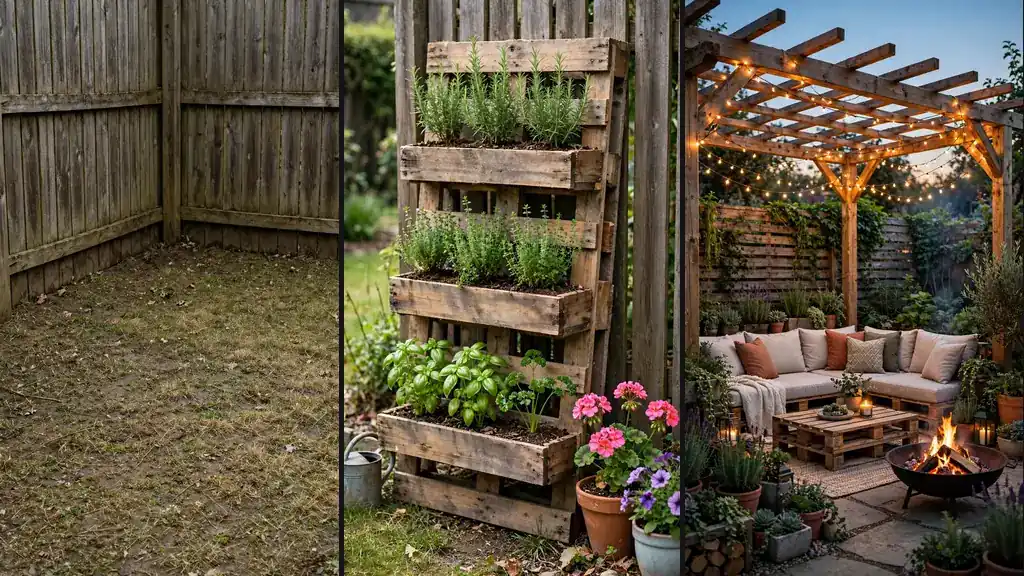
DIY home projects are the fastest way to fall back in love with your space — and you don’t need a workshop full of power tools to start. The best beginner projects share three traits: they cost little, they finish in a weekend, and they teach you a skill you’ll reuse forever. Whether you want to refresh a tired room or give your garden some personality, here are the projects worth your Saturday.
DIY Home Projects for Beginners: Start Here
If you’ve never built anything, start with paint and hardware — the two projects with the highest success rate in all of DIY. Repainting a single accent wall takes an afternoon and transforms a room’s entire mood. Swapping cabinet knobs, drawer pulls, and dated light switch plates takes an hour and makes kitchens and bathrooms feel updated. These aren’t “real” carpentry, and that’s the point: early wins build the confidence for bigger things.
Your starter toolkit fits in one bag: a decent drill-driver, a tape measure, a level, a stud finder, painter’s tape, and a set of screwdrivers. Buy quality on the drill and the tape measure; go cheap on everything else until you know what you’ll actually use. The project tutorials at The Spruce are beginner-friendly and honest about difficulty, which matters more than you’d think.
Weekend DIY Home Projects With Big Impact
Ready for something meatier? Floating shelves are the classic second project: two boards, four brackets, one level, and suddenly you have display space that looks custom. A simple bookshelf from pine boards and screws teaches measuring, drilling, and finishing in one go — and you’ll use it for years. Peel-and-stick wallpaper has also grown up; modern versions are repositionable, renter-friendly, and genuinely convincing in a powder room or behind open shelving.
For a project with real craft in it, try building a DIY indoor plant stand — it combines basic joinery with something you’ll actually use every day. And if your walls need more than decor, our guide to building a garden fence scales the same skills up to the outdoors.
DIY Garden Projects That Anyone Can Do
Gardens are forgiving — plants don’t care if your cuts are perfectly square. Start with raised beds: four boards screwed into a rectangle, filled with good soil, and you’re growing vegetables by next month. Cement projects are the sleeper hit of DIY home projects for the garden — mix, pour into molds (old bowls, boxes, even rhubarb leaves for texture), and you get planters, stepping stones, and orbs for pennies.
Painted pots are the lowest-effort garden upgrade in existence: terracotta pots, outdoor paint, an afternoon. Group them in odd numbers at different heights and the whole patio looks designed. For layout inspiration, these vego garden design ideas show how small structured beds can look intentional rather than improvised.
DIY Home Projects on a Tight Budget
The secret to cheap DIY is shopping your home first. That dresser you hate? Sand it, paint it, swap the hardware — it’s a new piece of furniture for the price of a quart of paint. Pallets (heat-treated, marked HT) become coffee tables, headboards, and garden planters with minimal tools. Thrift stores are goldmines for solid-wood frames and furniture with good bones hiding under bad finishes.
Track every project’s cost in a notes app. Not to be frugal for its own sake, but because knowing a room refresh cost $86 instead of $800 is deeply motivating — it’s what turns one project into a habit. Better Homes & Gardens runs regular budget-DIY features that are great for stealing ideas, and seeing indoor gardeners who turned homes into green paradises might convince you the garden is where your next project belongs.
Mistakes to Avoid on Your First Projects
Three rules that save beginners every time. One: measure twice, cut once isn’t a cliché, it’s a budget strategy — lumber isn’t cheap enough to waste. Two: prep is the project. The paint job is 20% painting and 80% cleaning, sanding, and taping; the beautiful finish lives or dies in the prep. Three: finish one project before starting the next. Half-done projects multiply stress, while finished ones multiply confidence.
And the most important rule: done beats perfect. Your first shelf will have a wobble. Your first paint job will have a drip. Nobody will notice except you, and in six months you won’t notice either — you’ll just notice the shelf holding your books and the wall in your favorite color. That’s what DIY home projects are actually for: not perfection, but a home that increasingly looks like you made it. Because you did. And once the first few DIY home projects are under your belt, you’ll start seeing every room as raw material for the next one. Keep a simple idea list on your phone — every time something in the house annoys you, add it. That list becomes your project queue, and working through it is one of the most satisfying feelings a homeowner can have.