Some tattoos shout. A flower tattoo whispers — and somehow says more. Whether it marks a new beginning, honours someone lost, or celebrates being alive, a bloom inked on skin carries a story that never wilts. The trick is choosing the right flower, style and spot before the needle touches your skin.
Below are 38 flower tattoo ideas, each with design, meaning, best placement and honest downside — plus plain-English pain, cost, healing and aftercare guidance, so you can walk into the studio confident.
Quick Answer
A flower tattoo is a floral design inked on skin, chosen for beauty and symbolism — rose for love, lotus for rising above adversity. Costs run from around $100 (small fine-line flower) to $2,000+ (large colour piece), pain from 3/10 (forearm) to 8/10 (ribs), and surface healing takes 2–4 weeks.
- Quick Answer
- Why Flower Tattoos Never Go Out of Style
- What Does a Flower Tattoo Mean?
- Chapter 1: Classic Blooms
- Chapter 2: Meaningful & Symbolic
- Chapter 3: Styles
- Chapter 4: Placements & Combos
- Flower Tattoo Pain Levels by Placement
- How Much Does a Flower Tattoo Cost?
- Healing Time: What to Expect
- Placement Pros and Cons at a Glance
- Aftercare Essentials
- Common Mistakes to Avoid
- Flower Tattoo Styles Compared
- Frequently Asked Questions
- Quick Summary
- About the Author
- References
Why Flower Tattoos Never Go Out of Style
Flower tattoos for women and for men have both surged, and it is easy to see why. Flowers adapt endlessly: a single stem can be delicate and private, a full bouquet a showpiece. They suit almost every style — from fine line flower tattoo minimalism to bold American traditional flower tattoo colour — and age better than trend-driven designs.
Then there is the language of flowers, or floriology: Victorians sent coded messages through bouquets, and that symbolism still shapes flower tattoo meaning today — red rose for passion, white rose for new beginnings, sunflower for loyalty and warmth. Knowing what each bloom stands for turns decoration into a statement.
Torn between a single bloom and a full arrangement? Our lotus tattoo ideas and lily tattoo ideas guides show how one flower can carry a design; the 50 tattoo meanings guide covers ink symbolism broadly.
What Does a Flower Tattoo Mean?
There is no single answer to “what does a flower tattoo mean” — the meaning changes with the bloom, and you pick the message. Roses speak of love, peonies of prosperity, cherry blossom of life’s fleeting nature, daisies of innocence and fresh starts. A birth flower bouquet tattoo can weave several family members into one design.
Colour matters too: white lotus for purity, pink for devotion, blue for wisdom, red for compassion. Rose thorns add protection, pain and the honest cost of beauty. Before committing, ask which meaning you want to carry for decades — not just which flower photographs prettiest.
Chapter 1: Classic Blooms
The flowers everyone recognises — timeless, versatile, proven over decades.
1. Red Rose
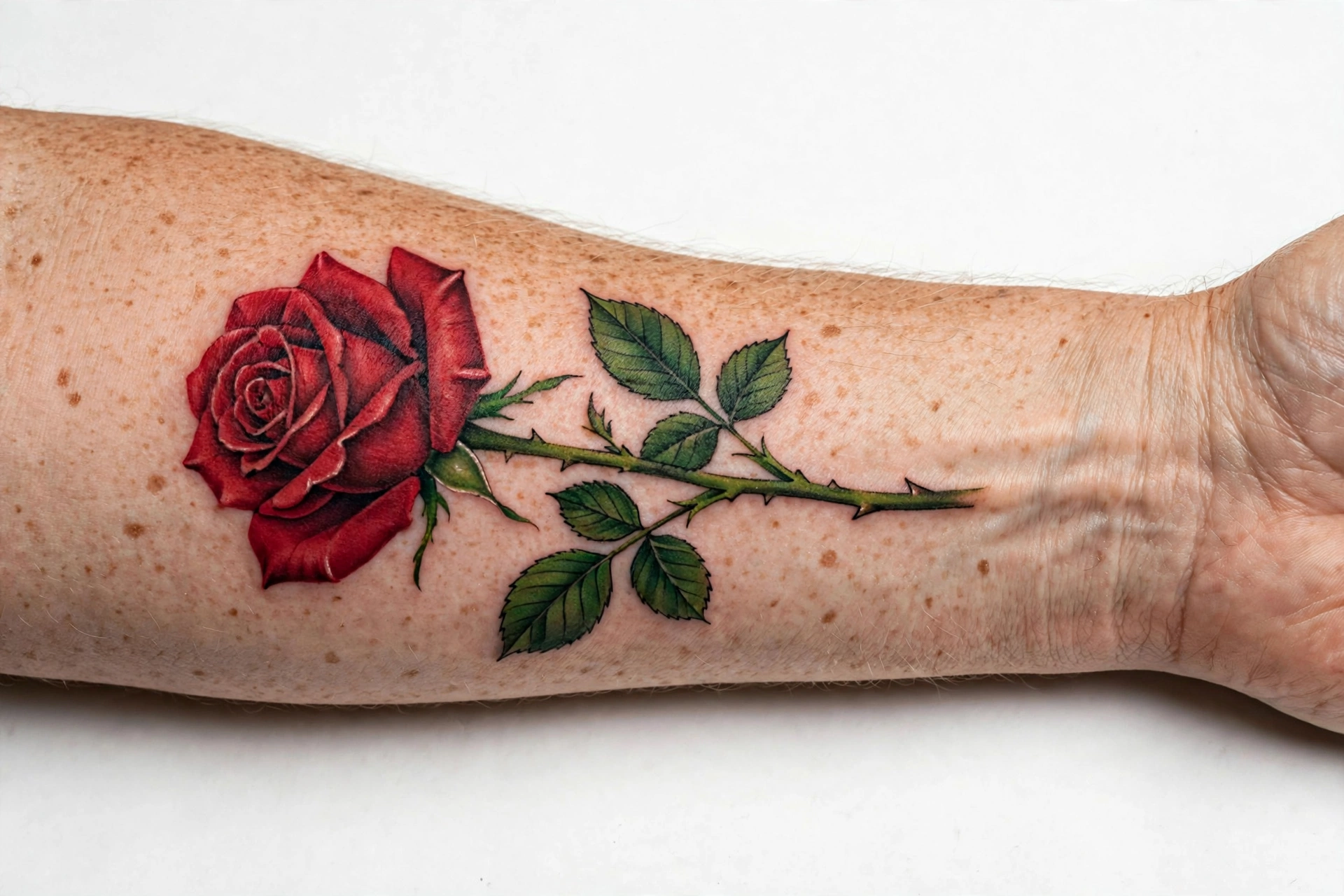
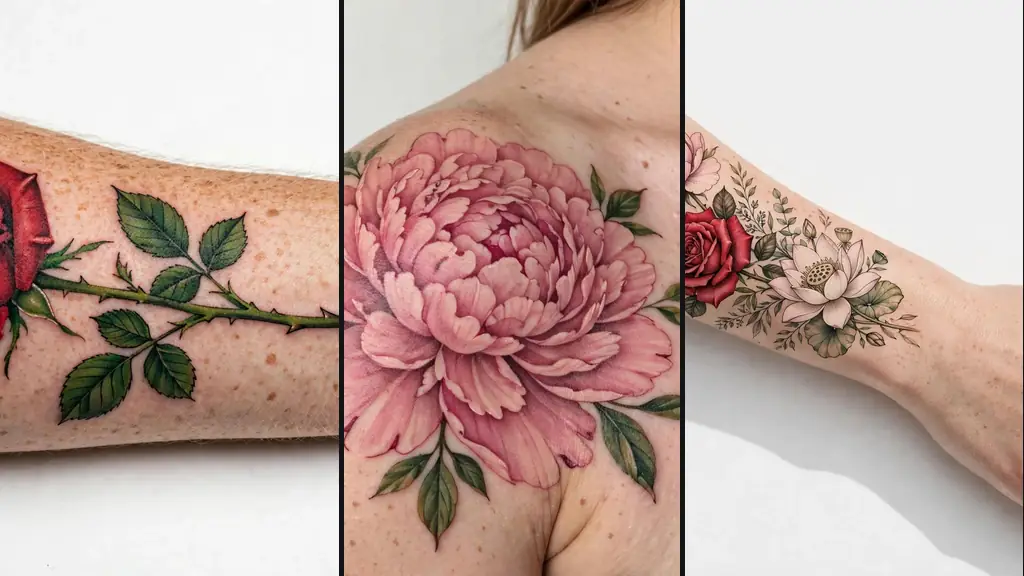
The red rose means love, passion and devotion — the most iconic flower tattoo of all. It suits the forearm, shoulder or thigh in any style. Best for romantics. Downside: its popularity means a generic version can look forgettable, so add a personal twist.
2. White Rose
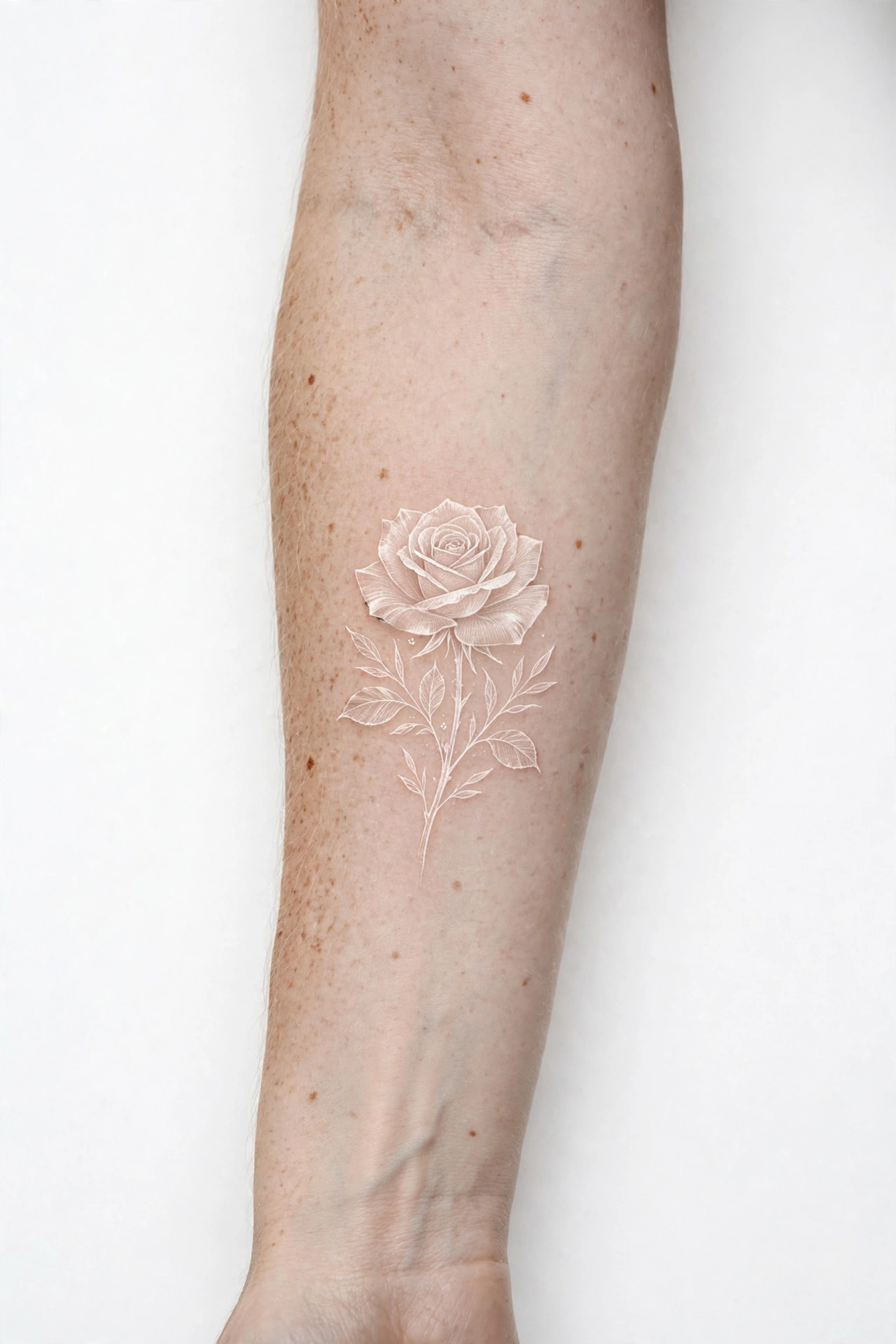
A white rose means purity, new beginnings and reverence — a favourite for weddings and quiet memorials. It looks stunning in fine line on the wrist or collarbone. Best for minimalists. Downside: white ink fades fast, so black or grey shading is essential.
3. Black Rose
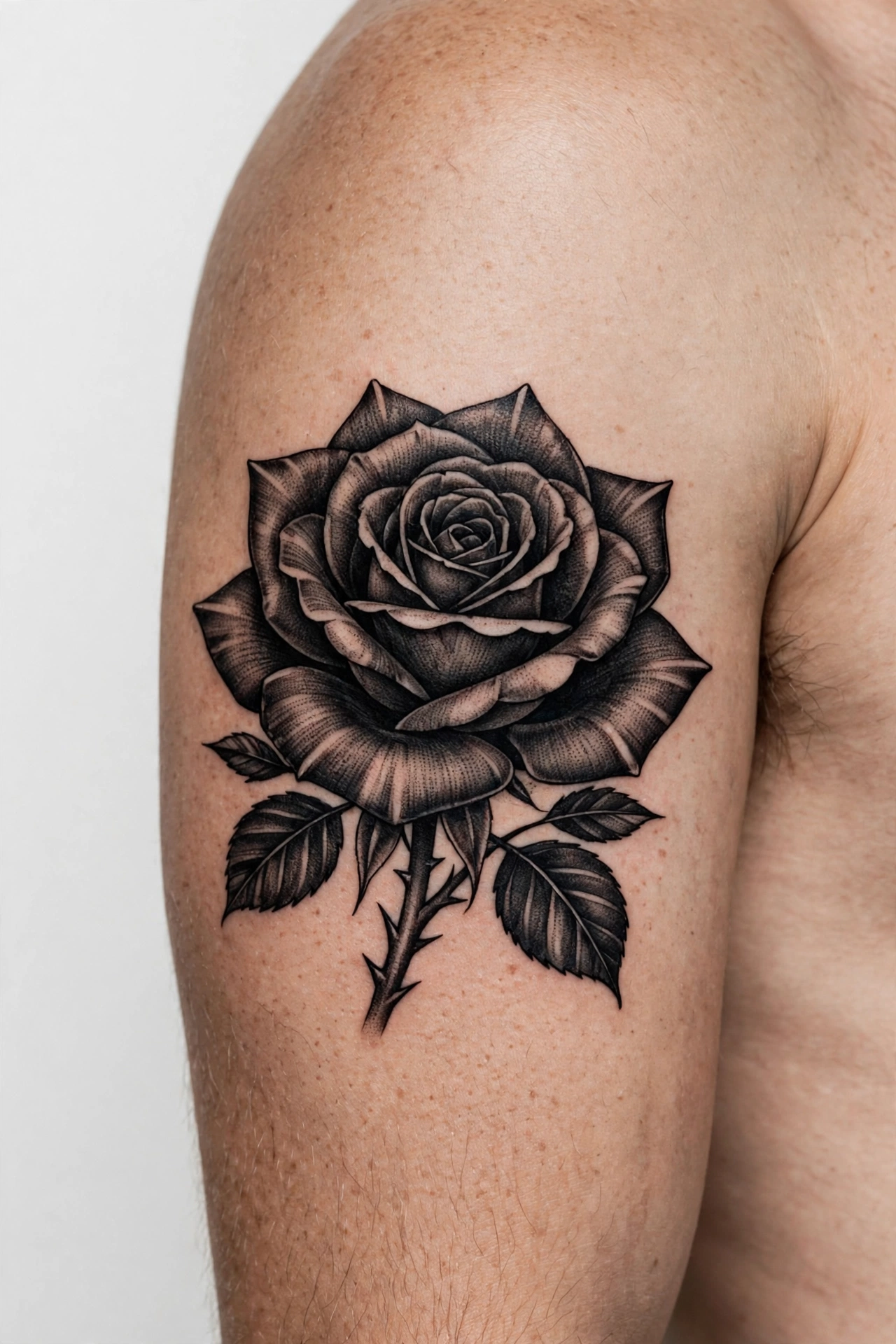
A black rose symbolises endings, rebirth and the courage to let go. It suits the forearm or chest in bold blackwork. Best for anyone marking a major life change. Downside: heavy black shading can blur fine petal detail, so keep the design bold.
4. Peony
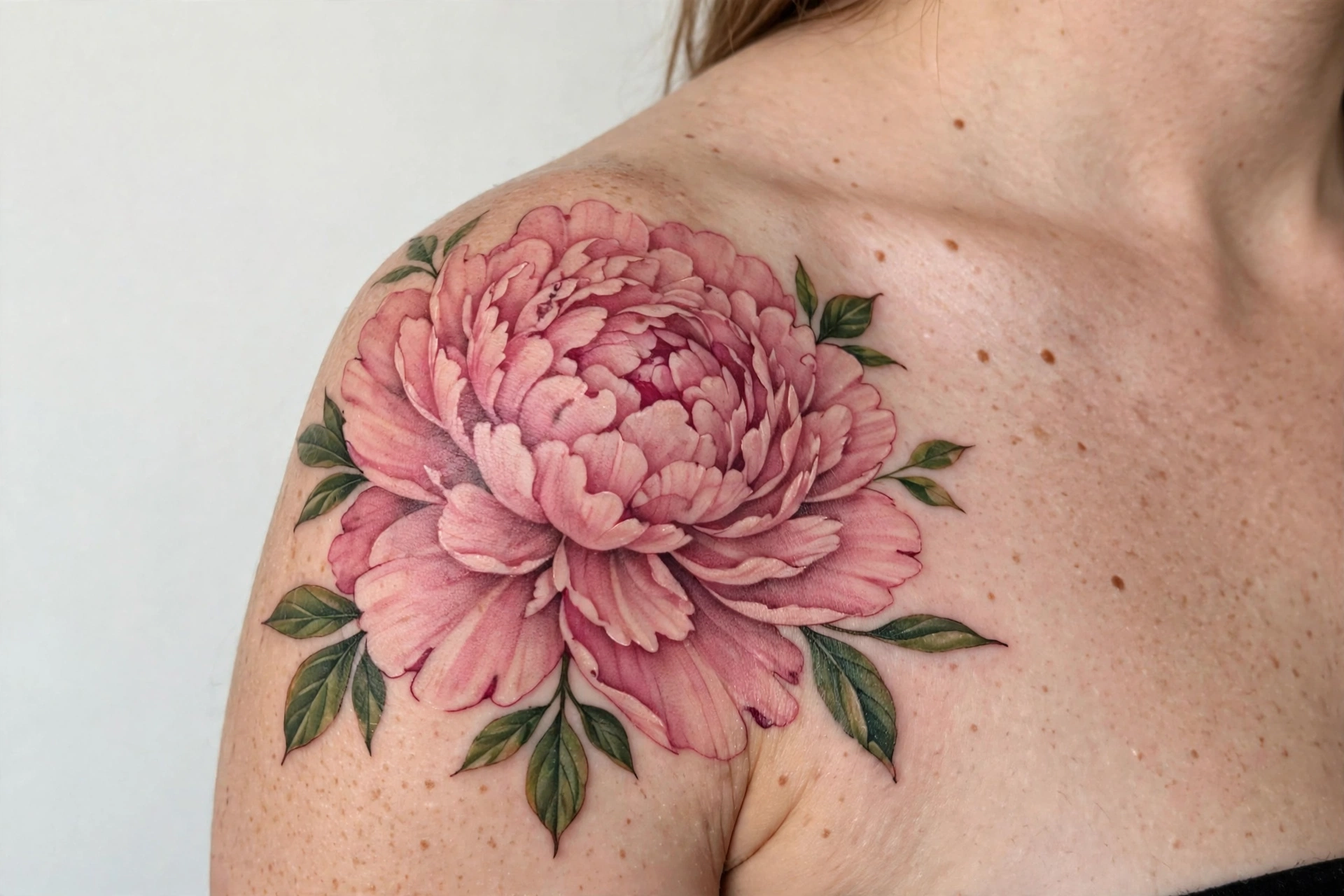
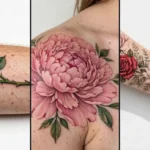
The peony means prosperity, good fortune and beauty in both Eastern and Western tradition. Its lush, layered petals suit colour work on the shoulder, thigh or back. Best for statement pieces. Downside: peonies need space — squeezed small, those glorious layers turn to mush.
5. Lotus
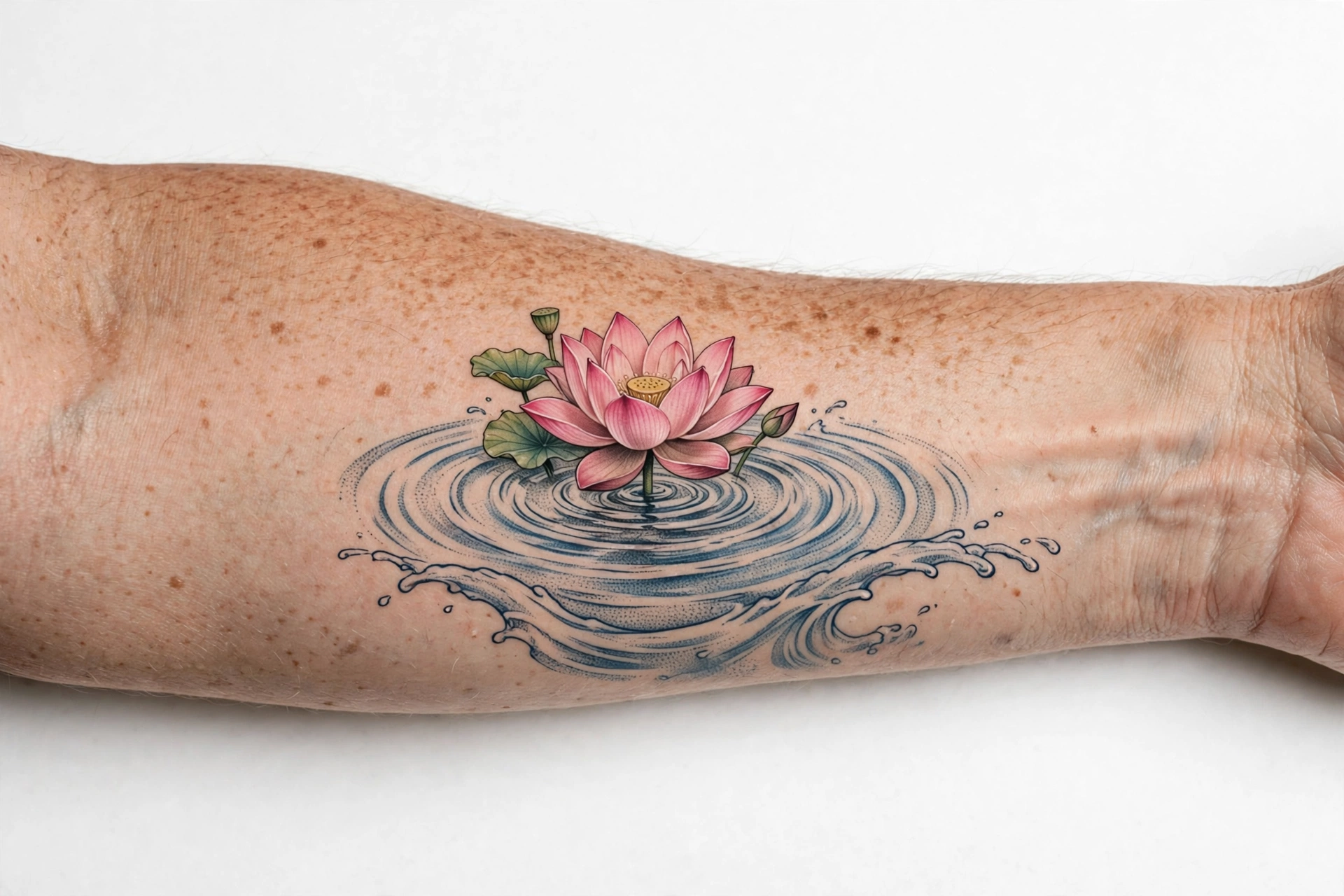
The lotus rises from muddy water to bloom clean, so it means rising above adversity, purity and spiritual growth. It suits the spine, sternum or forearm. Best for survivors and seekers. Downside: its symmetry is unforgiving — a slightly crooked lotus shows.
6. Cherry Blossom
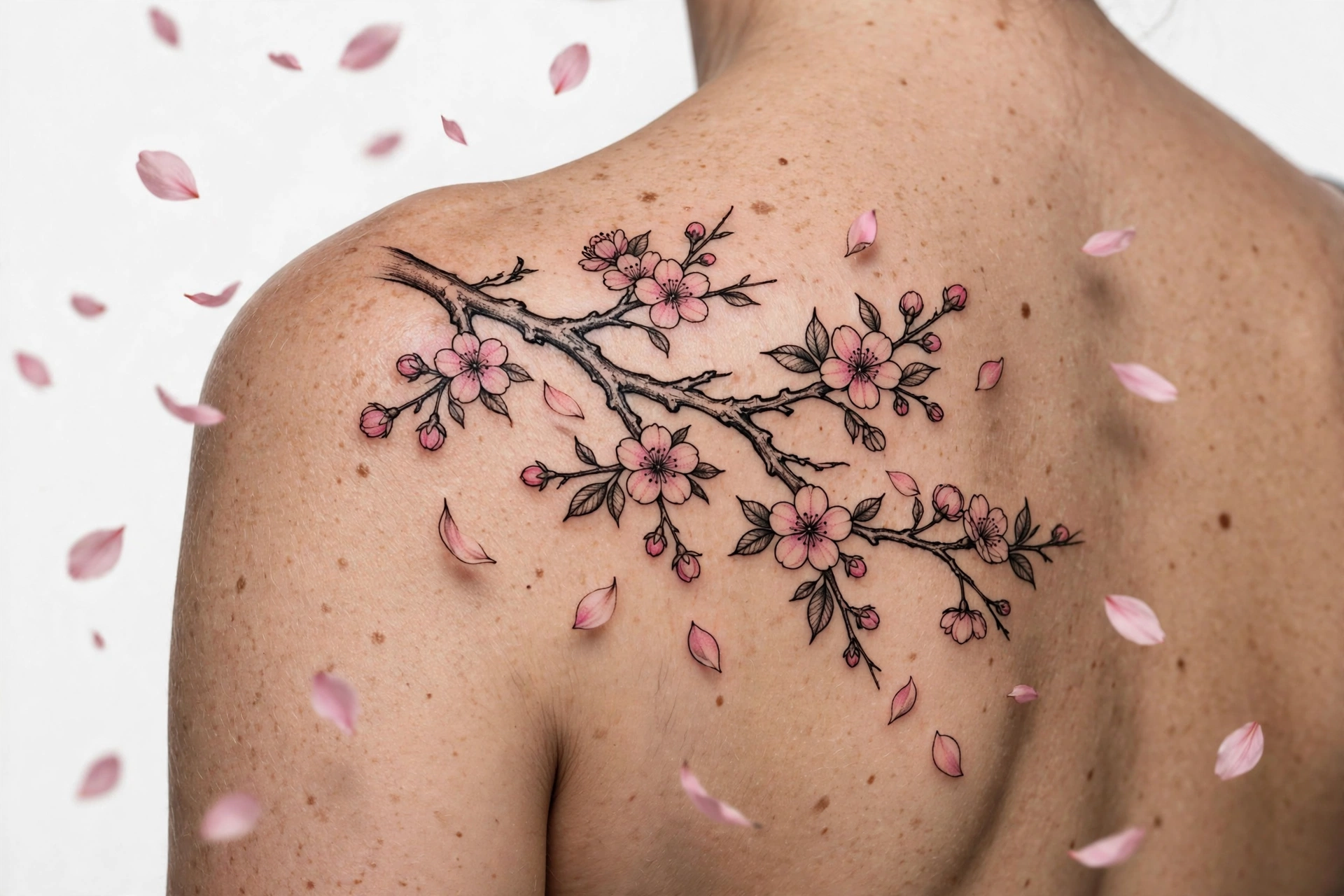
Cherry blossom, or sakura, captures life’s fleeting nature — beautiful precisely because it does not last. Petals scattered down the shoulder or spine are breathtaking. Best for romantics and Japan lovers. Downside: scattered petals look random unless the branch flow is planned first.
7. Sunflower
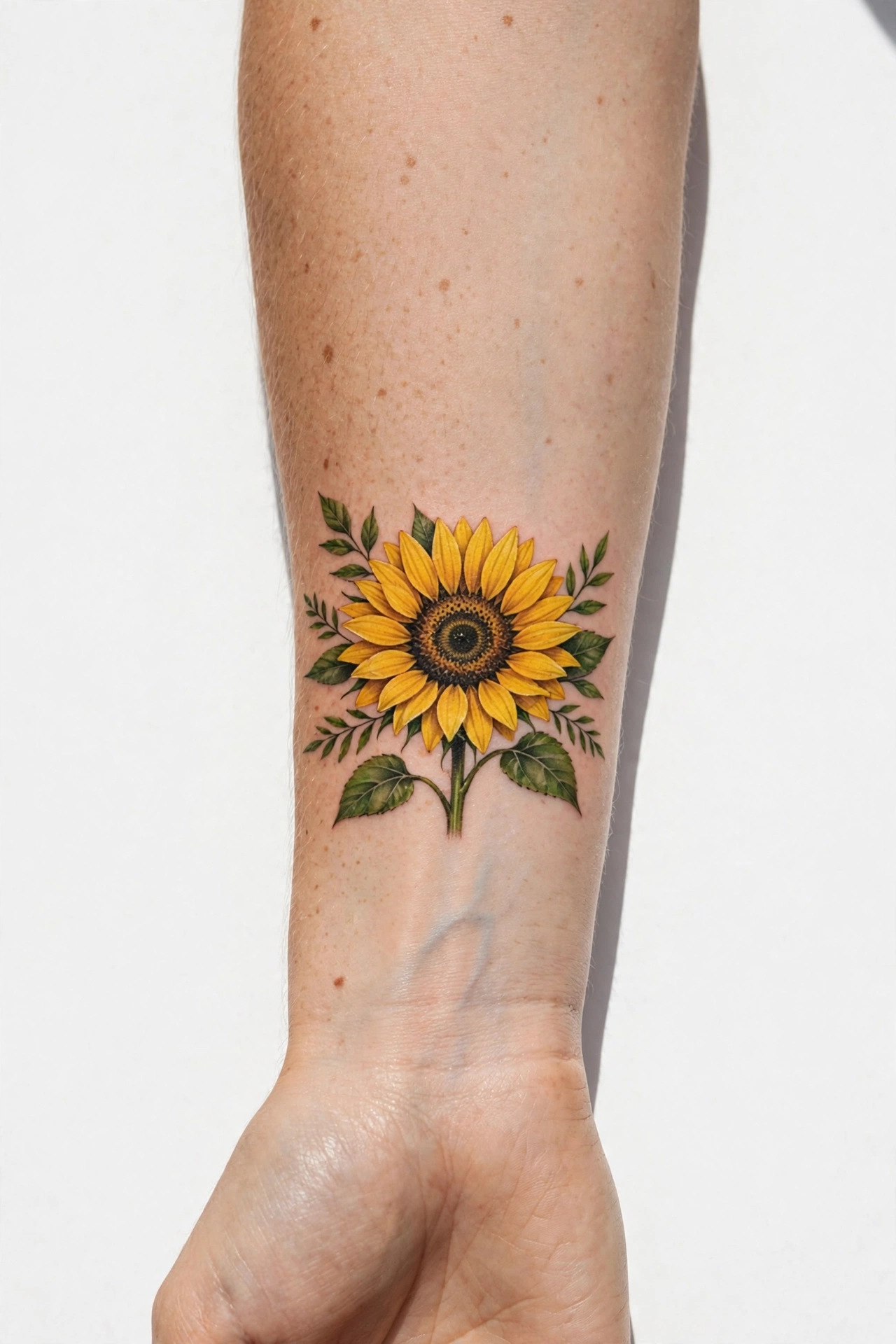
A sunflower radiates joy, loyalty and warmth — it literally turns toward the light. Bold yellow petals pop on the forearm, calf or shoulder. Best for optimists. Downside: yellow ink fades faster than most colours in strong sun, so sunscreen is non-negotiable.
8. Daisy
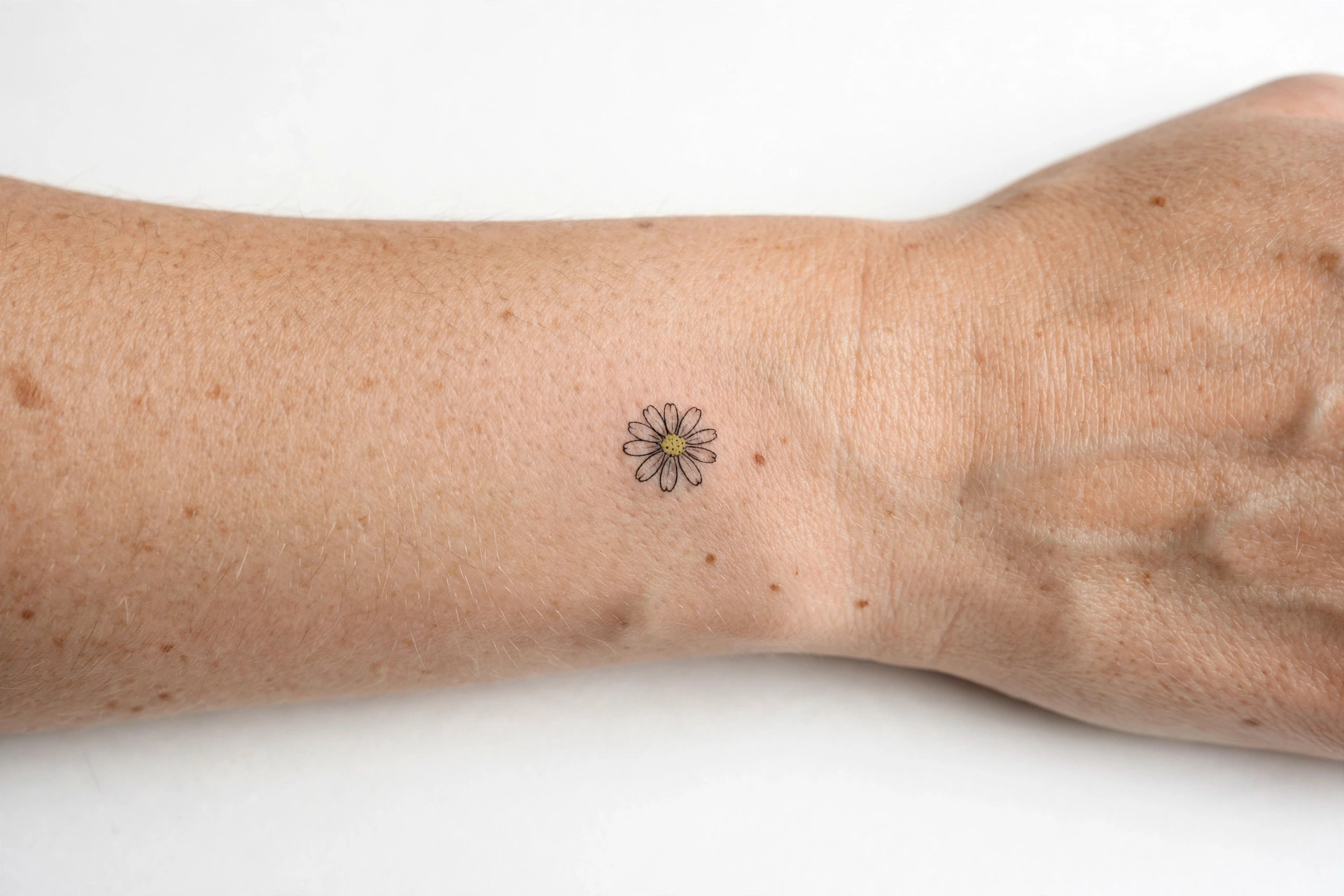
Daisies mean innocence, new beginnings and simple, honest joy. A small daisy chain or single stem suits a first tattoo on the wrist or ankle. Best for free spirits. Downside: tiny daisies lose petal definition as they age, so go slightly larger.
9. Lavender Sprig
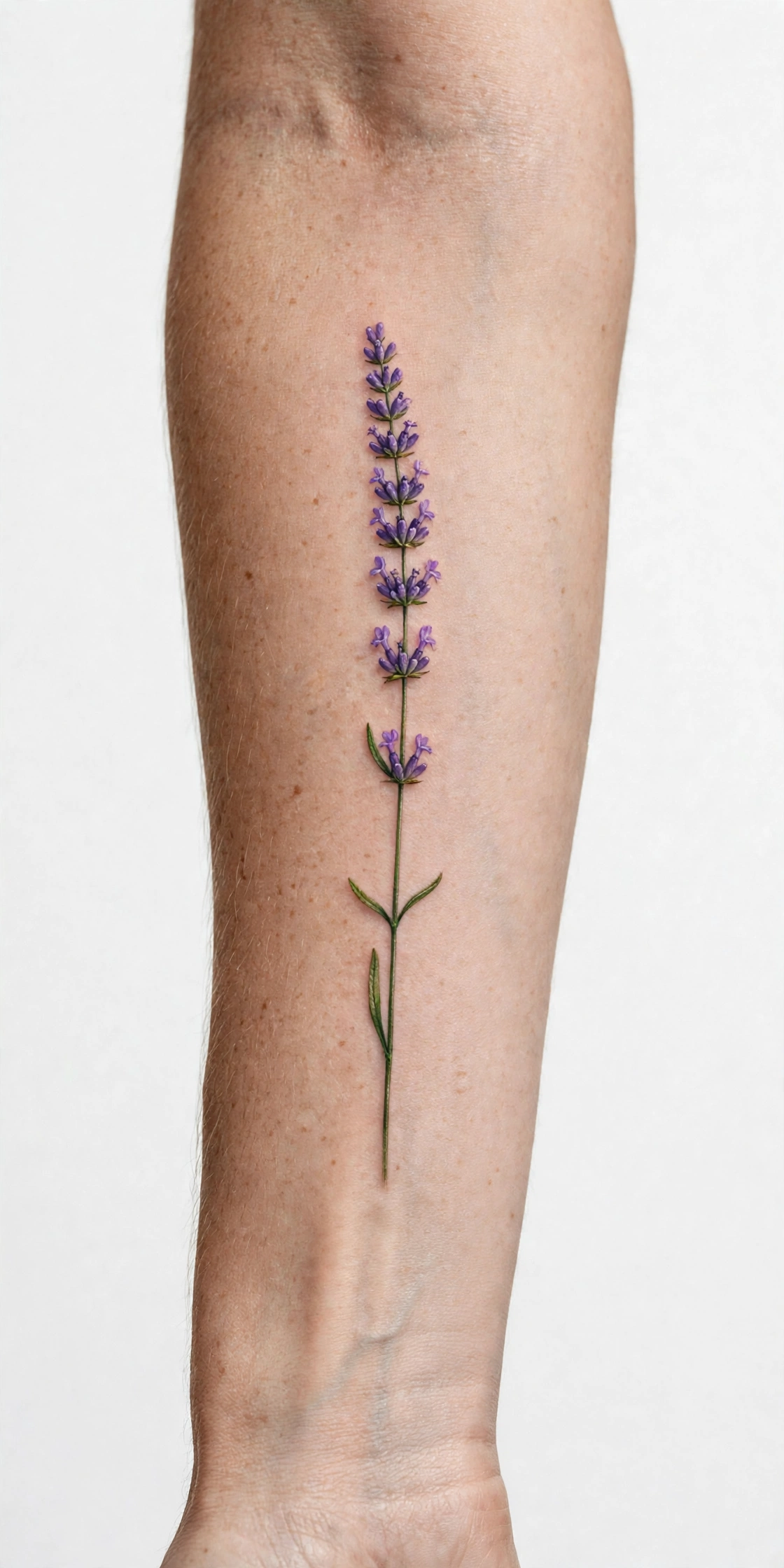
Lavender stands for calm, devotion and grace under pressure, and its slender purple spikes suit vertical placements like the forearm, spine or behind the ear. Best for anyone wanting a calming, elegant design. Downside: thin stems and tiny buds can blur within a few years.
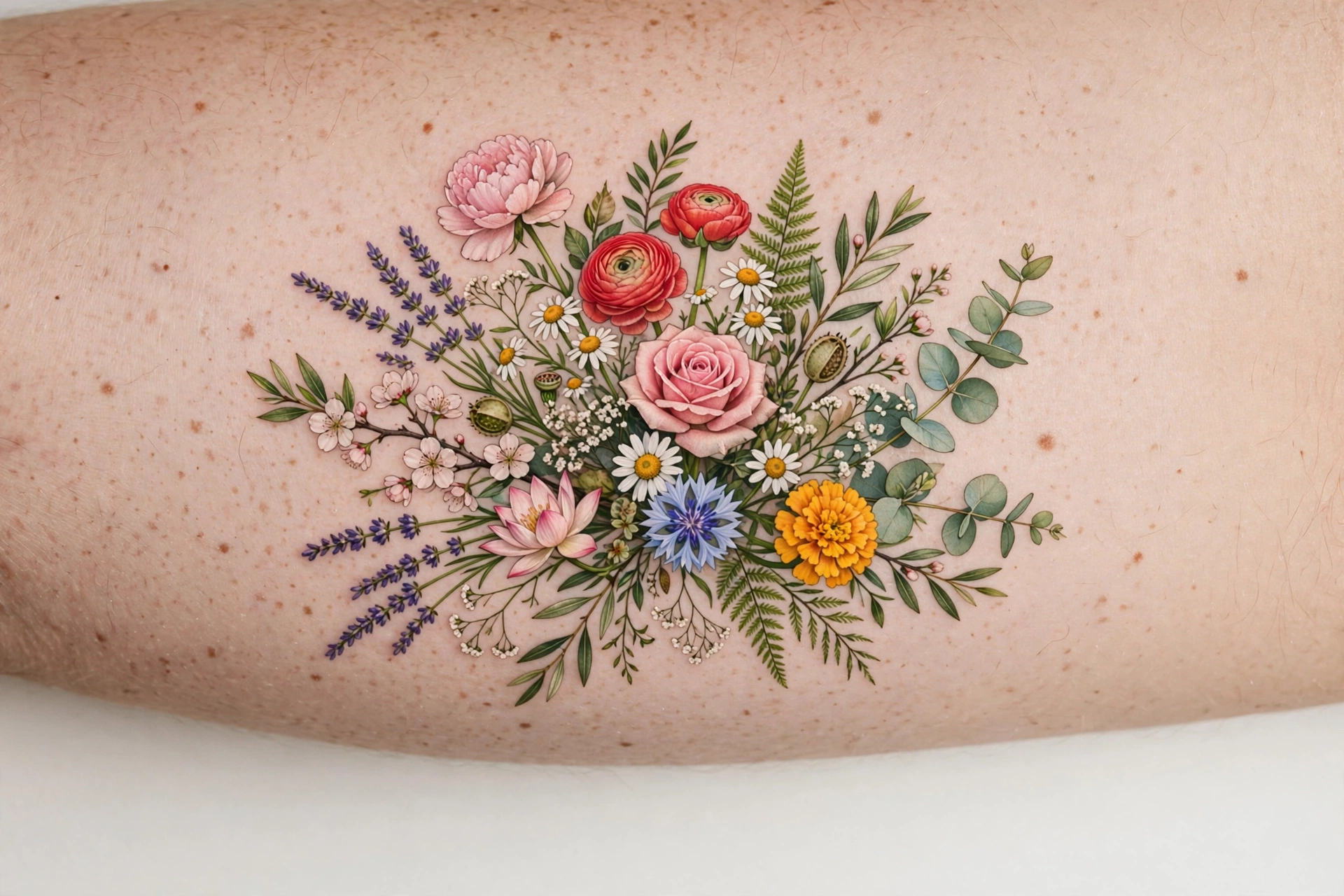
10. Wildflower Bouquet
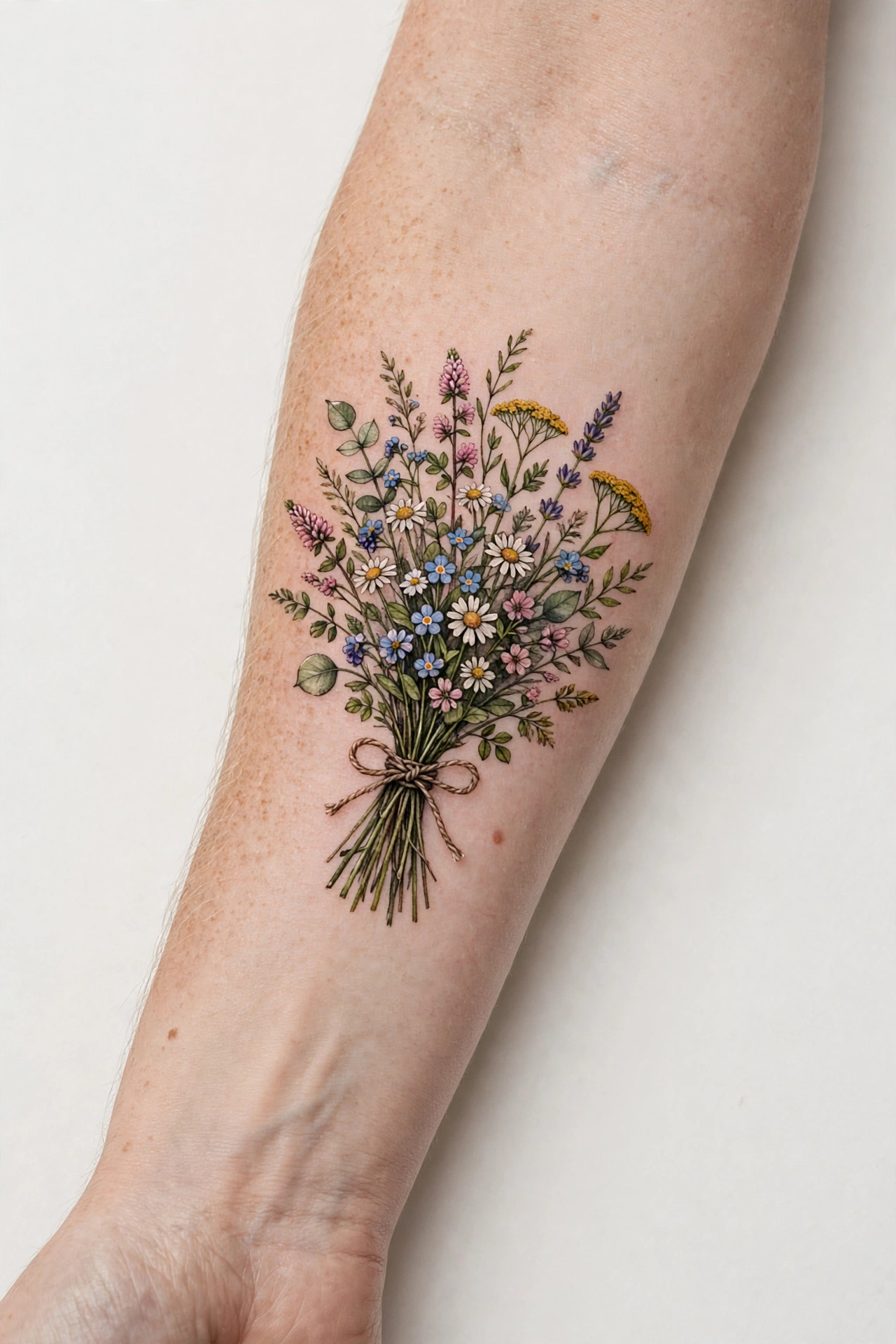
A wildflower bouquet gathers mixed blooms into one free, untamed arrangement celebrating natural, unpolished beauty. It suits the forearm or thigh, where stems can flow. Best for nature lovers who refuse a single meaning. Downside: busy bouquets look messy at small sizes.
Chapter 2: Meaningful & Symbolic
Chosen for what they say first, how they look second.
11. Birth Flower Bouquet
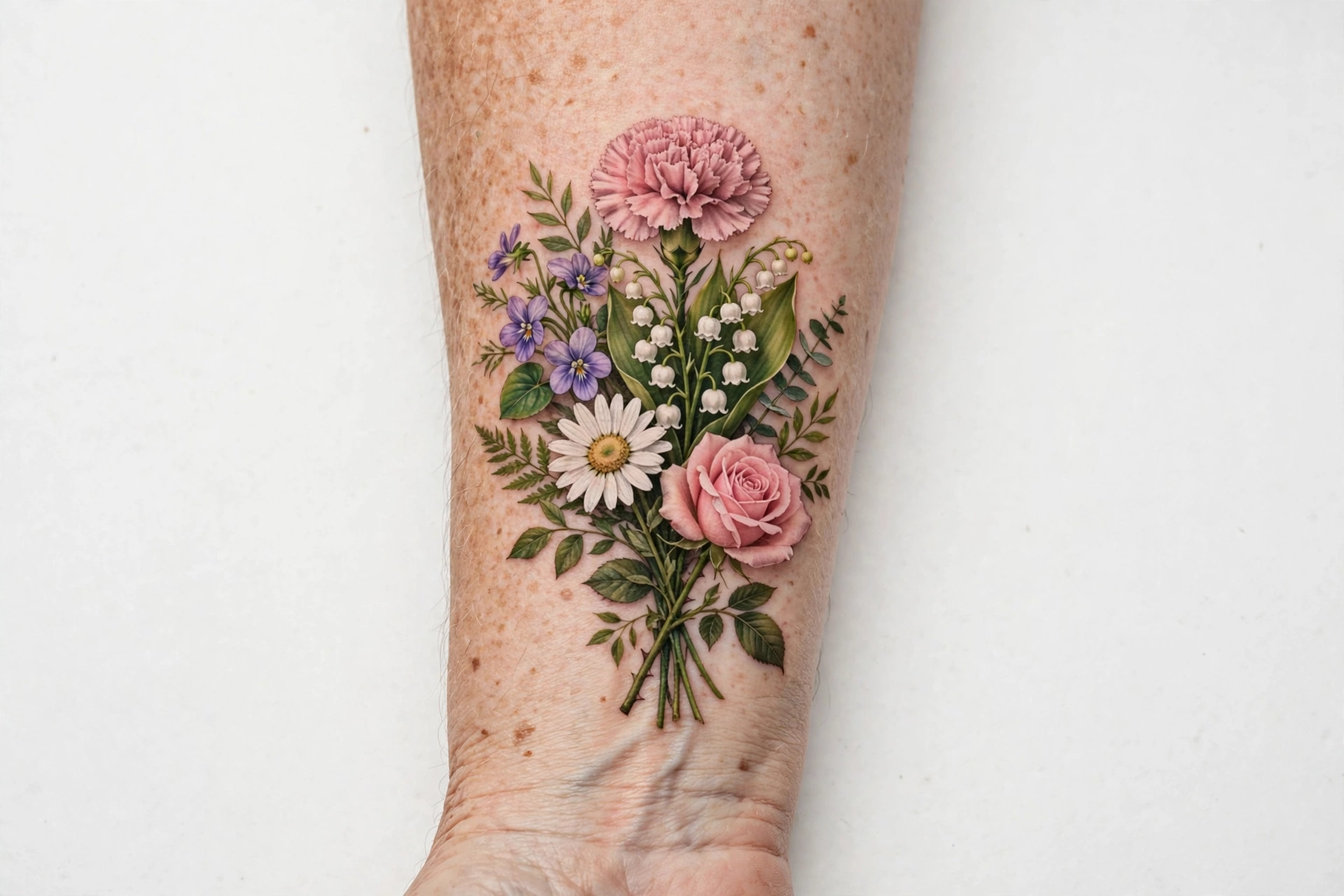
A birth flower bouquet weaves family members’ birth flowers into one arrangement for the whole family. It suits the forearm, thigh or back. Best for mothers and siblings honouring loved ones. Downside: several blooms demand a skilled artist and generous size to stay legible.
12. Rose and Thorns
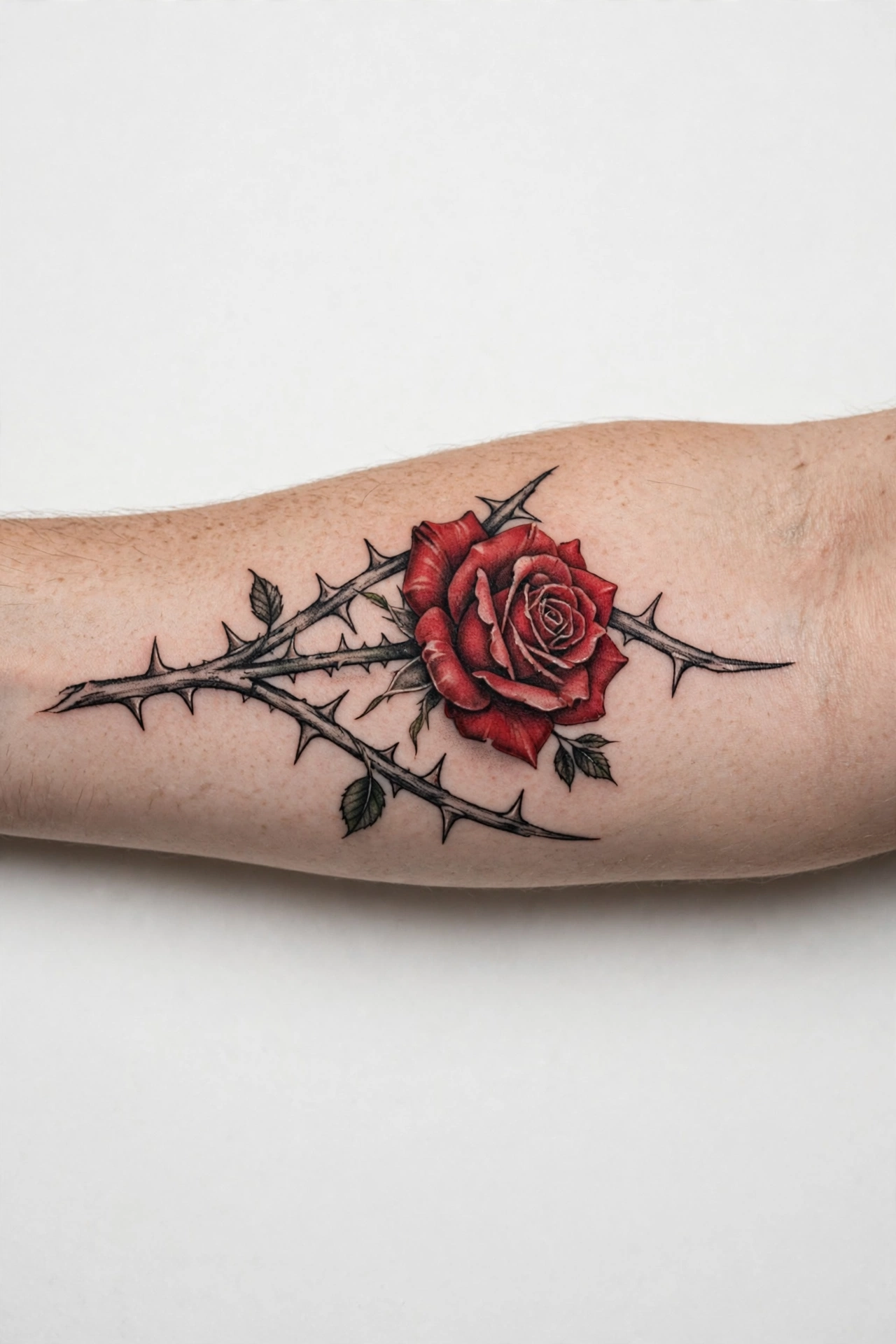
Rose thorns add protection, pain and the cost of beauty to the rose’s message of love. A wrapping vine suits the forearm or calf. Best for anyone whose love story survived hardship. Downside: thorns can look scratchy if they dominate the bloom.
13. Poppy Remembrance
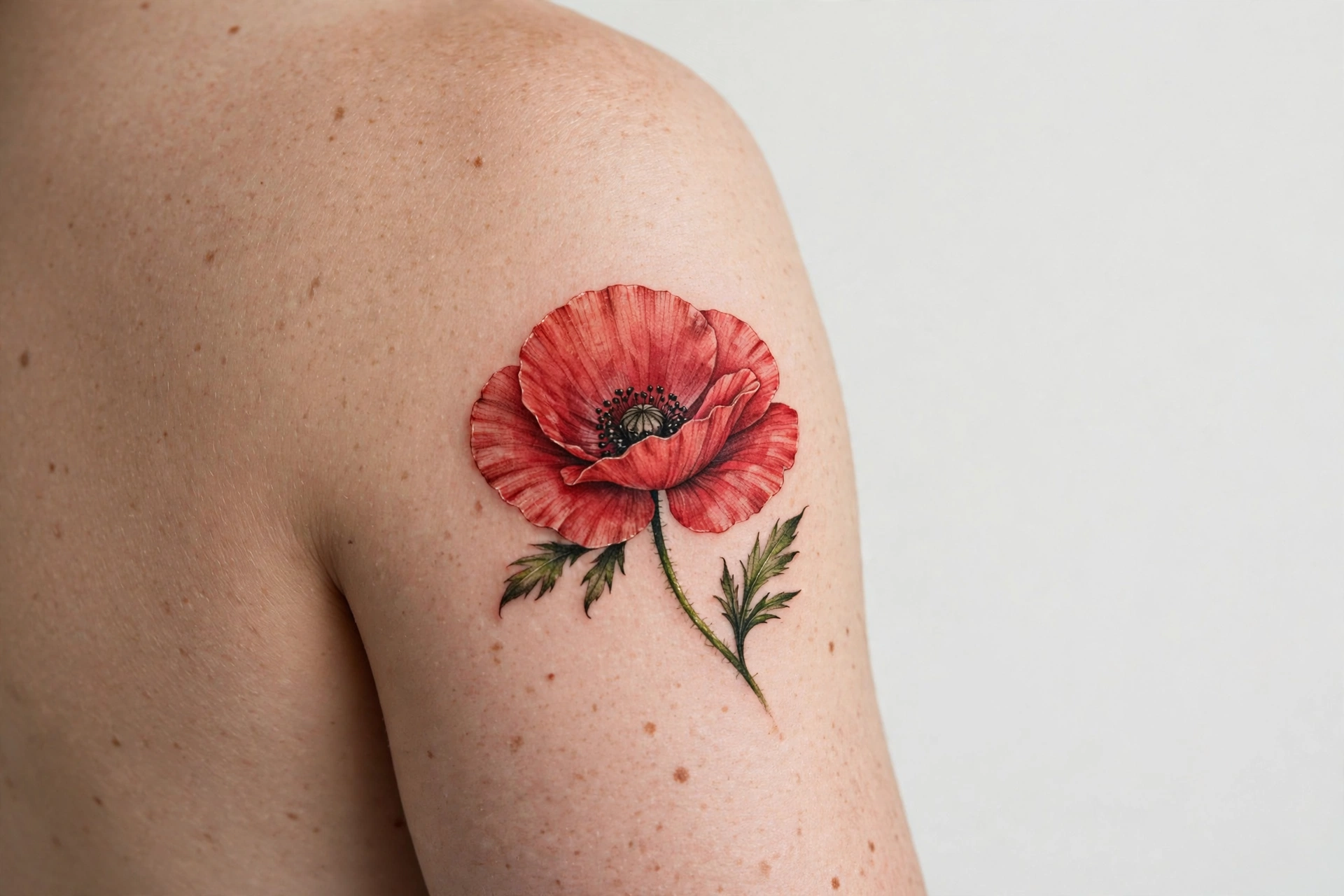
The poppy is the flower of remembrance, sleep and peace, worn for those lost in war and in life. A single red poppy on the shoulder or chest is quietly powerful. Best for memorial tattoos. Downside: be sure that remembrance association is the one you want.
14. Hibiscus
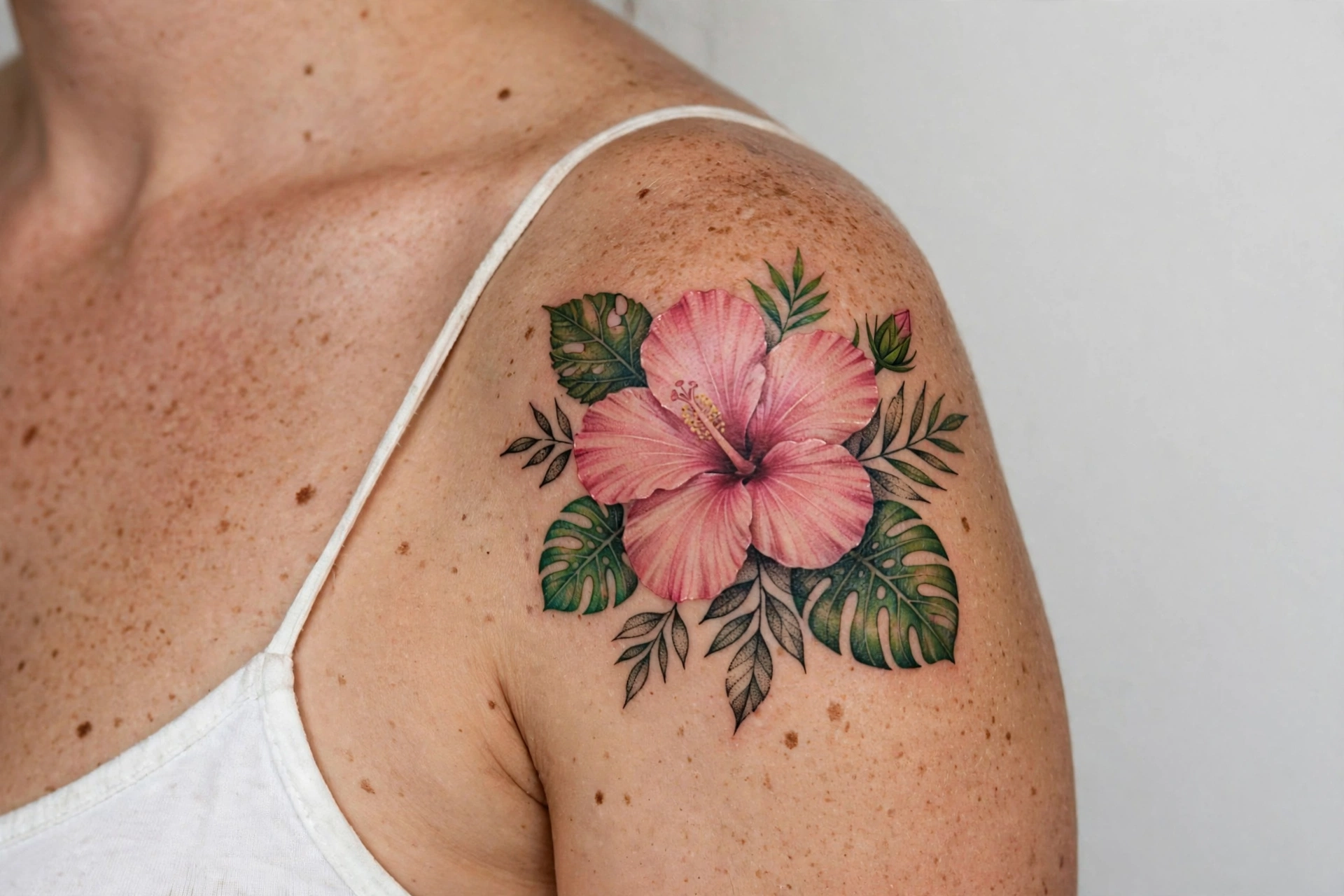
Hibiscus stands for delicate beauty and a laid-back island spirit, evoking sun, sea and summer. It looks gorgeous in colour on the thigh, hip or shoulder. Best for travellers and beach souls. Downside: bright tropical colours fade fastest in sun and salt water.
15. Magnolia
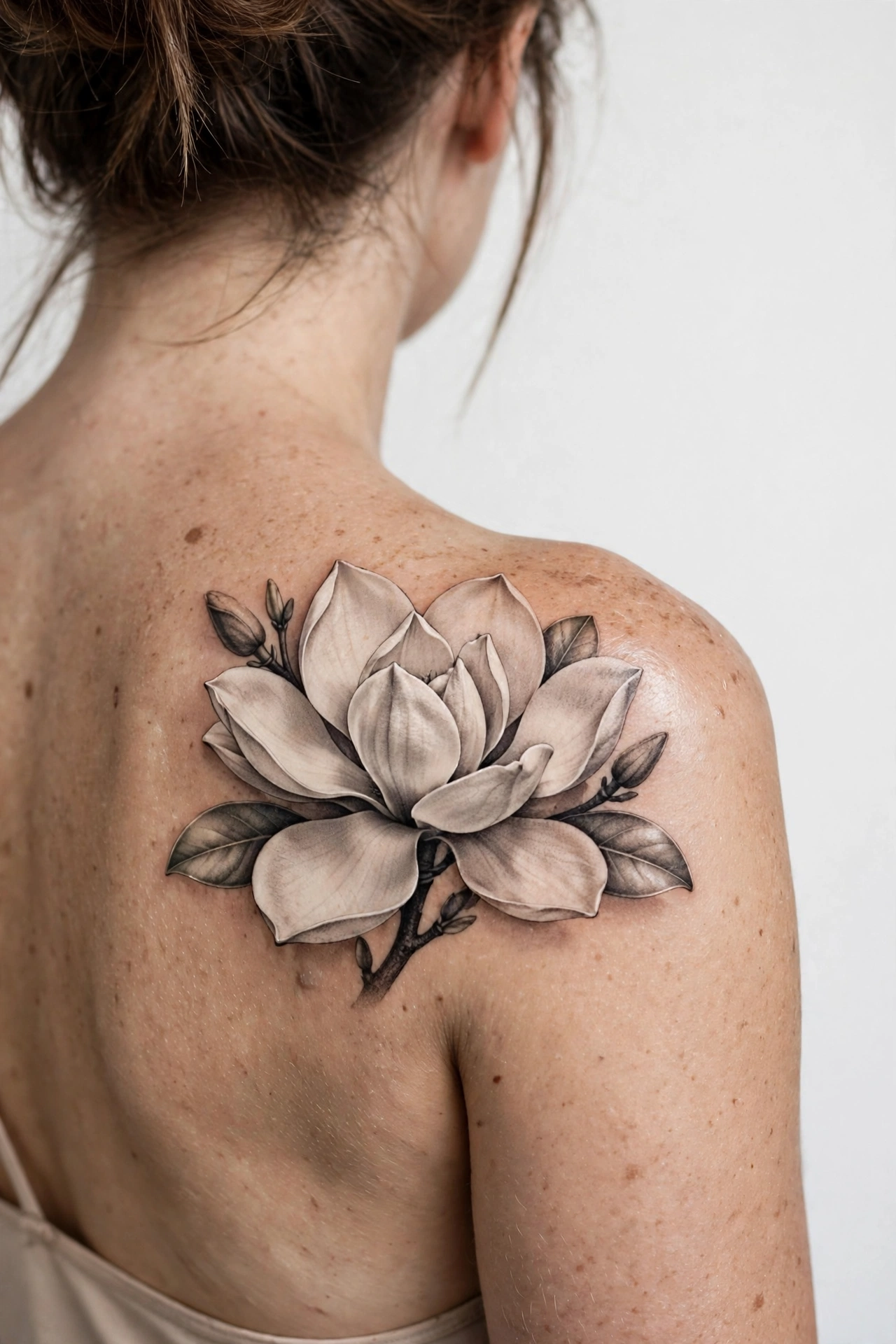
Magnolia means dignity, perseverance and quiet strength — a Southern classic with large, creamy blooms. It suits the shoulder, back or thigh in soft shading. Best for anyone who endured with grace. Downside: subtle cream tones need contrast shading or the flower washes out.
16. Jasmine
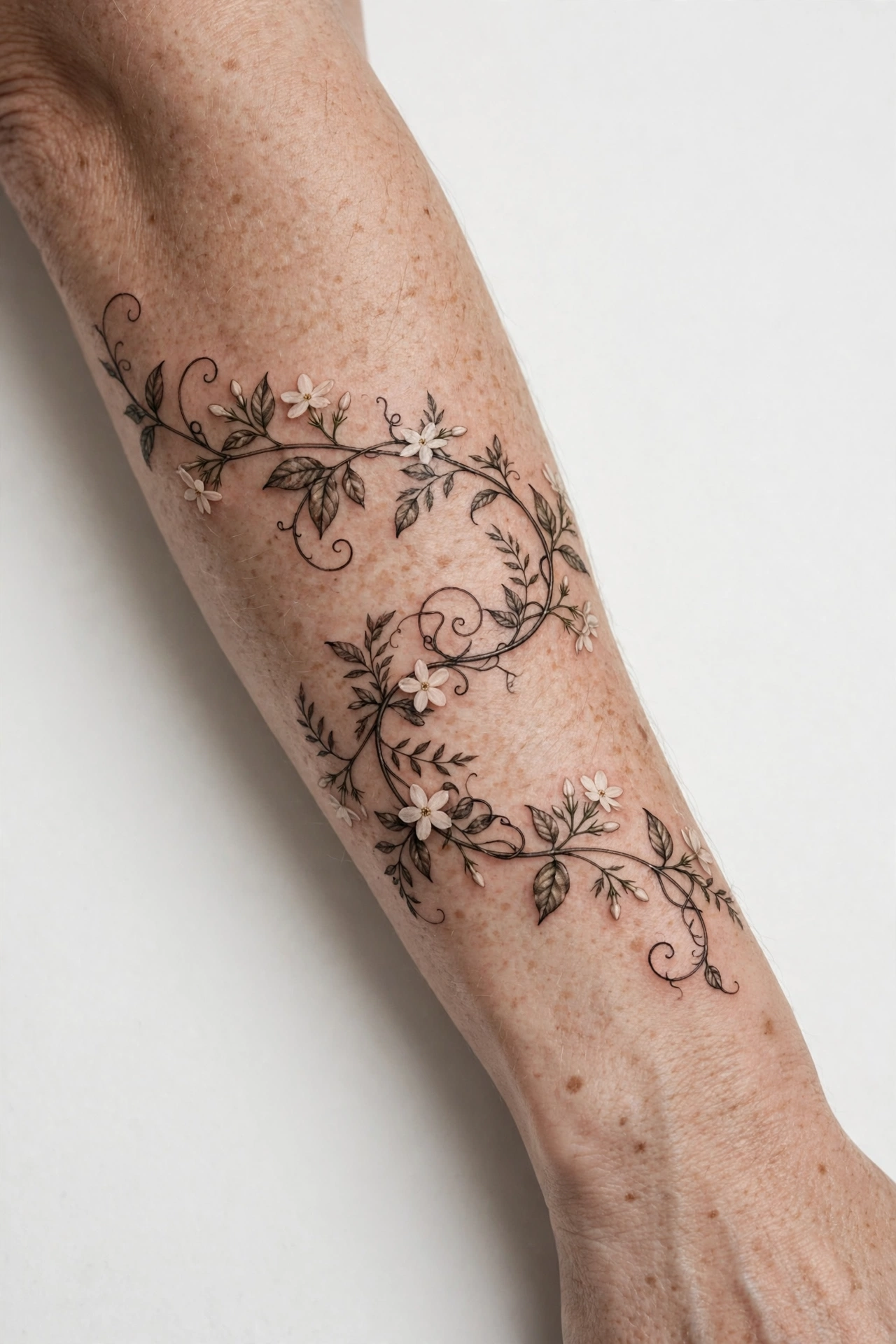
Jasmine symbolises love, sensuality and good luck, and its tiny star-shaped blossoms make a delicate vine along the collarbone, wrist or ankle. Best for romantics who prefer subtlety. Downside: small white flowers blur quickly at tiny sizes, so keep each blossom defined.
17. Tulip
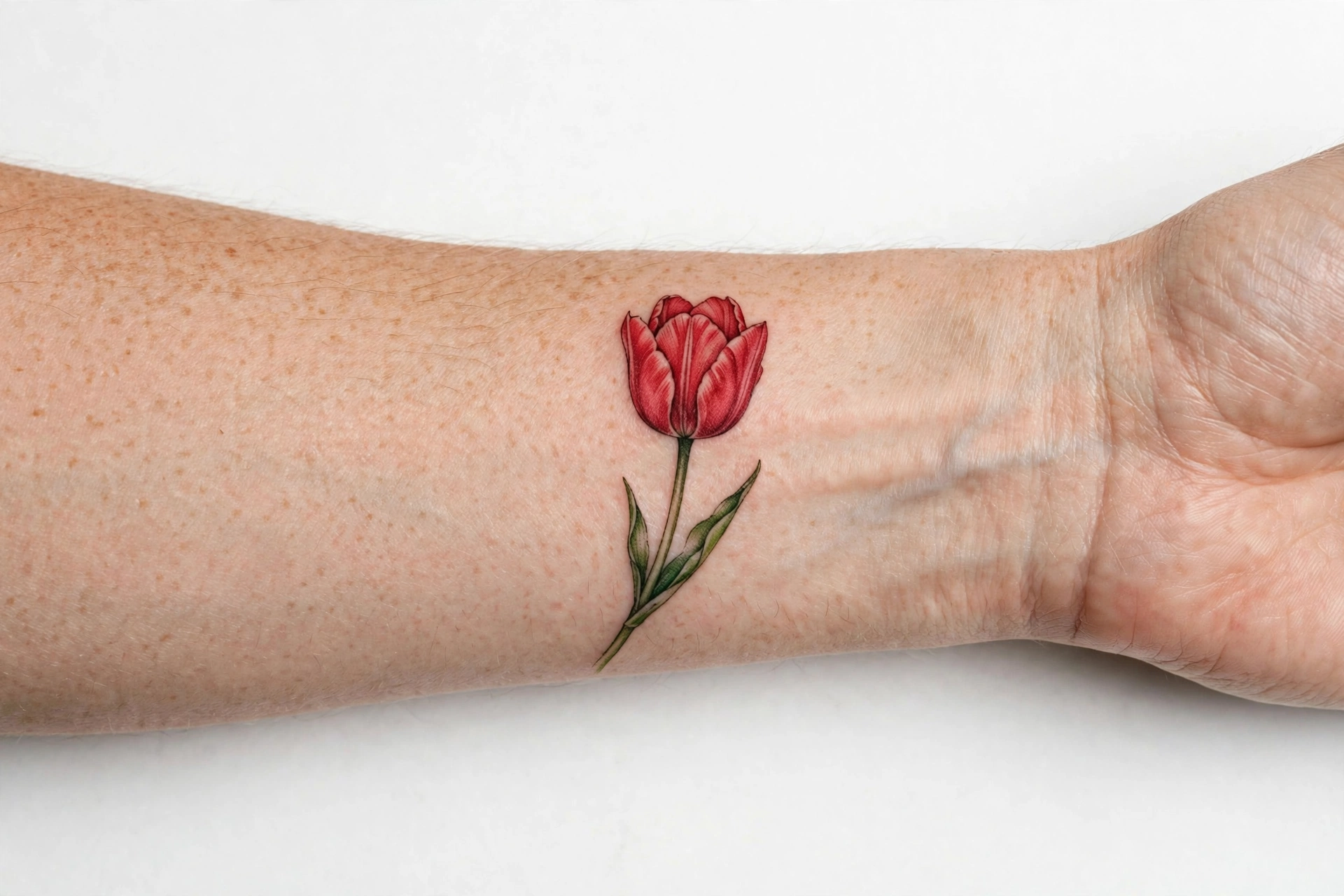
The tulip means perfect love and a fresh declaration of feeling. A single stem or trio suits the forearm or calf. Best for first loves and bold romantics. Downside: tulips are less common in portfolios, so check your artist does clean, simple florals.
18. Iris
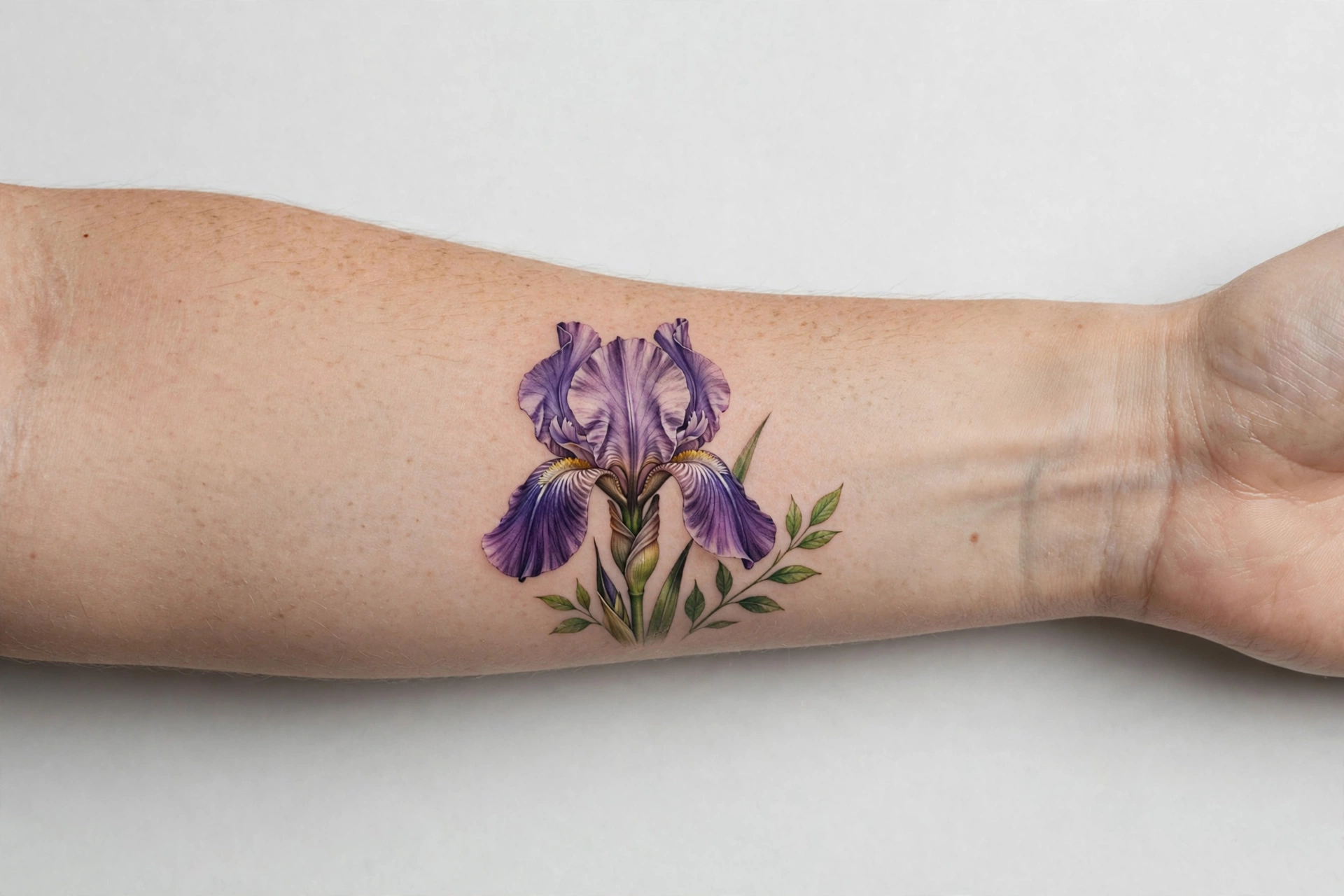
Named for the Greek goddess of the rainbow, the iris stands for wisdom, hope and faith. Its tall shape suits the forearm, spine or thigh. Best for thoughtful souls and February birthdays. Downside: complex petals can muddle together if the design is too small.
19. Violet
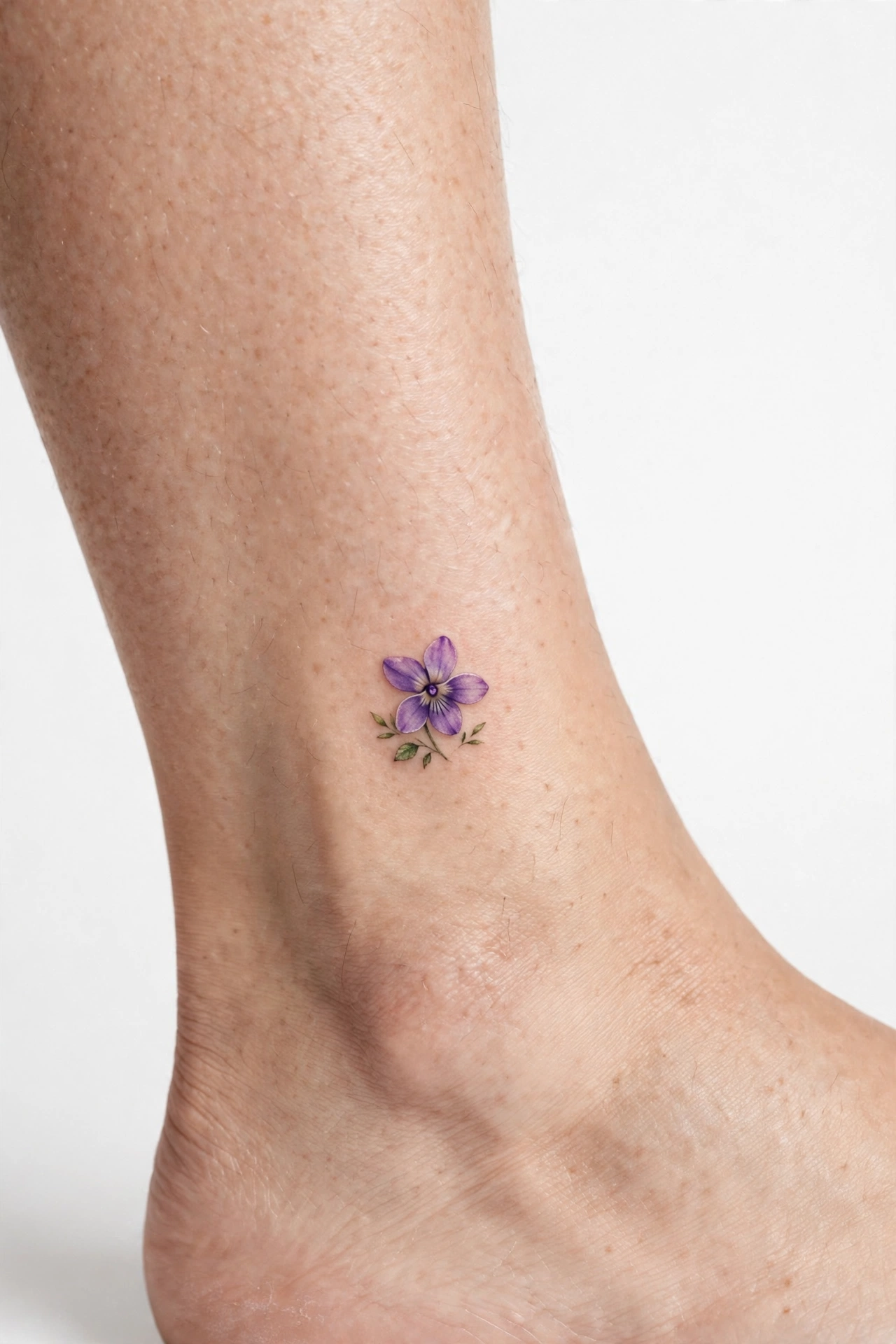
Violet means modesty, faithfulness and quiet devotion. A tiny violet suits the wrist, ankle or behind the ear. Best for introverts and February-born romantics. Downside: violets are small by nature, and a too-tiny tattoo may lose shape within a few years.
Chapter 3: Styles
Same flower, completely different tattoo: style shapes how it looks, hurts, heals and ages. Our tattoo styles guide compares every major style.
20. Fine-Line Single Stem
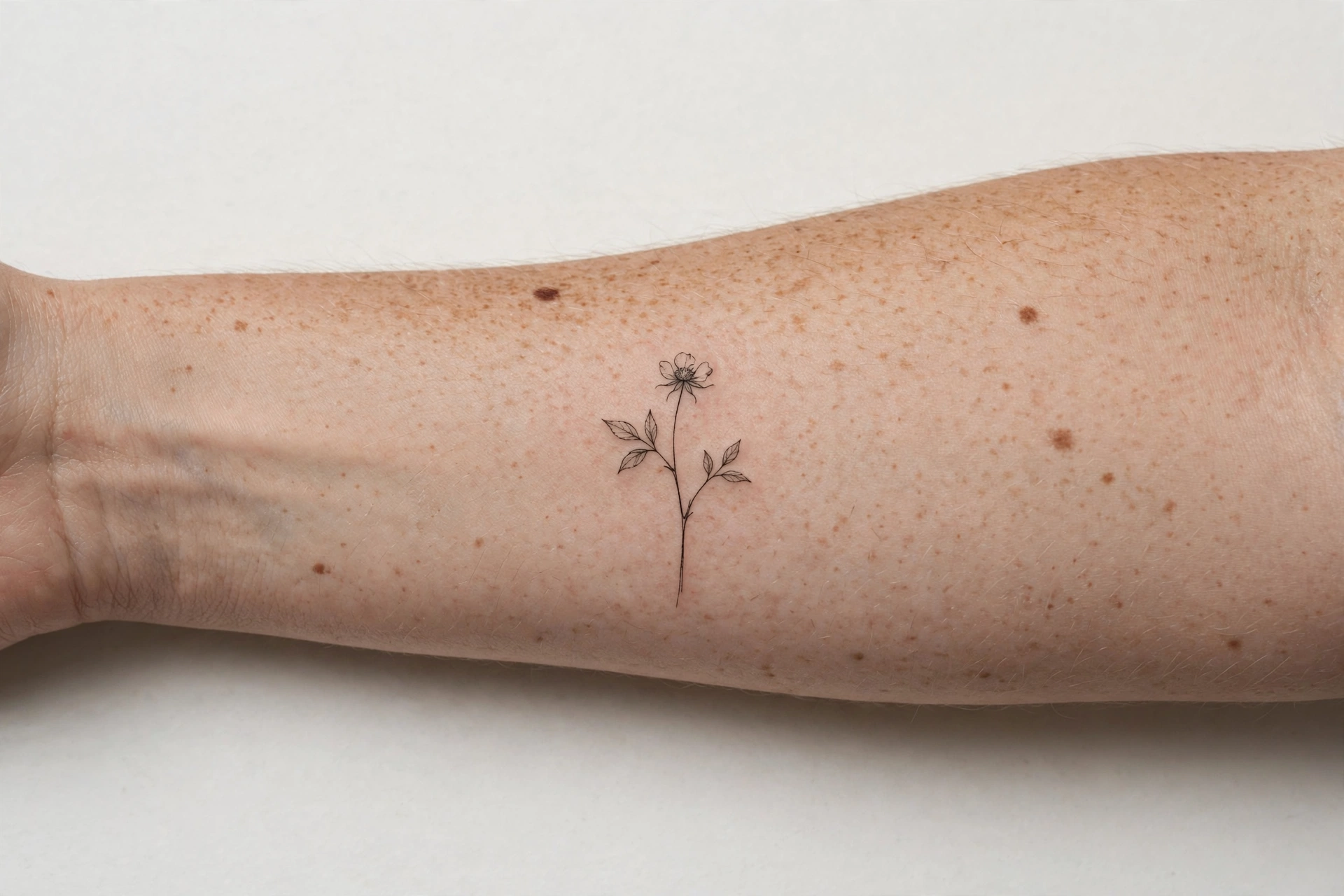
A fine-line single stem is one delicate bloom drawn in thin, precise lines. It suits the wrist, forearm or collarbone. Best for first-timers and minimalists. Downside: fine line fades fastest of all styles, so expect a touch-up within a few years.
21. Watercolor Peony
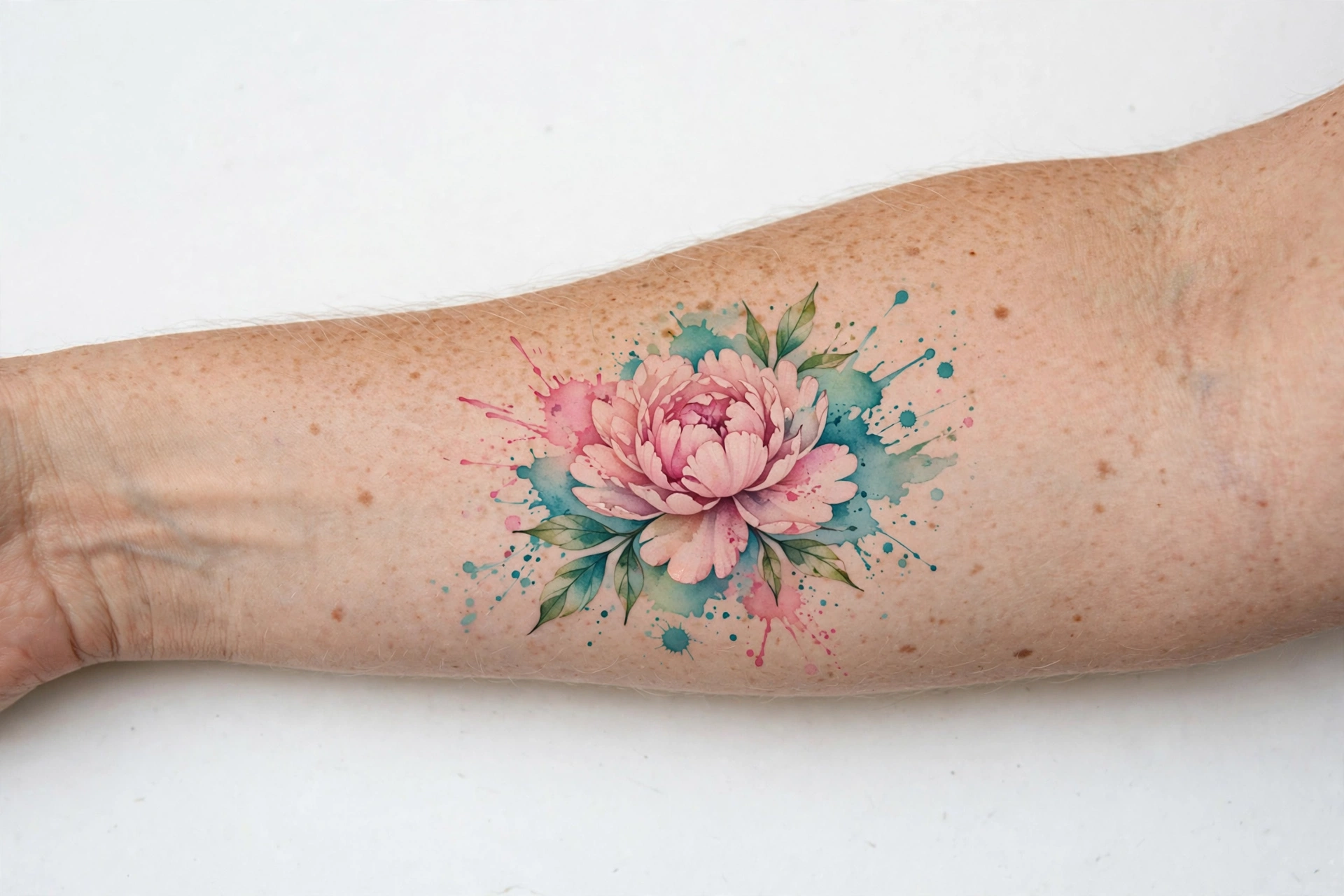
A watercolor peony bleeds soft pinks and purples beyond its outline like paint on paper — dreamy, romantic and artistic. It suits the shoulder or thigh. Best for art lovers. Downside: soft edges without anchoring linework fade and blur sooner than bold styles.
22. Blackwork Botanical
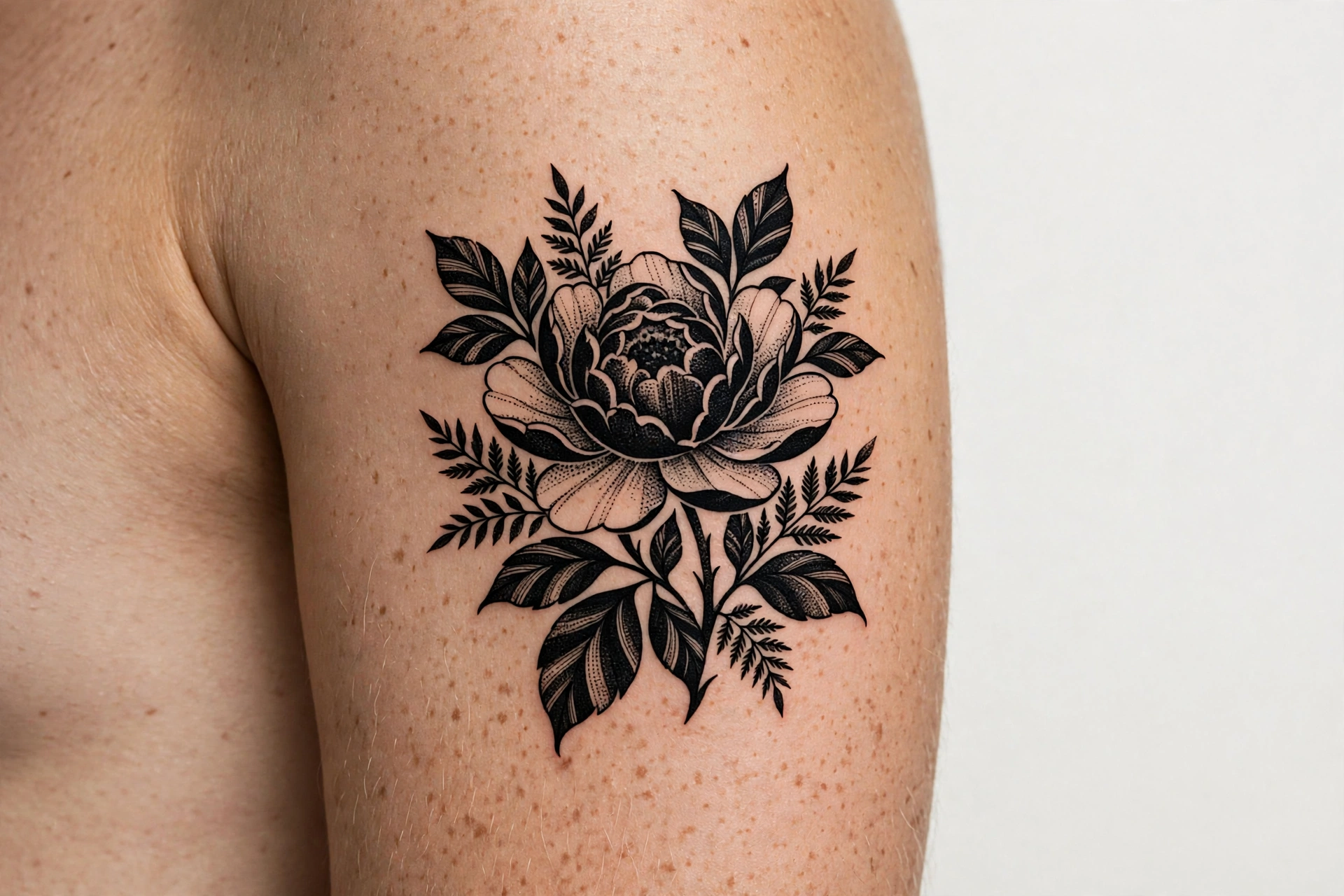
Blackwork botanical uses solid black ink and bold shapes for a dramatic, graphic flower that holds its edge for decades. It suits the forearm, calf or back. Best for lovers of bold, timeless ink. Downside: blackwork is unforgiving, and cover-ups are harder.
23. American Traditional Rose
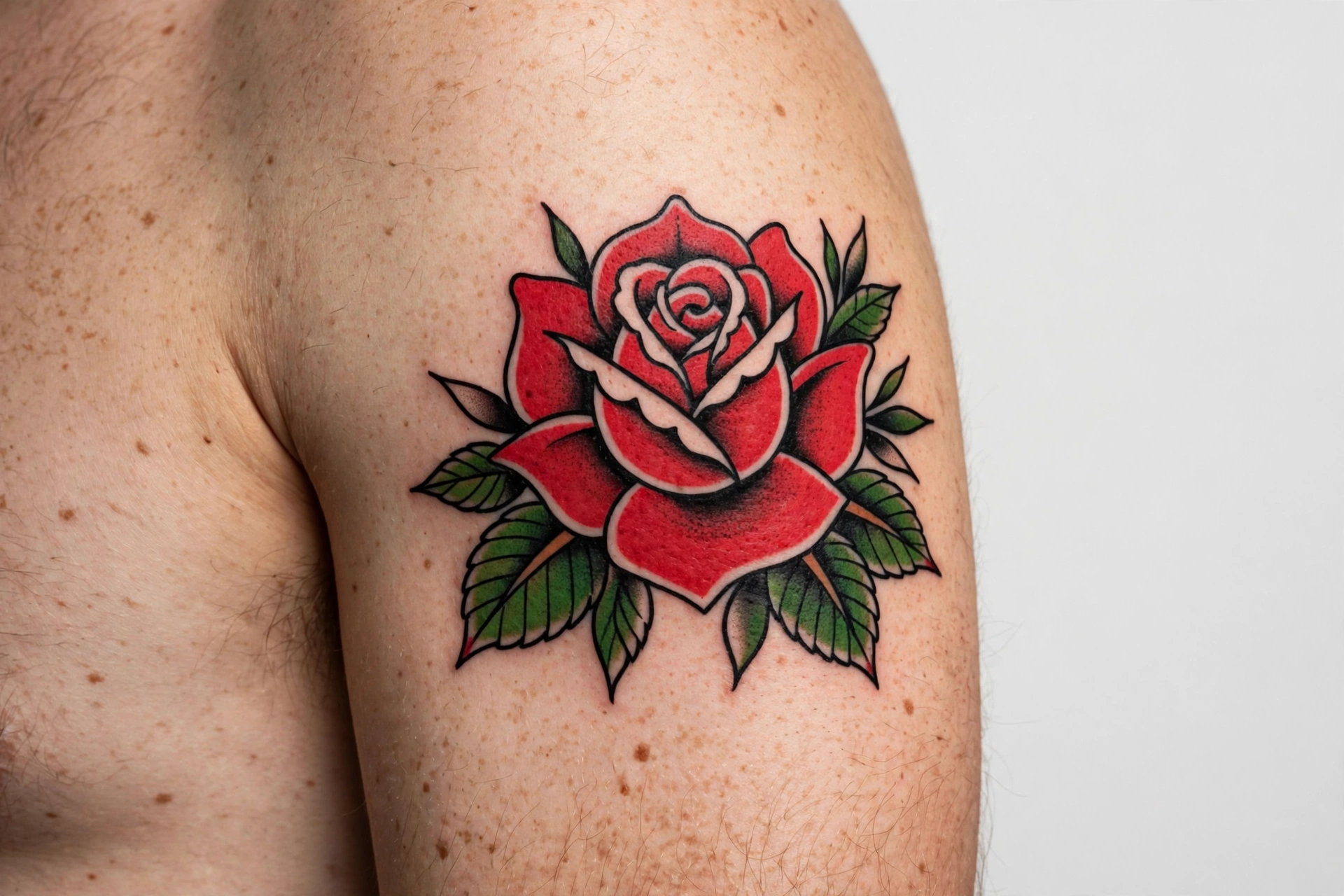
The American traditional rose — bold outlines, limited palette, classic shading — is tattoo history you can wear. It suits the forearm, bicep or calf. Best for vintage lovers and traditional collectors. Downside: its chunky, old-school look is not for minimalists.
24. Japanese Peony
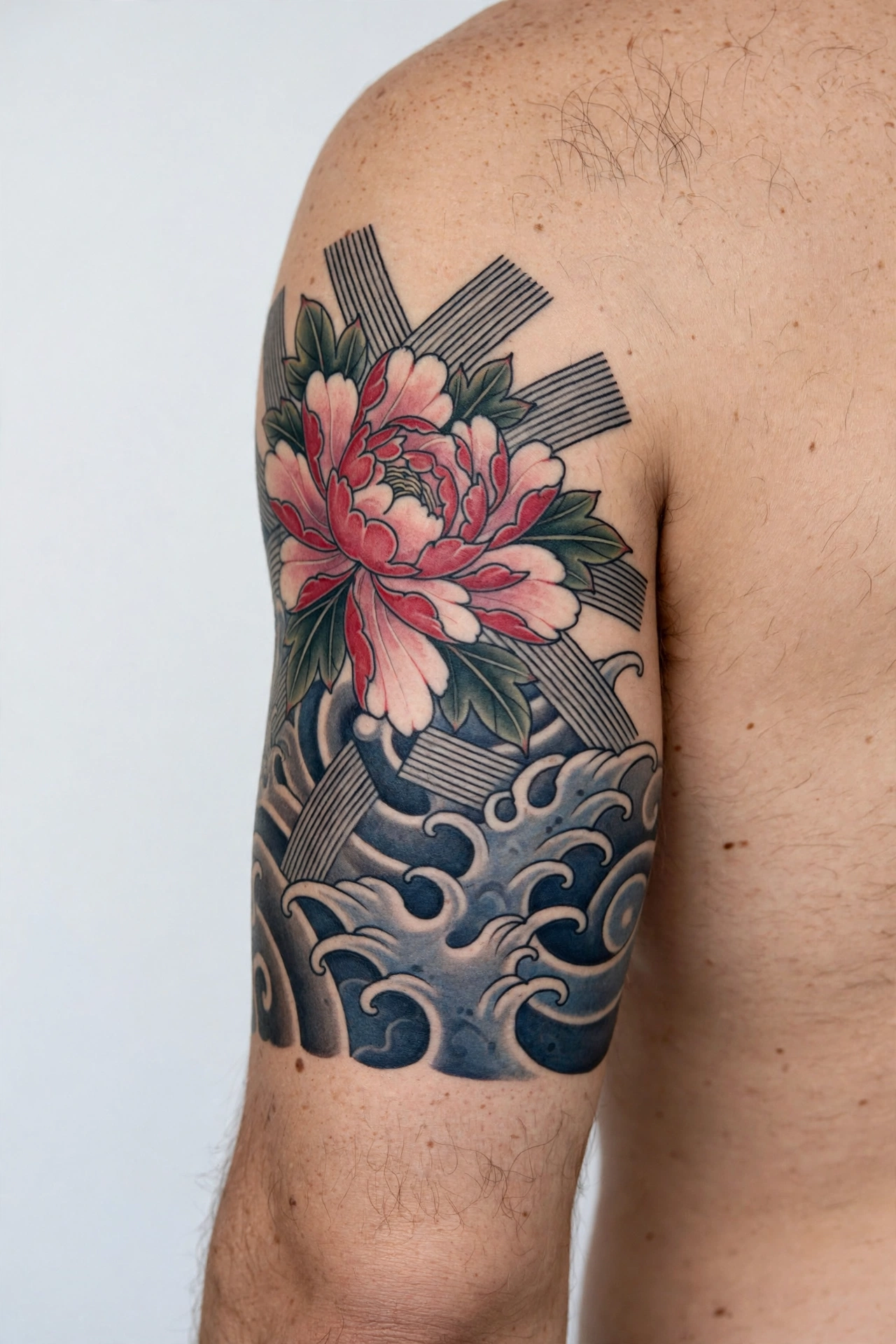
Japanese peony, or botan, pairs lush blooms with flowing leaves and wind bars in the irezumi tradition — a large, dynamic piece full of movement. It suits the back, thigh or sleeve. Best for collectors of Japanese art. Downside: authentic Japanese work is large and expensive.
25. Geometric Flower
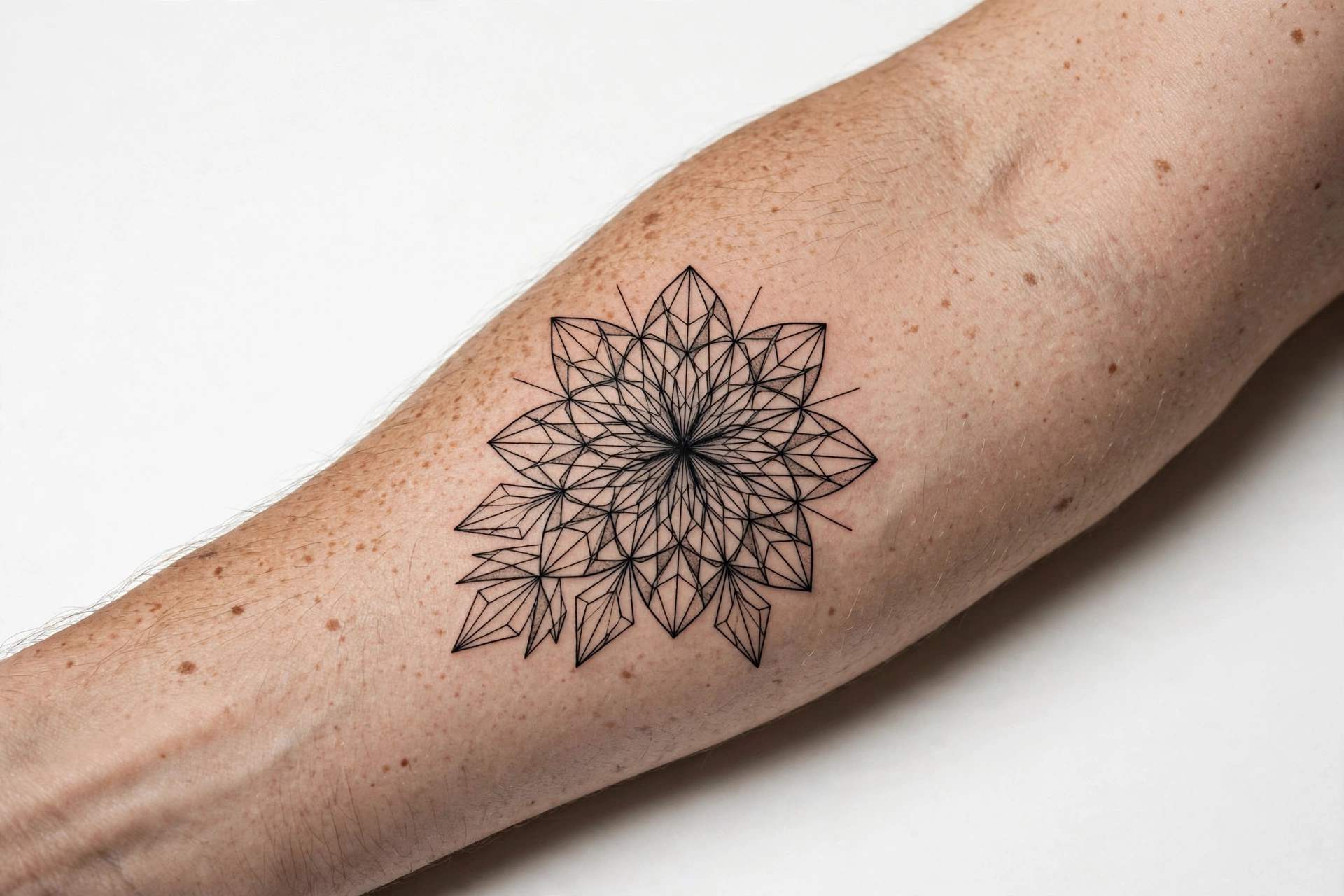
A geometric flower frames a bloom inside lines, triangles or sacred-geometry patterns — nature meets mathematics. It suits the forearm, chest or calf. Best for modern, design-minded wearers. Downside: geometry demands perfect symmetry, so a shaky line stands out immediately.
26. Dotwork Daisy Mandala
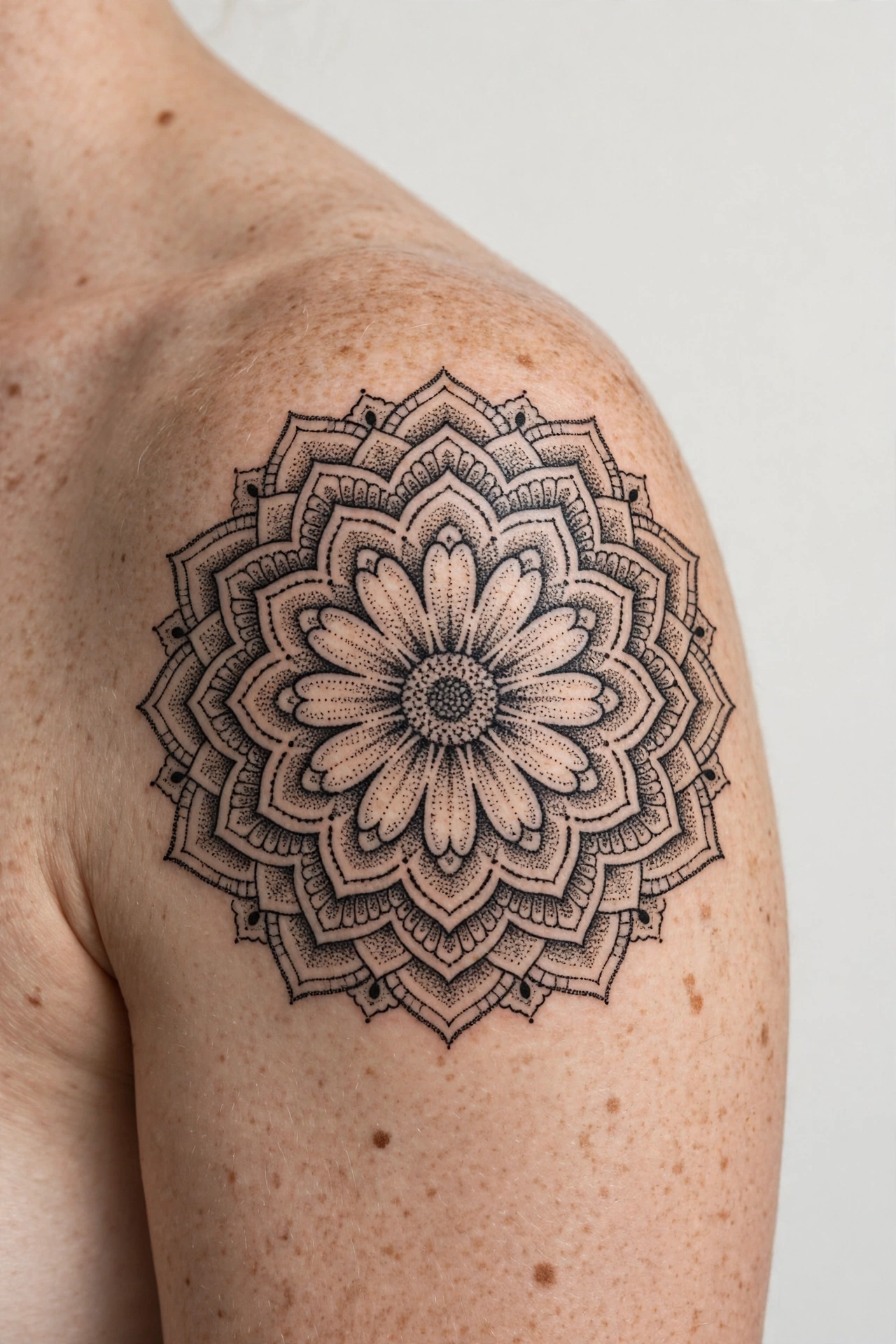
Dotwork builds a daisy mandala from thousands of tiny dots, creating soft shading and a meditative, symmetrical pattern. It suits the shoulder, back or thigh. Best for spiritual seekers and pattern lovers. Downside: dotwork sessions are long and slow, and uneven dot density looks patchy.
27. Realistic Rose Portrait
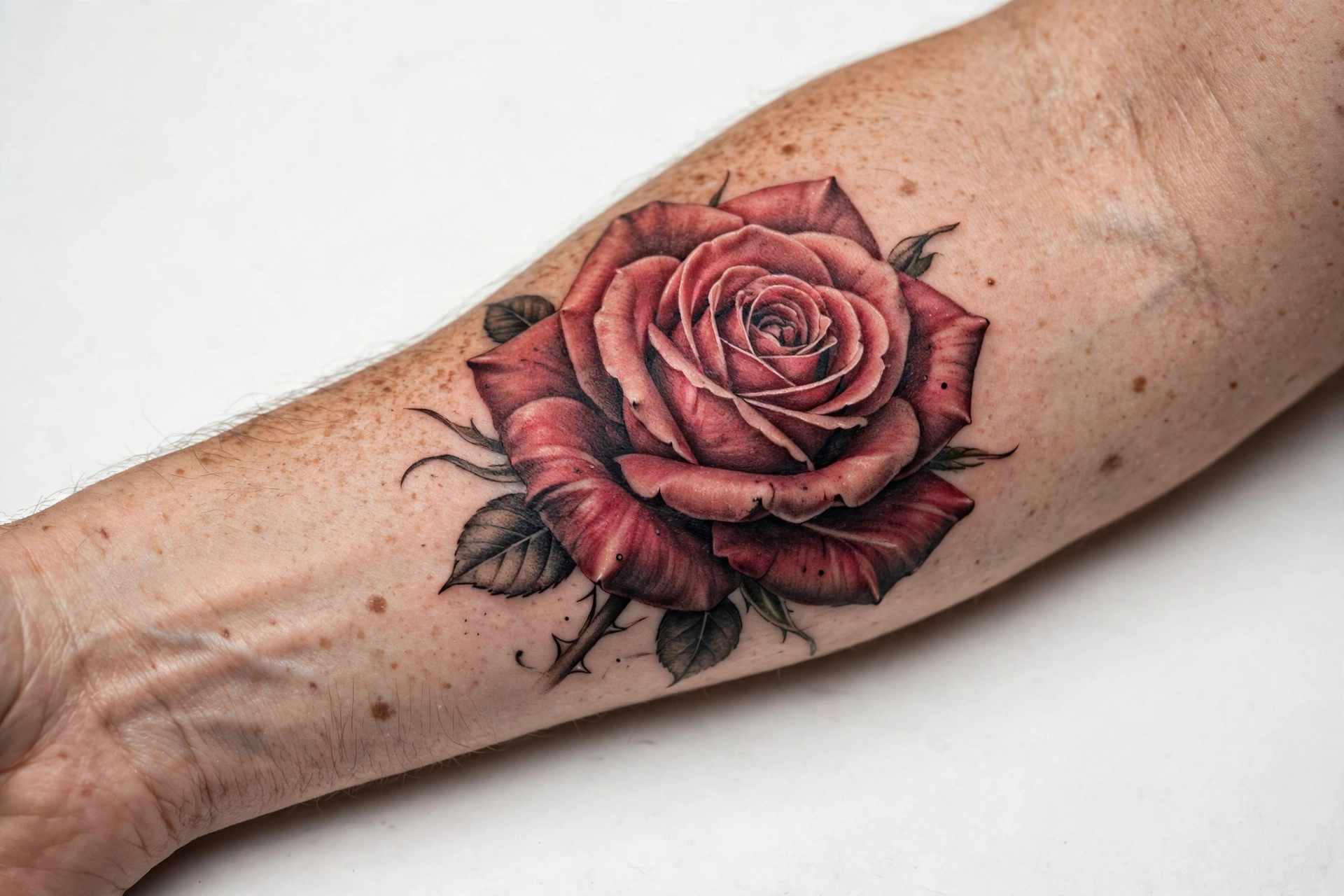
A realistic rose portrait aims for photographic detail — velvet petals, dew, shadow — and is the most technically demanding floral style. It suits the forearm or thigh. Best for showpiece seekers. Downside: realism needs a specialist, costs most, and is most sun-sensitive.
28. Sketch-Style Wildflowers
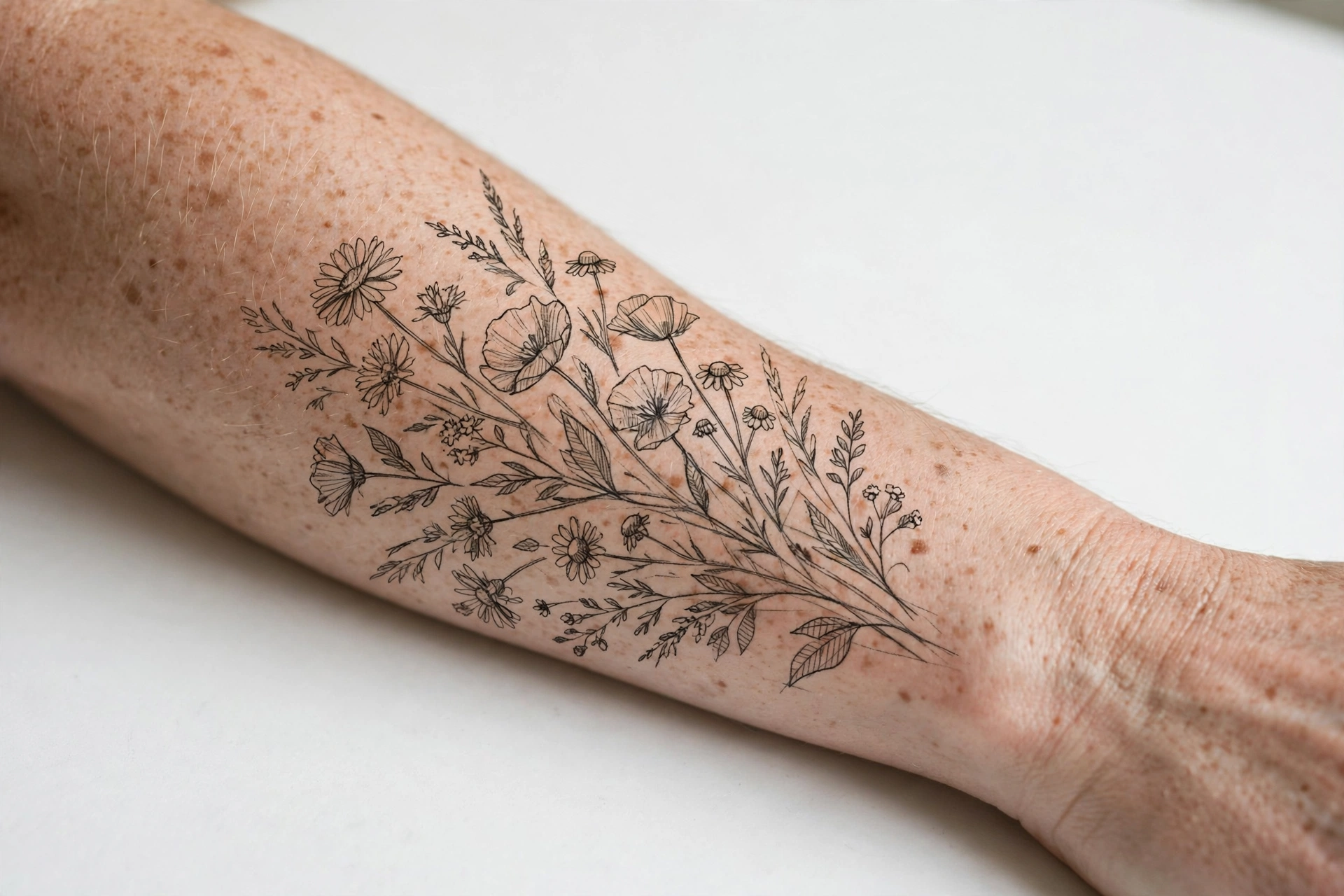
Sketch-style wildflowers look like pencil drawings on skin — loose lines, hatch marks, artistic imperfection. They suit the forearm or ribs. Best for artists and free spirits. Downside: sketchy lines can read as unfinished, and fine hatching fades sooner than bold linework.
29. Minimalist Tiny Flower
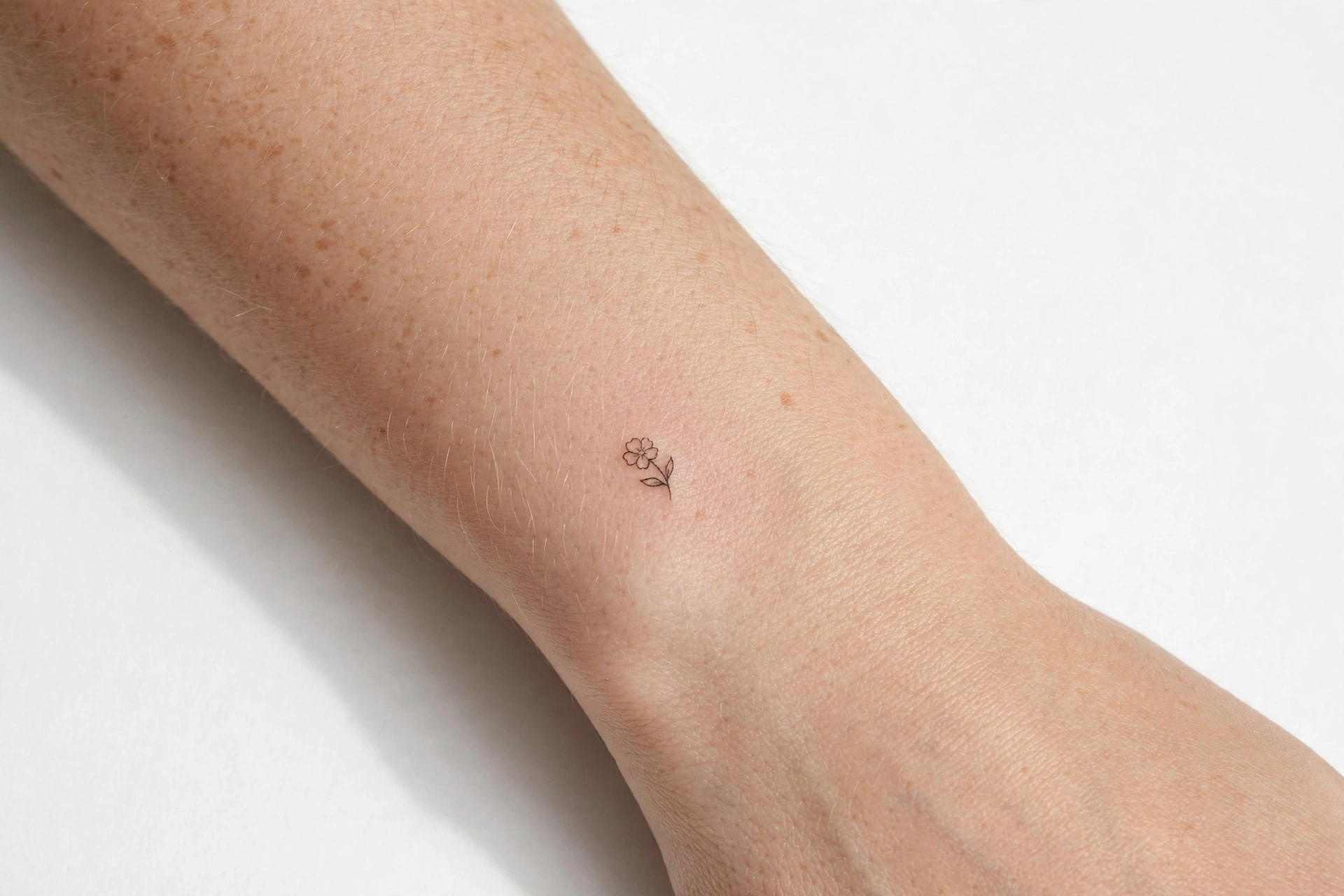
A minimalist tiny flower — a few lines, one small bloom — is the smallest meaningful tattoo you can get, perfect for a finger, wrist or ankle. Best for discreet wearers. Downside: tiny tattoos age worst, so keep the design dead simple. See also: small meaningful tattoos.
Chapter 4: Placements & Combos
Placement changes a flower tattoo’s pain, visibility and lifespan. These nine pair the right bloom with the right spot, including flower and butterfly tattoo combinations.
30. Forearm Floral Vine
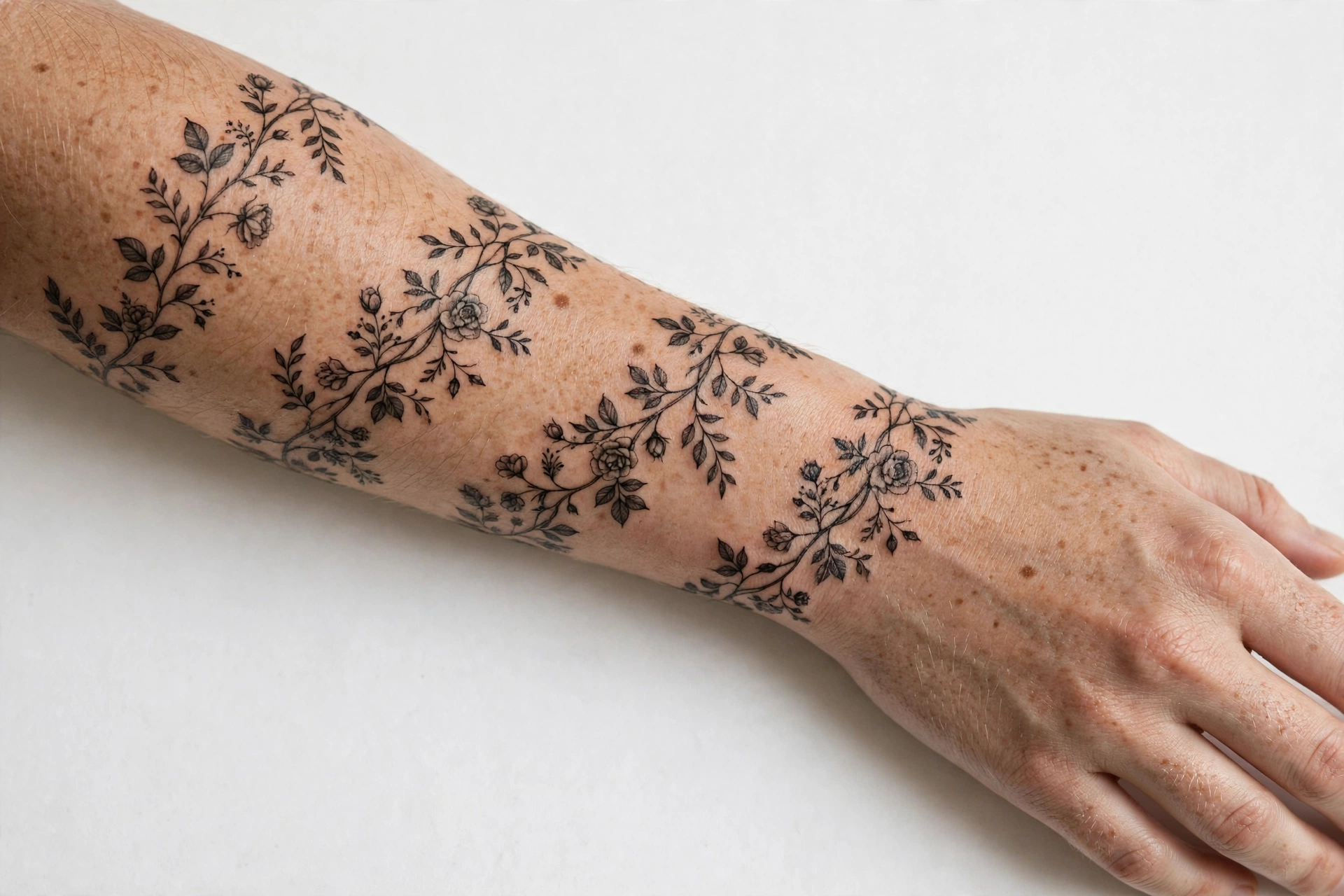
A floral vine winding up the forearm is the most popular flower placement: visible, versatile, only moderately painful. It suits roses, wildflowers or lavender. Best for first-timers wanting visible ink. Downside: forearms get constant sun, so fading is faster without daily SPF.
31. Shoulder Peony
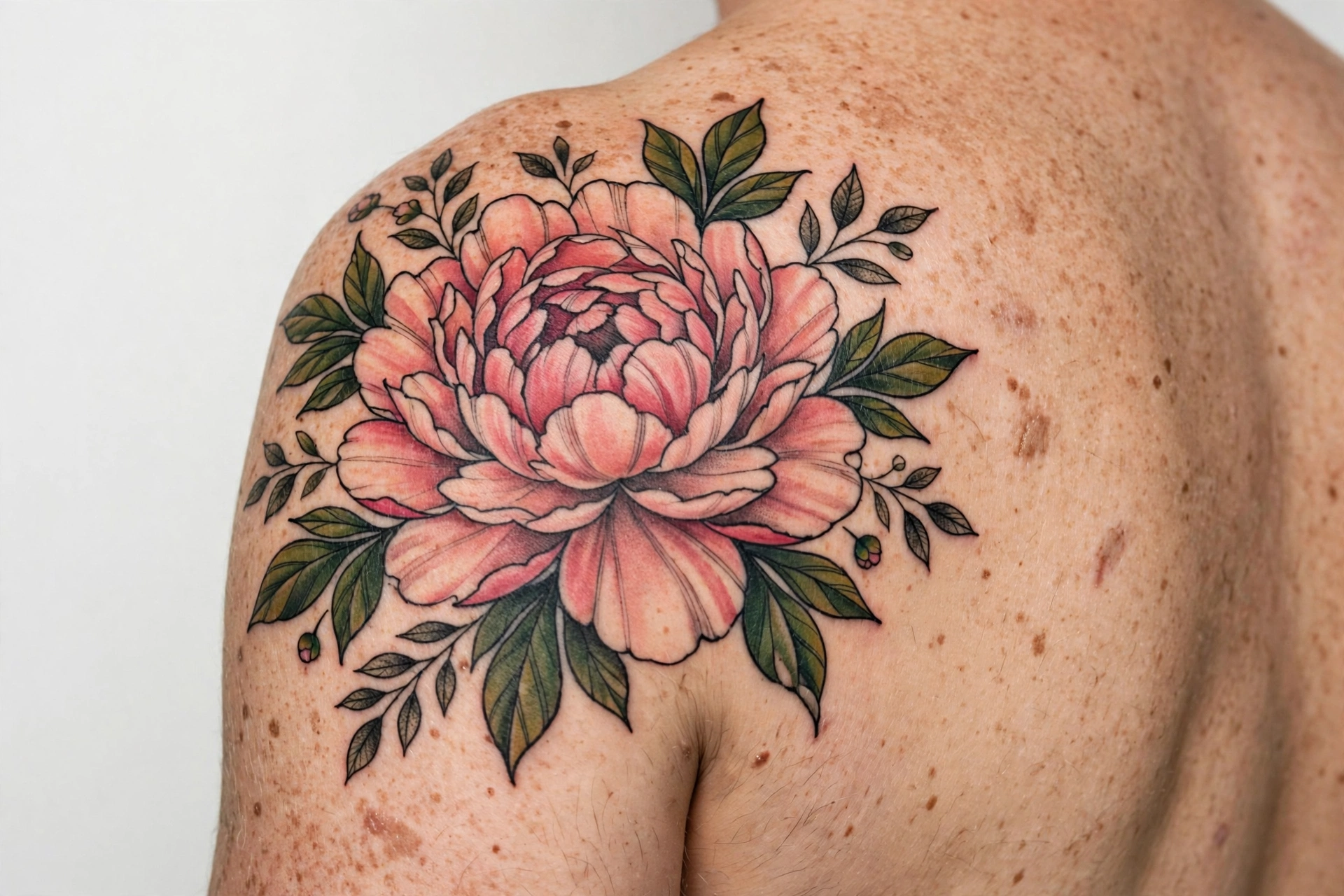
A peony blooming over the shoulder cap uses the body’s natural curve, making the flower look alive. It suits large, colourful peonies and cherry blossom. Best for statement pieces you can cover at work. Downside: shoulder movement can distort the design if muscle flex is ignored.
32. Spine Wildflower Stem
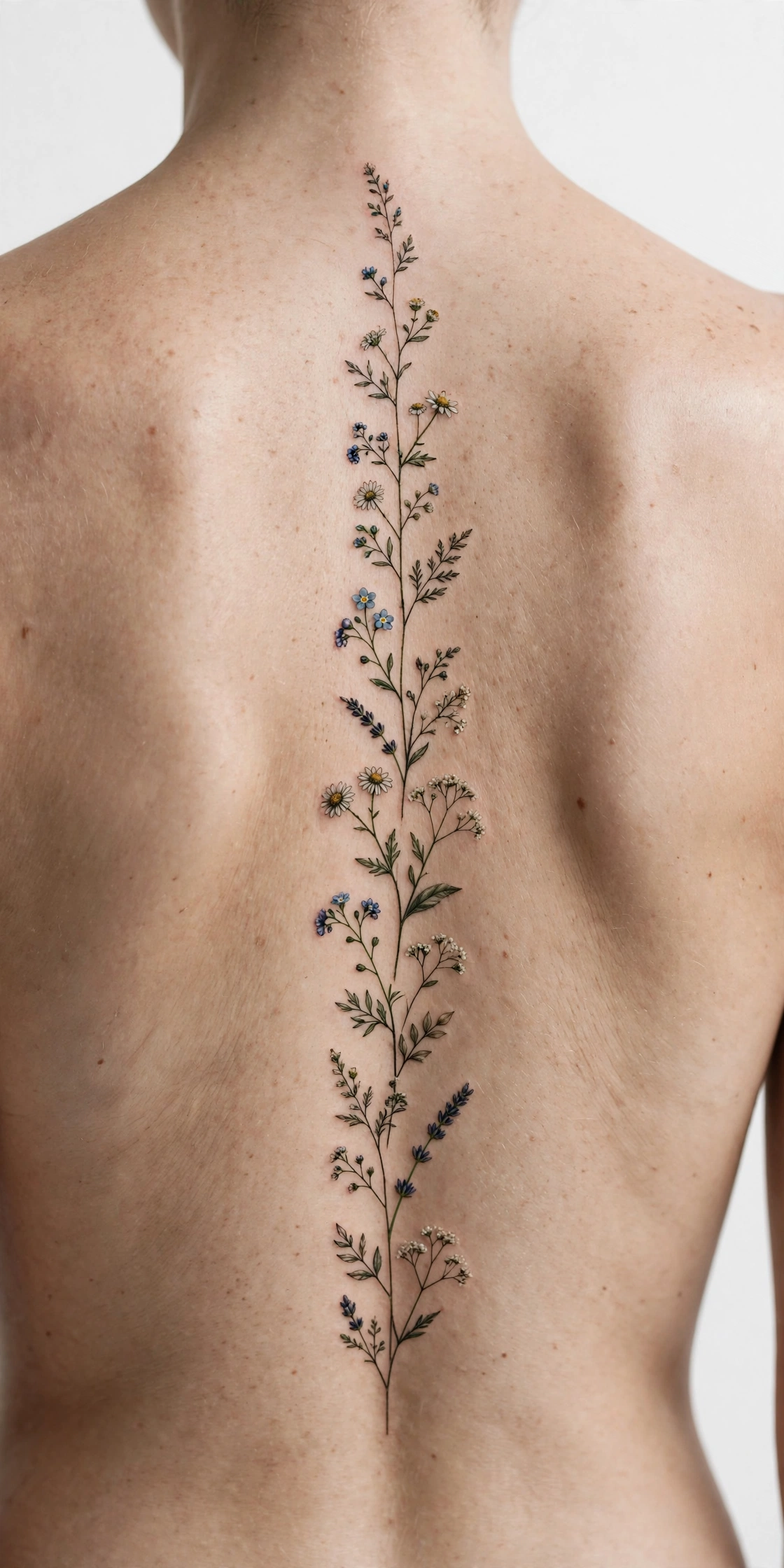
A single wildflower stem running down the spine is elegant, vertical and quietly dramatic. It suits lavender, wildflowers or a fine-line stem. Best for those wanting a hidden-until-revealed design. Downside: spine tattoos hurt — around 7/10 — with the needle close to bone.
33. Ankle Daisy Chain
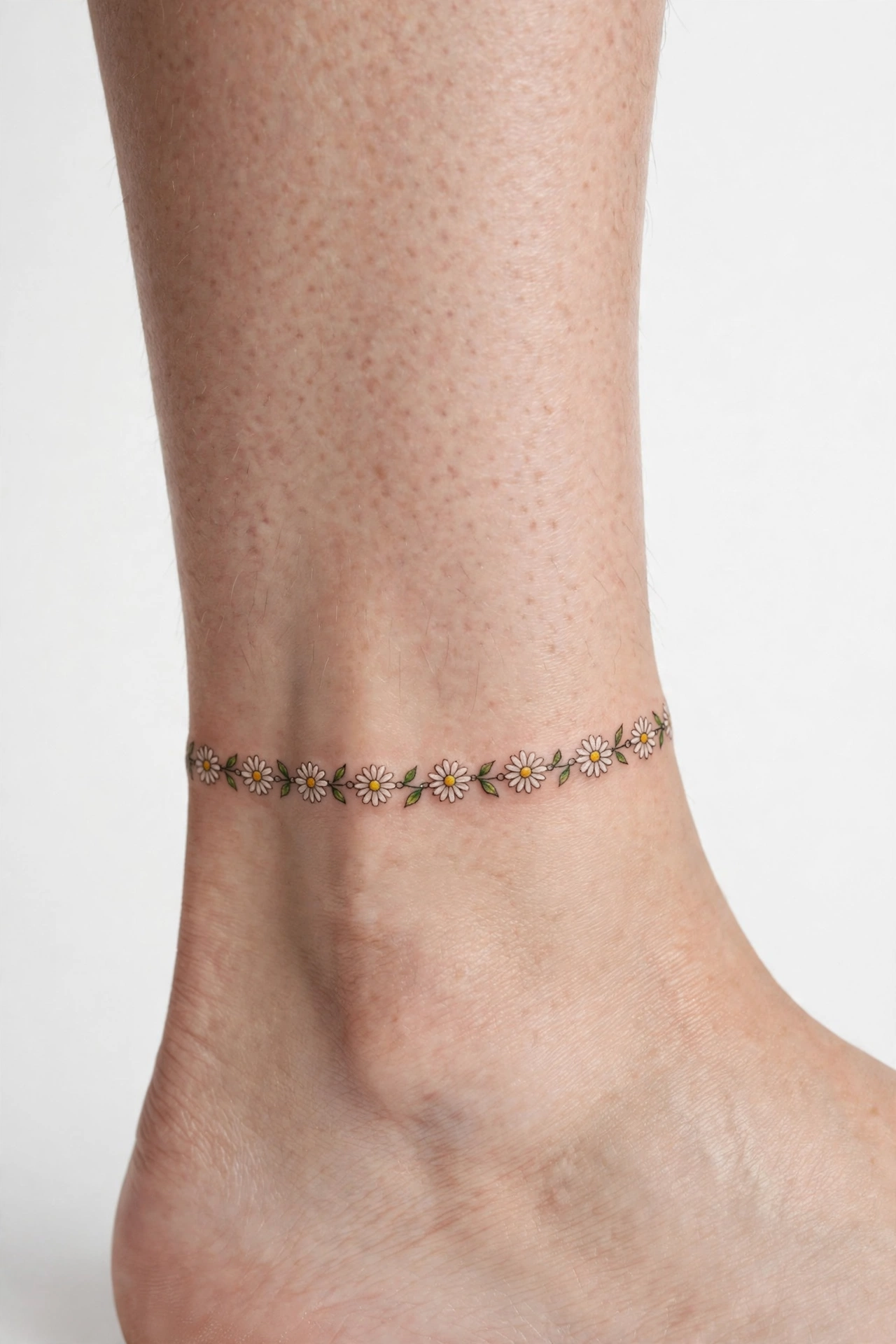
A daisy chain circling the ankle is dainty, playful and perfect for summer. It suits small daisies, jasmine or tiny wildflowers. Best for delicate, feminine designs. Downside: ankles sit near bone, rate around 7/10, and thin skin there fades faster, especially with shoes rubbing.
34. Collarbone Lavender
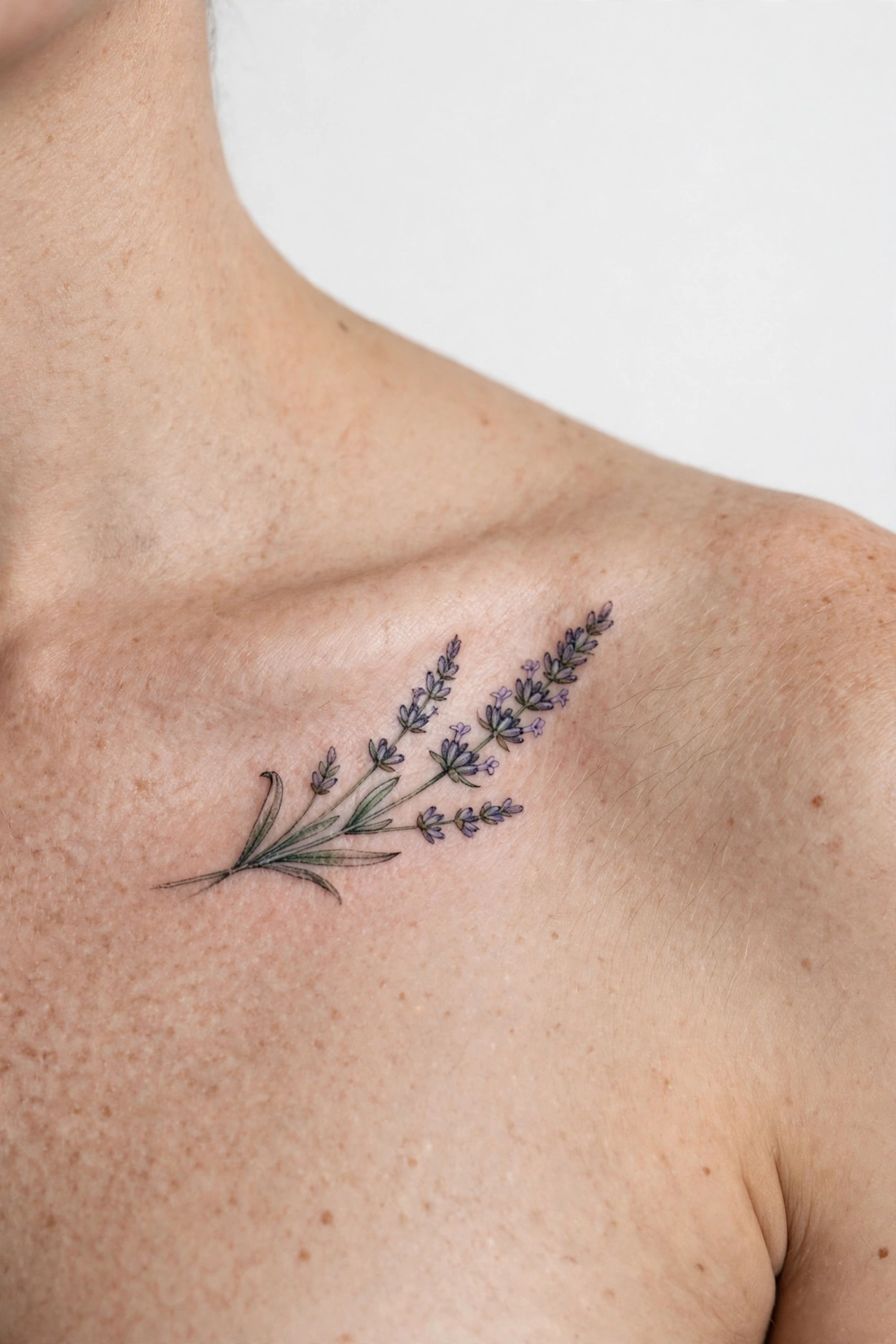
Lavender laid along the collarbone frames the neckline beautifully — elegant, visible and easy to show off. It suits slender sprigs and fine-line stems. Best for special-occasion elegance. Downside: collarbone pain is around 4/10 but the bone vibration feels strange, and sun exposure is constant.
35. Thigh Rose
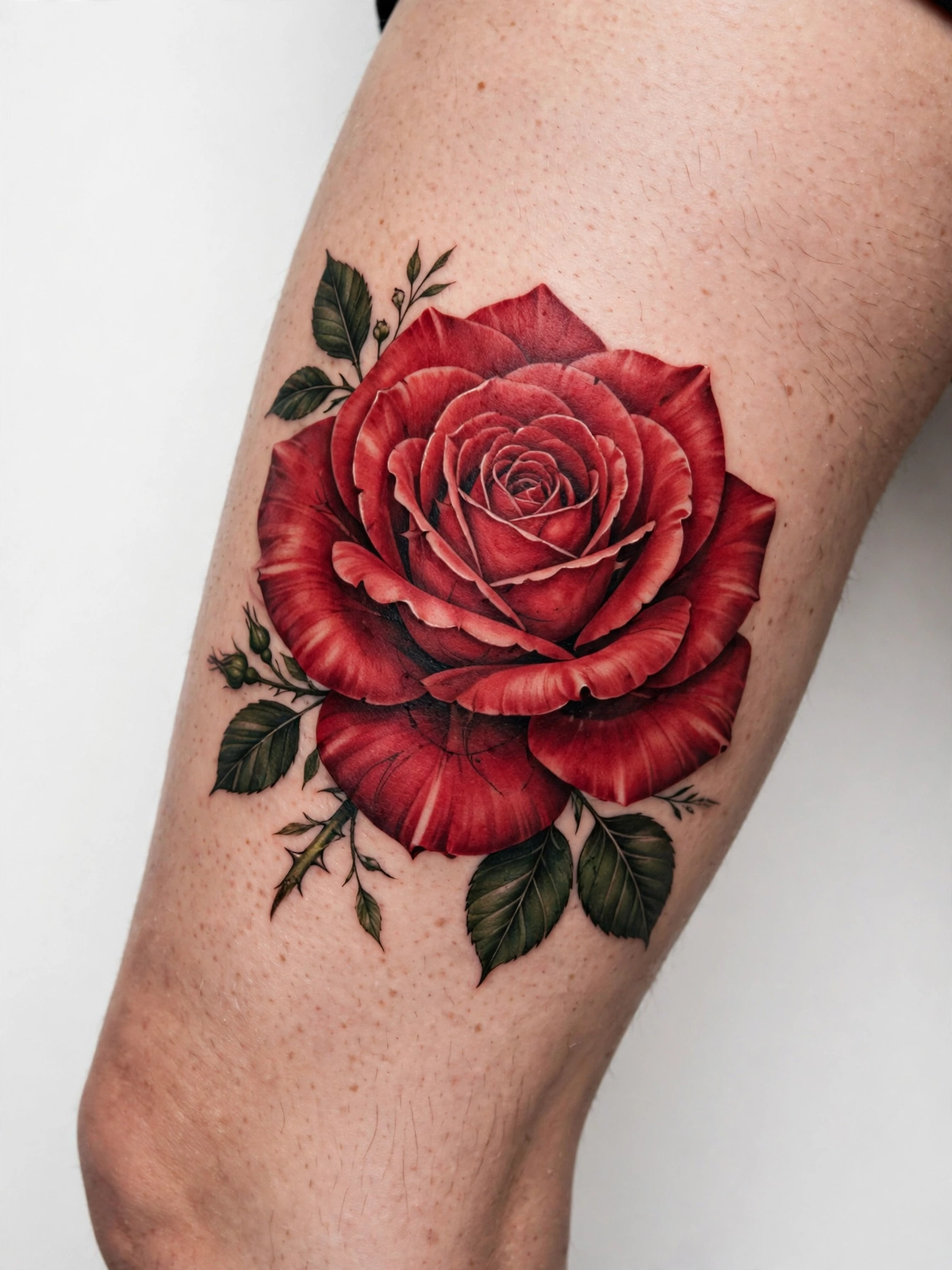
A large rose on the thigh gives a generous, low-pain canvas for detailed colour work. It suits realistic roses, peonies and Japanese florals. Best for big pieces you can hide or flaunt. Downside: thigh tattoos stretch with weight changes, distorting fine detail over decades.
36. Behind-Ear Blossom
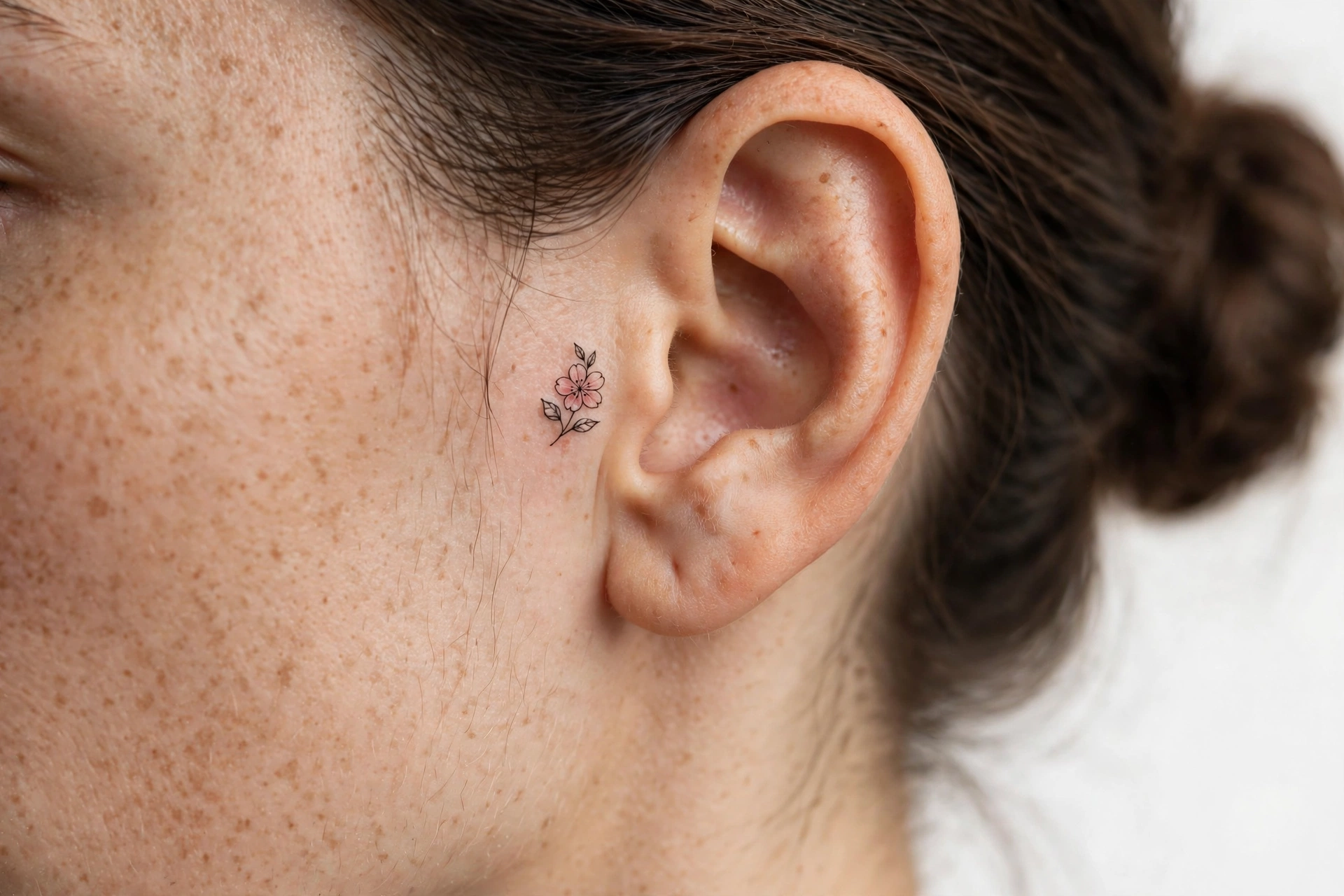
A tiny blossom tucked behind the ear is the ultimate secret, visible only when you want it to be. It suits daisies, violets or a single cherry blossom. Best for discreet first tattoos. Downside: thin skin, hair and headphones irritate healing, and small designs blur sooner there.
37. Flower and Butterfly
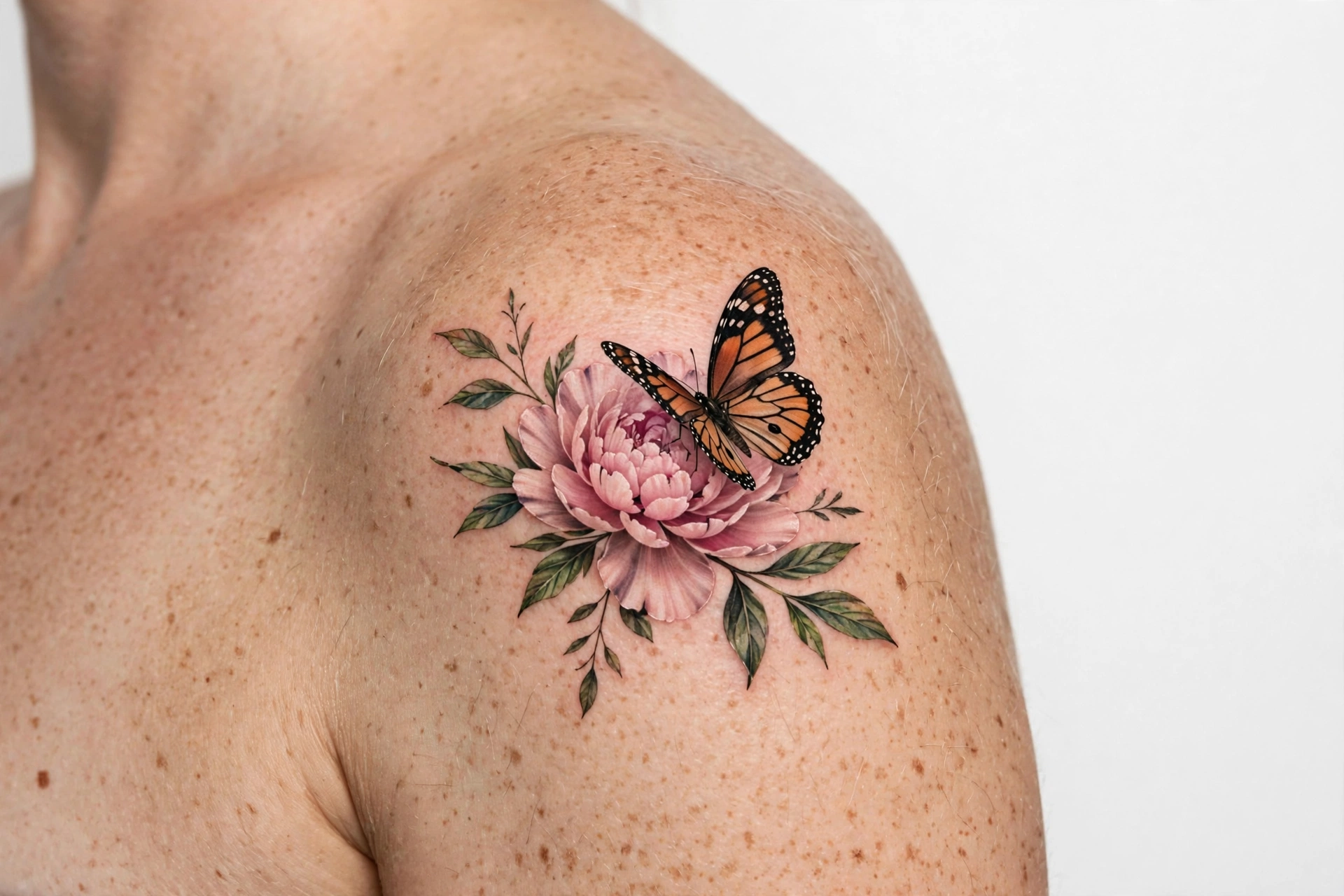
Pairing a flower with a butterfly adds transformation and freedom to the bloom’s meaning — a design about becoming. It suits the shoulder, forearm or back. Best for new chapters. Downside: two subjects need careful balance, or one will visually swallow the other. See also: butterfly tattoo ideas.
38. Flower and Moon Phases
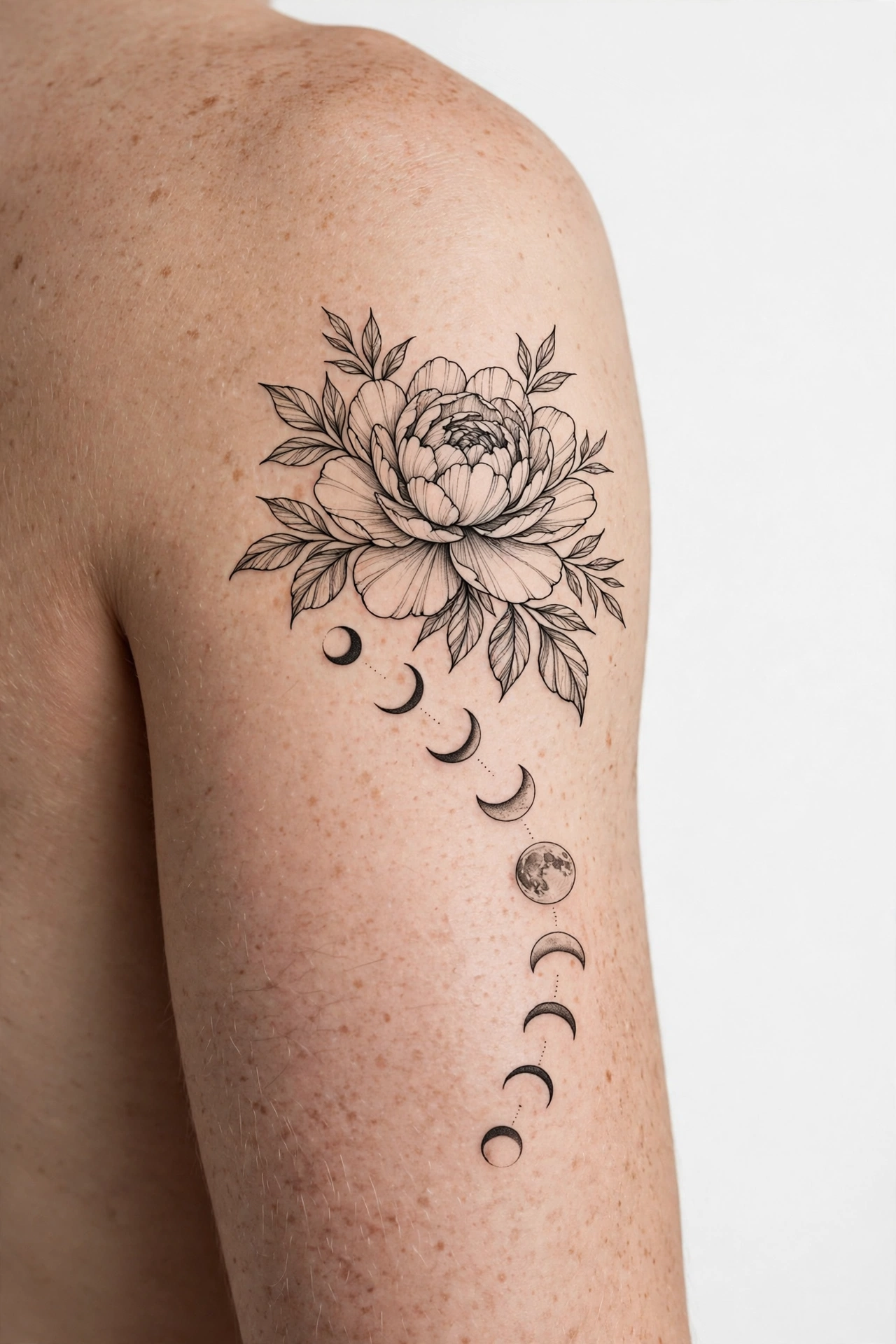
Flowers paired with moon phases link growth to cycles: blooming, waning, beginning again. A row of moons beside a stem suits the forearm or spine. Best for spiritual wearers. Downside: moon-phase rows are trendy now, so ask whether you will still love the motif in twenty years.
Flower Tattoo Pain Levels by Placement
Do flower tattoos hurt? Yes — but pain depends on placement, not the flower. Our full tattoo pain chart covers every spot; here are this guide’s placements:
- Outer forearm — 3/10: the friendliest large canvas.
- Outer thigh — 3/10, calf — 3/10: fleshy, forgiving.
- Shoulder — 4/10, collarbone — 4/10: mild to moderate.
- Wrist — 5/10: thin skin and tendons sting more than expected.
- Chest — 6/10: moderate, with extra sensitivity near the sternum.
- Spine — 7/10, ankle/foot — 7/10: bone-close, every line felt.
- Ribs — 8/10: the most painful common spot.
Small fine-line designs hurt less because sessions are shorter; large realism or dotwork pieces hurt more through sheer duration, even on easy placements.
How Much Does a Flower Tattoo Cost?
Flower tattoo cost depends on size, detail, colour and artist rates — but these ranges prevent sticker shock:
- Small fine-line flower: $100–$250, usually 1–2 hours.
- Medium detailed flower: $300–$700, typically 2–4 hours.
- Large detailed colour piece: $700–$1,500+, often multiple sessions.
- Full back or floral sleeve: $2,000–$4,000+, several sittings.
Realism and Japanese work sit at the top because they demand specialist skill. Budget a tip on top, and beware prices far below these ranges — cheap floral work becomes the most expensive tattoo once the cover-up is counted.
Healing Time: What to Expect
Surface healing takes 2–4 weeks: scabbing, peeling, then dullness before colour settles. Deeper settling takes 3–6 months as lines soften and colours find their final tone. Fine-line and watercolor designs fade fastest; bold blackwork holds longest. Hands, feet and behind-ear designs fade fastest of all.
Placement Pros and Cons at a Glance
Forearm: visible, low pain, fades fast in sun. Shoulder: great curves, easy to cover, moderate pain. Spine: elegant, high pain. Ribs: private, highest pain. Ankle: dainty, bony pain, fast fading. Thigh: big canvas, low pain, distortion risk. Collarbone: elegant, odd vibration. Behind the ear: secret, tricky healing, quick blurring. Pick the trade-off you can live with.
Aftercare Essentials
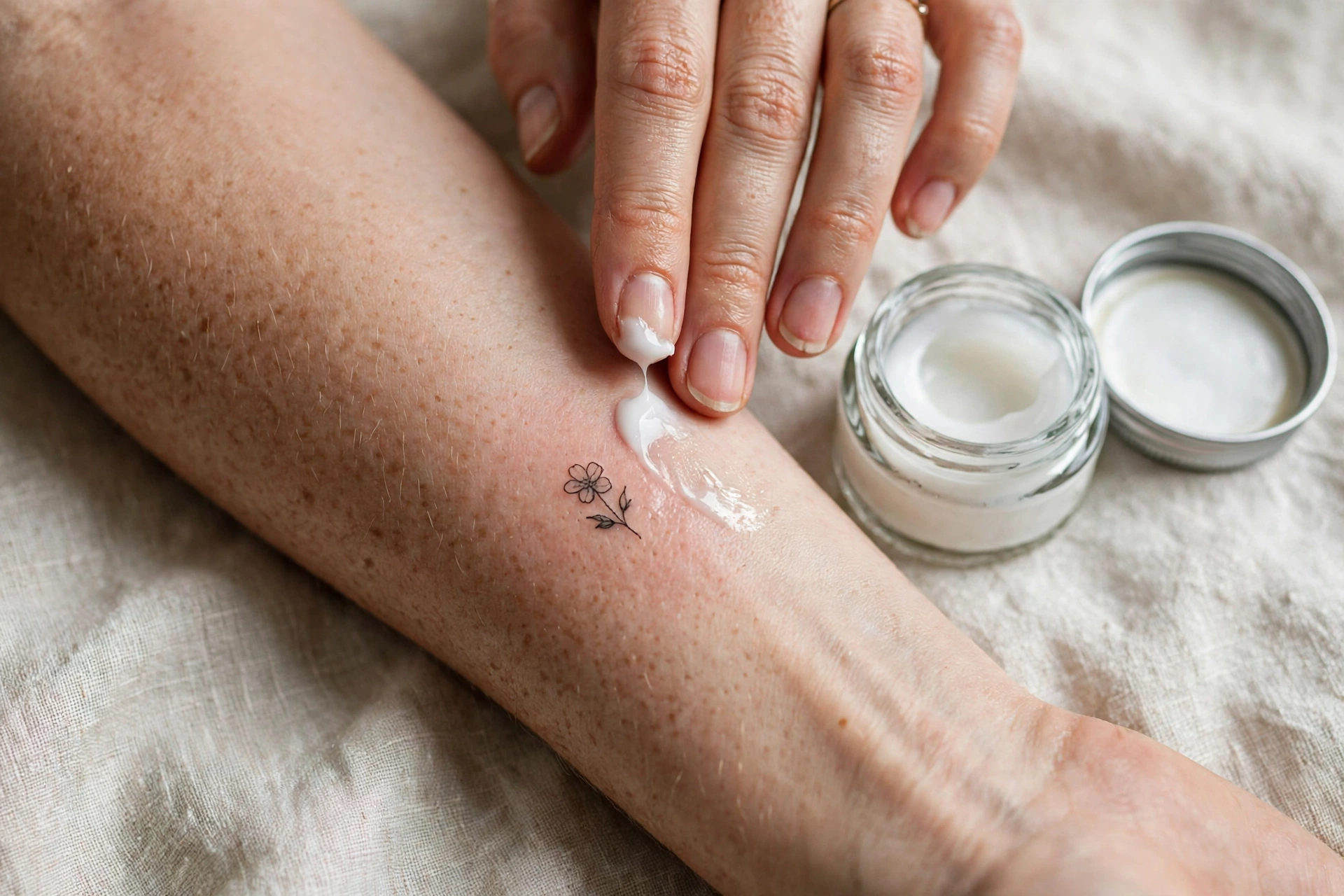
Good aftercare separates a tattoo great at ten years from one tired at two. Our complete tattoo aftercare guide covers every step; the essentials: keep fresh ink clean and lightly moisturised — the American Academy of Dermatology recommends fragrance-free, water-based lotion, plus broad-spectrum SPF 30+ once healed. Never pick scabs, never soak in baths, pools or the sea while healing, and keep new ink out of sun and tanning beds. Redness, swelling or pus means seeing a clinician promptly — the FDA notes inks can occasionally trigger allergic reactions.
Common Mistakes to Avoid
- Too small for the detail: a coin-sized peony becomes a blob.
- Large design, small placement: a bouquet cannot live on a finger.
- Copying a sacred symbol without understanding it: Japanese florals carry meanings worth respecting.
- Skipping sunscreen: sun is the biggest fader, especially of yellow and watercolor inks.
- Picking scabs or over-moisturising: both damage healing ink.
- Choosing an artist without a floral portfolio: check healed photos, not just fresh ones.
- Chasing trends over meaning: moon phases are lovely, but will you love them in twenty years?
Flower Tattoo Styles Compared
| Style | Pain | Session Length | How It Ages | Best For |
|---|---|---|---|---|
| Fine line | Low | 1–2 hours | Fades fastest | Minimalists, first tattoos |
| Watercolor | Moderate | 2–4 hours | Softens sooner without anchoring lines | Art lovers, romantics |
| Blackwork | Moderate-high | 2–5 hours | Holds longest | Timeless, graphic designs |
| American traditional | Moderate | 2–4 hours | Ages excellently | Vintage collectors |
| Japanese | High | Multiple sessions | Ages well large-scale | Large statement pieces |
| Geometric | Moderate | 2–4 hours | Holds if lines stay crisp | Modern, design-led wearers |
| Dotwork | Moderate | 3–6 hours | Good if dots stay even | Mandalas, spiritual pieces |
| Realism | High | Multiple sessions | Most sun-sensitive | Showpiece portraits |
| Minimalist tiny | Low | Under 1 hour | Detail vanishes first | Discreet wearers |
Frequently Asked Questions
What is the most popular flower tattoo?
The rose, by a wide margin: instant recognition, endless styles, and a meaning — love — almost everyone relates to. Peonies and lotus follow, cherry blossom and sunflowers close behind. For something less common, try magnolia, iris or violet.
What does a flower tattoo mean?
It depends on the flower: roses love, peonies prosperity, lotus rising above adversity, cherry blossom life’s fleeting nature, sunflowers joy, daisies innocence, lavender calm, poppies remembrance, violets faithfulness. Colour adds a layer: white rose, new beginnings; black rose, endings and rebirth.
How much does a flower tattoo cost?
Expect $100–$250 for a small fine-line flower, $300–$700 medium, $700–$1,500+ large colour, $2,000–$4,000+ full back or sleeve. Realism and Japanese styles cost most — specialist skill, multiple sittings.
Where is the best place to get a flower tattoo?
For a first tattoo, the outer forearm is hard to beat: low pain (3/10), easy to show or cover, room for vertical stems. The shoulder suits large blooms, the thigh big colour work, the spine a single stem if you can handle 7/10. Avoid tiny detail on hands, feet and behind the ear.
Do flower tattoos hurt?
As much as any tattoo in the same spot — the flower makes no difference. Forearm and thigh 3/10, shoulder and collarbone 4/10, wrist 5/10, chest 6/10, spine and ankle 7/10, ribs 8/10. Small fine-line designs hurt least; long sessions hurt more through duration.
Are flower tattoos only for women?
Not at all. Flower tattoos for men are increasingly popular — blackwork botanicals, Japanese peonies and American traditional roses read bold, not delicate. Flowers symbolise strength and rebirth as much as beauty; the lotus and the thorny rose are stories anyone can wear.
What flower tattoo means strength and new beginnings?
For strength: lotus (rising above adversity) or magnolia. For new beginnings: daisy, white rose or cherry blossom. A lotus-daisy combination carries both messages.
How long does a flower tattoo take to heal?
Surface healing takes 2–4 weeks of scabbing and peeling; deeper settling takes 3–6 months before final colour emerges. Fine-line and watercolor designs may need a touch-up after a few years; blackwork holds longest. Protect healing ink from sun, soaking and scratching; use fragrance-free lotion and SPF 30+ once healed.
Quick Summary
Flower tattoos pair timeless beauty with personal meaning: roses for love, peonies for prosperity, lotus for rising above adversity, cherry blossom for life’s fleeting nature, birth-flower bouquets for family. 38 designs, nine styles, eight placements — from a tiny minimalist violet to a full Japanese peony back piece. Budget $100–$4,000+, pain from 3/10 (forearm) to 8/10 (ribs), 2–4 weeks’ surface healing, and protect ink with fragrance-free lotion and SPF 30+. Choose a meaning you will love in twenty years, size it to its detail, and pick an artist with a proven floral portfolio.
References
- American Academy of Dermatology — “Tattoos: Caring for tattooed skin” (aad.org) — moisturiser and sunscreen guidance.
- U.S. Food and Drug Administration — “Tattoos, Temporary Tattoos & Permanent Makeup” (fda.gov) — ink safety and allergic reactions.
- Encyclopaedia Britannica — “Floriography” entries (britannica.com) — the Victorian language of flowers.
- Smithsonian Gardens — flower symbolism resources (si.edu) — traditional bloom meanings.
Which one is your favorite?