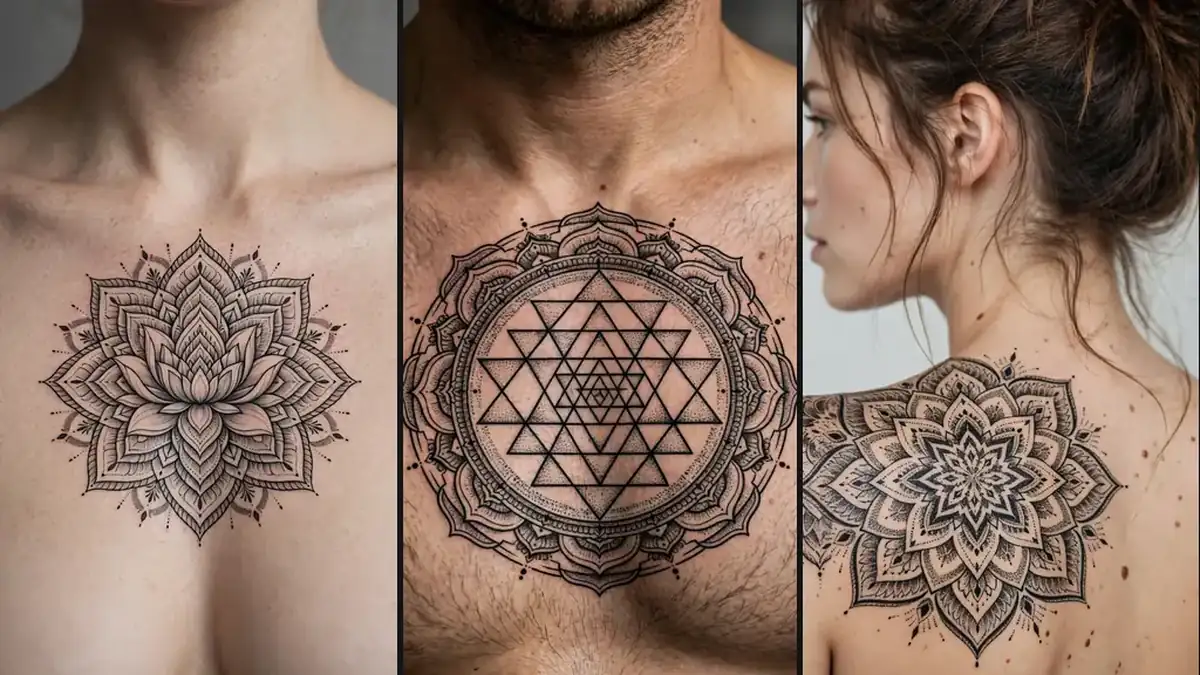
There is something quietly magnetic about a mandala tattoo. One look at those perfect, radiating circles and your eye keeps travelling inward, as if the design itself is asking you to slow down and breathe. Whether you want a small wrist piece or a full back mandala, this guide gives you 40 real mandala tattoo ideas, honest pain and cost numbers, and everything you need to choose well.
Quick Answer
A mandala tattoo is a circular, symmetrical design rooted in Hindu and Buddhist tradition, where the Sanskrit word “mandala” means “circle.” It symbolises balance and harmony, wholeness, inner peace and the spiritual journey toward enlightenment. Most mandala tattoos cost $150–$800 for a medium piece, take 2–5 hours, and hurt most on the sternum, spine and ribs — least on the outer arm and thigh.
In This Article
- What Does a Mandala Tattoo Mean?
- Classic & Geometric Mandalas
- Floral & Nature Mandalas
- Mandalas by Placement
- Animal & Symbol Mandalas
- Modern & Personal Mandalas
- Pain Levels by Placement
- Cost
- Healing Time
- Placement Pros and Cons
- Aftercare Essentials
- Common Mistakes to Avoid
- Mandala Tattoo Styles Compared
- Frequently Asked Questions
- Quick Summary
What Does a Mandala Tattoo Mean?
The word mandala comes from Sanskrit and simply means “circle” — but the meaning runs much deeper. In Hindu and Buddhist traditions, a mandala is a map of the universe: concentric circles, petals and geometric patterns radiating from a single centre point called the bindu, the seed from which everything grows. A traditional mandala is built the same way it has been for centuries — a bindu at the centre, then rings of petals, dots and geometry expanding outward in perfect symmetry. Monks create intricate sand mandalas over days, then sweep them away as a meditation on impermanence. Because the circle has no beginning and no end, it also speaks of eternity: balance and eternity held in a single shape.
That is why the mandala tattoo meaning resonates so strongly today. The design speaks of balance and harmony — the idea that life, like the mandala itself, holds together around a calm centre even when the outer rings get complicated. Mandala symbolism is deeply personal too: the same circle can mean balance to one person and a memorial to another, which is why personal symbolism matters so much when you design your own — birth flowers, dates, initials or a zodiac sign woven into the rings make the piece yours. It can mark a spiritual journey, a period of healing, a fresh start, or simply a love of sacred geometry and the quiet order it brings.
Carl Jung, the Swiss psychologist, saw mandalas as symbols of the self and wholeness, and used them in his work on the unconscious mind. Many people today choose a mandala tattoo for the same reason: not as a religious statement, but as a reminder to return to centre. A spiritual tattoo does not have to belong to one faith to carry meaning — but it does deserve respect. If you borrow from Hindu or Buddhist imagery, learn what the symbols mean, choose them thoughtfully, and avoid sacred diagrams like the Sri Yantra as mere decoration without understanding them. A good artist who specialises in geometric work will help you get the symbolism right.
Classic & Geometric Mandalas
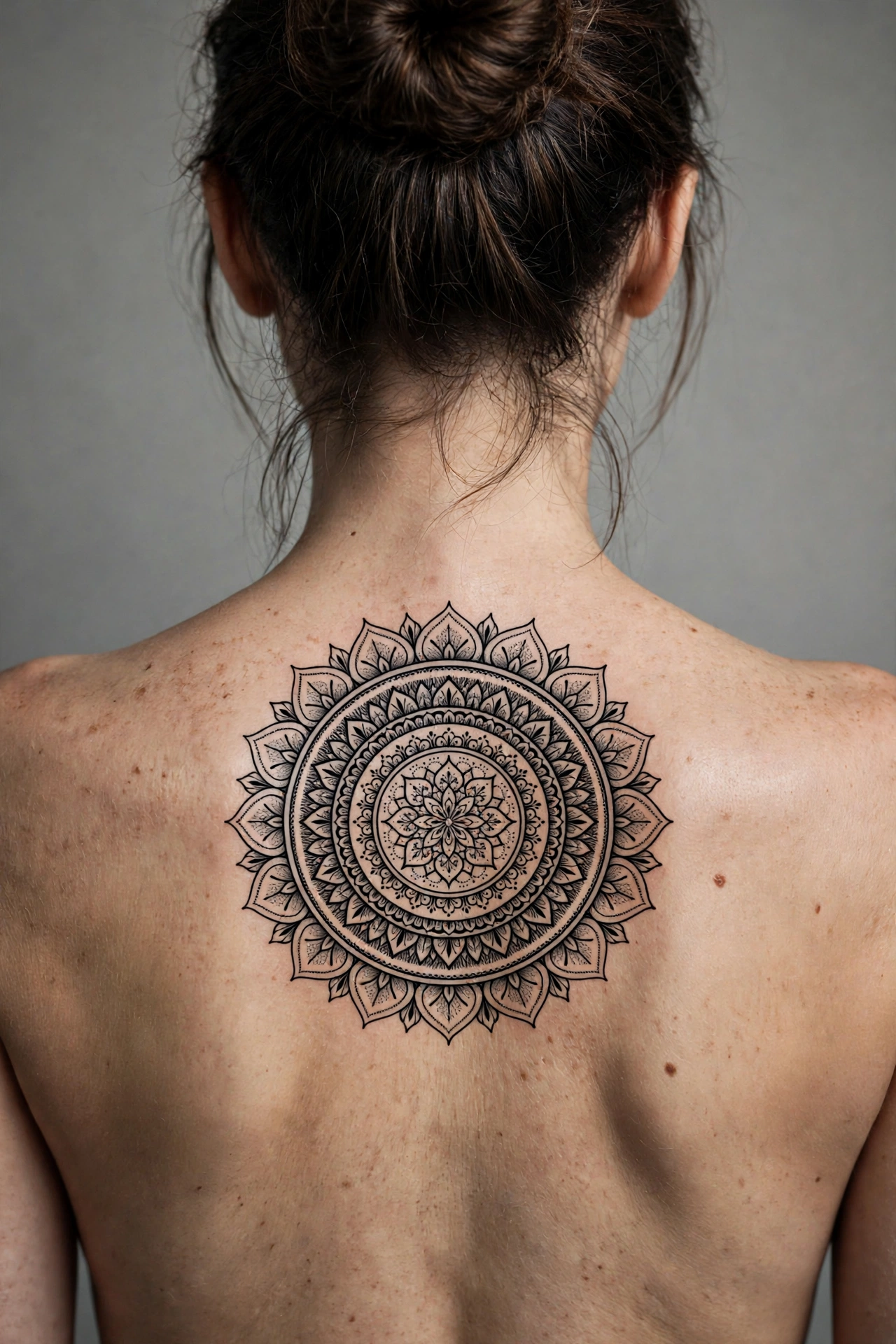
1. Classic Circular Mandala
The original and still the most loved of all mandala tattoo designs — perfect concentric rings, petal layers and fine linework radiating from a single bindu. It suits the upper arm, back or thigh, where the circle can stay perfectly round. Pain is moderate, around 4/10 on fleshy spots. The honest downside: any slight wobble in symmetry shows, so only book an artist with a strong geometric portfolio.
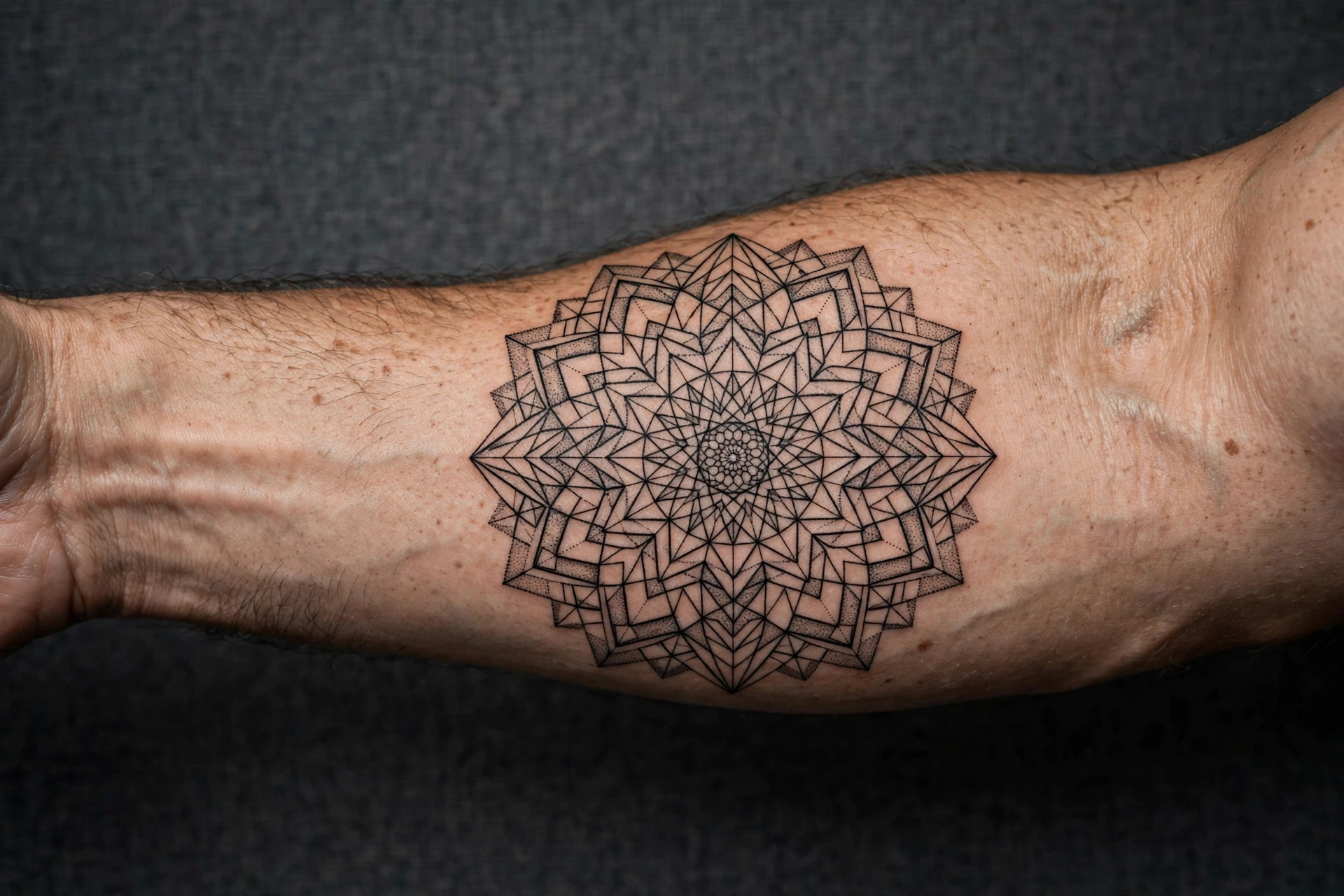
2. Geometric Mandala
Sharp triangles, diamonds and hexagons locked inside the circle give this geometric mandala a modern, architectural edge. It is a strong mandala tattoo for men who want structure without flowers, and it looks superb as a forearm or calf piece. Pain is low to moderate. The downside is that crisp angles blur faster than soft curves, so expect a touch-up after a few years.
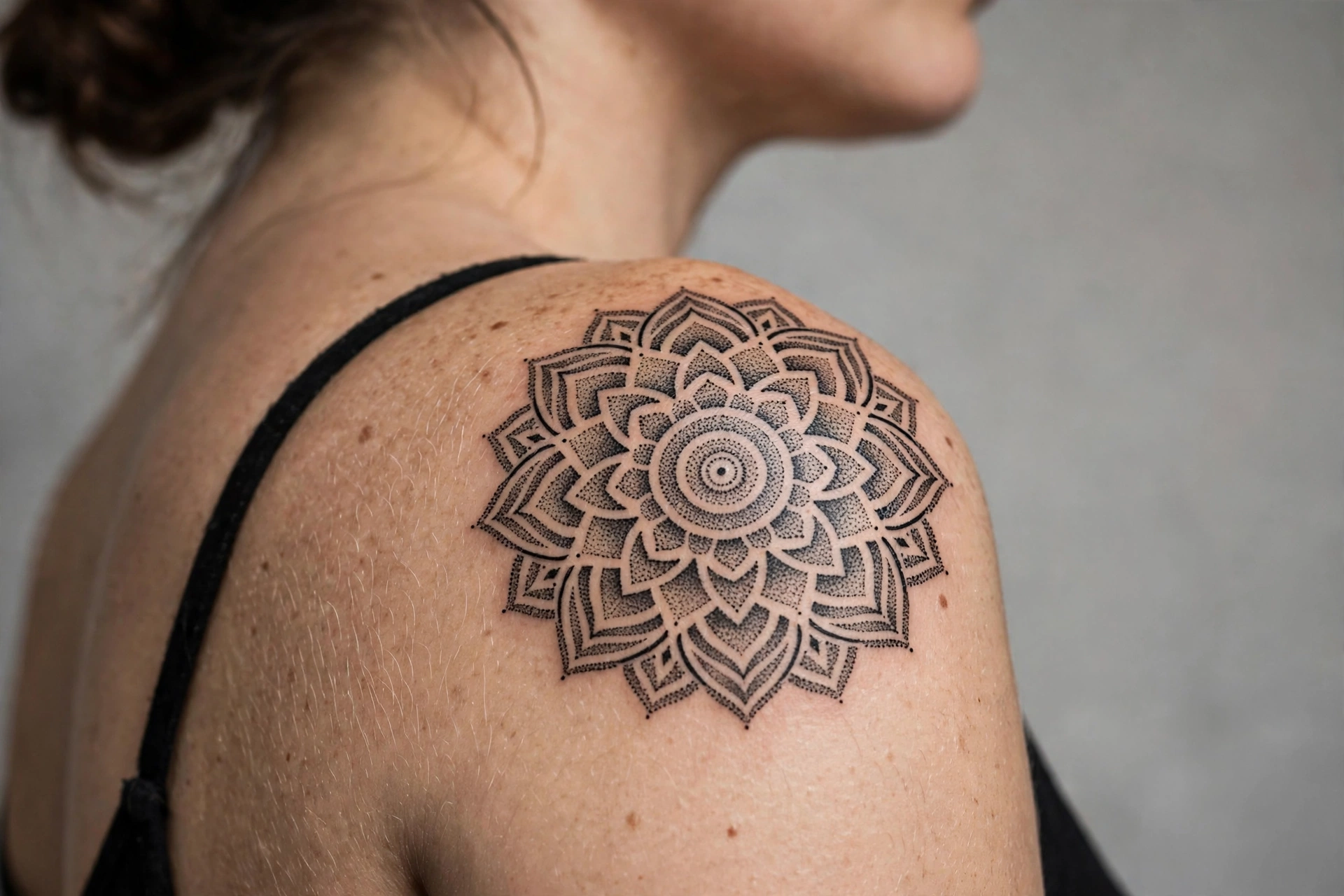
3. Dotwork Mandala
Built entirely from thousands of tiny dots, a dotwork mandala has a soft, shaded, almost textile feel that linework cannot match. It is beautiful on the shoulder or sternum, where the gradient shading can breathe. Sessions run long — dotwork is slow, patient work. The downside: dots soften and spread with age, so the finest detail will fade first.
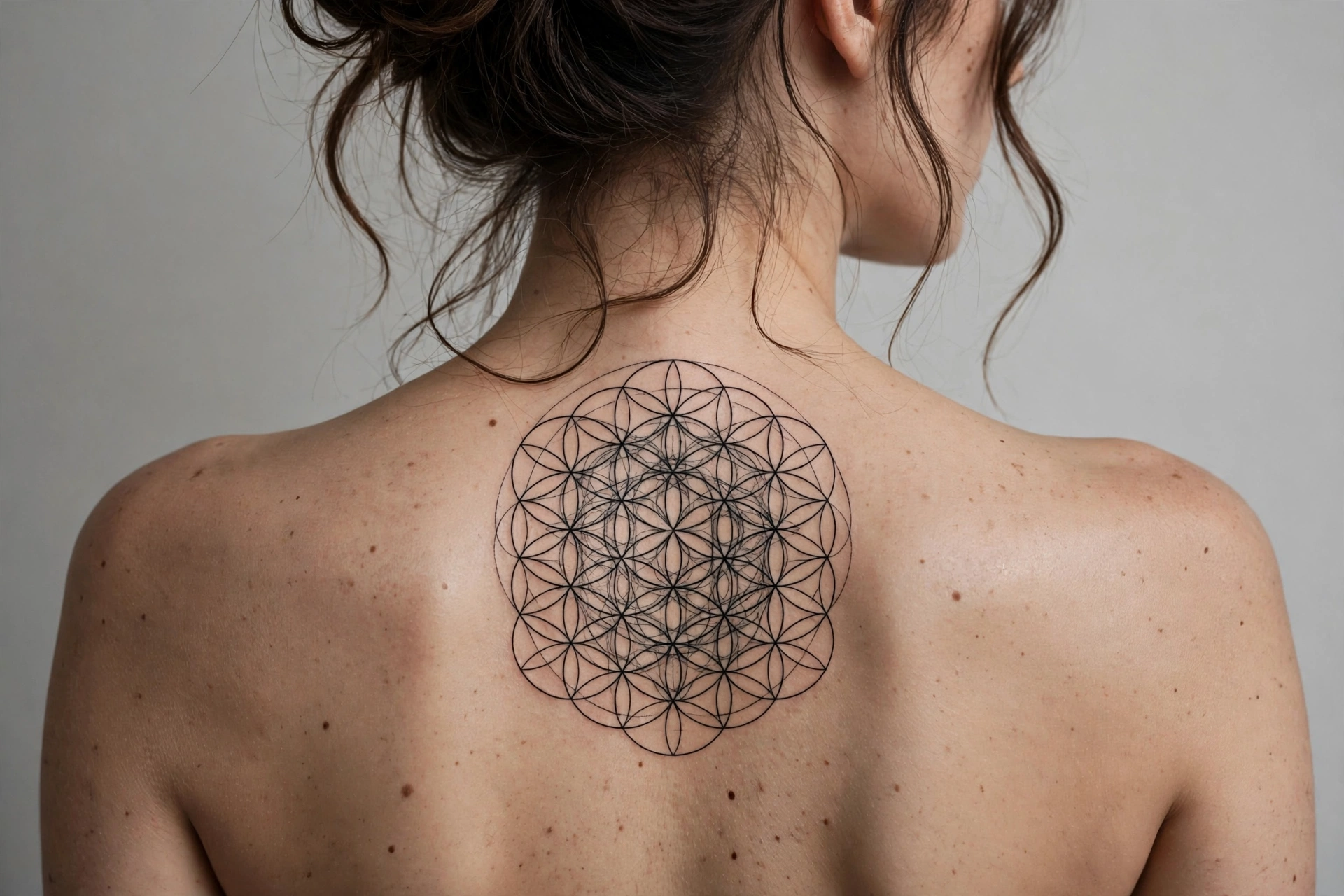
4. Flower of Life Mandala
The Flower of Life is sacred geometry at its purest — overlapping circles forming a flower that many believe contains the blueprint of creation. This is one of the most meaningful mandala tattoo symbols, ideal for the chest or back where the full pattern can unfold. Pain is moderate. The downside is complexity: a sloppy stencil ruins the whole effect, so check your artist’s sacred geometry work first.
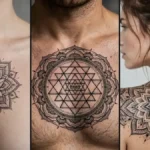
5. Sri Yantra Mandala
Nine interlocking triangles form the Sri Yantra, one of the oldest and most sacred diagrams in Hindu tradition, representing the cosmos and the divine feminine. It is a powerful choice for someone on a genuine spiritual path. Best placed on the chest, upper back or sternum. The downside is real: this symbol carries deep religious weight, so wear it with understanding, not as a trend.
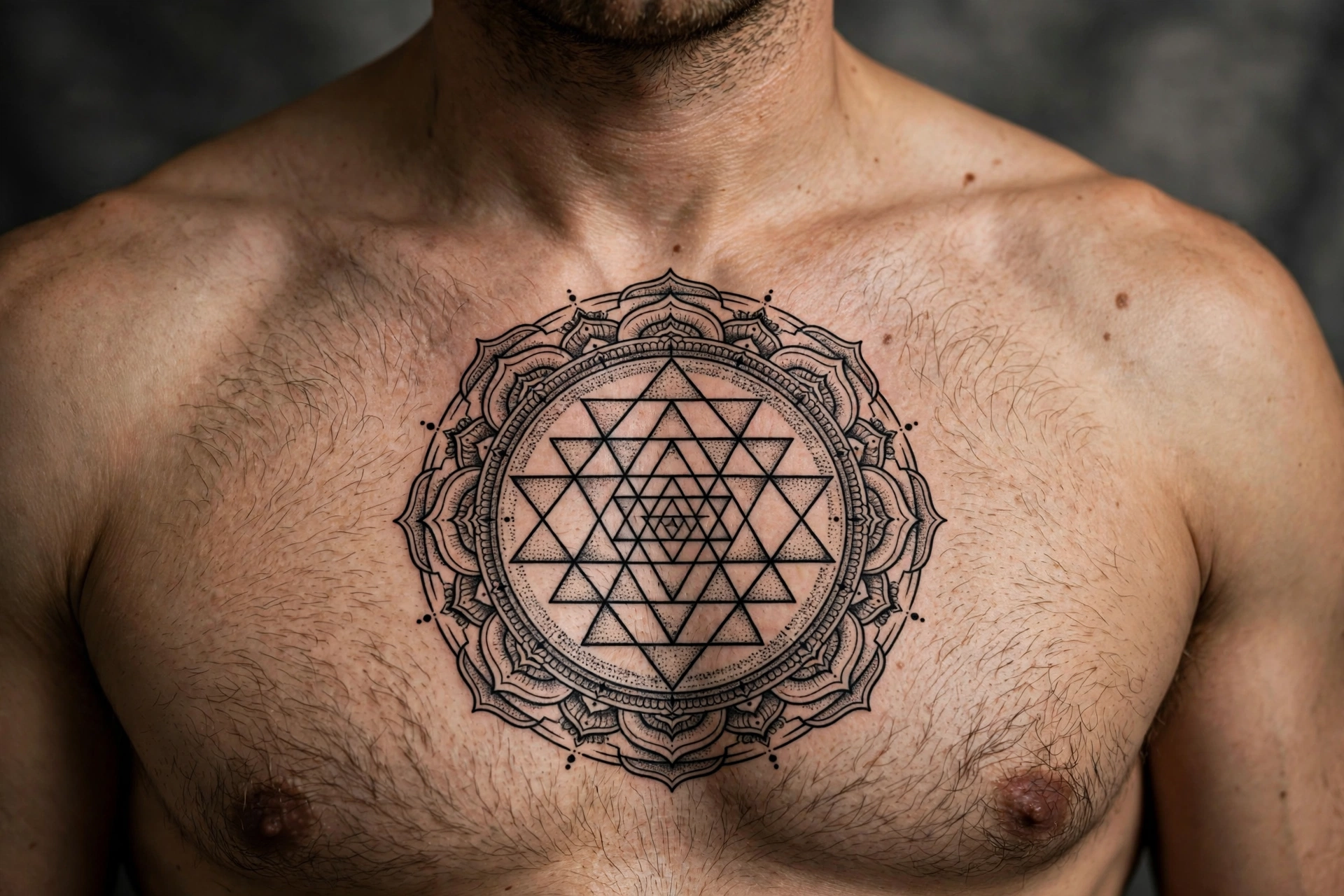
6. Minimalist Linework Mandala
A simple mandala tattoo in fine, clean lines — no shading, no colour, just the pure pattern. It is delicate, elegant and quick to tattoo, making it a lovely first tattoo and a popular mandala tattoo for women who prefer subtle ink. Best on the wrist, ankle or behind the ear — see our fine-line tattoo ideas for more delicate designs. The downside: fine lines are the first to fade, so a touch-up is almost guaranteed.
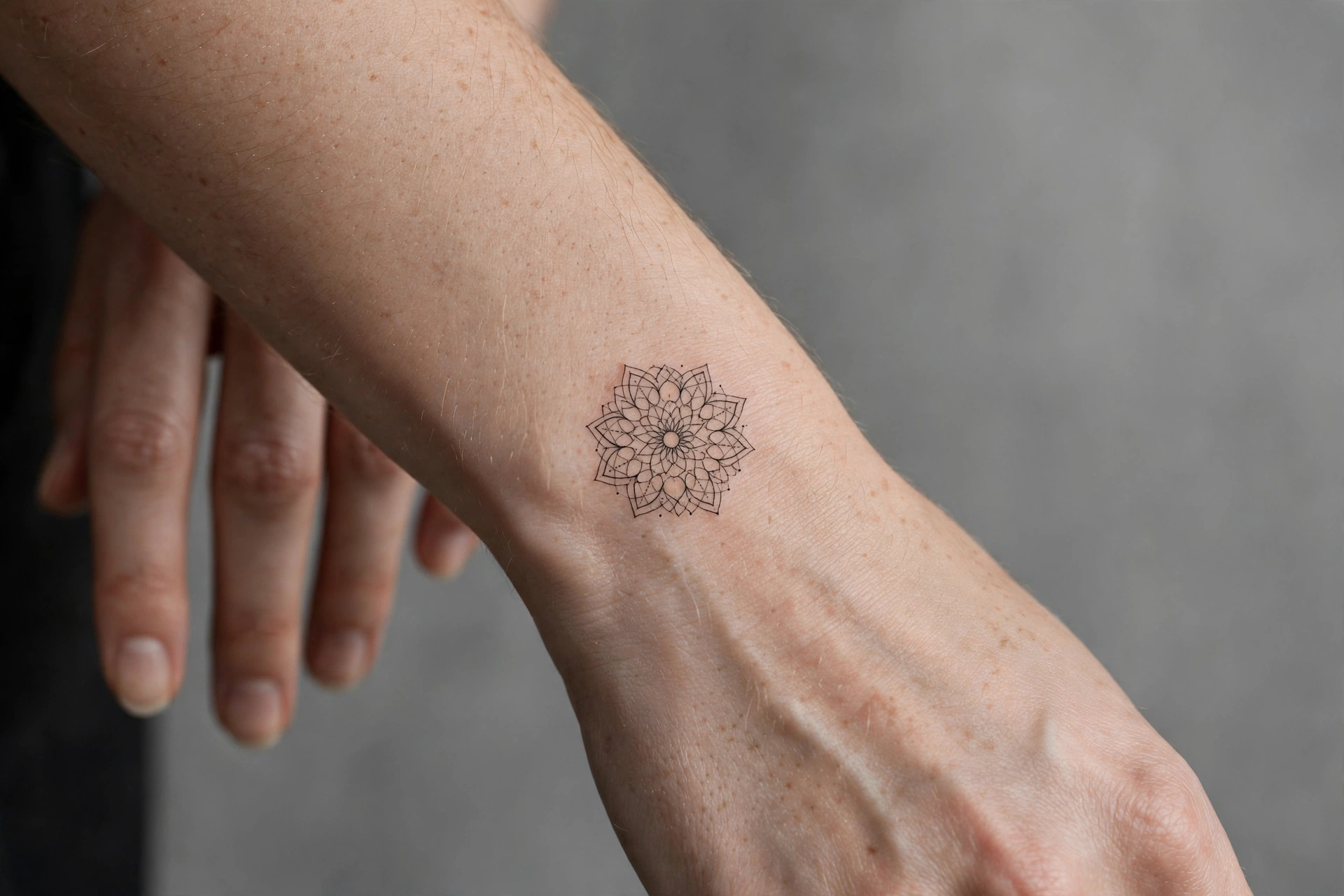
7. Blackwork Mandala
Bold, solid black fills the rings and petals of a blackwork mandala, creating a striking, high-contrast piece that reads beautifully from a distance. It suits the upper arm, thigh or calf, and it ages better than fine linework because the bold ink holds. Pain is moderate. The downside: heavy blackwork is harder and more expensive to remove later — see our laser tattoo removal guide before you commit.
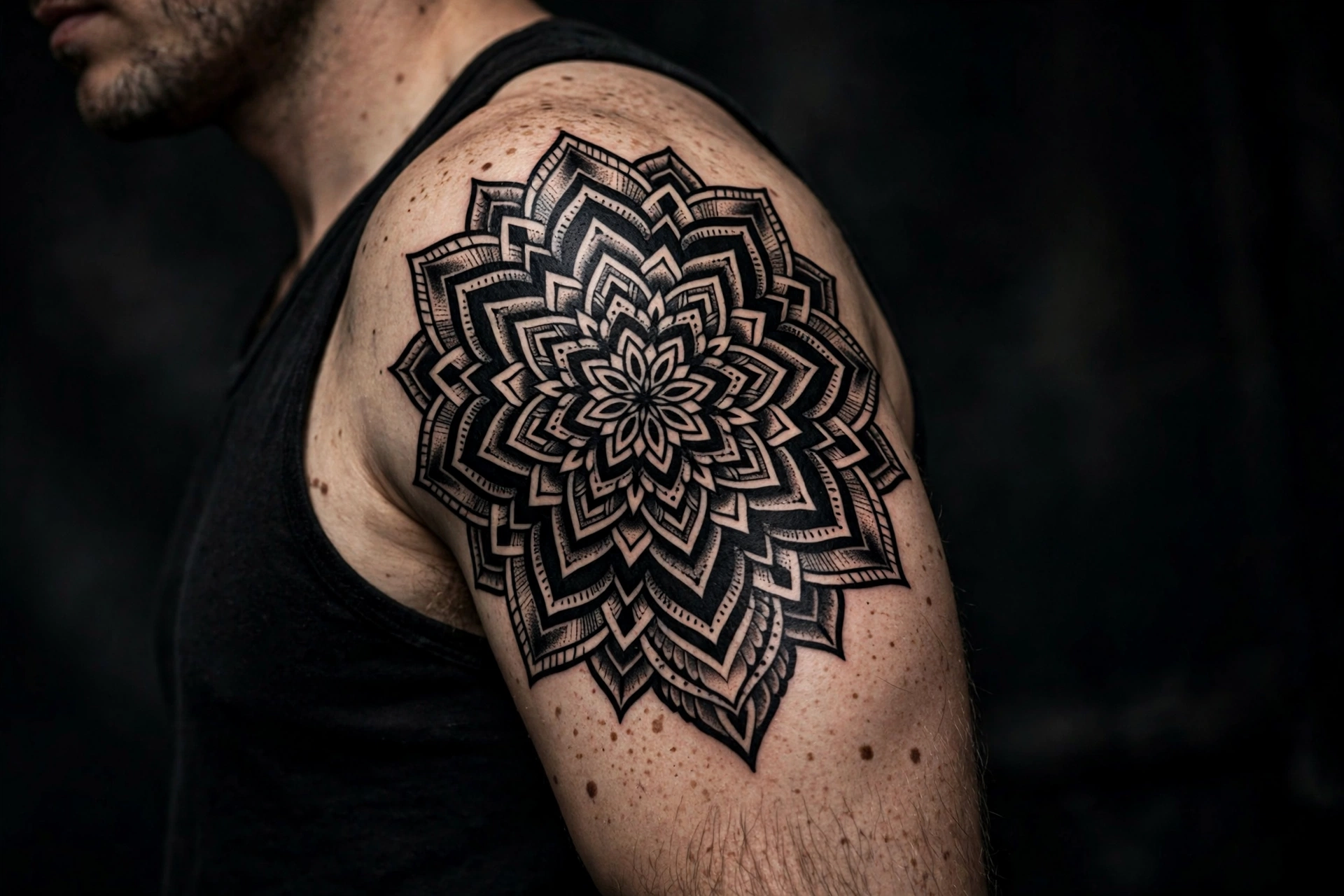
8. Negative Space Mandala
Here the mandala is carved out of solid black ink — the design appears in the untouched skin left behind. The result is dramatic, modern and unmistakable, especially as a large back or shoulder piece. It needs a confident artist and a longer session. The downside is the sheer amount of black ink, which means more healing time and a heavier feel on the skin.
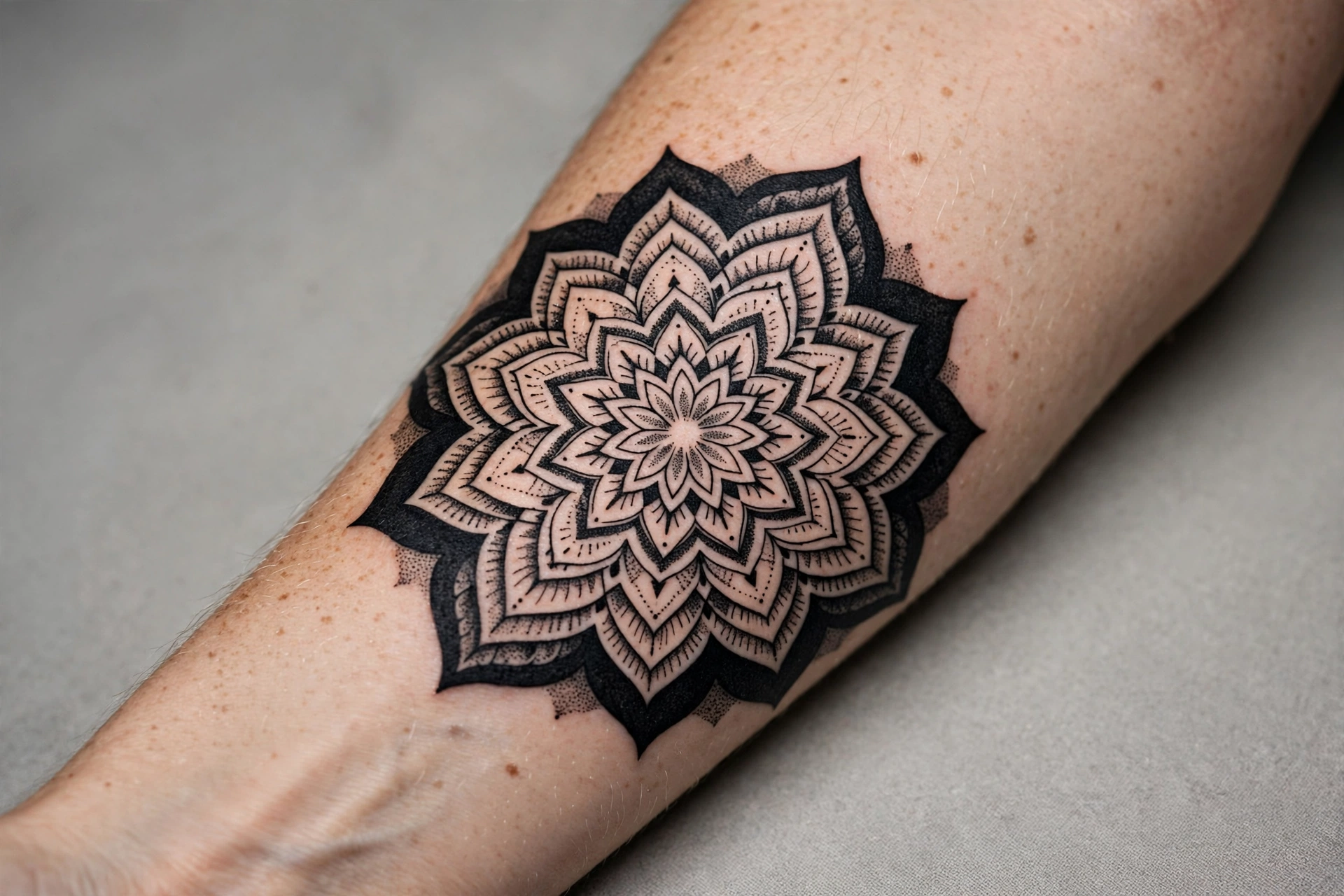
Floral & Nature Mandalas
9. Lotus Mandala
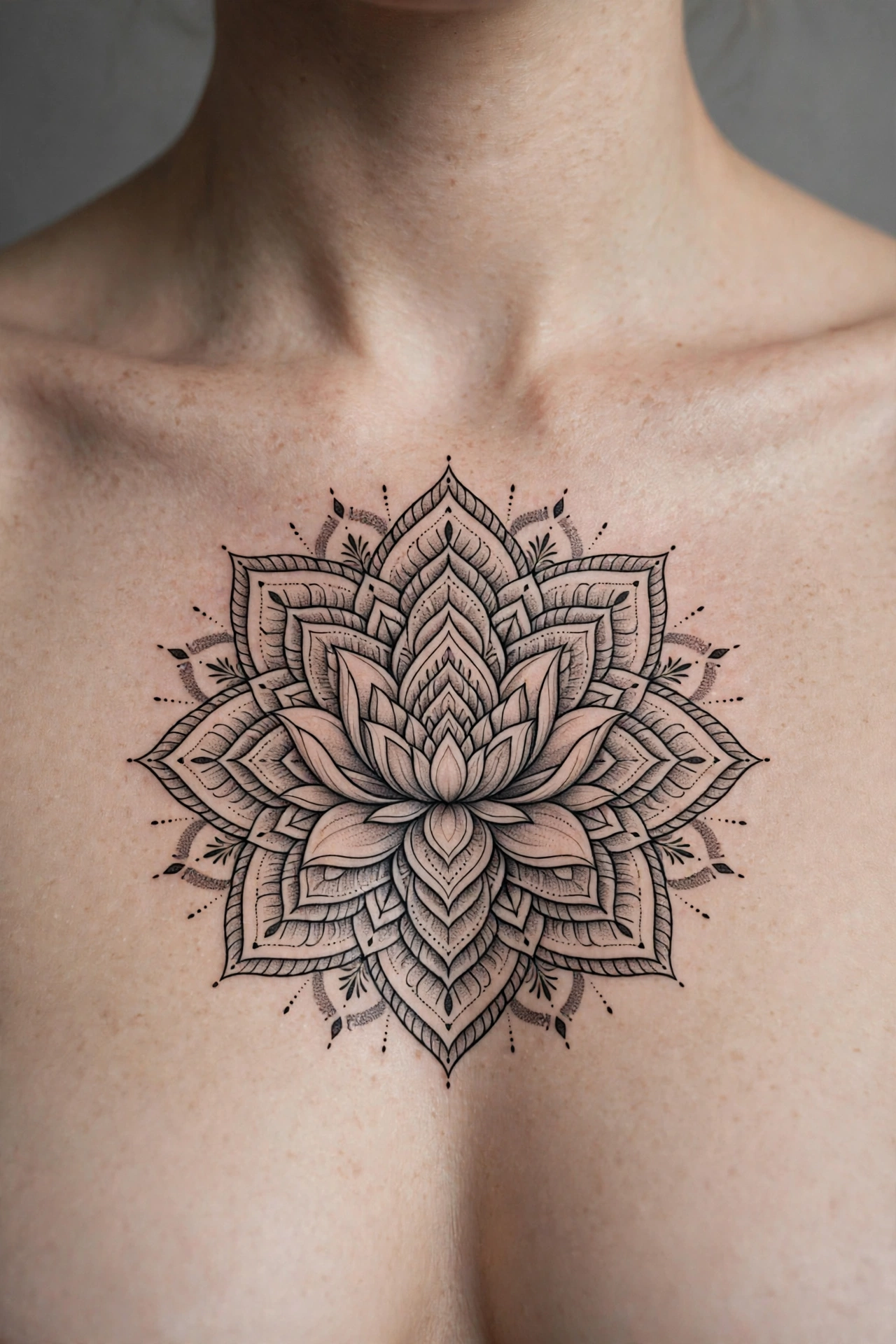
The lotus mandala pairs the flower of purity and rebirth with the mandala’s perfect symmetry. A lotus rises clean from muddy water, so this design speaks of growth after hard times. It is stunning on the sternum, back or forearm. Pain is moderate. The downside: the layered petals need space, so shrinking it too small will muddle the detail.
10. Sunflower Mandala
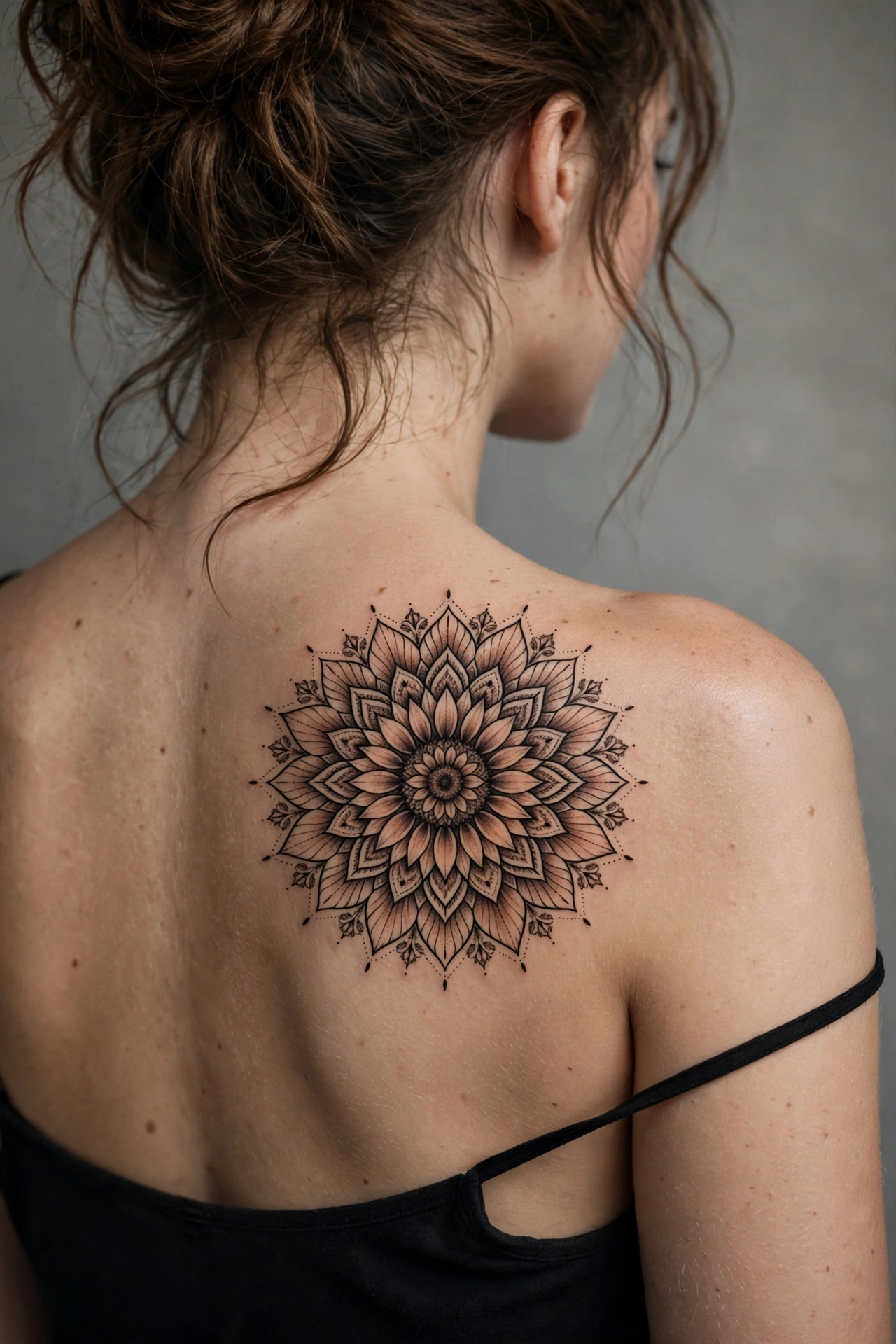
A sunflower mandala is pure warmth — golden petals radiating like sunshine, symbolising loyalty, joy and adoration. It is a cheerful, feminine choice that looks gorgeous on the shoulder or thigh, with or without soft yellow shading. Pain is low to moderate. The downside: colour sunflowers fade faster than blackwork, so keep it out of the sun.
11. Rose Mandala
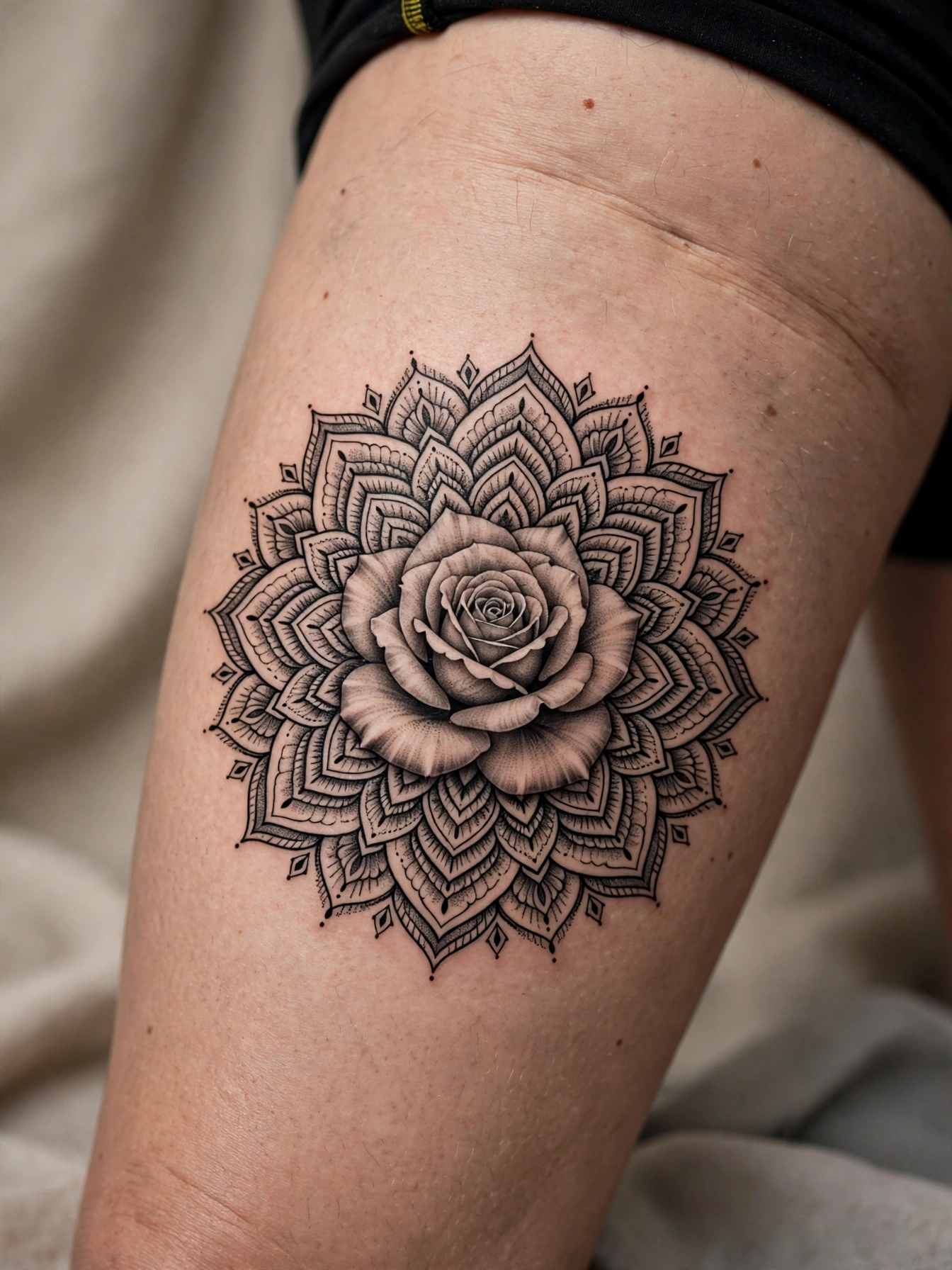
Roses woven into mandala rings combine love with balance — passion held in perfect order. This floral mandala works beautifully as a large shoulder or back piece, and the petals give the artist room to add soft shading. Pain is moderate. The downside is that realistic rose detail inside a geometric frame demands a very skilled artist.
12. Sun Mandala
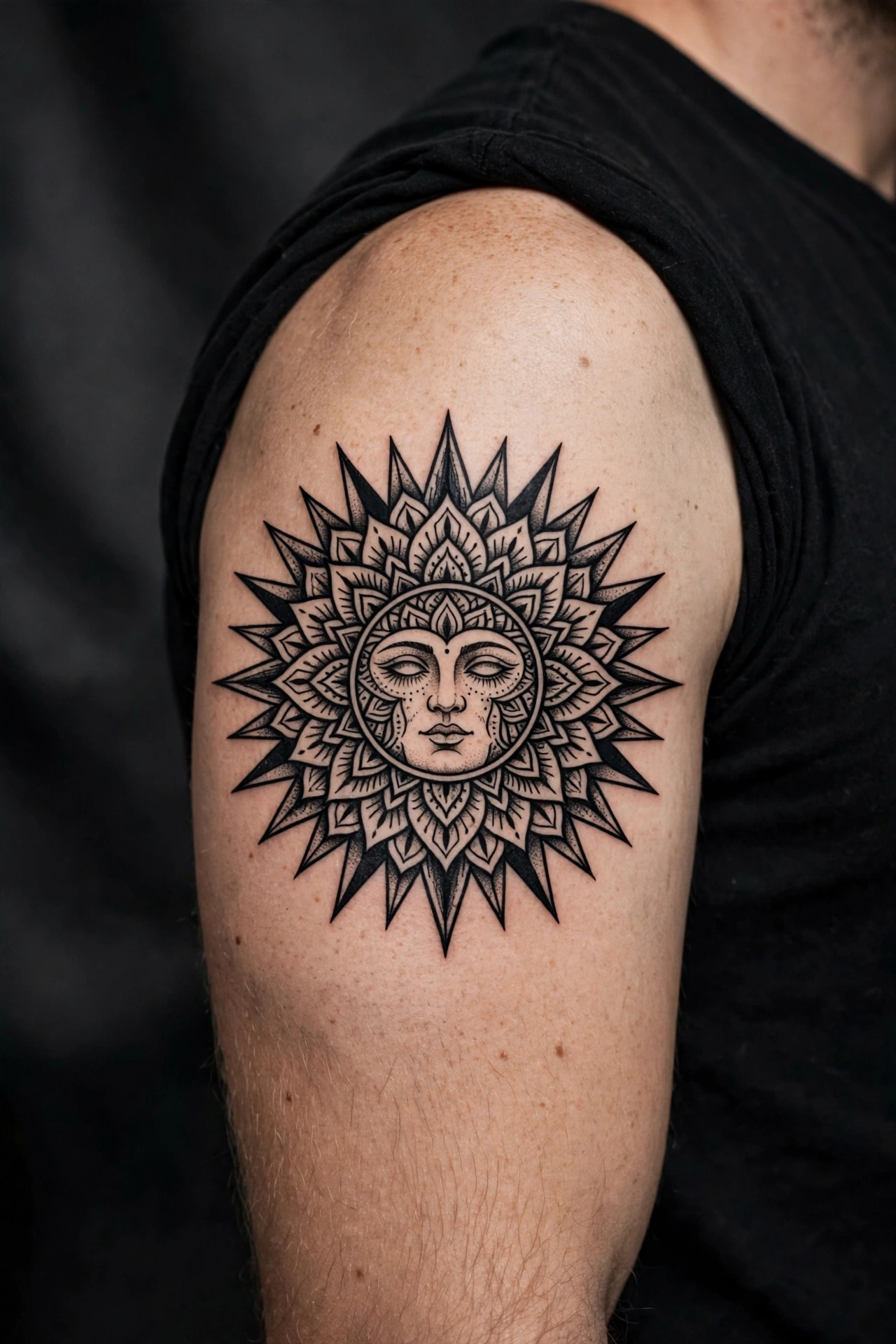
A sun mandala radiates energy, vitality and new beginnings, with rays bursting from a calm centre. It is a bold, uplifting design that suits the upper back, chest or upper arm. Pain is moderate on the chest. The downside: ray tips are fine and pointed, so they can blur over time — ask your artist to keep them slightly thicker.
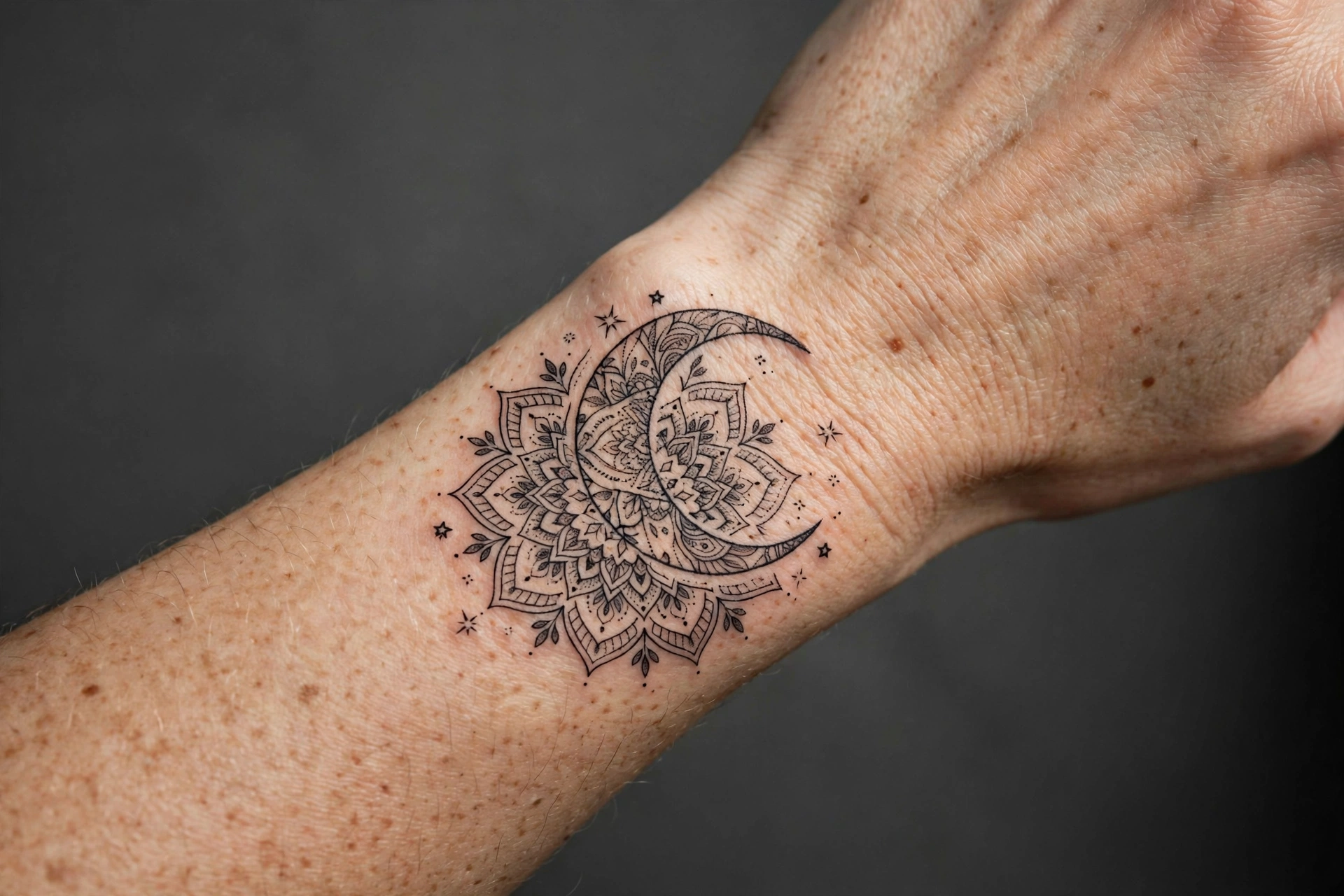
13. Moon Mandala
The moon mandala is the sun’s quieter sister — crescent curves, stars and soft shading that speak of intuition, cycles and calm. It is a lovely, dreamy choice for the forearm, ankle or back of the neck. Pain is low on the forearm. The downside: pale greywash shading can look washed out on deeper skin tones, so discuss contrast with your artist.
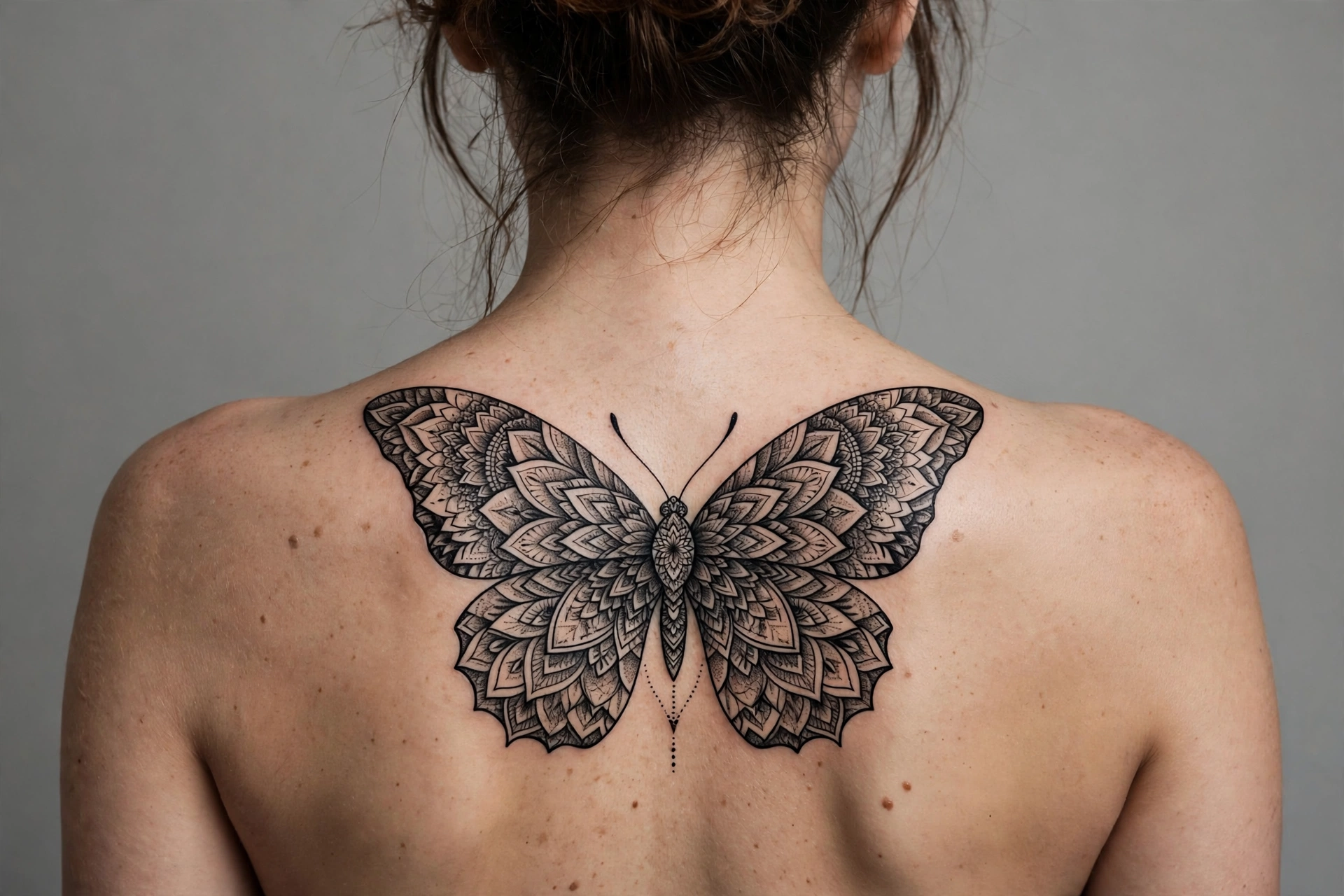
14. Butterfly Mandala
Wings and mandala rings blend into a symbol of transformation — the butterfly’s journey from caterpillar to flight, held inside perfect symmetry. It is a gentle, pretty design, popular on the shoulder blade or upper arm. Pain is low to moderate. The downside: butterfly wings need fine detail, and fine detail is the first thing to soften with age.
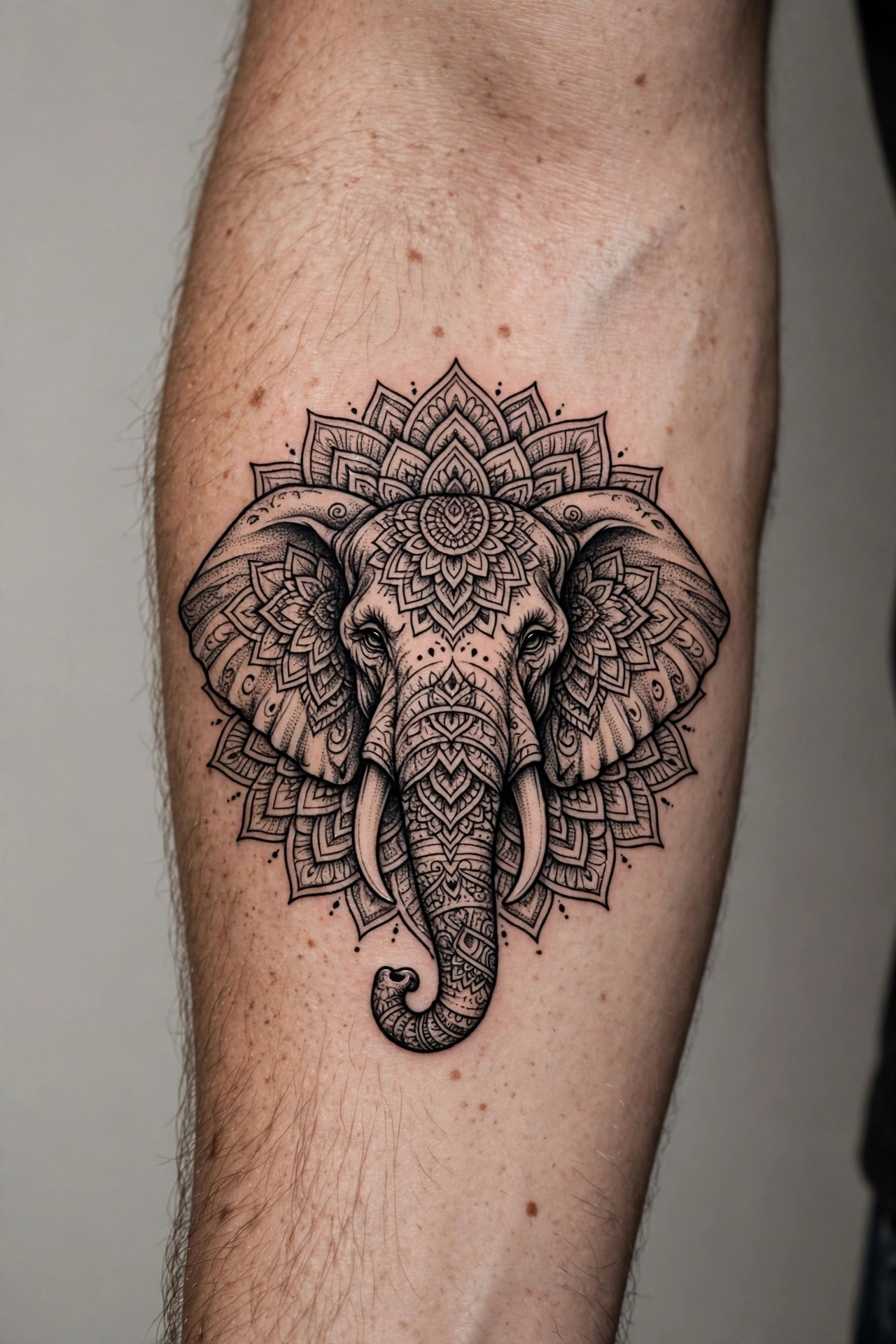
15. Elephant Mandala
In Hindu tradition the elephant means wisdom, strength and good fortune, and an elephant mandala wraps those qualities in ornamental detail. It is a meaningful, substantial piece best done large on the thigh, back or upper arm. Pain is moderate. The downside: the trunk and ear detail needs size — a small version will lose the elephant entirely.
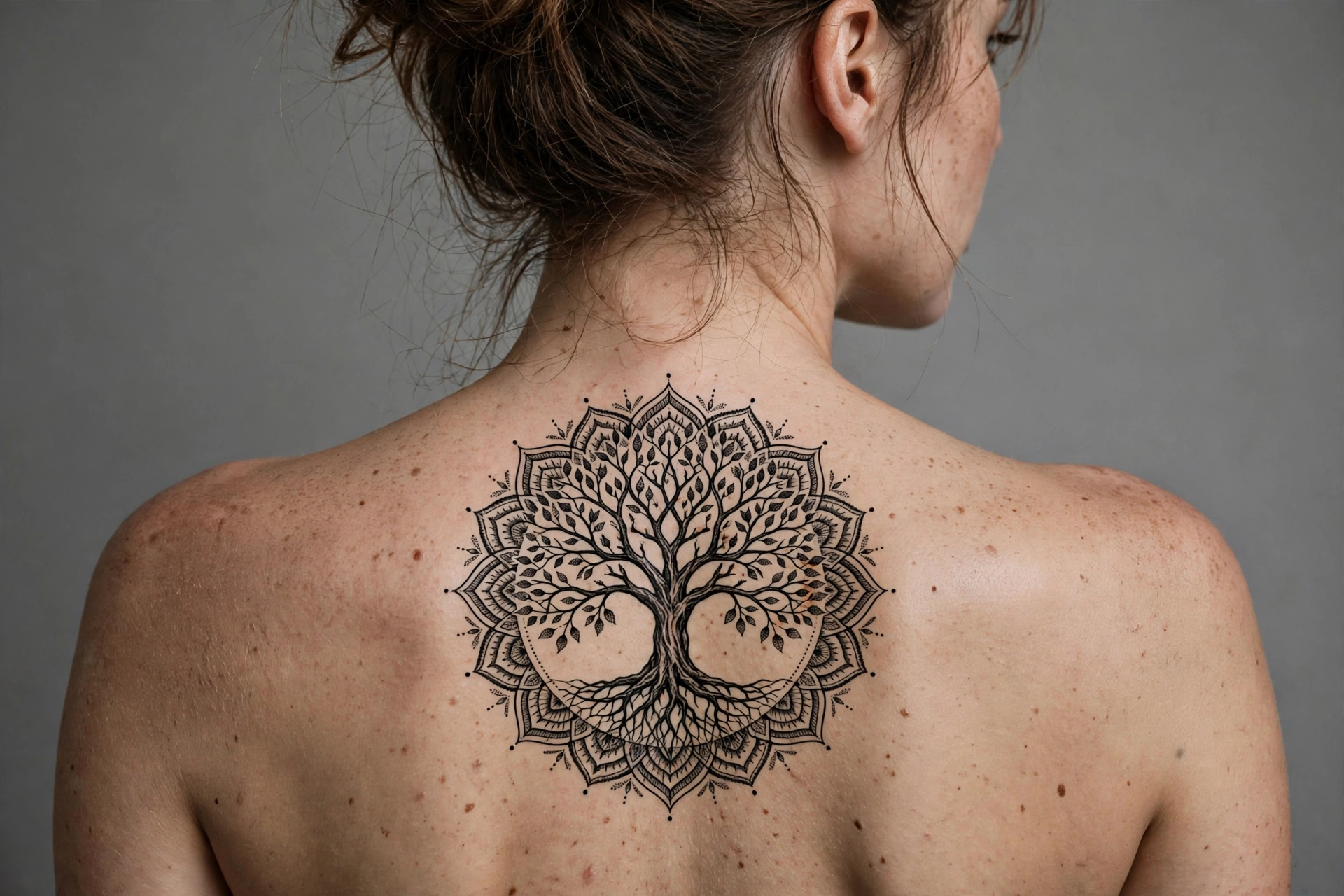
16. Tree of Life Mandala
Roots below, branches above, all held in a circle — the Tree of Life mandala speaks of connection, growth and family. It is a deeply personal design that works beautifully as a large back piece. Pain is moderate on the back. The downside is scale: this design needs room, so do not squeeze it onto a small spot.
Mandalas by Placement
17. Shoulder Cap Mandala
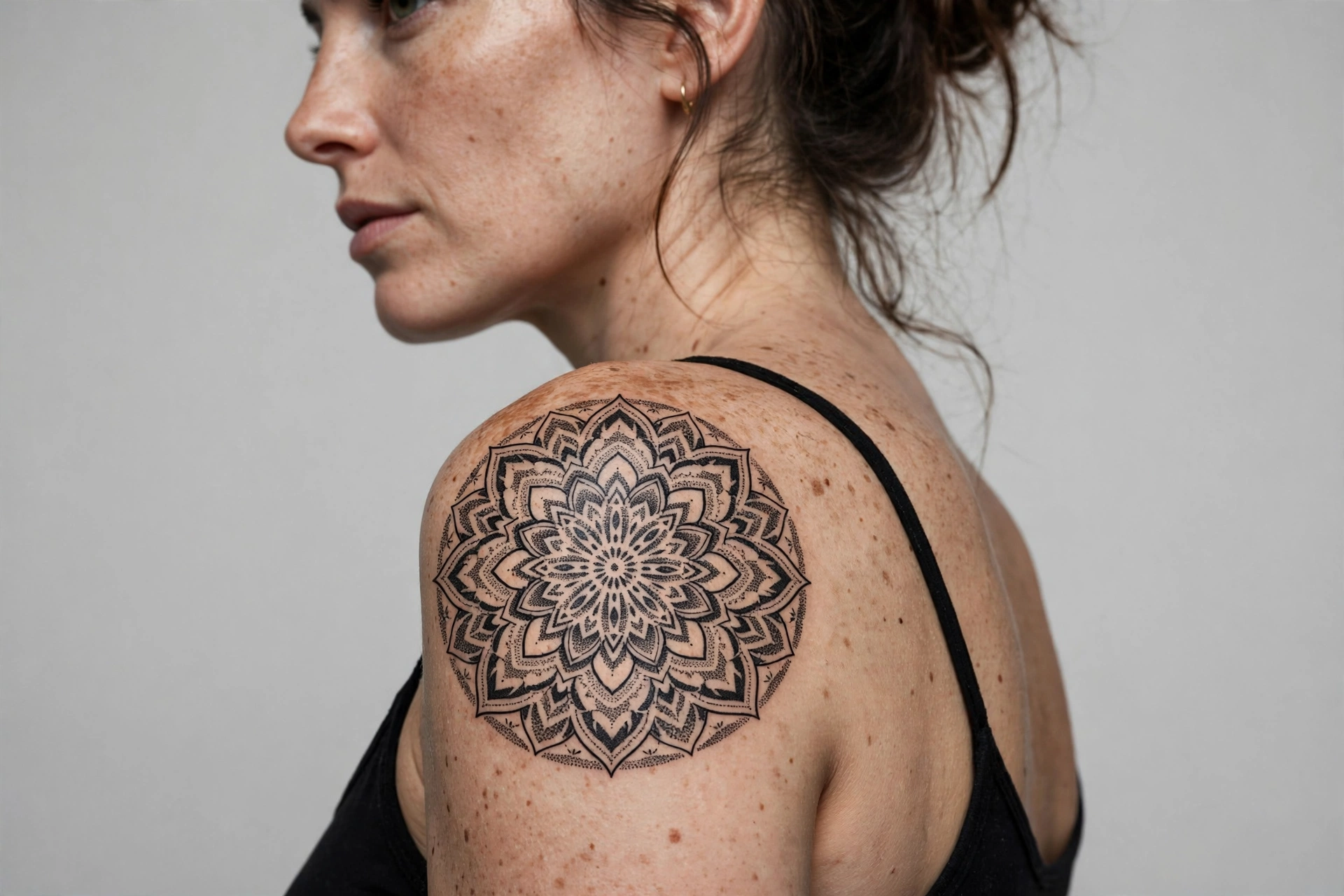
A mandala tattoo shoulder piece that follows the curve of the deltoid is one of the most flattering placements in tattooing — the circle sits naturally on the round of the shoulder. It suits men and women equally and peeks beautifully from a sleeveless top. Pain is around 3/10. The downside: the curve can distort the circle if the stencil is not placed with care.
18. Sternum Mandala
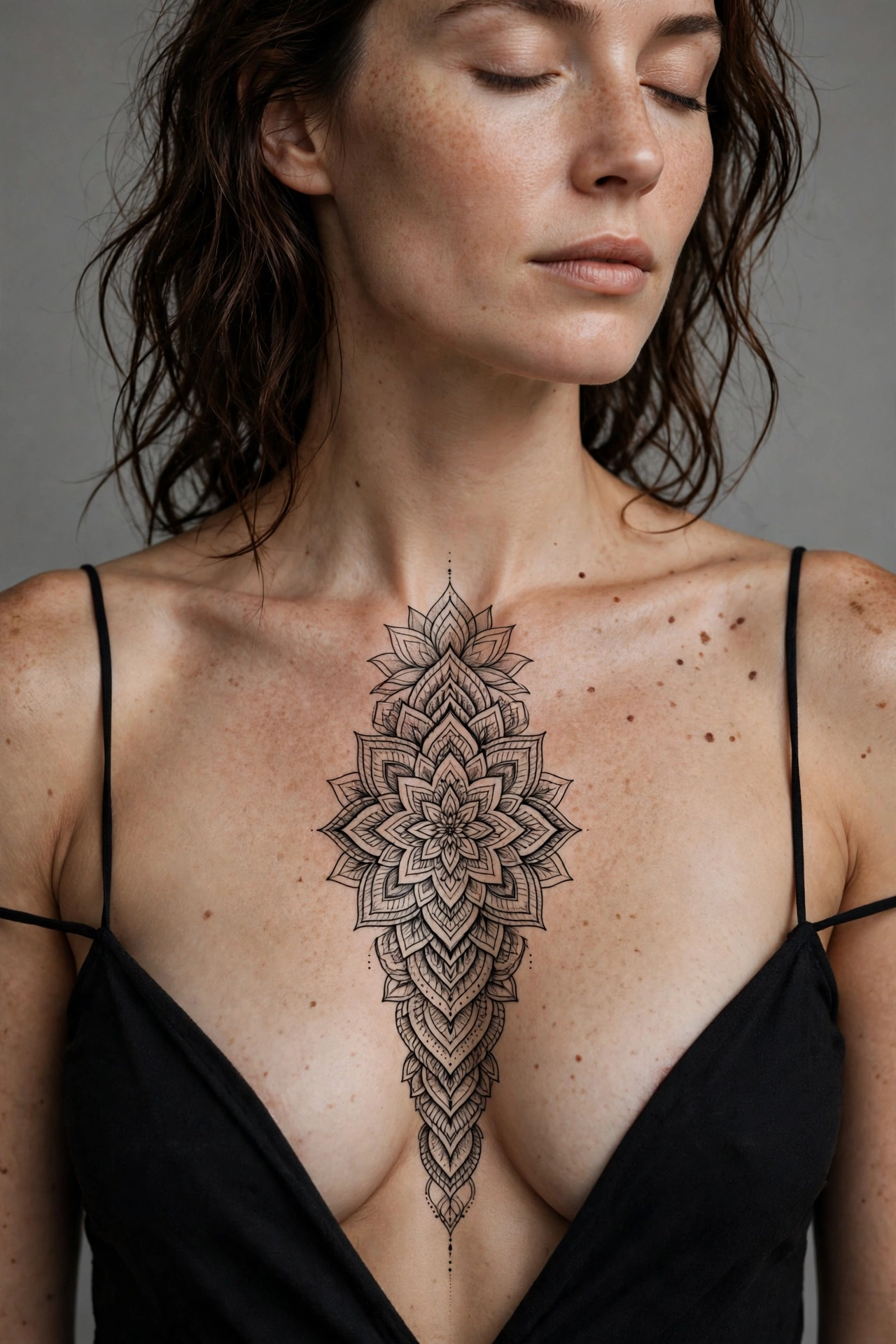
The mandala tattoo sternum placement is iconic — a symmetrical design running down the centre of the chest, often with a drop of detail toward the stomach. It is elegant, striking and very popular as a mandala tattoo for women. Pain is high, around 7/10, over the bone. The downside: it is one of the most painful mandala spots, and the centre line can blur first.
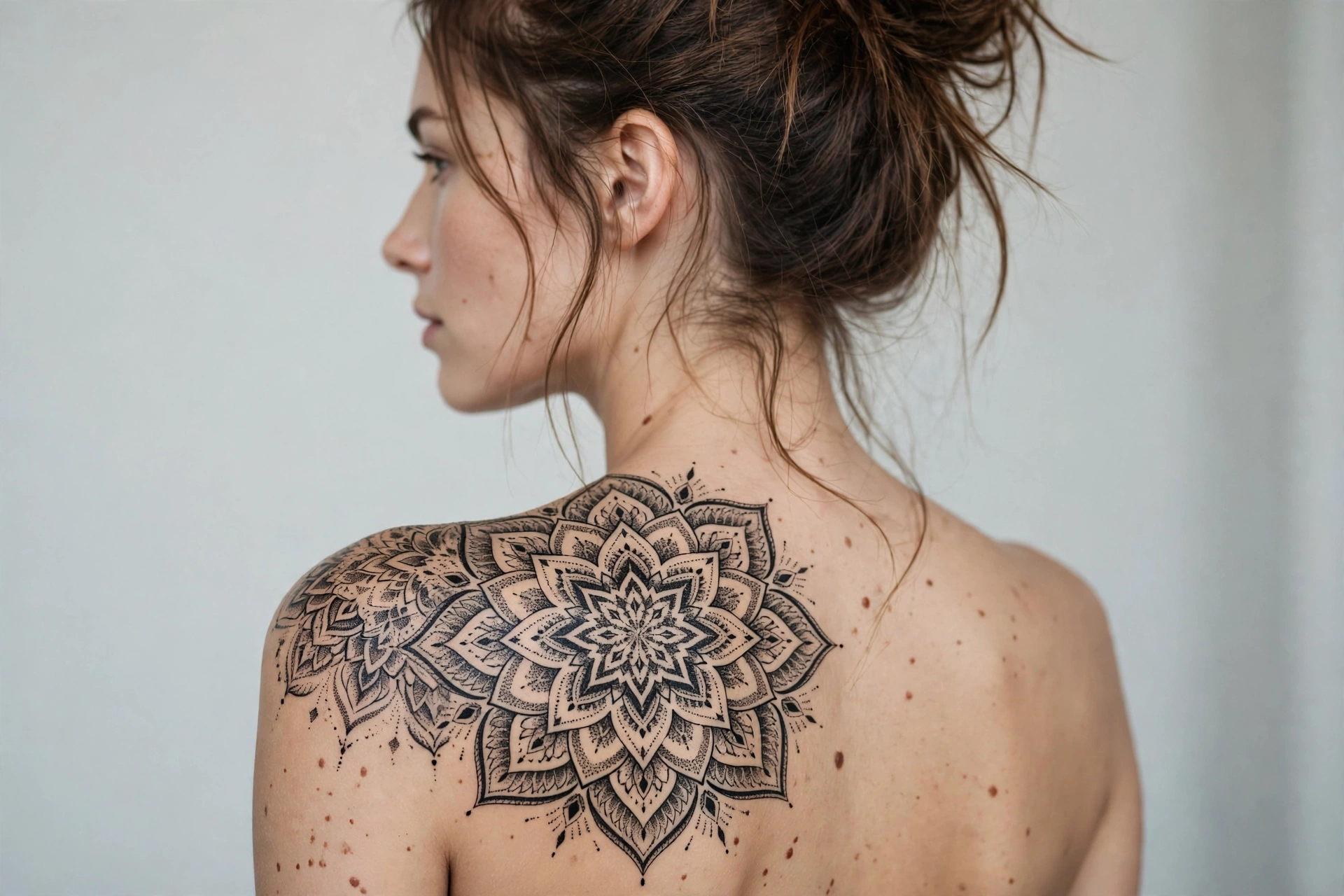
19. Upper Back Mandala
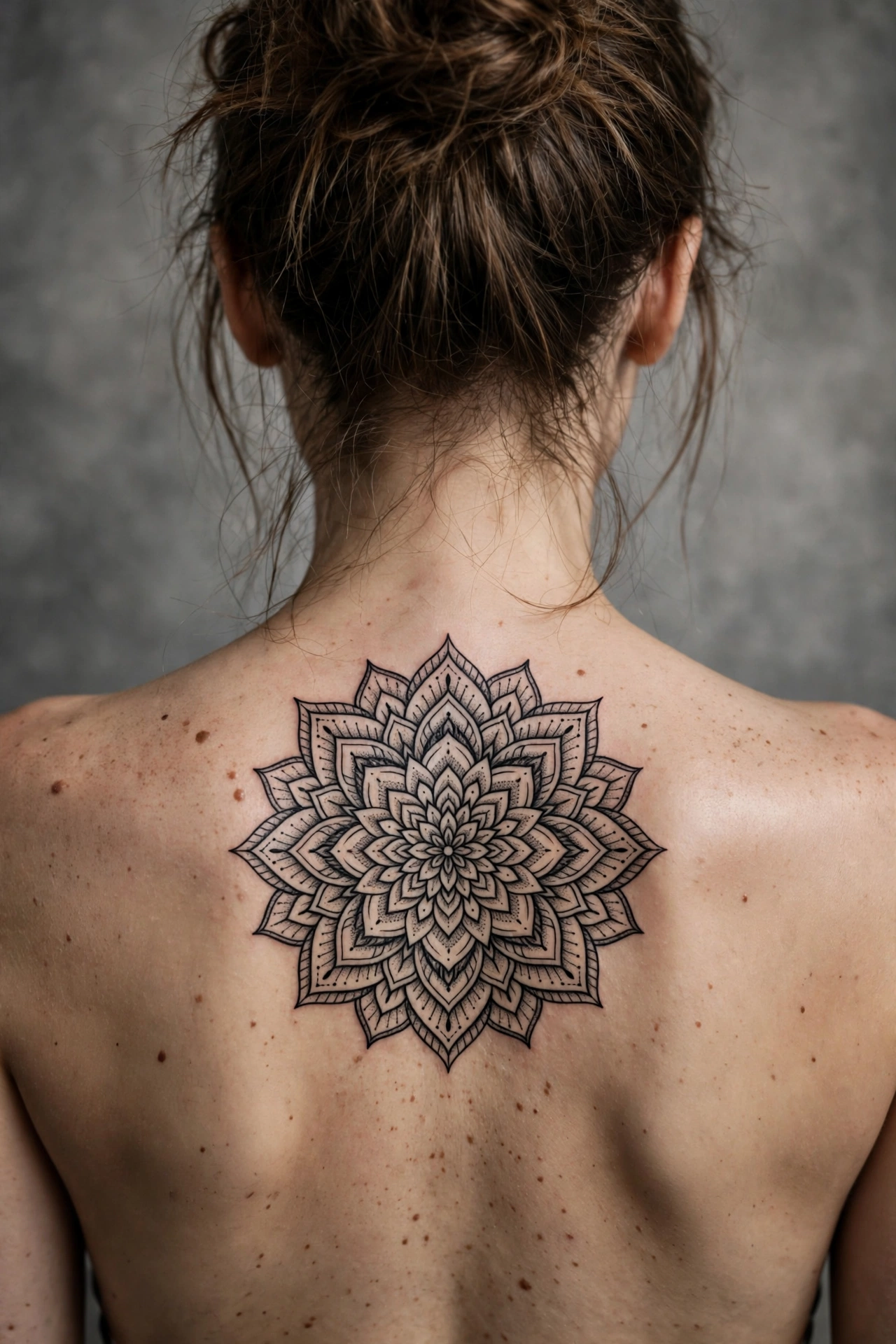
A mandala tattoo back piece gives the artist a wide, flat canvas for the most detailed work — large rings, fine dotwork and layered petals all have room to breathe. Pain is moderate, around 4/10, on the upper back. The downside: you cannot see it yourself without a mirror, so choose it for yourself, not for showing off.
20. Wrist Mandala
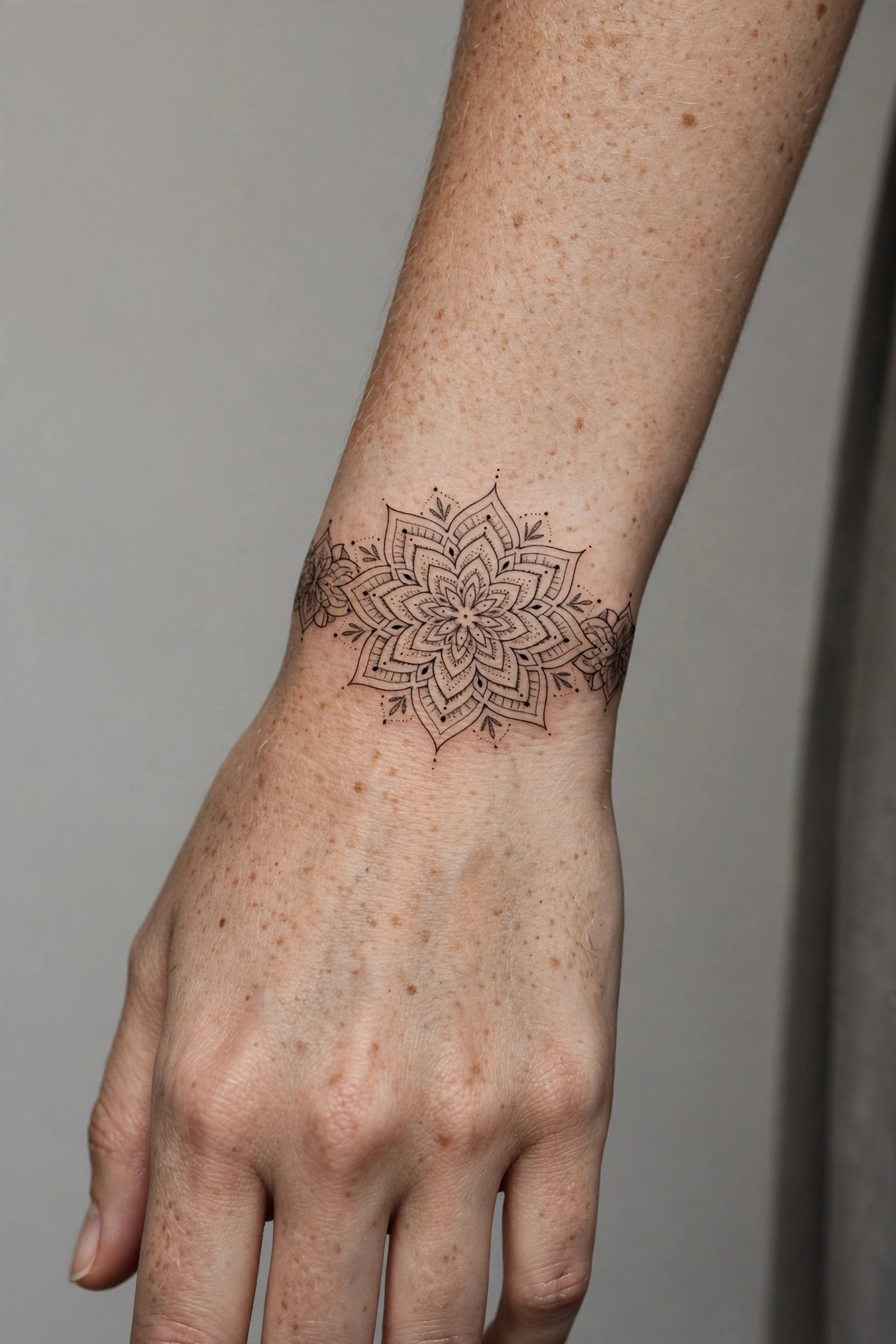
A small mandala tattoo wrist design is delicate, visible and easy to love — a tiny circle of calm you can glance at all day. It is a great first tattoo and a favourite cute mandala tattoo. Pain is moderate, around 5/10, over the thin skin. The downside: wrists fade fast from sun and washing, so expect touch-ups.
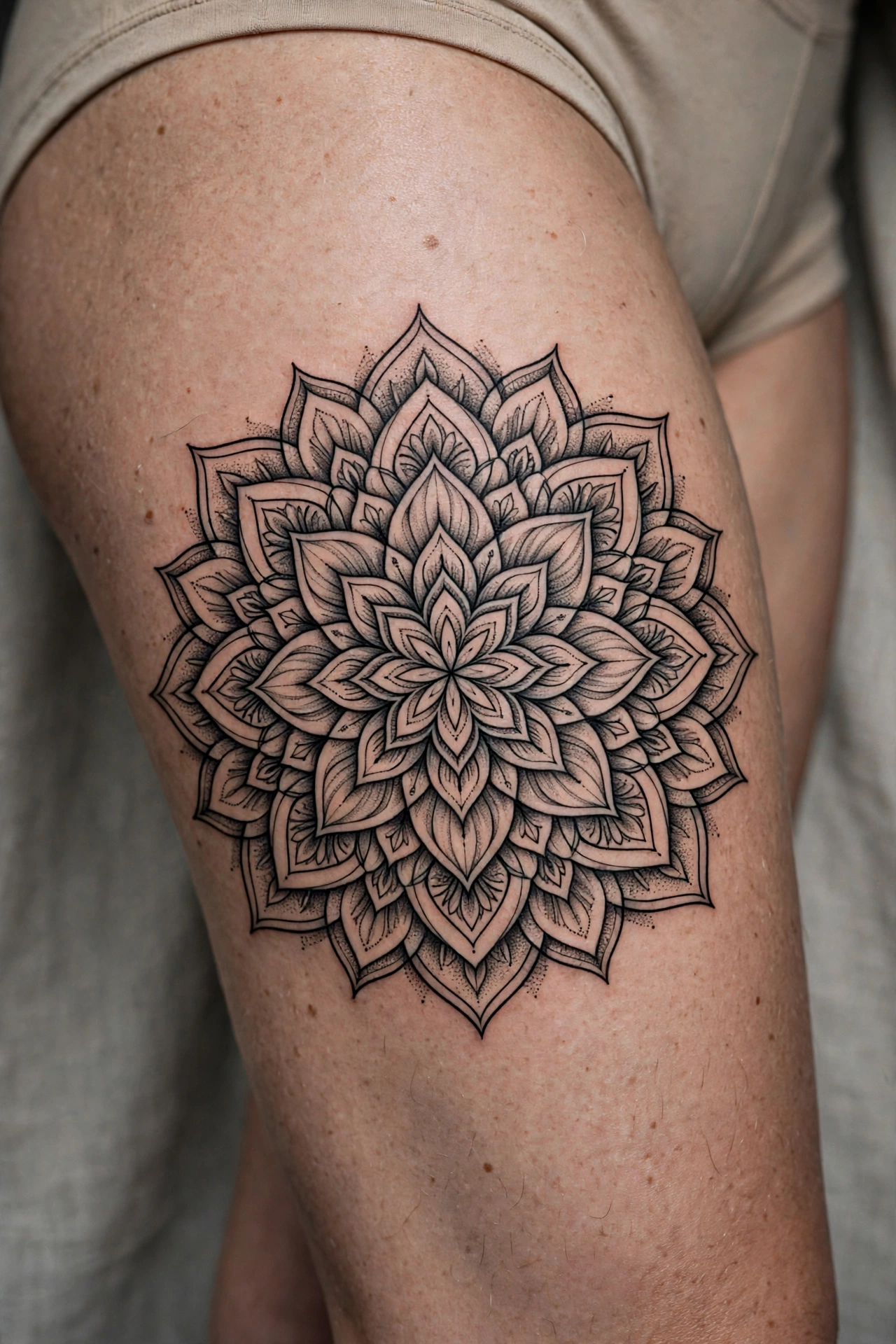
21. Thigh Mandala
A mandala tattoo thigh piece is bold, private and wonderfully pain-friendly — the thigh is one of the least painful large spots on the body, around 3/10. It is ideal for a large floral mandala or a blackwork design you can show off or keep hidden — see our thigh tattoo ideas for women for more inspiration. The downside: thigh tattoos can stretch or shift with weight changes, so keep the design flexible.
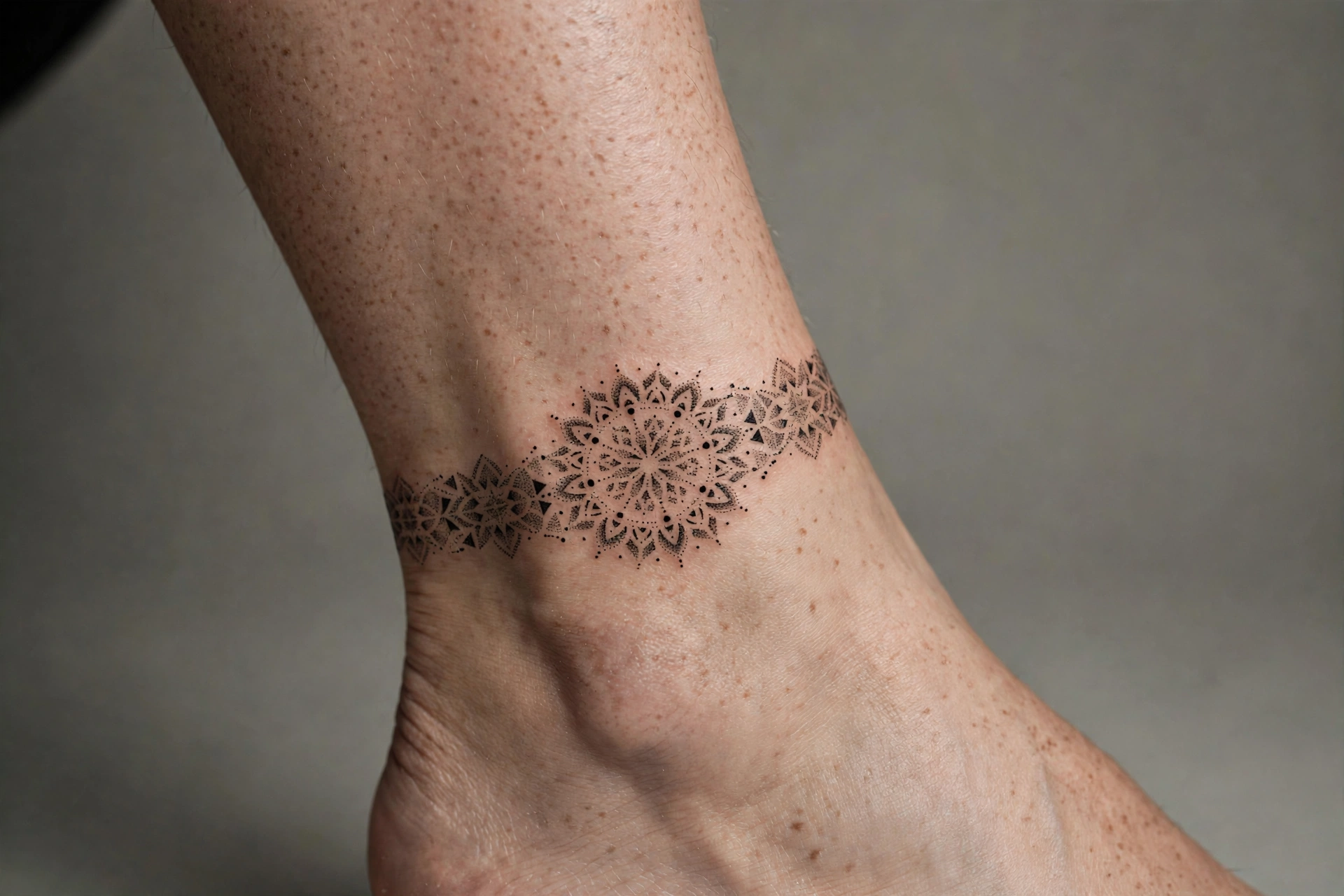
22. Ankle Mandala
An ankle mandala is dainty and discreet — a small ring of pattern circling the ankle bone or sitting just above it. It suits sandals, bare feet and anyone who wants subtle ink. Pain is moderate, around 5/10, near the bone. The downside: ankle skin is thin and shoes rub it, so healing needs extra care.
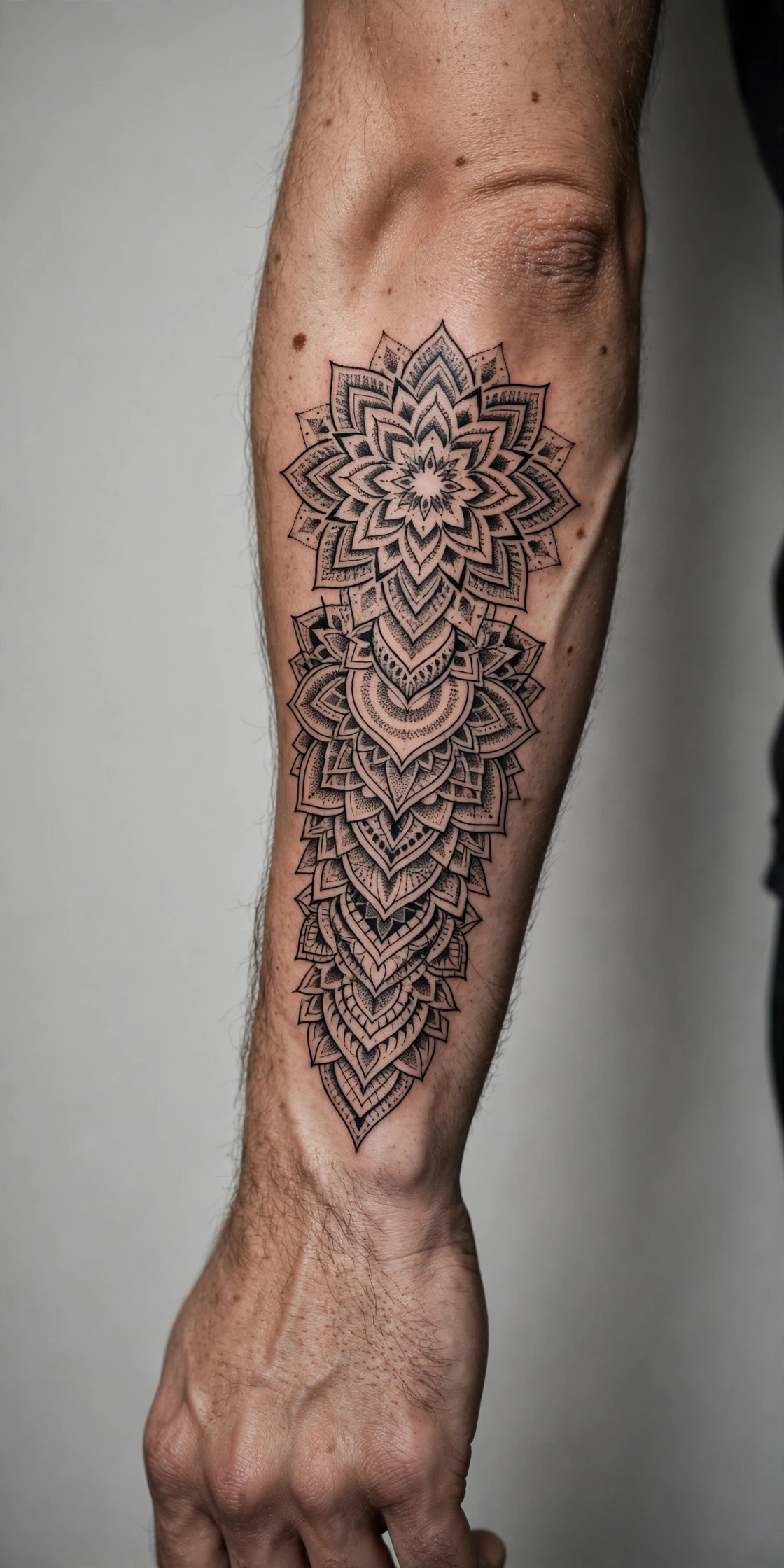
23. Forearm Mandala
A mandala tattoo forearm design is visible, versatile and one of the easiest to heal — the forearm is flat, fleshy and low-pain at around 3/10. It works for a circular mandala, a band that wraps the arm, or a half mandala tattoo. The downside: it is always on show, so be sure your workplace is fine with visible ink.
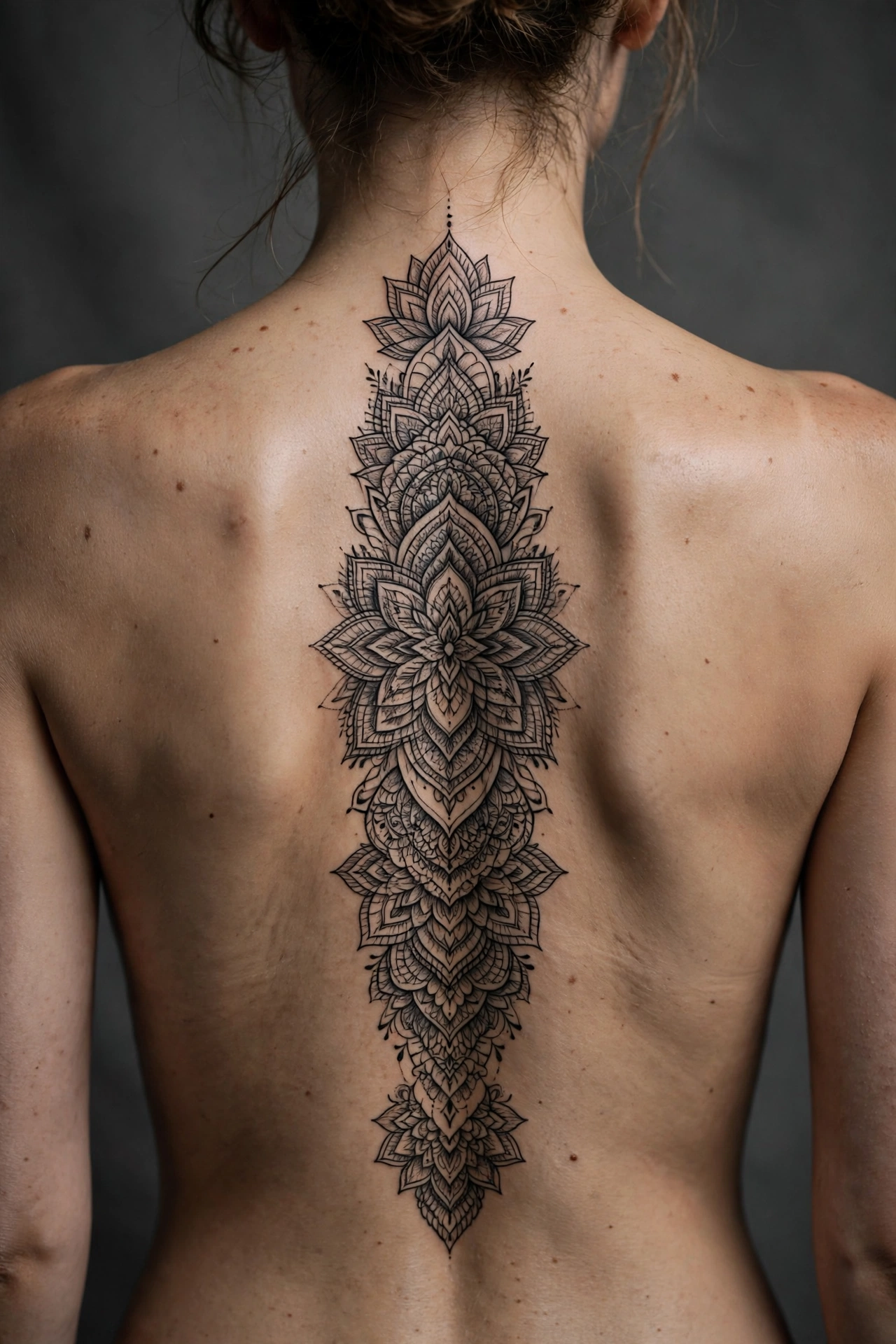
24. Spine Mandala
A mandala tattoo spine design runs in a vertical column of small circles down the back — elegant, symmetrical and quietly dramatic. It is a beautiful choice for a long, slim design. Pain is high, around 7/10, directly over the vertebrae. The downside: the spine is one of the most painful placements, and sitting and sleeping are uncomfortable for the first week.
Animal & Symbol Mandalas
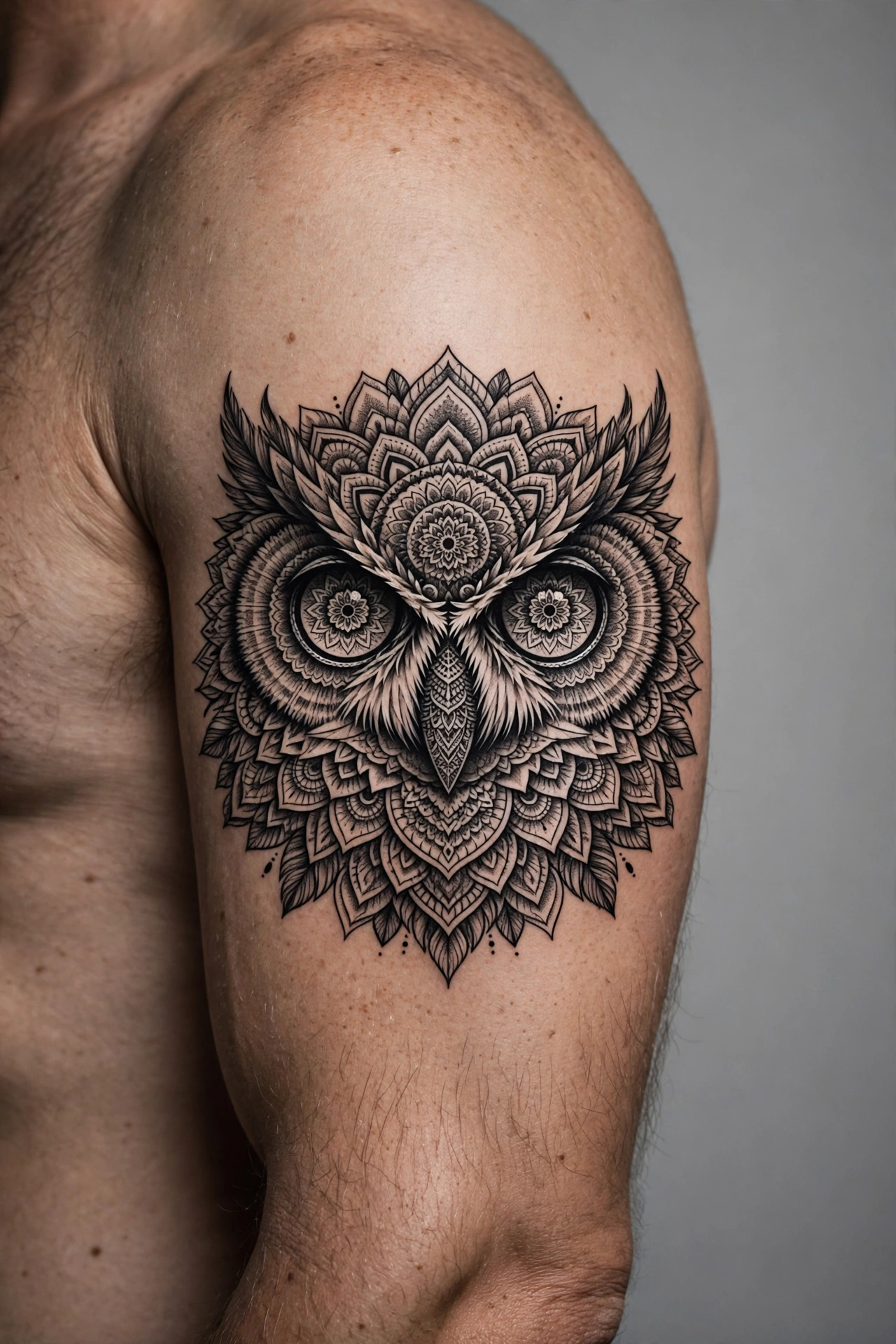
25. Owl Mandala
The owl means wisdom and watchfulness, and an owl mandala wraps that quiet intelligence in ornamental rings. It is a thoughtful, slightly mysterious design that suits the upper arm or thigh. Pain is moderate. The downside: owl eyes are the focal point, so a small or rushed version will lose the expression entirely.
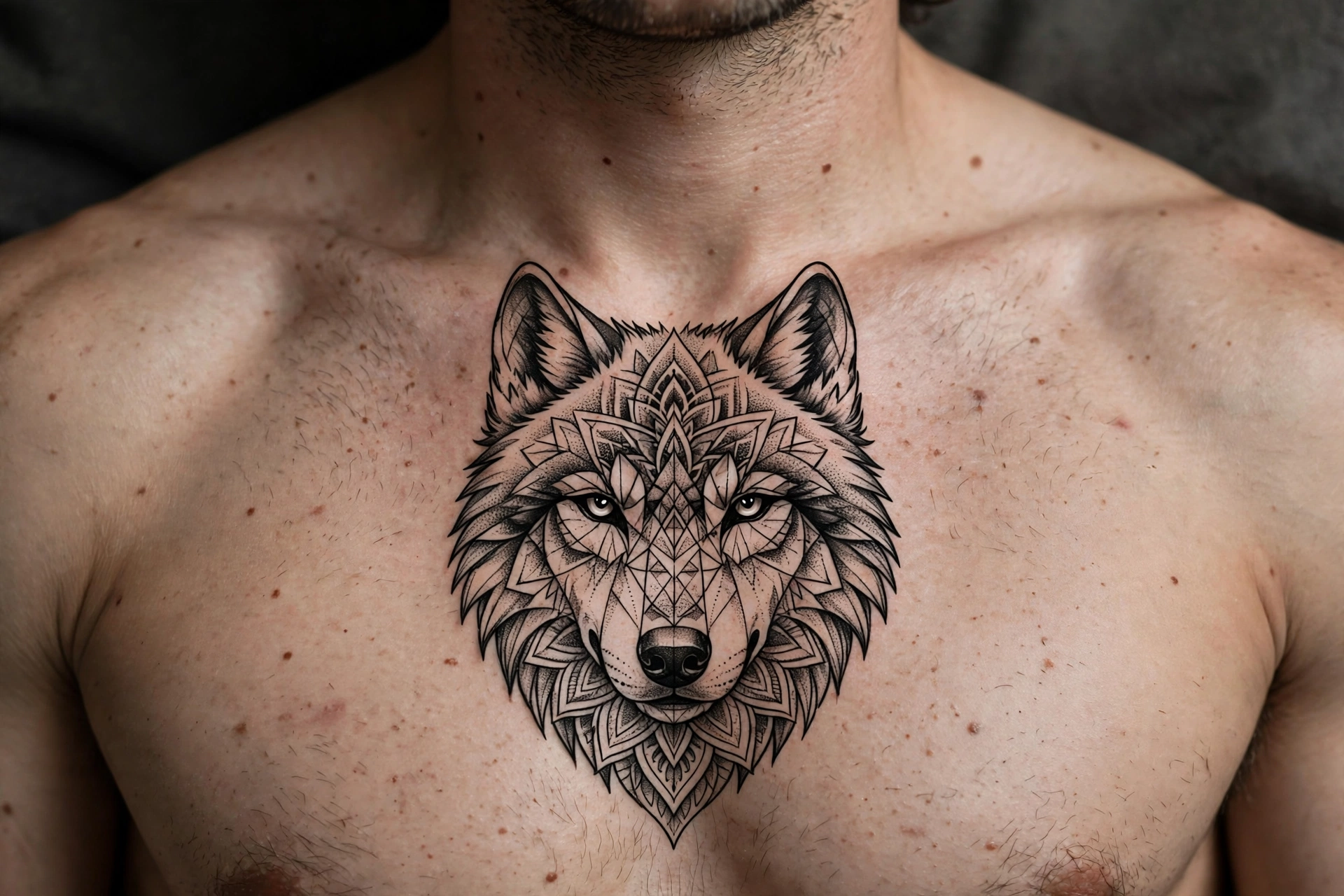
26. Wolf Mandala
A wolf mandala speaks of loyalty, instinct and wild freedom — the wolf’s face emerging from geometric rings. It is a strong mandala tattoo for men and a striking large piece on the chest or thigh. Pain is moderate. The downside: the fur detail and the geometry compete for attention, so the design needs a skilled hand to stay balanced.
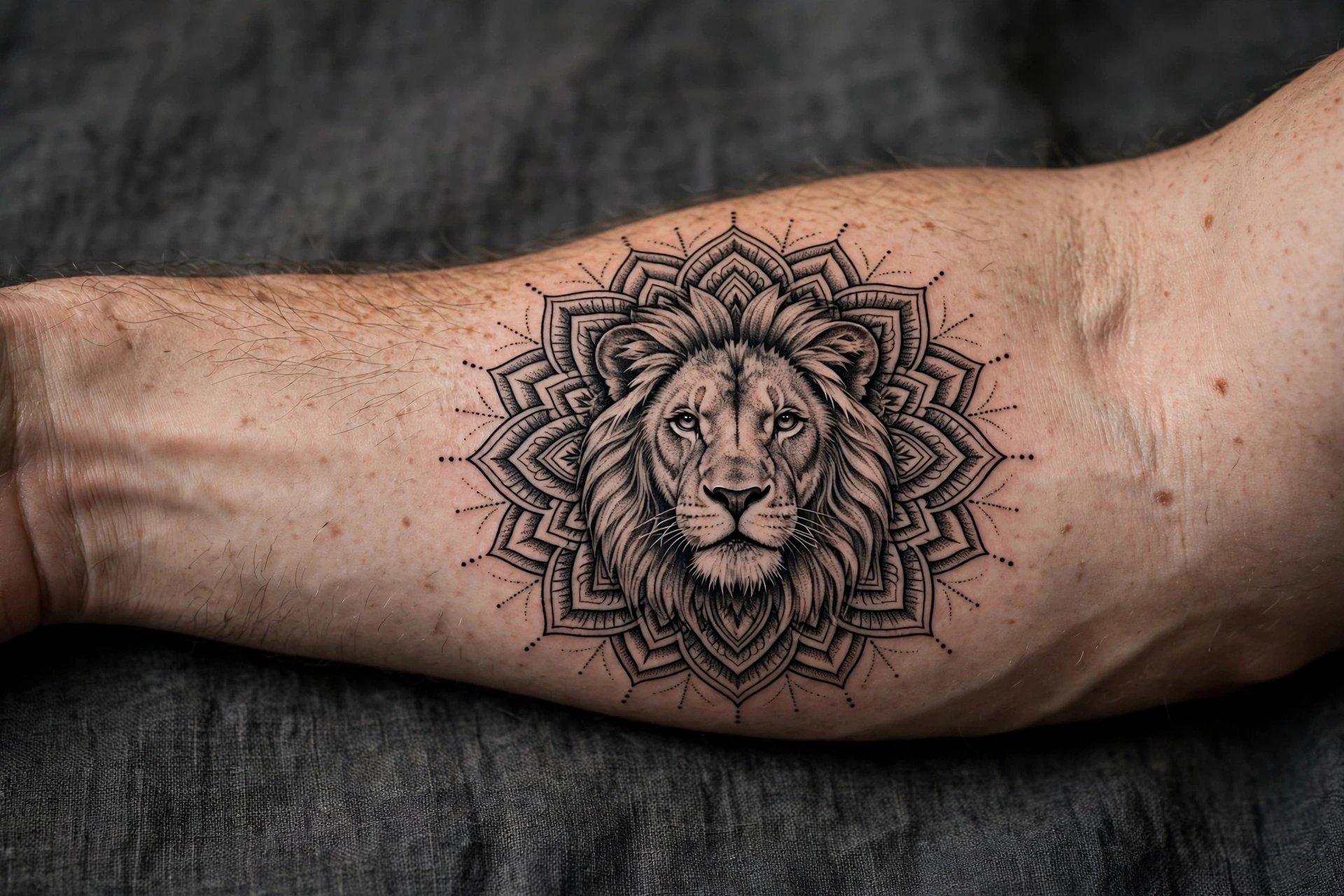
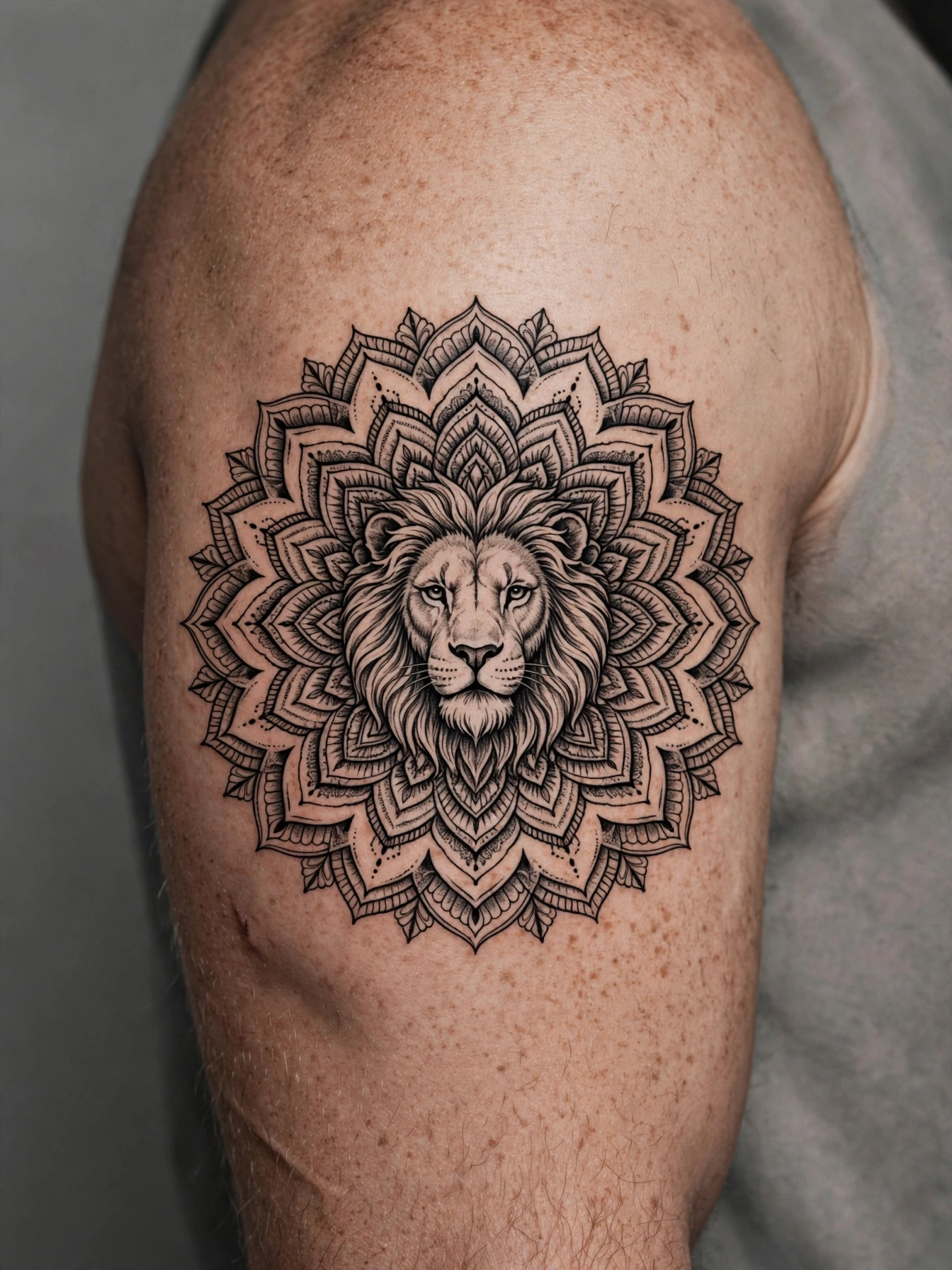
27. Lion Mandala
The lion mandala combines courage and calm authority with the mandala’s perfect order — a mane that flows naturally into radiating petals. It is a powerful chest or back piece. Pain is moderate on the back. The downside: the mane detail is dense, so a small lion mandala will look muddy within a few years.
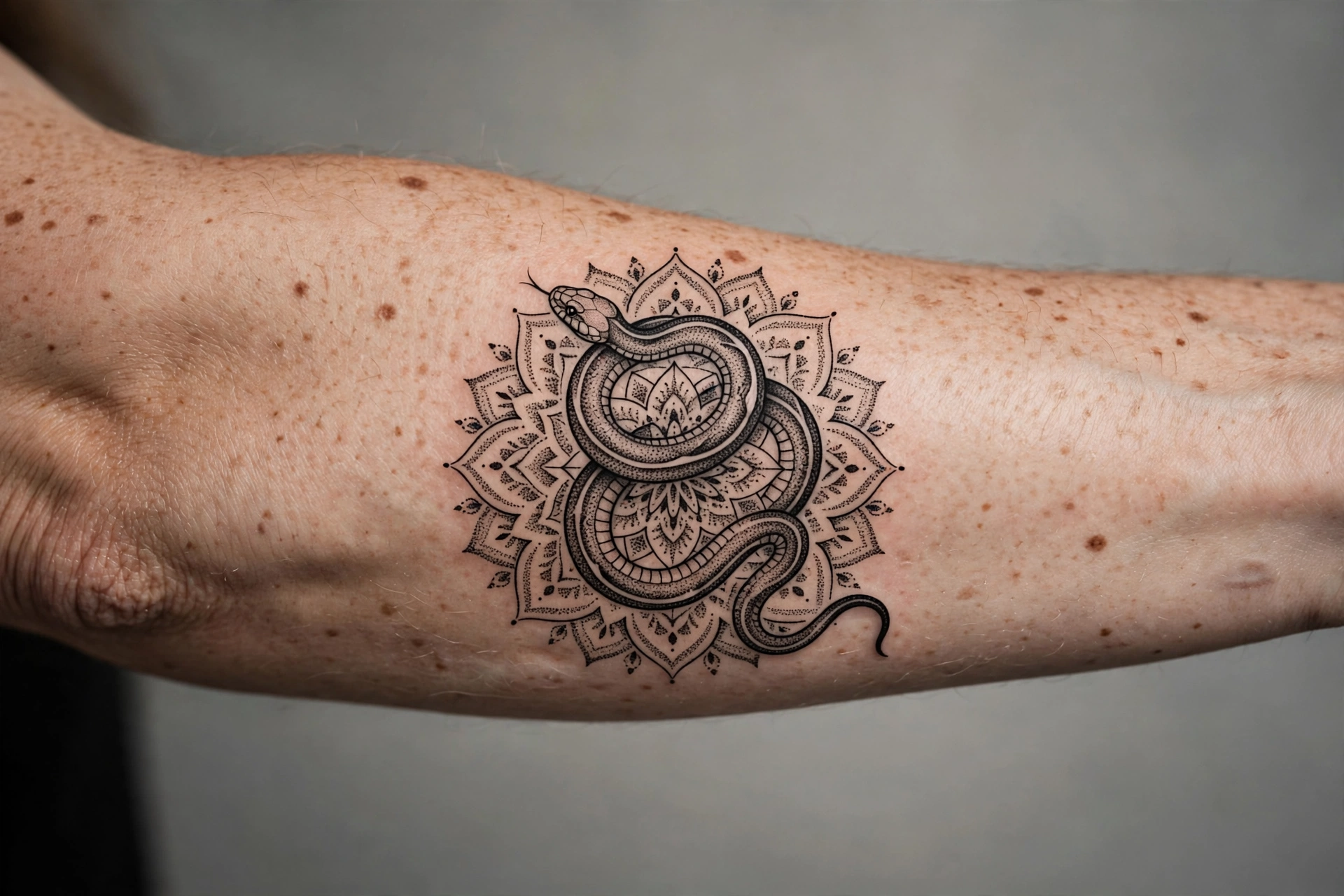
28. Snake Mandala
A snake coiled into a circle is an ancient image of rebirth and the cycle of life — and it fits the mandala form perfectly. This is a bold, edgy design for the forearm, thigh or back. Pain is moderate. The downside: snake scales inside a symmetrical pattern are technically demanding, so choose your artist carefully.
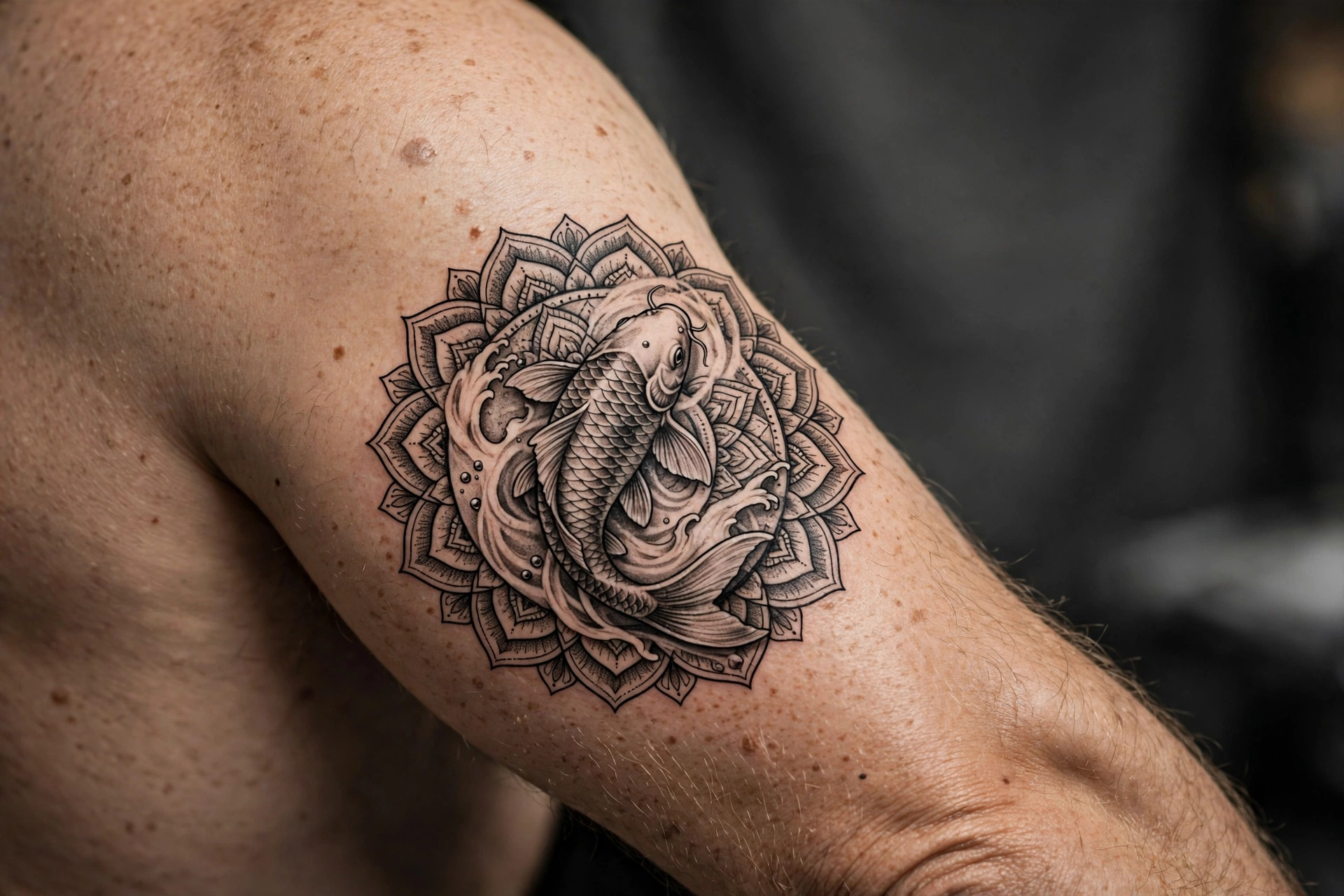
29. Koi Fish Mandala
Koi fish mean perseverance and good fortune, swimming upstream against the current. A koi fish mandala pairs that story with flowing water-like rings. It is a graceful, colourful choice for the upper arm or thigh. Pain is moderate. The downside: colour koi need regular sunscreen and occasional touch-ups to stay vivid.
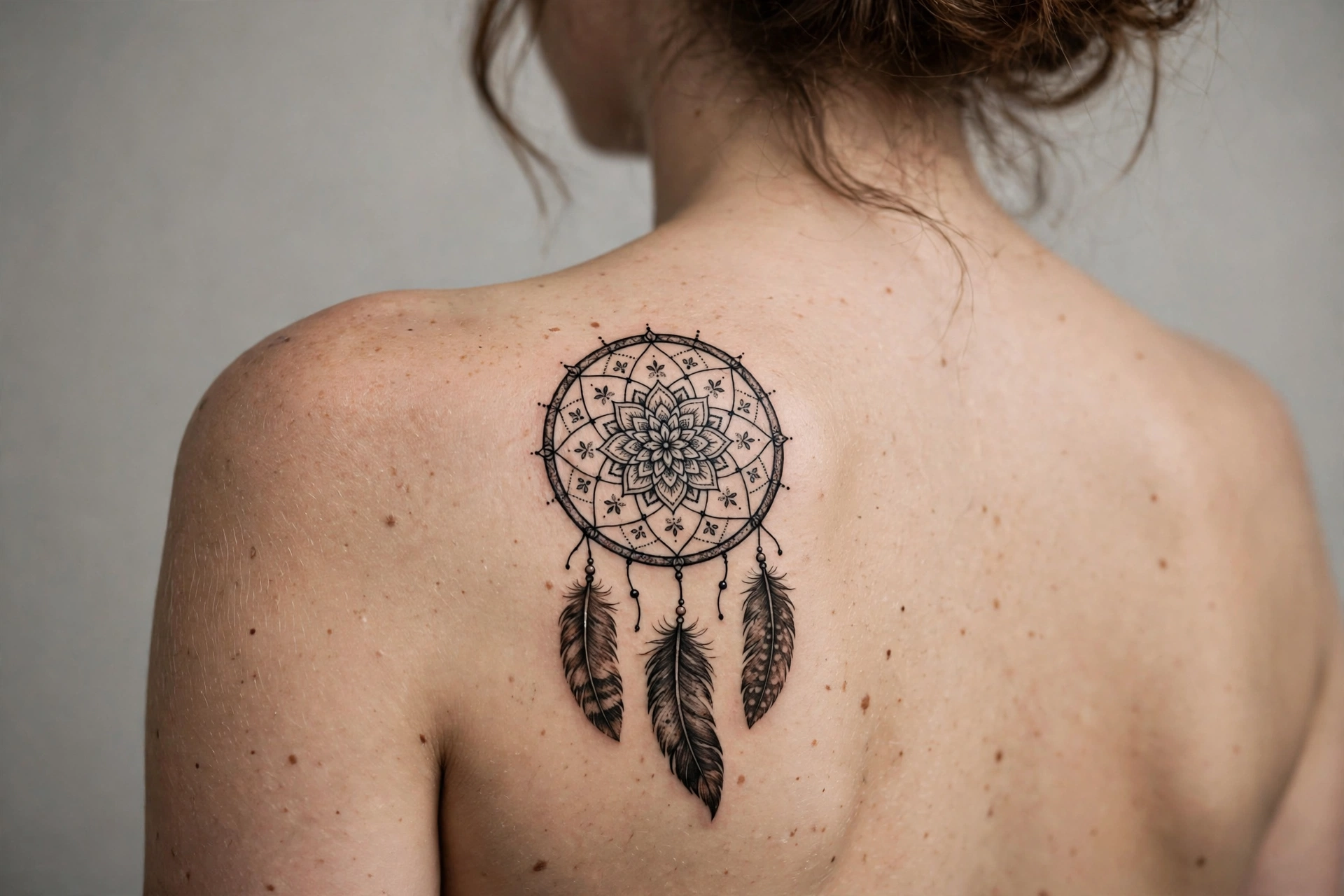
30. Dreamcatcher Mandala
A dreamcatcher mandala blends Native American dreamcatcher imagery with mandala symmetry — a web of protection that catches bad dreams and lets good ones through. It is a gentle, meaningful design for the back or thigh. Pain is moderate. The downside: the web detail is fine and fades fast, and the cultural roots deserve respectful handling.
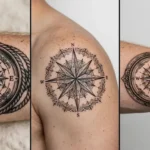
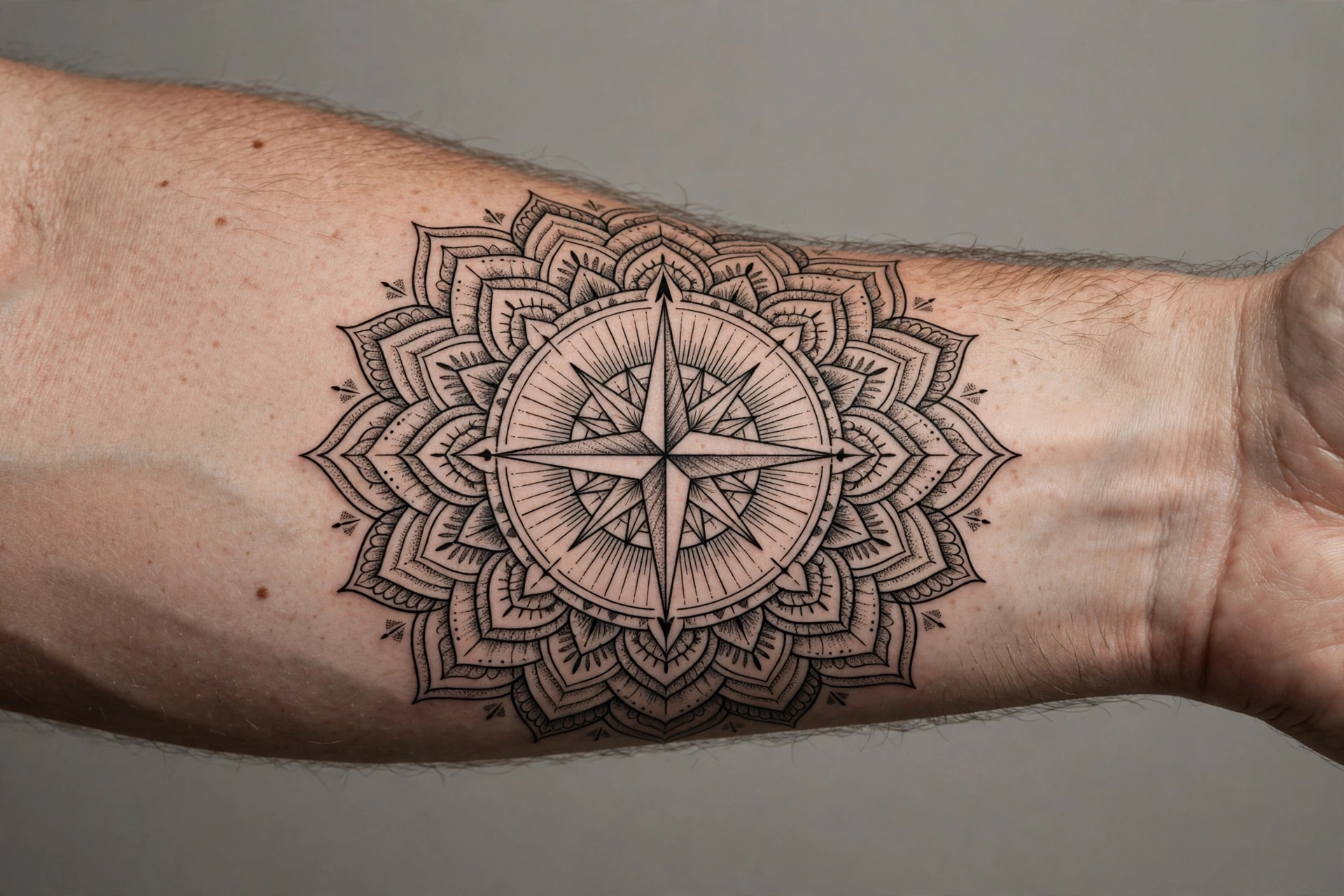
31. Compass Mandala
A compass mandala pairs direction and guidance with the mandala’s balance — a reminder to stay on course. It is a clean, structured design that works well on the forearm, chest or upper arm. Pain is low to moderate. The downside: compass points are fine and sharp, so they need slightly bolder lines to age well. See also our compass tattoo ideas for more direction-inspired designs.
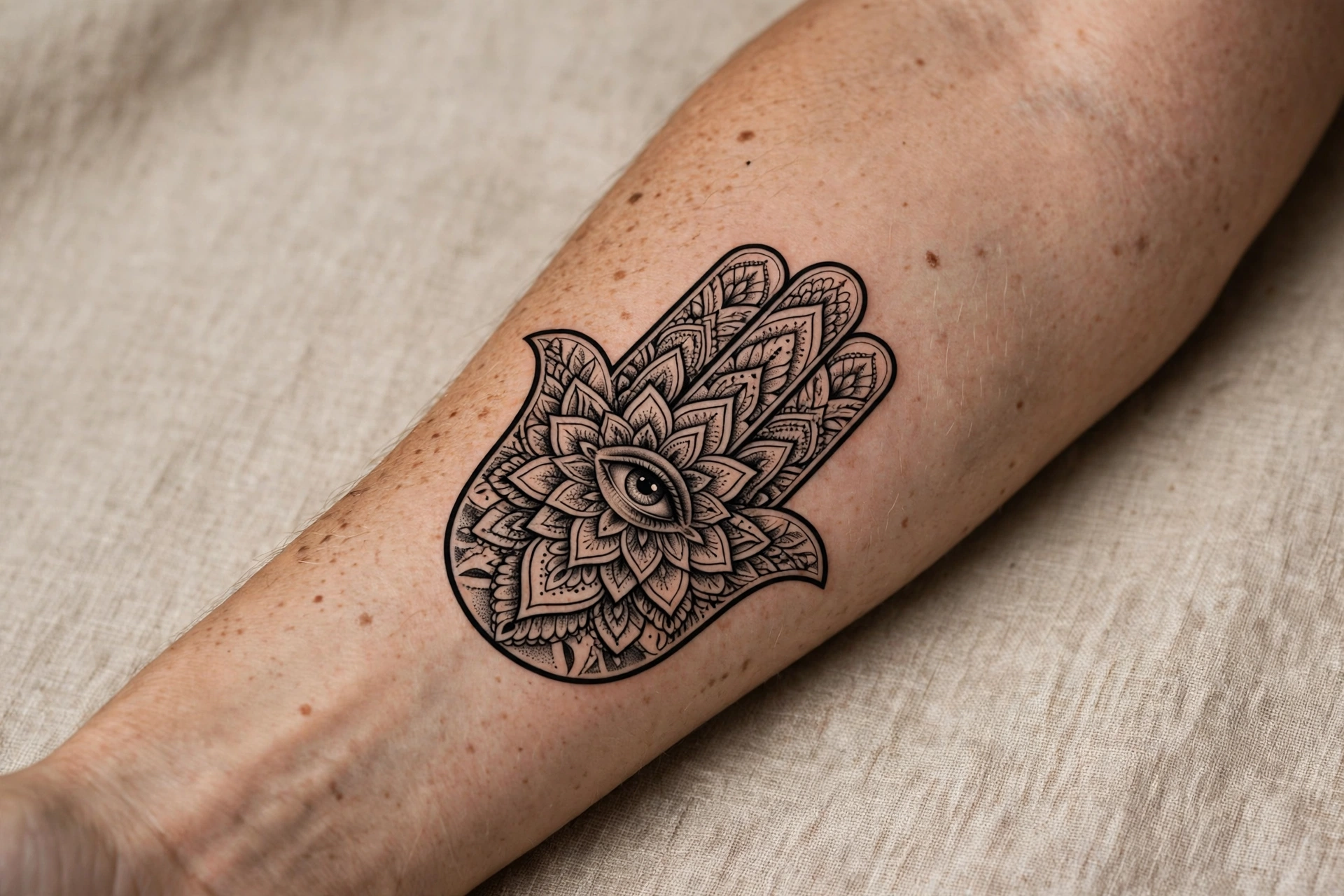
32. Hamsa Mandala
The Hamsa hand, a symbol of protection across Middle Eastern and North African cultures, sits beautifully inside mandala rings. It is a meaningful, protective design for the back of the hand, forearm or chest. Pain is moderate. The downside: the Hamsa carries deep cultural and religious meaning, so wear it with respect and understanding.
Modern & Personal Mandalas
33. Half Mandala
A half mandala tattoo uses only one side of the circle — a semi-circle of pattern that sits elegantly on the shoulder, wrist or ankle. It is modern, minimal and surprisingly striking for its simplicity. Pain is low to moderate depending on placement. The downside: the flat edge must be perfectly straight, or the whole design looks unfinished.
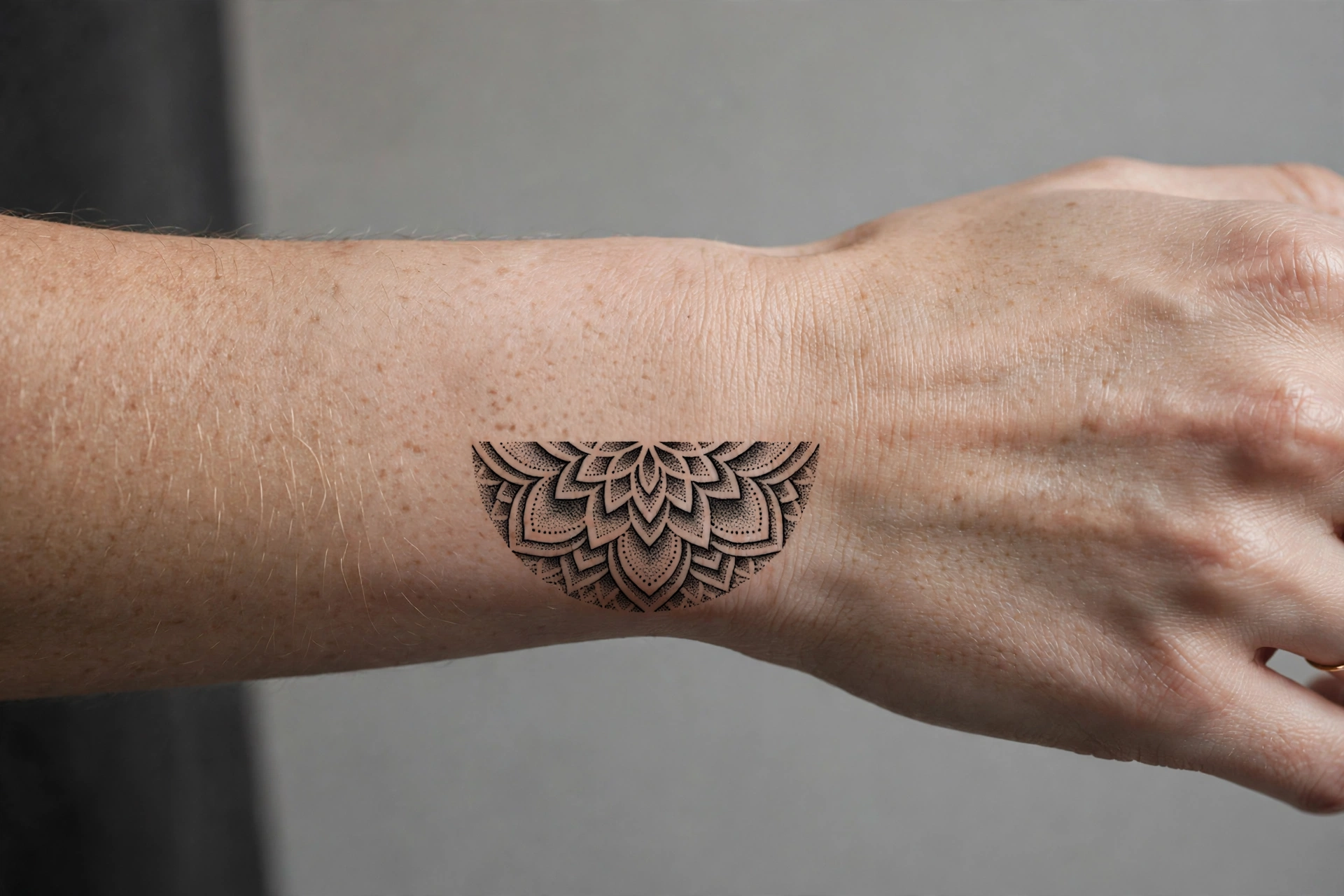
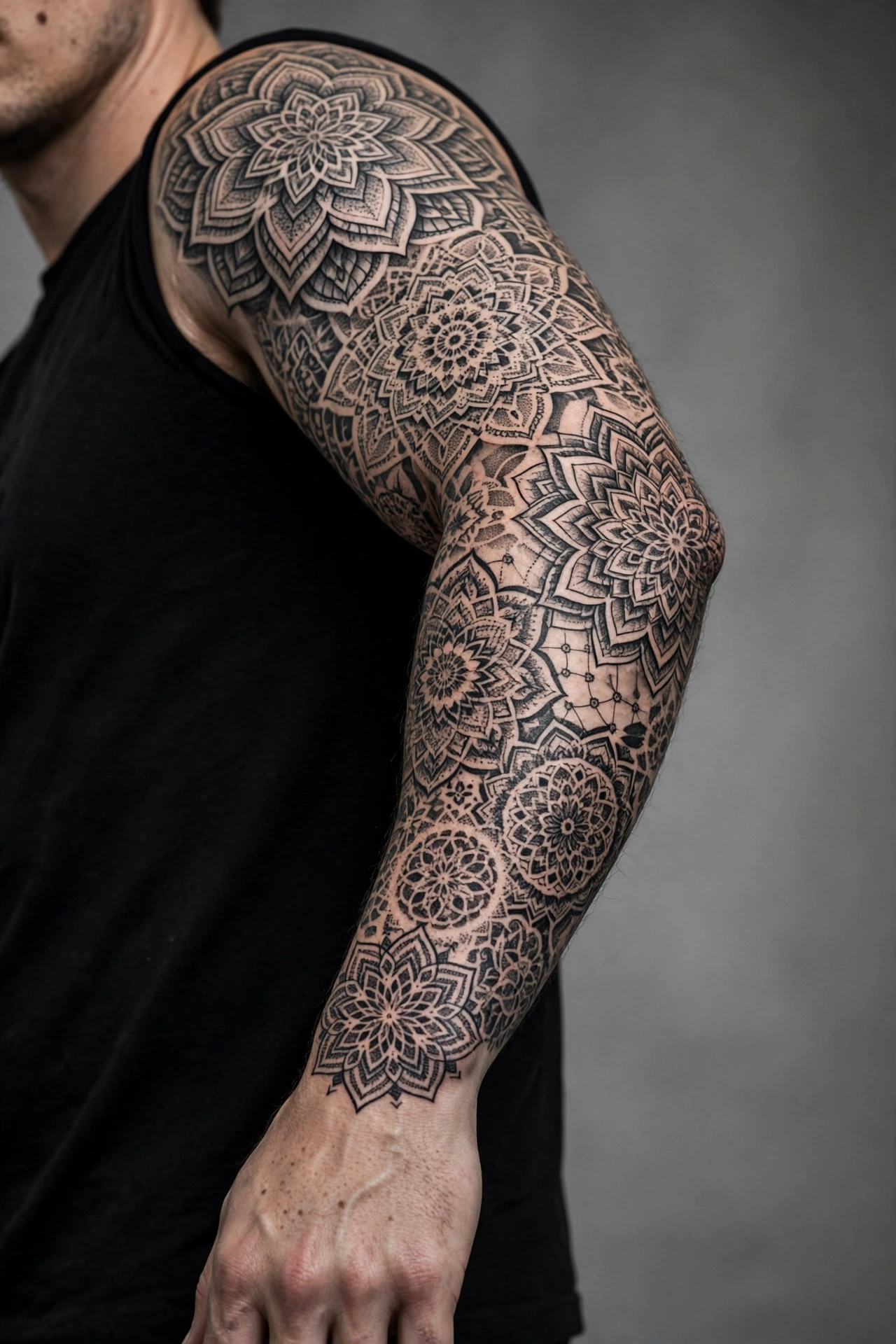
34. Mandala Sleeve
A mandala tattoo sleeve builds the whole arm into one flowing geometric composition — circles, bands and dotwork shading that connect from shoulder to wrist. It is a commitment and a showpiece. Pain varies by spot, and the work takes multiple sessions. The downside: it is expensive, time-consuming and hard to cover, so plan it carefully with your artist.
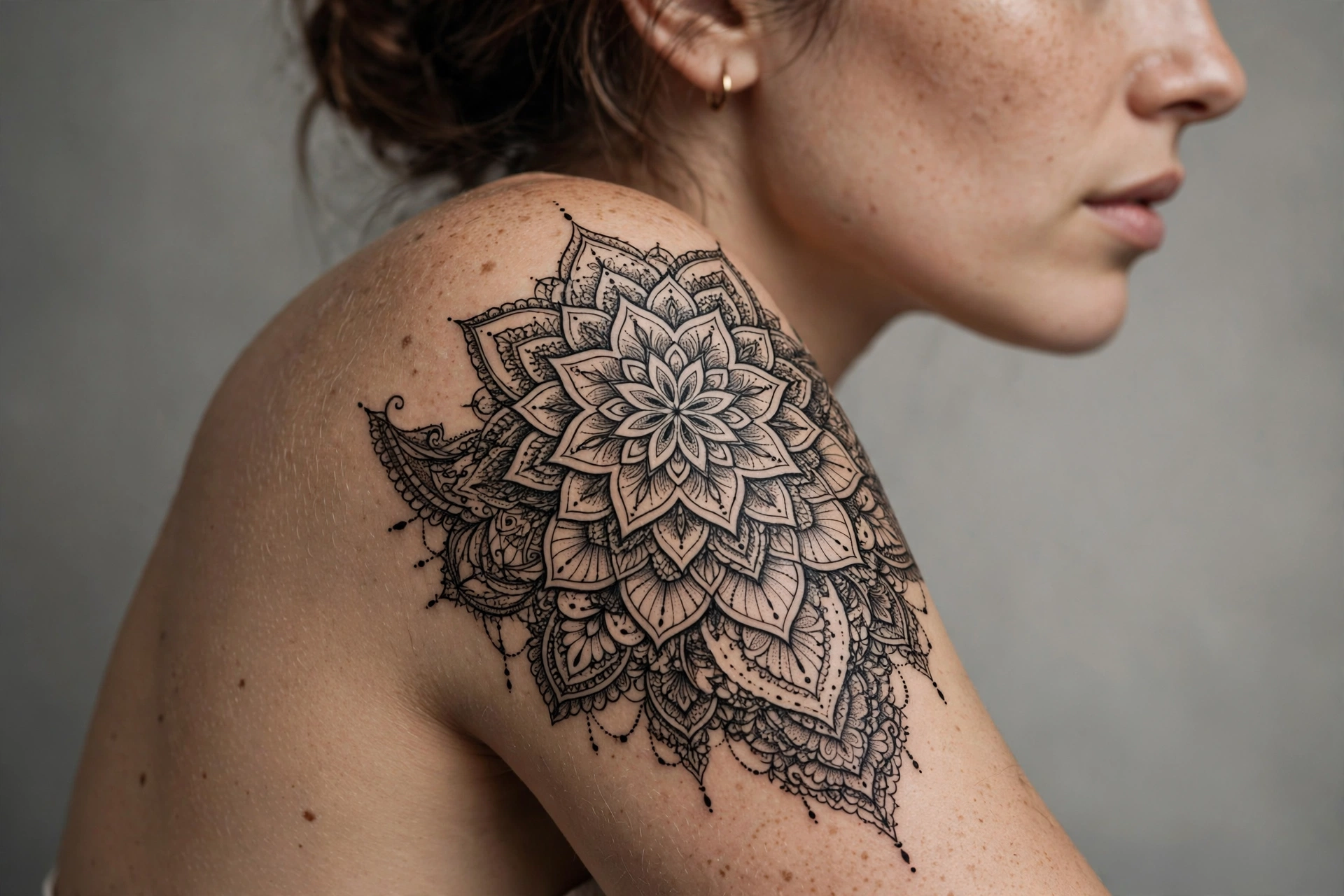
35. Ornamental Mandala
An ornamental mandala leans into jewellery-like detail — fine chains, beads, lace and filigree that make the tattoo look like a permanent ornament. It is stunning on the shoulder or upper arm, where it sits like a piece of jewellery. Pain is moderate. The downside: ornamental fine lines are the most fragile of all mandala styles and will need touch-ups.
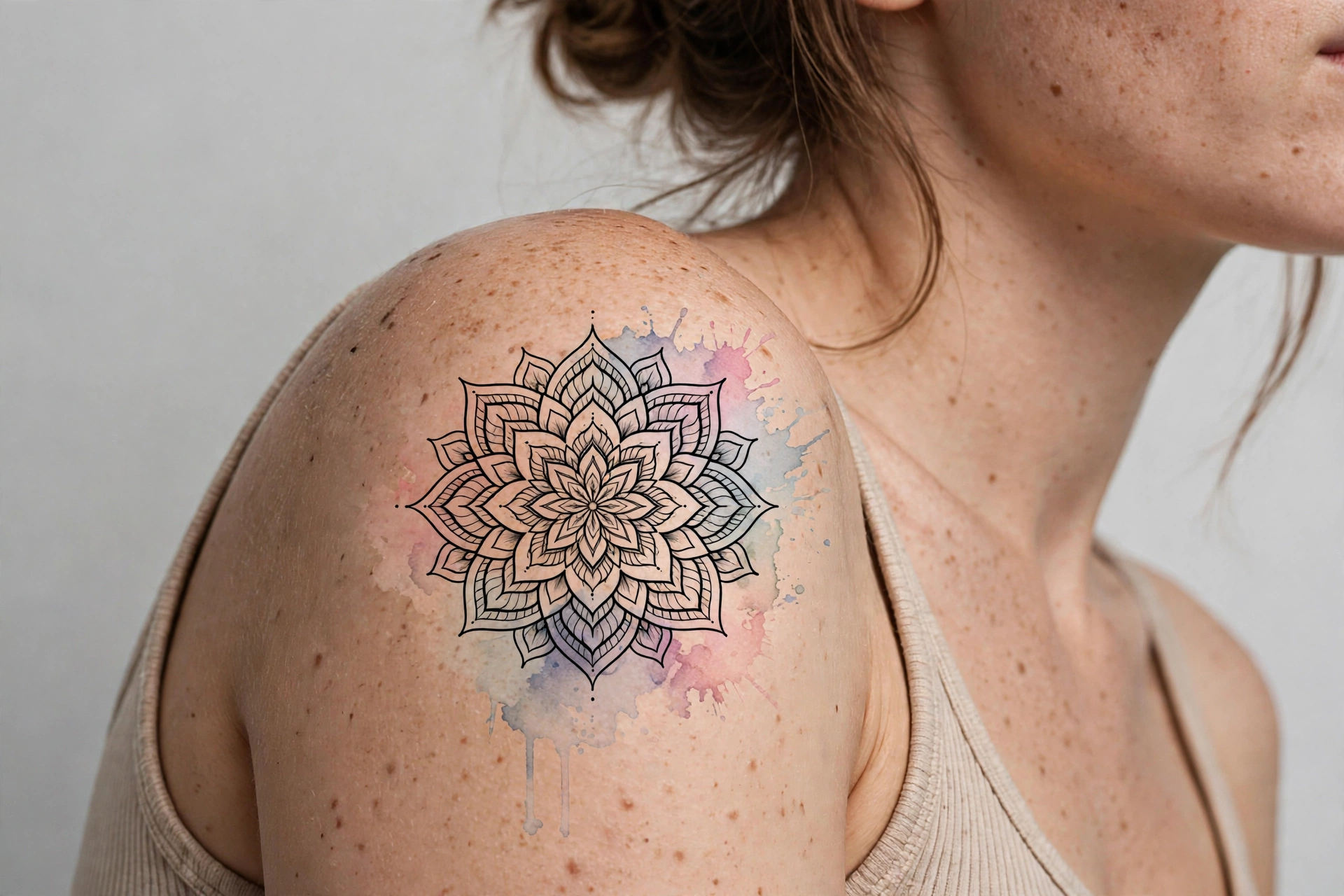
36. Watercolor Mandala
Soft watercolour washes bleed behind crisp mandala linework, giving the design a painterly, dreamy quality. It is a lovely choice for anyone who wants colour without heavy shading. Best on the thigh or upper arm. Pain is moderate. The downside: watercolour fades fastest of all colour styles, so expect it to soften noticeably within a few years.
37. Birth Flower Mandala
A birth flower mandala weaves your birth month’s flower — or a loved one’s — into the mandala rings, making the design deeply personal. It is a thoughtful gift to yourself and a beautiful way to honour someone. Best on the forearm or shoulder. Pain is low to moderate. The downside: the flower must be recognisable, so do not shrink it too small.
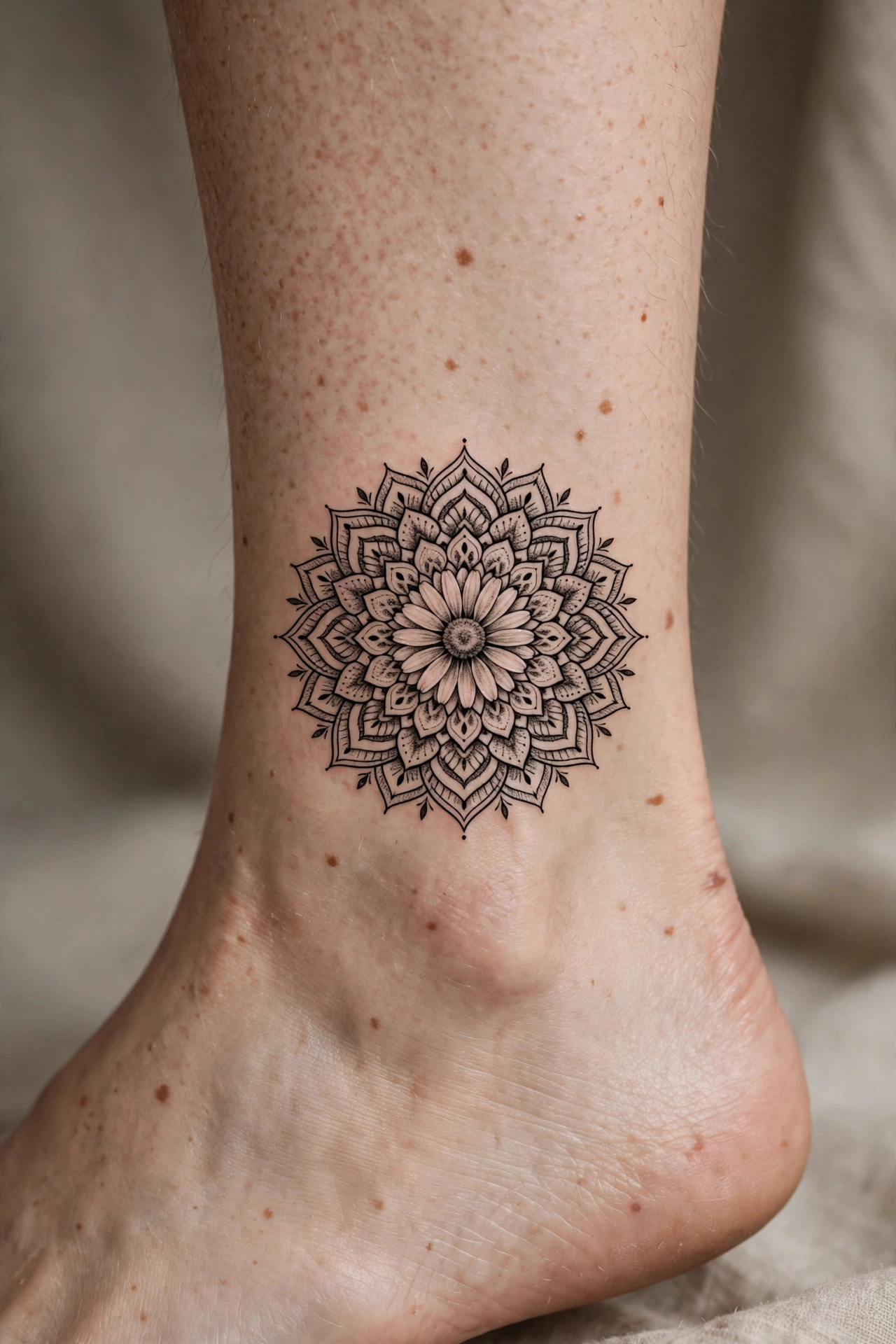
38. Zodiac Mandala
Your zodiac sign, constellation or birth chart symbols arranged inside mandala rings — a zodiac mandala is personal astrology made beautiful. It suits the upper arm, back or forearm. Pain is moderate. The downside: zodiac symbols are small and detailed, so they need a larger canvas than you might expect.
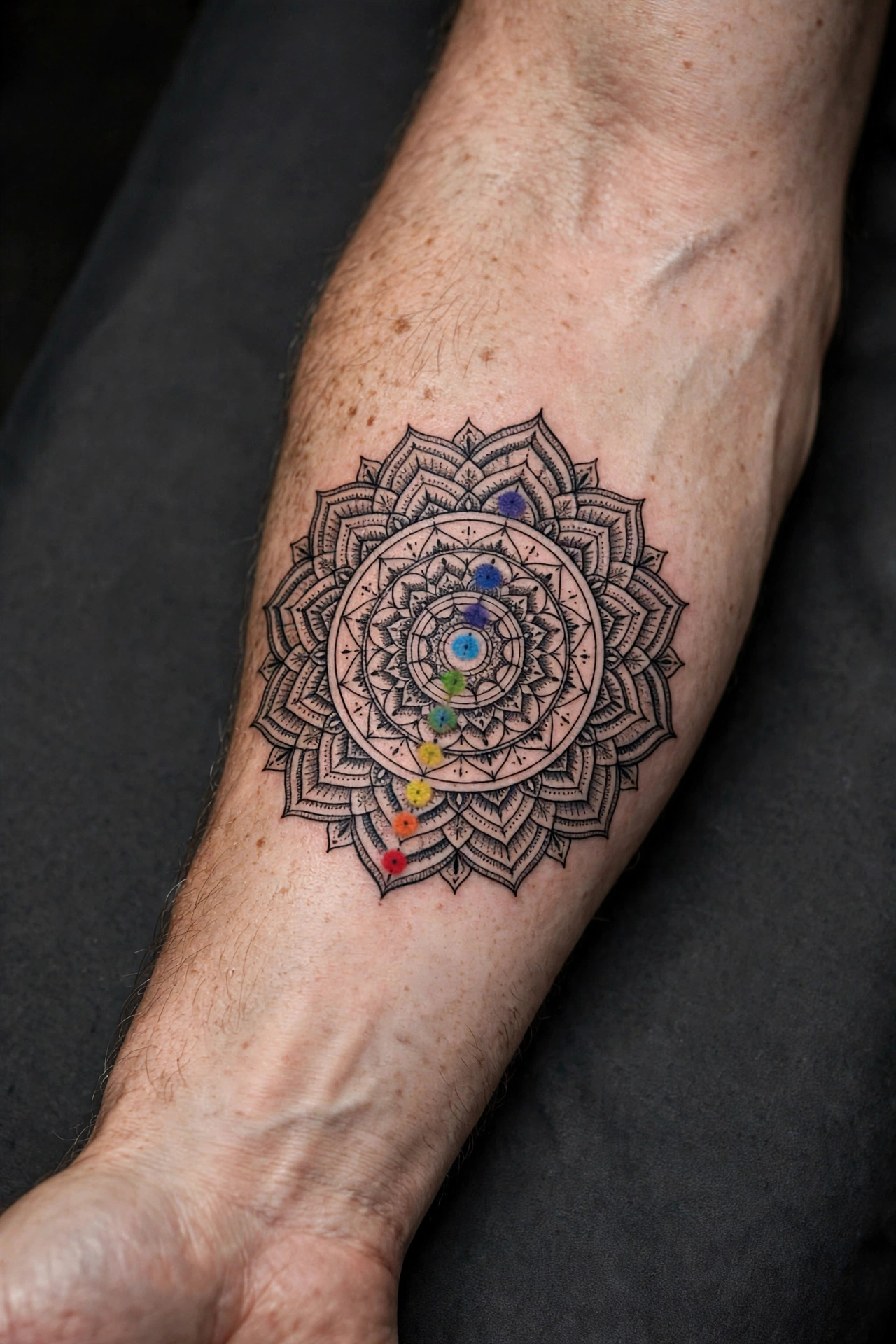
39. Chakra Mandala
A chakra mandala maps the body’s seven energy centres — from root to crown — into a single circular design, often with the lotus and colour of each chakra. It is a deeply spiritual choice for the forearm or upper arm. Pain is low to moderate. The downside: colour chakra work fades unevenly, so the brightest colours will need the most care.
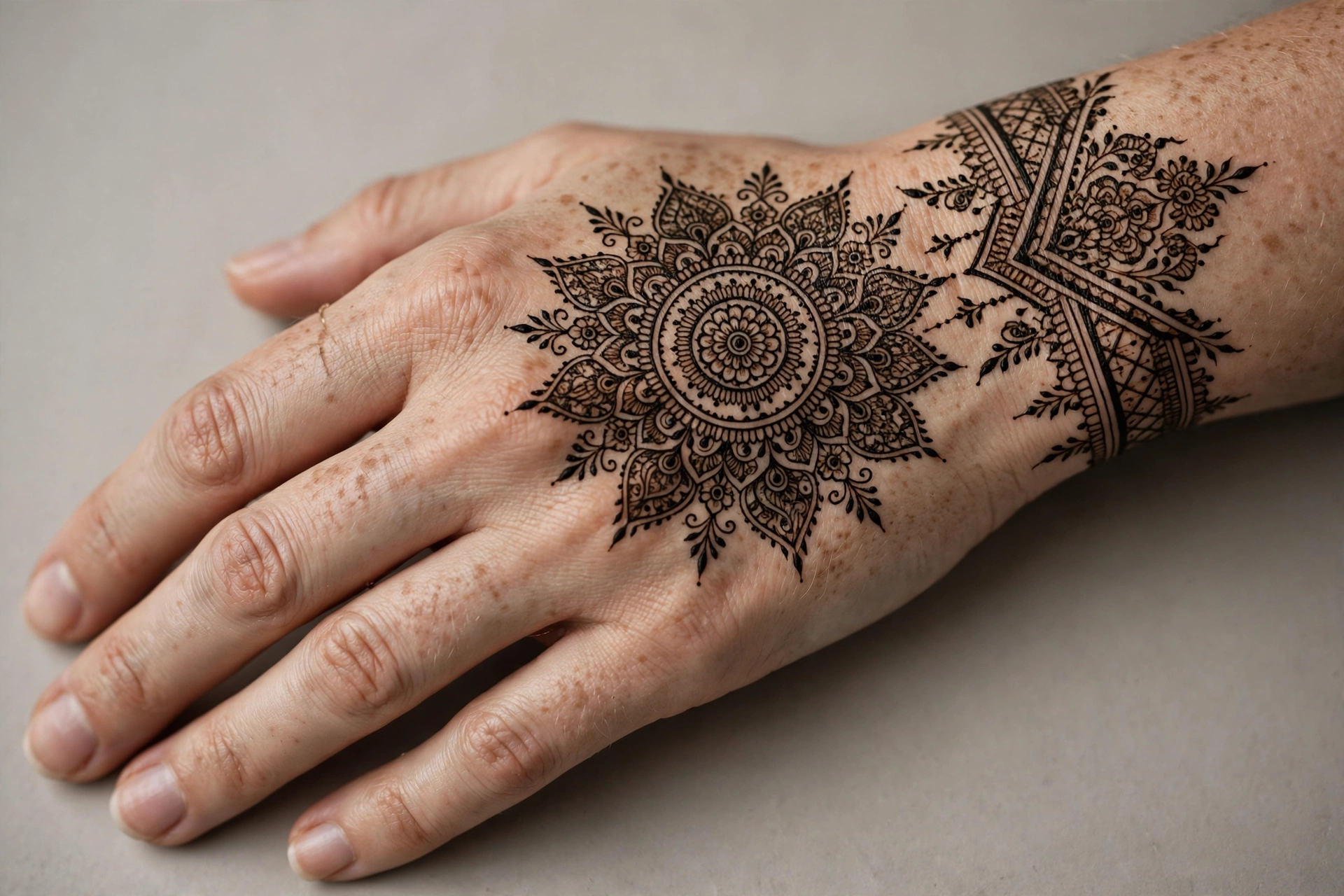
40. Henna-Inspired Mandala
Henna mandala designs borrow the flowing, lace-like patterns of traditional mehndi — delicate, intricate and deeply feminine. A henna-inspired mandala tattoo gives you the beauty of henna permanently, without the fortnight fade. It suits the hand, wrist or forearm. Pain is moderate on the hand. The downside: hand tattoos fade fastest of all, so this one will need the most touch-ups.
Pain Levels by Placement
Mandala tattoo pain depends far more on placement than on the design itself — and mandalas are often large, symmetrical pieces that take hours, so the spot matters. Our full tattoo pain chart breaks every area down, but here are the mandala hotspots:
- Outer arm / thigh: 3/10 — the easiest large spots. Fleshy, flat, and forgiving; ideal for a first big mandala.
- Forearm: 3/10 — low pain, easy healing, and a flat canvas that keeps the circle true.
- Upper back: 4/10 — moderate and manageable, though long sessions get tiring lying face-down.
- Shoulder cap: 3/10 — gentle on the deltoid, sharper near the collarbone.
- Wrist: 5/10 — thin skin and bone close to the surface; quick, but stingy.
- Ankle: 5/10 — similar to the wrist, with added rubbing from shoes during healing.
- Sternum: 7/10 — one of the most painful mandala placements. See our sternum tattoo ideas for more designs that work on this spot. The bone, the centre line and the long session combine into a serious test.
- Spine: 7/10 — directly over the vertebrae, with vibration that rattles through the whole back.
- Ribs: 8/10 — the most painful common mandala spot. Breathing moves the skin, and the bone is right underneath.
A mandala tattoo stencil session also takes time: the artist must place the stencil perfectly symmetrically, and you will be asked to stand, breathe normally and hold still while they check it from every angle. That patience pays off — a mandala that is even slightly off-centre will bother you forever.
Cost
Mandala tattoo cost varies with size, detail and the artist’s skill — geometric specialists charge more, and they are worth it. See our full guide to tattoo prices in 2026 for the wider picture.
- Small (2–3 inches, wrist or ankle): $100–$250, usually one session of 1–2 hours.
- Medium (4–6 inches, shoulder, forearm or sternum): $250–$600, one session of 2–4 hours, sometimes two.
- Large (7+ inches, back, thigh or sleeve section): $600–$1,500+, two to four mandala tattoo sessions of 3–5 hours each.
- Full mandala sleeve: $1,500–$4,000+, spread over many sessions across weeks or months.
Dotwork and ornamental styles cost more per hour because they are slower. A cheap mandala is almost always a false economy — fixing a wonky circle costs far more than paying a good geometric artist in the first place. Always ask for a quote after a consultation, and tip 15–20% for good work.
Healing Time
Mandala tattoo healing follows the usual tattoo timeline, with a few mandala-specific quirks. Expect the surface to heal in 2–3 weeks, with the deeper layers settling over 4–6 weeks. Dotwork and heavy blackwork can take a little longer, and large pieces may feel tender for a full month.
The first thing to blur is almost always the centre — the bindu and the finest inner rings sit in the most detailed, most-worked skin. That is normal, not a mistake, and it is why a touch-up at 6–8 weeks is common for mandalas. Do not judge the final look until at least a month has passed. Full aftercare detail is in our complete tattoo healing guide.
Placement Pros and Cons
| Placement | Pros | Cons |
|---|---|---|
| Shoulder | Flattering curve, low pain, easy to show or hide | Circle can distort on the curve |
| Sternum | Stunning, symmetrical, very popular | High pain (7/10), centre blurs first |
| Upper back | Large flat canvas, best detail | You cannot see it yourself |
| Wrist | Visible, delicate, quick | Fades fast, moderate pain |
| Thigh | Low pain, large canvas, private | Can shift with weight changes |
| Ankle | Dainty, discreet, pretty | Thin skin, shoe rubbing while healing |
| Forearm | Low pain, easy healing, always visible | Always on show at work |
| Spine | Elegant, dramatic, symmetrical | High pain, uncomfortable healing |
The best mandala tattoo placement is the one that fits the design’s shape, your pain tolerance and your lifestyle — not the trendiest spot on social media. A circle needs a flat or gently curved surface to stay a circle, so talk through placement with your artist before you commit.
Aftercare Essentials
Good mandala tattoo aftercare is what separates a crisp, lasting mandala from a blurry one. The American Academy of Dermatology recommends keeping the tattoo clean, moisturised and protected from the sun — and mandalas need a little extra attention.
- Keep it clean and dry: wash gently with fragrance-free soap, pat dry, and apply a thin layer of fragrance-free lotion for tattoos — never a thick coat.
- Dotwork and fine-line care: fine lines and dots are fragile. Do not pick, scratch or over-moisturise, and expect the centre to look slightly soft while it heals.
- Touch-ups: plan a touch-up 6–8 weeks after your session. The centre blurs first, and fine-line petals are the next to soften. A good artist will include one free touch-up — ask before you book.
- Sun protection: sunscreen is non-negotiable once healed. UV light is the biggest cause of mandala tattoo fading, especially for dotwork, watercolour and colour pieces. Keep new ink out of direct sun entirely for the first month.
- No soaking: no baths, pools or hot tubs for at least two weeks. Showers only.
- Loose clothing: tight fabric rubs the fine detail, especially on the sternum, spine and thigh.
If you notice spreading redness, heat, swelling or pus, contact your artist and a doctor promptly — the FDA notes that tattoos carry a risk of infection and allergic reaction, so do not ignore warning signs. See the FDA’s tattoo safety page for more on risks and what to watch for.
Common Mistakes to Avoid
- Going too small. A mandala squeezed into two inches loses its detail within a year. Give the design room to breathe.
- Choosing a non-geometric artist. Mandalas demand symmetry. Check the artist’s geometric and dotwork portfolio, not just their general work.
- Skipping the stencil check. Stand up, look in the mirror, breathe normally, and check the stencil from every angle before the needle touches skin.
- Ignoring fading. All tattoos fade, but fine-line and dotwork mandalas fade fastest. Budget for touch-ups and wear sunscreen.
- Getting a sacred symbol without understanding it. The Sri Yantra, Flower of Life and chakra designs carry real meaning. Learn it first, or choose a simpler pattern.
- Booking on price alone. A cheap mandala is the most expensive tattoo you will ever get, once the cover-up is counted.
- Poor aftercare. Picking scabs, sunbathing too soon or drowning the tattoo in cream will blur the fine detail you paid for.
Mandala Tattoo Styles Compared
| Style | Pain | Session Length | How It Ages | Best For |
|---|---|---|---|---|
| Classic linework | 4/10 | 2–4 hours | Good; fine lines soften | First mandala, any placement |
| Geometric | 4/10 | 2–5 hours | Good; angles blur slightly | Modern look, men, forearms |
| Dotwork mandala | 5/10 | 3–6 hours | Softens and spreads | Shading lovers, sternum, shoulder |
| Floral mandala | 4/10 | 3–5 hours | Good if large enough | Women, back, thigh, shoulder |
| Blackwork mandala | 5/10 | 3–5 hours | Best of all; bold ink holds | Statement pieces, thigh, arm |
| Minimalist / fine-line | 3/10 | 1–2 hours | Fades fastest; needs touch-ups | Small, subtle, first tattoo |
| Ornamental mandala | 6/10 | 3–6 hours | Fragile; fine lines blur first | Sternum, jewellery look |
| Watercolor mandala | 4/10 | 2–4 hours | Fades fastest of colour styles | Colour lovers, thigh, arm |
If you are torn between styles, our guide to tattoo styles explained walks through every major style so you can compare them side by side.
Frequently Asked Questions
What does a mandala tattoo mean?
A mandala tattoo means balance and harmony, wholeness, inner peace and the spiritual journey. The word comes from Sanskrit for “circle,” and in Hindu and Buddhist tradition the mandala is a map of the universe radiating from a central point, the bindu. Many people also choose it as a symbol of healing, transformation or a fresh start.
How much does a mandala tattoo cost?
A small mandala tattoo costs $100–$250, a medium piece $250–$600, and a large back or thigh mandala $600–$1,500 or more. A full mandala sleeve can run $1,500–$4,000+. Dotwork and ornamental styles cost more because they take longer, and prices vary by artist, city and studio.
How painful is a mandala tattoo?
Mandala tattoo pain depends on placement: outer arm and thigh are around 3/10, the forearm 3/10, the upper back 4/10, the wrist and ankle 5/10, and the sternum and spine 7/10. Ribs are the most painful at around 8/10. Large mandalas also mean long sessions, which adds to the discomfort even in low-pain spots.
How long does a mandala tattoo take?
A small mandala takes 1–2 hours, a medium piece 2–4 hours, and a large back or thigh mandala 3–5 hours per session across two to four mandala tattoo sessions. A full sleeve takes many sessions over weeks or months. Dotwork is the slowest technique, so a dotwork mandala often needs an extra session.
Do mandala tattoos fade?
Yes — all tattoos fade, and mandalas are more vulnerable than most because they rely on fine lines and dotwork. Mandala tattoo fading shows first in the centre, where the finest detail sits, and in dotwork shading, which softens and spreads with age. Sunscreen, good aftercare and occasional touch-ups keep a mandala crisp for years.
How often do mandala tattoos need a touch up?
Most mandala tattoos benefit from a touch up 6–8 weeks after the first session, once healing is complete, to sharpen the centre and any fine lines that softened. After that, expect a light touch-up every 3–5 years for fine-line and dotwork pieces, and every 5–8 years for bold blackwork. Colour mandalas need touch-ups more often.
What is the best placement for a mandala tattoo?
The best mandala tattoo placement depends on size: shoulder cap and forearm for medium pieces, upper back and thigh for large detailed work, sternum for a striking symmetrical design, and wrist or ankle for a small mandala tattoo. Flat or gently curved skin keeps the circle true, so avoid sharply curved spots for large designs.
Is a mandala tattoo disrespectful?
A mandala tattoo is not inherently disrespectful, but the symbols come from Hindu and Buddhist traditions and deserve respect. Learn what the design means, avoid sacred diagrams like the Sri Yantra as casual decoration, and choose a design that reflects genuine appreciation rather than a passing trend. If in doubt, ask your artist or choose a simpler geometric pattern.
Quick Summary
A mandala tattoo is a circular, symmetrical design that means balance, wholeness and inner peace — a small map of the universe worn on your skin. The best designs give the pattern room: a classic circular mandala on the shoulder, a lotus mandala on the sternum, a dotwork mandala on the back, or a small minimalist mandala on the wrist. Expect to pay $150–$800 for a medium piece, feel the most pain on the sternum and spine, and plan a touch-up after healing, because the fine centre detail blurs first. Choose a geometric specialist, check the stencil from every angle, protect it from the sun, and your mandala will stay crisp for years.
References
- American Academy of Dermatology Association. “Tattoos: Caring for Tattooed Skin.” https://www.aad.org/public/everyday-care/skin-care-basics/tattoos/caring-for-tattooed-skin
- U.S. Food and Drug Administration. “Think Before You Ink: Tattoo Safety.” https://www.fda.gov/consumers/consumer-updates/think-you-ink-tattoo-safety
- Encyclopaedia Britannica. “Mandala.” https://www.britannica.com/topic/mandala
- The Metropolitan Museum of Art. “Heilbrunn Timeline of Art History: Mandalas.” https://www.metmuseum.org/toah/hd/mand/hd_mand.htm
Which one is your favorite?