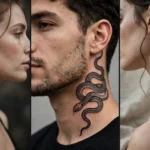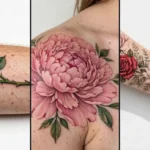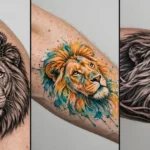
There is no hiding a neck tattoo — and that is exactly the point. Sitting right beside your face, it is the boldest canvas in tattooing: visible every day, impossible to ignore, unforgettable when done right. The wrong choice is just as visible. So before the needle touches that thin, moving skin, you need the full picture: which designs work on the neck, how much each zone hurts, what it costs, and how it ages.
Below are 40 neck tattoo ideas — side neck, nape, behind the ear and throat — each with design, meaning, placement and downside, plus pain, cost, healing and aftercare guidance.
Quick Answer
A neck tattoo is ink placed on the side, back (nape), front (throat) or behind the ear. Costs run from $150 (tiny fine-line behind the ear) to $1,000+ (large wrap-around), pain from 4/10 (nape) to 9/10 (throat), and surface healing takes 2–4 weeks. Start at the nape or behind the ear if unsure — the throat is a lifetime commitment.
Why Neck Tattoos Are Different From Every Other Placement
Neck tattoos for men and women have both surged, and the reason is simple: no other placement sits this close to your face. A forearm tattoo can be covered by a sleeve; a neck tattoo greets everyone you meet. That visibility is why neck tattoos mean confidence and a willingness to be seen — and why they still draw more workplace judgment than almost any other spot.
The neck also moves constantly — you turn, look down, swallow and talk all day — so a design must follow the neck’s anatomy (jawline, the muscle running down each side, collarbone) instead of fighting it. Smart artists test the stencil while you turn your head; if it compresses or tilts, the placement is adjusted first. That movement test is the single most important step in any neck tattoo, and our tattoo pain chart explains why the neck ranks among the most painful zones.
If the neck feels too bold, a fine-line tattoo behind the ear or a small nape design gives you the same idea at lower visibility. The 50 tattoo meanings guide covers the symbolism behind many designs below.
What Does a Neck Tattoo Mean?
There is no single answer to “what do neck tattoos mean” — the meaning changes with the subject and with the spot. The nape is the quietest: protection and quiet strength, kept for yourself. The throat is the loudest: voice, self-expression and courage, sitting over your voice box for everyone to see. The side says confidence and individuality; behind the ear is the most private of all.
Subject meanings layer on top: snake for rebirth, butterfly for change and freedom, mandala for balance, script for a personal philosophy worn on your voice. Ask which message you want beside your face for decades — not just which design photographs prettiest.
Chapter 1: Side-Neck Classics
The tall, narrow canvas from behind the ear to the collarbone — the most popular neck placement of all.
1. Rose Vine
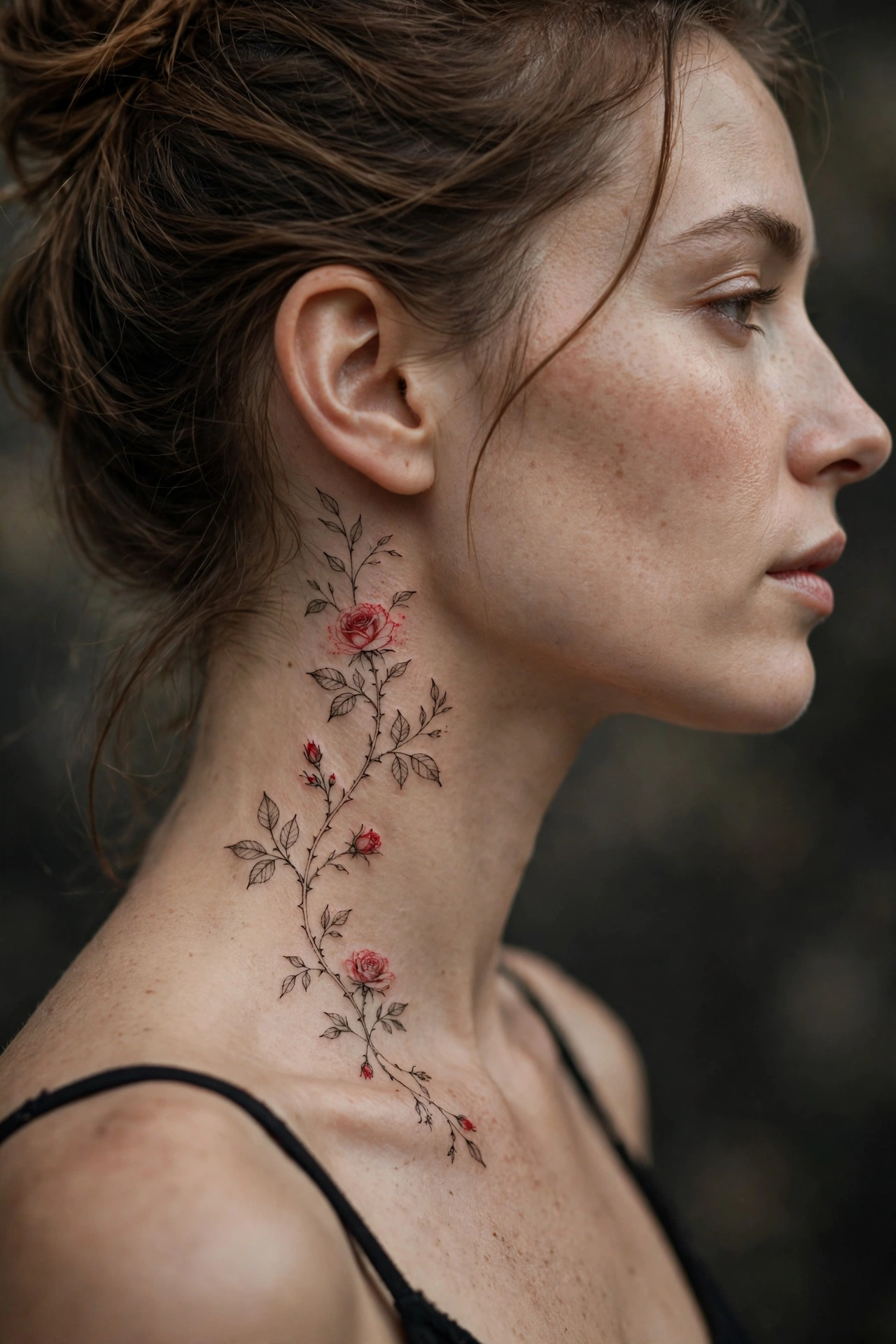
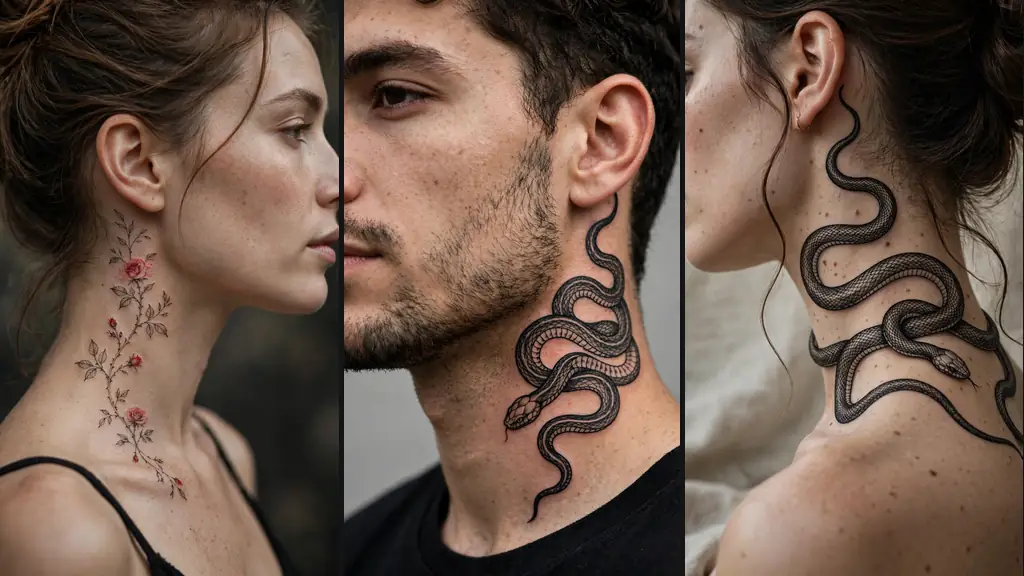
A rose vine winding down the side of the neck means love that grows and endures, with thorns adding protection. It follows the jaw and neck muscle beautifully. Best for romantics. Downside: vines need flow — a stiff vine looks pasted on, so plan the curve with your artist.
2. Wrapping Snake
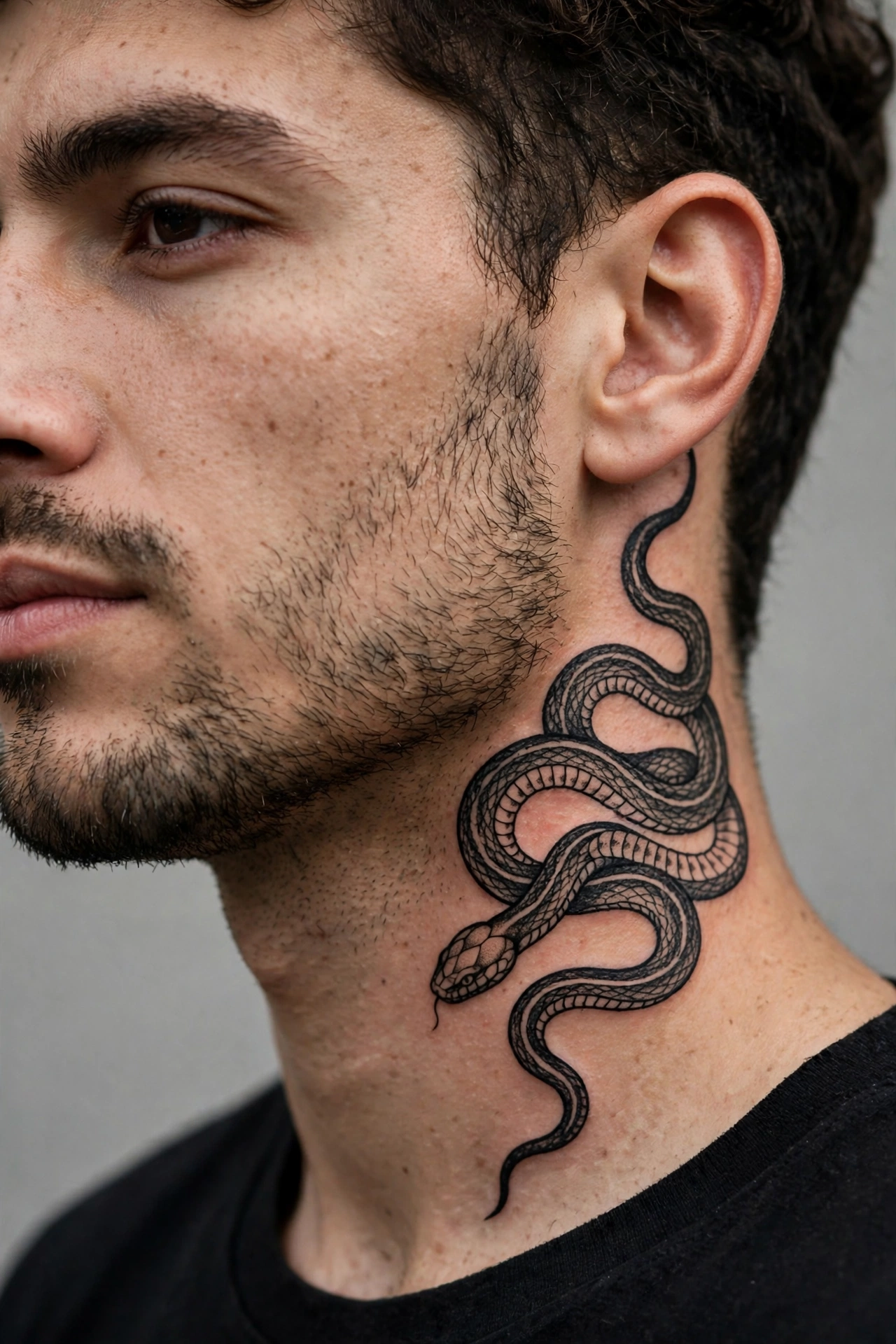
A snake coiling around the side of the neck means rebirth, transformation and shedding an old life. Best for anyone marking a major change. Downside: a snake squeezed too small loses its scale detail, so give it room.
3. Death’s-Head Moth
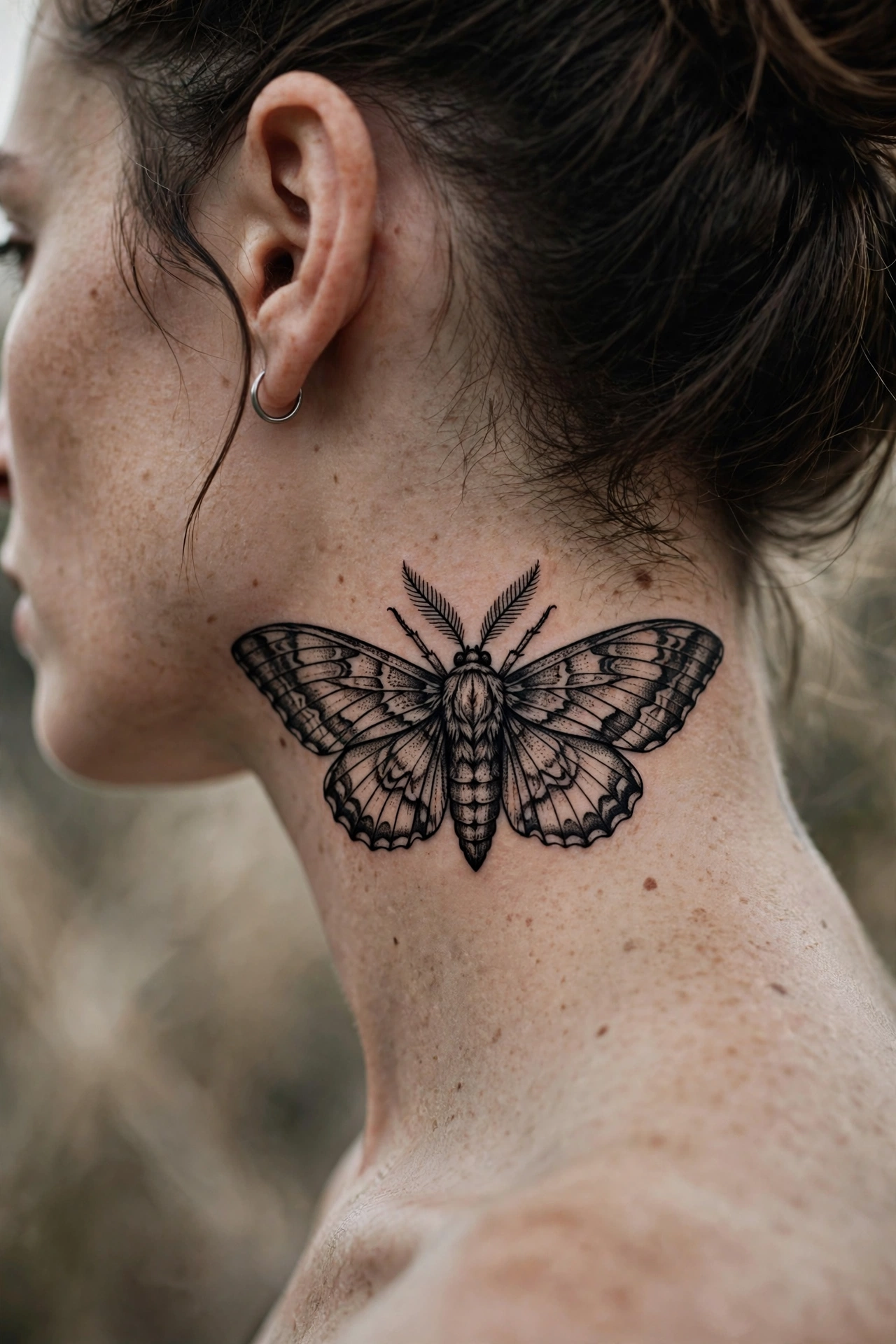
A moth below the ear means transformation, intuition and attraction to the light — darker and more mysterious than a butterfly. It suits blackwork on the side neck. Best for night owls and goths. Downside: fine wing detail fades fastest on the neck, so bold outlines matter.
4. Vertical Script
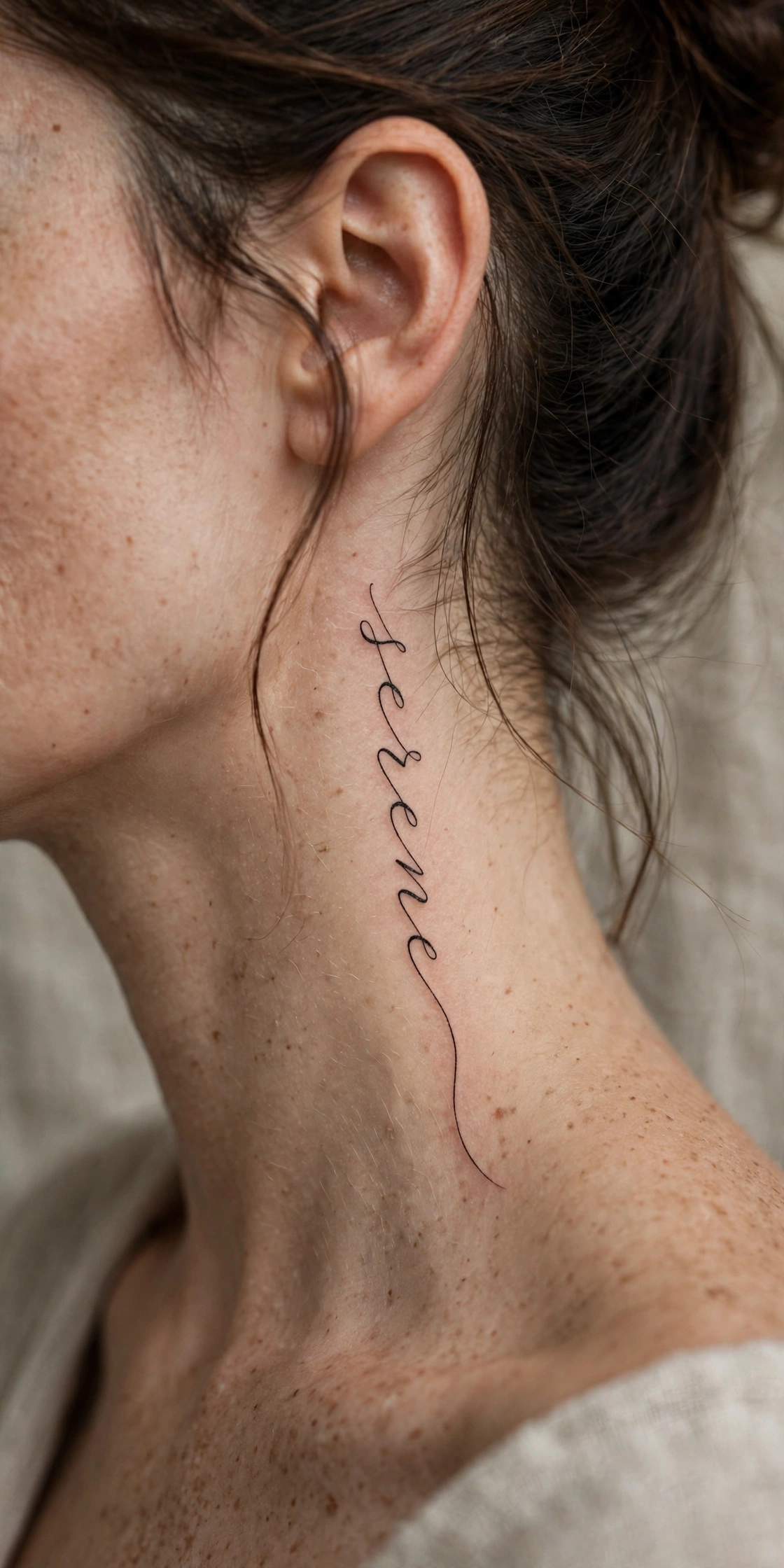
A single word in cursive down the side of the neck puts a personal philosophy where your voice lives. Best for minimalists with something to say. Downside: script must stay large enough to remain legible — tiny letters blur into a line.
5. Flowing Feather
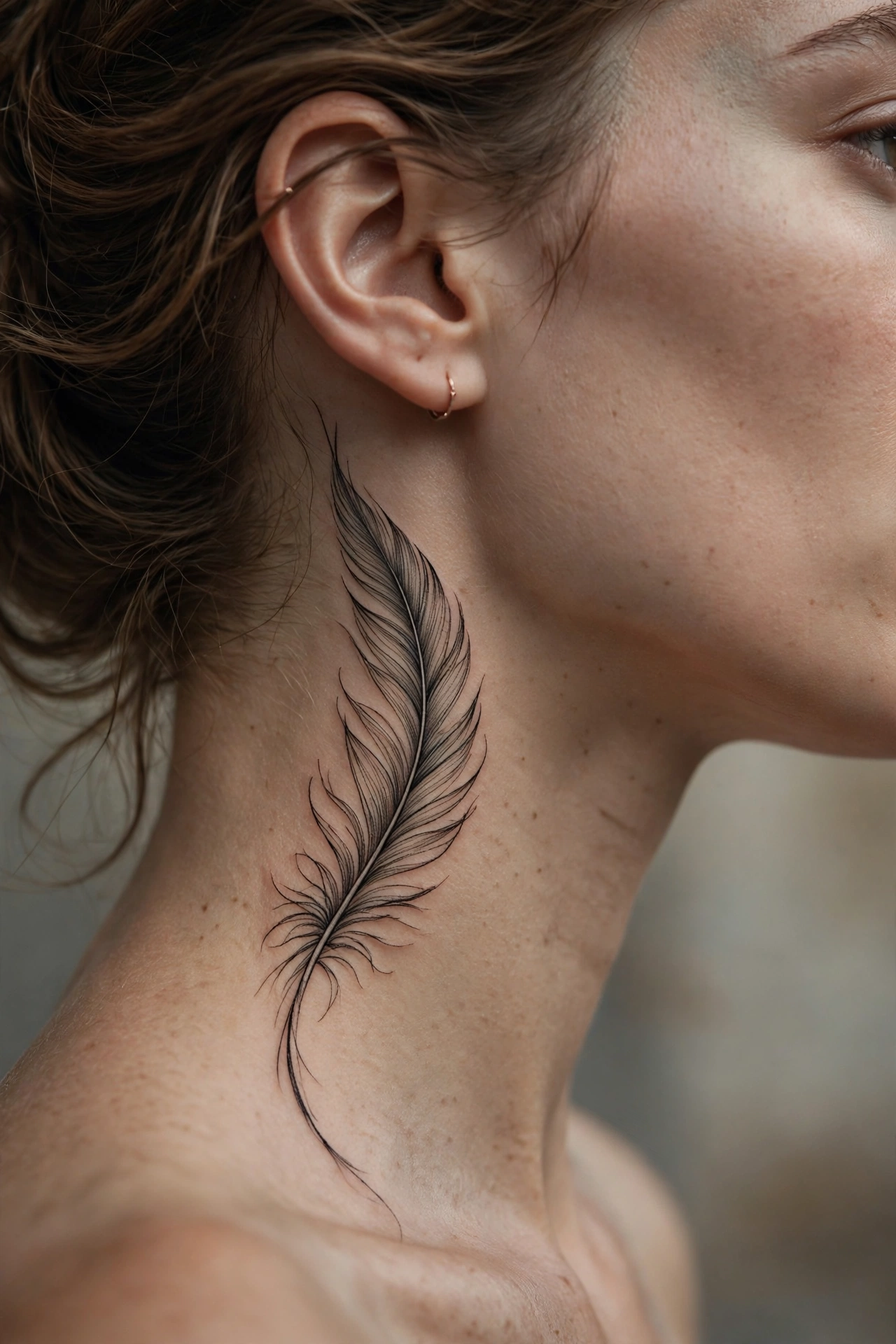
A feather flowing down the side of the neck means freedom, lightness and a free spirit. Best for dreamers. Downside: ultra-fine barbs are the first thing to fade, so expect a touch-up within a few years.
6. Dagger and Rose
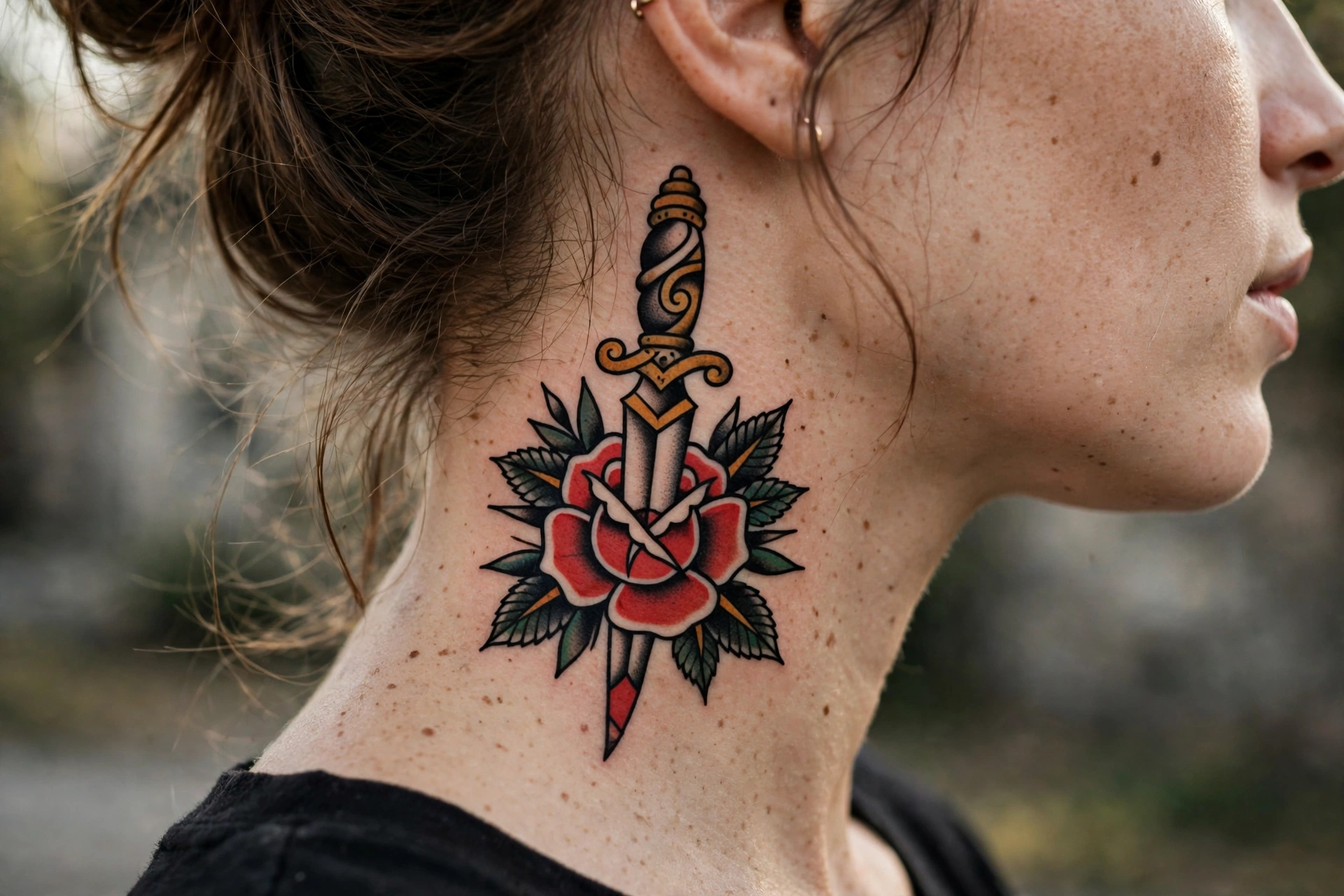
A dagger through a rose on the side neck means love and pain held together — beauty with a sharp edge. American traditional bold lines suit this placement perfectly. Best for old-school lovers. Downside: traditional colour needs a bold outline to survive neck movement, so avoid watery shading here.
7. Moon Phases
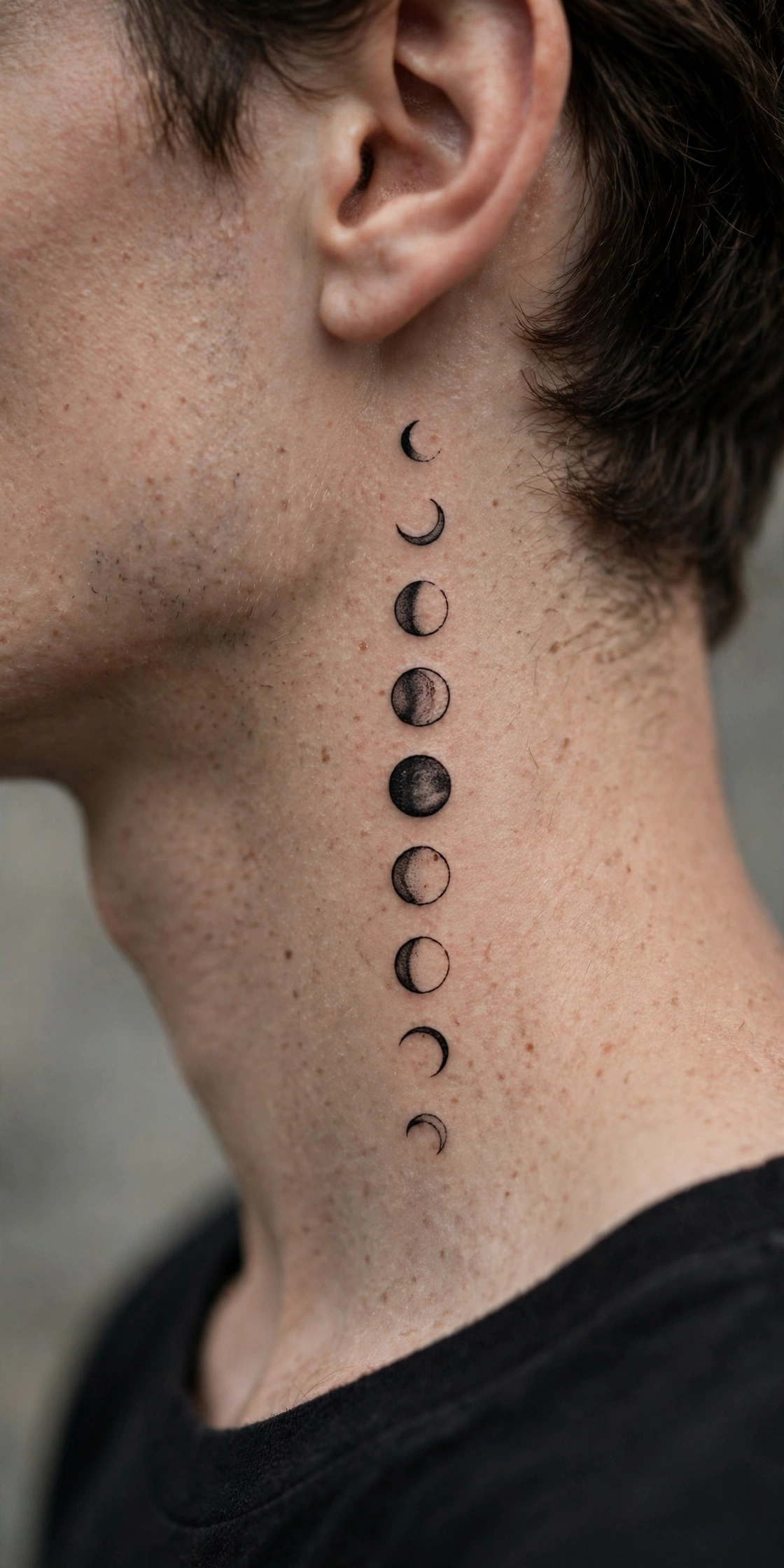
Vertical moon phases down the side of the neck mean cycles, growth and the passage of time. Small crescents and a full moon fit the neck’s vertical line exactly. Best for spiritual minimalists. Downside: uneven spacing shows badly on a curve, so check the stencil while turning your head.
8. Curling Dragon
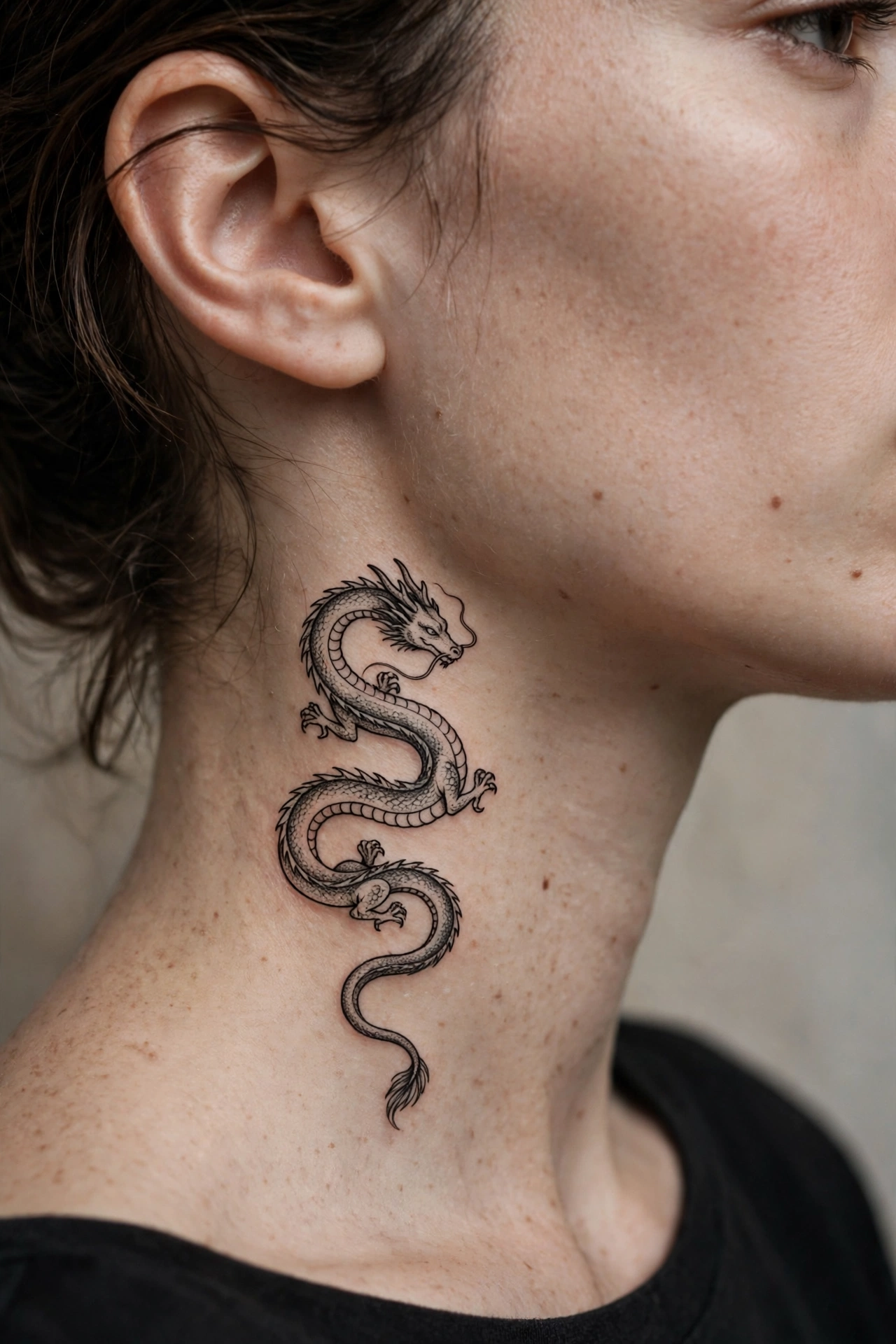
A small dragon curling along the side of the neck means power, wisdom and good fortune in Eastern tradition. Its coiled body follows the neck naturally. Best for fantasy lovers. Downside: dragons need detail to read as dragons — too small and it becomes a squiggle.
9. Wolf Head
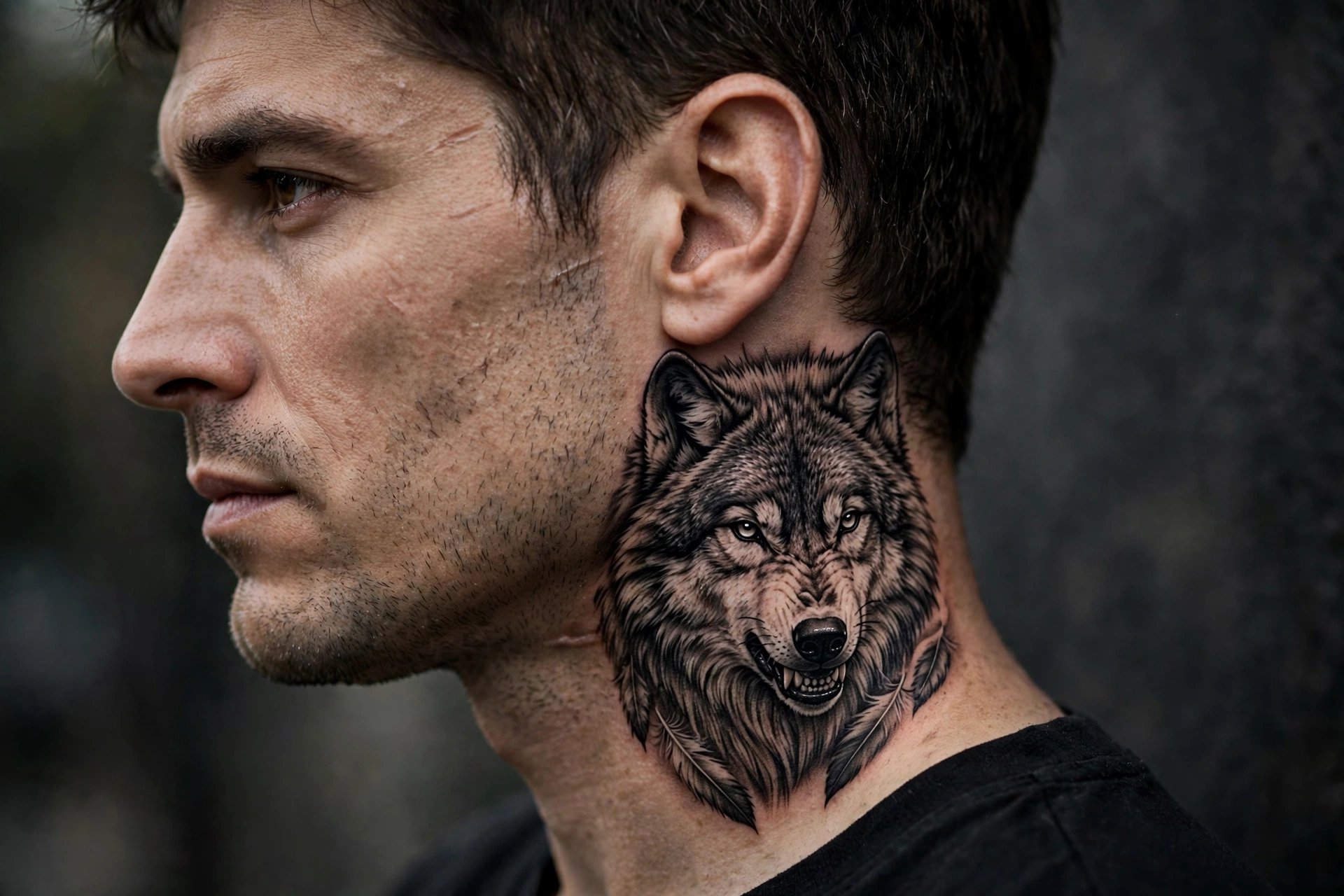
A wolf head on the side neck means loyalty, instinct and wild independence. The vertical length suits a face-forward composition, with the neck muscle giving shading something to wrap around. Best for lone wolves. Downside: realism needs a minimum size (around 10×8cm) to hold fur and eye detail.
10. Koi Fish
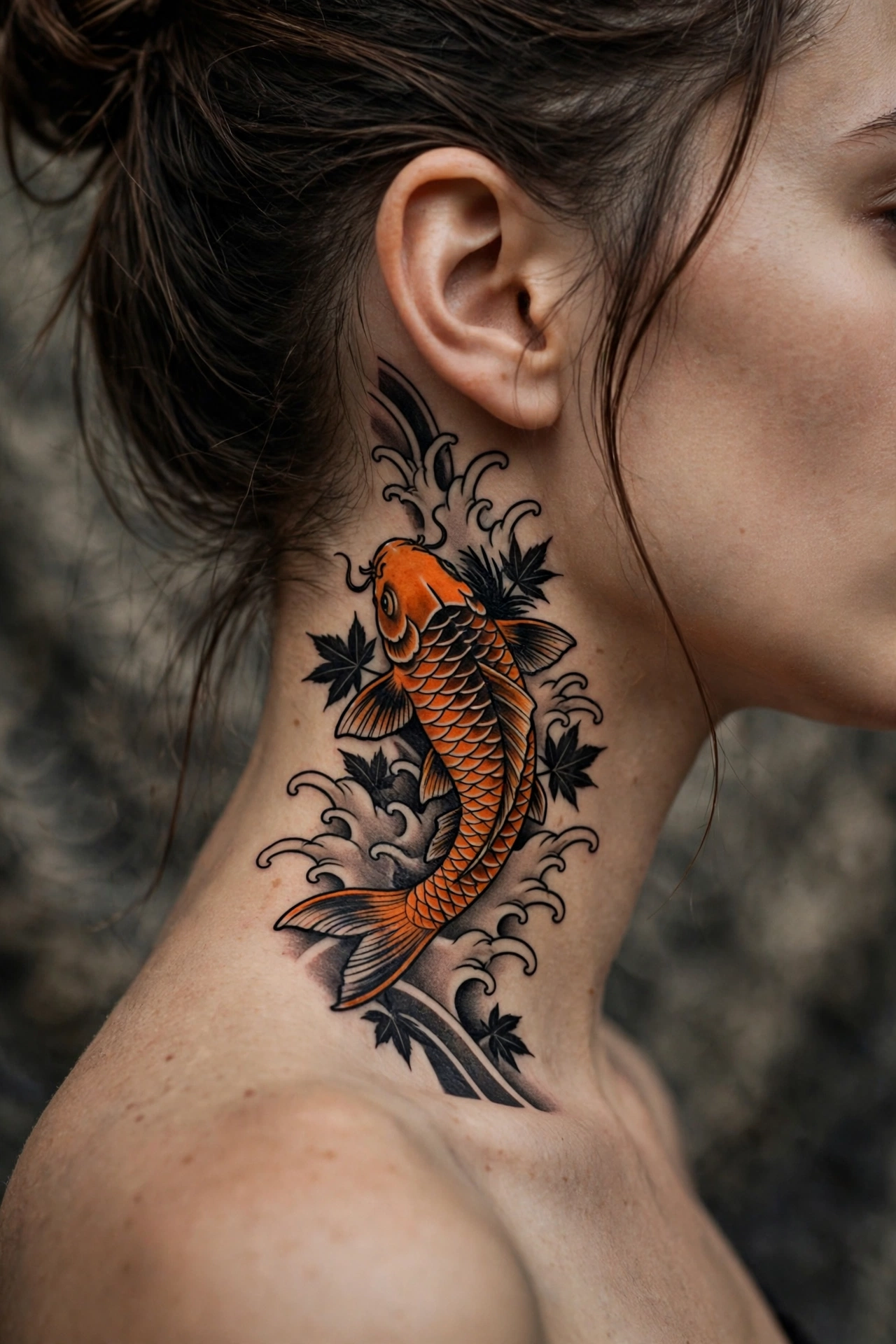
A koi swimming up the side of the neck means perseverance against the current — in Japanese legend, the koi that swims upstream becomes a dragon. Best for fighters. Downside: koi need flowing water lines around them, or the fish looks stranded.
Chapter 2: Behind the Ear & Nape
The quieter zones — concealable with hair, gentler on pain, perfect for a first neck tattoo.
11. Tiny Butterfly Behind the Ear
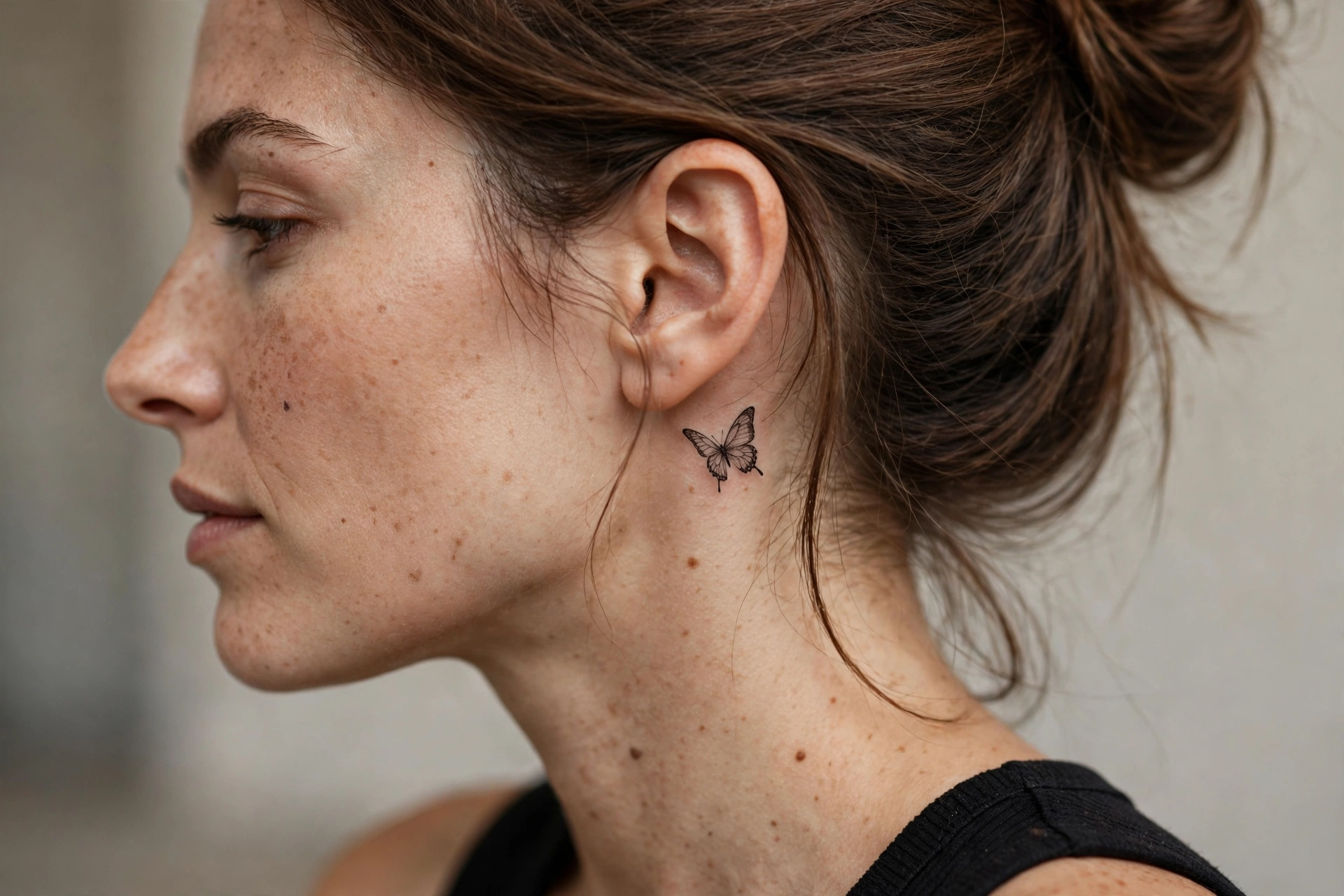
A tiny butterfly tucked behind the ear means transformation and freedom in miniature — a milestone only you and a few others will notice. Best for a first neck tattoo. Downside: at thumbnail size, wing detail fades fast, so keep the outline bold and the design simple.
12. Star Constellation
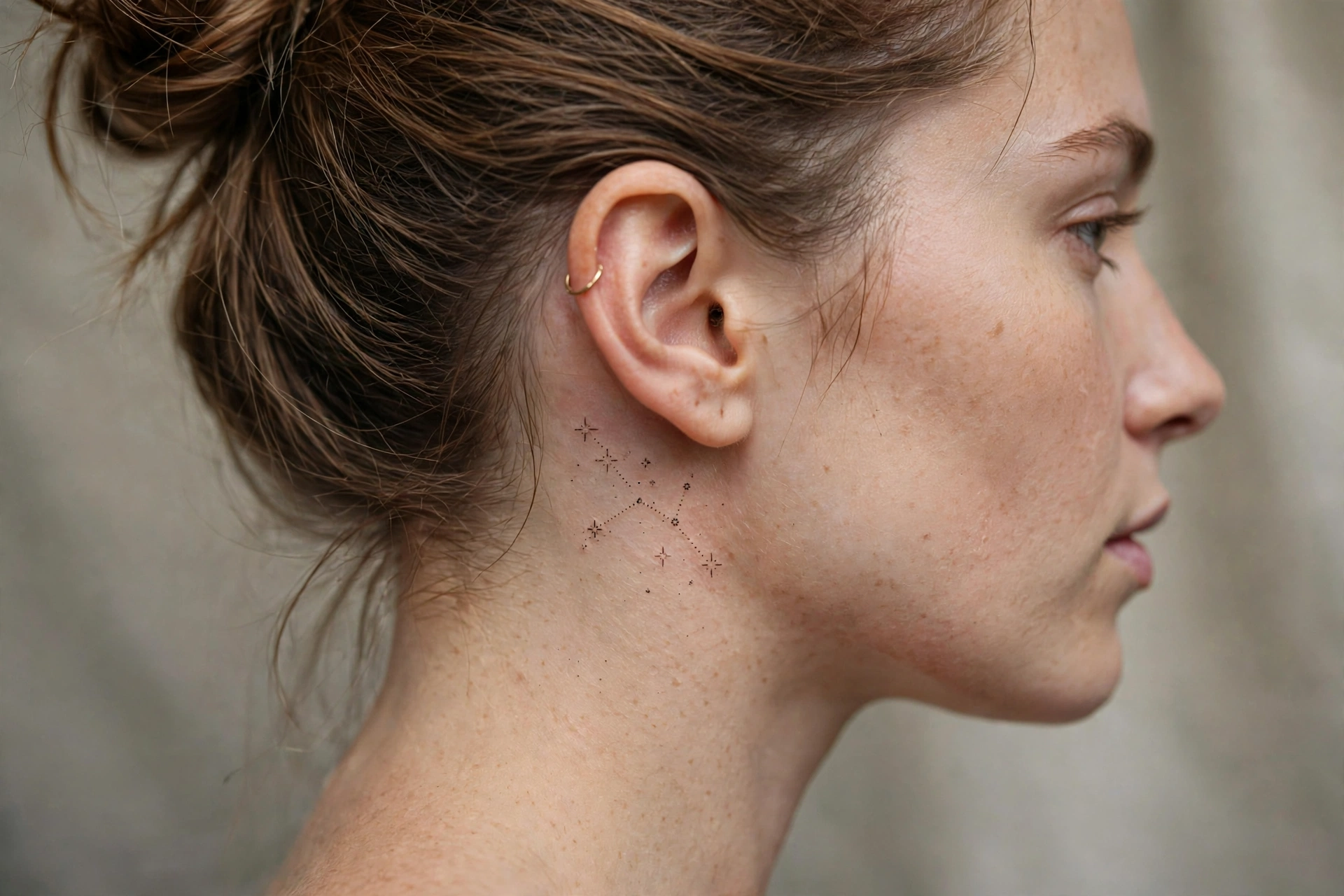
A small constellation behind the ear means guidance, destiny and a connection to someone far away — your star sign or a loved one’s. Best for stargazers. Downside: dots drift as skin ages, so the pattern must be spaced generously or it turns into a smudge.
13. Minimalist Cross
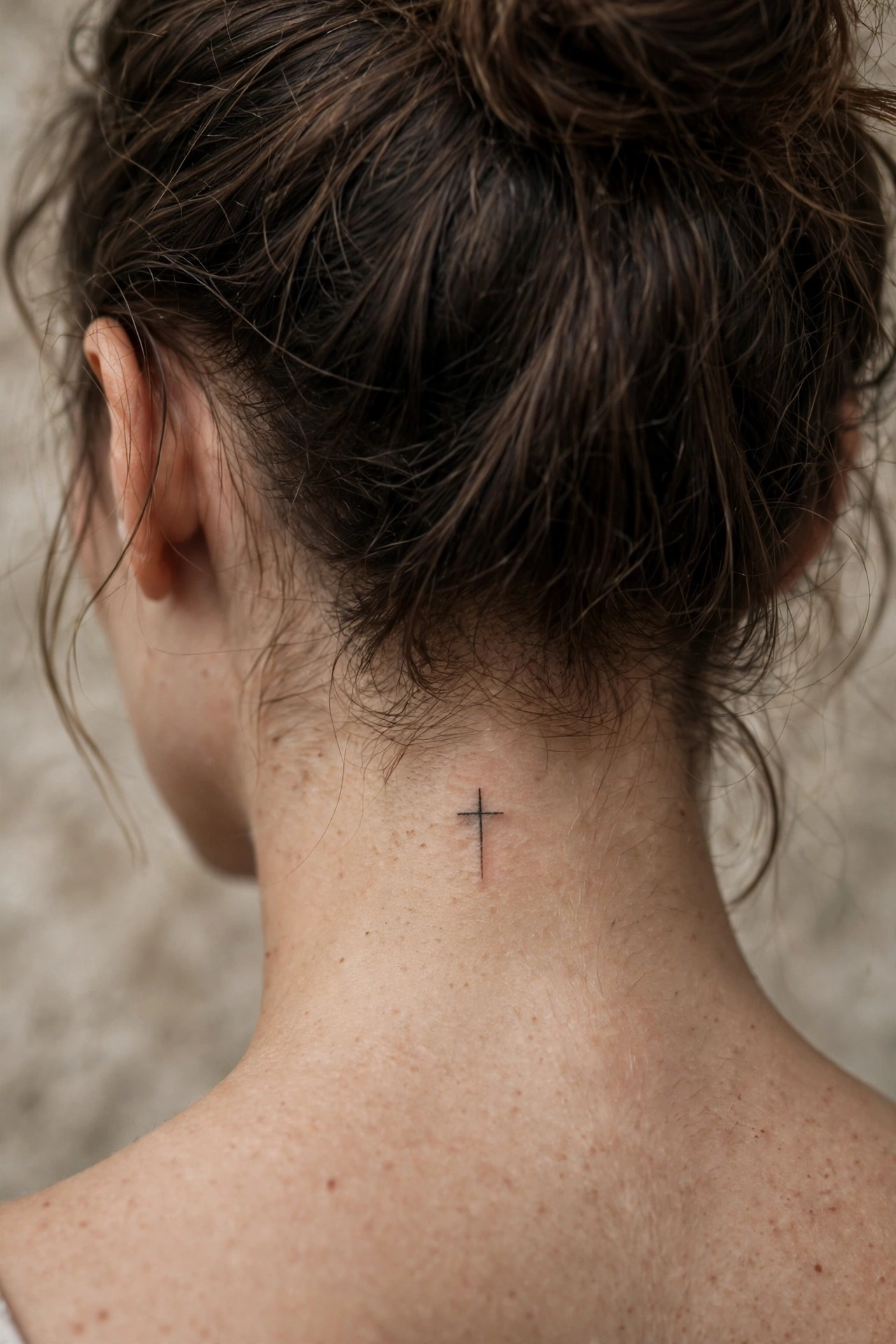
A small cross on the nape under the hairline means faith kept close and quiet. Best for the devout who want discretion. Downside: a cross this small can look like a stray mark if the lines are not perfectly straight.
14. Lotus on the Nape
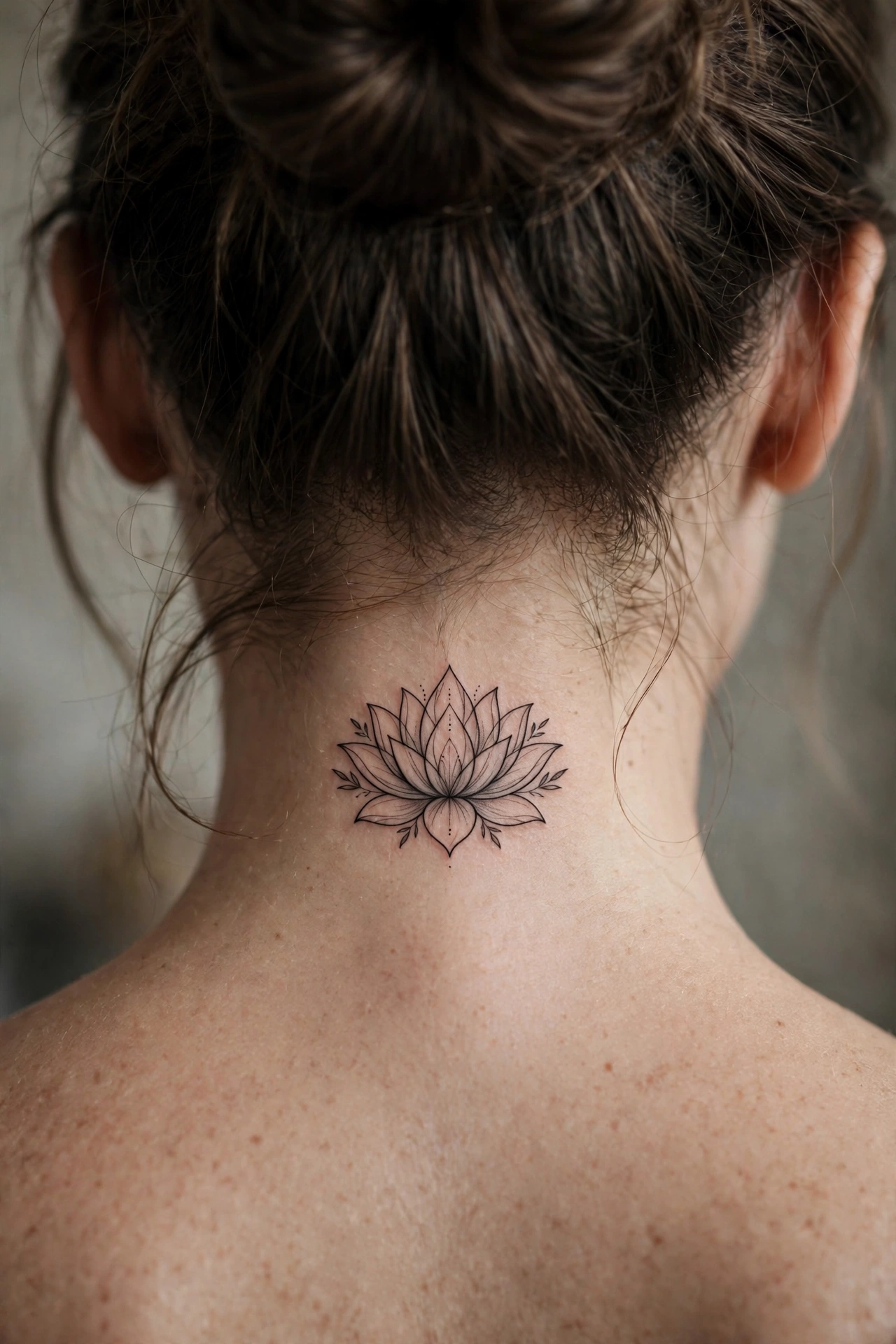
A lotus centred on the nape means rising above adversity and spiritual growth, blooming clean from muddy water. Symmetry suits the spine’s centreline. Best for survivors. Downside: the nape’s symmetry is unforgiving — a slightly crooked lotus shows every time you tie your hair up.
15. Nape Mandala
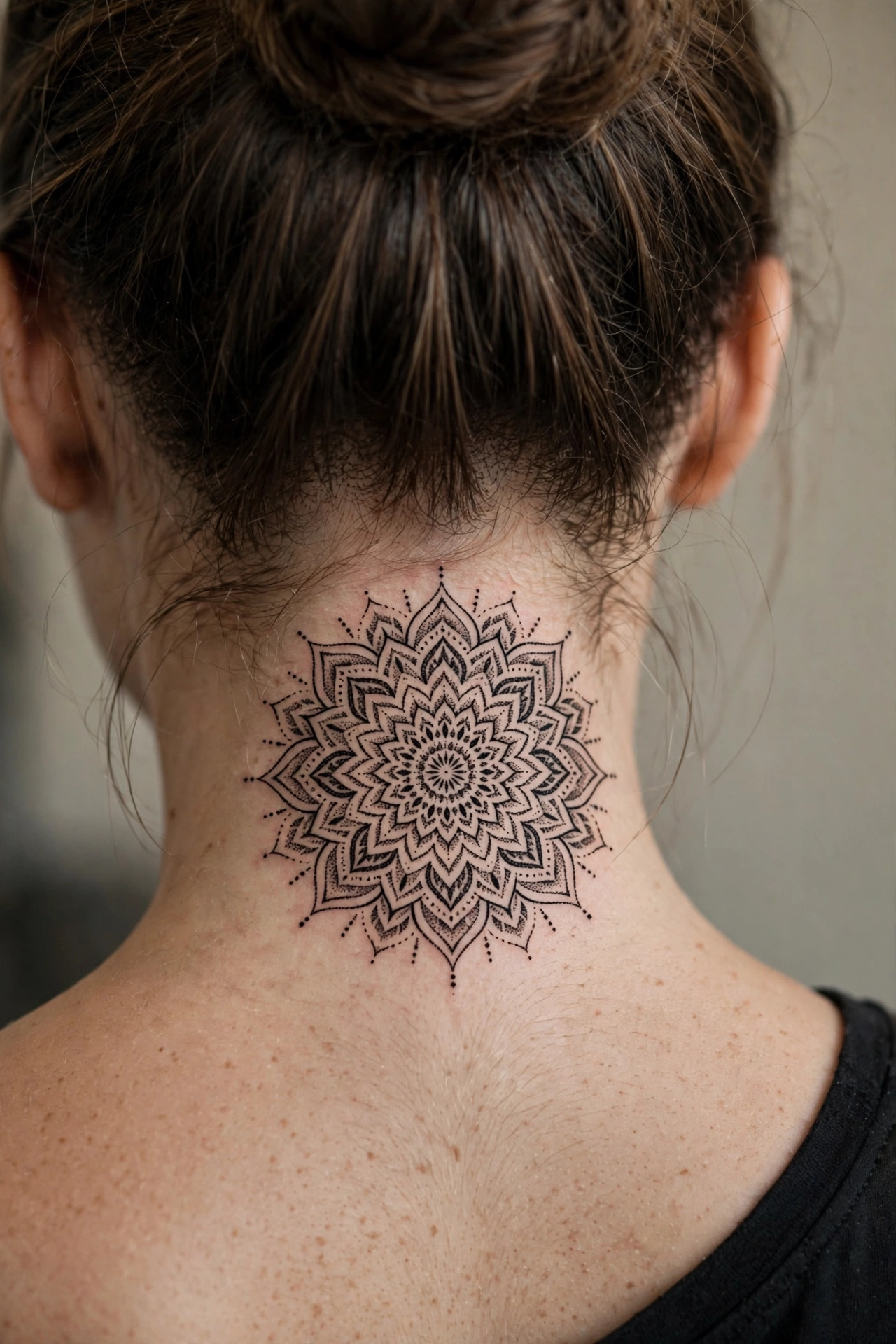
An ornamental mandala on the nape means balance and wholeness, cascading like a lace collar under the hairline. Best for lovers of sacred geometry. Downside: dotwork mandalas take long sessions and hurt more than expected, thanks to the vertebrae underneath.
16. Crescent Moon on the Nape
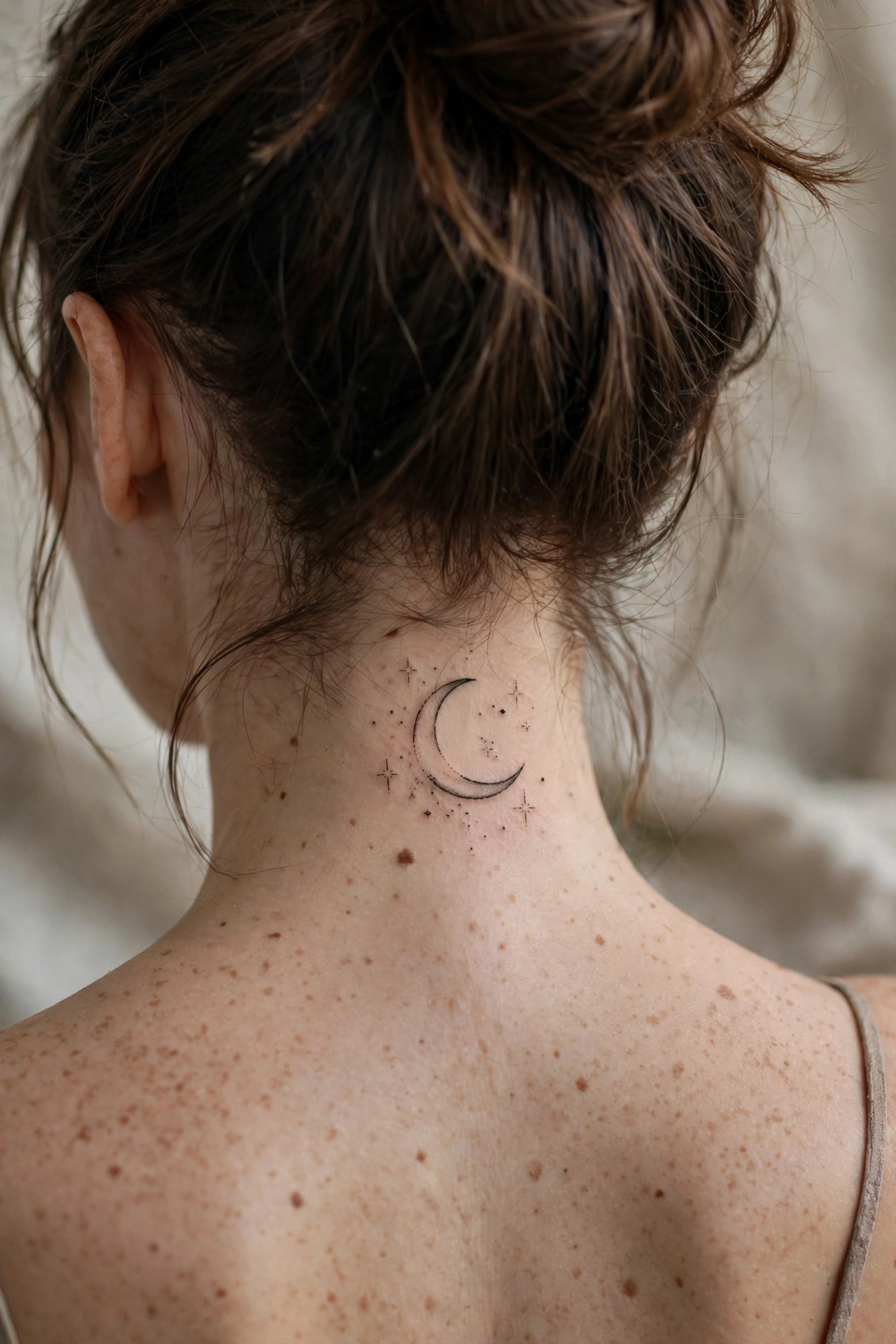
A crescent moon on the nape with tiny stars means intuition, dreams and the quiet hours. Best for night thinkers. Downside: a crescent alone can look unfinished — add stars or shading to anchor it.
17. Single Initial
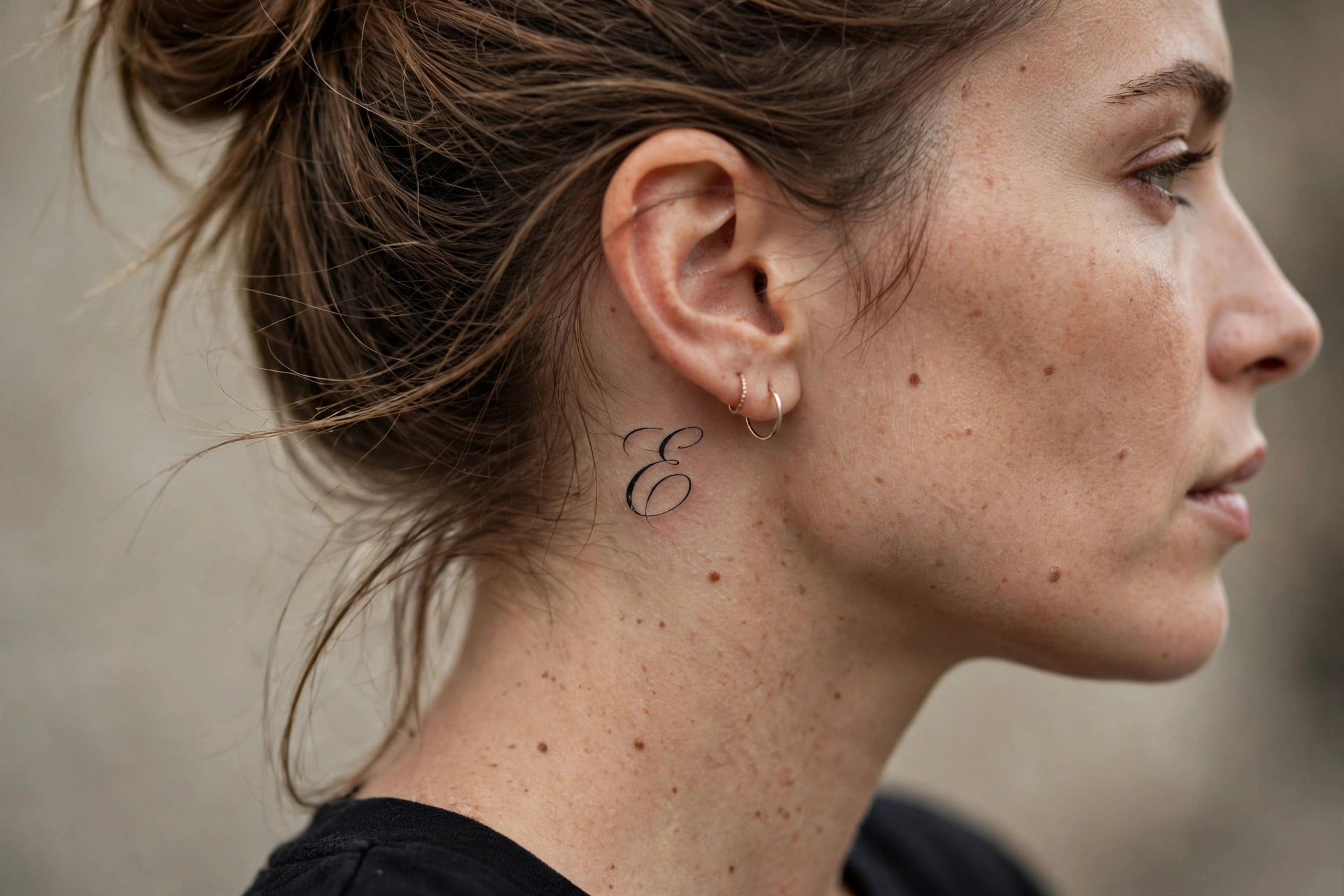
A single elegant initial behind the ear means a person, a memory or yourself — the most private tribute there is. Best for memorials and self-love. Downside: one letter carries no context, so choose a script you will still love in twenty years, not a trend.
18. Tiny Bee
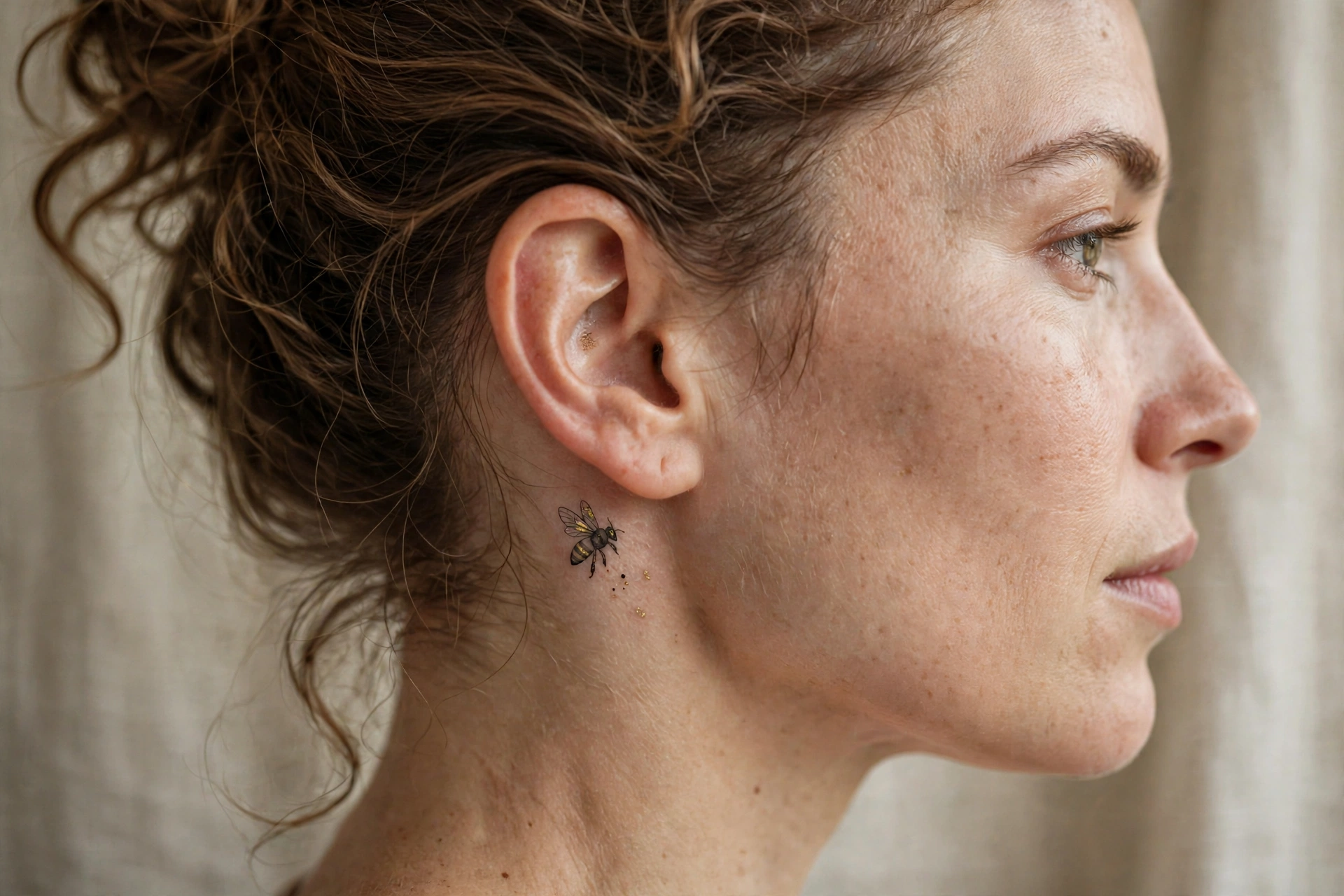
A tiny bee behind the ear means hard work, community and sweet reward. Best for nature lovers. Downside: bees need wing detail to read as bees, so do not shrink it below thumbnail size.
19. Cherry Blossom Sprig
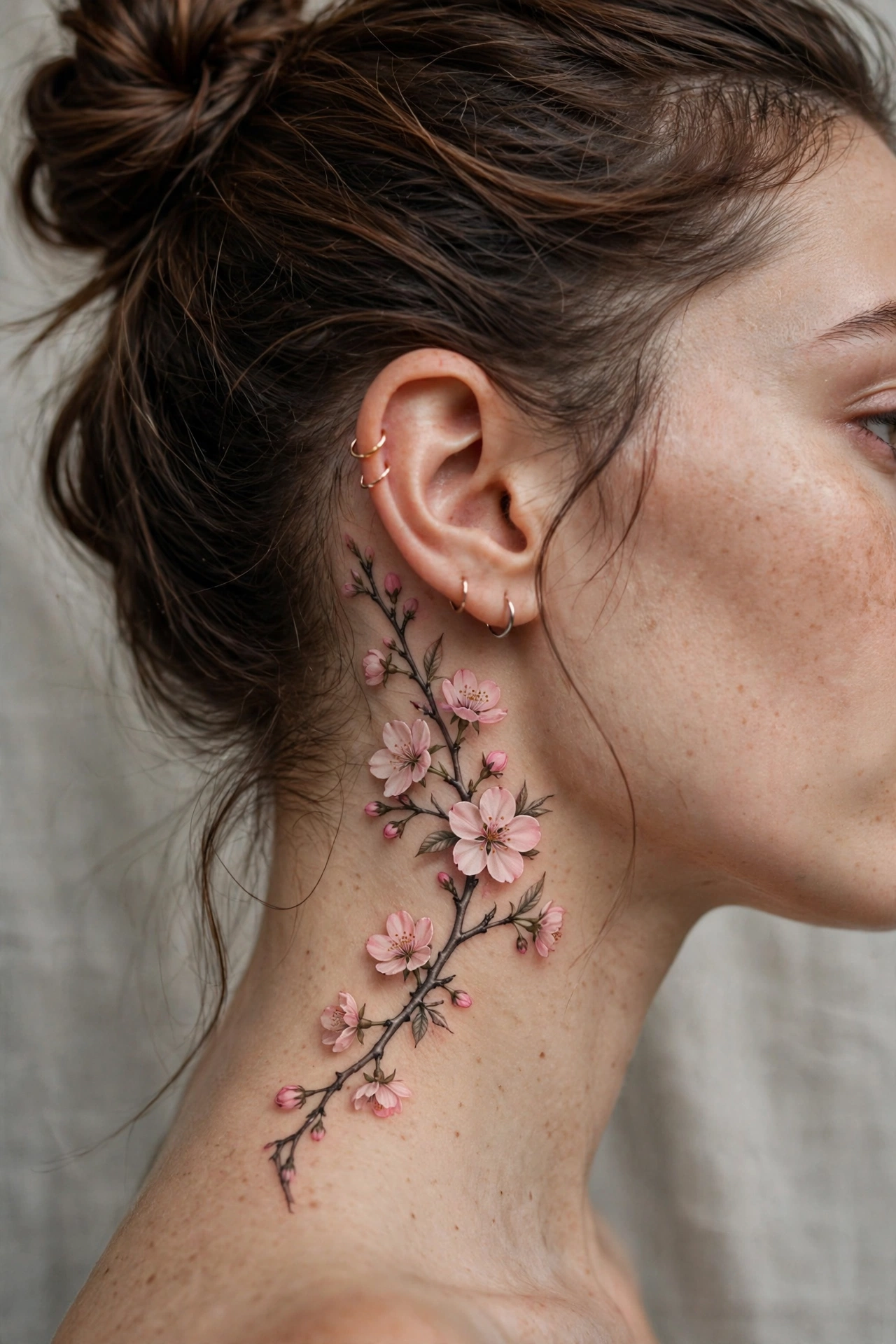
A cherry blossom sprig trailing from behind the ear down the neck captures life’s fleeting nature — beautiful precisely because it does not last. Pink petals soften the whole neck line. Best for romantics. Downside: scattered petals look random unless the branch flow is planned first.
20. Realistic Eye
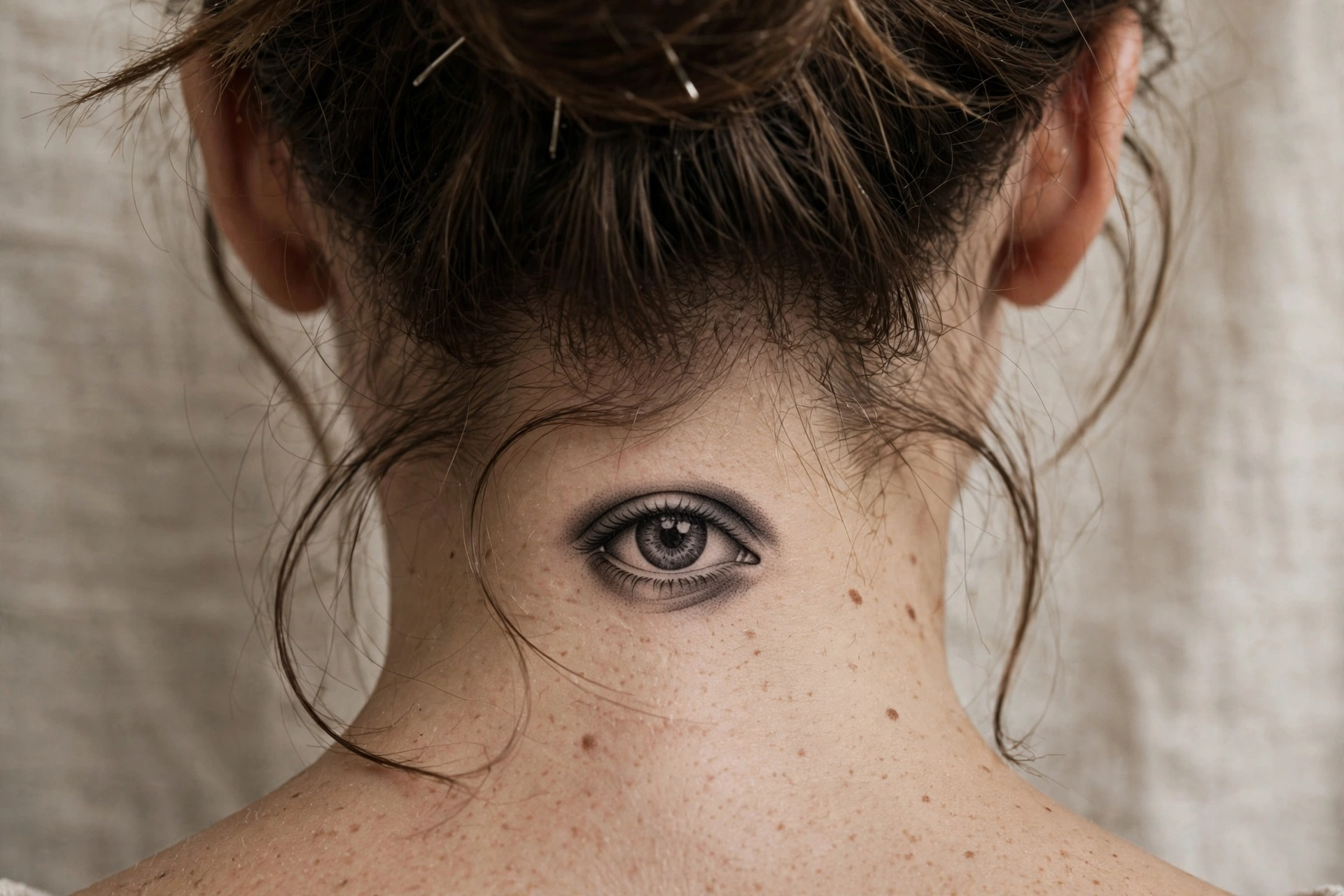
A small realistic eye on the nape means awareness, protection and being watched over — the classic evil-eye idea in modern form. Best for the spiritually minded. Downside: eyes demand a realism specialist; a mediocre eye on the nape is worse than no eye at all.
Chapter 3: Throat & Front Neck
The loudest placement in tattooing — only for people fully comfortable being a tattooed person, every day.
21. Throat Moth
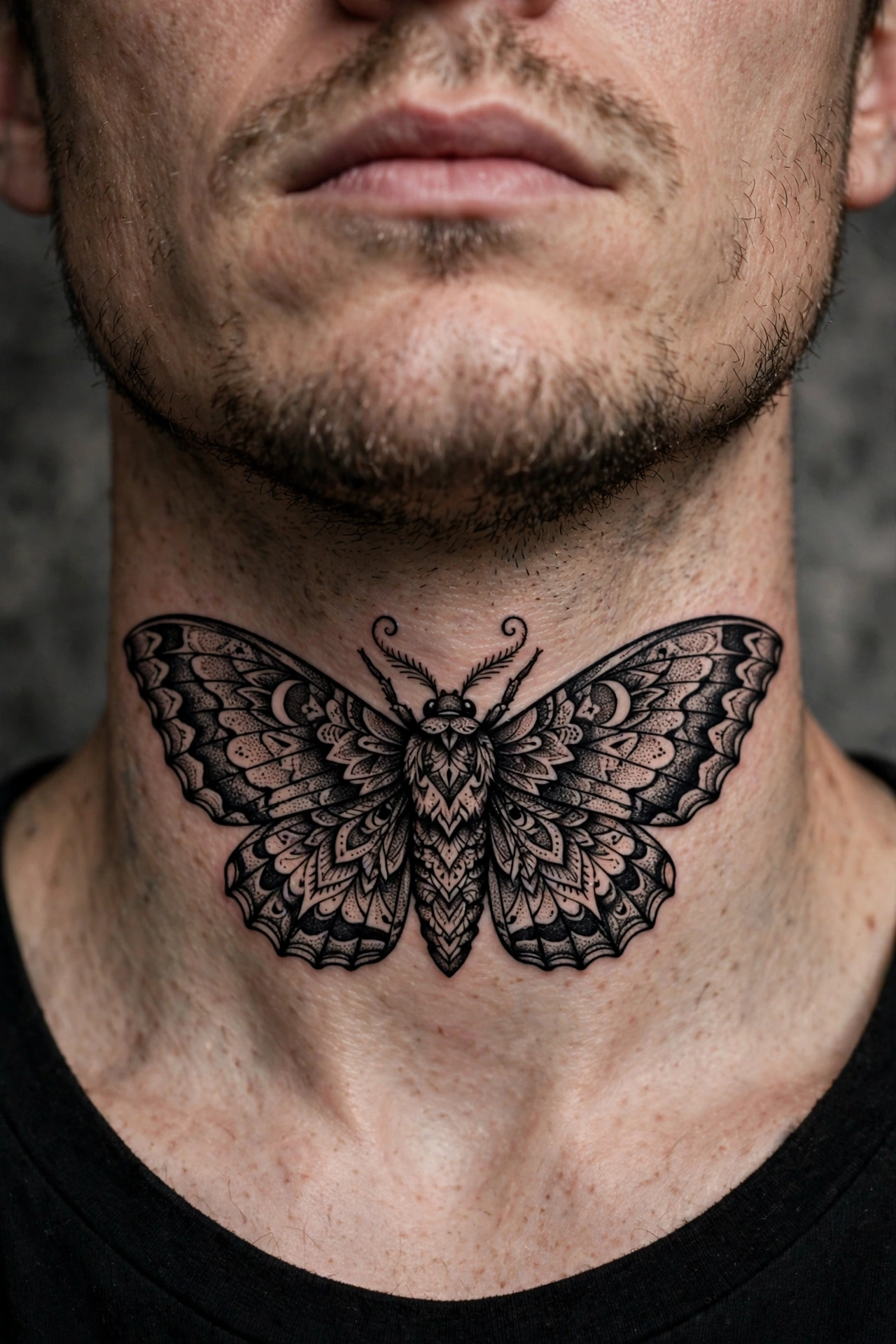
A large moth spread across the throat means transformation worn without apology — the boldest version of a classic symbol. Best for experienced collectors. Downside: the throat moves when you swallow and talk, so lines here are the hardest to keep clean; only a proven artist should attempt it.
22. Throat Mandala
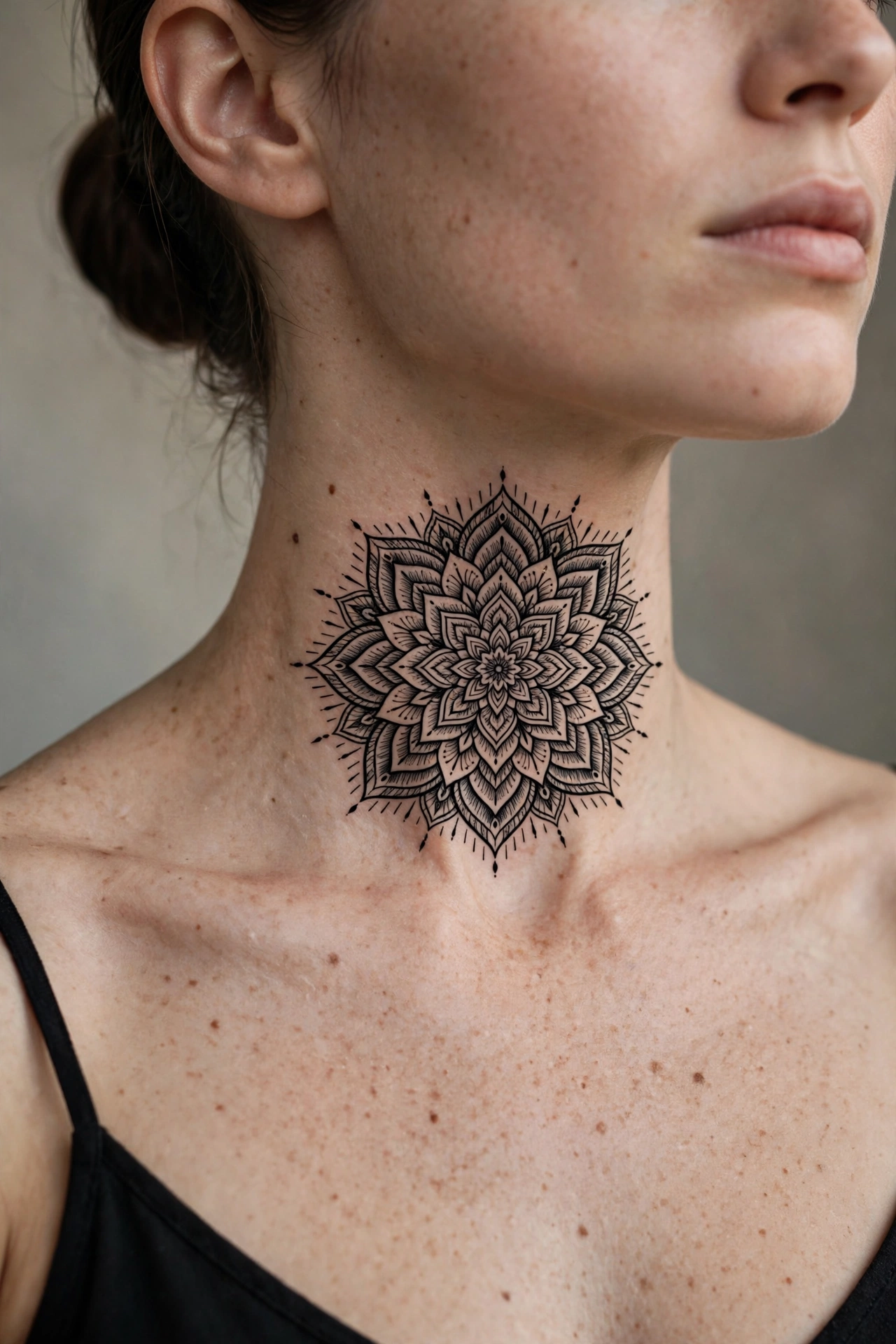
A symmetrical mandala on the front of the throat means balance at the very centre of your voice. Its geometry suits the throat’s symmetry. Best for geometry lovers with commitment. Downside: any asymmetry shows instantly, face-on, every day — there is nowhere to hide a wobble.
23. Throat Butterfly
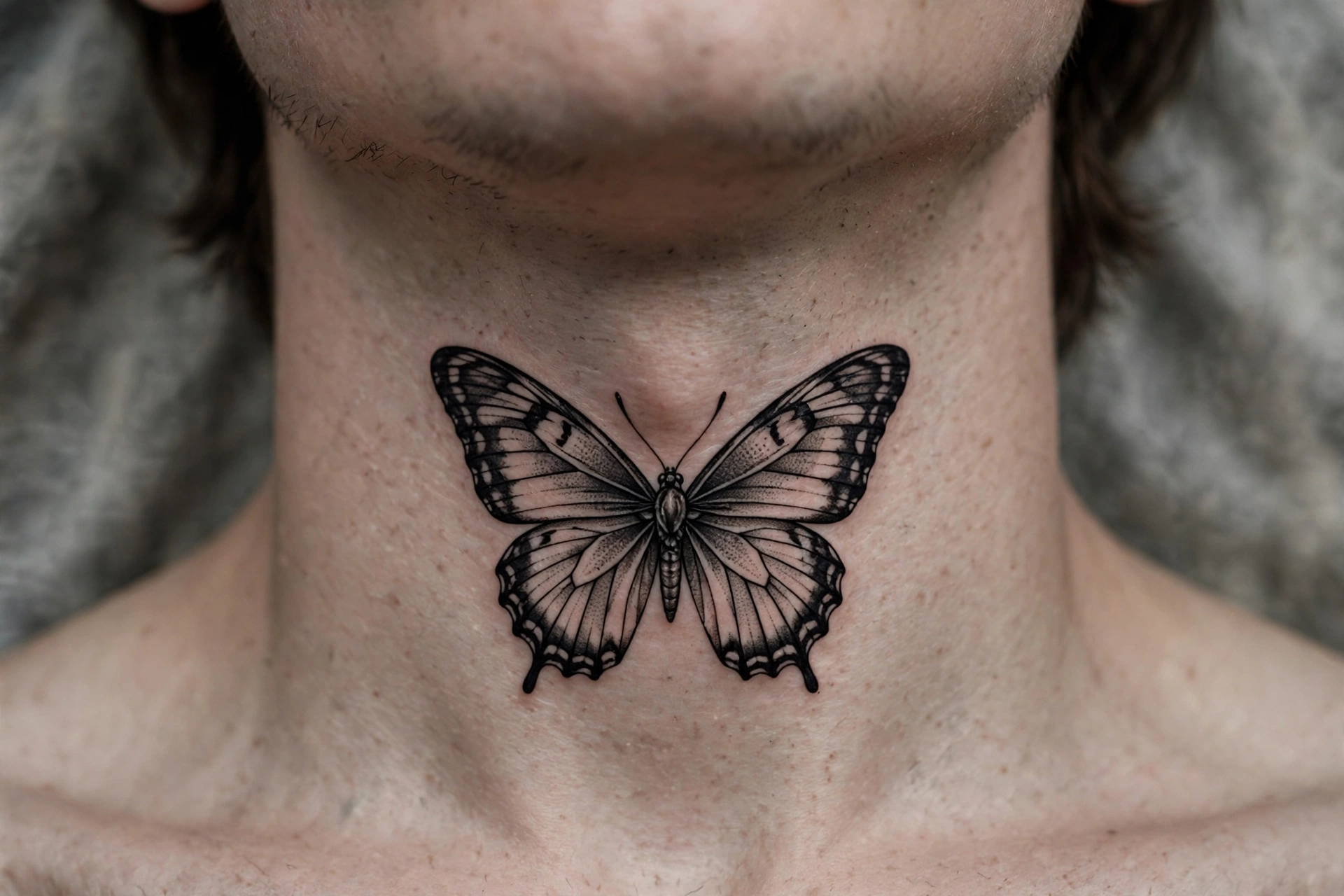
A butterfly centred on the throat means freedom and rebirth at full volume — delicate subject, fearless placement, and that contrast is the whole point. Best for transformers. Downside: delicate wings on the throat fade and blur faster than bold designs, so expect regular touch-ups.
24. Angel Wings
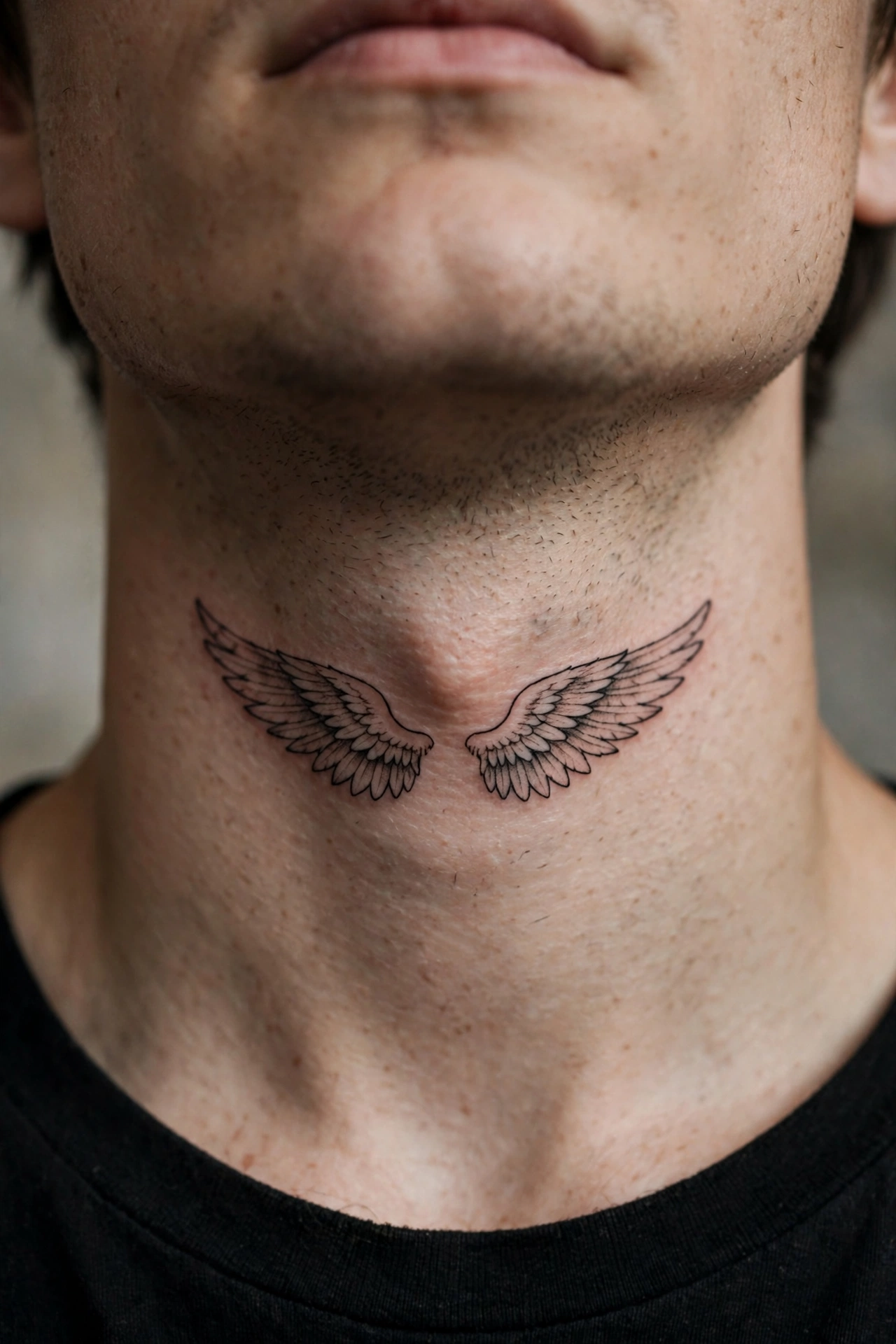
Small angel wings spread below the chin mean protection and guidance from above, framing the throat like a collar. Best for the faithful. Downside: wings must be perfectly mirrored or the piece looks lopsided from the front.
25. Coiling Throat Snake
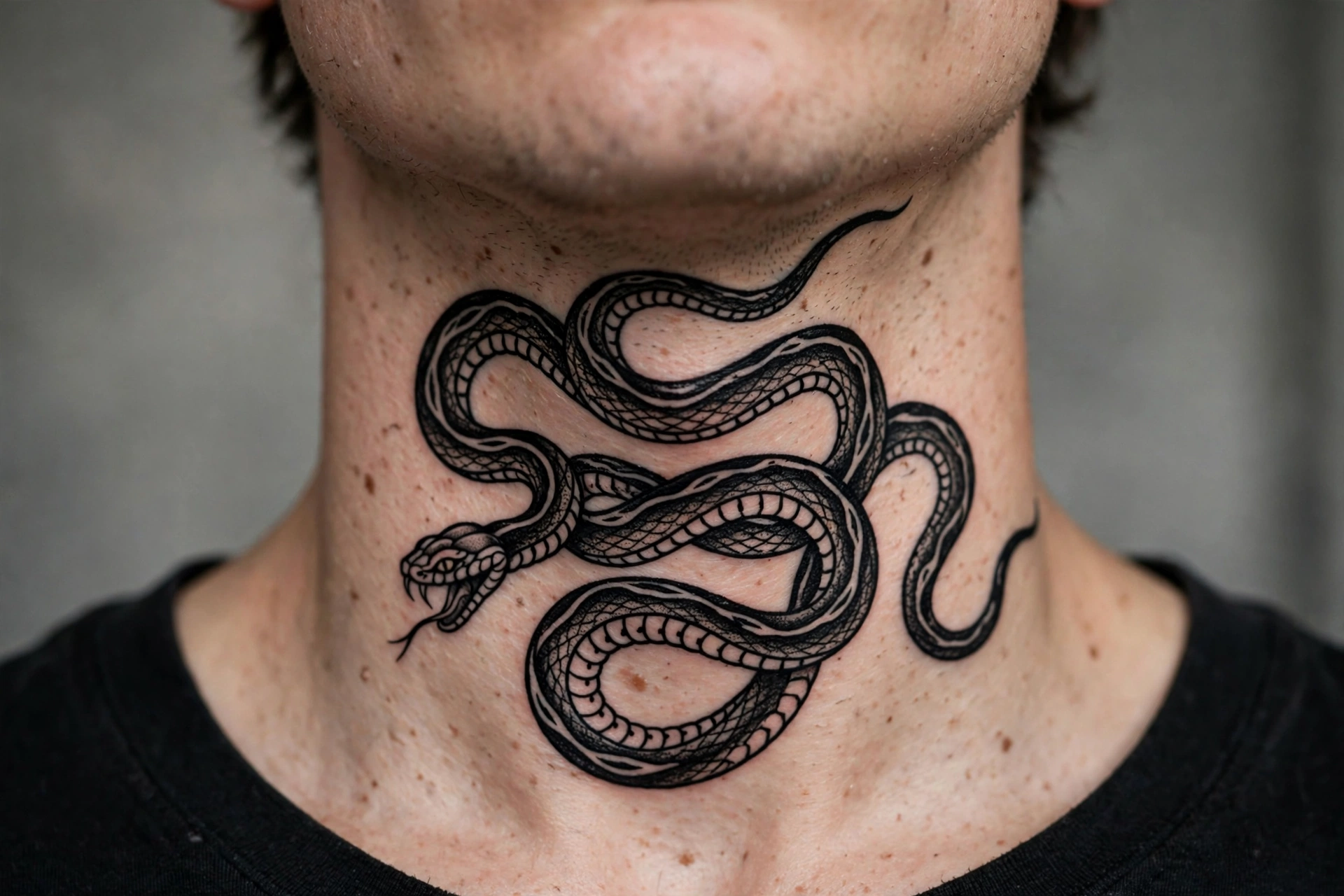
A snake coiling across the front of the throat means rebirth and danger embraced — the most dramatic snake placement there is. Best for the fearless. Downside: this is a 9/10 pain zone over the windpipe, and it is essentially impossible to conceal at work.
26. Throat Rose
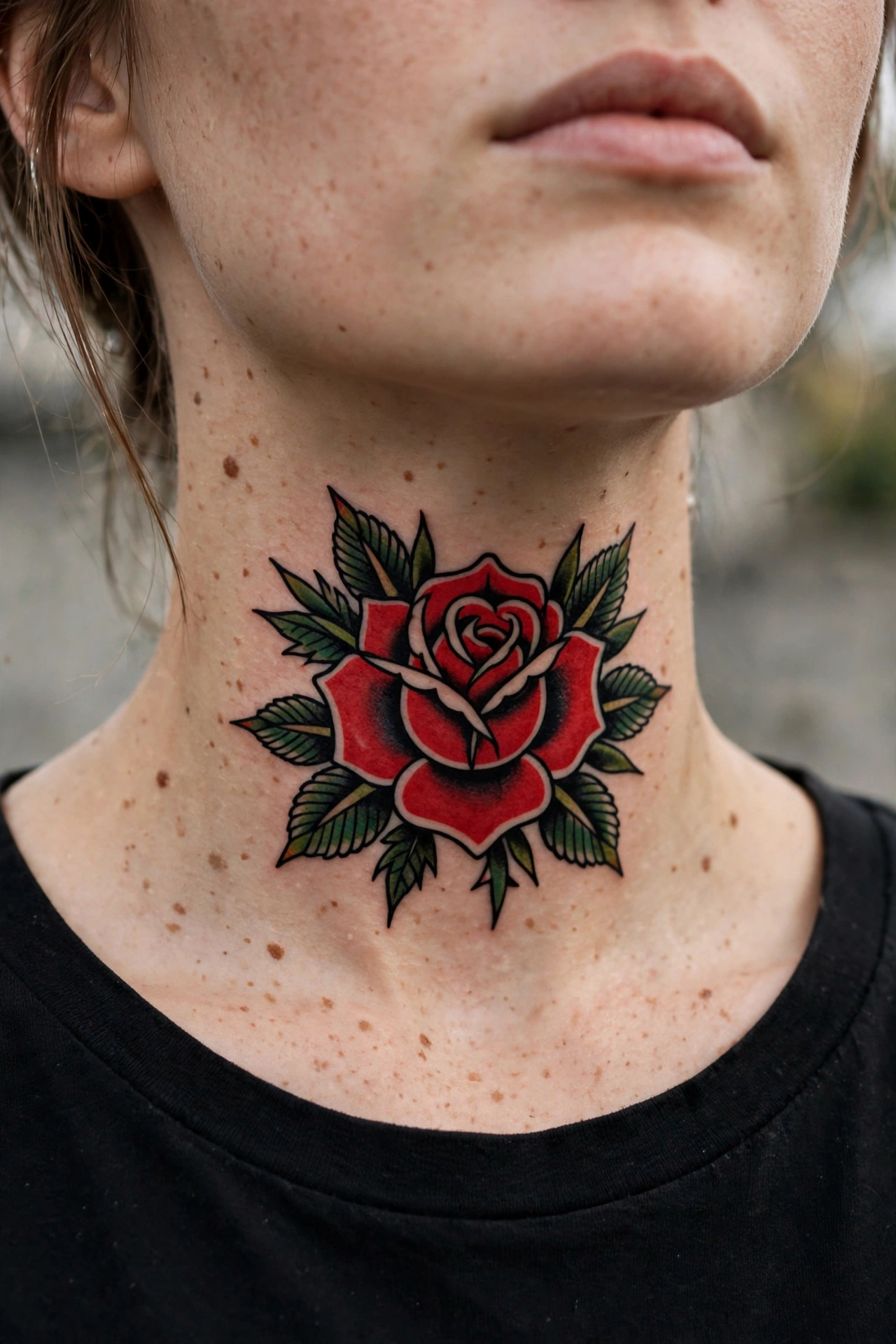
A bold red rose centred on the front neck means love declared to the world, with no filter and no apology. Traditional style holds up best here. Best for romantics with conviction. Downside: red ink on the throat fades in constant sun exposure, so SPF becomes a daily ritual.
27. Sacred Heart
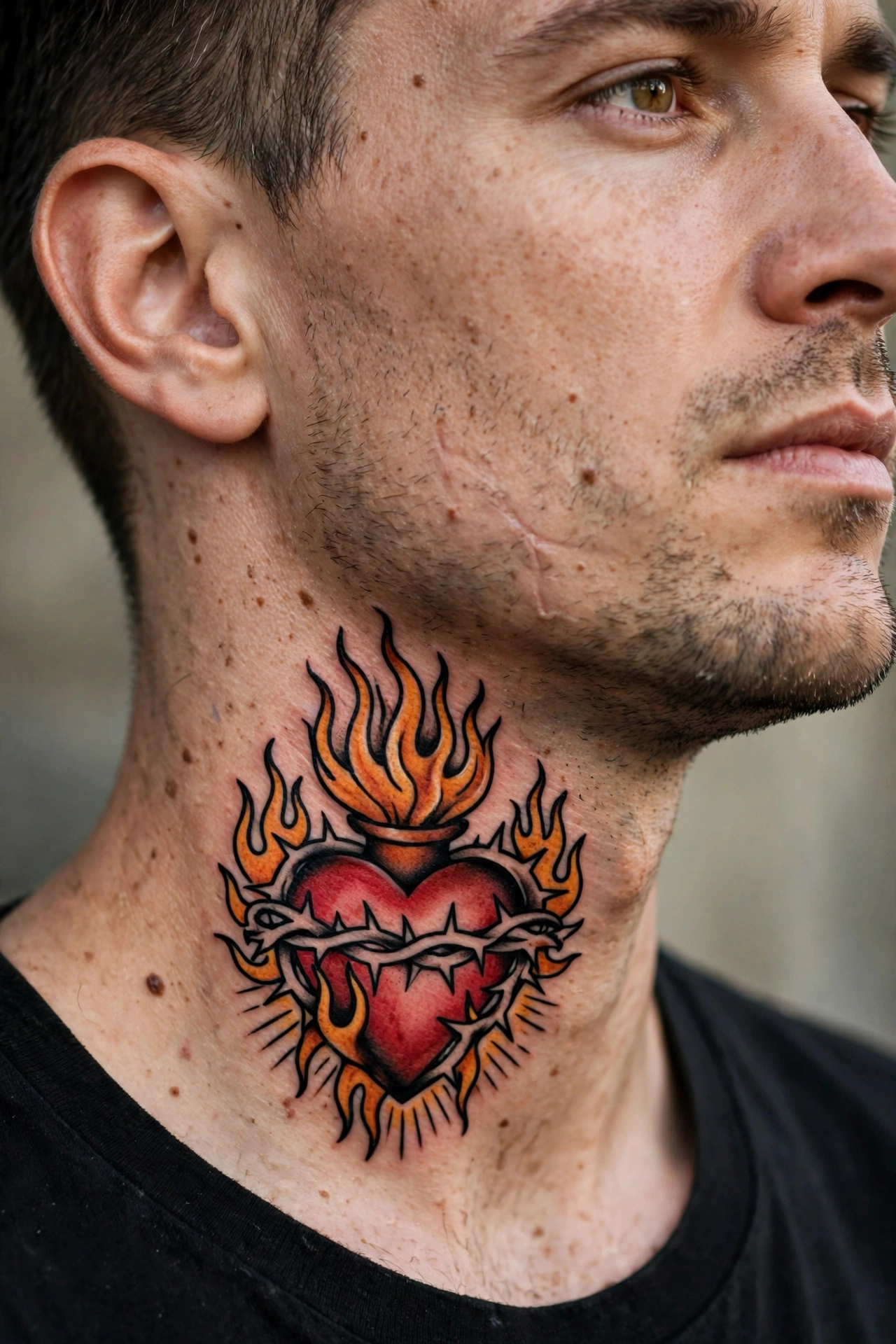
A sacred heart with flames on the front neck means devotion, passion and a heart worn literally on the outside. Traditional flames and rays suit the throat’s shape. Best for the devoted. Downside: sacred imagery carries real religious weight — wear it for its meaning, not just its look.
28. Bat
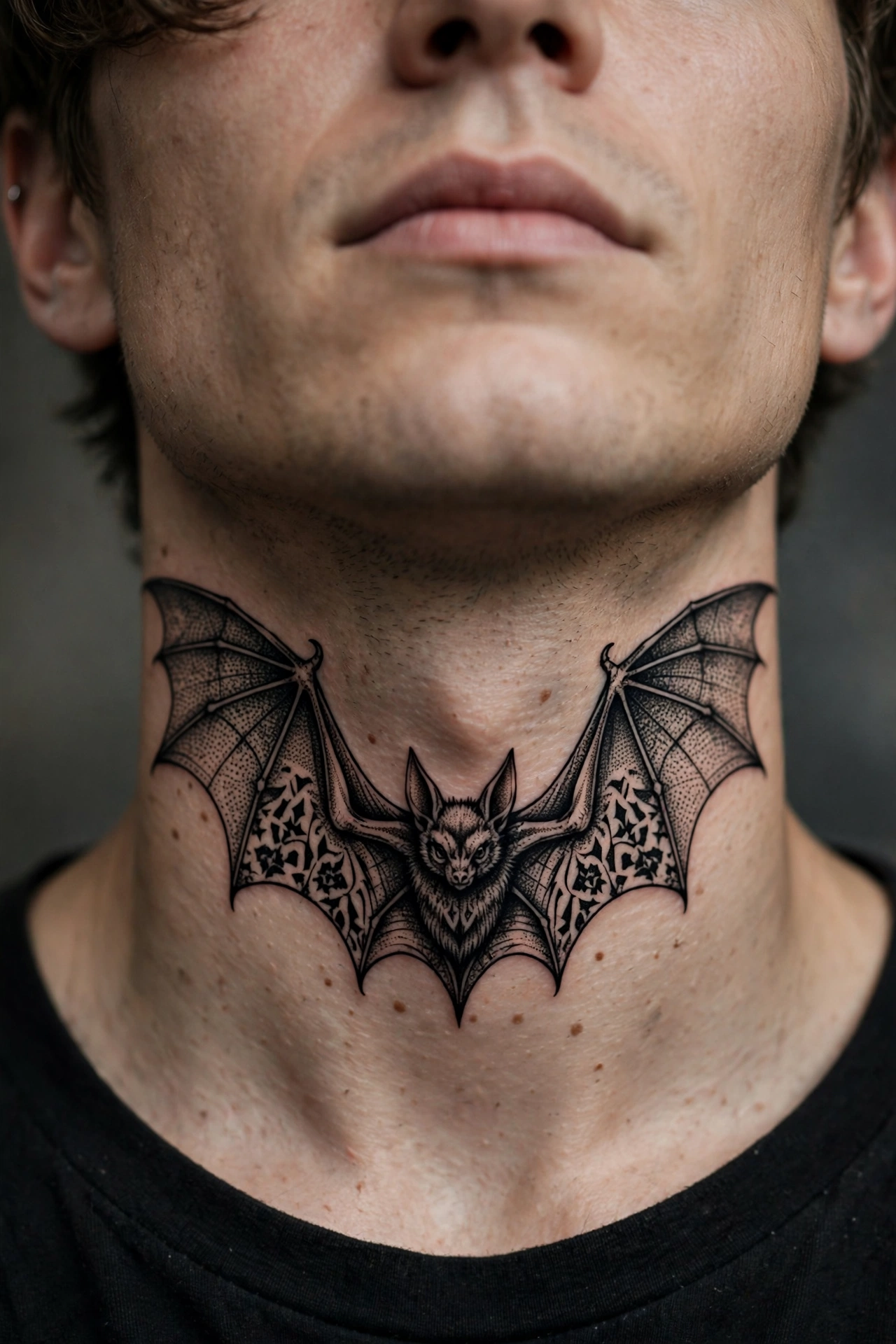
A bat with spread wings on the front neck means rebirth, intuition and comfort with the dark — a gothic classic with real symbolism. Best for night creatures. Downside: bats read as blobs without careful wing-finger detail, so the artist’s linework must be excellent.
29. Ornamental Collar
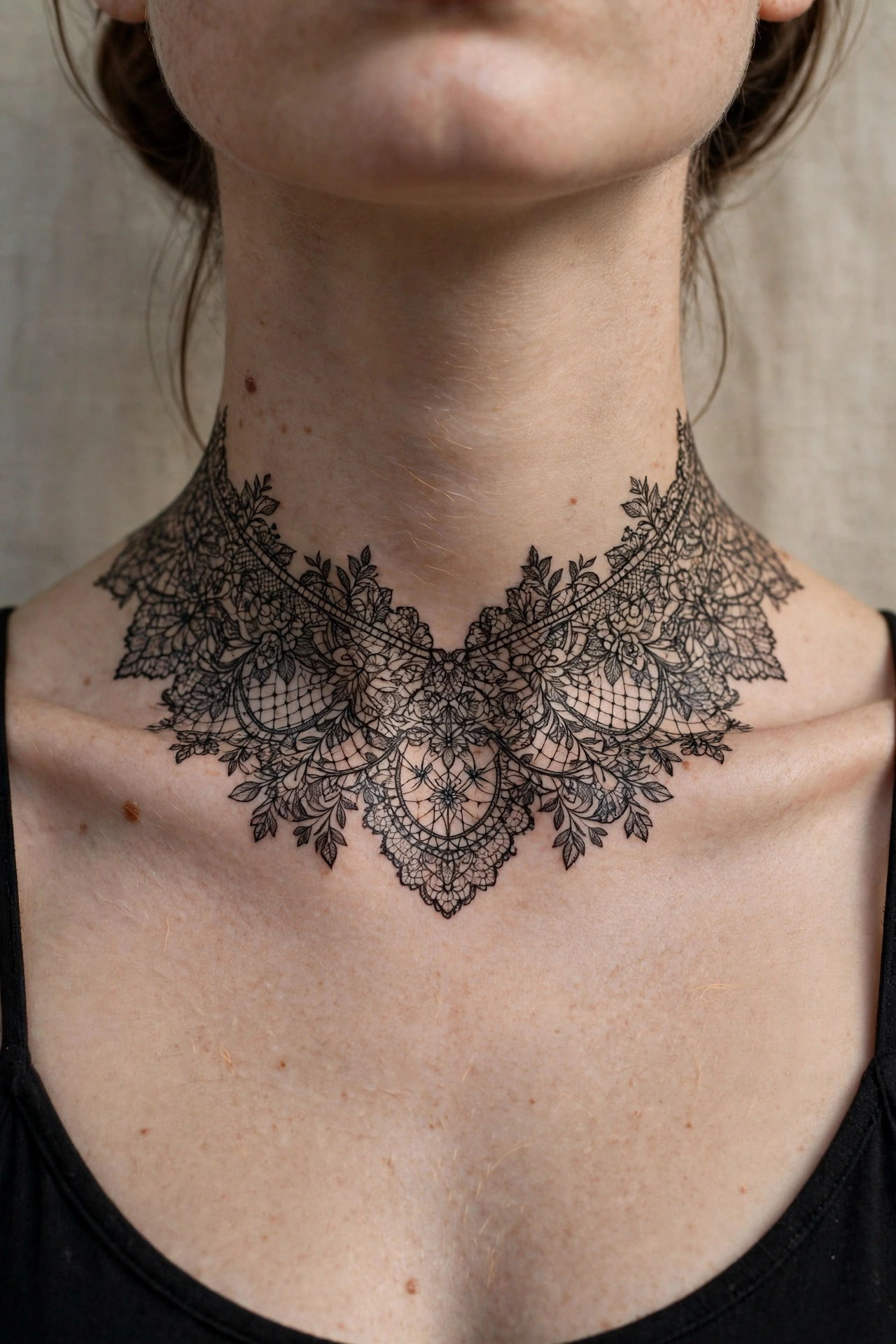
A lace-like ornamental collar tattooed around the front of the neck means elegance worn permanently — jewellery you never take off. Best for ornament lovers. Downside: a collar must sit perfectly level or it looks like a crooked necklace forever; the stencil fitting takes patience.
30. Spider Web
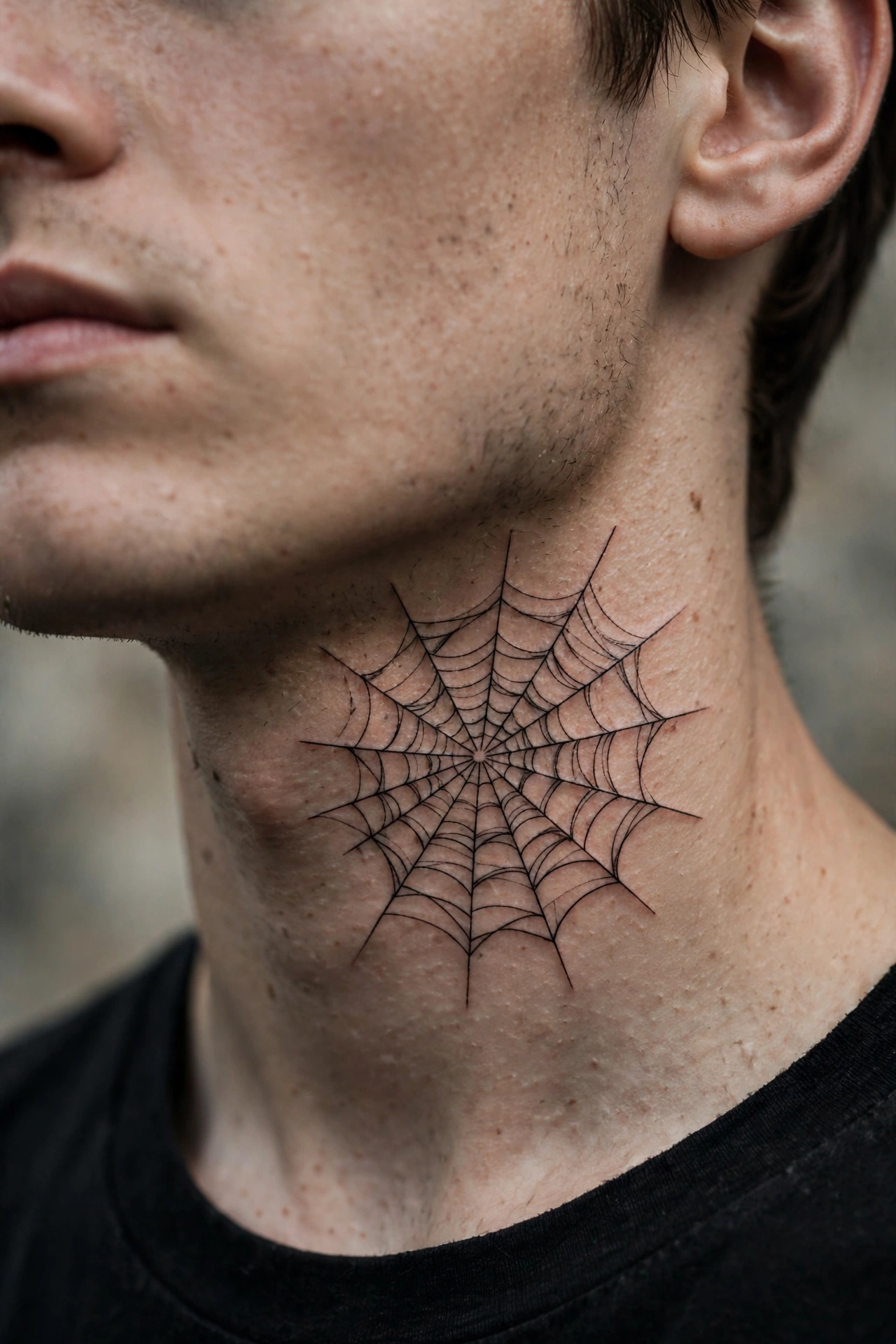
A spider web on the front side of the neck means being caught, or catching, fate — and in some circles it carries prison associations, so know the history first. Best for the edgy. Downside: fine web lines are among the first to blur on moving neck skin.
Chapter 4: Bold & Statement Pieces
For collectors who already have tattoos elsewhere and want the neck louder.
31. Blackwork Tribal
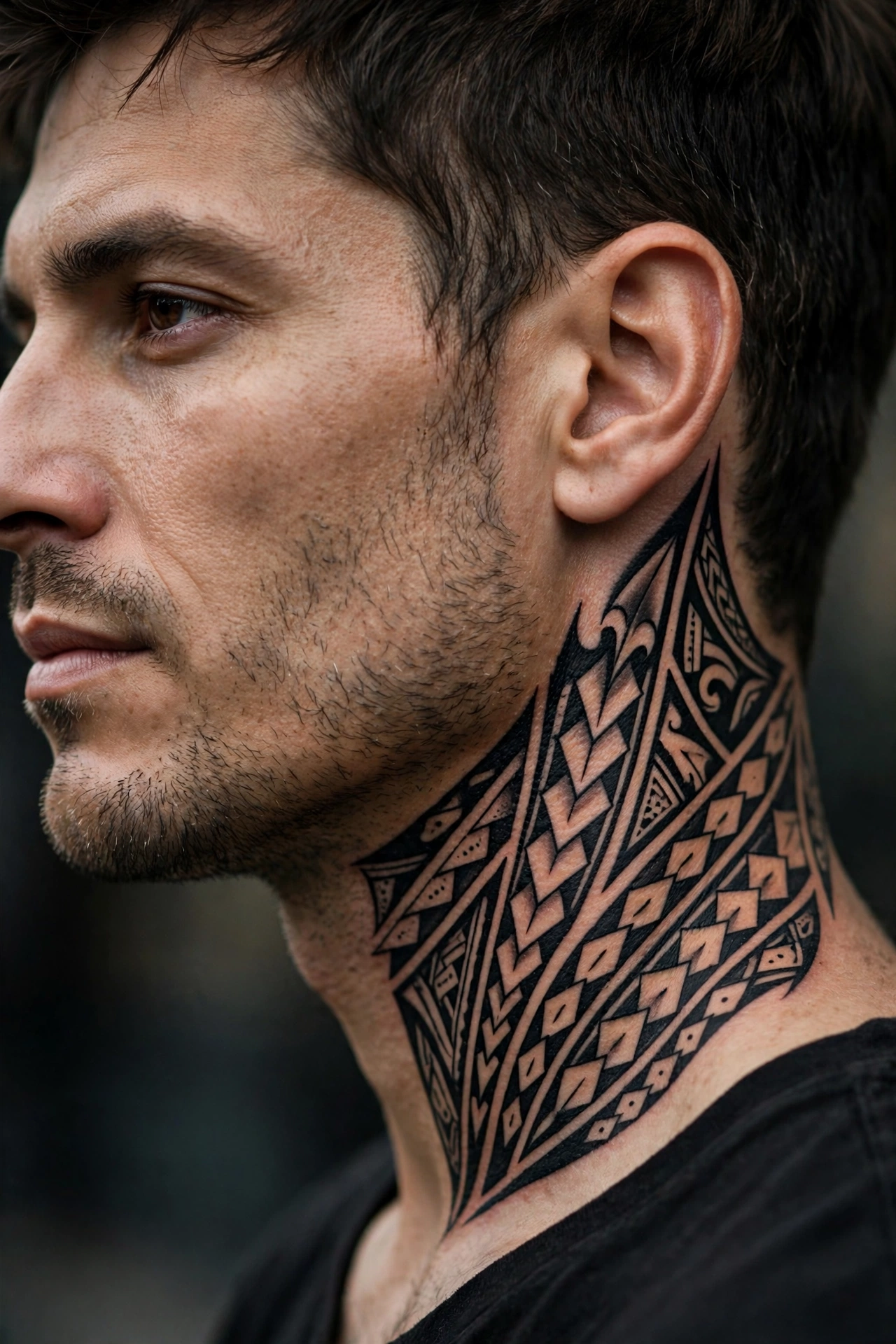
Bold blackwork tribal wrapping the side neck means heritage, strength and identity — but tribal and Māori-inspired patterns carry deep cultural significance, so research the specific pattern’s origin before wearing it. Best for the bold. Downside: heavy blackwork is the hardest style to cover or remove later.
32. Japanese Dragon Wrap
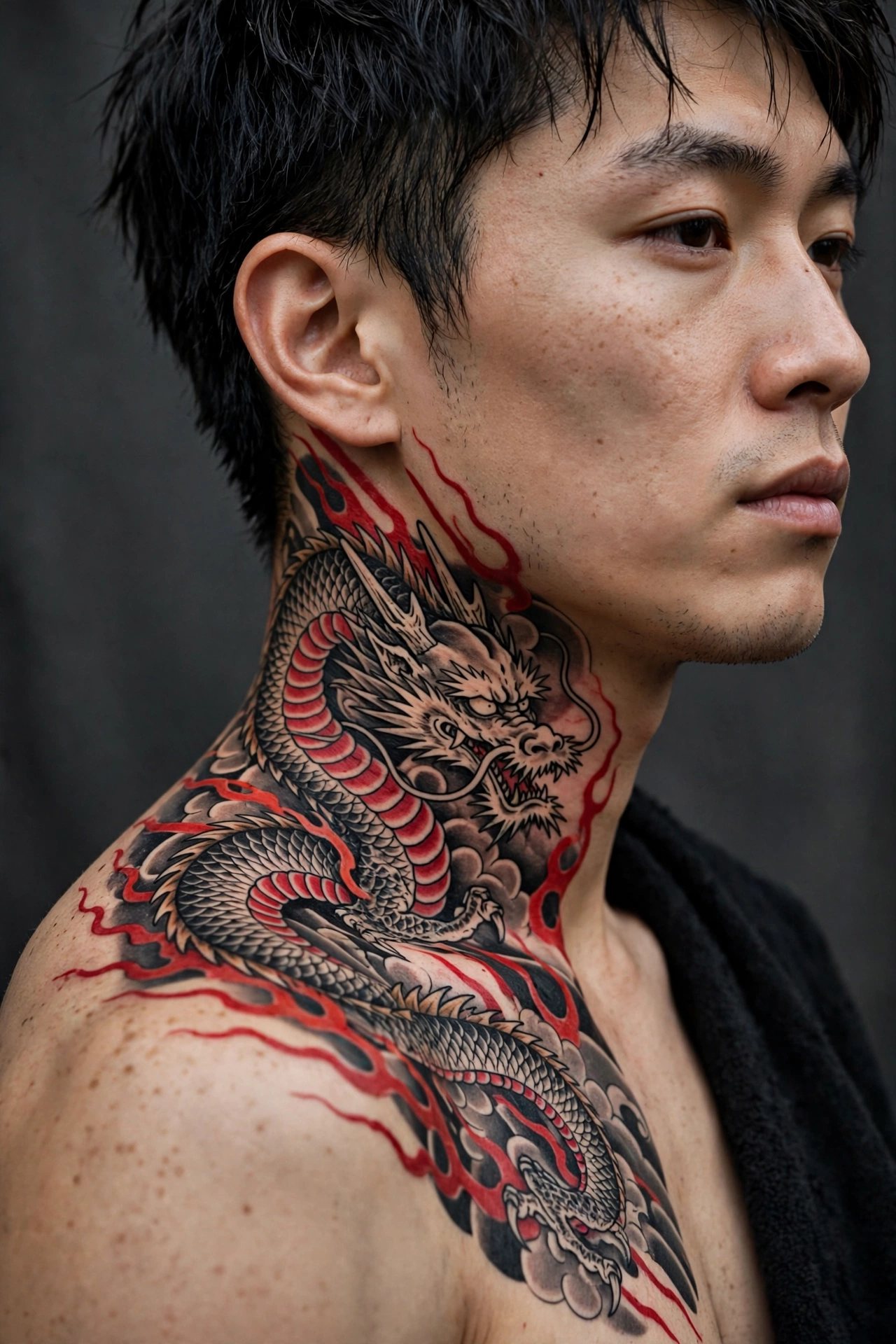
A Japanese dragon wrapping from neck to shoulder means power, wisdom and protection, in the tradition of irezumi. It needs a specialist and usually multiple sessions. Best for serious collectors. Downside: a dragon wrap is a $1,000+ commitment and a multi-session project, not a walk-in.
33. Skull
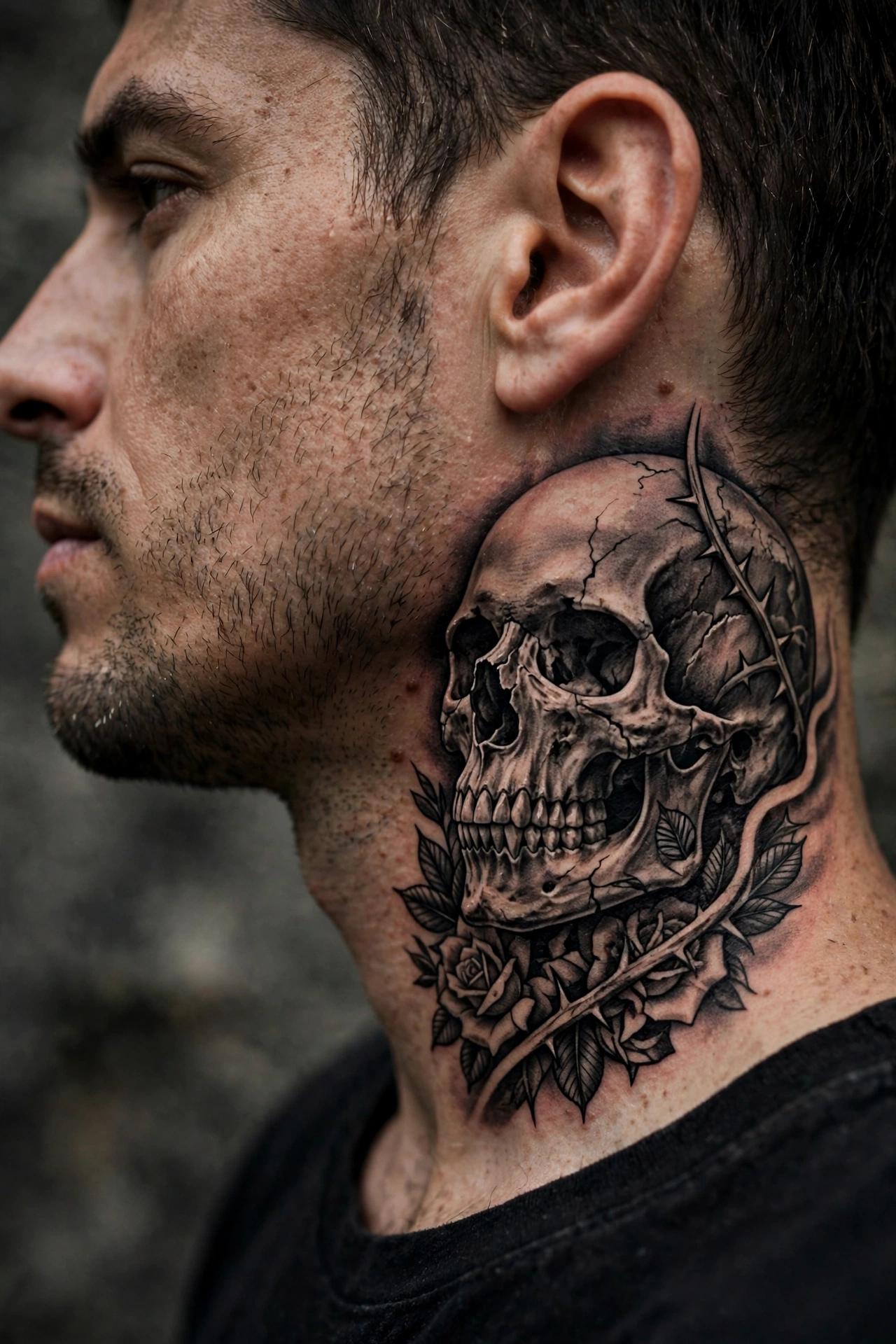
A skull on the side neck means mortality faced without fear — memento mori, worn where everyone can see it. Black and grey realism suits it best. Best for the fearless. Downside: skulls still carry the old “job stopper” stigma more than florals or script.
34. Scorpion
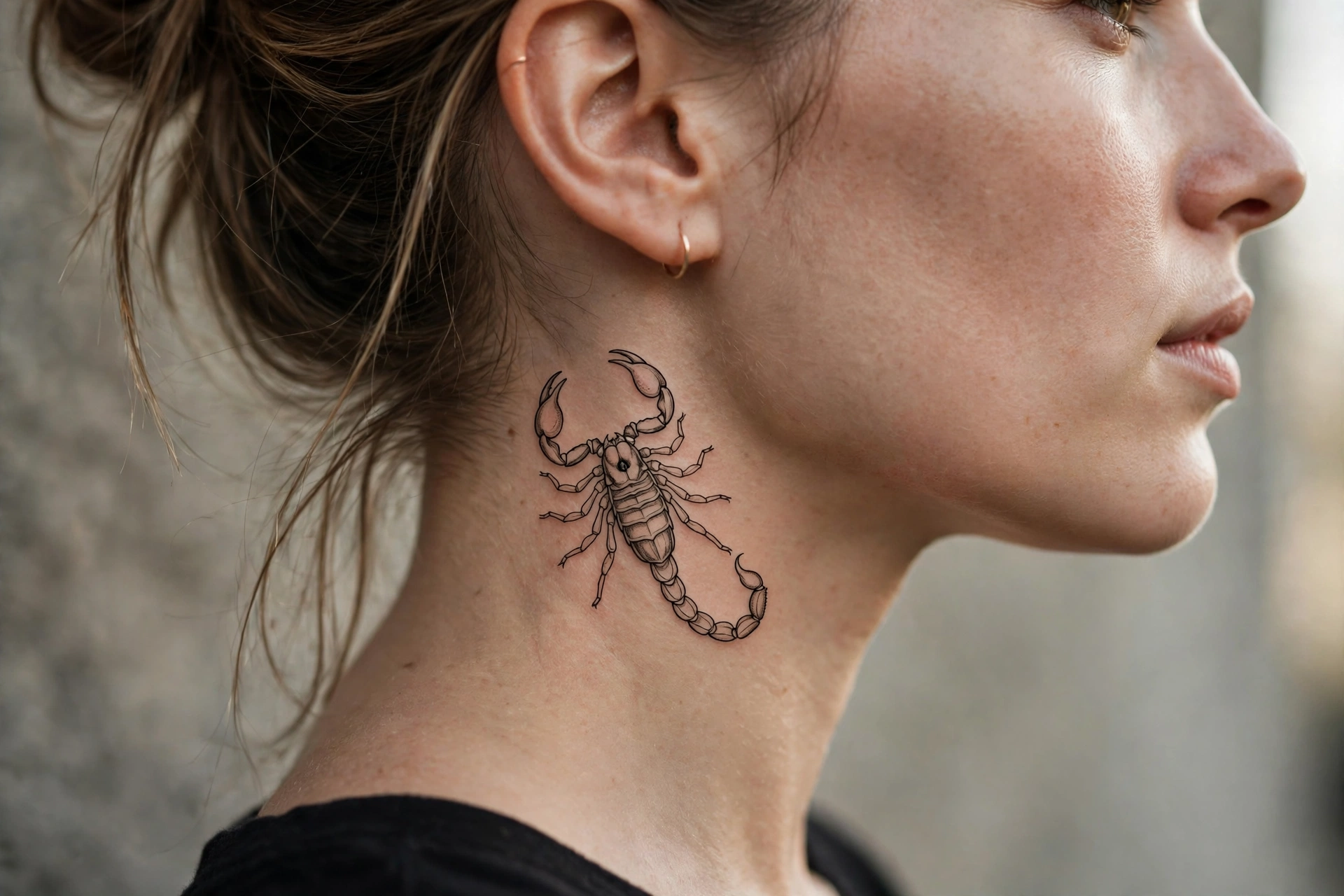
A scorpion on the side neck means protection, resilience and a sting kept in reserve. Its curved tail follows the neck’s curve perfectly. Best for Scorpios and survivors. Downside: the tail’s fine segments blur quickly at small sizes, so keep it bold.
35. Eagle Head
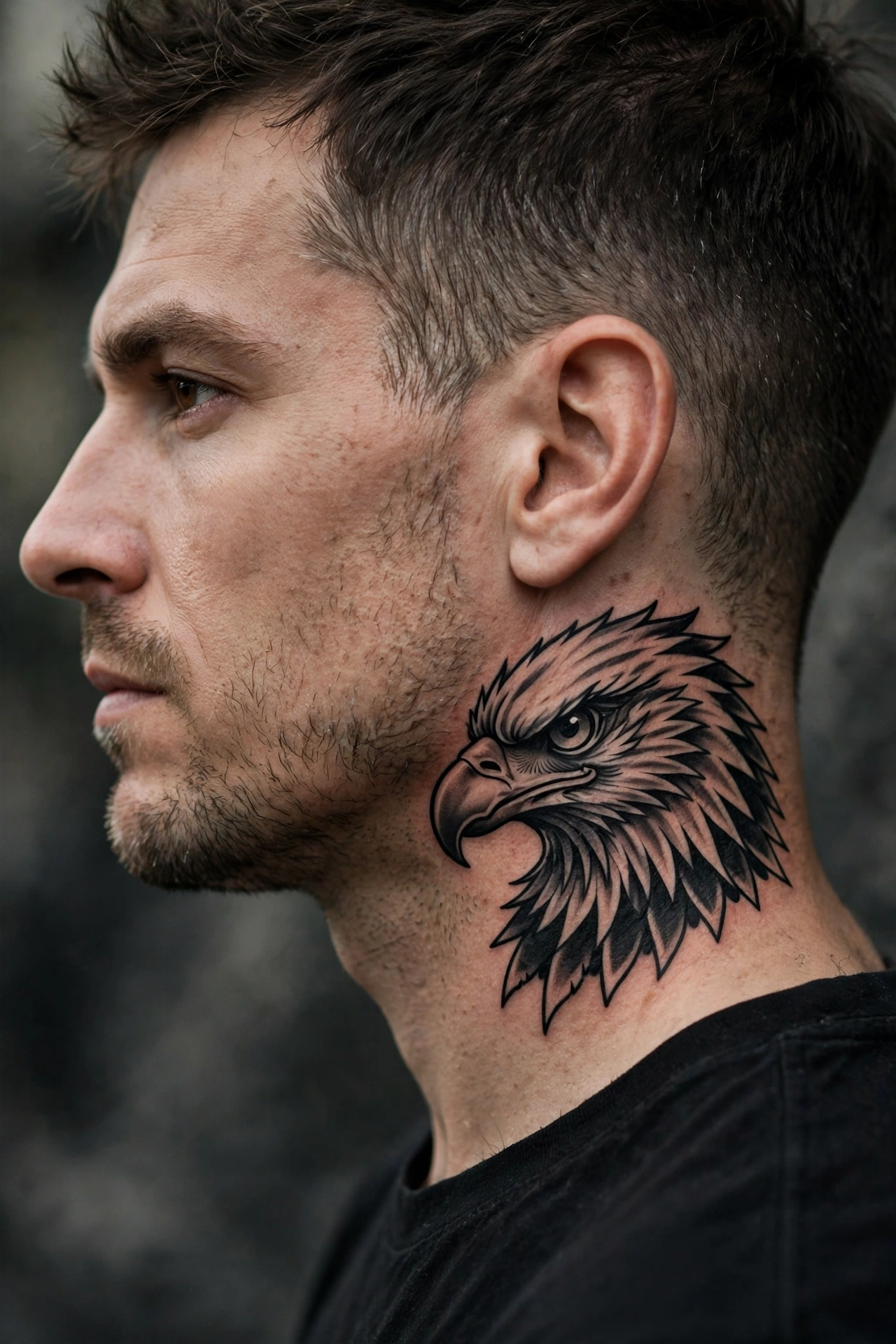
An eagle head on the side neck means freedom, vision and fierce independence. Bold black and grey shading gives it weight beside the face. Best for patriots and free spirits. Downside: eagles need a large canvas to avoid looking like a generic bird — small eagles disappoint.
36. Phoenix
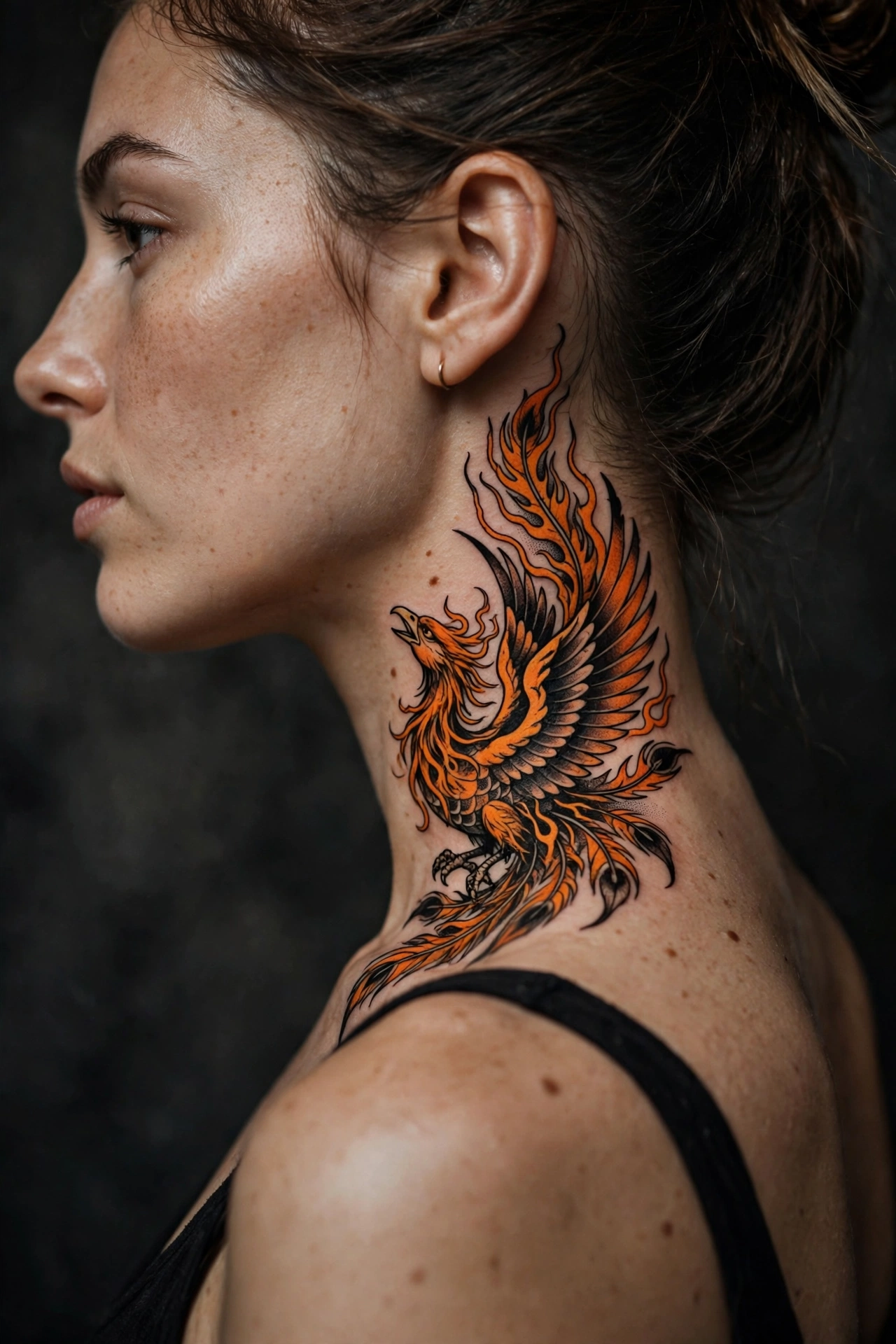
A phoenix rising up the side of the neck means rebirth from ashes — the ultimate comeback symbol, made for the neck’s upward line. Best for anyone who rebuilt their life. Downside: phoenixes live or die by flame detail, which needs space and sun-safe colour.
37. Geometric Pattern
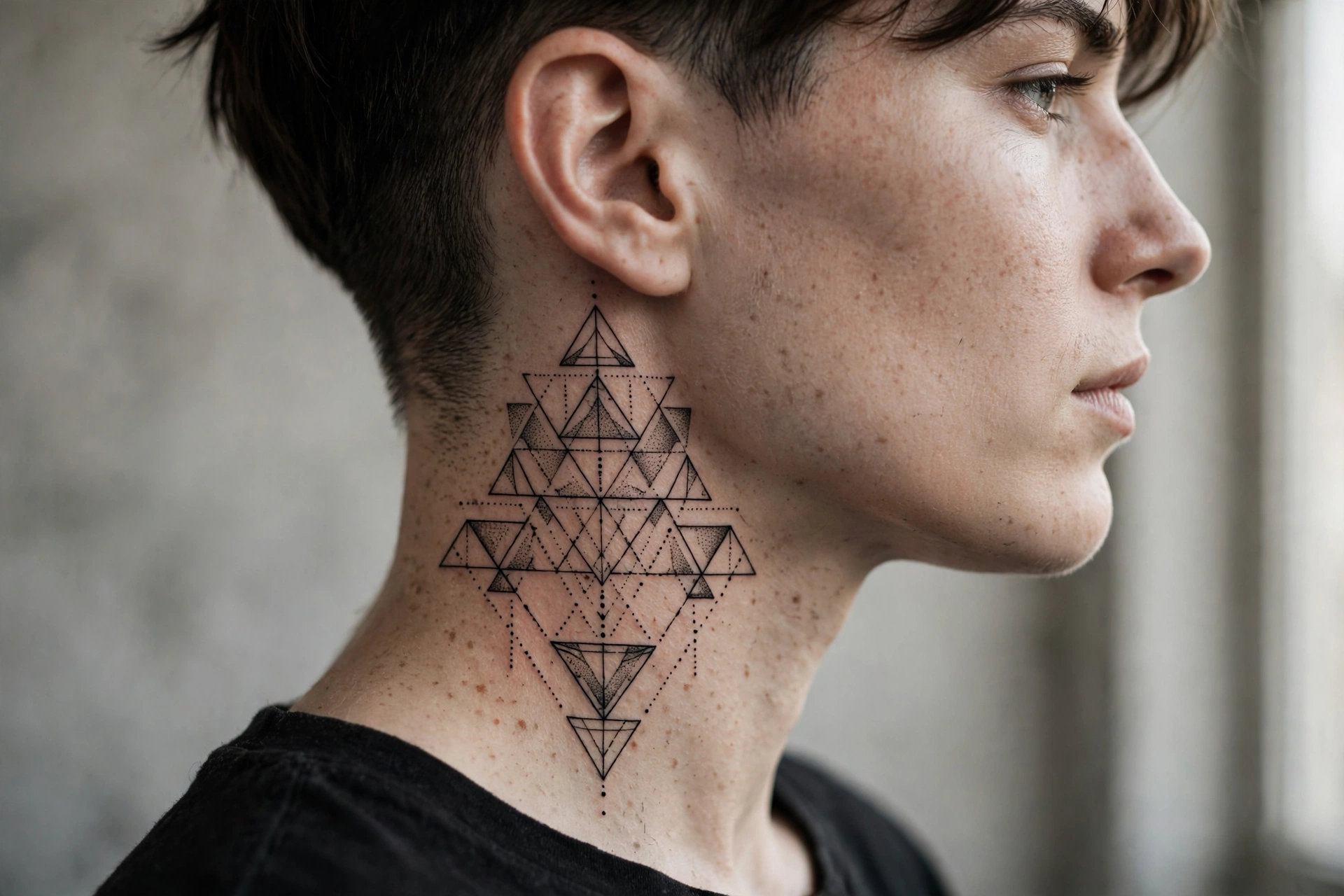
A geometric pattern of triangles and dots on the side neck means balance, order and the interconnectedness of things. Clean lines look strikingly modern. Best for minimalists who want edge. Downside: one wobbly line ruins a geometric piece, and neck movement makes straight lines genuinely hard.
38. Winged Angel
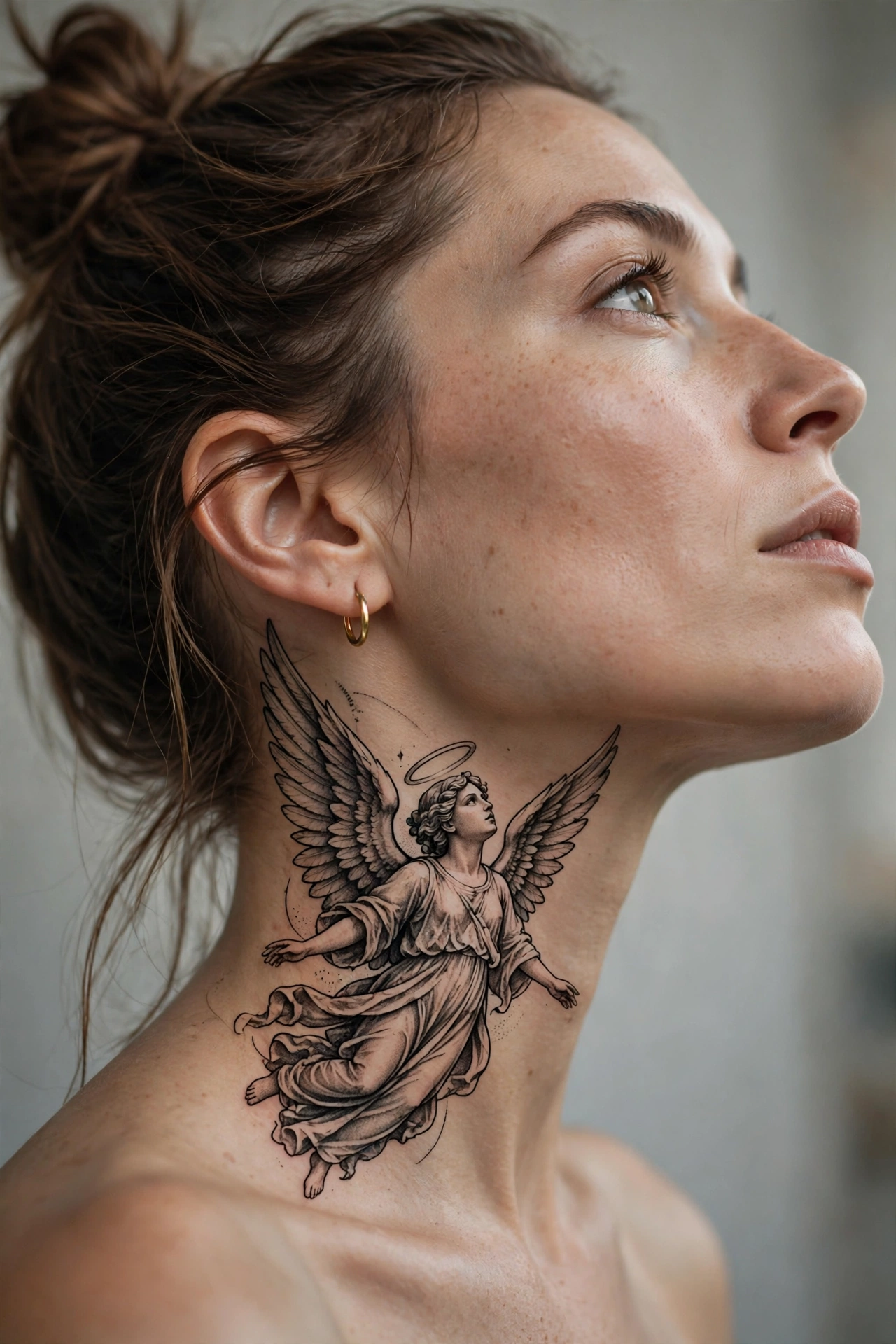
A winged angel looking upward on the side neck means protection, guidance and hope — it lengthens the neck and looks elegant rather than loud. Best for memorials. Downside: angels need shading depth to avoid looking flat, so this is not a cheap or quick piece.
39. Lion Head
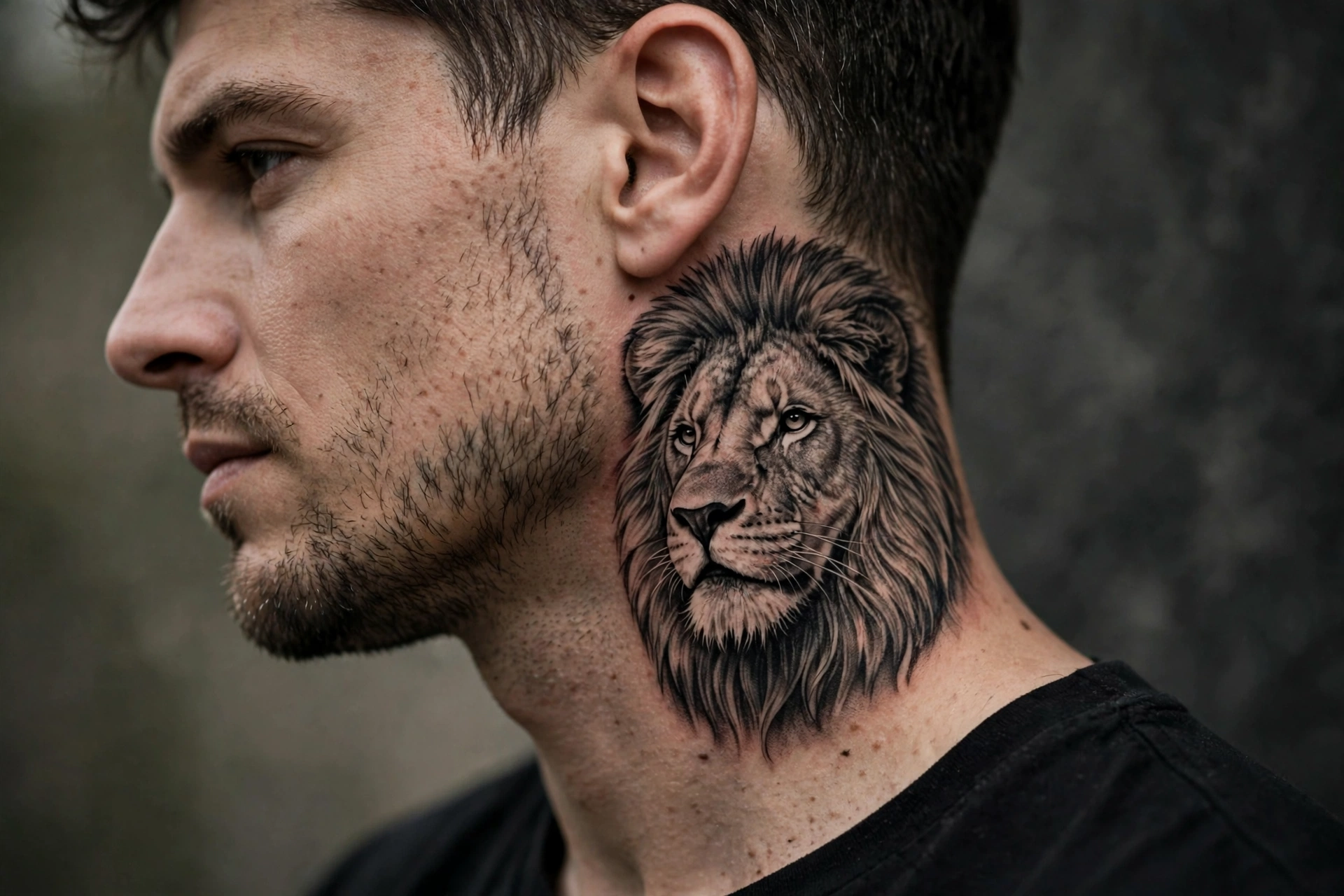
A lion head on the side neck means courage, strength and quiet authority — the king of beasts beside your face. Our lion tattoo ideas guide covers the animal in full. Best for leaders. Downside: a lion needs real size for mane detail, or it reads as a fuzzy blob.
40. Barbed Wire Choker
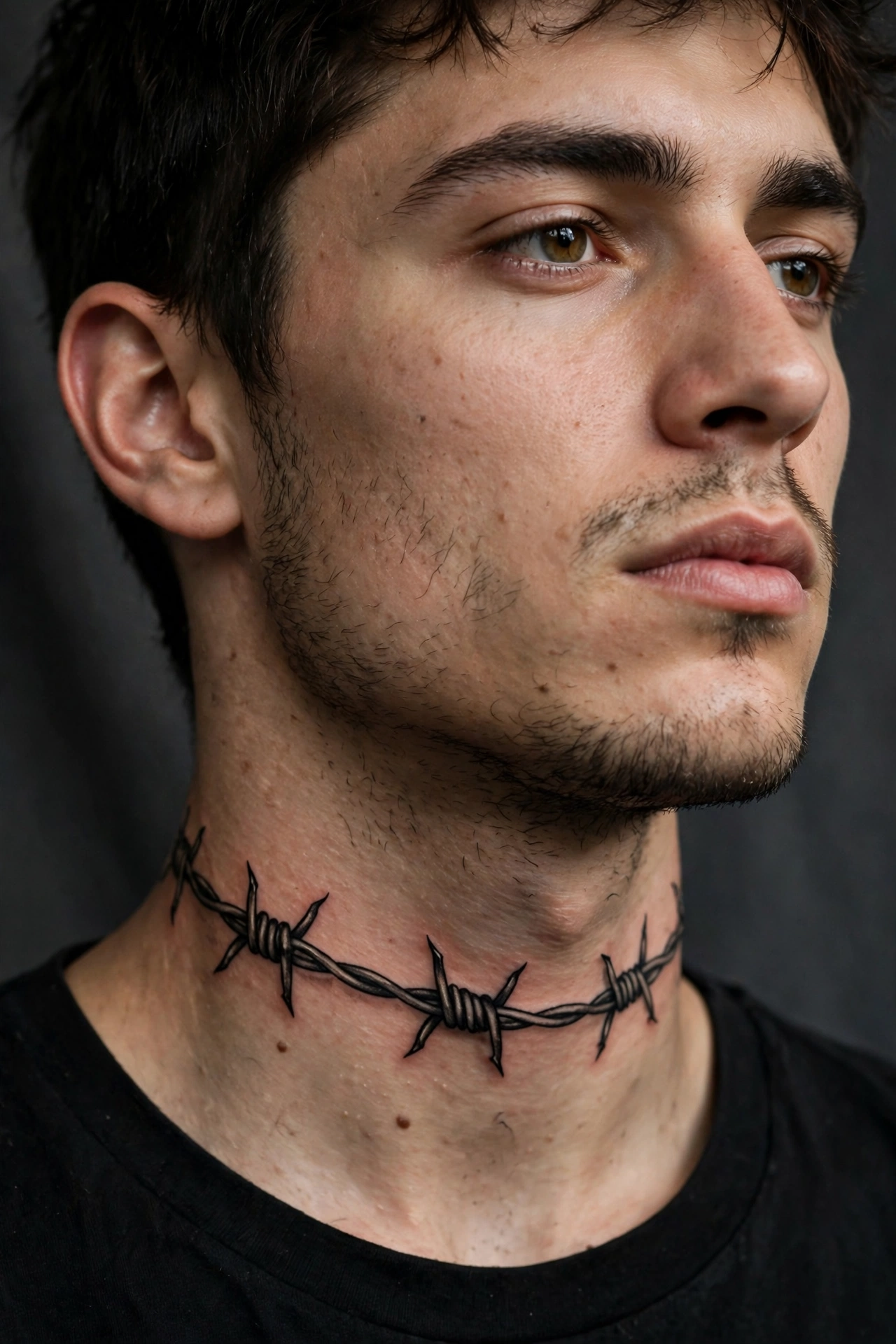
A barbed wire tattoo wrapping the neck like a choker means boundaries, toughness and a past that left marks. It is simple, striking and unmistakable. Best for punk spirits. Downside: a choker line must be perfectly level all the way around, or the eye catches the tilt instantly.
Neck Tattoo Pain Levels by Placement
Neck tattoos hurt more than most placements: thin skin, little padding, nerves near the surface — plus machine vibration felt through bone, up into your jaw, ears and teeth:
- Nape: 4/10 to 6/10 — the gentlest zone, a dull ache with more muscle padding, though some artists rate it 8/10 for vertebrae vibration at the skull base.
- Behind the ear: 6/10 to 7/10 — the skull sits close to the skin, so it rattles, but sessions are short.
- Side of the neck: 7/10 to 8/10 — sharp and buzzy near the jawline and collarbone, with a little cushion from the neck muscle.
- Throat: 8/10 to 9/10 (some say 9/10 to 10/10) — skin stretched over the windpipe with almost no padding, moving as you swallow and talk.
If pain worries you, start at the back. Our full tattoo pain chart ranks every body spot the same way.
How Much Does a Neck Tattoo Cost?
Neck tattoos cost more per square inch than flat placements: difficult skin, longer sessions, and a premium for high-stakes visible work. Expect roughly: tiny fine-line behind the ear $150–$250; simple side-neck $200–$400; detailed side or nape $400–$800; realism or wrap-around $500–$1,000+; specialist or full-neck $1,000 and up. Add touch-ups every two to three years for fine-line styles. Our tattoo prices guide breaks down the hidden costs in detail.
Healing Time & Aftercare Essentials
Surface healing takes 2–4 weeks, with deeper settling over 3–6 months. The neck is a hard healer: it moves every time you turn, swallow or talk, and catches sun all day. The American Academy of Dermatology advises gentle washing, a thin layer of fragrance-free moisturiser, no picking scabs, no sun or tanning beds on new ink, and SPF 30+ sunscreen once healed. Sleep on a clean pillowcase and skip tight collars while it heals. Our complete tattoo aftercare guide covers the timeline day by day.
Placement Pros & Cons — Comparison Table
| Placement | Best For | Visibility | Pain | Coverability | Session Length | How It Ages |
|---|---|---|---|---|---|---|
| Side neck | Florals, snakes, vertical script, animals | High | 7/10–8/10 | Low–medium (collars, long hair) | 1–4 hours | Good if bold; fine line fades in 2–3 yrs |
| Nape / back of neck | Mandalas, symbols, small florals, centred designs | Medium | 4/10–6/10 | High (hair or collar) | 1–3 hours | Good; hair shields it from sun |
| Behind the ear | Fine-line marks, tiny script, stars, initials | Medium | 6/10–7/10 | Medium–high (hair) | 30–60 minutes | Fastest fading; detail blurs |
| Throat / front | Bold blackwork, symmetrical pieces, large designs | Very high | 8/10–9/10 | Very low | 2–4+ hours, often multiple sessions | Needs bold lines + SPF |
Common Mistakes to Avoid
- Making the neck your first tattoo. Get experience on a less visible spot first, and be sure about daily visibility.
- Going too small for the detail. A wolf, lion or dragon squeezed tiny loses the detail that makes it work.
- Skipping the movement test. If the stencil is not checked while you turn and look down, the design will distort in daily life.
- Ignoring workplace reality. No written policy does not mean no effect — the throat is judged most.
- Copying sacred symbols without understanding them. Heritage patterns like Māori tā moko are not mere decoration.
- Choosing an artist without a neck portfolio. Ask to see healed neck work, not just fresh photos.
- Skipping sunscreen. The neck catches sun daily, and sun is the biggest fader of all.
Frequently Asked Questions
How painful is a neck tattoo?
By zone: nape 4/10–6/10, behind the ear 6/10–7/10, side neck 7/10–8/10, throat 8/10–9/10. Expect vibration through your jaw and teeth, especially near bone.
How much does a neck tattoo cost?
Tiny behind-the-ear: $150–$250; simple side-neck: $200–$400; detailed: $400–$800; realism, wrap-arounds or specialist full-neck: $500–$1,000+. Fine-line touch-ups every two to three years add lifetime cost.
Are neck tattoos a bad idea for work?
They can be. Creative and tech workplaces largely do not care, but conservative fields still judge visible neck ink, and the throat cannot be concealed. The nape and behind-the-ear zones are far safer.
What does a neck tattoo mean?
By spot: nape = protection, throat = voice and courage, side = confidence, behind the ear = something private. The subject — snake for rebirth, butterfly for change, mandala for balance — adds its own layer.
Can you hide a neck tattoo?
Partly. Nape hides under hair or a collar, behind-the-ear under longer hair, side-neck under collars or scarves. A front throat tattoo cannot realistically be hidden.
Do neck tattoos age well?
Bold blackwork ages best; fine line fades fastest, often needing touch-ups within two to three years. Daily SPF once healed matters more on the neck than almost anywhere else.
Is the neck a good place for a first tattoo?
Usually not. Get experience on a less visible, less painful spot first, and be fully sure about daily visibility — especially for the throat.
How long does a neck tattoo take to heal?
Surface healing takes 2–4 weeks, deeper settling 3–6 months. Because the neck moves constantly and catches sun, aftercare discipline matters more here than on still placements.
Quick Summary
Neck tattoos are the boldest placement in tattooing: 40 designs across side neck, nape, behind the ear and throat; pain from 4/10 at the nape to 9/10 at the throat; costs from $150 to $1,000+; surface healing in 2–4 weeks. Pick the spot by the visibility you can live with, test the stencil while moving, choose an artist with healed neck work in their portfolio, and protect it from the sun for life.
References
- American Academy of Dermatology — tattoo aftercare guidance (aad.org).
- SkyRyeDesign — Neck Tattoo Ideas: 40+ Designs, Pain & Placement Guide.
- Inkspo — Neck Tattoos for Men: A Tattoo Artist’s Guide.
- Tattooradar — What Do Neck Tattoos Mean?
- U.S. Food & Drug Administration — tattoo safety information (fda.gov).
Which one is your favorite?